Key Takeaways
Our Verdict
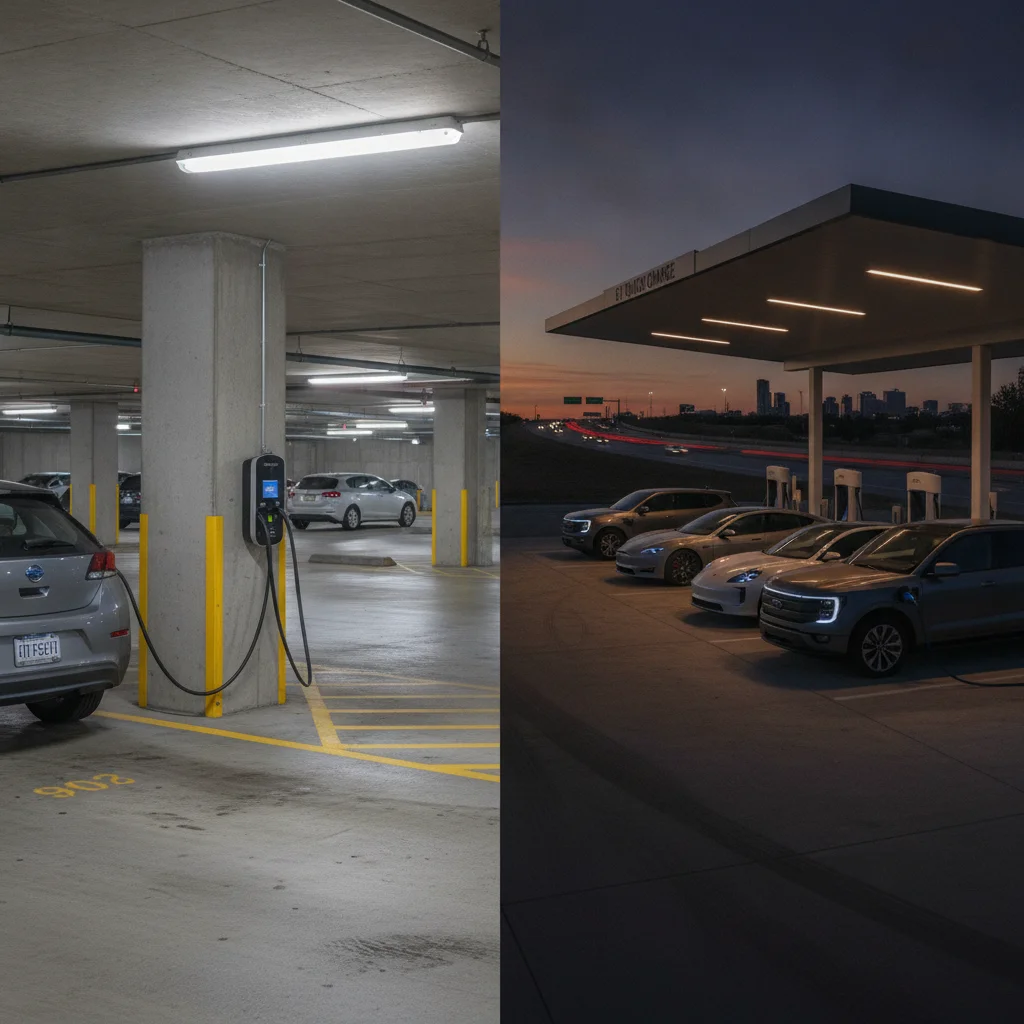
Urban commuters and highway road trippers face entirely different charging challenges that demand different infrastructure solutions. City drivers benefit most from widespread Level 2 availability at destinations they already visit, while long-distance travelers need high-power fast chargers reliably spaced along major routes. No single network perfectly serves both use cases today, but the gap is narrowing rapidly as NEVI funding and private investment reshape the landscape.
| Best for | Recommended |
|---|---|
| City commuters who charge overnight at home and need occasional top-ups | Level 2 destination networks (ChargePoint, Blink, EVgo AC) |
| Apartment and condo dwellers without home charging access | Dense urban Level 2 networks like ChargePoint or EVgo |
| Long-distance road trippers crossing multiple states | Tesla Supercharger (Tesla owners) or Electrify America (non-Tesla EVs) |
| Drivers who need both urban convenience and highway coverage | A multi-app strategy combining ChargePoint for cities and Electrify America or Supercharger for highways |
Two Use Cases, Two Infrastructure Realities
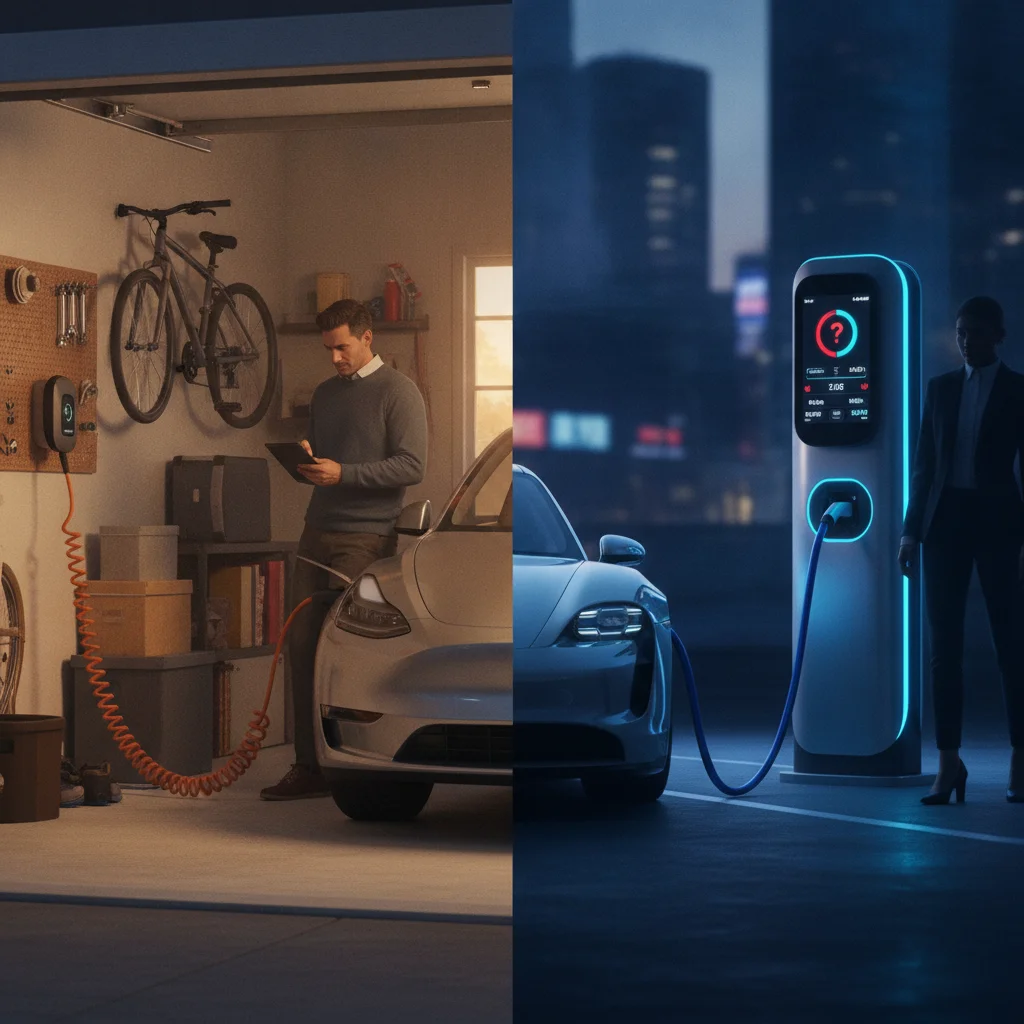
Ask a Tesla Model Y owner who lives in a Chicago high-rise what charging infrastructure looks like, and you'll get a very different answer than the one from a Rivian R1T driver in rural Tennessee preparing for a 600-mile haul to Florida. Both are EV drivers. Both depend on public charging. But their needs — in terms of speed, location, and dwell time — are almost entirely opposite.
Urban charging is fundamentally a convenience and access problem. The goal isn't to add 200 miles in 20 minutes; it's to reliably top off a battery over several hours while a driver is already parked at work, at the grocery store, or in a residential garage. Speed matters far less than density and availability.
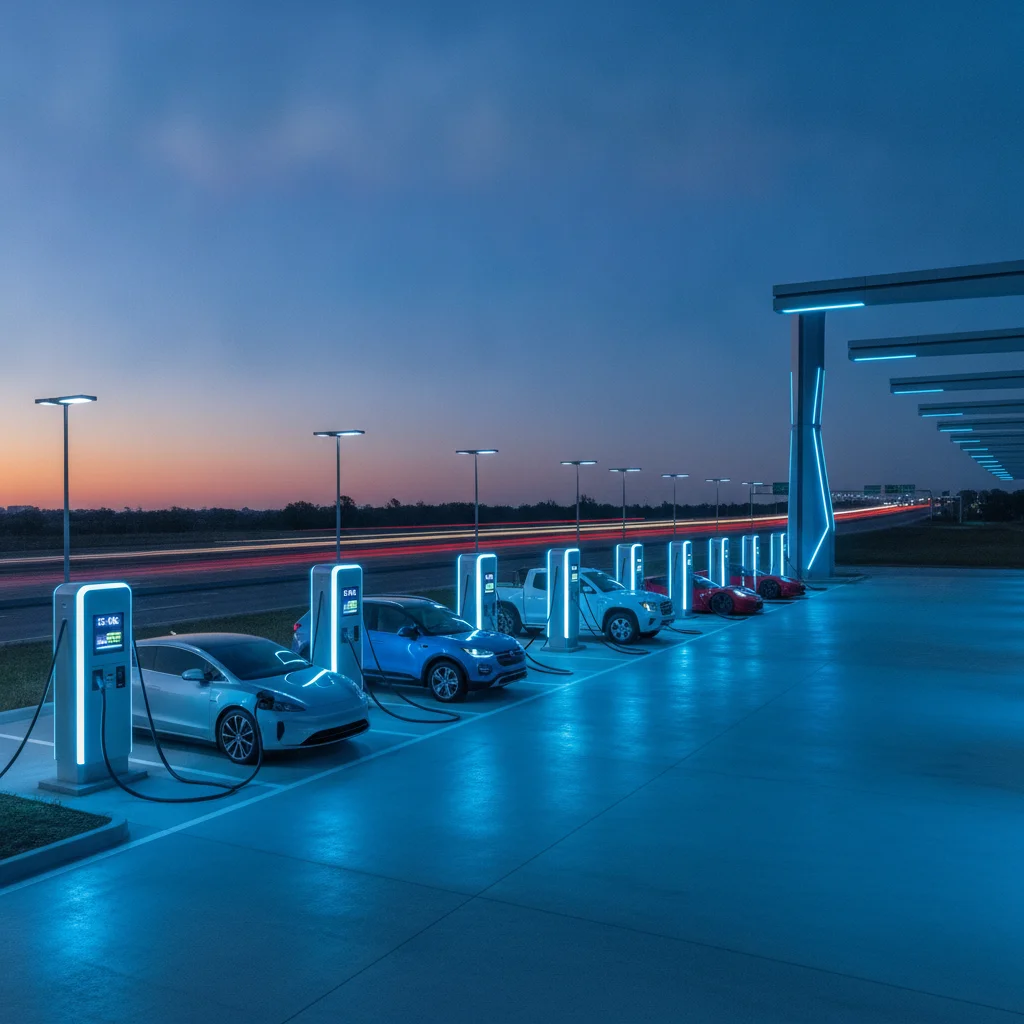
Highway fast charging, by contrast, is a range anxiety and throughput problem. Road trippers cannot afford to wait two hours for a Level 2 charger to replenish depleted capacity. They need high-power DC fast chargers capable of delivering 150–350 kW — enough to add 100–200 miles of range in roughly 15–25 minutes — stationed close enough together that battery management isn't a constant source of stress.
The distinction matters because public charging networks have largely developed with one audience or the other in mind, and conflating the two leads to real frustration for drivers who choose the wrong tool for the job. Matching your stop type to the right charger speed is one of the most underappreciated skills in EV ownership.
Urban Charging: Density Over Speed
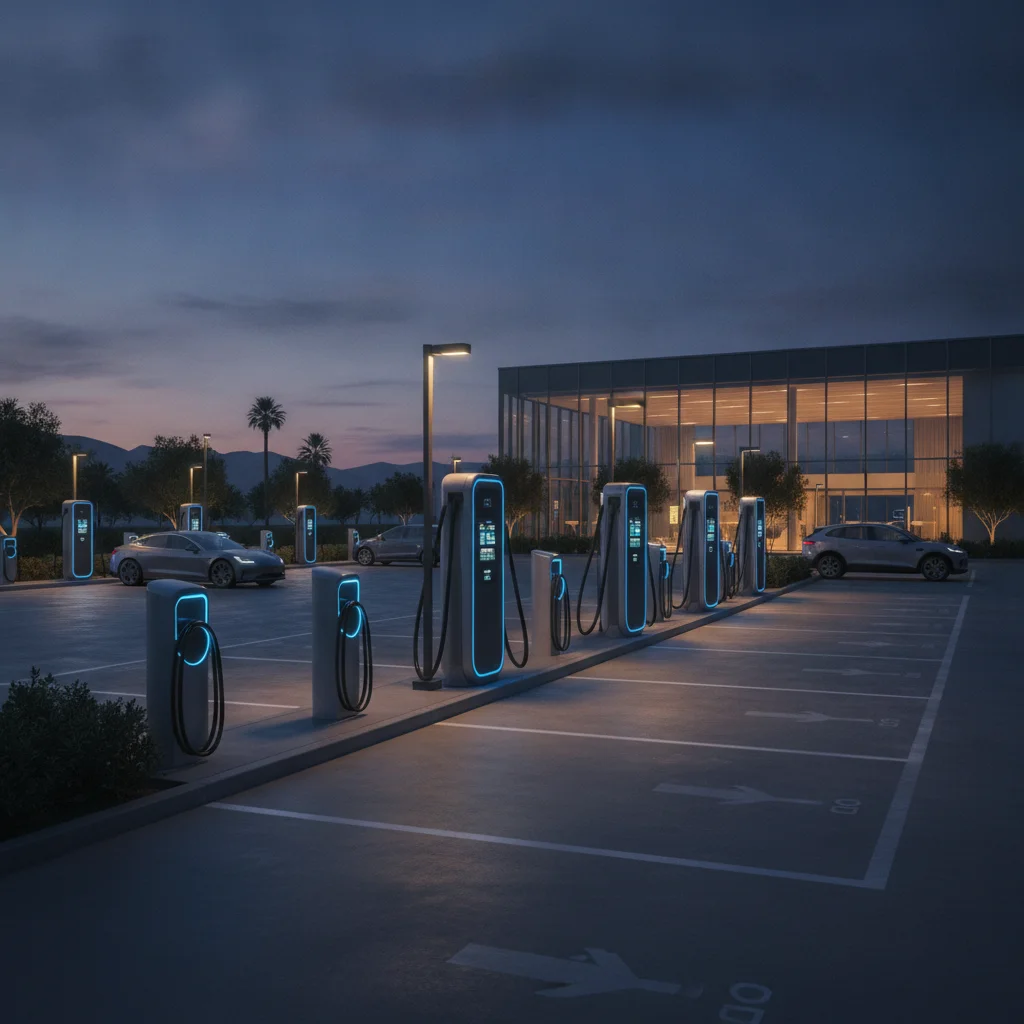
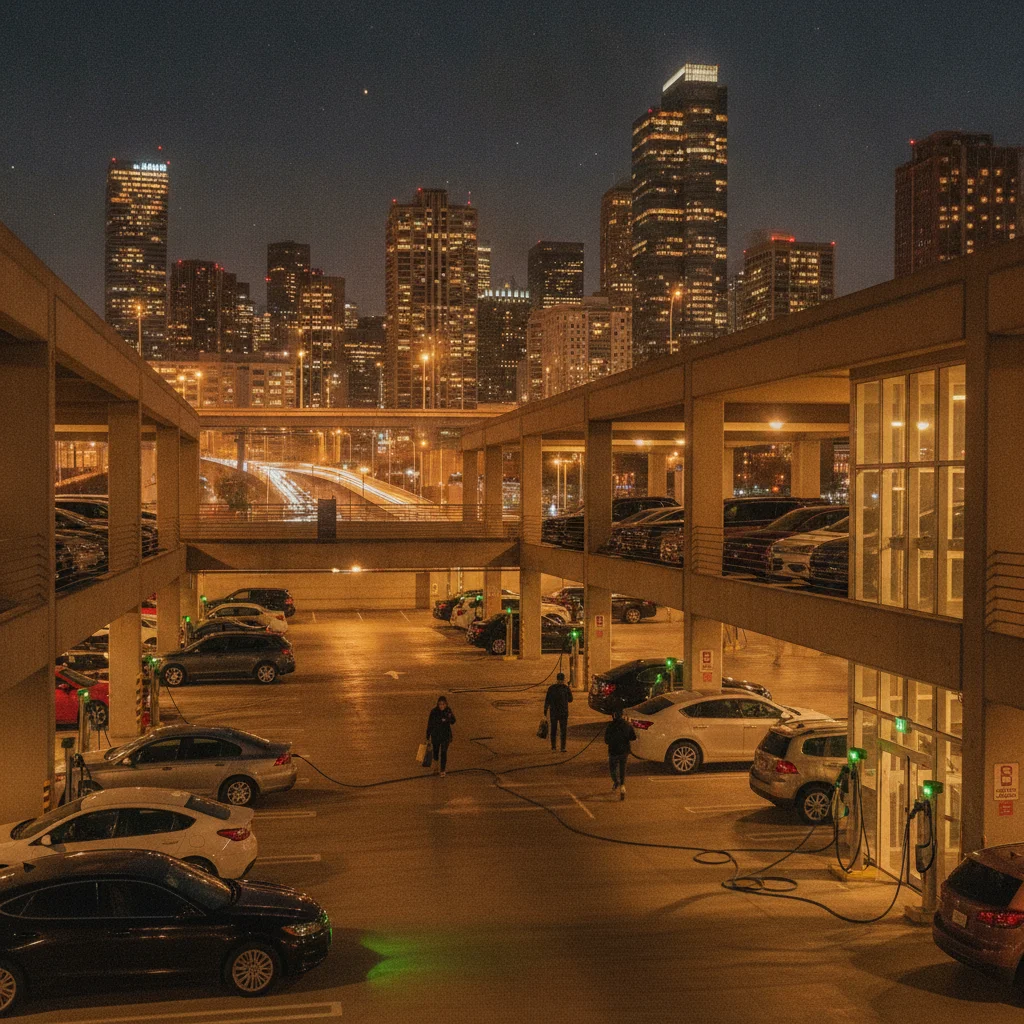
For city-dwellers, the ideal charging scenario is invisible: you park, plug in, run your errands or sleep, and return to a full battery. That experience demands Level 2 AC chargers (typically 7–19 kW) placed in high-frequency locations — parking structures, apartment complexes, grocery stores, office buildings, and transit hubs.
Who Dominates Urban AC Networks
ChargePoint operates the largest network of Level 2 stations in the United States, with over 35,000 public ports as of early 2025. Its business model relies heavily on commercial property owners who install ChargePoint hardware as an amenity, making it naturally suited to urban and suburban destination locations. Pricing varies by station owner, which introduces inconsistency but also competition.
Blink Charging focuses similarly on commercial real estate partnerships — multifamily properties, hotels, and retail centers. Blink's coverage is thinner in smaller markets but reasonably dense in the top 50 metro areas.
EVgo's AC network tends to be co-located with its DC fast chargers in urban retail settings, meaning city drivers get the dual benefit of a fast-charge option and a slower Level 2 alternative at the same site.
The Apartment Problem
Roughly 30–35% of American households live in multifamily housing, according to the U.S. Census Bureau — a population that disproportionately lacks access to home charging. For this group, urban Level 2 public charging isn't a backup option; it's the primary charging strategy. Networks that serve this segment well need high station-to-stall ratios, competitive per-kWh pricing, and reliable uptime — three metrics where the industry still struggles.
Maximize Urban Charging Efficiency
Urban EV drivers get the most value by treating public Level 2 charging as an opportunistic supplement rather than a planned stop. Plug in whenever you park for more than an hour — at the gym, grocery store, or office — and you'll rarely need a dedicated charging trip. Apps like PlugShare and ChargePoint can filter by availability in real time, reducing wasted detours to occupied stations.
Highway Membership Math
If you make more than two cross-state highway trips per year, an Electrify America Pass+ subscription ($4/month) pays for itself in a single stop by reducing the per-kWh rate from $0.48 to $0.36. Similarly, EVgo's monthly plan makes economic sense for drivers who fast-charge more than 100 kWh per month at EVgo stations. Run the numbers for your specific travel pattern before defaulting to pay-as-you-go pricing.
Comparing the true cost of home versus public charging can reveal how much urban dwellers pay as a premium over home-charging drivers — a figure that factors heavily into total EV ownership cost.
$5B
Federal NEVI program funding
The Infrastructure Investment and Jobs Act allocated $5 billion for EV charging infrastructure along federal highway corridors through 2026.
80–90%
Miles charged at home by typical EV owners
According to the U.S. Department of Energy, most EV drivers complete the vast majority of their charging at home, using public networks only for supplemental or highway charging.
50 miles
Maximum station spacing under NEVI rules
NEVI program requirements mandate that federally funded DC fast-charging stations be placed no more than 50 miles apart on designated Alternative Fuel Corridors.
35%
US households without home charging access
Approximately 30–35% of American households live in multifamily housing and lack dedicated EV charging access, according to U.S. Census Bureau estimates.
99%+
Reported Tesla Supercharger uptime
Tesla reports its Supercharger network maintains uptime above 99%, a benchmark that third-party networks, where uptime can dip below 80% at some stations, have not consistently matched.
Highway Fast Charging: Speed, Spacing, and Reliability
Long-distance EV travel depends on a very specific infrastructure formula: DC fast chargers with peak output of at least 150 kW, spaced no more than 50 miles apart along major interstate corridors, with enough stalls per station to prevent queuing during peak travel periods. Anything short of that formula creates range anxiety and real delay.
The Supercharger Standard
Tesla built the Supercharger network explicitly for this use case, and it remains the gold standard for highway fast charging reliability. With over 2,000 Supercharger stations in the US and the majority positioned along interstate highways, Tesla drivers have consistently rated the experience as the closest equivalent to gas station refueling. Average station uptime consistently exceeds 99%, according to Tesla's own data — a bar that third-party networks have struggled to match.
Since opening Superchargers to non-Tesla EVs in 2023, the network has become a genuine option for drivers of Ford, Rivian, GM, and other brands equipped with the Combined Charging System (CCS) connector or an adapter. However, non-Tesla pricing is typically higher than the member rates Tesla owners enjoy.
Electrify America's Highway Footprint
Electrify America, funded partly through Volkswagen's diesel emissions settlement, has built the most extensive non-Tesla DC fast-charging highway network, with over 900 stations and more than 4,000 stalls. The network skews explicitly toward major corridors — interstates, US highways, and key state routes — with stations anchored in Walmart and travel center locations every 50–150 miles along popular routes. Peak charging speeds reach 350 kW at select stations, making it the highest-power public network available to non-Tesla drivers. EVgo and Electrify America's highway coverage compares in meaningful ways that affect which is better for your specific route.
EVgo's Urban-Highway Hybrid Model
EVgo occupies a middle position — its DC fast chargers (typically 50–350 kW) are concentrated in urban retail locations rather than isolated highway pull-offs. This approach serves intra-city fast charging well but creates gaps on long-distance routes where EVgo stations may be hundreds of miles apart.
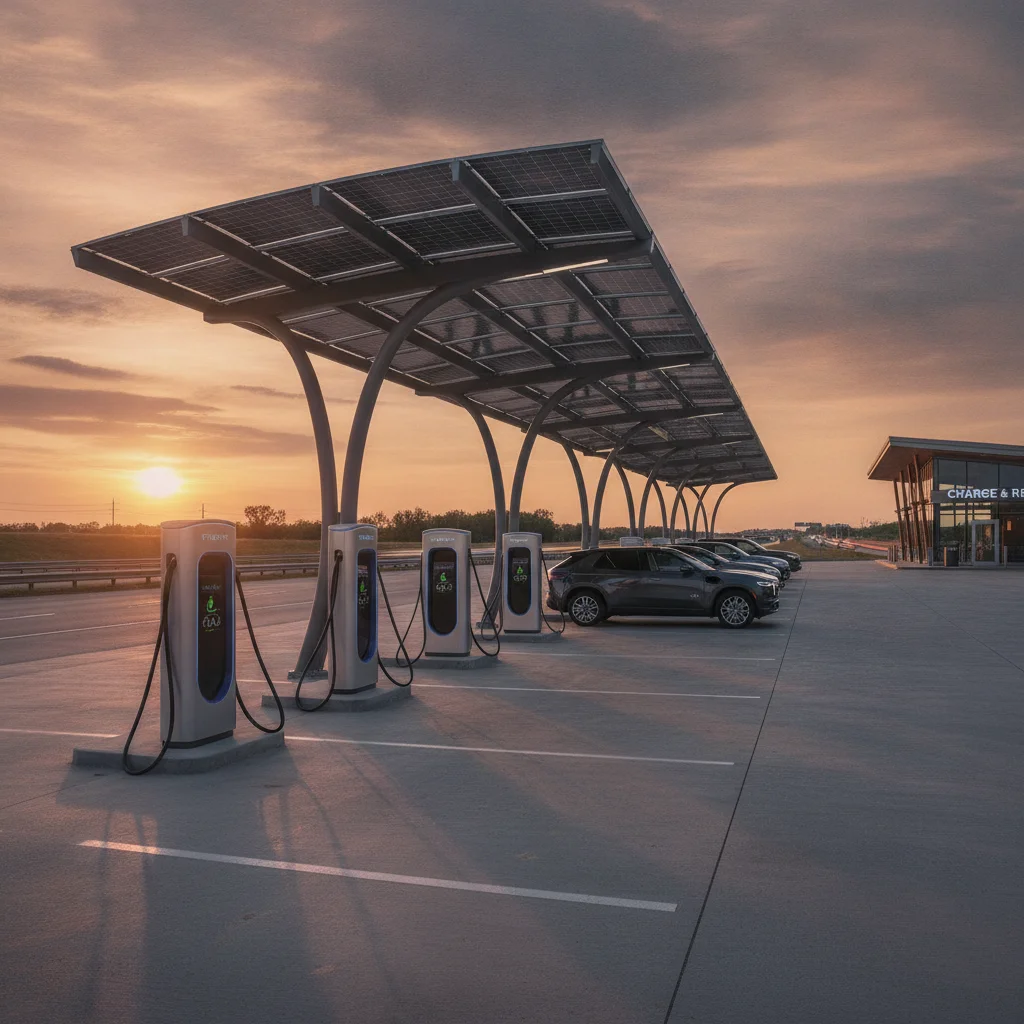
The federal government is attempting to fill corridor gaps through the National Electric Vehicle Infrastructure (NEVI) program, which requires states to build fast-charging stations every 50 miles along designated Alternative Fuel Corridors. How the US is building its EV highway backbone through NEVI and private investment is a story still actively unfolding, with billions in commitments but inconsistent rollout timelines across states.
Don't Rely on a Single Network for Highway Travel
No single non-Tesla network provides adequate coast-to-coast coverage today. Drivers who plan highway trips using only one network risk arriving at a station that is under maintenance, at capacity, or incompatible with their vehicle's connector. Always have a backup network identified along your route, and use ABRP or your vehicle's built-in navigation to plan with real-time station availability data.
Cold Weather Cuts Highway Range Significantly
Lithium-ion batteries lose 20–40% of their effective range in temperatures below 20°F, according to AAA research. Highway road trippers in northern states during winter should plan charging stops at 60–70% of normal spacing to avoid range emergencies. Most modern EVs include battery preconditioning features — activating these before departure improves cold-weather range and fast-charging speed.
Network Comparison: Urban vs. Highway Performance
Not all charging networks are equal across both dimensions. The table below captures how the major players stack up when evaluated specifically for urban utility versus highway suitability — two distinct criteria that often favor different providers.
| ChargePoint | Electrify America | Tesla Supercharger | EVgo | |
|---|---|---|---|---|
| Primary use case | Urban/destination Level 2 | Highway DC fast charging | Highway DC fast charging | Urban DC fast charging |
| US station count (2025) | 35,000+ ports | 900+ stations | 2,000+ stations | 950+ stations |
| Max charging speed | 19 kW (Level 2) | 350 kW DC | 250 kW DC (V3) | 350 kW DC |
| Highway corridor coverage | Very limited | Strong | Excellent | Limited |
| Urban density | Excellent | Moderate | Moderate | Good |
| Average cost per kWh | $0.25–$0.45 | $0.36–$0.48 | $0.25–$0.50 | $0.27–$0.42 |
| Non-Tesla vehicle access | Yes (all EVs) | Yes (CCS/NACS) | Yes (adapter/NACS) | Yes (CCS/NACS) |
| Reported uptime reliability | Moderate | Moderate | Excellent | Moderate |
| Membership/subscription option | ChargePoint account | EA Pass+ ($4/mo) | Tesla account | EVgo+ ($7.99/mo) |
| Best for road trippers | Not recommended | Strong choice | Best overall | Not ideal |
A few patterns jump out of this comparison. Tesla Supercharger leads decisively on highway reliability and speed, but its urban presence — while growing — remains thinner than ChargePoint's destination-focused footprint. ChargePoint's enormous Level 2 network is exceptional for city dwellers but offers almost no highway fast-charging utility. Electrify America splits the difference most effectively for non-Tesla highway travel, though its urban density trails ChargePoint significantly.
Cost Dimensions: What You Pay Differs by Use Case
Charging costs vary dramatically depending on network, speed tier, and whether you're paying per kWh or per minute — a pricing distinction that has real consequences for how much you pay per mile of range added.
Urban Level 2 pricing ranges from free (at many employer or retailer stations) to around $0.25–$0.45 per kWh on commercial networks like ChargePoint. At those rates and typical vehicle efficiency, you're paying roughly $0.03–$0.06 per mile — competitive with, or cheaper than, home charging in high-electricity-cost states.
Highway DC fast charging costs significantly more. Electrify America's pass pricing runs approximately $0.48 per kWh without a membership, or $0.36 per kWh with its $4/month Electrify America Pass+ subscription. EVgo charges $0.27–$0.42 per kWh depending on subscription tier and location. Tesla's non-owner Supercharger rates average $0.25–$0.50 per kWh depending on station and time of day. At 0.40 per kWh and a vehicle efficiency of 3.5 miles/kWh, you're paying about $0.11 per mile — more than twice the cost of home charging in most US markets.
The true per-mile cost comparison between public DC fast charging and home charging reveals just how significant that premium is when calculated across 10,000–15,000 annual highway miles. For road trippers who rely heavily on public fast charging, the annual cost differential versus home-charging commuters can exceed $1,000.
Maximize Urban Charging Efficiency
Urban EV drivers get the most value by treating public Level 2 charging as an opportunistic supplement rather than a planned stop. Plug in whenever you park for more than an hour — at the gym, grocery store, or office — and you'll rarely need a dedicated charging trip. Apps like PlugShare and ChargePoint can filter by availability in real time, reducing wasted detours to occupied stations.
Highway Membership Math
If you make more than two cross-state highway trips per year, an Electrify America Pass+ subscription ($4/month) pays for itself in a single stop by reducing the per-kWh rate from $0.48 to $0.36. Similarly, EVgo's monthly plan makes economic sense for drivers who fast-charge more than 100 kWh per month at EVgo stations. Run the numbers for your specific travel pattern before defaulting to pay-as-you-go pricing.
Efficiency Adds Another Layer: City vs. Highway Range
One often-overlooked factor in the urban-versus-highway charging equation is that EVs consume energy differently depending on driving context — and this affects how frequently you'll need to charge on each type of trip.
Unlike internal combustion vehicles, which typically achieve better fuel economy on highways than in stop-and-go city traffic, EVs tend to be more efficient in urban conditions. Regenerative braking recaptures energy during city deceleration, and the lower sustained speeds reduce aerodynamic drag — the dominant energy consumer at highway speeds.
A vehicle rated at 300 miles of EPA range might realistically deliver 260–280 miles in mixed city driving but only 230–250 miles at 75 mph on a highway. That gap means highway road trippers will be stopping to charge more frequently than their EPA label suggests, while urban commuters may exceed rated efficiency. Why EVs are more efficient in city traffic than on highways is a counterintuitive but well-documented phenomenon that every EV buyer should understand before planning long trips.
The practical implication: highway charging infrastructure must be denser than simple EPA range figures would suggest, because real-world highway range at interstate speeds is measurably shorter than the label. Networks that space stations 80–100 miles apart may leave drivers in genuine difficulty if they're traveling against headwinds, through mountainous terrain, or in cold weather — all of which further reduce effective range.

Building a Practical Charging Strategy
Given the infrastructure gaps that still exist in both the urban and highway segments, the most effective approach for most EV drivers today is a layered charging strategy — one that doesn't rely on any single network to solve all needs.
For Urban Commuters
- Home charging first: Even a 120V Level 1 outlet adds 4–5 miles per hour overnight — enough for most daily commutes. A Level 2 home charger is the highest-value charging upgrade available to any EV owner. Choosing and installing the right home EV charger is the logical first step for anyone with garage or driveway access.
- Workplace charging as a supplement: Free or subsidized workplace Level 2 charging dramatically reduces dependence on public networks. Employees with access to workplace chargers report the lowest public charging costs of any EV driver segment.
- Urban Level 2 for gap coverage: ChargePoint and Blink apps help locate nearby stations for opportunistic charging during parking stops longer than 90 minutes.
For Highway Road Trippers
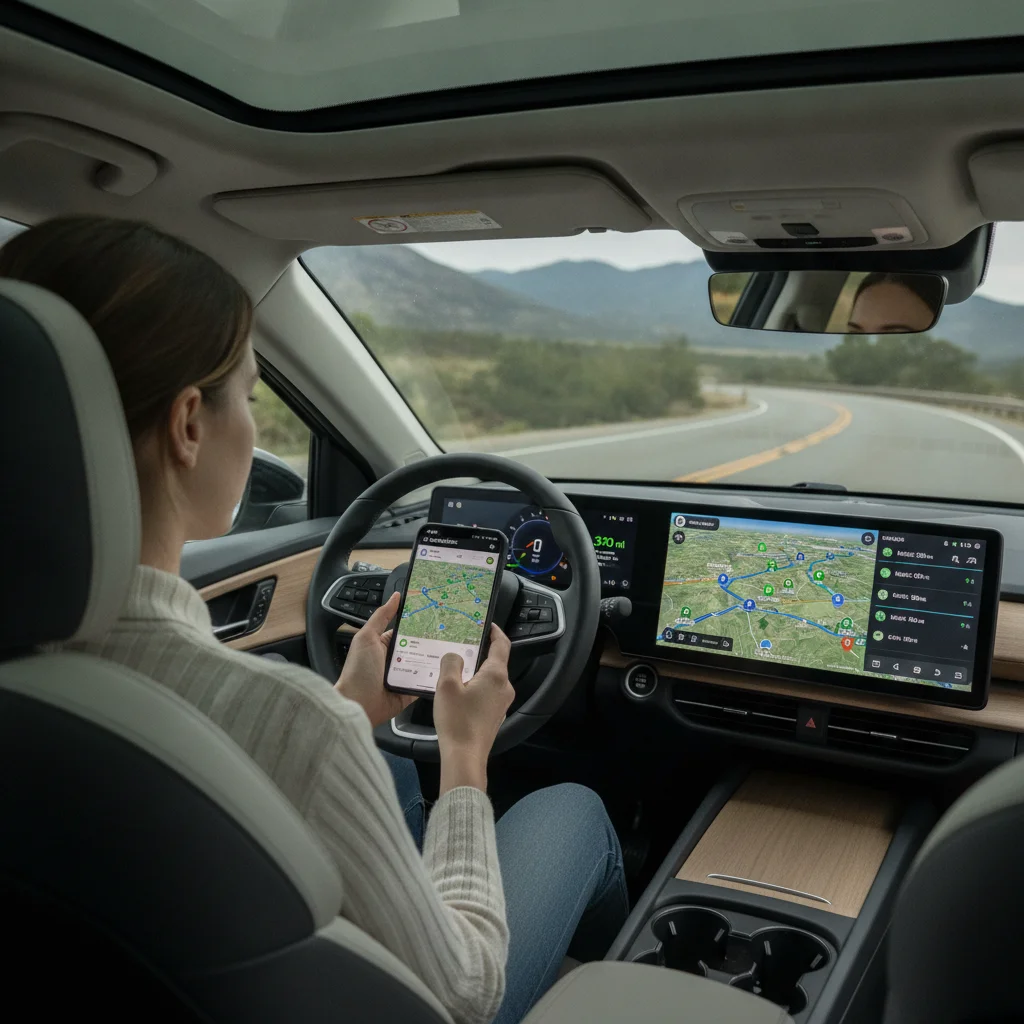
- Plan the route before you drive: PlugShare, ABRP (A Better Route Planner), and the native navigation systems in most modern EVs optimize charging stops automatically. Build in buffer stops rather than running to 5–10% battery.
- Carry multiple network accounts or use a universal payment card: Electrify America, EVgo, and ChargePoint each require separate apps unless you use an aggregator like Plugshare or a cross-network RFID card.
- Charge to 80%, not 100%, on highway stops: Lithium-ion charging rate tapers above 80% state of charge, meaning the final 20% takes nearly as long as the first 80%. Stopping at 80% and driving to the next charger is almost always faster than topping up completely.
Don't Rely on a Single Network for Highway Travel
No single non-Tesla network provides adequate coast-to-coast coverage today. Drivers who plan highway trips using only one network risk arriving at a station that is under maintenance, at capacity, or incompatible with their vehicle's connector. Always have a backup network identified along your route, and use ABRP or your vehicle's built-in navigation to plan with real-time station availability data.
Cold Weather Cuts Highway Range Significantly
Lithium-ion batteries lose 20–40% of their effective range in temperatures below 20°F, according to AAA research. Highway road trippers in northern states during winter should plan charging stops at 60–70% of normal spacing to avoid range emergencies. Most modern EVs include battery preconditioning features — activating these before departure improves cold-weather range and fast-charging speed.
For drivers who need both urban flexibility and highway capability, the multi-app reality remains a genuine friction point. Understanding EV charging costs and savings strategies across networks helps identify where memberships and subscriptions actually pay off versus where pay-as-you-go is sufficient.
What the Next Three Years Look Like
The urban and highway charging landscapes are both moving targets, and several forces are likely to reshape them significantly by 2027.
NEVI buildout acceleration: All 50 states submitted NEVI plans, and construction is ramping. The program's requirement for four 150 kW+ stalls at every federally funded station, placed every 50 miles on designated corridors, is gradually closing the most dangerous gaps in highway coverage. Expect meaningful improvement on secondary interstates and rural corridor segments by late 2025 into 2026.
Tesla's network opening: As more automakers adopt the North American Charging Standard (NACS) connector — now standard on Ford, GM, Rivian, Honda, Nissan, and others — the Supercharger network becomes available to the majority of new EV buyers without an adapter. This is arguably the single largest near-term improvement to highway charging reliability for non-Tesla drivers.
Bidirectional charging and V2G: Vehicle-to-grid technology, now available on the Ford F-150 Lightning and Nissan Leaf (select trims), could eventually let parked urban EVs serve as distributed storage — changing the economics of urban charging infrastructure in ways that are still speculative but directionally important.
Urban charging consolidation: Blink, ChargePoint, and smaller urban network operators face mounting pressure as the market matures. Expect consolidation and possible acquisitions that could improve app interoperability and reduce the friction of multi-network management.
The gap between what urban commuters need and what highway travelers need will likely remain, but the quality of solutions available to both groups is measurably improving — and the worst of today's infrastructure frustrations should be significantly reduced within three years for drivers in major metro areas and along primary interstate corridors.
All claims are backed by peer-reviewed research. Sources on request.