| Level 1 charging rate | 1.2–1.9 kW (~3–5 mi/hr) (U.S. Department of Energy, Alternative Fuels Data Center) |
| Level 2 charging rate range | 3.3–19.2 kW (~10–75 mi/hr) (U.S. Department of Energy, Alternative Fuels Data Center) |
| DC fast charging rate range | 50–350 kW (CharIN e.V. CCS standard specifications) |
| Peak DC fast charging window (SOC) | 10% to 80% (General industry consensus; varies by vehicle BMS) |
| Typical home charger output | 7.2 kW (single-phase 240V, 32A) |
| Formula: Miles per hour of charge | Charging rate (kW) × Efficiency (mi/kWh) |
| Formula: Charge time (hours) | Energy needed (kWh) ÷ Charger rate (kW) |
| Cold weather charging speed impact | Up to 30–50% slower without preconditioning (AAA Electric Vehicle Range Testing, 2023) |
Why the Numbers on Chargers Are Confusing — and Why They Matter
Pull up to a public charging station and you'll see numbers flying at you from every direction: 7.2 kW, 150 kW, 400 miles of range, 25 miles per hour of charge. These figures aren't interchangeable — they measure fundamentally different things — yet they all influence how long you'll be standing next to a charger waiting for enough juice to continue your trip.
The confusion is understandable. The auto industry borrowed its units from electrical engineering, and the result is a shorthand that rewards people who already know the vocabulary and frustrates everyone else. This reference is designed to be the decoder ring you keep coming back to.
For a broader look at how kW and kWh appear across EV spec sheets generally, see Kilowatts, Kilowatt-Hours, and Miles of Range: Making Sense of EV Specs. This article focuses specifically on what those numbers mean at the charger itself — and how to translate them into real-world minutes and miles.
| Level 1 charging rate | 1.2–1.9 kW (~3–5 mi/hr) (U.S. Department of Energy, Alternative Fuels Data Center) |
| Level 2 charging rate range | 3.3–19.2 kW (~10–75 mi/hr) (U.S. Department of Energy, Alternative Fuels Data Center) |
| DC fast charging rate range | 50–350 kW (CharIN e.V. CCS standard specifications) |
| Peak DC fast charging window (SOC) | 10% to 80% (General industry consensus; varies by vehicle BMS) |
| Typical home charger output | 7.2 kW (single-phase 240V, 32A) |
| Formula: Miles per hour of charge | Charging rate (kW) × Efficiency (mi/kWh) |
| Formula: Charge time (hours) | Energy needed (kWh) ÷ Charger rate (kW) |
| Cold weather charging speed impact | Up to 30–50% slower without preconditioning (AAA Electric Vehicle Range Testing, 2023) |
kW vs. kWh: The Single Most Important Distinction
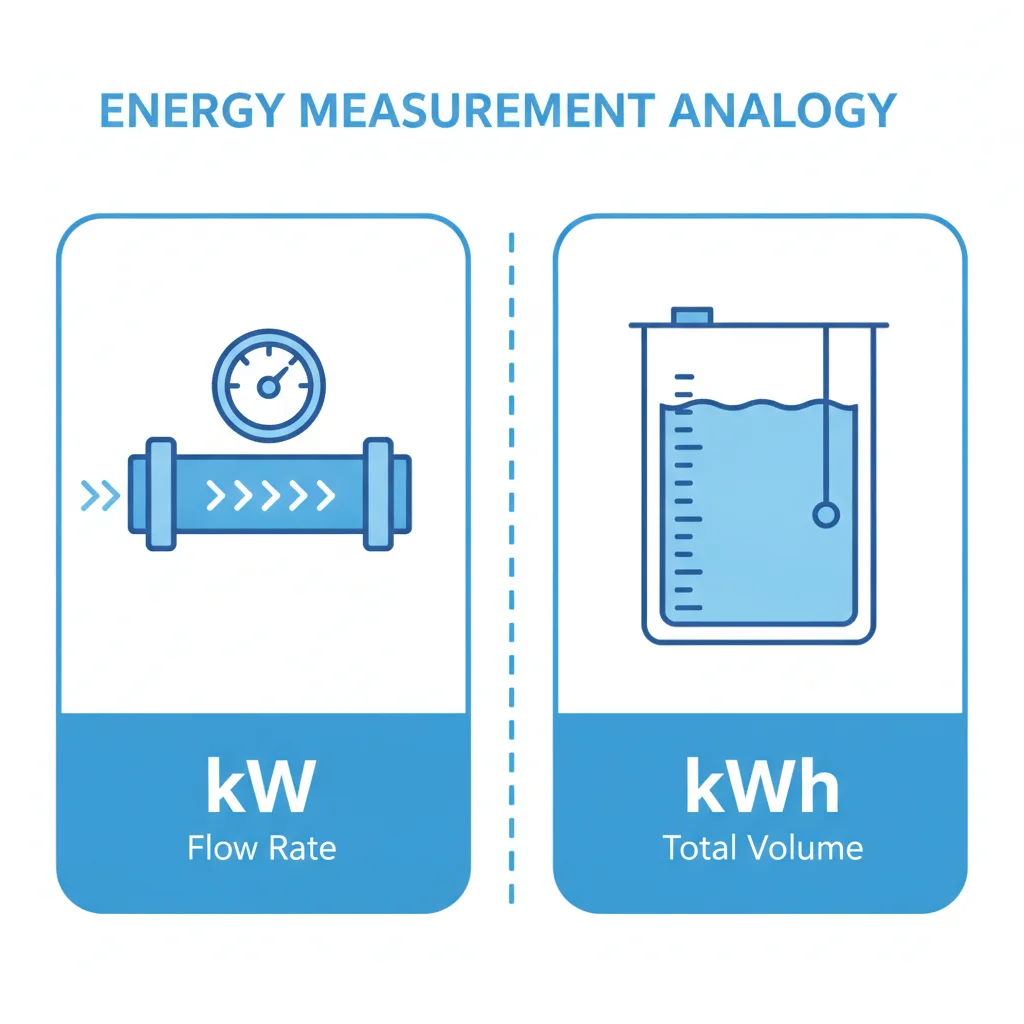
The two terms that trip up new EV owners most often are kilowatts (kW) and kilowatt-hours (kWh). They sound nearly identical. They're not.
Kilowatts Measure Rate
A kilowatt measures the rate at which electricity flows — how fast energy is being delivered at any given moment. Think of it like water pressure in a hose. A 150 kW DC fast charger can push 150 kilowatts of power into your battery every hour, assuming your vehicle can accept that rate. The charger's kW rating is its maximum throughput.
Kilowatt-Hours Measure Quantity
A kilowatt-hour measures a quantity of stored energy — how much total electricity is in the tank. Your EV's battery is rated in kWh. A 75 kWh battery holds 75 kilowatt-hours of energy, the same way a gas tank holds 15 gallons. Larger kWh = more range available (all else being equal).
The Connection Between the Two
Here's the simple math that ties them together:
Time to charge (hours) = Energy needed (kWh) ÷ Charger rate (kW)
If you need to add 30 kWh and you're plugged into a 10 kW Level 2 charger, that's 3 hours. Plug into a 150 kW DC fast charger, and the math says 12 minutes — but in the real world, your vehicle's onboard hardware and battery state will likely cap you well below 150 kW. More on that shortly.
Kilowatt (kW)
A unit of power measuring the rate at which electricity is delivered. A charger rated at 150 kW can transfer 150 kilowatt-hours of energy per hour at peak output. Higher kW = faster charging.
Kilowatt-Hour (kWh)
A unit of energy representing the total amount of electricity stored or transferred. An EV battery rated at 75 kWh holds 75 kilowatt-hours of energy — analogous to the volume of a gas tank.
Miles Per Hour of Charge
A human-readable metric showing how many miles of range are recovered for each hour spent plugged in. It combines charging rate (kW) and vehicle efficiency (miles/kWh) into a single practical figure.
Onboard Charger
The hardware inside your EV that converts AC power from Level 1 and Level 2 outlets into DC power for the battery. Its kilowatt rating is the hard ceiling for AC charging speed, regardless of what the station can supply.
DC Fast Charging (DCFC)
A charging method that delivers direct current directly to the battery, bypassing the onboard charger. Enables rates from 50 kW to 350 kW and significantly shorter charge times compared to Level 2.
State of Charge (SOC)
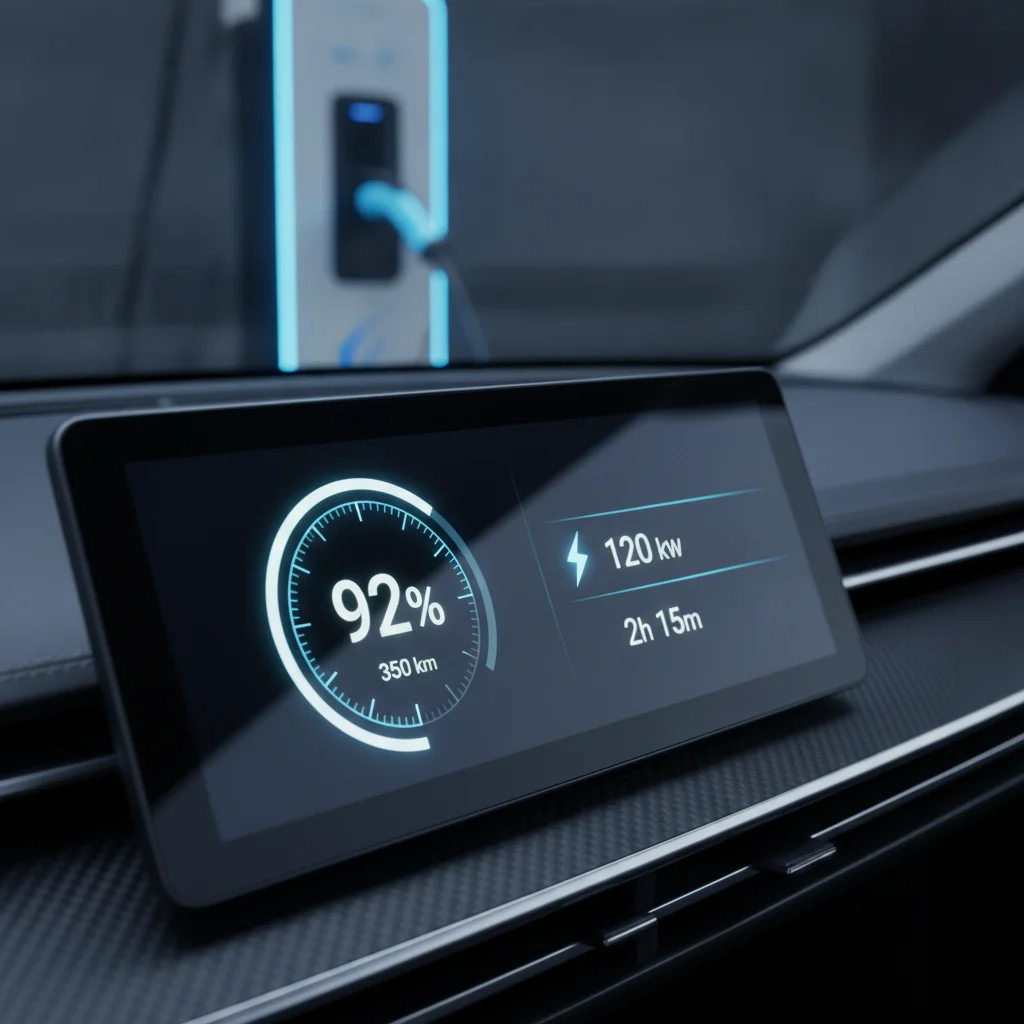
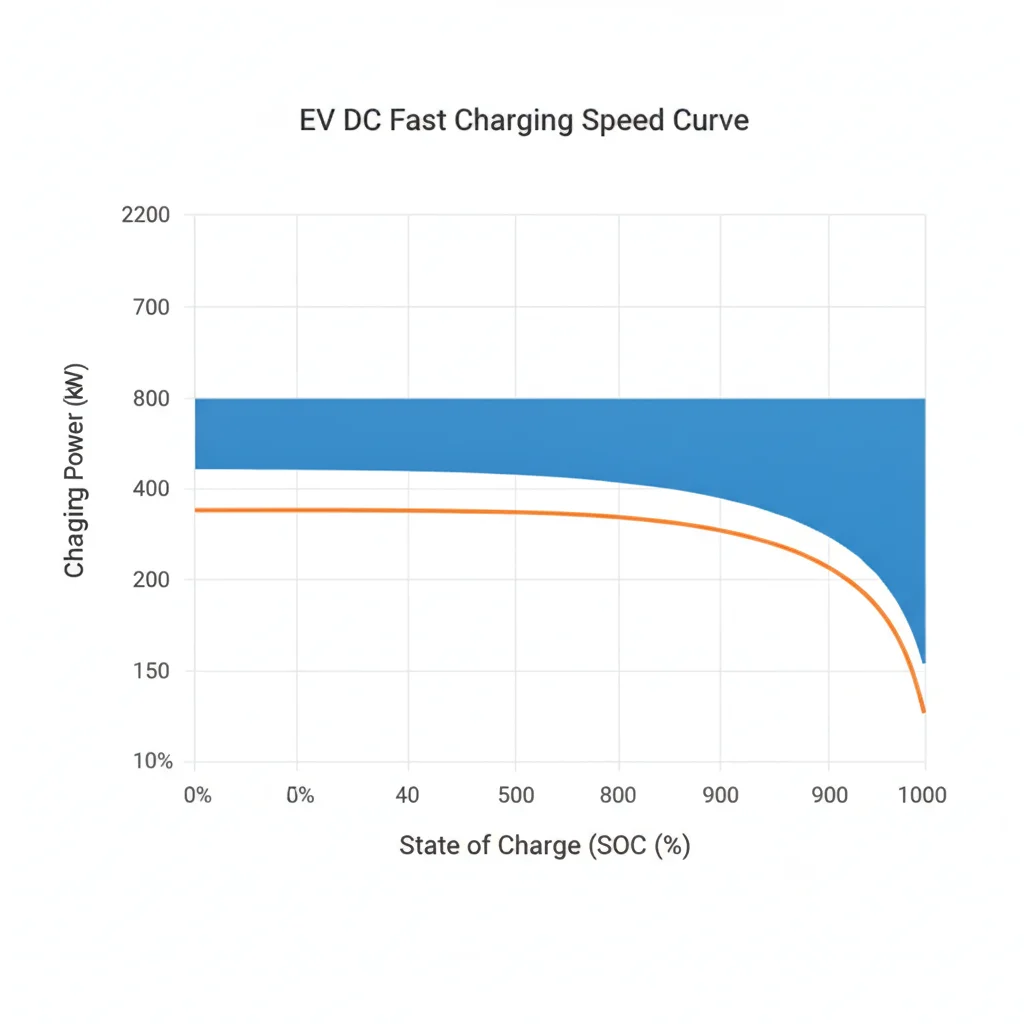
The current battery level expressed as a percentage of total capacity (0–100%). Charging speed on DC fast chargers is highly dependent on SOC, with peak rates available primarily between 10% and 80%.
Battery Preconditioning
A feature on some EVs that automatically warms or cools the battery to an optimal temperature before a planned DC fast charging session, maximizing the charging rate upon arrival.
Charge Acceptance Rate
The maximum rate (in kW) at which a specific vehicle's battery system can accept power from a DC fast charger. This figure caps fast-charging speed even when a higher-output charger is available.
The Three Levels of Charging — and Their kW Ranges
Public and home charging infrastructure is organized into three broad levels. Each level operates at a different voltage and delivers power at a different rate.
~5 mi/hr
Range added per hour on Level 1
Based on a typical 1.4 kW Level 1 charge rate and an average EV efficiency of ~3.5 miles/kWh.
~29 mi/hr
Range added per hour on a 7.2 kW Level 2 charger
Assumes 4 miles/kWh efficiency; results vary by vehicle model and onboard charger rating.
18–30 min
Typical 10–80% DC fast charge time (150+ kW)
Based on a 75 kWh battery at sustained 150 kW input under optimal temperature conditions.
80%
SOC ceiling for peak DC fast charging speed
Most EV battery management systems begin tapering charge input at 80% SOC to protect cell longevity.
350 kW
Maximum rated output of current CCS fast chargers
Per CharIN's Combined Charging System specification; few production vehicles currently accept more than 270 kW.
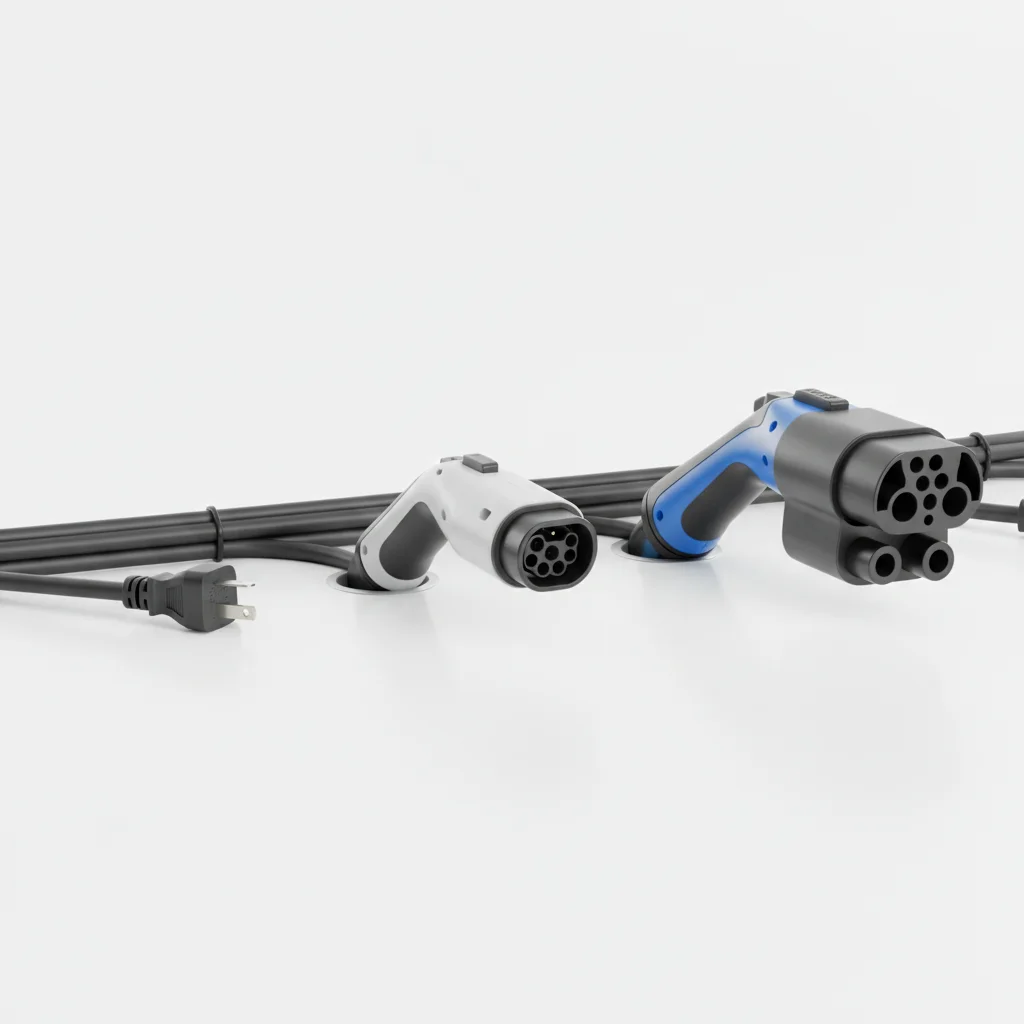
Level 1: Standard Household Outlet
Level 1 uses a standard 120-volt AC outlet — the same kind you'd use for a lamp. Charging rate: roughly 1.2 to 1.9 kW. At that rate, you gain approximately 3–5 miles of range per hour of charging. Level 1 is effectively useless for road tripping but workable as an overnight top-up for short daily commuters driving fewer than 30–40 miles a day.
Level 2: The Workhorse of Home and Destination Charging
Level 2 uses a 240-volt AC circuit (the same voltage as a clothes dryer). Home charging units and most public destination chargers operate at this level. Depending on the hardware, Level 2 delivers between 3.3 kW and 19.2 kW. At a common home charger rate of 7.2 kW, most drivers gain 20–30 miles of range per hour.
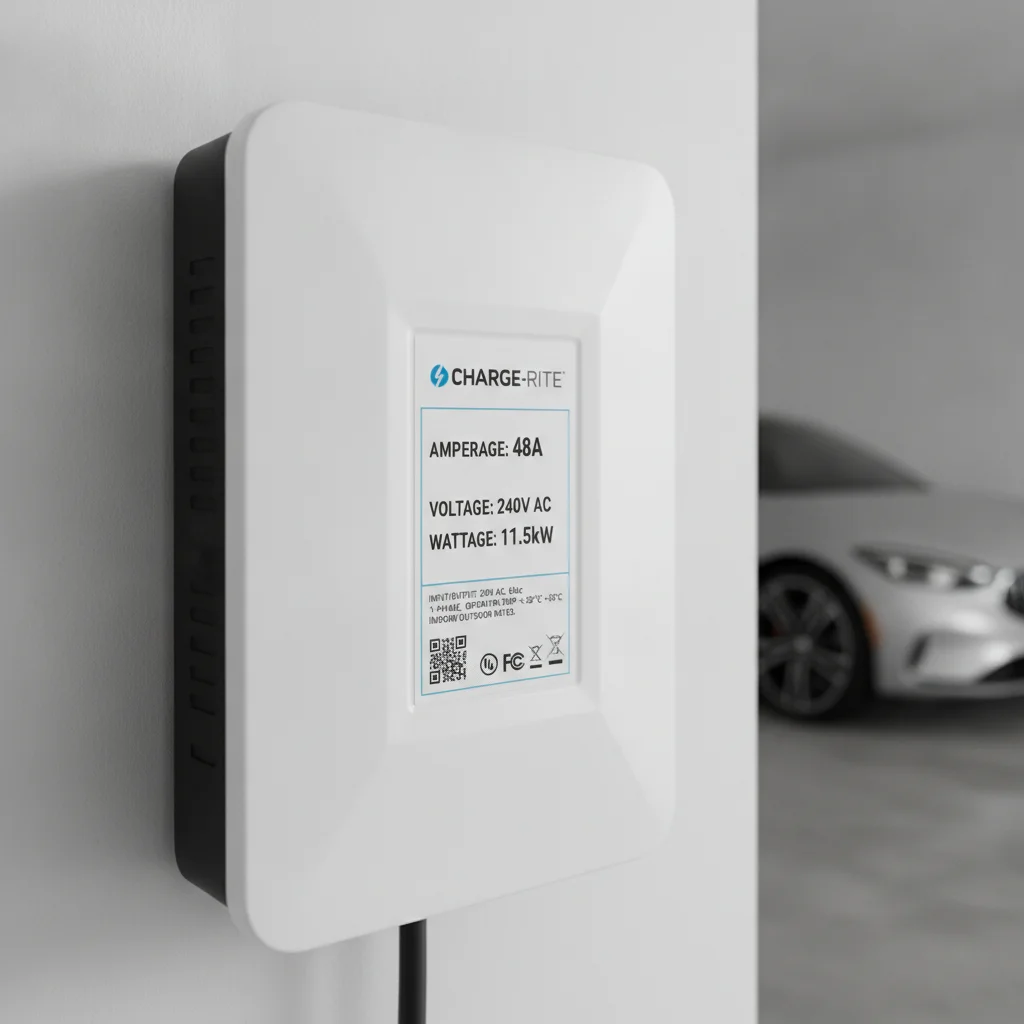
The critical nuance: your car's onboard charger sets the ceiling. A vehicle with a 7.2 kW onboard charger will never pull more than 7.2 kW from a Level 2 station, even if the station can supply 11.5 kW or 19.2 kW. How an Onboard Charger Works — and Why Its Kilowatt Rating Matters explains exactly why this surprises so many new owners.
Level 3 / DC Fast Charging (DCFC)
DC fast chargers bypass the onboard charger entirely and push direct current straight into the battery pack. This is why they can charge so much faster. Rates range from about 50 kW to 350 kW, with most real-world sessions landing between 100 kW and 250 kW depending on the vehicle and battery state of charge. A 10–80% charge on a 75 kWh battery at a sustained 150 kW would take roughly 27 minutes in ideal conditions — though charging rates slow significantly above 80% as the battery management system tapers input to protect cells.
Miles Per Hour of Charge: The Human-Readable Metric
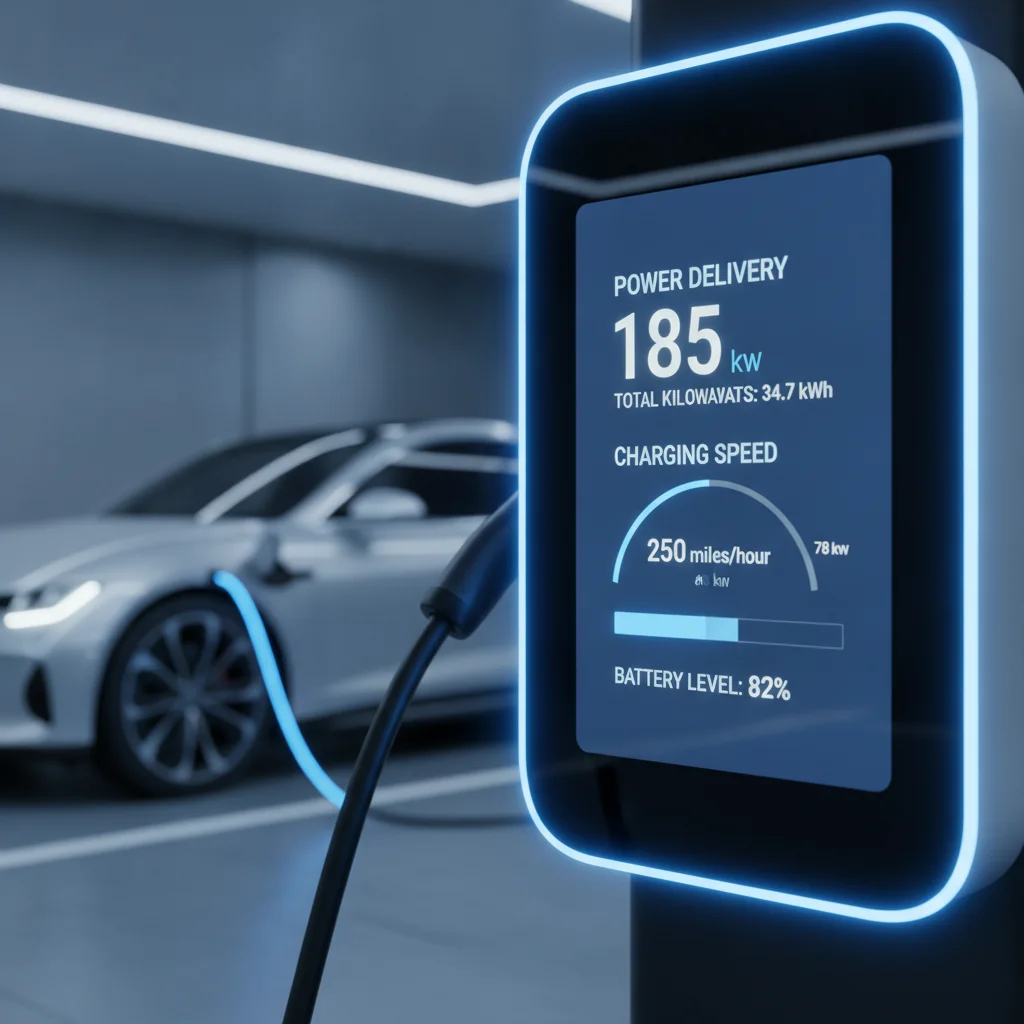
Kilowatts are useful for doing math. Miles per hour of charge (mi/hr) is useful for making decisions. Most charging apps, vehicle dashboards, and station displays now show both, and mi/hr is the number that tells you what you actually want to know: How much range am I recovering right now?
How Miles Per Hour of Charge Is Calculated
The conversion from kW to mi/hr depends on your specific vehicle's energy efficiency:
Miles per hour of charge = Charging rate (kW) × Vehicle efficiency (miles/kWh)
A vehicle that gets 4 miles per kWh plugged into a 7.2 kW Level 2 charger recovers about 29 miles of range per hour. That same vehicle on a 150 kW DC fast charger (assuming it could accept 150 kW) would theoretically recover 600 miles per hour — obviously impossible in practice, but the math shows you why faster chargers feel so dramatic on short stops.
Why Mi/Hr Varies Between Vehicles on the Same Charger
Two different EVs plugged into the same 50 kW charger will display different mi/hr figures because their efficiency ratings differ. A truck that achieves 2.5 miles/kWh gains 125 miles per hour at 50 kW. A compact sedan at 4.0 miles/kWh gains 200 miles per hour at the same station. The charger is identical; the vehicles are not.
This is why range estimates and charging time estimates in EV reviews always need to specify which vehicle — not just which charger — they're referencing.
Real-World Charging: Where the Numbers Break Down
Rated charging speeds and real-world charging speeds rarely match. Several factors consistently push actual charging rates below the theoretical ceiling.
Battery State of Charge (SOC)
DC fast charging operates at peak speed only within a specific SOC window — typically 10% to 80%. Below 10%, some vehicles throttle input to protect deeply discharged cells. Above 80%, the battery management system deliberately slows charging to prevent heat damage and extend long-term battery health. If you arrive at a fast charger with a 40% battery and want to leave at 80%, you'll see near-peak speeds throughout. If you want to go from 80% to 100%, plan on that final 20% taking nearly as long as the first 40%.
Temperature
Cold batteries charge more slowly. Lithium-ion cells have higher internal resistance when cold, which limits how fast they can accept current. Many modern EVs include battery preconditioning systems that use navigation data to warm the battery before arriving at a planned DC fast charger. Drivers who skip preconditioning — or whose vehicles don't support it — may see initial fast-charge speeds 30–50% below rated figures on cold days.
Network Congestion and Station Conditions
Multi-stall DC fast charging locations often share power among stalls. At a busy station, arriving when adjacent stalls are occupied can reduce your available charging rate. The degree of power sharing varies widely by network and station design.
Power Sharing Can Reduce Your Session Rate
Many DC fast charging stations distribute a fixed power budget across multiple active stalls. If two vehicles are charging simultaneously at a location designed to share power, each may receive half the maximum available rate. Before choosing a stall, check whether the station displays per-stall power output — some networks surface this information in their apps. Arriving at an uncongested station or choosing a dedicated-power stall can meaningfully cut your wait time.
Not All Level 2 Chargers Are Equal
The Level 2 label covers a wide range of hardware — from 3.3 kW portable units to 19.2 kW commercial stations. Always check both the station's output rating and your vehicle's onboard charger limit before assuming you'll get maximum Level 2 speed. Some older EVs shipped with 3.3 kW or 6.6 kW onboard chargers that will never pull more than that figure regardless of station capability.
Charger Spec vs. Vehicle Acceptance Rate
Always check both numbers: the charger's maximum output and your vehicle's maximum DC charge acceptance rate. If your car accepts up to 125 kW and you're at a 350 kW charger, you'll charge at 125 kW. If your car accepts 250 kW but the charger only puts out 50 kW, you charge at 50 kW. The lower of the two numbers always wins. For a methodical look at decoding charger specifications, How to Read an EV Charger Spec Sheet Without Getting Lost in the Numbers is a useful companion to this reference.
Understanding what actually governs your charge rate — charger, car hardware, and battery state — is covered in depth in How Charging Speed Is Actually Determined.
Putting It All Together: A Practical Lookup Reference
The table below consolidates the most common charging scenarios into a single quick-reference format. Figures assume a 75 kWh battery, 4.0 miles/kWh efficiency, and charging from 20% to 80% (a 45 kWh add).
| Charging Level | Typical Rate | Miles/Hr Added | Time to Add 45 kWh (20–80%) |
|---|---|---|---|
| Level 1 (120V) | 1.4 kW | ~5–6 mi/hr | ~32 hours |
| Level 2 Home (7.2 kW) | 7.2 kW | ~29 mi/hr | ~6.25 hours |
| Level 2 High-Power (11.5 kW) | 11.5 kW | ~46 mi/hr | ~4 hours |
| DC Fast (50 kW) | 50 kW | ~200 mi/hr | ~54 minutes |
| DC Fast (150 kW) | 150 kW | ~600 mi/hr | ~18 minutes |
| DC Fast (250 kW) | 250 kW | ~1,000 mi/hr | ~11 minutes |
Note: mi/hr figures above 150 kW are theoretical maximums. Real-world speeds vary based on vehicle acceptance rate, battery temperature, and SOC. The values shown assume ideal conditions.
Once you understand what you're paying for in terms of kWh delivered, the next logical step is understanding how charging networks price that energy. Networks use per-minute, per-kWh, and session-based models — each of which interacts differently with your charging speed. How Charging Pricing Models Work Across Major Networks walks through what each model means for your wallet.
To estimate what all this costs you monthly, EV Charging Cost Calculator: Understanding the Inputs That Matter explains the specific variables — battery size, efficiency, kWh rate — that determine your actual bill. And if you want a comprehensive glossary of the cost-related terminology you'll encounter, Key Terms Every EV Owner Needs to Understand Charging Costs is worth bookmarking alongside this page.
U.S. DOE Alternative Fuels Station Locator
The Department of Energy's interactive map lets you find public charging stations by level, network, and connector type. Essential for planning routes with Level 2 and DC fast charging stops.
PlugShare
A crowd-sourced app where EV drivers report real-world charging speeds, station reliability, and wait times — filling the gap between rated and actual kW output at specific locations.
EV Charging Cost Calculator: Understanding the Inputs That Matter
Once you know your charge rate in kW, this companion guide explains how to translate that into a monthly charging bill using your battery size, efficiency rating, and local electricity rates.
How Charging Pricing Models Work Across Major Networks
Per-minute pricing penalizes drivers at slow charge rates; per-kWh pricing rewards them. This guide breaks down how each pricing model interacts with charging speed so you can choose networks strategically.
All claims are backed by peer-reviewed research. Sources on request.