Key Takeaways
Option A
Hardwired Level 2 Charger
The permanent, high-capacity home charging solution.
Best for: Homeowners who want maximum charging amperage, a clean installation, and plan to stay in their home long-term.
Option B
Plug-In Level 2 Charger
The flexible, relocatable alternative for practical owners.
Best for: Renters, frequent movers, or owners who want the option to take their charger with them or swap units easily.
If you own your home and plan to stay long-term
Hardwired Level 2 Charger
A hardwired unit gives you the highest available amperage, a cleaner aesthetic, and adds genuine resale value to your home without the clutter of an outlet and plug.
If you're renting or expect to move within a few years
Plug-In Level 2 Charger
A plug-in charger lets you take the unit with you when you move, avoiding the cost of buying a second charger. Installation is simpler and more landlord-friendly.
If you drive a large EV with a high-capacity onboard charger
Hardwired Level 2 Charger
Vehicles like the Ford F-150 Lightning or Rivian R1T can accept 80-amp charging. Only a hardwired EVSE can deliver that — plug-in units cap out lower.
If you want to keep installation costs as low as possible
Plug-In Level 2 Charger
Running a NEMA 14-50 outlet circuit is typically cheaper than a full hardwired installation, and you can switch charger brands or models later without rewiring anything.
If you're installing a charger at a secondary property or vacation home
Plug-In Level 2 Charger
The flexibility to unplug and transport the charger makes more sense for occasional-use locations where a permanent dedicated install isn't justified.
What Actually Separates These Two Installation Types
Before getting into the trade-offs, it helps to understand what the terms actually mean — because the marketing around home EV chargers can blur the distinction.
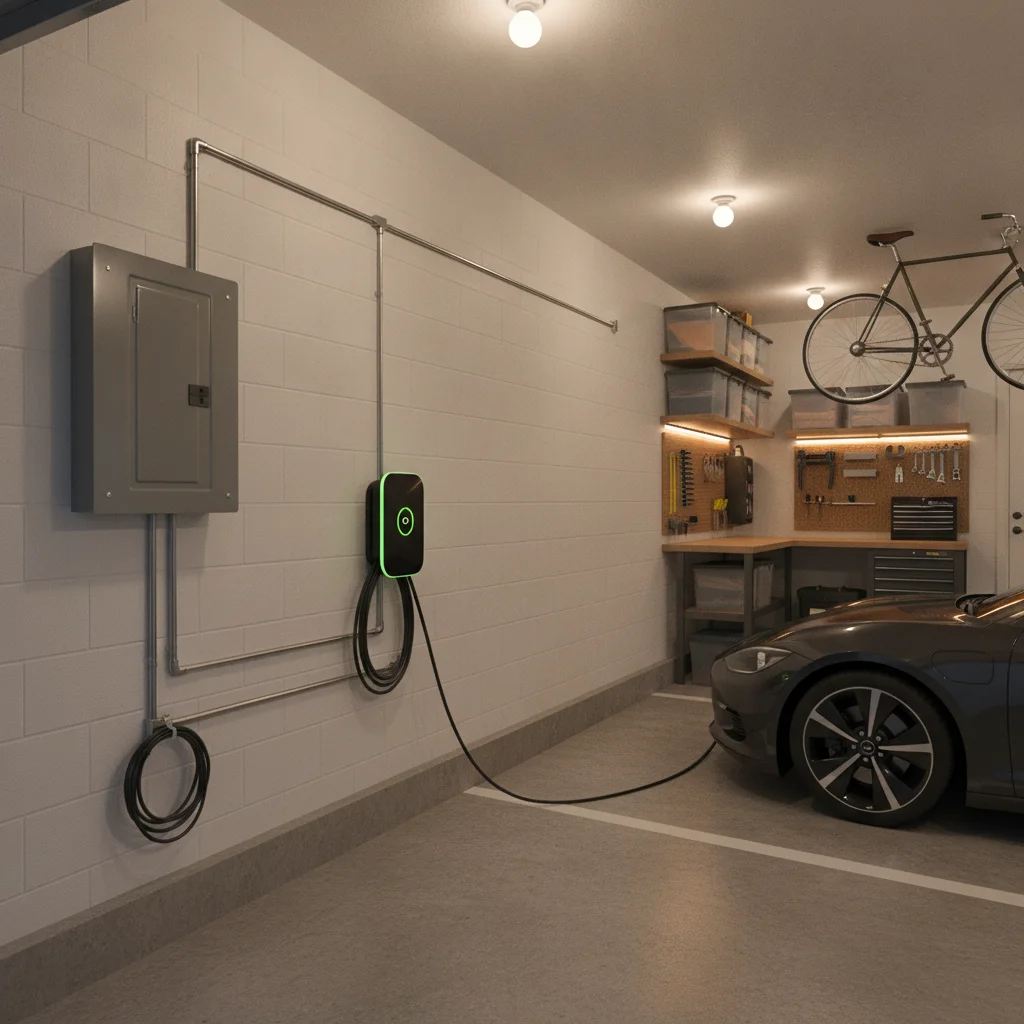
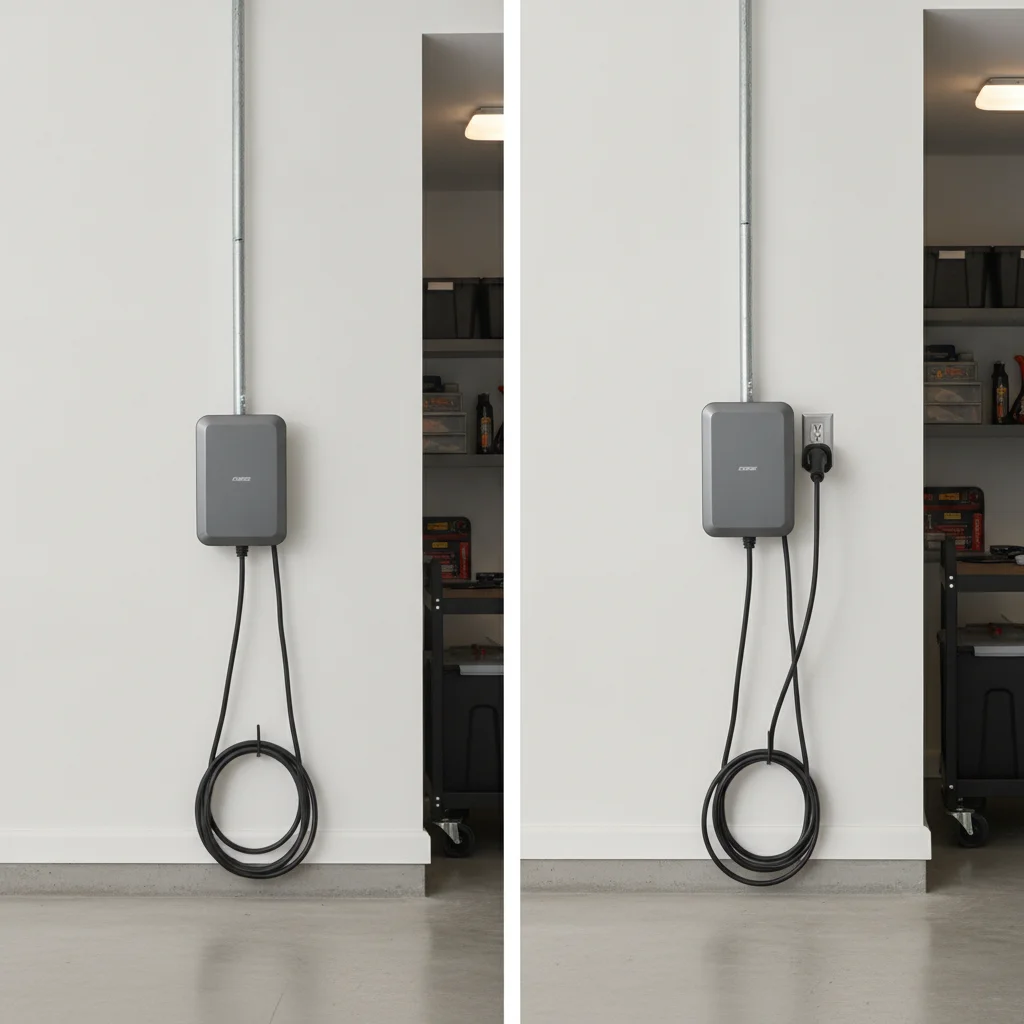
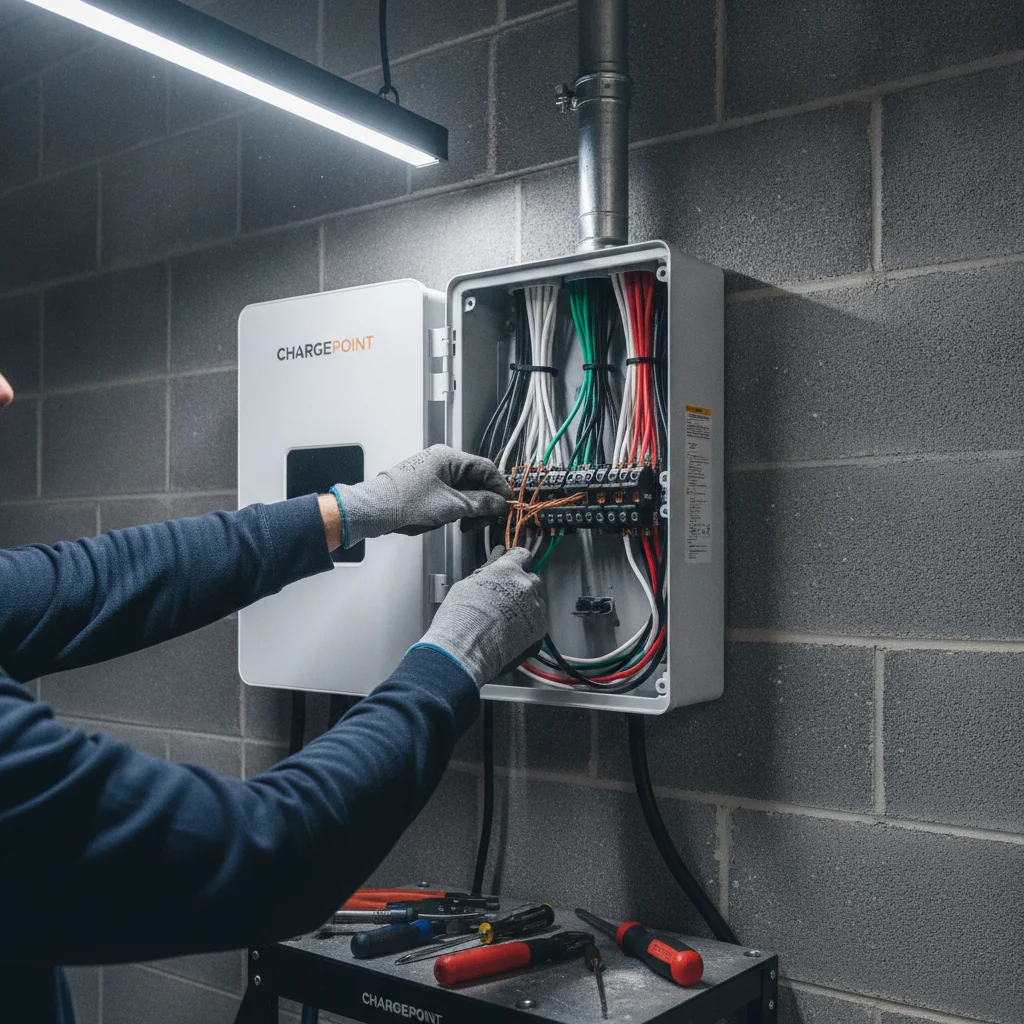
A hardwired Level 2 charger (also called a hardwired EVSE — Electric Vehicle Supply Equipment) connects directly to your home's electrical panel via dedicated wiring, with no plug or outlet in between. An electrician runs wire from your panel to the charger location and terminates it inside the unit itself. The charger is, in the most literal sense, part of your home's wiring.
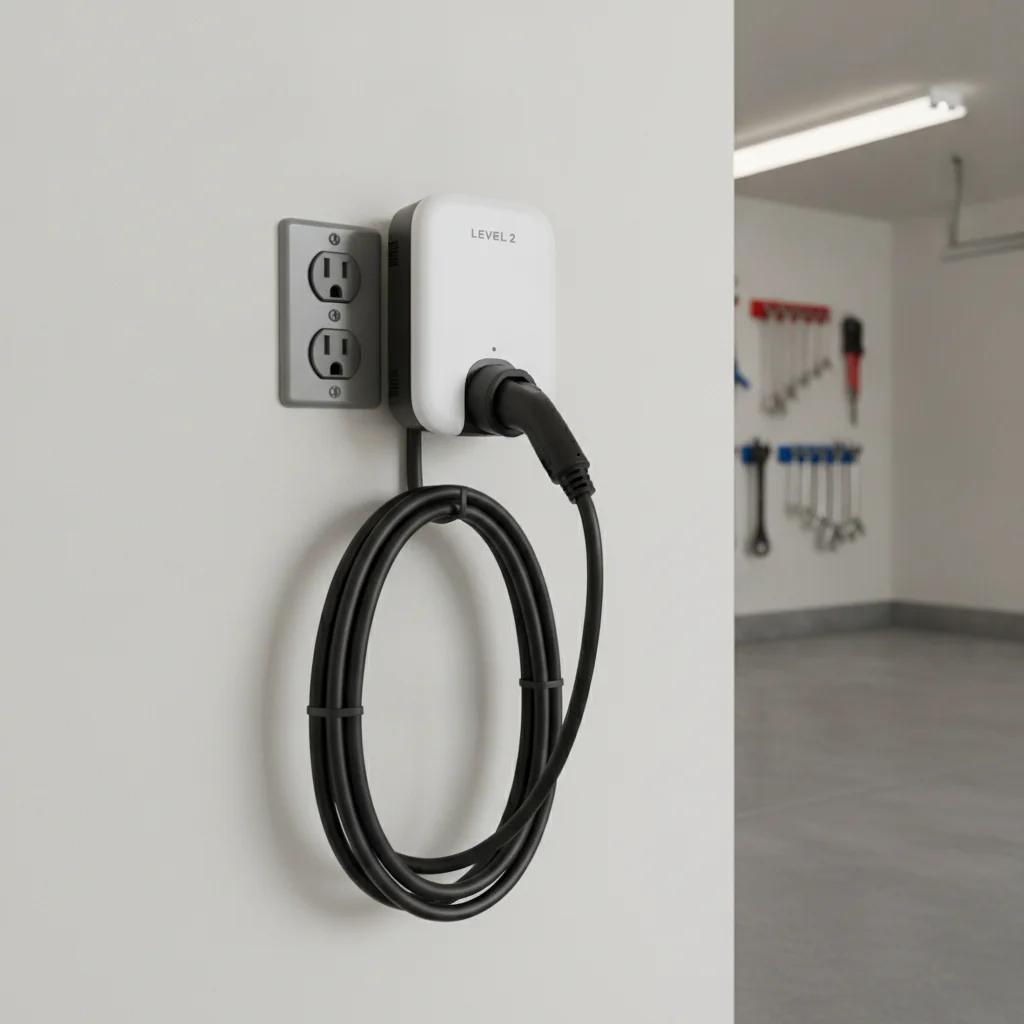
A plug-in Level 2 charger operates through a dedicated outlet — most commonly a NEMA 14-50 (the same type used for electric ranges and RVs) or, in some cases, a NEMA 6-50 or NEMA 14-30. The charger unit has a built-in cord and plug that connects to that outlet. The electrician installs the outlet and dedicated circuit; you handle the charger hardware yourself.
In both cases, you need a licensed electrician to install a dedicated circuit. The difference is what happens at the endpoint: a hardwired connection versus a receptacle-and-plug. That single distinction drives almost every other difference in this comparison — amperage, flexibility, cost, and safety profile.
If you're still weighing whether you need Level 2 at all, see Level 1 vs Level 2 Home Charging for a clear breakdown of what the speed difference actually means day to day.
Charging Speed and Amperage: Where Hardwired Has a Real Edge
The most technically significant difference between the two installation types is amperage ceiling — and it matters more for some vehicles than others.
NEMA 14-50 outlets are rated for 50 amps, but the NEC requires that continuous loads not exceed 80% of a circuit's rated capacity. That means a 50-amp circuit delivers a usable maximum of 40 amps to the charger. Most plug-in EVSE units are designed around this constraint and deliver between 32 and 40 amps — translating to roughly 7.7 to 9.6 kW of actual power delivery.
A hardwired charger is not constrained by outlet ratings in the same way. Manufacturers like ChargePoint, Emporia, and Enel X Way offer hardwired units rated at 48 or even 80 amps — capable of delivering up to 19.2 kW when paired with a vehicle onboard charger that can accept that rate. Most current EVs have onboard chargers capped at 11.5 kW or 7.2 kW, so the real-world difference won't always show up at the vehicle level today. But as automakers increase onboard charger capacity — which is already happening — a hardwired installation future-proofs your setup.
| Criterion | Hardwired Level 2 Charger | Plug-In Level 2 Charger |
|---|---|---|
| Max usable amperage | Up to 80A (48–80A common) | Up to 40A (limited by outlet) |
| Max power delivery | Up to 19.2 kW | Up to 9.6 kW |
| Typical installation cost (labor) | $400–$800+ | $200–$500 |
| Charger portability | Not portable (requires electrician to move) | Portable (unplug and take with you) |
| Charger swap ease | Requires electrician | Self-service (just plug in new unit) |
| Suitable for renters | Rarely — landlord approval difficult | More feasible with landlord consent |
| Future-proofing for higher-amperage EVs | Yes — supports upcoming higher rates | Limited by outlet amperage ceiling |
| Permit required | Yes (in most jurisdictions) | Yes (in most jurisdictions) |
| Resale value contribution | Higher — treated as home fixture | Lower — considered personal property |
40A
Max continuous amps via NEMA 14-50 outlet
The NEC 80% continuous load rule caps a 50-amp circuit at 40 usable amps, limiting plug-in charger output to roughly 9.6 kW.
19.2 kW
Peak hardwired Level 2 charging rate
An 80-amp hardwired EVSE can deliver up to 19.2 kW — roughly double the maximum output of a typical plug-in charger on a NEMA 14-50 outlet.
$200–$800+
Typical electrician labor range for Level 2 install
According to industry installer data, plug-in outlet installs average $200–$500 while hardwired terminations add $400–$800 or more, excluding panel upgrades.
~25 miles
Range added per hour on a 32-amp plug-in charger
A 32-amp Level 2 charger adds approximately 20–25 miles of range per hour for most mainstream EVs — sufficient for the average 37-mile US daily commute.
37 miles
Average American daily commute by distance
According to the U.S. Department of Transportation, the average American drives roughly 37 miles per day — well within what any Level 2 charger can restore overnight.
One practical note: if your current EV has a 7.2 kW onboard charger, you will not charge faster with an 80-amp hardwired unit than with a 40-amp plug-in. The bottleneck is the vehicle, not the charger. The speed advantage of hardwired only materializes if your car can actually accept higher power.
Installation Cost, Complexity, and What the Electrician Actually Does
Both installation types require a licensed electrician for the circuit work. Where they differ is in the scope of that work — and consequently, the cost.
For a plug-in installation, the electrician runs a dedicated circuit from your panel to the outlet location, installs the appropriate receptacle, and ensures everything is properly grounded and protected (GFCI protection is typically required). You plug in your charger, and you're done. In many cases, the labor for a straightforward outlet installation in an attached garage runs between $200 and $500, not counting panel upgrades or conduit runs. The outlet is a commodity; you can swap charger brands or models without touching it.
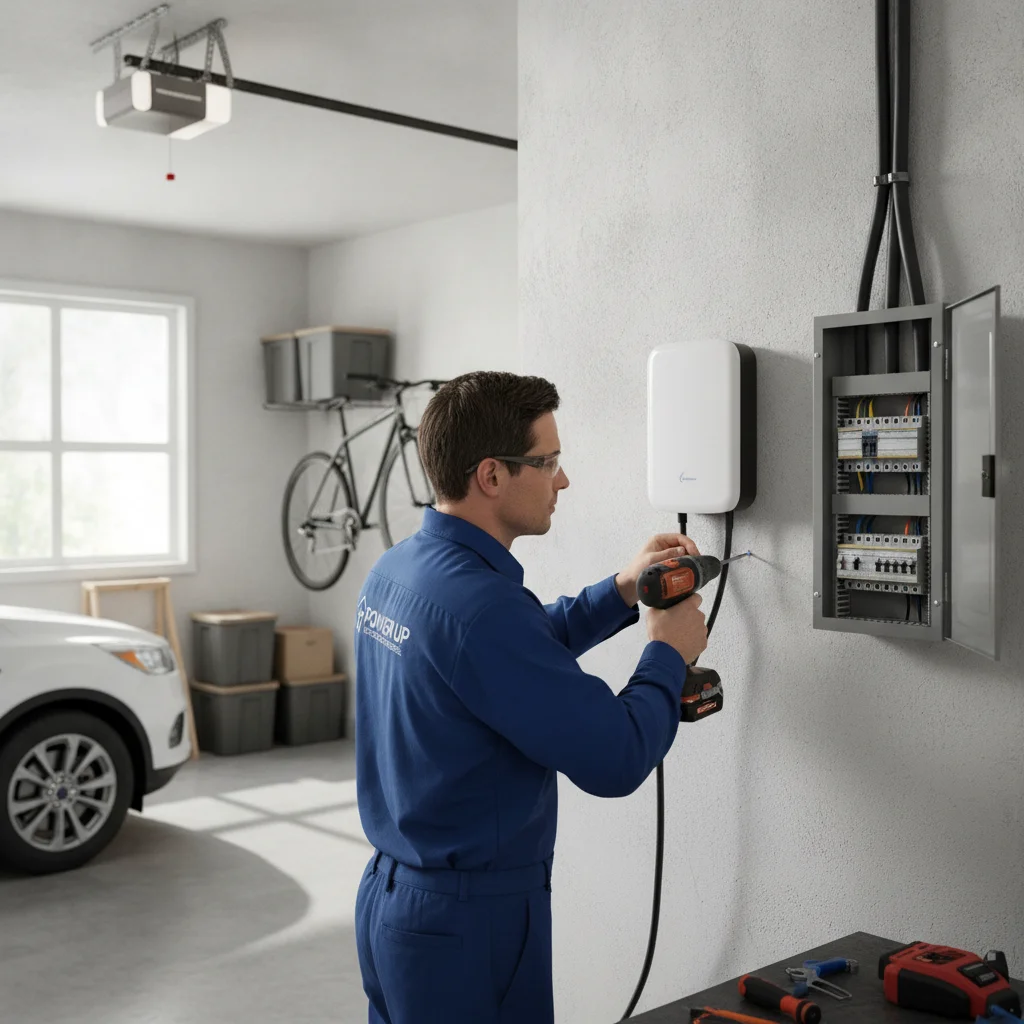
For a hardwired installation, the electrician does all of the above plus terminates the circuit wiring directly into the charger unit. The charger must be mounted on the wall first (or simultaneously), and the electrician handles the final connection. This adds labor time, and if you ever want to replace the charger, you need an electrician back to disconnect and reconnect the new unit. Labor cost for hardwired installs typically runs $400 to $800 or more, again depending on panel distance and conduit requirements.
The wildcard in both scenarios is the distance between your electrical panel and your parking spot. Conduit, wiring, and cable length drive installation costs more than most people expect. A 60-foot run adds material cost regardless of which installation type you choose.
For a detailed breakdown of what drives overall project costs, see How Much Does It Really Cost to Install a Level 2 Home Charger.
Panel Upgrades Can Affect Both Options Equally
If your electrical panel lacks capacity for a new 40- or 50-amp dedicated circuit, you may need a panel upgrade regardless of whether you choose hardwired or plug-in. Panel upgrades typically cost $1,500–$4,000 and are the single largest cost variable in any Level 2 charger installation. Get a panel assessment from your electrician before comparing installation quotes.
Not All Chargers Work With Both Installation Types
Some EVSE models are sold specifically as hardwired-only units (no plug) while others are plug-in only. A growing number offer dual-mode capability — they ship with a plug but can be converted to hardwired installation by an electrician. Check the spec sheet before purchasing, especially if you expect your installation type to change in the future.
Federal Tax Credits Apply to Both Types
The federal Alternative Fuel Vehicle Refueling Property Credit (30C) covers 30% of the cost of EV charging equipment and installation, up to $1,000 for residential installations, regardless of whether you choose hardwired or plug-in. Income and location requirements apply. Consult IRS Form 8911 or a tax professional to confirm eligibility.
Flexibility, Portability, and What Happens When You Move
This is where the plug-in format earns its strongest argument. If you move, you unplug the charger, take it with you, and plug into a compatible outlet at your new place — assuming one exists or gets installed. The outlet you leave behind is an asset for the next EV owner of your home. No electrician required for the move.
With a hardwired charger, moving involves a deliberate choice: leave the unit behind (it stays with the house), or pay an electrician to disconnect it, patch the wiring, and potentially reinstall it at your new address. Neither option is catastrophic, but the friction is real. Many homeowners treat hardwired chargers as home fixtures — like a dishwasher — and simply leave them. This can be a selling point, but only if your home buyer drives an EV.
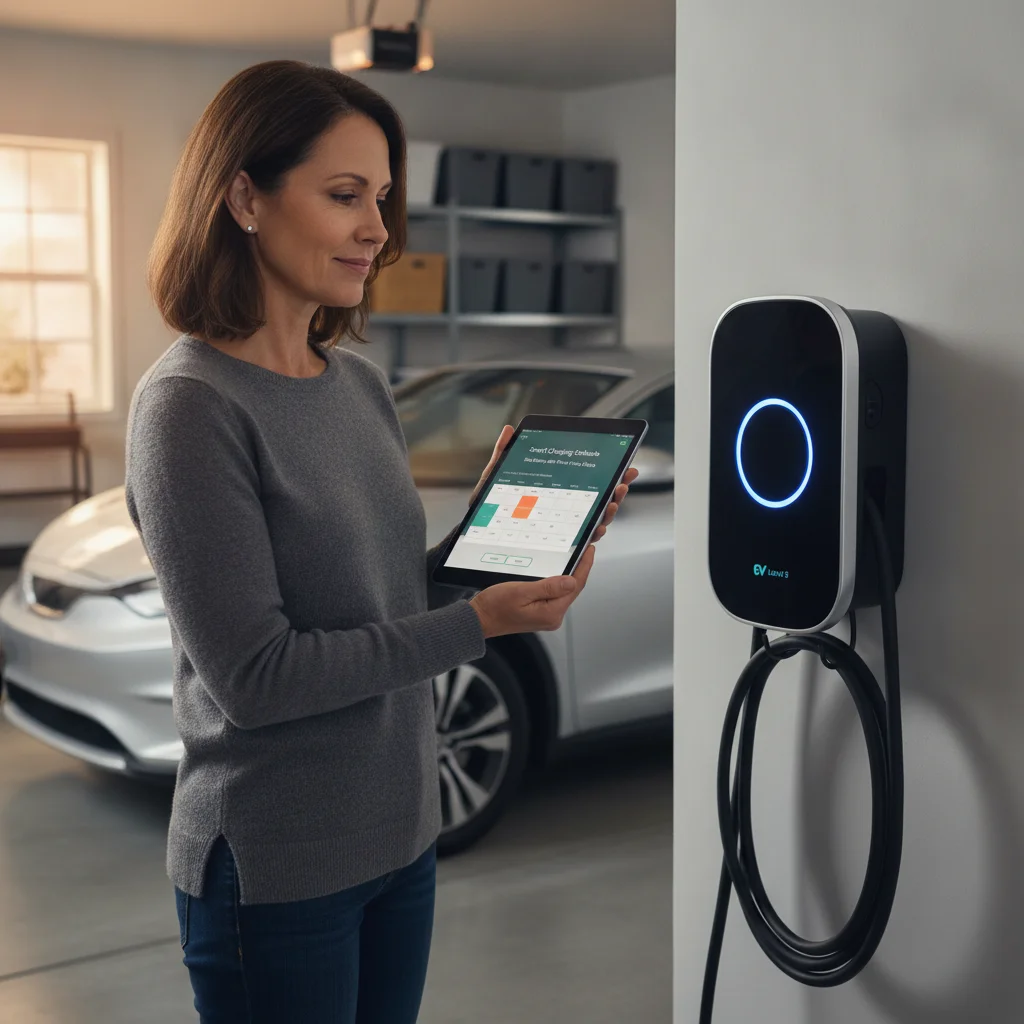
Flexibility also matters when technology changes. Charger hardware evolves quickly. Plug-in owners can swap to a newer unit (or a unit with better smart-charging features) by purchasing a new charger and plugging in. Hardwired owners need an electrician for the changeover. Given that many smart chargers now offer time-of-use scheduling, solar integration, and utility demand response programs, this is a real-world consideration — not just a hypothetical.
For renters, the calculus shifts significantly. Most leases require landlord permission for electrical modifications, and a permanent hardwired install is a tougher ask than a single outlet addition. Some landlords will approve a NEMA 14-50 outlet installation — especially if you agree to leave it — but very few will agree to a tenant's hardwired charger. See Home Charging Equipment and Renters for more on what you need to sort out before installing anything as a renter.
Safety, Code Compliance, and Insurance Considerations
Both installation types are safe when done correctly by a licensed electrician using properly listed equipment. The anxiety some people have about outlet-based charging — the idea that a plug somehow introduces a weak point — is largely unfounded when the outlet and circuit are correctly sized and the EVSE is UL-listed.
That said, there are legitimate nuances worth knowing:
- Heat at the receptacle: A NEMA 14-50 outlet that sees daily high-amperage charging cycles can experience wear over time. Some plug-in chargers now include temperature monitoring at the plug. Periodic inspection of the outlet is good practice — a discolored or warm plug is a sign to have an electrician check the connection.
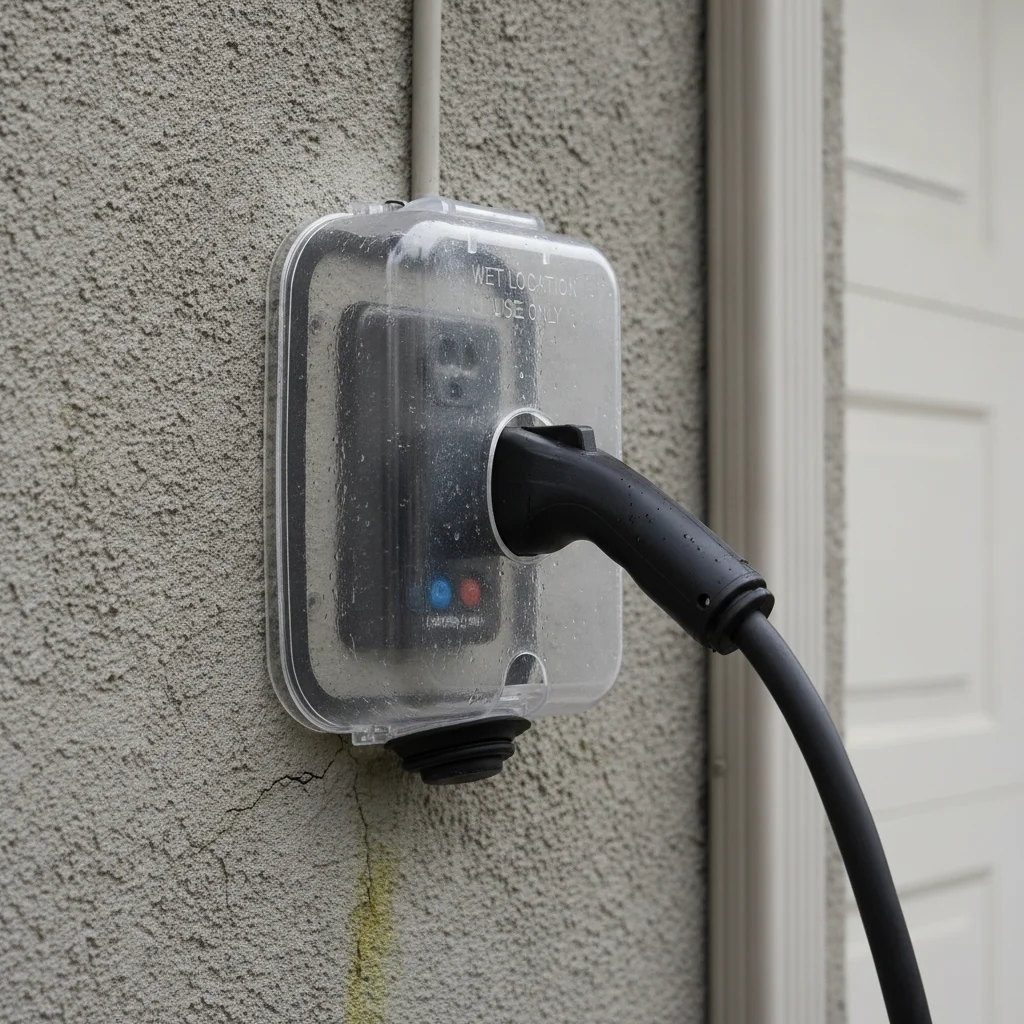
- Outdoor installations: If your charger lives outside, both hardwired and plug-in units need appropriate weatherproof enclosures and outlet covers. A NEMA-rated weatherproof in-use cover for an outdoor outlet is required by code in most jurisdictions. See Indoor vs Outdoor Charger Placement for how climate and placement interact with code requirements.
- Permits and inspections: Either type of installation typically requires a permit and inspection. Skipping this step isn't just a code violation — it can void your homeowner's insurance coverage if a fire is traced to unpermitted electrical work. Always get the permit.
- Homeowner's insurance: Your charger — whether hardwired or plug-in — may or may not be covered under your existing policy. Some insurers treat a hardwired unit as a home fixture (covered under dwelling coverage) and a plug-in unit as personal property (covered under contents). The coverage limits, deductibles, and exclusions differ. Confirm with your insurer before installation.
To understand how your EV charger type affects your overall infrastructure choices — and whether public charging can fill gaps — see Public Charging Networks.
Making the Call: A Practical Decision Framework
Rather than declaring one option universally better, here's how to think through the decision based on your actual situation:
- Do you own your home? If yes, hardwired is worth serious consideration. If no, plug-in (with a NEMA 14-50 outlet) is almost certainly your only practical path.
- What does your EV's onboard charger support? Check your vehicle spec sheet. If your car maxes out at 7.2 kW (roughly 32 amps), a plug-in charger on a 14-50 outlet already delivers near-maximum speed. If your vehicle accepts 11.5 kW or above, a hardwired charger gives you room to grow.
- How long do you plan to stay? Less than three years — plug-in. Five or more years in a home you own — hardwired makes more financial sense over time.
- How often will you swap charger hardware? If you enjoy upgrading to the latest tech or might switch EVs with different connector standards, plug-in wins on flexibility.
- What does your electrician quote? Get quotes for both options before deciding. In some homes — particularly newer builds with panels close to the garage — the cost difference is surprisingly small. In others, the delta is significant.
The decision also connects to how charging infrastructure shapes your broader EV ownership experience. See How Charging Infrastructure Should Shape Your EV Type Decision if you're still in the vehicle selection phase.
Once you've decided on installation type, knowing what to expect from the actual electrician visit removes a lot of uncertainty. The Electrician Visit walks through the installation process step by step.

All claims are backed by peer-reviewed research. Sources on request.