Key Takeaways
Our Verdict
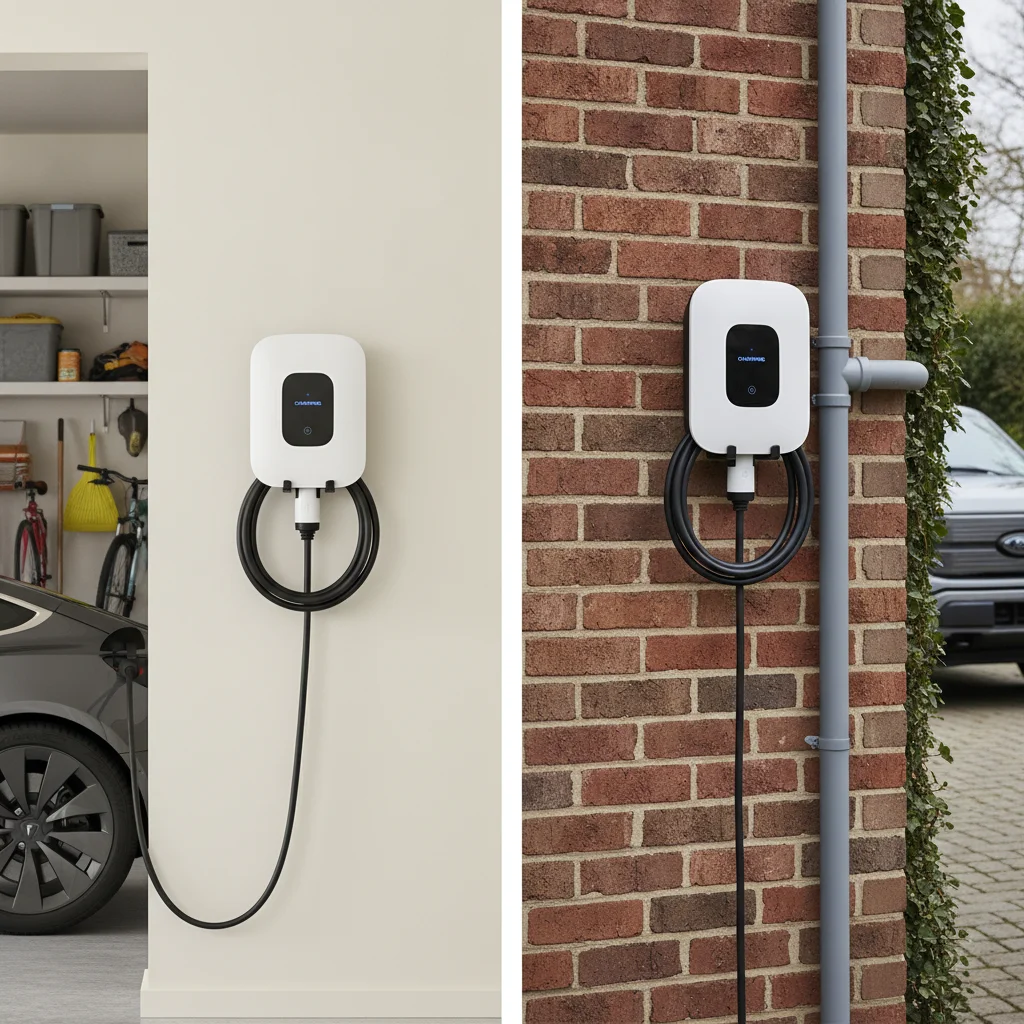
For most homeowners with a garage, indoor installation is the simpler, lower-cost path that protects the equipment and avoids the most demanding weatherproofing requirements. Outdoor placement is the right call when your parking situation demands it — a driveway, carport, or detached garage — but it requires a higher-rated enclosure, conduit-protected wiring, and closer attention to climate-specific stressors. Neither location is inherently unsafe when installed to code; the difference is mostly cost, equipment spec, and long-term maintenance burden.
| Best for | Recommended |
|---|---|
| Homeowners with an attached or detached garage | Indoor charger placement |
| Owners who park in a driveway or open carport | Outdoor charger placement |
| Those in extreme climates (desert heat, northern cold, coastal humidity) | Indoor charger placement where possible |
| Renters or those wanting maximum equipment portability | Indoor plug-in Level 2 charger |
Why Placement Is Not Just a Convenience Decision
Most EV owners zero in on charger brand and power output — 32 amps or 48 amps, smart features or dumb. Placement gets treated as an afterthought, something you sort out with the electrician on install day. That's a mistake. Where you mount a Level 2 EVSE (Electric Vehicle Supply Equipment) determines what equipment you need, what permits apply, how much the run of wire costs, and how many years the unit lasts before salt air, UV, or temperature cycling degrades it.
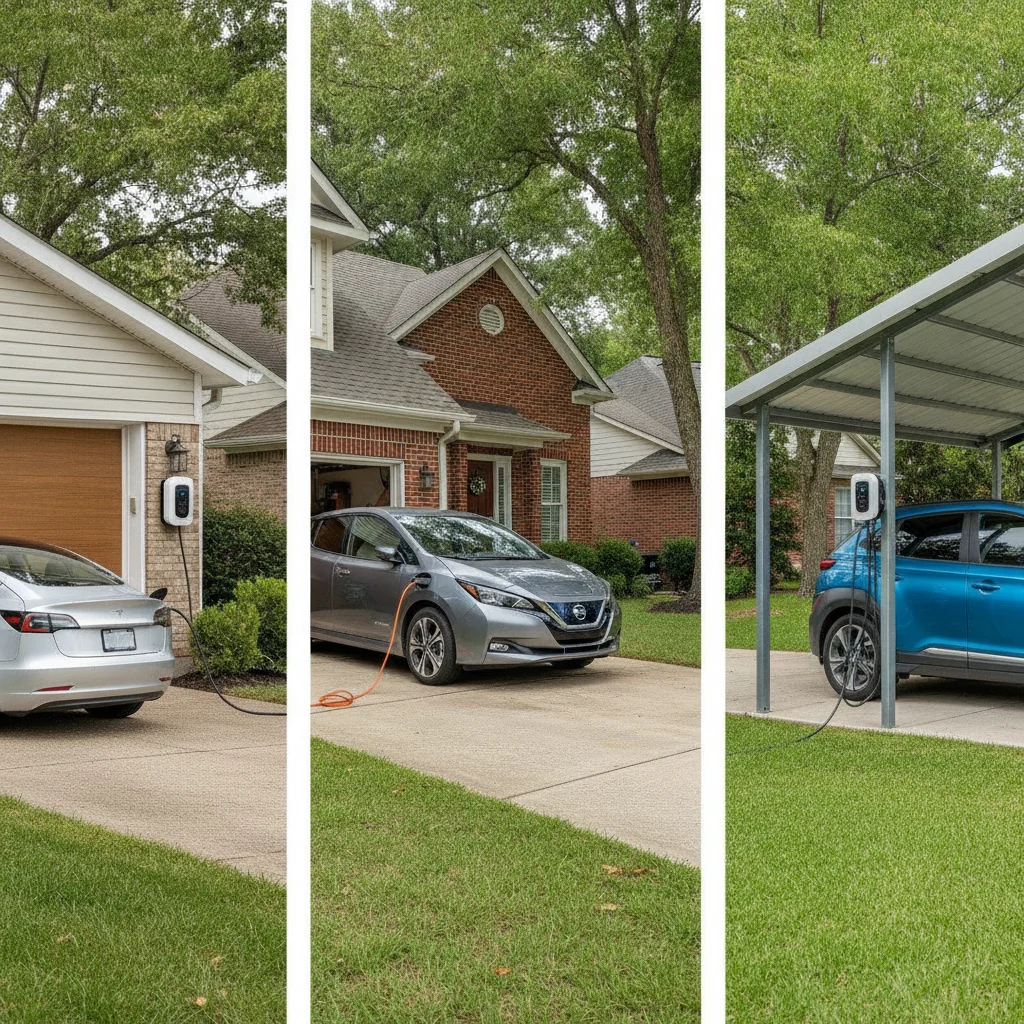
The choice is rarely binary — it's shaped by your parking situation, your climate, your electrical panel's location, and your local code authority's interpretation of the National Electrical Code. Where you park matters enormously — a garage, driveway, and carport each push you toward different solutions in ways that placement alone can't solve.
This comparison walks through the two locations side by side across the dimensions that actually matter: safety standards, weatherproofing ratings, climate effects, cable reach, code compliance, and cost. By the end, you'll have a framework to make the call that fits your home and driving habits — not just the one that's easiest on install day.
Safety Standards: What the Code Actually Requires
The foundational document is NEC Article 625, which covers electric vehicle charging systems. It applies nationwide as a model code, though adoption and amendments vary by state and municipality. Article 625 sets requirements for equipment listing, circuit protection, wiring methods, and — critically for this discussion — enclosure ratings based on environment.
GFCI Protection
Both indoor and outdoor installations require ground-fault circuit interrupter (GFCI) protection on the branch circuit feeding the charger. For Level 2 units operating at 240V, this typically means a GFCI-equipped breaker at the panel, not just a standard outlet GFCI. Some listed EVSE units have GFCI built into the unit itself; confirm with your electrician which approach satisfies your local authority having jurisdiction (AHJ).
Enclosure Ratings: NEMA Classifications
This is where indoor versus outdoor diverges sharply. NEMA (National Electrical Manufacturers Association) enclosure ratings define what environments a charger's housing can withstand:
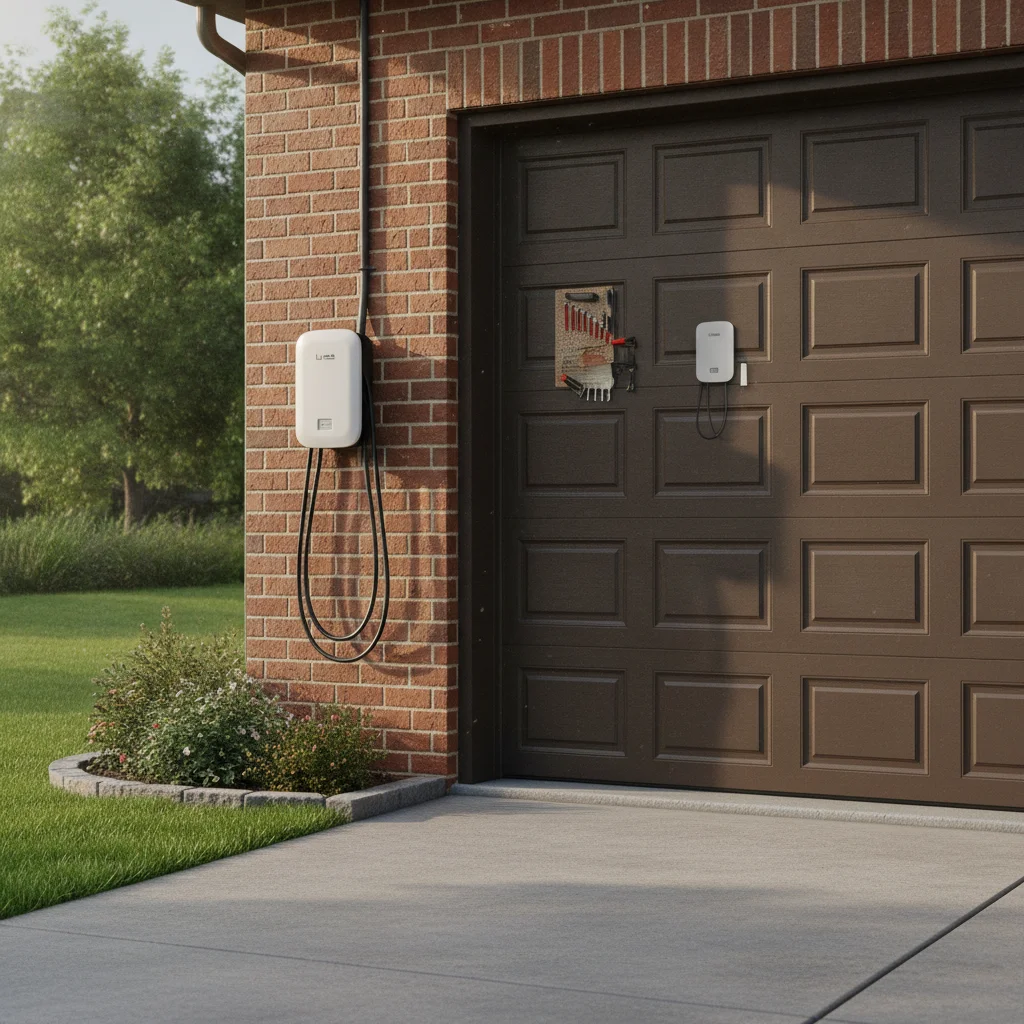
- NEMA 3R — Protection against rain, sleet, and external ice formation. Adequate for covered outdoor locations like a carport or protected wall.
- NEMA 4 — Adds protection against windblown rain and splashing water. The practical minimum for exposed outdoor mounting.
- NEMA 4X — NEMA 4 plus corrosion resistance. Required in coastal or high-humidity environments where salt air is a factor.
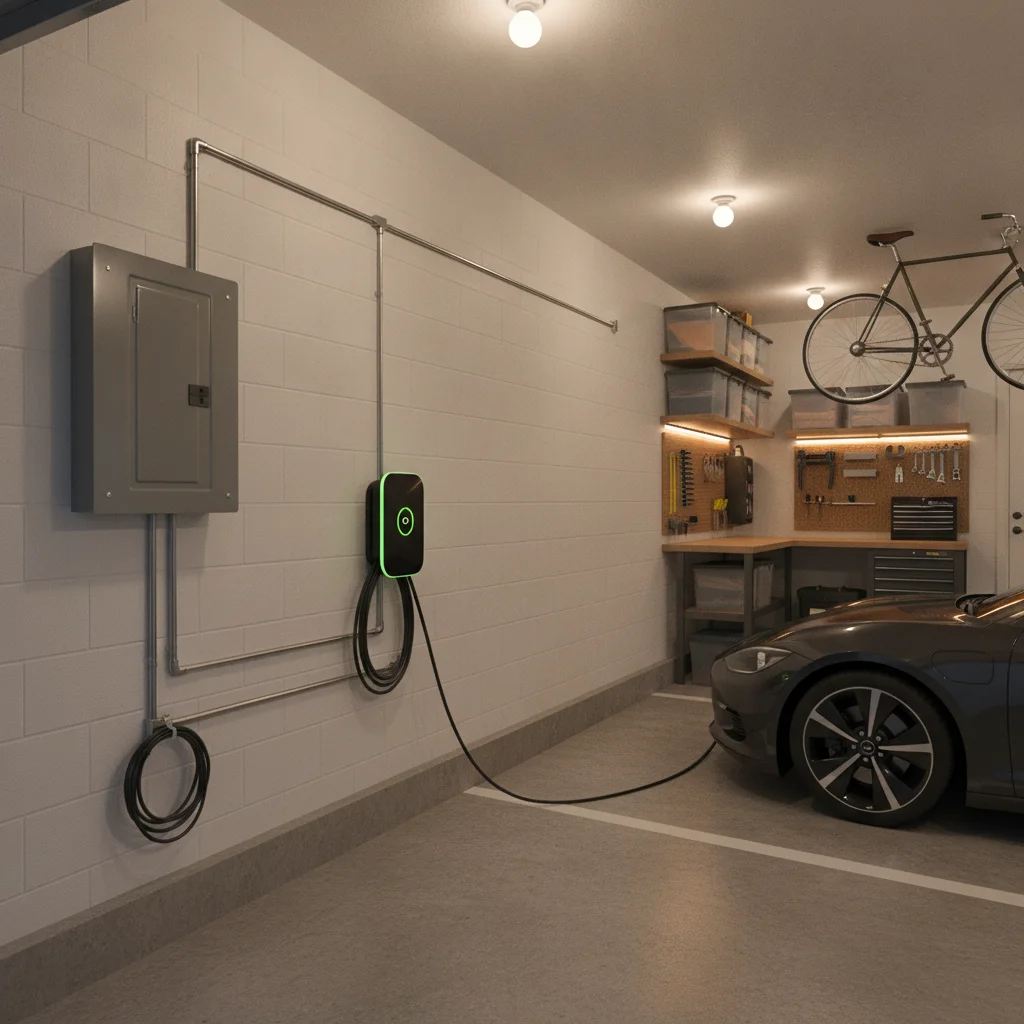
- NEMA 1 / NEMA 12 — Indoor-only ratings. No moisture protection. Adequate for a conditioned or semi-conditioned garage.
A charger rated NEMA 3R or NEMA 4 costs more than an indoor-only unit. If you're buying a single unit and placing it indoors, you can often choose a less hardened (and less expensive) enclosure — though most major brands ship dual-rated units that satisfy outdoor requirements anyway, giving you flexibility.
Always Pull the Permit Before Work Starts
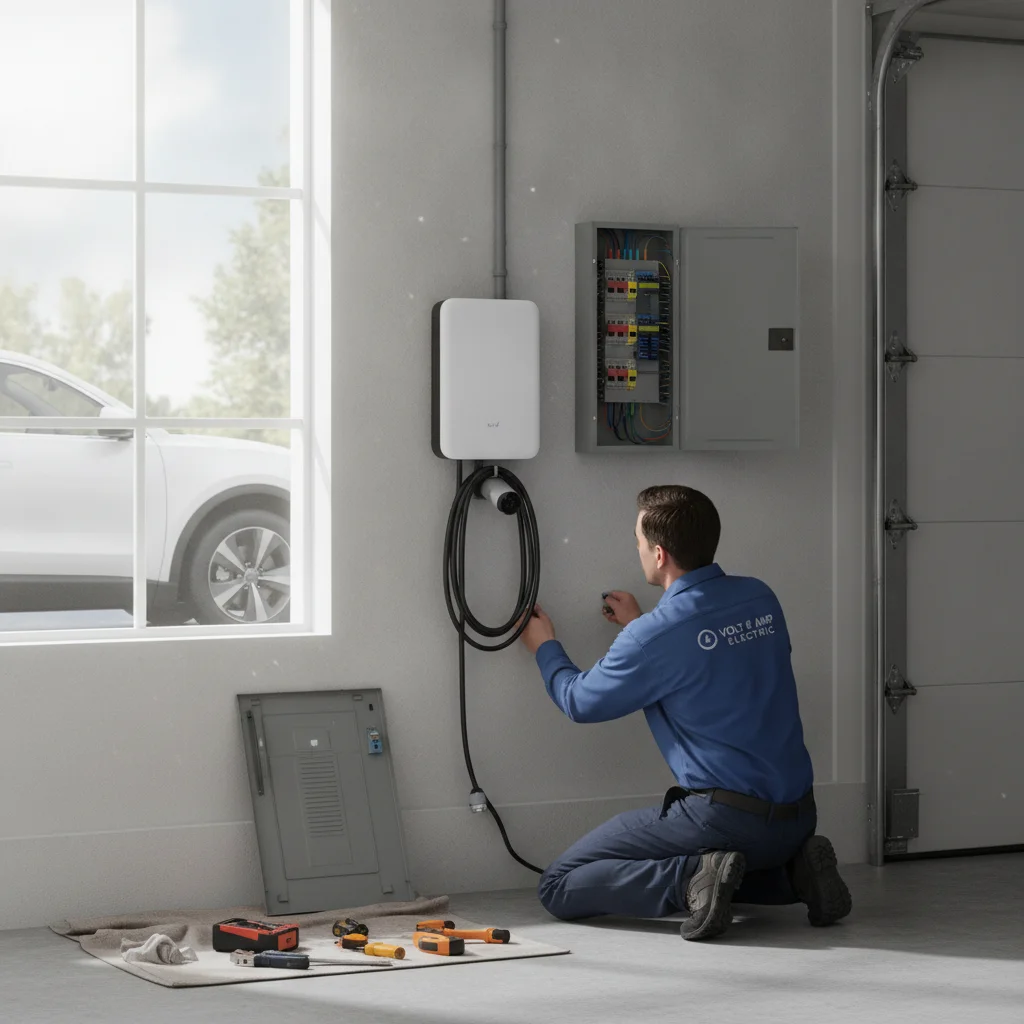
An electrical permit for a new 240V circuit is typically $50–$150 — a trivial cost compared to a $5,000 insurance claim denial or a forced removal by a code inspector. In most jurisdictions, the permit must be obtained before the electrician begins work, not after. Your installer should handle this, but confirm it explicitly before work begins.
Check Your Insurance Before You Install
Call your homeowner's insurer and ask two questions: Is permanently installed EVSE covered under my dwelling coverage, and is there a sub-limit that applies? Outdoor units exposed to theft may warrant a scheduled equipment endorsement. This conversation takes 15 minutes and can prevent a coverage gap that costs thousands.
Pulling a permit is not optional in most jurisdictions for a new 240V circuit. The inspection process is your best protection against a code-noncompliant install — and a future insurance headache if something goes wrong with an unpermitted job.
| Indoor Installation | Outdoor Installation | |
|---|---|---|
| Required NEMA rating | NEMA 1 or 12 (indoor only) | NEMA 3R minimum; NEMA 4X for coastal/humid |
| Typical installed cost | $400–$900 (short panel run) | $700–$2,000+ (longer runs, conduit) |
| Climate sensitivity | Low — garage buffers extremes | High — UV, moisture, freeze-thaw exposure |
| Cable reach challenge | Moderate — limited by garage geometry | Higher — longer distances, trip hazard routing |
| NEC 625 compliance complexity | Standard — GFCI breaker, listed EVSE | Higher — weatherproof fittings, sealed penetrations |
| Equipment lifespan | Longer — protected from elements | Shorter without UV/weather maintenance |
| Theft/vandalism risk | Low | Moderate to high depending on location |
| Best parking scenario | Attached or detached garage | Driveway, carport, or open parking |
Weatherproofing and Climate: The Variables That Shorten Equipment Life
A charger rated for outdoor use isn't immune to climate stress — it's rated to survive it. That's a meaningful distinction. Even a NEMA 4-rated unit will see accelerated degradation in certain environments if you're not deliberate about placement and maintenance.
Heat and Sun Exposure
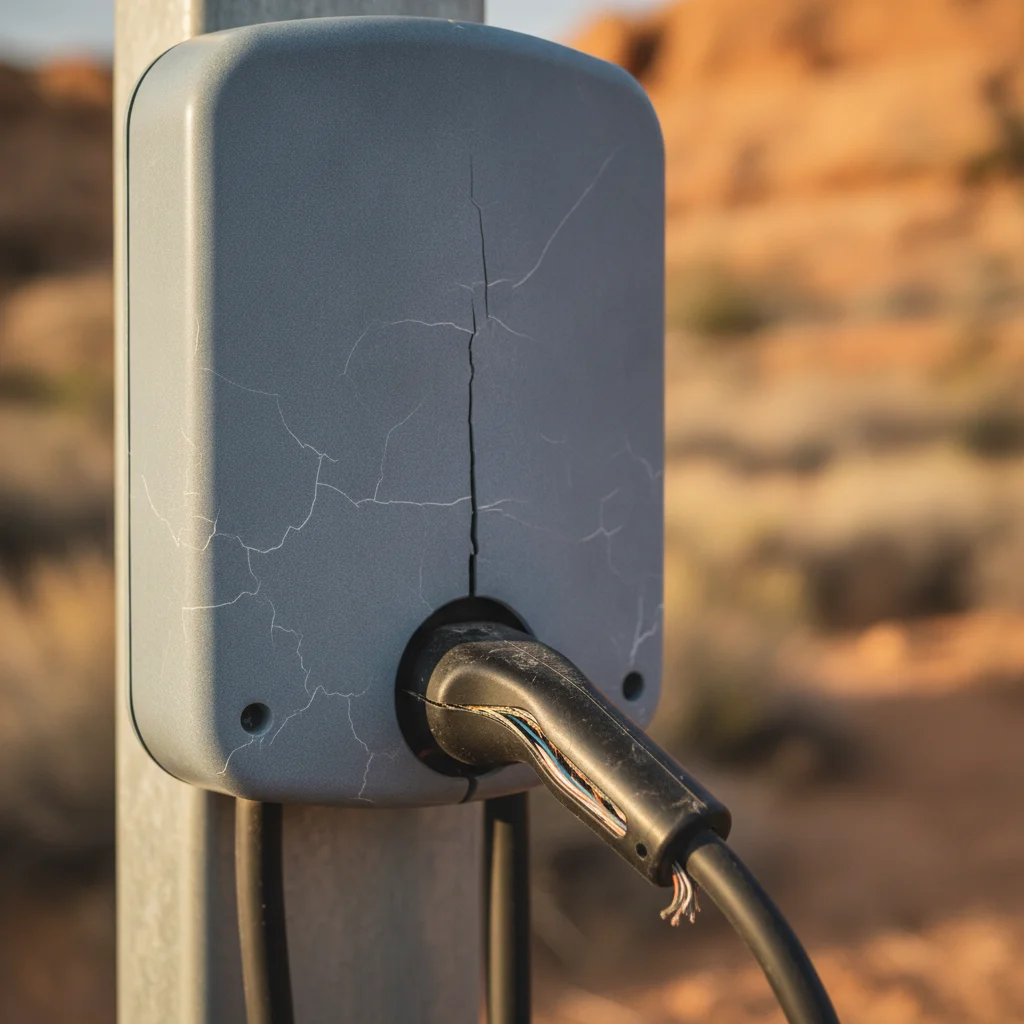
In desert climates — Phoenix, Las Vegas, inland Southern California — summer ambient temperatures routinely exceed 110°F. A south- or west-facing exterior wall can add 20–30°F of radiant heat load beyond ambient. Most Level 2 chargers are rated to operate up to 122°F (50°C), but sustained operation at the thermal ceiling reduces the lifespan of internal components, particularly capacitors and relays. An indoor garage, even an unconditioned one, typically stays 20–30°F cooler than peak outdoor temps.
UV exposure compounds the problem. Charging cables contain thermoplastic elastomer (TPE) or similar compounds that become brittle with sustained UV bombardment. Manufacturers typically warrant cables for a number of charge cycles, not years of sun exposure. A wall-mounted shade or simple overhang adds meaningful protection if outdoor placement is unavoidable.
Cold and Freeze-Thaw Cycles
In northern climates, the risk flips. Cables lose flexibility below freezing, making them harder to manage and more prone to jacket cracking at the connector end. Some charger brands offer cold-weather cable options rated down to -40°F; these are worth the premium if you're in Minnesota or upstate New York. Water infiltration into conduit fittings, followed by freeze-thaw cycling, is a common cause of outdoor installation failures — confirm your electrician uses weatherproof conduit bodies and properly seals all penetrations.
Humidity and Coastal Exposure
Salt air accelerates corrosion of metal enclosures, conduit fittings, and terminal connections. If you're within a few miles of the ocean, a NEMA 4X-rated enclosure with stainless or fiberglass components is worth the added cost. Schedule annual inspections of the conduit connections and terminal block — catching surface corrosion before it reaches the electrical connections is far cheaper than a replacement install.
Don't Mount an Indoor-Only Charger Outdoors
A NEMA 1 or NEMA 12 rated enclosure is not designed to resist moisture, and mounting one on an exterior wall violates the equipment's listing conditions — meaning your install is non-compliant with NEC 625 regardless of the wiring quality. Water infiltration into a non-weatherproof enclosure creates shock and fire risk. Always verify the NEMA rating before purchasing a unit for outdoor use.
Never Use Extension Adapters on EV Charging Connectors
If your charger cable doesn't quite reach your charge port, the temptation to use a third-party pigtail or extension adapter is understandable but dangerous. These adapters are not UL-listed for EV charging loads, can overheat at the connection point, and may void both your charger's warranty and your homeowner's coverage. The right fix is relocating the charger mount or extending the conduit run.
Cable Reach: The Practical Constraint That Often Decides Everything
A charger mounted in the wrong spot — even if it's code-compliant and weatherproofed — is a daily frustration if the cable doesn't reach your charge port without tension. This is more constrained than most buyers realize.
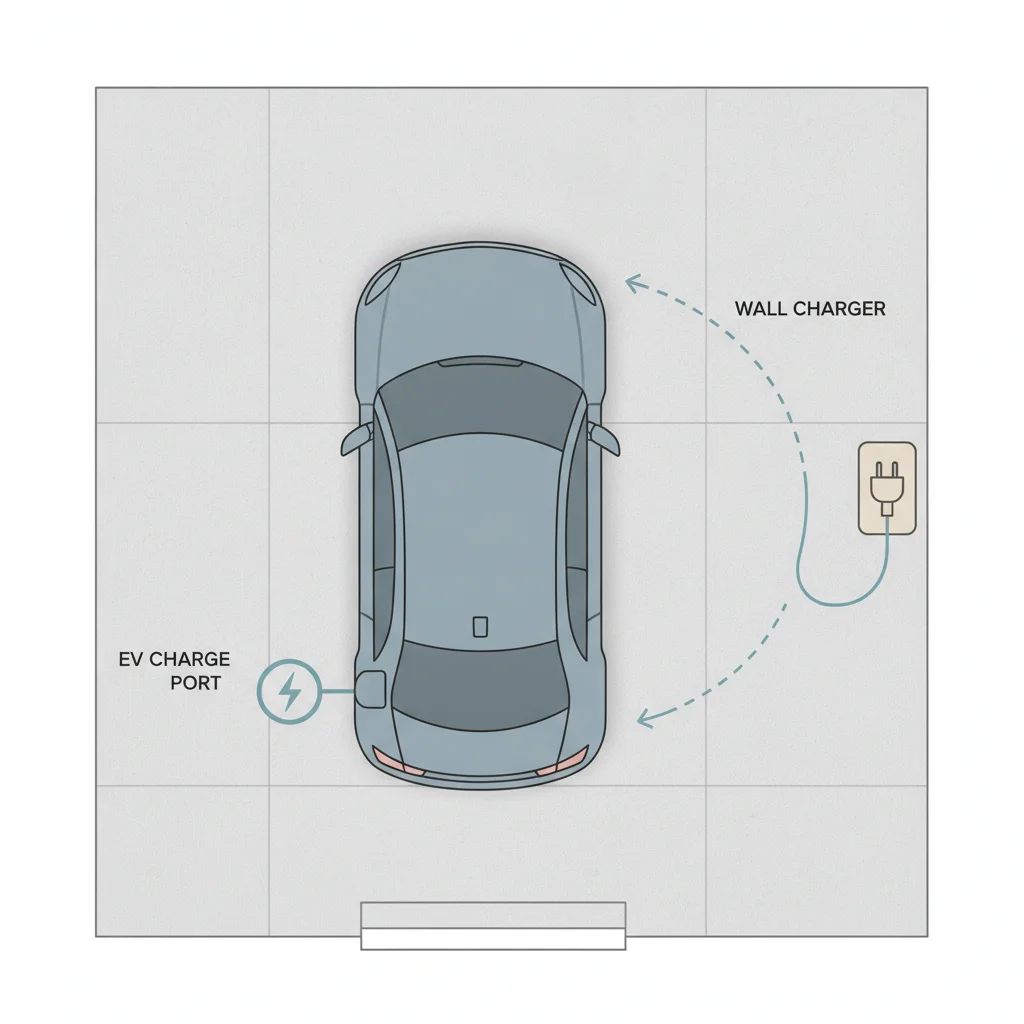
Standard Level 2 EVSE cables are typically 18 to 25 feet long. That sounds like a lot until you account for the cable's routing arc, the height of the wall mount, and where your vehicle's charge port is located relative to your parking position. Charge ports are on the driver's side front fender (common on Teslas), passenger's side rear (many non-Tesla EVs), or front center (some Hyundai and Kia models). A charger mounted on the driver's side wall of a single-car garage may not reach a passenger-side rear port without the cable crossing the vehicle's path.
Planning the Cable Path
- Park your vehicle in its actual resting position and measure from the charge port to the proposed mounting point.
- Add a foot of slack for the cable's natural drop from the wall mount to the connector.
- Account for the cable manager or holster — the last 12–18 inches of cable typically hangs from the holster; that distance eats into your reach.
- For outdoor installs, consider whether the cable will cross a path, driveway, or doorway — trip hazards matter.
If the reach calculation is marginal, the solution is usually to move the charger location, not buy a longer cable. Third-party extension adapters for EV charging connectors exist but are generally not code-compliant and can create heat buildup at the connection point. The better path is to optimize your conduit run and wall placement before the electrician commits to a mounting spot.
18–25 ft
Typical Level 2 EVSE cable length
Most manufacturers ship standard cables in this range; longer cables are available but may require special order.
~$1,000
Median U.S. home charger install cost
According to NREL and industry installer surveys, median Level 2 home installation costs range from $700 to $1,500 depending on panel distance and site conditions.
122°F
Common upper operating temp limit
Many certified Level 2 EVSEs are rated for operation up to 50°C (122°F); sustained exposure above this threshold accelerates component wear.
80%
EV owners who charge primarily at home
U.S. Department of Energy data consistently shows the vast majority of EV charging occurs at the owner's residence.
Installation Cost Differences: What You're Actually Paying For
Indoor installations are generally less expensive, but the gap varies widely based on panel distance, conduit requirements, and local labor rates. Here's where the money goes in each scenario:
Indoor Installation Cost Drivers
- Panel to mount distance: A short run (under 20 feet) in a garage adjacent to the main panel is the cheapest possible scenario — often $400–$700 in labor and materials for a basic 240V/50A circuit.
- Conduit type: Indoor installs often use EMT (electrical metallic tubing) or flexible conduit, both less expensive than weatherproof rigid PVC or liquid-tight conduit required outdoors.
- No weatherproof junction boxes: Eliminates the cost of outdoor-rated boxes at every transition point.
Outdoor Installation Cost Drivers
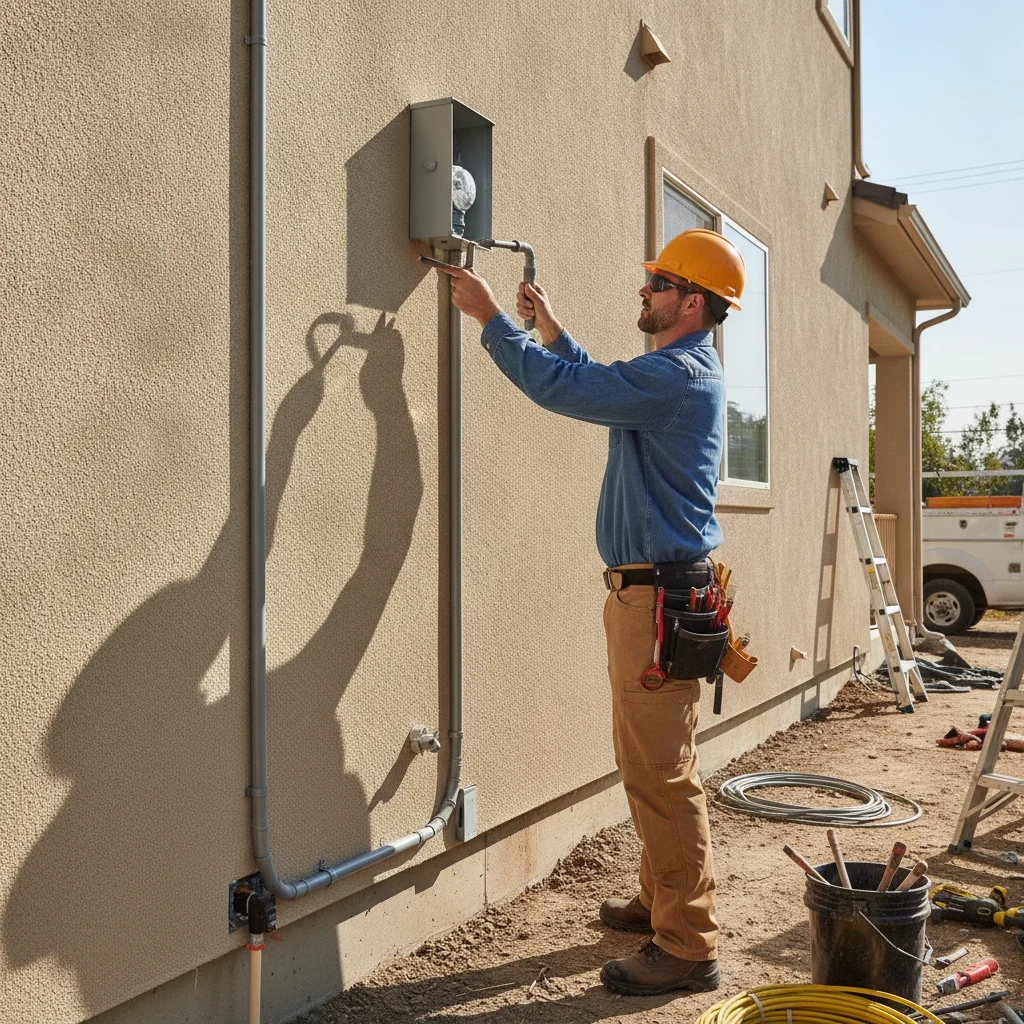
- Weatherproof conduit and fittings: Liquid-tight flexible conduit, weatherproof boxes, and sealed penetrations add $100–$300 in materials on a typical run.
- Enclosure upgrades: If your charger of choice isn't already NEMA 4/4X rated, you may need an additional weatherproof enclosure — though most modern EVSEs include this.
- Longer wire runs: Outdoor parking often means the panel-to-charger distance is longer, requiring heavier gauge wire (and potentially a subpanel) to stay within voltage drop limits. Wire gauge and run length are closely linked — a 50-foot run at 48A may require #6 AWG or larger.
- Trenching: If the charger must be on the opposite side of the home from the panel, underground conduit may be required — adding $500–$2,000 depending on distance and soil conditions.
For owners evaluating plug-in versus hardwired options, the placement question intersects with the installation type choice. Hardwired versus plug-in Level 2 chargers have different implications for both indoor and outdoor scenarios — a plug-in unit requires a weatherproof outlet receptacle outdoors, while a hardwired unit requires a weatherproof junction box.
Insurance and Liability Considerations
Where you mount a charger affects how your homeowner's insurance treats it — and whether it's covered at all. Most standard homeowner's policies cover permanently installed electrical equipment as part of the dwelling, but the definition of 'permanently installed' and the coverage limits vary.
An outdoor charger mounted on an exterior wall is more exposed to theft, vandalism, and storm damage than an indoor unit. Some policies require a separate rider or equipment floater for high-value electrical equipment. Your homeowner's or renter's policy may not automatically cover the charger — it's worth a 15-minute call to your agent before you commit to placement and spend on installation.
Unpermitted installations are a specific liability exposure. If a fire or electrical fault occurs and the investigation reveals the charger circuit was installed without a permit, your insurer may deny the claim. This risk applies indoors and outdoors equally, but outdoor installs are more likely to be inspected by a neighbor, a prospective buyer's inspector, or an insurance adjuster — making code compliance more practically important.
Always Pull the Permit Before Work Starts
An electrical permit for a new 240V circuit is typically $50–$150 — a trivial cost compared to a $5,000 insurance claim denial or a forced removal by a code inspector. In most jurisdictions, the permit must be obtained before the electrician begins work, not after. Your installer should handle this, but confirm it explicitly before work begins.
Check Your Insurance Before You Install
Call your homeowner's insurer and ask two questions: Is permanently installed EVSE covered under my dwelling coverage, and is there a sub-limit that applies? Outdoor units exposed to theft may warrant a scheduled equipment endorsement. This conversation takes 15 minutes and can prevent a coverage gap that costs thousands.
Making the Final Call: A Decision Framework
After working through the code requirements, climate stressors, cable geometry, and cost differences, the decision usually resolves around a few concrete questions. Work through these in order:
- Do you have a garage or covered indoor space? If yes, indoor placement is almost always the better starting point — lower cost, longer equipment life, simpler code compliance.
- If indoor, can the cable reach your charge port from a practical wall location? Measure before you commit. If it's close, prioritize charger position over panel proximity.
- If outdoor is required, what's your climate? Desert or coastal environments push you toward NEMA 4X and cable shading. Cold climates require cold-weather cable specs and sealed conduit.
- What's the panel-to-charger distance? Longer runs increase cost regardless of location, but outdoor runs are typically longer. The hidden cost is often the wire run, not the charger itself.
- What does your local AHJ require? Some jurisdictions have amendments to NEC 625 that affect outlet height, conduit type, or disconnect requirements for outdoor installs. The permit process surfaces these local requirements before your electrician makes irreversible decisions.
One final consideration: if you're renting or anticipate moving, a plug-in indoor Level 2 charger on a 14-50 outlet gives you the most flexibility. You can take the unit with you, and the outlet itself adds value for the next tenant. For homeowners parking outdoors long-term, a hardwired outdoor installation is the more permanent, slightly safer, and ultimately cleaner solution.
The cost of charging at home is already substantially lower than public charging — placement decisions that protect your equipment and maximize uptime keep that advantage intact over the life of the vehicle.

All claims are backed by peer-reviewed research. Sources on request.