Key Takeaways
Home EV Charger Insurance Coverage
Home EV charger insurance coverage refers to whether a homeowners or renters insurance policy will pay to repair or replace your Level 2 charging equipment after theft, fire, storm damage, or vandalism. Because a Level 2 charger is a permanently or semi-permanently installed piece of electrical equipment — not a vehicle accessory — it falls into a gray zone that many standard policies don't explicitly address. Renters face an additional layer of complexity because the equipment may be attached to a landlord's property, yet owned by the tenant.
Under most policy language, a Level 2 EVSE (Electric Vehicle Supply Equipment) qualifies as personal property if it is plug-in and portable, but may be treated as a building fixture — and therefore excluded from renters coverage — if it is hardwired or permanently mounted.
The Coverage Question Nobody Asks Until It's Too Late
Most EV owners spend considerable time researching which Level 2 charger to buy, whether to hardwire it or leave it plug-in, and where to mount it in their garage or carport. Very few ask a more financially consequential question: is this equipment actually insured?
For homeowners, the answer is complicated but navigable. For renters, it is genuinely murky — a function of lease terms, installation method, local landlord-tenant law, and policy language that insurers themselves often interpret inconsistently.
The stakes are real. A quality Level 2 home charger costs between $400 and $900 for the hardware alone, and professional installation typically adds another $300 to $1,500 depending on panel capacity and conduit runs. Home charging setup involves more than most buyers anticipate, including permits, electrical upgrades, and sometimes trenching. If that investment is damaged in a storm, destroyed in a garage fire, or stolen from an outdoor mount, you want to know before the fact whether your insurance policy will respond.
This article breaks down exactly where standard policies fall short, what renters in particular need to watch for, and how to close the gap before a loss event forces the conversation.
How Standard Policies Categorize EV Charging Equipment
Insurance policies classify property in two primary buckets: real property (the physical structure and anything permanently attached to it) and personal property (movable items you own). Where your EV charger lands in that taxonomy determines which section of your policy — if any — covers it.
Plug-In vs. Hardwired: The Dividing Line
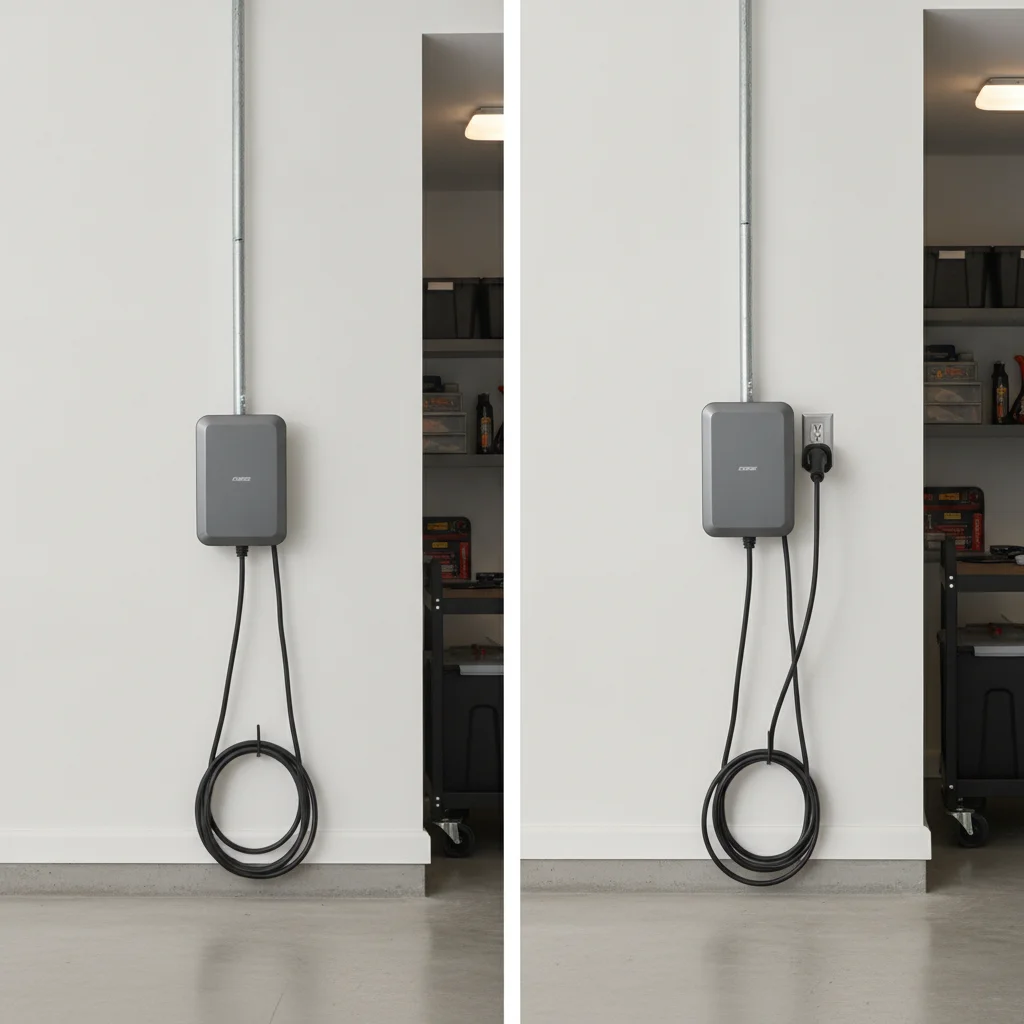
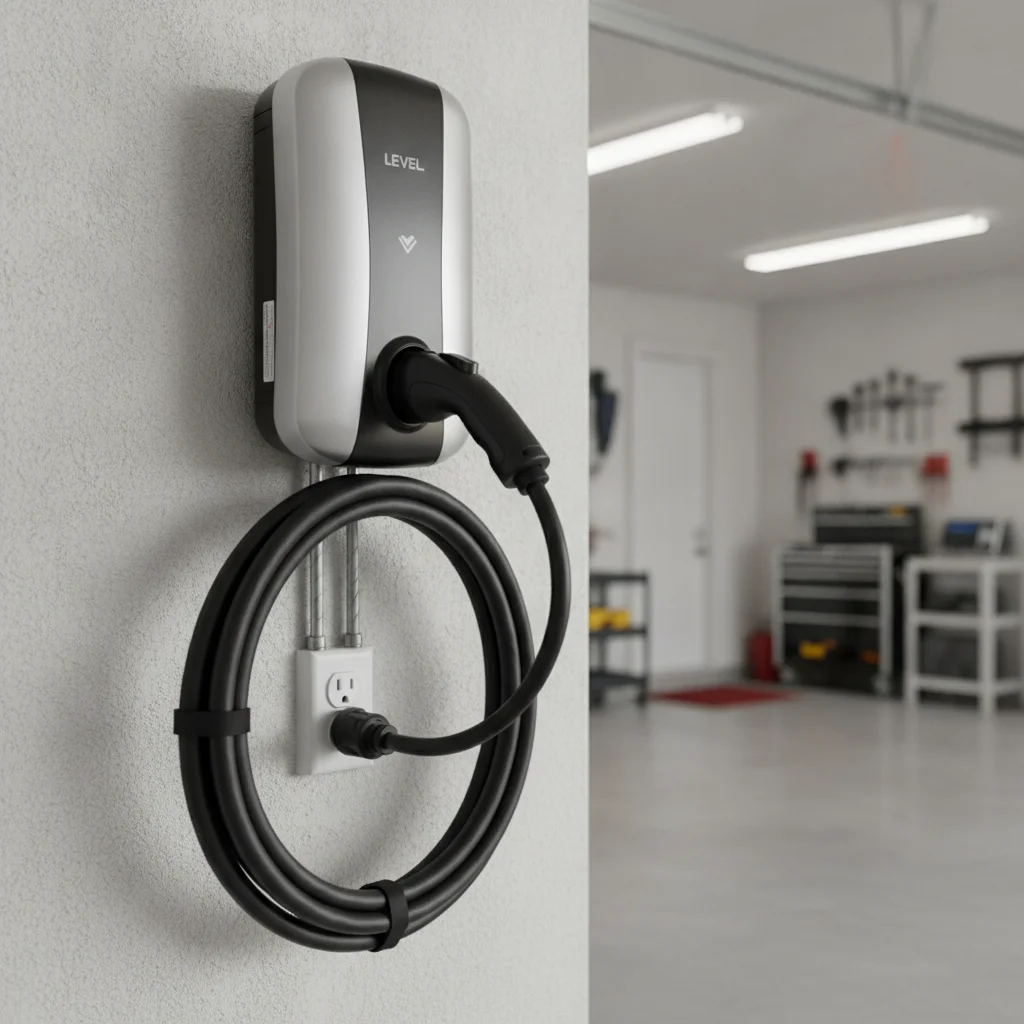
A plug-in Level 2 charger — typically a 240V unit connected to a NEMA 14-50 outlet — is portable. You can unplug it, put it in the car, and take it to a new address. Insurers generally treat it as personal property, which means it falls under the personal property coverage section of both homeowners and renters policies.
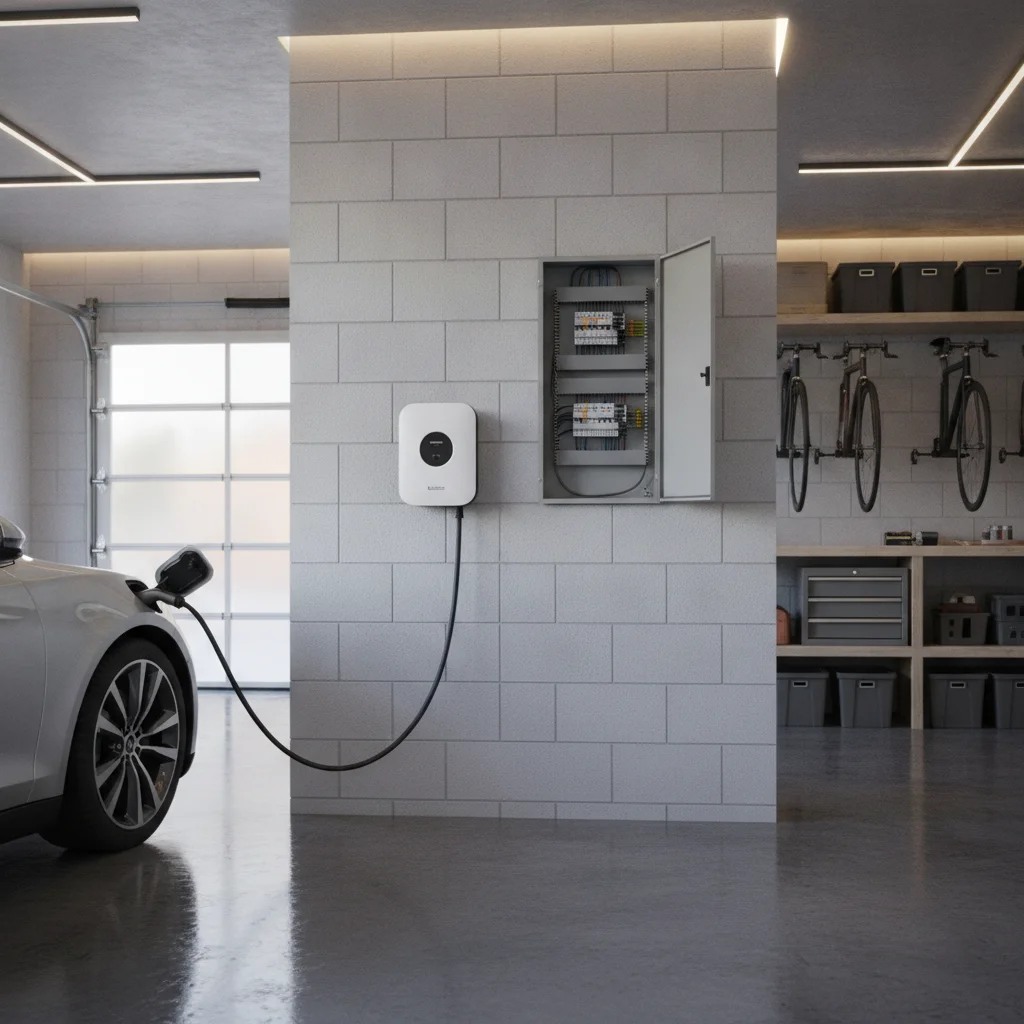
A hardwired Level 2 charger is permanently connected to your electrical panel through dedicated wiring, mounted to the wall, and cannot be removed without an electrician. At that point, it starts to look like a fixture — similar to a built-in dishwasher or an HVAC unit. For homeowners, fixtures are typically covered under dwelling coverage. For renters, this is where the gap opens: renters insurance covers your belongings, not the building's fixtures. If a hardwired charger you paid for and installed becomes legally classified as a fixture, your renters policy may not cover it at all.
Policy Language Varies Significantly by Insurer
There is no industry-wide standard for how Level 2 EV chargers are classified in residential insurance policies. One insurer may explicitly list charging equipment as covered personal property; another may exclude permanently installed electrical equipment entirely. Reading your specific policy — and asking your insurer directly — is the only reliable way to determine your actual coverage position. Do not assume that a neighbor's policy outcome reflects your own.
Some States Have Right-to-Charge Laws
Several U.S. states — including California, Florida, and Colorado — have enacted right-to-charge statutes that limit a landlord's ability to prohibit EV charger installation outright. These laws affect your ability to install charging equipment but do not directly govern insurance coverage. However, in states with right-to-charge protections, landlords are sometimes more willing to enter into written agreements about equipment ownership, which can support your insurance position.
Shared Parking Chargers Are a Different Coverage Category
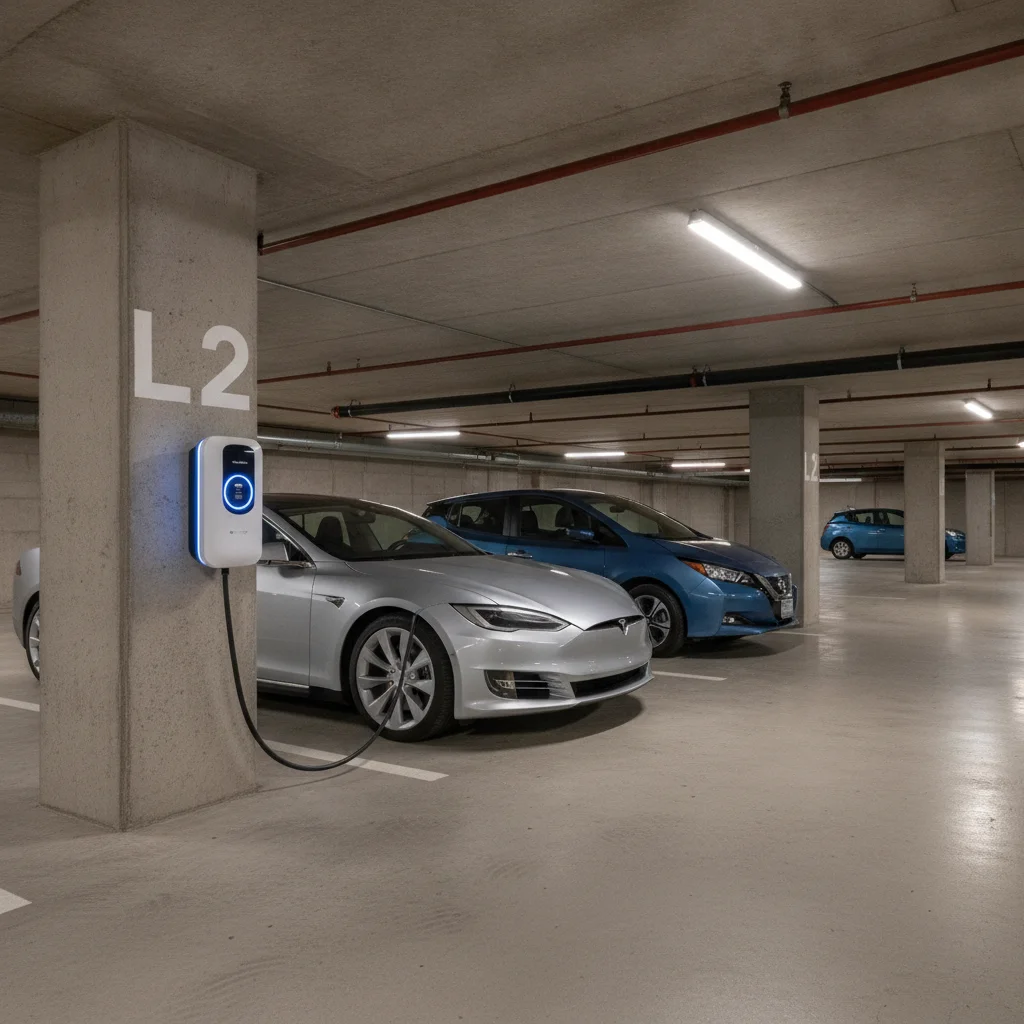
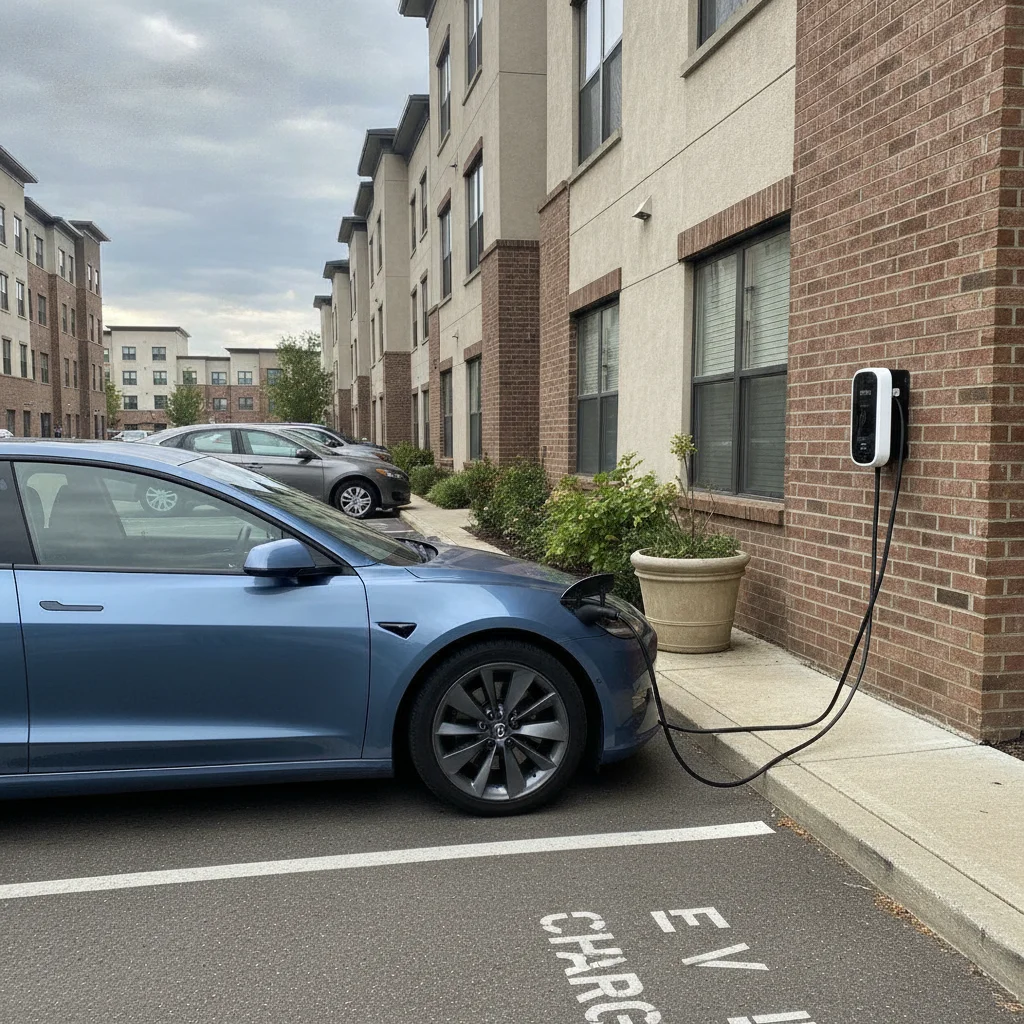
If your apartment complex provides shared Level 2 charging stations in a common parking area, that equipment belongs to the landlord or property management company and is covered under their commercial property insurance. Damage to your vehicle during charging at those stations — including damage to your charging port — would be handled through your own auto insurance's comprehensive coverage, not your renters policy.
The choice between hardwired and plug-in Level 2 installation has cost, safety, and flexibility implications beyond insurance — but insurance is now a material factor in that decision for renters specifically.
$300–$1,500
Typical Level 2 charger installation cost
According to HomeAdvisor and multiple installer surveys, professional Level 2 EVSE installation ranges widely based on panel capacity, conduit length, and local labor rates.
~43%
EV owners who charge primarily at home
J.D. Power's 2023 U.S. Electric Vehicle Experience Home Charging Study found the majority of EV owners rely on home charging as their primary energy source.
$400–$900
Average hardware cost for a Level 2 charger
Based on retail pricing for leading residential EVSE brands including ChargePoint, Enel X, and Emporia as of 2024.
$50–$200
Typical electrical permit cost for EV charger
Permit fees vary by municipality; this range reflects common costs reported by licensed electricians across major U.S. metro areas.
The Renter's Specific Problem: Who Owns What?
Renters face a layered ownership problem that homeowners simply don't encounter. When a renter installs a Level 2 charger — assuming the landlord has granted permission — the equipment belongs to the tenant in most cases. But the wall it's mounted on, the electrical panel it draws from, and the conduit running through the structure all belong to the landlord.
This creates ambiguity that plays out in several loss scenarios:
- Fire damage: If a garage fire damages both the building and your charger, the landlord's property insurance covers the building. Your renters policy should cover your personal property — but only if the charger is classified as personal property, not a fixture.
- Theft: If someone removes the charger from its outdoor mount, a plug-in unit is clearly a theft of personal property. A hardwired unit is more ambiguous — it required tools and presumably left wiring exposed, which complicates the claim.
- Electrical surge: Power surges that damage the charger may or may not be covered depending on whether your renters policy includes equipment breakdown or electrical damage coverage.
- Landlord's contractor causes damage: If a landlord's electrician accidentally damages your charger during other work, this is a liability matter — not a property claim — and you may need to pursue the landlord directly.
The practical lesson: document ownership of your charger explicitly. Keep the purchase receipt, the installation invoice, and any written agreement with your landlord stating that the charger is your property and will be removed upon move-out. That documentation is what an adjuster will want to see if you ever file a claim.
For a deeper look at the landlord-tenant dynamics around charger installation, see what both tenants and landlords need to know about EV charging.

Choose Plug-In If You Rent and Move Often
A plug-in Level 2 charger connected to a NEMA 14-50 outlet offers nearly the same charging speed as a hardwired unit but remains portable personal property under most renters policies. If you relocate every year or two, a plug-in unit also travels with you — avoiding the need to negotiate charger removal with each new landlord and protecting your insurance coverage classification in the process.
Notify Your Insurer Before You Install
Contact your insurance company before your electrician starts work. Describe the exact installation type — plug-in or hardwired, indoor or outdoor — and ask how the equipment will be classified under your policy. Request written confirmation of their response. This single step can prevent a coverage dispute after the fact and may reveal the need for an endorsement you weren't aware of.
Add an Equipment Breakdown Endorsement
Standard homeowners and renters policies cover damage from external perils like fire and theft, but they do not cover an EV charger that simply fails due to an electrical defect or component breakdown. An equipment breakdown endorsement typically costs $25–$50 per year and fills that gap — covering repair or replacement when the cause is internal failure rather than a named peril.
What Homeowners Policies Actually Cover
Homeowners who own their residence are in a somewhat better position, but coverage still isn't automatic or unlimited.
Dwelling Coverage
A hardwired Level 2 charger is typically treated as part of the dwelling — a permanent fixture attached to the home. Most standard HO-3 policies cover the dwelling against all perils except those explicitly excluded. This means fire, lightning, windstorm, hail, vandalism, and theft are generally covered. The charger's replacement cost would be included in the dwelling coverage limit, which is usually sufficient given that most homes are insured for their full replacement value.
Other Structures Coverage
If your charger is installed in a detached garage or carport, it may fall under the "other structures" section of your homeowners policy, which is typically set at 10% of your dwelling limit. For most homes, that's still more than enough to cover a single charger, but it's worth knowing the applicable sub-limit.
Personal Property Coverage for Plug-In Units
A plug-in Level 2 charger at a homeowner's residence is covered as personal property. Homeowners policies generally provide broader personal property protection than renters policies in terms of total limits, though renters policies are functionally similar in how they define covered perils.
What's Often Excluded
Flood and earthquake damage are standard homeowners exclusions and apply to charging equipment just as they do to the home itself. Mechanical or electrical breakdown — for example, a charger that simply stops working due to an internal defect — is also excluded from most base policies. Equipment breakdown coverage is available as an endorsement and is worth adding if your charger cost more than a few hundred dollars.
“EV adoption is outpacing insurance product development in the residential space. Most standard policies were written before home charging equipment was a household concept, and the policy language simply hasn't caught up. Consumers need to ask explicit questions — not assume their existing coverage extends to new equipment.”
— Carla Fontaine, Independent insurance consultant specializing in emerging auto and home technology risks
How to Actually Close the Coverage Gap
Whether you rent or own, the path to proper coverage follows the same general steps — the specifics just differ.
Step 1: Read Your Current Policy Before Assuming Anything
Pull up your declarations page and the full policy document. Look for language around "personal property," "fixtures," "electrical equipment," and "equipment breakdown." If you see EV charging equipment explicitly mentioned — increasingly common in newer policies — note whether it's covered or excluded and under what conditions.
Step 2: Call Your Insurer and Ask Directly
Policy language is ambiguous enough that you should not rely on your own interpretation alone. Call your insurer, describe your specific installation (plug-in or hardwired, indoor or outdoor, garage or carport), and ask explicitly: "Is my Level 2 EV charger covered, and under which section of my policy?" Get the answer in writing — a follow-up email confirmation or a written endorsement.
Step 3: Consider an Endorsement or Floater
If your base policy doesn't adequately cover the charger, ask about adding an endorsement. Options include:
- Equipment breakdown endorsement: Covers mechanical and electrical failure not caused by an external peril. Typically costs $25–$50 per year and covers appliances and home systems.
- Scheduled personal property floater: Lists the charger as a specifically insured item with its own coverage limit. Useful if your base personal property coverage is low or if you want coverage without a deductible.
- EV equipment endorsement: Some insurers — including several major national carriers — now offer EV-specific endorsements that bundle charger coverage with other EV ownership protections.
Step 4: Check Manufacturer and Installer Warranty Programs
Several Level 2 charger manufacturers offer extended warranty or protection plans that cover equipment failure, power surges, and sometimes even theft. These are not insurance policies, but they can complement your homeowners or renters coverage and reduce out-of-pocket risk. Check whether your installer also offers a workmanship warranty, which would cover damage attributable to the installation itself.
If damage does occur and you need to navigate a claim, the claims process for EV charging equipment damage has its own set of procedural steps worth understanding in advance.
Choose Plug-In If You Rent and Move Often
A plug-in Level 2 charger connected to a NEMA 14-50 outlet offers nearly the same charging speed as a hardwired unit but remains portable personal property under most renters policies. If you relocate every year or two, a plug-in unit also travels with you — avoiding the need to negotiate charger removal with each new landlord and protecting your insurance coverage classification in the process.
Notify Your Insurer Before You Install
Contact your insurance company before your electrician starts work. Describe the exact installation type — plug-in or hardwired, indoor or outdoor — and ask how the equipment will be classified under your policy. Request written confirmation of their response. This single step can prevent a coverage dispute after the fact and may reveal the need for an endorsement you weren't aware of.
Add an Equipment Breakdown Endorsement
Standard homeowners and renters policies cover damage from external perils like fire and theft, but they do not cover an EV charger that simply fails due to an electrical defect or component breakdown. An equipment breakdown endorsement typically costs $25–$50 per year and fills that gap — covering repair or replacement when the cause is internal failure rather than a named peril.
Permit Status Matters More Than You Think
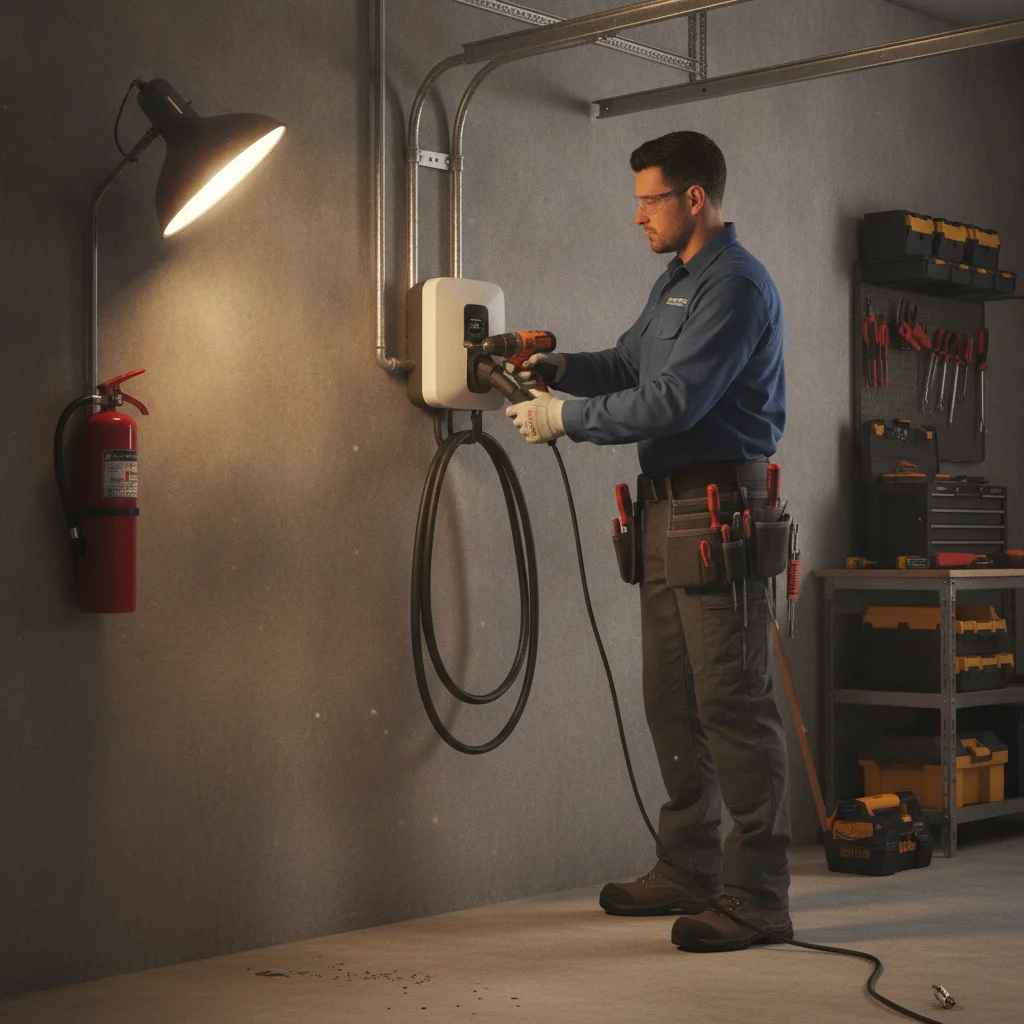
Here is an underappreciated risk factor: unpermitted installations can void insurance claims. Most jurisdictions require an electrical permit for Level 2 charger installation because it involves a new 240V circuit. If you skip the permit — whether to save money, avoid landlord scrutiny, or simply because you didn't know it was required — and a fire later originates from or spreads through that circuit, your insurer may deny the claim on the grounds that the installation was not code-compliant.
This is not a hypothetical. Insurers routinely investigate the cause and origin of electrical fires, and an unpermitted electrical installation is a red flag that adjusters are trained to identify. The cost of a permit — typically $50 to $200 depending on locality — is trivially small compared to the risk of a denied six-figure fire damage claim.
Understanding what a home charging installation actually involves, including permit requirements, is the first step in protecting both your investment and your insurance coverage.
Policy Language Varies Significantly by Insurer
There is no industry-wide standard for how Level 2 EV chargers are classified in residential insurance policies. One insurer may explicitly list charging equipment as covered personal property; another may exclude permanently installed electrical equipment entirely. Reading your specific policy — and asking your insurer directly — is the only reliable way to determine your actual coverage position. Do not assume that a neighbor's policy outcome reflects your own.
Some States Have Right-to-Charge Laws
Several U.S. states — including California, Florida, and Colorado — have enacted right-to-charge statutes that limit a landlord's ability to prohibit EV charger installation outright. These laws affect your ability to install charging equipment but do not directly govern insurance coverage. However, in states with right-to-charge protections, landlords are sometimes more willing to enter into written agreements about equipment ownership, which can support your insurance position.
Shared Parking Chargers Are a Different Coverage Category
If your apartment complex provides shared Level 2 charging stations in a common parking area, that equipment belongs to the landlord or property management company and is covered under their commercial property insurance. Damage to your vehicle during charging at those stations — including damage to your charging port — would be handled through your own auto insurance's comprehensive coverage, not your renters policy.
For renters, a permitted installation also serves as legal documentation that the work was done correctly — which can be valuable if a landlord later disputes whether the installation caused any property damage.
Placement and Installation Choices That Affect Coverage
Where you install your charger — and how — creates practical insurance implications beyond the hardwired vs. plug-in distinction.
Outdoor Installations
An outdoor-mounted charger faces weather exposure, UV degradation, and a higher theft risk than an indoor unit. Most policies cover weather-related damage under standard named perils, but theft from an unsecured outdoor location may trigger questions from adjusters about whether reasonable precautions were taken. A charger mounted with a locking bracket or cable lock is in a stronger position than one left accessible. Indoor vs. outdoor charger placement involves safety and climate considerations that directly affect how the equipment holds up over time.
Garage vs. Carport
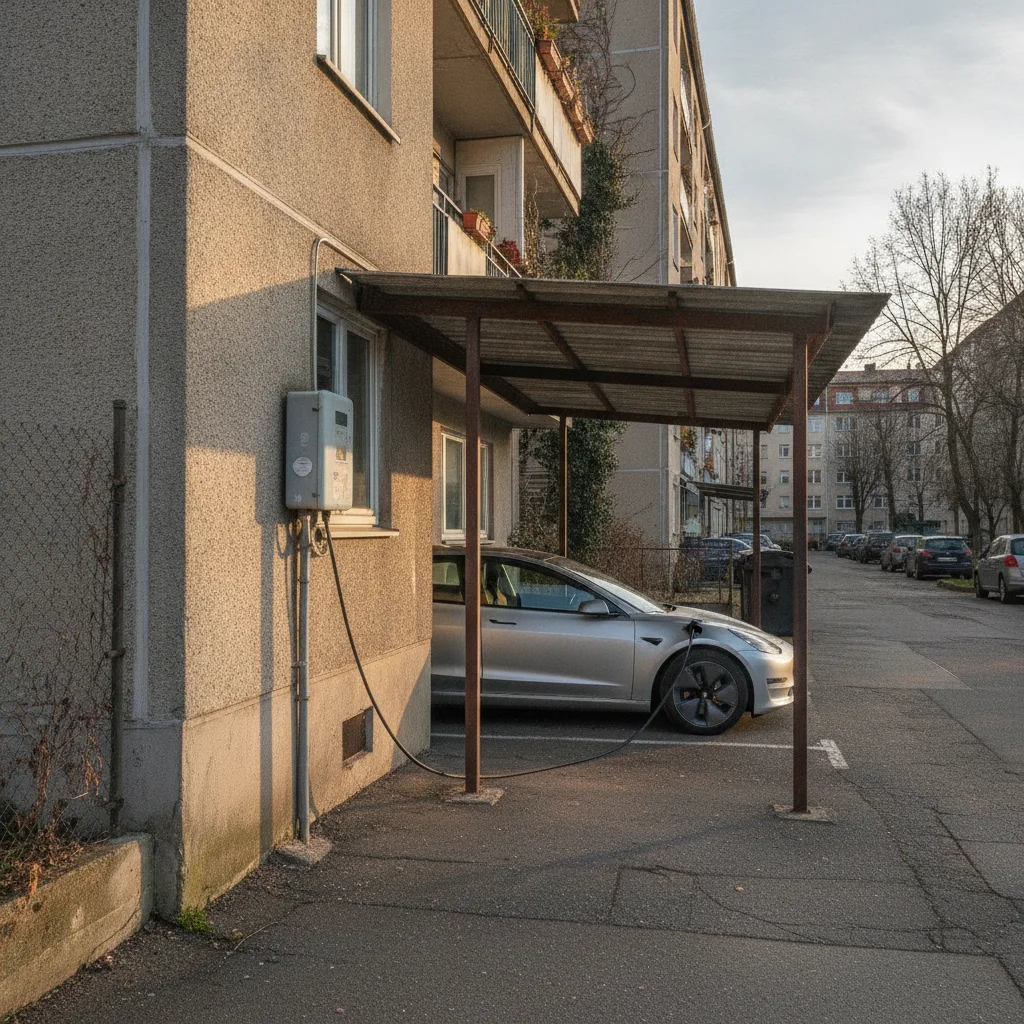
A charger in an attached garage is generally part of the dwelling for homeowners insurance purposes. A charger in a detached structure — detached garage, carport, or shed — falls under other structures coverage, which carries a sub-limit. Renters in shared parking structures face additional complexity: if the carport or parking garage is common property, neither your renters policy nor your landlord's policy may cleanly cover your personal equipment installed there.
Shared Multi-Unit Installations
In some apartment complexes, landlords are installing shared Level 2 charging stations in common areas. In that scenario, the equipment belongs to the landlord and is covered under their commercial property policy. Damage to your vehicle's charging port during a session at such a station, however, would fall under your auto policy — specifically comprehensive coverage — rather than any residential policy.
Policy Language Varies Significantly by Insurer
There is no industry-wide standard for how Level 2 EV chargers are classified in residential insurance policies. One insurer may explicitly list charging equipment as covered personal property; another may exclude permanently installed electrical equipment entirely. Reading your specific policy — and asking your insurer directly — is the only reliable way to determine your actual coverage position. Do not assume that a neighbor's policy outcome reflects your own.
Some States Have Right-to-Charge Laws
Several U.S. states — including California, Florida, and Colorado — have enacted right-to-charge statutes that limit a landlord's ability to prohibit EV charger installation outright. These laws affect your ability to install charging equipment but do not directly govern insurance coverage. However, in states with right-to-charge protections, landlords are sometimes more willing to enter into written agreements about equipment ownership, which can support your insurance position.
Shared Parking Chargers Are a Different Coverage Category
If your apartment complex provides shared Level 2 charging stations in a common parking area, that equipment belongs to the landlord or property management company and is covered under their commercial property insurance. Damage to your vehicle during charging at those stations — including damage to your charging port — would be handled through your own auto insurance's comprehensive coverage, not your renters policy.
Bottom Line for Renters: Assume Nothing, Document Everything
The core takeaway for renters is that your insurance situation around a home EV charger requires active management, not passive assumption. A standard renters policy is not written with Level 2 charging equipment in mind, and the outcome of a claim will depend heavily on how your charger was installed, how your policy defines personal property versus fixtures, and whether you have documentation to support your position.
The four actions that matter most:
- Choose a plug-in charger if portability and coverage clarity matter to you. A plug-in NEMA 14-50 unit is much easier to classify as personal property than a hardwired one. For renters who move frequently, it also travels with you to the next address.
- Get your landlord's permission in writing and specify that the charger remains your property. This is both a lease-protection measure and an insurance documentation measure.
- Notify your insurer before installation and get written confirmation of how the equipment will be treated under your policy. Ask specifically about theft, fire, and electrical damage scenarios.
- Pull a permit. The cost is minimal; the protection it provides — both legally and for insurance purposes — is substantial.
For renters who are still in the process of deciding how to set up home charging, starting EV ownership with a clear understanding of your home charging options is the logical first step before any installation decisions are made. And for broader context on the full home charging setup process, see the home charging setup hub for guides covering every stage from equipment selection to installation.
The EV transition is accelerating, and insurance products are catching up — but not uniformly and not automatically. The renter who spends 20 minutes confirming their coverage before installation is in a dramatically better position than the one who discovers the gap after a fire, a theft, or a storm has already made the question urgent.
All claims are backed by peer-reviewed research. Sources on request.