Key Takeaways
Why Shared Home Charging Is a Different Problem Than Single-EV Charging
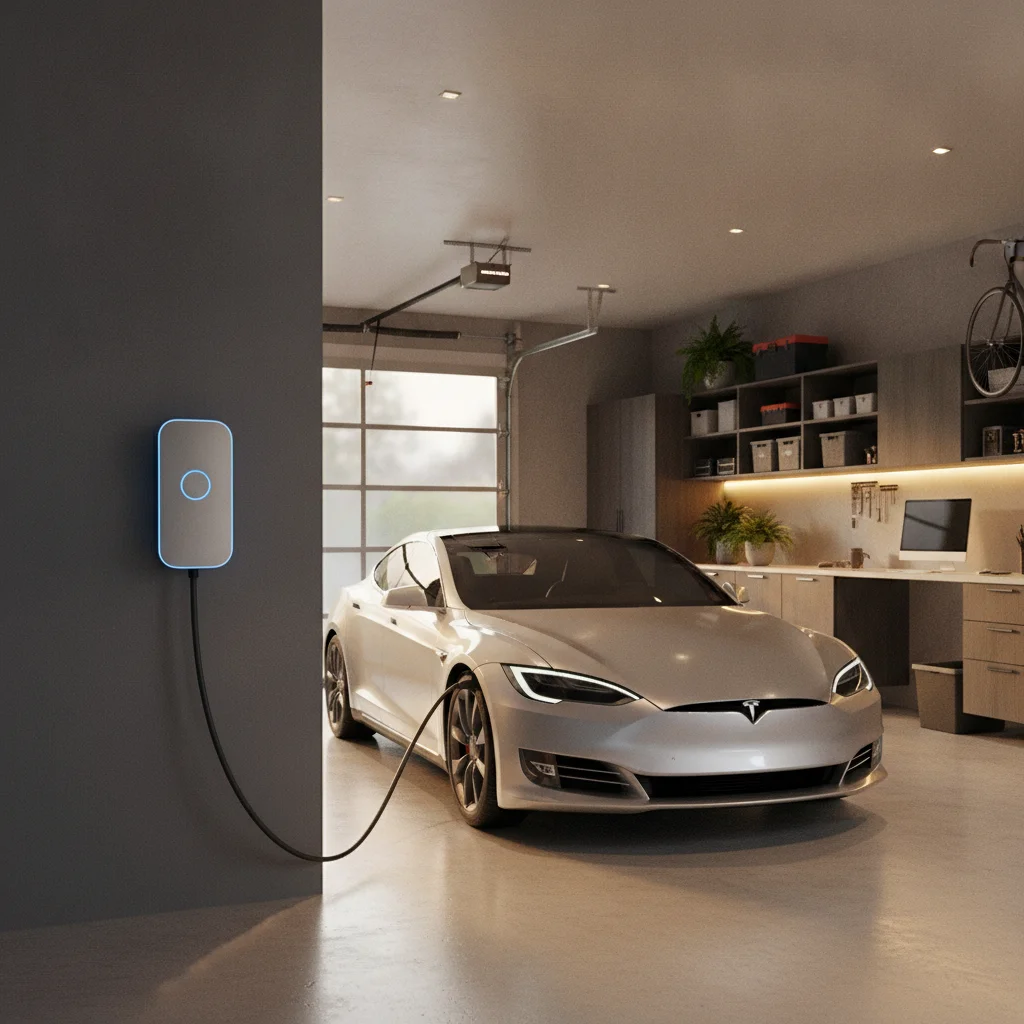
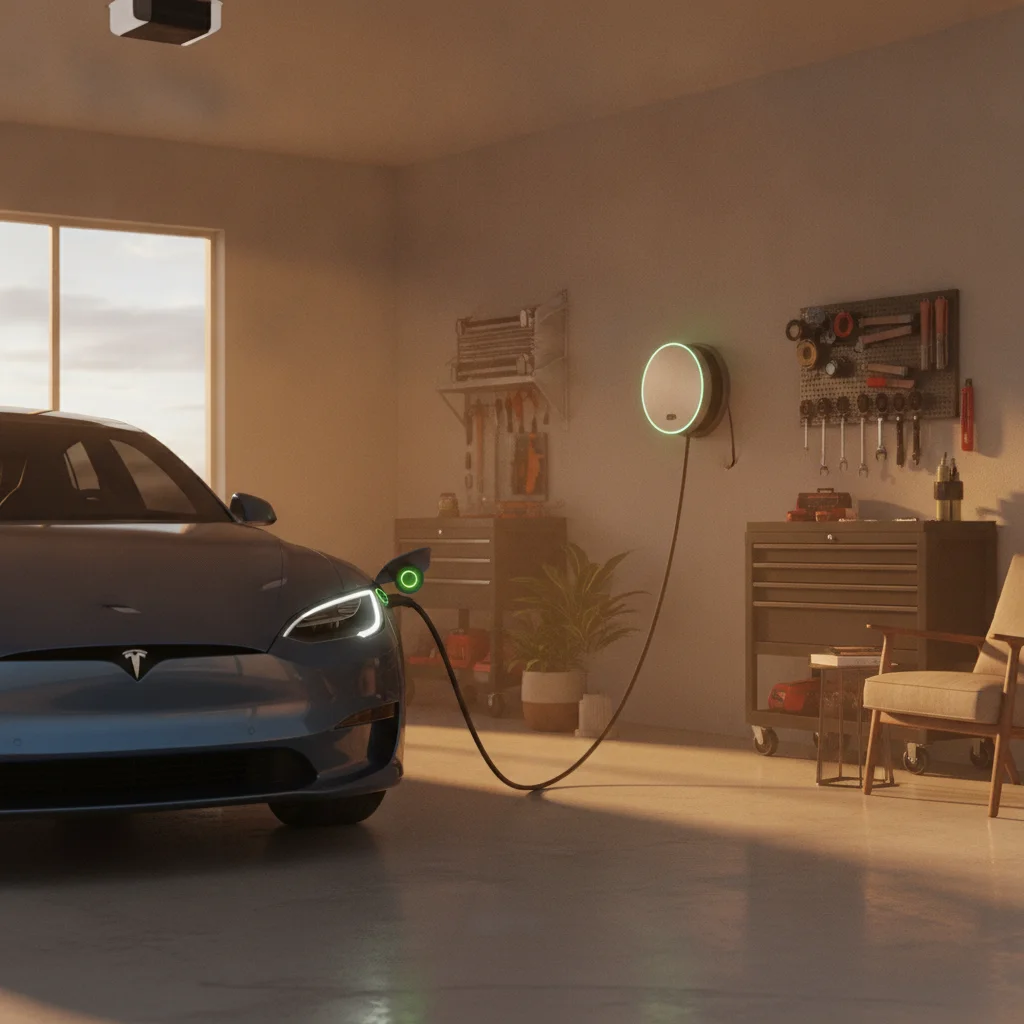
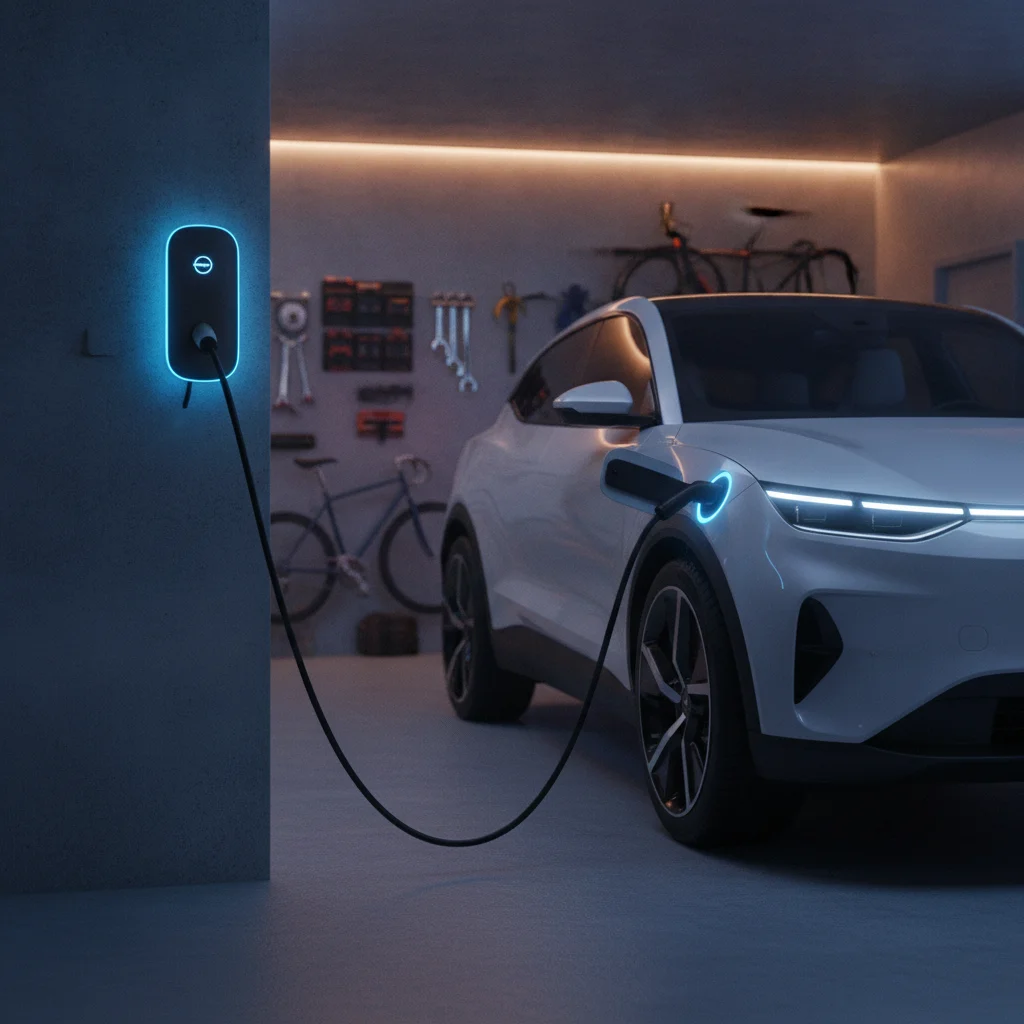
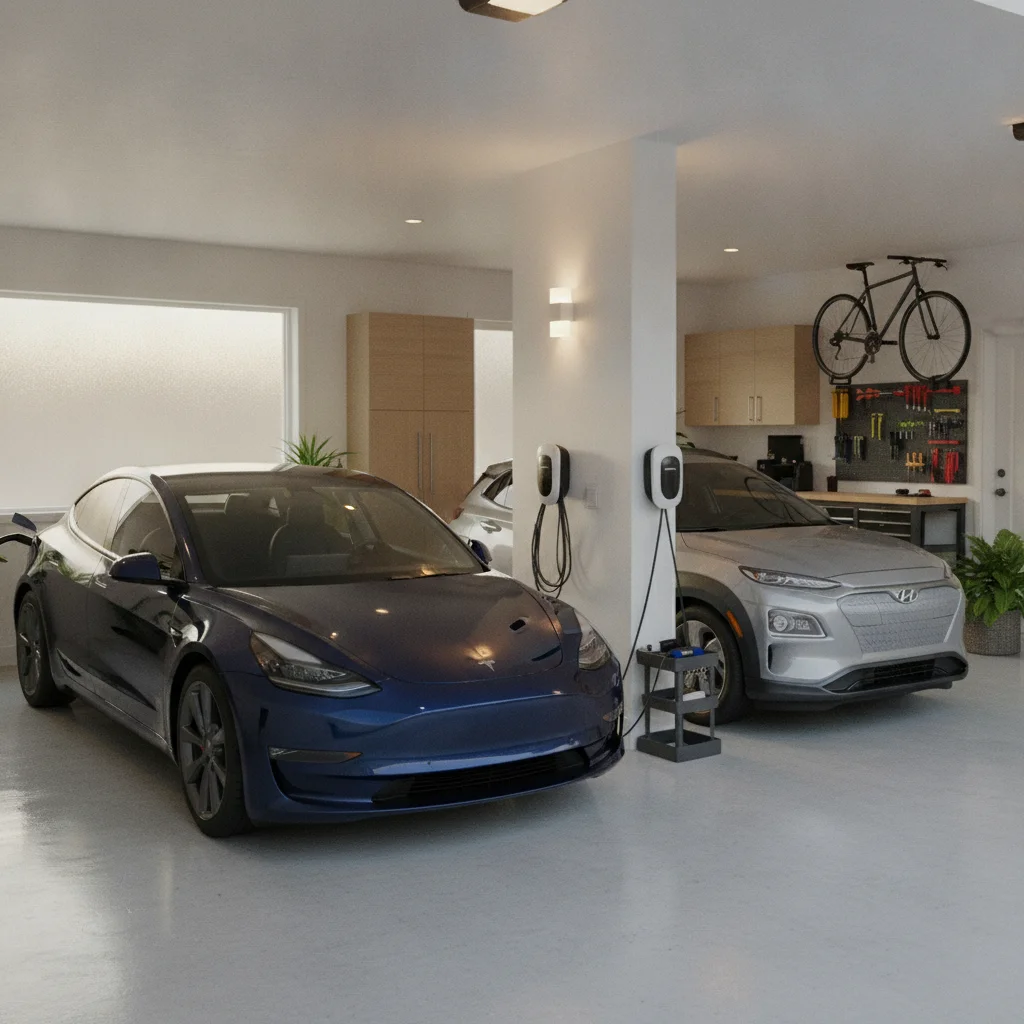
Adding a second electric vehicle to a household doesn't just double your energy needs — it exposes every weakness in your charging setup that a single EV was quietly tolerating. A 120-volt Level 1 outlet that took all night to replenish one car becomes genuinely inadequate when two vehicles need to be road-ready by 7 a.m. An electrical panel running near capacity for one EVSE (Electric Vehicle Supply Equipment) circuit can trip breakers or require expensive upgrades when a second charger is added.
The practical challenges multiply: Who gets priority access when both vehicles are low? How do you avoid running the dryer, oven, and two chargers simultaneously? If you share a driveway or carport with a tenant, neighbor, or family member in a separate unit, who pays for what?
None of these questions are unsolvable. But they do require deliberate answers — ideally before the second car arrives, not after. This guide is aimed at households navigating exactly that moment. For a broader foundation, our complete home EV charging setup guide covers electrical requirements and installation from scratch.
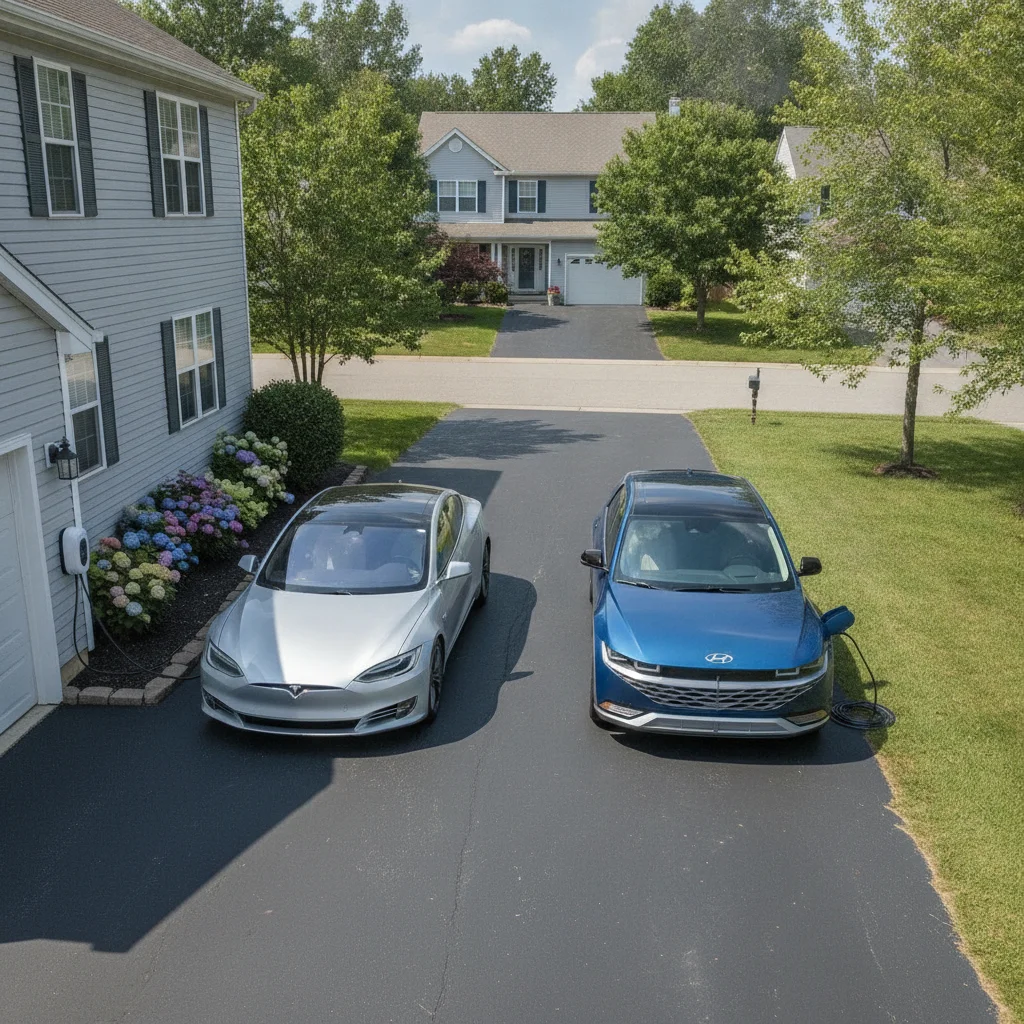
Level 1 vs. Level 2: The Decision Every Multi-EV Household Has to Make
If you're a single-EV household doing fewer than 40 miles per day, a Level 1 trickle charge (roughly 3–5 miles of range per hour) is often sufficient. That math stops working the moment a second vehicle enters the picture.
Consider a two-driver household where each car needs 30 miles of range restored overnight. A single 120V outlet delivers maybe 35–40 miles of range across an 8-hour night — barely enough for one car, let alone two. Level 2 charging (240V, typically 20–50 miles of range per hour depending on the charger's amperage and the car's onboard charger) can refill most EVs in 4–8 hours, leaving room in the schedule for both vehicles.
~4–5¢
Per-mile fuel cost on Level 2 off-peak charging
The U.S. Department of Energy estimates EV charging at off-peak residential rates typically costs 3–5 cents per mile driven, versus 10–15 cents per mile for gasoline at current prices.
30–50%
Electricity cost savings with time-of-use scheduling
According to multiple state utility rate analyses, EV drivers on time-of-use plans who charge overnight during off-peak windows routinely cut their per-kWh charging rate by 30–50% versus daytime flat rates.
$800–$1,800
Typical Level 2 EVSE installed cost
The National Renewable Energy Laboratory cites a range of $400–$1,000 for the hardware plus $300–$1,000 or more in electrician labor, depending on panel proximity and local permit requirements.
The financial case for Level 2 in a shared setup is strong. A dedicated 240V circuit and a quality EVSE typically runs $800–$1,800 installed, depending on your panel's proximity to the garage and local electrician rates. That's a one-time cost that pays dividends in flexibility for years. New to EV ownership? This beginner's breakdown of home charging options explains the full spectrum from the included cord to a hardwired Level 2 unit.
One Level 2 Charger Can Serve Two Cars
You don't necessarily need two Level 2 EVSEs to handle two vehicles. A single 48-amp Level 2 charger can fully replenish most EVs in 4–6 hours. If your two vehicles don't share the same departure time, sequential overnight charging on one charger may be entirely sufficient — and far cheaper to install than two separate circuits.
Match Charger Amperage to Your Onboard Charger
Not all EVs can accept power at the same rate. A Nissan Leaf with a 6.6 kW onboard charger gains nothing from a 48-amp EVSE that could deliver 11.5 kW. Check each vehicle's maximum AC charging rate before sizing your EVSE — buying more hardware than the car can use is wasted money. Your owner's manual or manufacturer website lists the onboard charger's kW rating.
Best Practices for Managing Shared Home Charging
The practices below apply whether you share a home with a spouse, a roommate, a tenant, or an adult child — any scenario where two or more EVs rely on the same electrical infrastructure and the same physical space.
Audit your electrical panel before adding a second EVSE circuit
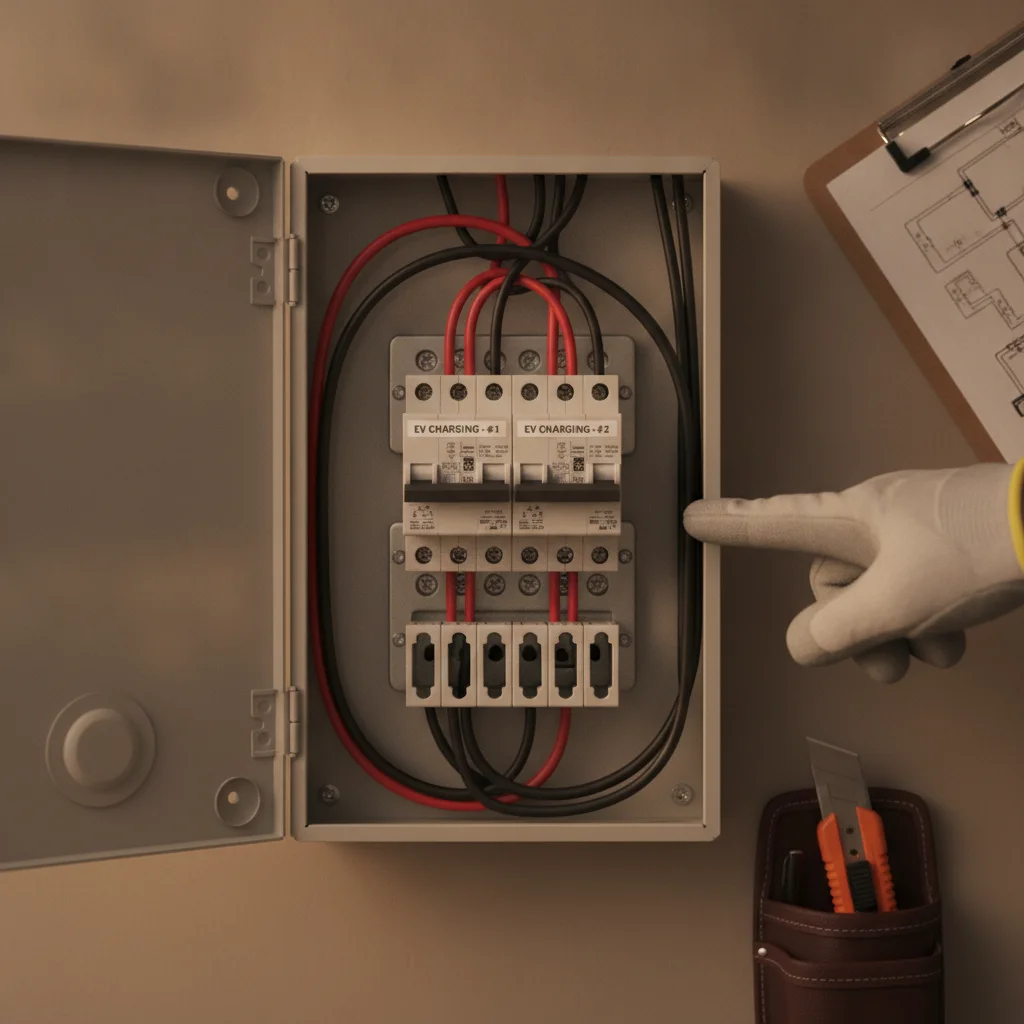
Most homes have a 100–200 amp service panel, and EVSE circuits typically claim 30–50 amps each. Adding a second charger without checking available capacity risks nuisance tripping or, worse, a fire hazard from overloaded wiring. An electrician can assess headroom in under an hour and often identify solutions — like load management or a panel upgrade — before problems occur.
Upgrade to at least one Level 2 charger for any multi-EV household
Level 1 charging simply cannot keep pace with two vehicles' daily energy needs in most households. A single Level 2 charger can fully recharge most EVs in 4–8 hours, making sequential or staggered overnight charging feasible for two vehicles on one circuit. The cost is modest relative to the convenience and flexibility gained.
Use your vehicles' built-in charge scheduling rather than relying on memory
Manual plug-in management is error-prone and creates nightly decision fatigue. Every major EV platform — Tesla, Ford, GM, Hyundai/Kia, Rivian — includes a departure-time or charge-schedule feature in the app or onboard UI. Setting it once and forgetting it is far more reliable than trying to coordinate charging windows on the fly.
Install a smart EVSE with energy monitoring and remote control
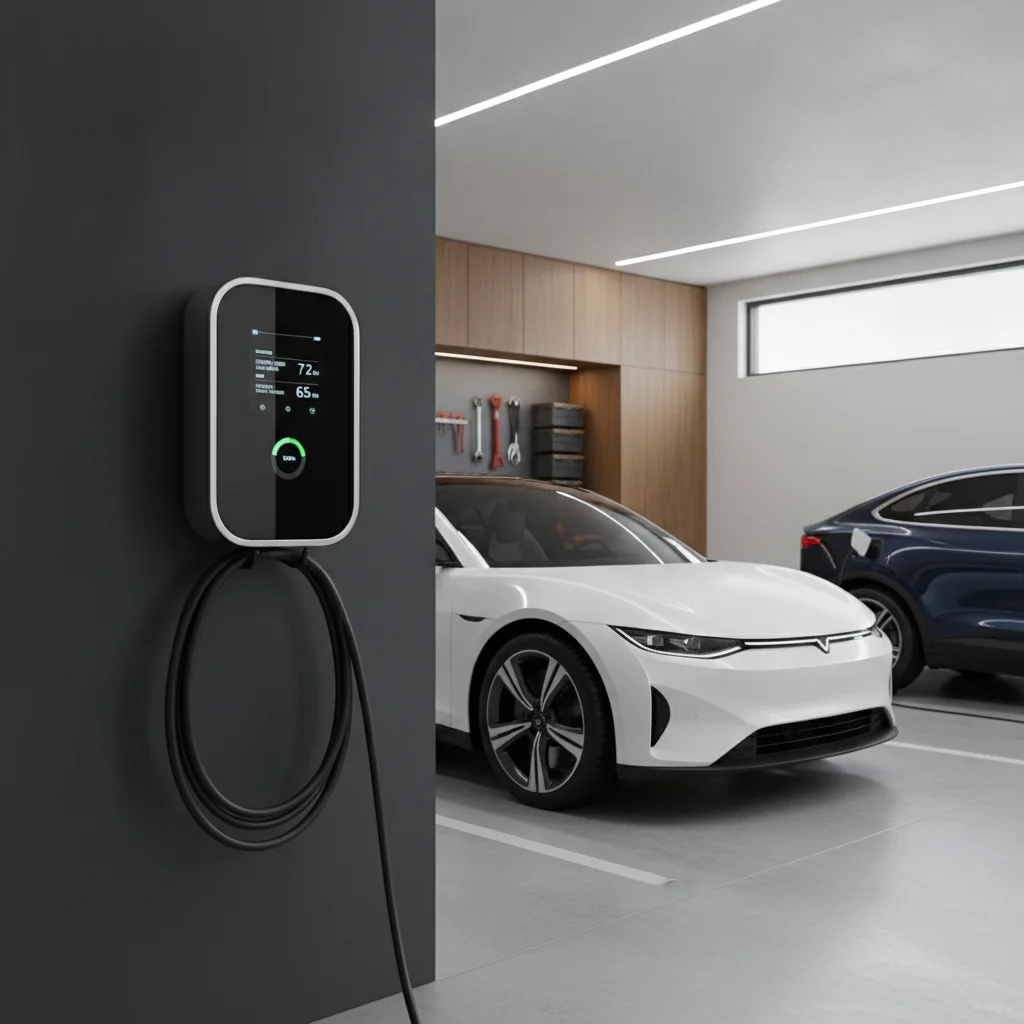
A smart EVSE that connects to your home's Wi-Fi allows remote session start/stop, energy usage logging, and integration with utility TOU plans — all critical features for multi-EV households. Energy monitoring lets you track each vehicle's consumption separately, which matters for cost-splitting and for identifying unexpected charging behavior.
Establish a household 'plug in immediately on arrival' norm
The most common conflict in shared charging setups isn't technical — it's behavioral. When one driver forgets to plug in and then needs a charged car urgently, it disrupts the entire household's charging plan. Making plugging in automatic upon parking, regardless of state of charge, ensures the charging schedule can always do its job.
Explore load-sharing or dynamic load management before paying for a panel upgrade
Panel upgrades can cost $2,000–$5,000 or more and require permits and inspection. In many cases, a load management system that coordinates two chargers and monitors total home consumption can achieve the same practical outcome — both vehicles charged by morning — at a fraction of the cost. This option is worth evaluating with a qualified electrician before committing to infrastructure spending.
Scheduling: The Single Most Effective Tool You're Probably Underusing
Most EVs and most smart EVSEs support scheduled charging — the ability to set a window during which the car draws power. This is the easiest lever available to a multi-EV household, and it's free to use once the hardware is in place.
The core principle: stagger your charging windows so the vehicles don't draw peak amperage simultaneously. If Household Vehicle A commutes first and needs to depart by 6:30 a.m., schedule it to charge from 11 p.m. to 4 a.m. Vehicle B, departing at 8 a.m., can charge from 4 a.m. to 7 a.m. Both cars get full sessions; the panel never sees double load.
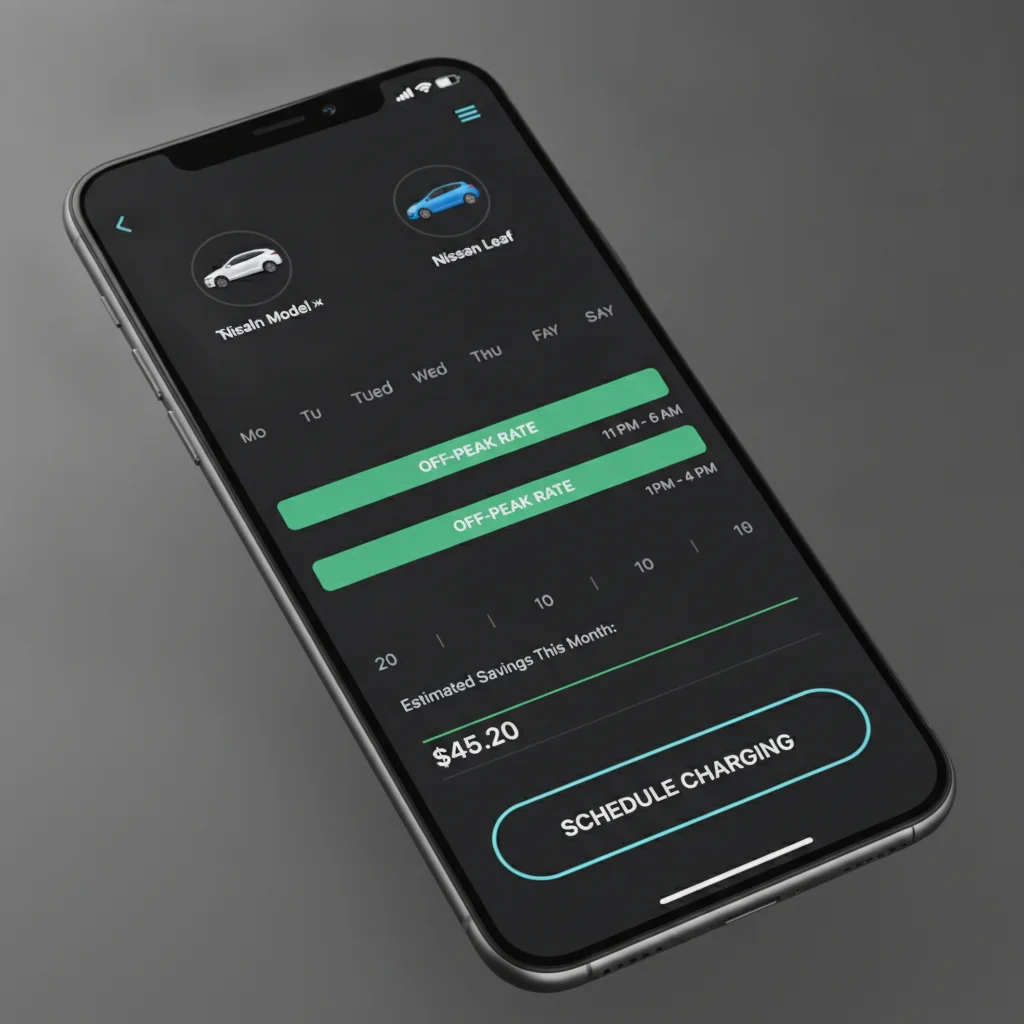
Staggered scheduling also captures off-peak electricity rates on time-of-use (TOU) utility plans, which can cut per-kilowatt-hour costs by 30–50% versus peak daytime rates. See how to set up smart charging schedules for maximum savings for a step-by-step walkthrough of setting this up with common EVSEs and vehicle apps.
Load Management: When Scheduling Alone Isn't Enough
Scheduling works well when driving patterns are predictable. When they aren't — when someone comes home unexpectedly low on a day the other car is already charging — you need a system that can make real-time decisions about power distribution.
That's what load management systems do. A smart EVSE with load management capability (or a dedicated energy management hub) monitors the home's total electrical consumption and dynamically adjusts how much power flows to each charger. If the panel is under load from the HVAC and kitchen appliances, the chargers dial back. When demand drops, they ramp up. The result: both cars charge as fast as conditions allow, without tripping breakers or requiring a panel upgrade.
Load Management vs. Panel Upgrade: Know the Difference
Load management systems don't increase your home's total electrical capacity — they redistribute what's already available more intelligently. If your panel is genuinely at capacity even without EV chargers, a panel upgrade may still be necessary. A licensed electrician can tell you which situation you're actually in after a brief assessment. Don't assume either direction without that evaluation.
Tenant and Shared-Unit Charging Has Legal Dimensions
If you're charging an EV (or allowing a tenant to charge) in shared parking at a multi-unit dwelling, check your lease, HOA rules, or local ordinances first. Several states, including California and Florida, have 'right to charge' laws that limit a landlord's ability to prohibit EV charging entirely, but the specifics vary. Clarify the rules before installing any hardware.
Some load management products — like those from Emporia, ChargePoint Home Flex, or the paired EVSE systems from certain automakers — are designed specifically for residential multi-EV use. These typically require both chargers to be from the same manufacturer or platform, so plan accordingly when purchasing your second EVSE.
For a deeper look at how load management technology works across a home's electrical system, this practical overview of load management for multi-EV homes is worth reading before you buy any hardware.
Fairness and Household Agreements: The Human Side of Shared Charging
Technical solutions only go so far. The other half of shared charging is behavioral — and households that skip this conversation tend to create friction that no smart charger can fix.
“The technology to charge multiple EVs at home is readily available and affordable. What most households underestimate is the need for a clear agreement between the people using that technology — because the charger doesn't care whose car needs to leave first.”
— Plug In America, National nonprofit EV driver advocacy organization
A few ground rules worth establishing explicitly:
- Plug in on arrival, always. The biggest source of charging conflict is the car that wasn't plugged in when it should have been. Make plugging in immediately upon parking a non-negotiable habit, regardless of current battery state. You don't know when plans will change and the car will need to leave earlier than expected.
- Agree on a minimum charge threshold. If one vehicle regularly leaves at 20% while the other is always topped off, resentment builds. Setting a household minimum — say, both cars must be at 70% by morning — creates shared accountability.
- Decide who pays what. In a tenant or multigenerational scenario, electricity cost-sharing needs an explicit agreement. Smart EVSEs that log session data by account make this easier. Some households split the bill proportionally; others install a sub-meter on the charging circuit for exact measurement.
- Handle the shared parking space gracefully. If only one parking spot has charger access, establish a rotation or priority rule based on next-day range needs. This requires a brief nightly check-in, but it beats arguing at 6 a.m.
Where you park shapes almost as much as what you drive when it comes to charging logistics. How your parking situation shapes your charging setup covers the constraints specific to garages, driveways, and carports in detail.
Long-Term Habits That Protect Your Setup
Shared charging setups accumulate more wear than single-EV setups — more plug cycles, more cable handling, more exposure to temperature swings if the setup is outside. A few maintenance habits protect your investment:
- Inspect EVSE cables and connectors quarterly for fraying, corrosion, or cracking, especially if the charger is in an exposed driveway or carport.
- Don't charge either vehicle to 100% routinely. Most EV manufacturers recommend a daily charge limit of 80–90% for long-term battery health. Reserve 100% for road trips.
- Log any breaker trips or charger error codes. Occasional nuisance trips in a heavily loaded panel signal that a capacity evaluation is overdue.
- Keep the charging area clear of clutter, especially combustible materials near the EVSE or vehicle battery area.
For a full checklist of maintenance habits that keep home charging setups safe over the long haul, these long-term EV charging maintenance habits are worth bookmarking now and revisiting annually.
Finally, if your home setup ever feels consistently inadequate — both cars rarely fully charged, frequent scheduling conflicts, rising electricity bills — it may be time to explore whether pairing rooftop solar with your home EV charging could reduce both cost pressure and grid dependency over time.

All claims are backed by peer-reviewed research. Sources on request.