Key Takeaways
EV Load Management
EV load management is a system that automatically monitors and distributes your home's available electrical capacity across multiple charging stations and household appliances. Instead of allowing every device to draw power at full throttle simultaneously, it regulates charging speeds so your home's total draw never exceeds what your electrical panel can safely supply. The result: two (or more) EVs can charge overnight without tripping breakers or requiring a costly panel upgrade.
Load management systems can be implemented at the EVSE (charger) level using smart charger-to-charger communication, at the panel level via energy management controllers, or through utility-integrated demand response programs. Some use CT (current transformer) sensors to monitor real-time whole-home consumption and adjust charging output accordingly.
Why Two EVs on One Panel Is a Real Logistical Challenge
Adding a second electric vehicle to your household feels like a straightforward win — lower fuel costs, cleaner driving, fewer stops at the pump. But the moment you start thinking about charging both overnight, the math gets complicated fast.
A standard Level 2 home charger draws between 16 and 48 amps of continuous current. Multiply that by two chargers, and you're looking at a potential peak load of 60 to 96 amps just for your vehicles — before accounting for your refrigerator, HVAC system, water heater, or anything else on your panel. For many American homes, especially those with 100- or 150-amp service, that's simply not viable without some kind of management strategy.
Even homes with 200-amp service can run into trouble. The National Electrical Code (NEC) requires that a circuit be sized to handle no more than 80% of its breaker rating for continuous loads. A 200-amp panel's practical working capacity for continuous loads is roughly 160 amps — and once you subtract baseline household consumption, the headroom for two full-speed chargers can shrink quickly.
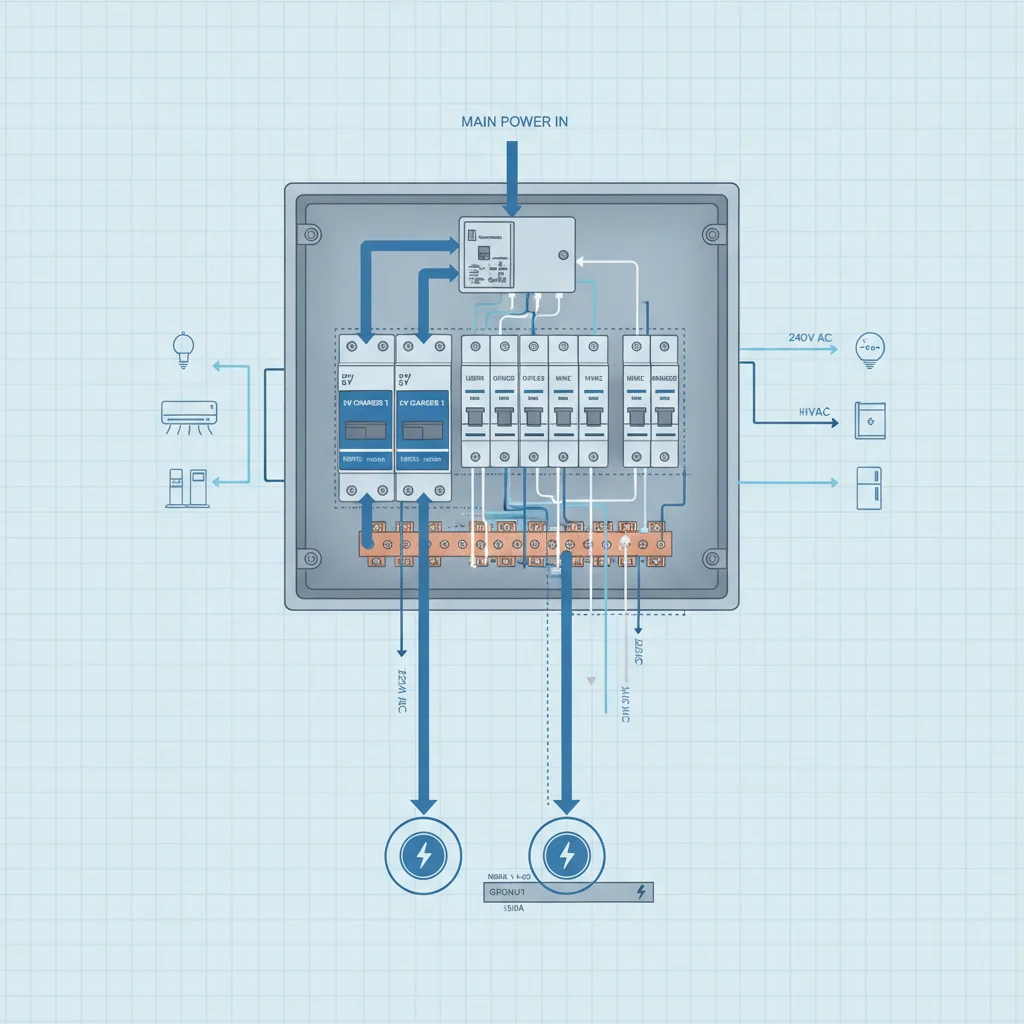
The good news: you don't necessarily need to rip out your electrical panel to solve this. Load management systems exist precisely to handle this situation, and they've become more affordable and more capable in recent years. Before you call an electrician and sign off on a panel upgrade, it's worth understanding how these systems work and what your real options are. For a full overview of what home charging setup involves from the ground up, see what the setup actually involves.
How Load Management Systems Work
At its core, load management for EV charging is about one thing: making sure the total electrical demand of your home never exceeds what your panel can safely deliver. The system does this by monitoring real-time consumption and throttling charging output up or down as needed.
The Three Main Approaches
- Smart charger pairing with built-in load sharing: Some manufacturers sell chargers designed to communicate directly with each other. When both vehicles are plugged in and demanding power, the chargers negotiate how to split the available amperage. If one car finishes or reduces its draw, the other automatically picks up the slack. This approach is self-contained and doesn't require any additional hardware.
- Energy management controller (EMC): A device installed at or near your electrical panel uses current transformer (CT) sensors to monitor your home's total power draw in real time. When overall consumption is high — say, the dryer, oven, and AC are all running — the controller signals the chargers to throttle back. When load drops, charging speed ramps back up. Products like the Emporia Vue or Schneider Electric's Square D EV Gateway take this approach.
- Utility-side demand response: Some utilities offer programs that adjust EV charging speed remotely during grid stress events in exchange for bill credits. This is less about managing your panel and more about managing grid-wide load, but it can be combined with either of the above approaches for a more comprehensive strategy.
Not All Chargers Support Load Sharing
Built-in load sharing is a feature that must be explicitly supported by the charger's hardware and firmware — it is not universal across all Level 2 EVSEs. Before purchasing a charger for a multi-unit setup, confirm that the specific model supports multi-unit communication and that both chargers are from the same ecosystem or use an open protocol like OCPP. Mixing brands without a whole-home EMC often means load sharing is not available.
Solar + Load Management Can Work Together
If your home has rooftop solar, many whole-home energy management controllers can incorporate solar production data into their load calculations. During the day, excess solar generation can be directed to EV charging without competing with panel limits. Some systems, like Tesla's Powerwall with Home Energy Management, integrate solar, storage, and charging into a single automated ecosystem.
The most effective setups for multi-EV homes typically combine a whole-home energy monitor with smart chargers — giving you both real-time panel protection and the flexibility to adjust charging schedules manually or via an app.
Static vs. Dynamic Load Management
Some simpler systems use static load management: they cap each charger at a fixed amperage regardless of what the rest of the home is doing. If you have two chargers and 60 amps of dedicated capacity, static management simply gives each charger 30 amps, period. It's reliable and straightforward, but inefficient — if one car isn't plugged in, the full 60 amps never routes to the vehicle that is charging.
Dynamic load management is more sophisticated. It reads actual household consumption in real time and adjusts charger output continuously. If the house is quiet and drawing only 20 amps for baseline loads, both chargers might each receive 40 amps of the available headroom. If the clothes dryer kicks on, the system sheds 20–30 amps across the chargers temporarily. Dynamic systems squeeze more charging speed out of the same panel capacity.
37 miles
Average U.S. daily driving distance
According to the U.S. Department of Transportation's National Household Travel Survey, the average American drives approximately 37 miles per day — recoverable on most EVs with a standard overnight Level 1 or Level 2 charge.
160 amps
Safe continuous load on a 200-amp panel
The National Electrical Code requires continuous loads to stay within 80% of rated capacity, putting the practical ceiling for a 200-amp panel at approximately 160 amps before breakers are at risk.
$1,500–$5,000
Typical panel upgrade cost range
Costs vary by region, service size, and whether utility work is required; the range reflects contractor estimates across major U.S. markets as of 2024.
3–5 mph
Miles of range added per hour on Level 1
Level 1 charging on a standard 120V/12A circuit delivers approximately 3–5 miles of range per hour, per charger manufacturer and DOE data.
$150–$800
Load management hardware cost range
Depending on approach — from simple energy monitors to full paired smart charger systems — hardware costs before installation labor range from roughly $150 to $800 based on current retail pricing.
Level 1 vs. Level 2 in a Multi-EV Household
Before investing in load management hardware, it's worth asking whether the load management problem can be partially sidestepped by rethinking your charging tier mix.
When Level 1 Can Pull Its Weight
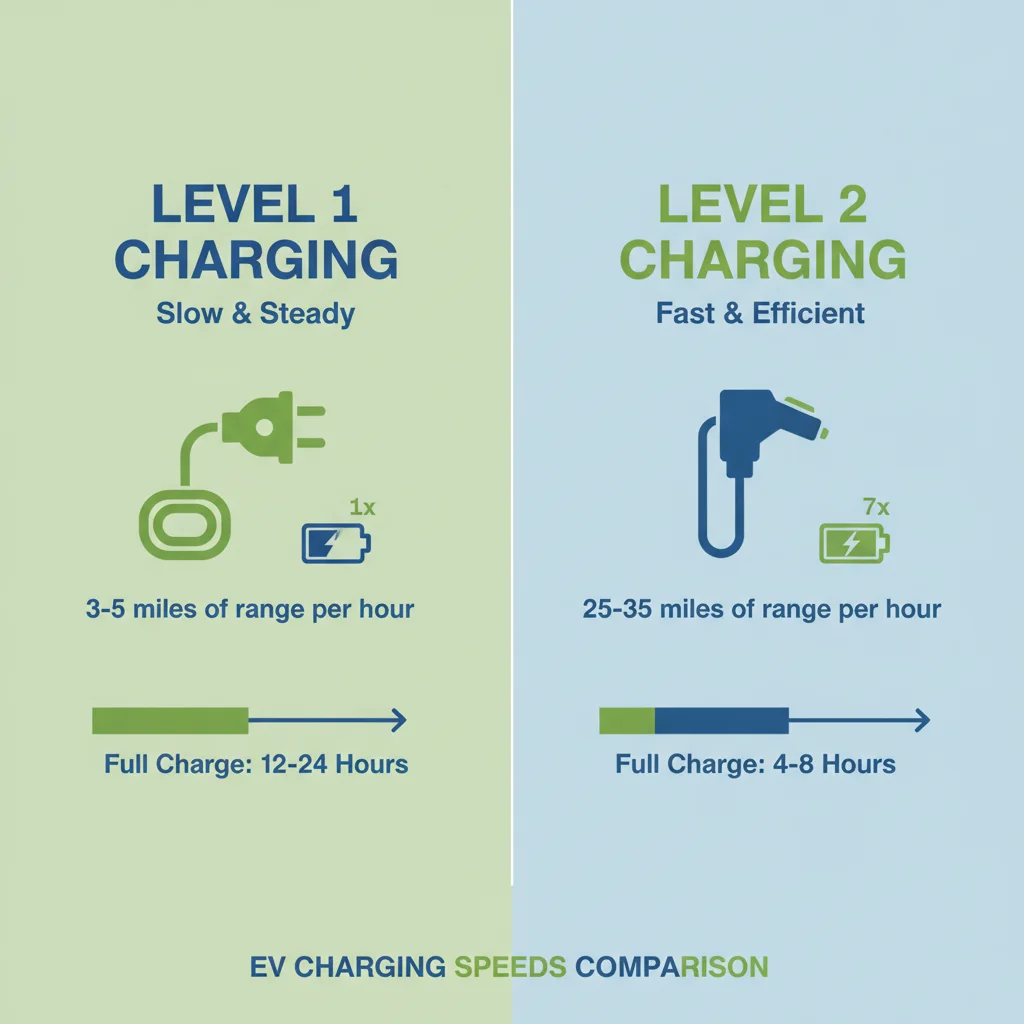
Level 1 charging — plugging into a standard 120-volt household outlet — delivers roughly 3 to 5 miles of range per hour. That sounds slow, but consider: the average American drives about 37 miles per day. At 4 miles per hour of charging, a vehicle needs roughly 9 hours to recover a typical daily commute. That fits comfortably in an overnight window.
In a two-EV household where one driver has a modest commute and the other drives more heavily, a reasonable approach is to assign the lower-mileage vehicle to Level 1 overnight and dedicate your Level 2 charger to the vehicle with higher daily range demands. This effectively removes one charger from the load management equation entirely, since a 120V outlet on a dedicated 20-amp circuit draws only 12 amps at most — well within what any panel can spare.
Start With a Professional Load Calculation
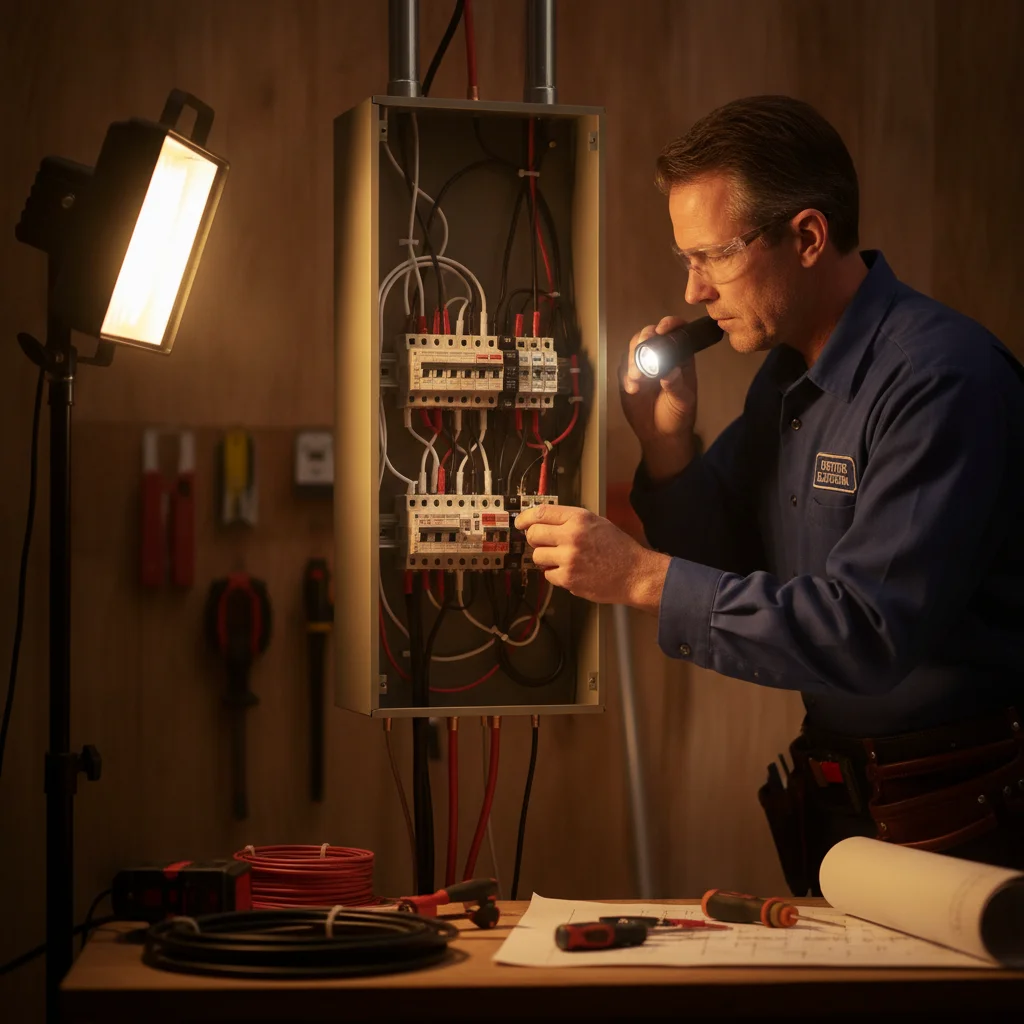
Before purchasing any load management hardware, ask a licensed electrician to perform a load calculation on your home's panel. This takes 30–60 minutes and costs little or nothing as part of a site visit. The calculation tells you exactly how much headroom you have for EV charging — and often reveals that the panel can handle more than you'd expect, eliminating the need for an upgrade.
Use Off-Peak Hours to Your Advantage
Many utilities offer time-of-use rate plans that make overnight charging significantly cheaper per kilowatt-hour than daytime charging. Scheduling both vehicles to charge between 11 PM and 6 AM reduces your electricity costs and also takes advantage of the home's naturally lower baseline load — giving your chargers more headroom without any additional hardware.
When You Actually Need Two Level 2 Chargers
Two full Level 2 chargers make sense when both drivers regularly drive 60 or more miles per day, when at least one vehicle has a larger battery that Level 1 realistically can't replenish overnight, or when one or both vehicles is a truck or SUV with a battery in the 100+ kWh range. In those cases, load management becomes genuinely important rather than optional.
A comprehensive guide to home EV charging setup covers charger types and electrical requirements in detail — worth reading before you commit to any hardware purchase.
Do You Actually Need a Panel Upgrade?
This is the question that causes the most sticker shock for multi-EV owners. Panel upgrades — replacing a 100-amp service with 200-amp service, or upgrading to 400-amp service — cost anywhere from $1,500 to $5,000 or more depending on whether the utility needs to bring a new service line to your home. It's not a small expense.
The honest answer is: it depends on your current panel, your existing loads, and what charging speed you actually need.
Scenarios Where You Can Likely Skip the Upgrade
- You have 200-amp service and modest baseline household loads (no electric resistance heat, no electric vehicle already maxing out the panel).
- You're willing to use dynamic load management and are comfortable with chargers occasionally throttling back during high-demand periods.
- At least one vehicle charges primarily on Level 1, reducing your simultaneous Level 2 demand.
- You can schedule charging during off-peak hours (typically 9 PM to 6 AM) when HVAC and appliance loads are minimal.
Scenarios Where an Upgrade May Be Warranted
- Your home has 100-amp or older service that's already heavily loaded by appliances and HVAC.
- You're adding a heat pump water heater, EV chargers, and electric range simultaneously — common in whole-home electrification projects.
- You want both chargers to run at maximum output simultaneously without any throttling.
What a 200-amp panel upgrade actually involves is a useful companion read before making any final decision on this. Get a licensed electrician's load calculation before spending money — a good electrician can often find capacity headroom homeowners didn't know they had.
“Most homeowners are surprised to learn how much capacity their existing panel actually has once we do a proper load calculation. The assumption that two EVs automatically require a panel upgrade is wrong more often than it's right.”
— Brett Hanson, Licensed Master Electrician and EV charging infrastructure specialist
Choosing and Installing a Load Management Setup
Once you've decided load management is the right path, the practical question is which system to buy and what installation looks like.
Charger-to-Charger Load Sharing
If both drivers own vehicles from the same manufacturer — or if you're open to using compatible third-party chargers — paired smart chargers with built-in load sharing are the cleanest solution. Tesla's Wall Connector is the best-known example: up to six units can be networked together and programmed to share a defined amperage budget. ChargePoint's Home Flex and Wallbox's Pulsar Plus offer similar functionality for non-proprietary setups.
Installation typically involves two dedicated circuits (or one shared circuit with an appropriately sized breaker), pulling communication wiring between units, and configuring the load-sharing settings via an app. Expect to pay $600–$1,600 for two chargers plus $300–$600 in installation labor depending on your panel's proximity to the garage.
Whole-Home Energy Management Controllers
If your chargers are from different manufacturers or you want a single system to manage all your loads — EV chargers, HVAC, water heater, and more — a whole-home EMC is more flexible. Brands like Emporia, Sense, and Schneider Electric offer panels or clip-on monitors that communicate with compatible smart chargers and can also integrate with solar inverters if you have panels on the roof.
These systems cost $150–$400 for the monitor hardware and require compatible smart chargers (usually an additional cost). The payoff is real-time visibility into your entire home's power consumption and automatic protection against overloading your panel.
Scheduling as a Low-Tech Supplement
Don't overlook time-of-use scheduling as a complementary tool. Most modern smart chargers allow you to set charging windows — for example, both vehicles start charging at 11 PM when your HVAC load drops and utility rates fall. Even without sophisticated dynamic management, staggered start times can reduce peak simultaneous demand significantly. If one car charges from 11 PM to 3 AM and the other from 3 AM to 7 AM, they never overlap at all. This costs nothing beyond the charger's app functionality.
For guidance on coordinating schedules fairly between multiple drivers, charging etiquette for shared home setups has practical frameworks that work whether or not you have smart hardware.
Planning Ahead for Future Vehicles
If you're buying your second EV now but might add a third in a few years — or if you're planning a home electrification project that will eventually include a heat pump, EV chargers, and an induction range — it pays to think about infrastructure capacity now rather than retrofitting twice.
A few principles worth building in from the start:
- Run conduit even if you're not pulling wire yet. Having conduit in place from your panel to the garage makes adding circuits far cheaper in the future. The conduit itself costs very little; running it later requires opening walls or running exposed raceway.
- Size the breakers for future load, not current load. If you're installing a subpanel in your garage anyway, sizing it for 100 amps now rather than 60 amps costs relatively little extra and gives you headroom for a third charger or a high-capacity truck charger later.
- Choose chargers with network connectivity. A networked charger can be updated with new load management capabilities over firmware updates. Dumb chargers cannot.
Understanding your home charging options from day one is a useful primer if anyone in your household is just getting started with EV ownership and needs to understand the full charging landscape before making hardware decisions.
Load management isn't a patch over a problem — it's a permanent feature of multi-EV homes that will pay dividends every night your vehicles are plugged in. Getting the system right upfront is almost always cheaper than revisiting it after the fact.

All claims are backed by peer-reviewed research. Sources on request.