Key Takeaways
Option A
Liability-Only Coverage
The legally required baseline that protects others, not your vehicle.
Best for: Drivers with older, low-value vehicles who can absorb the cost of repairing or replacing their own car out of pocket.
Option B
Full Coverage
The comprehensive shield that protects both others and your own vehicle.
Best for: Drivers with newer or financed vehicles who need protection against collision damage, theft, and weather events in addition to liability.
If you own an older vehicle outright with low market value
Liability-Only Coverage
When your car is worth under $4,000–$5,000, the annual cost of comprehensive and collision coverage often approaches or exceeds what an insurer would pay in a total loss. Drop to liability and bank the savings.
If your vehicle is financed or leased
Full Coverage
Your lender has a financial interest in the vehicle and will contractually require full coverage. Letting it lapse risks the lender placing force-placed insurance at a far higher cost.
If you have significant personal assets or a growing net worth
Full Coverage
Full coverage with high liability limits gives you the broadest financial firewall. A serious at-fault accident can produce judgments that exceed state-minimum limits and reach your savings.
If you're a budget-constrained driver with a paid-off commuter car
Liability-Only Coverage
Prioritize robust liability limits over comprehensive and collision on a low-value vehicle. This protects your assets without paying for coverage that exceeds the car's worth.
If you live in an area prone to severe weather, hail, or high theft rates
Full Coverage
Comprehensive coverage pays for non-collision losses including theft, flood, and hail damage. In high-risk regions, this protection is often worth the premium even on mid-value vehicles.
What Each Coverage Type Actually Does
Before comparing cost or value, you need a clear picture of what you're actually buying. These aren't two tiers of the same thing — they're fundamentally different products that serve different financial purposes.
Liability-only coverage is exactly what it sounds like: it pays for harm you cause to other people and their property when you're at fault in an accident. It covers medical bills for injured parties, repair costs for vehicles you've hit, and property damage to fences, buildings, or other structures. It does not pay a single dollar toward your own vehicle. If you rear-end someone and total your car in the process, liability pays for their repairs and medical care — your car sits as a write-off at your own expense.
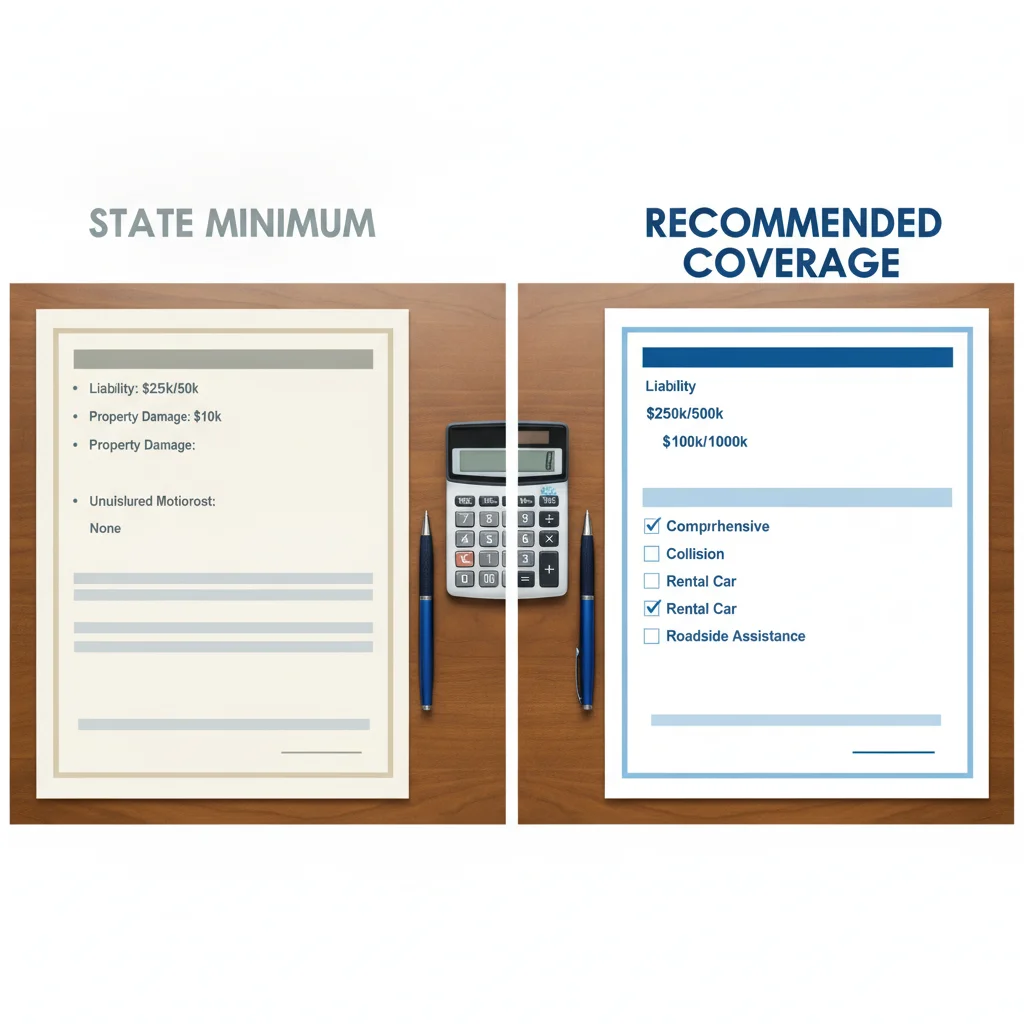
Every state requires some minimum level of liability coverage to legally register and drive a vehicle. But those minimums vary widely, and most are dangerously low by modern standards. See how state minimums compare to what most drivers actually need before assuming the legal floor is also the practical floor.
Full coverage is an industry shorthand — it's not a single policy but a package that layers collision and comprehensive coverage on top of liability. Here's what each component adds:
- Collision coverage pays for damage to your own vehicle when you hit another car, a guardrail, a tree, or any other object — regardless of fault.
- Comprehensive coverage pays for losses that aren't collision-related: theft, vandalism, weather events like hail or flooding, fire, and animal strikes.
Understanding the full scope of what collision and comprehensive cover is worth reviewing before you decide whether the added premium is justified for your situation.

One more distinction that matters: liability coverage has limits — per-person, per-accident, and property damage caps — and how those limits are structured affects how much protection you actually get. Split limits and combined single limits work differently and can produce very different outcomes in multi-injury accidents.
Head-to-Head: Liability-Only vs. Full Coverage
The table below cuts through the noise. Both options require liability coverage as their foundation — the difference is what gets added on top and what financial gaps remain.
| Criterion | Liability-Only | Full Coverage |
|---|---|---|
| Covers damage you cause to others | Yes | Yes |
| Covers your own vehicle after a collision | No | Yes (collision coverage) |
| Covers theft, weather, vandalism | No | Yes (comprehensive coverage) |
| Required by lenders on financed vehicles | No — insufficient | Yes — satisfies lender requirement |
| Average annual premium range | $400–$700/year | $1,000–$1,900/year |
| Asset protection from lawsuits | Only up to liability limits | Only up to liability limits |
| Best vehicle value threshold | Under ~$6,000 market value | Above ~$8,000 market value |
| Deductible applies | No (liability has no deductible) | Yes (collision and comprehensive) |
| Risk of out-of-pocket vehicle loss | High — 100% your expense | Limited to deductible amount |
| Recommended for drivers with significant assets | Only with high liability limits | Yes, plus high liability limits |
29%
U.S. drivers carrying only minimum liability
According to the Insurance Research Council, roughly 29% of insured drivers carry only state-minimum liability limits, leaving significant asset exposure.
$61,000+
Average cost of a serious injury claim
The Insurance Information Institute reports that the average bodily injury liability claim exceeds $20,000, with serious multi-injury accidents frequently topping $60,000–$80,000 per incident.
~10%
Premium-to-value break-even rule for full coverage
Financial planners and insurers widely cite the 10% annual premium-to-vehicle-value threshold as the practical break-even point for keeping collision and comprehensive.
$15–$20/mo
Typical cost to double liability limits
Going from 50/100 to 100/300 liability limits typically adds only $15–$20 per month to most standard auto policies, per insurer rate comparisons.
1 in 8
Drivers on the road who are uninsured
The Insurance Research Council estimates that approximately 1 in 8 U.S. drivers is uninsured, reinforcing the value of uninsured motorist coverage alongside any liability decision.
Cost is often the first thing drivers look at, but it's the wrong starting point. A $600-per-year gap in premiums looks significant until you realize your car is worth $22,000 and a parking-lot flood wipes it out. Conversely, paying $900 per year in comprehensive and collision premiums on a car worth $3,500 is a losing financial proposition almost by definition.
The practical question isn't "which is cheaper?" — it's "which coverage level aligns with my actual financial exposure?" That requires thinking about three things simultaneously: your car's value, your personal asset exposure from a lawsuit, and your ability to absorb an out-of-pocket loss.
The Vehicle Value Calculation: When Full Coverage Stops Making Sense
There's a widely cited rule of thumb in the insurance industry: if your annual collision and comprehensive premium exceeds 10% of your vehicle's current market value, you're likely over-insured for what the coverage can actually pay out.
Here's how that plays out in practice. Say your car has a current market value of $5,000. Your deductible is $1,000. That means the maximum payout you'd ever receive on a total loss is $4,000. If comprehensive and collision together cost you $650 per year, you're paying $650 annually for up to $4,000 in coverage — and you'd need to file a total-loss claim roughly every six years just to break even, before accounting for premium increases after a claim.
Depreciation Changes the Math Every Year
Your car loses value every year, but your collision and comprehensive premium doesn't automatically drop at the same rate. Run the break-even calculation annually — what was a smart full-coverage decision three years ago may no longer pencil out today. Set a calendar reminder at each renewal to check your car's current market value against what you're paying for physical damage coverage.
Coverage Review Triggers You Shouldn't Ignore
Certain life events should prompt an immediate insurance review, not just at annual renewal. Paying off a car loan, moving to a new state, buying a home, or experiencing a major income change all shift your coverage needs. <a href="/car-insurance/coverage-types/liability-coverage/reviewing-your-liability-coverage-after-a-major-life-change">Reviewing your liability coverage after a major life change</a> gives you a structured checklist for exactly these moments. Don't let inertia leave you with coverage that no longer fits.
Gap Insurance: The Add-On Financed Drivers Often Miss
If you financed your vehicle recently and put little money down, there's a good chance you owe more on the loan than the car is currently worth. Standard full coverage will pay the car's market value in a total loss — not the loan balance. Gap insurance covers the difference. If you're underwater on your loan, gap coverage is worth adding until the loan balance drops below the vehicle's value.
Compare that to a car worth $28,000 with the same $1,000 deductible. Now you're paying that same $650 for up to $27,000 in protection. The math flips decisively in favor of full coverage.
To find your vehicle's current market value, use sources like Kelley Blue Book, Edmunds, or the NADA Guides. Use the private party or trade-in value, not the retail price — that's the realistic number an insurer will reference when paying a claim. Subtract your deductible from that figure to get the realistic maximum payout, then compare it to what you're paying annually for collision and comprehensive.
If the numbers don't justify the premium, dropping to liability-only and setting aside the savings in an emergency fund is a legitimate strategy — as long as you actually do the saving.
The Liability Limit Decision: This Is Where Asset Protection Lives
Here's what most drivers get backwards: they spend all their energy deciding whether to add collision and comprehensive, and they barely glance at their liability limits. That's a mistake. Liability limits are where you face the most serious long-term financial risk.
When you're at fault in an accident that injures multiple people or causes significant property damage, the costs can easily reach six figures. Medical bills, lost wages, pain and suffering damages — these add up fast. If your liability limits cap at $25,000 per person and $50,000 per accident (a common state minimum), and the injured party's bills alone reach $80,000, you're personally responsible for the $30,000 gap.
What happens when a judgment exceeds your coverage ceiling is something every driver with any assets should understand before defaulting to minimum limits. Creditors can pursue your savings, investment accounts, and in some states, your home equity.
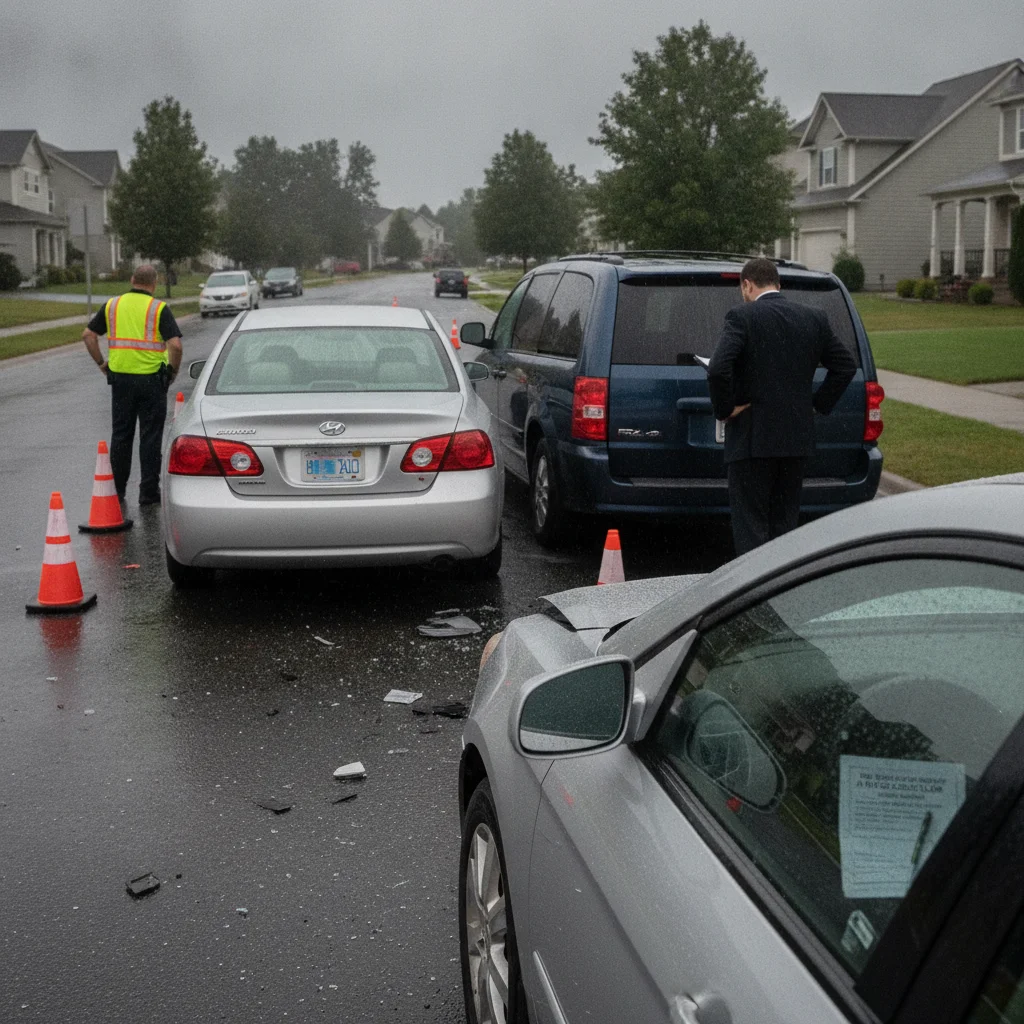
The good news: increasing liability limits is relatively inexpensive. Going from $50,000/$100,000 to $100,000/$300,000 often adds less than $10–$15 per month to your premium. The coverage jump is enormous relative to the cost difference. A practical framework for setting limits that genuinely protect you can help you land on a number tied to your actual assets rather than an arbitrary default.
If your net worth has grown substantially — through home equity, retirement savings, or business assets — your liability limits should reflect that. Drivers with significant assets who max out their auto liability limits should also consider whether a personal umbrella policy makes sense as an additional layer. Comparing umbrella coverage against simply raising auto limits is worth doing before your next renewal.
Special Situations That Override the Standard Calculus
There are circumstances where the typical vehicle-value math doesn't apply cleanly, and where defaulting to one coverage type without thinking it through creates real exposure.
Financed and Leased Vehicles
This one's non-negotiable. If you owe money on your car or you're leasing it, your lender or lessor will require full coverage as a condition of the loan or lease agreement. It's not a recommendation — it's contractual. If you drop to liability-only and your lender discovers it (usually through a lapse notice from your insurer), they will purchase force-placed insurance on your behalf and charge it to your loan. Force-placed policies are notoriously expensive and cover only the lender's interest, not yours. Keep full coverage in place until the loan is paid off.
Households With Teen Drivers
Adding a teen to your policy raises your liability exposure significantly. Young drivers are statistically more likely to cause accidents, and the resulting claims can be severe. How liability coverage works — and where it can fall short — for young drivers is worth reading before you assume your current limits are adequate. In many cases, households with teen drivers should increase liability limits rather than trim coverage to manage the higher premium.
Life Changes That Shift Your Risk Profile
A home purchase, a salary increase, or a significant inheritance changes your asset exposure and should trigger a coverage review. A practical checklist for reassessing limits when life changes lays out exactly when and how to do that review. What was adequate coverage two years ago may be dangerously thin today.
High-Risk Geographic Areas
If you live somewhere with high auto theft rates, frequent severe weather, or regular flooding, comprehensive coverage pays for itself more quickly than in low-risk areas. Check your local claims data — insurers use it, and you should too. A comprehensive deductible of $500 in a hail-prone area is a reasonable hedge. The same coverage in a mild climate with low theft rates is harder to justify on an older vehicle.

Making the Decision: A Practical Framework
Stop thinking about this as a binary choice between "cheap" and "expensive" insurance. Think of it as a two-part decision: one about your vehicle and one about your liability exposure.
Step 1: Evaluate Your Vehicle
- Find the current market value of your car (private party value from KBB or Edmunds).
- Subtract your deductible from that number to get your realistic maximum claim payout.
- Compare that figure to your annual collision and comprehensive premium.
- If the premium exceeds 10% of the net payout, seriously consider dropping to liability-only.
Step 2: Set Appropriate Liability Limits
- Identify your total exposed assets: savings, investment accounts, home equity, future earnings.
- Set liability limits at a minimum equal to your net worth — ideally higher.
- Evaluate whether a personal umbrella policy makes sense as an additional layer above your auto limits.
- Understand how your limits are structured — decoding split limits clearly ensures you know exactly what each number on your declarations page covers.
The combination most drivers should land on is not simply "full coverage with minimum liability" or "liability-only with whatever limits come default." The smartest approach is intentional: right-sized liability limits chosen based on your assets, and collision/comprehensive added only when the math supports it relative to your vehicle's actual value.
How your coverage acts as a financial firewall is the right mental model here. Liability coverage protects what you've built. Collision and comprehensive protect the vehicle itself. Both decisions deserve independent analysis, and neither should be made purely on the basis of what's cheapest this month.
Depreciation Changes the Math Every Year
Your car loses value every year, but your collision and comprehensive premium doesn't automatically drop at the same rate. Run the break-even calculation annually — what was a smart full-coverage decision three years ago may no longer pencil out today. Set a calendar reminder at each renewal to check your car's current market value against what you're paying for physical damage coverage.
Coverage Review Triggers You Shouldn't Ignore
Certain life events should prompt an immediate insurance review, not just at annual renewal. Paying off a car loan, moving to a new state, buying a home, or experiencing a major income change all shift your coverage needs. <a href="/car-insurance/coverage-types/liability-coverage/reviewing-your-liability-coverage-after-a-major-life-change">Reviewing your liability coverage after a major life change</a> gives you a structured checklist for exactly these moments. Don't let inertia leave you with coverage that no longer fits.
Gap Insurance: The Add-On Financed Drivers Often Miss
If you financed your vehicle recently and put little money down, there's a good chance you owe more on the loan than the car is currently worth. Standard full coverage will pay the car's market value in a total loss — not the loan balance. Gap insurance covers the difference. If you're underwater on your loan, gap coverage is worth adding until the loan balance drops below the vehicle's value.
Review your coverage every policy term — or immediately after a major life change. Car values depreciate, assets grow, and the right coverage level today may not be the right level in 18 months.

All claims are backed by peer-reviewed research. Sources on request.