Key Takeaways
Summary
22 items · 25–45 minutes
Why Life Changes and Liability Limits Go Hand in Hand
Liability coverage exists to protect what you've built. But what you've built tends to change — sometimes dramatically — over the course of a few years. A new spouse, a home purchase, a promotion, or even an inheritance can quietly shift your financial exposure in ways your current policy was never designed to handle.
The core problem is this: most people set their liability limits once, often when they first get a policy in their twenties with minimal assets, and never revisit them. State minimums — typically something like 25/50/25 (meaning $25,000 per person, $50,000 per accident, $25,000 for property damage) — exist only to keep you legal on the road. They are not designed to fully protect you financially if you cause a serious accident.
If someone is injured in a crash you caused and the damages exceed your policy limit, your insurer pays up to that limit and stops. The plaintiff's attorneys then come after your personal assets: your savings, your home equity, your retirement accounts, even a portion of your wages. That's the exposure life changes can amplify.
How much liability coverage do you actually need? depends heavily on your current financial picture — and that picture shifts every time a major life event occurs. This checklist walks you through a structured review so you can confirm your limits still match your actual risk.

What to Gather Before You Start
Before adjusting anything, you need a clear view of two things: what you currently have and what you currently own. Pull these together before working through the checklist below — it will make your review far more accurate and your conversations with your insurer or agent much more productive.
Current Auto Insurance Declarations Page
Shows your exact liability limits, covered vehicles, and listed drivers so you can identify gaps.
Recent Pay Stub or Tax Return
Helps you assess your income level and future earning capacity, both of which affect your liability exposure.
Bank and Investment Account Statements
Needed to calculate your total liquid and invested assets as part of your net worth.
Most Recent Mortgage Statement
Provides your current loan balance so you can calculate your home equity accurately.
Net Worth Calculator (spreadsheet or online tool)
Aggregates your assets and liabilities into a single number to compare against your liability limits.
Insurance Agent or Broker Contact
Allows you to request revised quotes and ask specific questions about umbrella policies and limit adjustments.
Once you have these documents in front of you, the checklist items below will take on real meaning. You're not just checking boxes — you're comparing what's on your policy to what's actually at stake.
The Life-Change Liability Review Checklist
Work through each group below in order. Some items require a quick look at a document; others prompt a deeper conversation with your agent. Mark anything that feels misaligned as a priority action item before your next renewal — or before it, if the gap is significant.
Assess Your Current Financial Profile
Account for Marriage or Partnership
Account for a Home Purchase
Account for Income or Asset Growth
Review Your Driving Exposure
Evaluate Umbrella Policy Need
Final Policy Review
State Minimums Are Not Financial Protection
Many drivers assume that carrying the state-required minimum liability coverage means they're adequately protected. They're not. State minimums are set to keep you legal — not to shield your savings account or home equity if you cause a serious accident. In most states, minimums cover as little as $25,000 in property damage and $50,000 per accident for bodily injury. A single hospitalization can easily exceed those limits.
Don't Wait Until Renewal to Act
If you've recently experienced a major life change — especially a home purchase or significant salary increase — don't wait for your next renewal date to update your limits. In most cases, insurers allow mid-term adjustments with immediate effect. A coverage gap that exists today is a real risk today, not a renewal-cycle problem.
Once you've completed the checklist, you'll likely find that one or two categories stand out as areas where your coverage has drifted from your reality. That's normal — and fixable. The goal isn't a perfect score; it's knowing exactly where you stand.
For a broader look at all the optional protections worth reconsidering during life transitions, this guide to auditing your add-ons after major changes covers the full picture beyond liability.
The Asset-to-Coverage Gap: Understanding Your Real Exposure
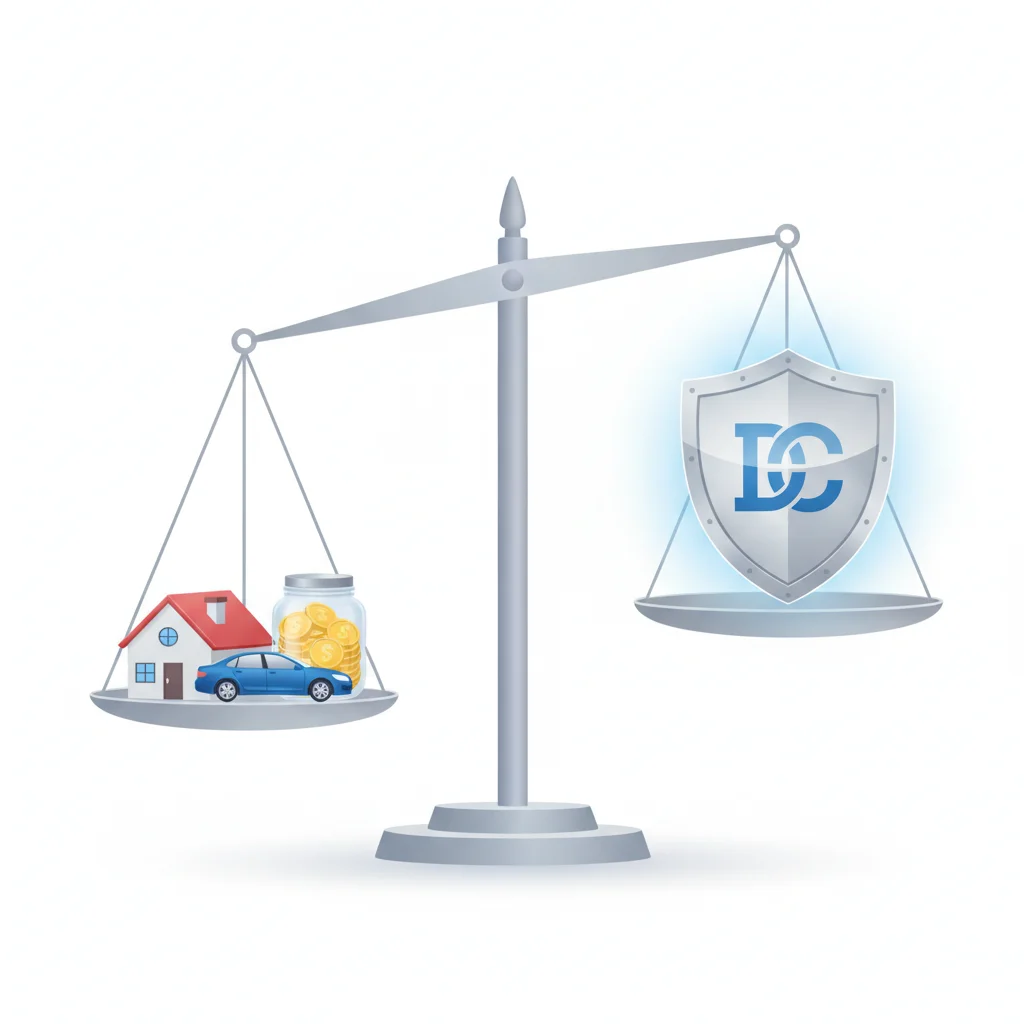
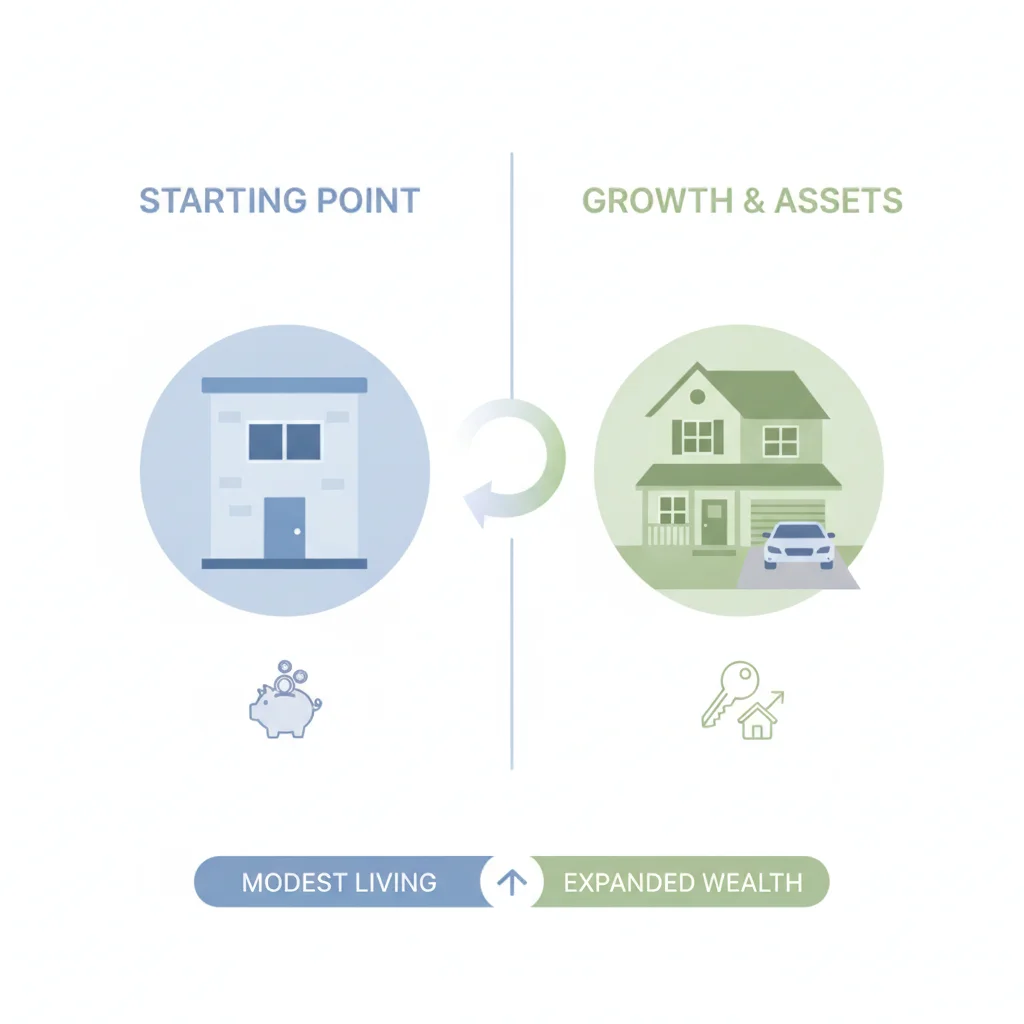
Here's the clearest way to think about liability limits: they should be high enough that, if you caused a catastrophic accident, your personal assets would remain largely protected. The gap between your total net worth and your current coverage limit is your exposure.
Consider this simplified example:
| Scenario | Net Worth | Current Limit | Exposure Gap |
|---|---|---|---|
| New renter, early career | $12,000 | $50,000 | Low |
| Married homeowner | $280,000 | $50,000 | High |
| Dual-income, investments | $550,000 | $100,000 | Very High |
The middle and bottom rows represent the situation millions of drivers are quietly in — often without realizing it. The solution isn't always doubling your auto liability limit. Sometimes a personal umbrella policy is far more cost-effective, extending your coverage to $1 million or more for as little as $200–$400 per year.
Your liability limits should reflect your net worth — that connection is the foundation of any meaningful coverage review. The higher your net worth climbs, the more you have to lose in a judgment.
Judgments Can Exceed Your Policy Limit
If you are found liable for an accident and the damages exceed your liability limit, your insurer pays up to the limit and your obligation ends there on paper — but the plaintiff can still pursue your personal assets through a civil judgment. Wages, savings accounts, and non-exempt property can all be targets. This is not a rare edge case: serious accident claims involving injuries and vehicles regularly result in six-figure damages. Make sure your limits reflect what you actually have to protect.
For a side-by-side look at when liability-only makes sense versus when full coverage is the right call, this comparison of liability limits vs. full coverage breaks down the tradeoffs clearly.
After the Review: What to Do With What You Find
Completing the checklist is just the diagnostic. Here's how to act on what you find.
If your limits are clearly too low
Contact your insurer or agent and request a quote for higher limits — typically moving from the state minimum (25/50/25) up to 100/300/100 is the most common upgrade, and it rarely costs as much as people expect. If your net worth exceeds $300,000–$500,000, ask about a personal umbrella policy on top of that.
If you've recently married
Combine policies if it makes financial sense (it usually does), and make sure both drivers are properly listed. Confirm that your combined assets are reflected in your new shared limits. Life events that should trigger a policy review covers the marriage transition in more detail.
If you've bought a home
Your home equity is now an asset that can be targeted in a judgment. This is typically the single strongest argument for raising your liability limits or adding an umbrella policy. Coordinate your home insurance and auto insurance umbrella requirements — most umbrella policies require minimum underlying limits on both.
If nothing has changed recently but it's been years
Inflation alone may have eroded the practical value of your existing limits. Property damage costs have risen sharply — a fender-bender that caused $10,000 in damage five years ago might cost $18,000 to repair today. Revisit your property damage liability limit in particular.
Your insurer's policy management options make mid-term adjustments straightforward in most cases — you don't have to wait until renewal to make meaningful changes to your coverage.

If your driving situation has changed in other ways — a long trip, a temporary relocation, or a period where you're not driving regularly — adjusting coverage for unusual situations explains how to handle those transitions without overpaying or leaving gaps.
A Final Note on Timing
The best time to review your liability coverage is before something happens — not after. A serious accident that exceeds your limits is one of the most financially destabilizing events a family can face, and it's entirely preventable with the right coverage in place.
Think of this checklist as something you return to at every significant transition: a new job, a new home, a new family member, a meaningful increase in savings or investments. It takes less than an hour and can protect years of financial progress.
If you're unsure where your limits should land after going through this checklist, our framework for setting liability limits gives you a structured way to arrive at a specific number based on your actual situation. The right limit isn't the same for everyone — but it should always reflect who you are financially today, not who you were when you first signed up for coverage.

All claims are backed by peer-reviewed research. Sources on request.