Key Takeaways
Liability Coverage for Teen Drivers
Liability coverage pays for injuries and property damage your teen causes to others in an at-fault accident. It does not cover damage to your own vehicle or your teen's medical bills — it protects the other party. When a teen is listed on your policy, your existing liability limits apply to their driving as well.
Liability coverage is split into two components: bodily injury liability (BI) and property damage liability (PD), each with separate limits expressed as per-person, per-accident, and property damage amounts (e.g., 100/300/100).
Why Teen Drivers Change Your Liability Picture Entirely
The moment your teenager gets behind the wheel, your liability exposure as a parent grows significantly. It's not a minor shift in risk — it's a fundamental change in what you could potentially owe if something goes wrong. Understanding that shift clearly is the first step to protecting your family.
Liability coverage is the portion of your auto insurance that pays for harm your teen causes to other people and their property. If your teen runs a red light and injures another driver, your liability coverage is what steps in to pay that person's medical bills and repair their car. If your limits aren't high enough to cover those costs, you're personally on the hook for the rest.
Liability coverage is foundational to any auto policy, but it works differently when a high-risk driver — and statistically, all teenagers are high-risk drivers — is included on your policy. The numbers are striking:
3x
Higher crash rate for teen drivers vs. adults
According to the CDC, drivers ages 16–19 are nearly three times more likely to be in a fatal crash per mile driven than drivers aged 20 and over.
$40,000+
Average cost of an injury-related auto claim
The Insurance Research Council reports that the average bodily injury liability claim has risen steadily and frequently exceeds state-minimum coverage limits.
50–100%
Typical premium increase when adding a teen
Industry data shows family auto premiums commonly rise by 50% to over 100% when a teenage driver is added, depending on age, gender, and vehicle.
$150–$300
Average annual cost of a $1M umbrella policy
The Insurance Information Institute notes that personal umbrella policies typically cost $150 to $300 per year for the first million dollars in coverage.
This doesn't mean your teen is a bad driver or that an accident is inevitable. It means the probability of a claim is meaningfully higher, and your coverage needs to reflect that reality.
How Your Liability Limits Work — and Where They Can Fall Short
Liability coverage is expressed as a set of three numbers, such as 100/300/100. Here's what each number means:
- $100,000 — the maximum your insurer will pay per person injured in a single accident
- $300,000 — the maximum your insurer will pay per accident, regardless of how many people are injured
- $100,000 — the maximum your insurer will pay for property damage caused in a single accident
Many families carry state-minimum liability limits — which in some states are as low as 25/50/25. Those limits made more sense before a teenage driver was added to the mix. A single serious accident involving multiple injuries can quickly surpass even a 100/300/100 policy.

Consider a scenario where your teen rear-ends a family in an SUV. The vehicle is worth $40,000. Three people are treated at the emergency room. One has a back injury requiring surgery. Medical bills alone could reach $150,000 or more — and if your per-person limit is only $25,000, the gap falls on you personally.
State Minimum Limits Are a Legal Floor, Not a Safety Net
State-required minimum liability limits exist to ensure some baseline compensation for accident victims — they were never designed to fully protect a driver from financial ruin. In states like California, the minimum property damage limit is just $5,000, which won't cover damage to most vehicles on the road today. Treat minimums as a starting point, not a finish line, especially when a teen driver is involved.
The cost to raise your liability limits from minimum levels to 100/300/100 is often $10–$20 per month — a fraction of what your premium increases by simply adding a teen. It's one of the most cost-efficient upgrades you can make. See how liability limits compare to full coverage so you can make an informed decision about your overall protection level.
Parental Liability: Your Legal Exposure Goes Beyond the Policy
Most parents don't realize how much legal responsibility they carry when a minor child drives. Liability insurance is designed to cover this exposure — but only up to your limits. Beyond that, the law often holds you personally accountable.
The Family Purpose Doctrine
In many states, the family purpose doctrine holds that if you own a vehicle maintained for family use, you are legally responsible for accidents caused by any family member who drives it — regardless of whether you were present. This applies to teens as well as other household members.
Parental Responsibility Laws
Many states have explicit parental responsibility statutes that make parents financially liable for negligent acts committed by their minor children while driving. In some states, signing your teen's driver's license application explicitly acknowledges this liability.
What This Means for Your Coverage
Taken together, these laws mean a judgment from an accident your teen causes could reach your personal assets — your savings account, your home's equity, even future wages — if your liability limits are exhausted. This is precisely why many insurance professionals, myself included, recommend umbrella coverage as a near-essential add-on once a teen driver joins your household.
“Once a teenage driver is in the household, parents need to think of their auto liability limits the way a business thinks about its coverage — the downside risk has fundamentally changed, and the coverage needs to reflect that.”
— J. Robert Hunter, Former Director of Insurance, Consumer Federation of America
Umbrella Insurance: The Safety Net Worth Considering
An umbrella policy sits on top of your auto (and home) insurance and provides additional liability coverage once your underlying limits are exhausted. Most umbrella policies start at $1 million in extra coverage and cost between $150 and $300 per year — often less than the cost of a tank of gas each month.
For a family with a teen driver, the math is straightforward. If you carry 100/300/100 auto liability and a $1 million umbrella, your effective bodily injury limit per accident becomes $1.3 million. That's a meaningful buffer against catastrophic claims.
Raise Your Limits Before Shopping for an Umbrella
Most umbrella insurers require that your underlying auto policy carry minimum liability limits of 100/300/100 before they'll issue an umbrella policy. If your current limits are lower, you'll need to raise them first — which is a smart move regardless. Contact your insurer to update your limits and ask for an umbrella quote in the same call.
Add Your Teen Before They Drive, Not After
Don't wait for your teen to cause an accident before notifying your insurer. Add them to your policy the day they receive their license — or even earlier if your insurer allows it for learner's permit holders. Coverage gaps caused by late notification can result in denied claims or coverage disputes that put your family at real financial risk.
There are a few things to know about umbrella policies before purchasing:
- Most insurers require minimum underlying auto liability limits (often 100/300/100 or 250/500/100) before they'll sell you an umbrella.
- Umbrella coverage typically extends to other liability situations as well — not just car accidents.
- If your teen causes an accident in another family member's car, your umbrella may or may not apply, depending on the policy wording.
Review your current auto limits before shopping for an umbrella. You may need to raise your base limits first, which is actually a good idea in its own right.
What Liability Coverage Does Not Cover for Your Teen
It's worth being direct about the gaps in liability-only coverage, because they surprise a lot of families. Liability insurance is designed to protect the other party — not you or your teen.
Here's what liability coverage does not pay for:
- Damage to your own vehicle — If your teen is at fault and your car is wrecked, liability won't pay to repair or replace it. You need collision coverage for that.
- Your teen's medical bills — If your teen is injured in an at-fault accident, liability does not cover their treatment. Medical payments (MedPay) or personal injury protection (PIP) handles that.
- Damage from an uninsured driver — If someone without insurance hits your teen, uninsured motorist coverage is what protects you.
- Stolen vehicle or weather damage — Only comprehensive coverage applies here.
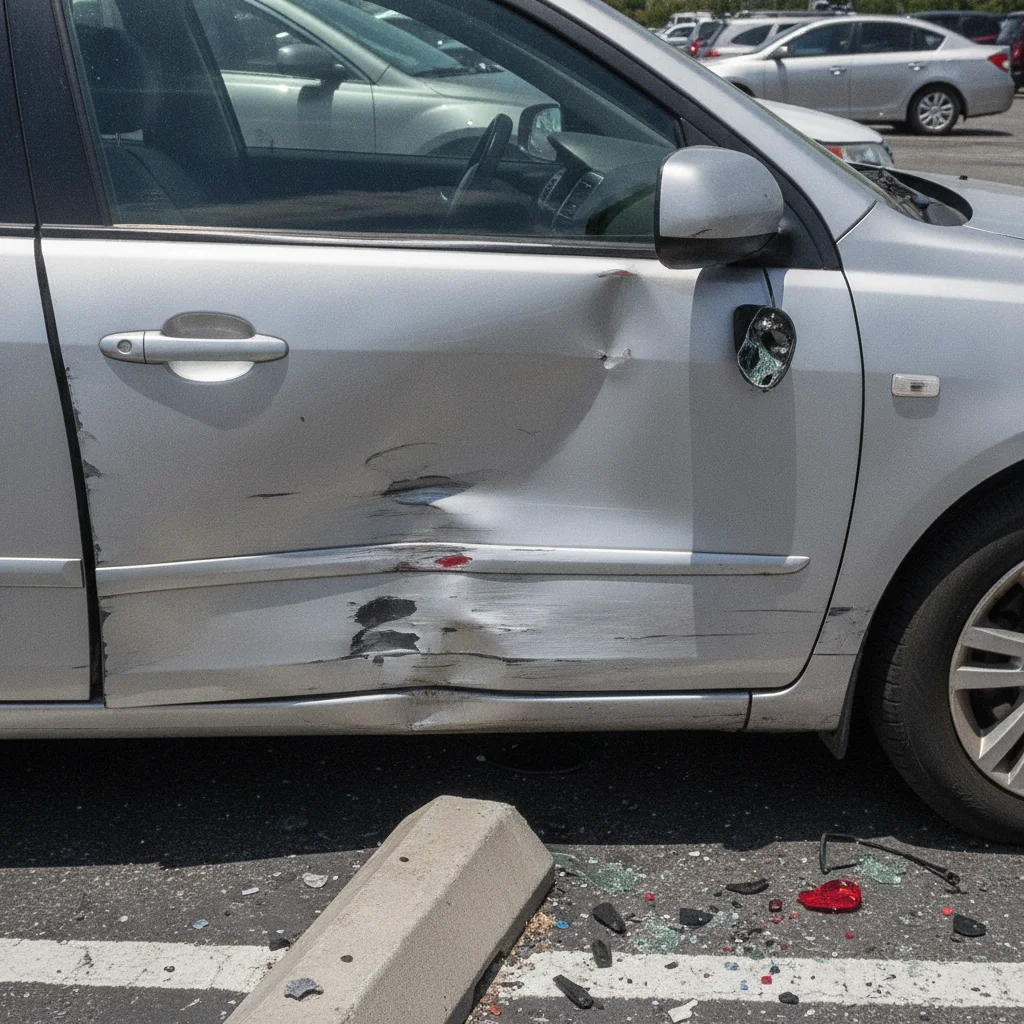
For teens driving a newer or financed vehicle, full coverage is usually worth the additional premium. And given teens' statistical risk profile, adding collision and comprehensive makes even more sense than it would for an experienced adult driver.
There are also optional add-ons worth exploring once you've addressed your core liability gaps. Certain optional coverages offer meaningful protection for inexperienced drivers that you might not need for yourself.
Should Your Teen Be on Your Policy or Get Their Own?
One practical question many parents face is whether to add their teen to the existing family policy or set them up with a separate policy entirely. The answer affects not just cost, but also how liability works in the event of a claim.
In most cases, adding a teen to your existing policy is the more affordable approach. It consolidates coverage, keeps the teen under your liability limits, and avoids the challenge of a teen qualifying for their own policy with no driving history.
However, if your teen lives at a separate address, attends college in another state, or drives a vehicle that's titled in their own name, a separate policy may be required or more appropriate. Insurers vary in how they handle these situations, so it's worth calling your agent to clarify.
The decision between shared and separate policies involves real trade-offs beyond just premium cost — including how claims affect each driver's record and future rates.
Raise Your Limits Before Shopping for an Umbrella
Most umbrella insurers require that your underlying auto policy carry minimum liability limits of 100/300/100 before they'll issue an umbrella policy. If your current limits are lower, you'll need to raise them first — which is a smart move regardless. Contact your insurer to update your limits and ask for an umbrella quote in the same call.
Add Your Teen Before They Drive, Not After
Don't wait for your teen to cause an accident before notifying your insurer. Add them to your policy the day they receive their license — or even earlier if your insurer allows it for learner's permit holders. Coverage gaps caused by late notification can result in denied claims or coverage disputes that put your family at real financial risk.
As your teen ages into adulthood, another question emerges: when do they need their own policy? Staying on a parent's policy as an adult driver has real trade-offs that both parents and young adults should understand before making that call.
Practical Steps to Protect Your Family Right Now
If you have a teen driver on your policy — or one who's close to getting their license — here's a focused action plan to make sure your liability coverage is actually doing its job.
- Review your current liability limits. Pull out your declarations page and find the three-number liability split. If it's below 100/300/100, you likely need to increase it before a teen is added.
- Notify your insurer when your teen gets licensed. Even if they're not driving yet, insurers expect you to disclose all licensed household members. Failing to do so can result in a denied claim.
- Get a quote for an umbrella policy. Call your insurer and ask what it would cost to add a $1 million umbrella. For most families it's remarkably affordable — and the peace of mind is worth it.
- Consider collision and comprehensive. Liability alone leaves you exposed if your teen damages your vehicle. Check whether adding these coverages makes financial sense given the car's value.
- Ask about discounts. Good student discounts, driver training discounts, and telematics programs can offset some of the premium increase. Many insurers also discount for teens who take a state-approved defensive driving course.
Understanding how age and driving history affect your premium can also help you anticipate what the rate increase will look like — and how it changes as your teen builds a clean driving record over time.

All claims are backed by peer-reviewed research. Sources on request.