Key Takeaways
Liability Insurance & Asset Protection
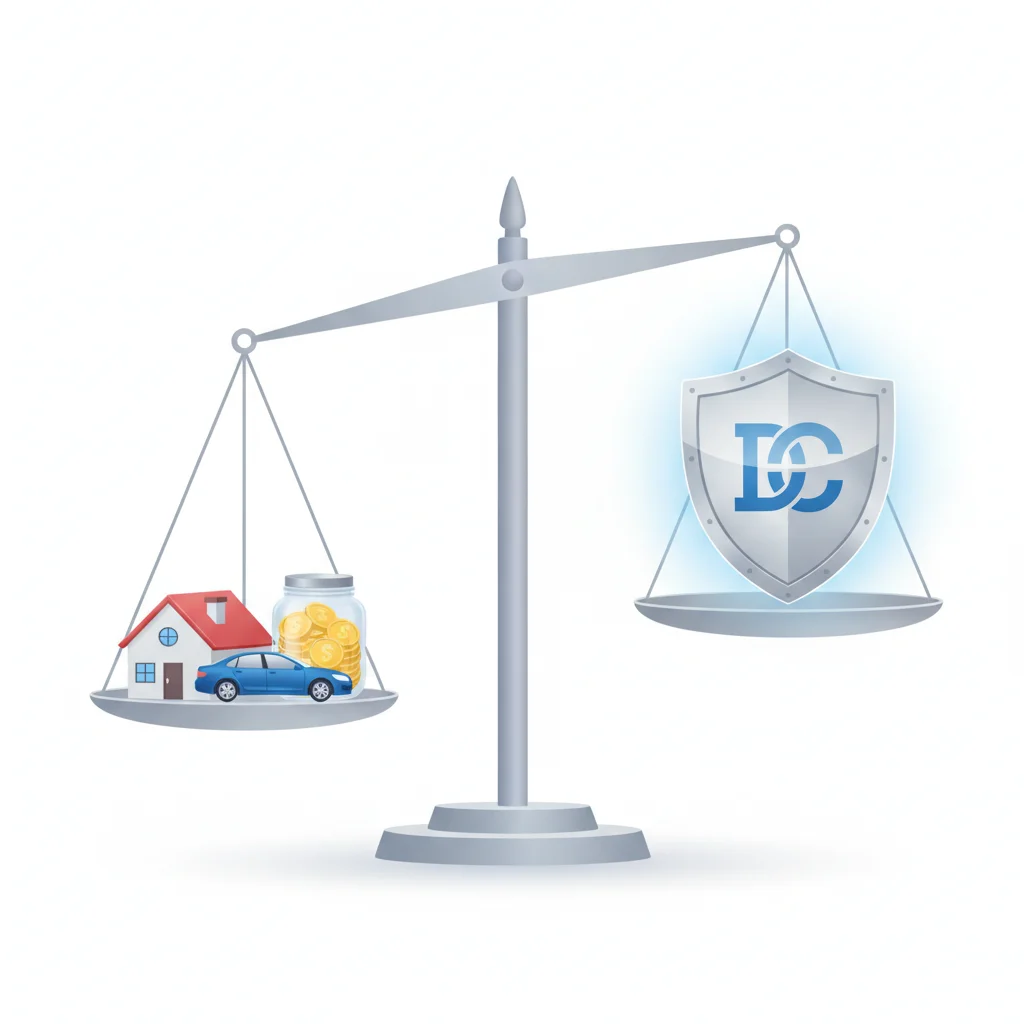
Liability car insurance pays for injuries and property damage you cause to others in an accident. Beyond covering those costs, it also shields your personal savings, home equity, and other assets from being seized to satisfy a legal judgment — up to your policy's limits. Think of it as a financial wall standing between an accident and everything you've built.
Asset protection under a liability policy is bounded by your declared coverage limits (expressed as per-person/per-accident/property damage splits, e.g., 100/300/100). Any judgment amount above those limits becomes your personal obligation, which is why limits selection is a wealth-management decision, not just a cost decision.
What Liability Insurance Actually Covers
When most people buy car insurance, they focus on what it does for them — covering their repairs, their hospital bills, their rental car. Liability coverage works differently. It exists to protect other people from financial harm you cause, and in doing so, it protects you from the legal and financial fallout that follows.
A standard auto liability policy has two main components:
- Bodily injury liability (BI): Pays for medical expenses, lost wages, pain and suffering, and sometimes funeral costs for people injured in an accident you caused.
- Property damage liability (PD): Covers repairs or replacement of vehicles, fences, storefronts, or other property you damage.
These limits are typically written as three numbers — for example, 100/300/100 — meaning $100,000 per injured person, $300,000 per accident total for bodily injury, and $100,000 for property damage. Every dollar the other party's attorney demands above those numbers is your personal responsibility.
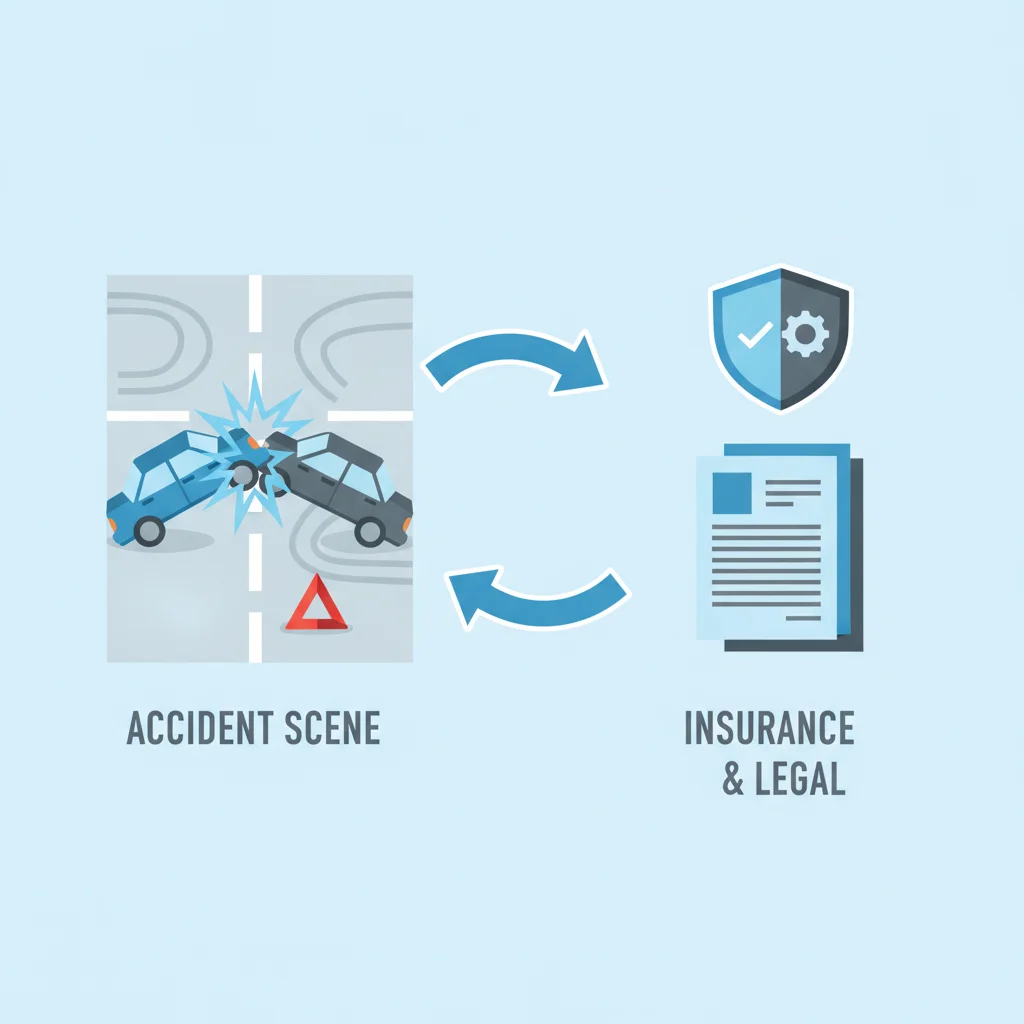
It's also worth noting what liability insurance does not cover: your own vehicle damage or your own medical bills after an accident. For those, you'd need collision and comprehensive coverage separately. Liability-only policies can be appropriate in certain situations — our guide on liability limits vs. full coverage walks through when that trade-off makes sense.
State Minimums Are Not a Safety Net
Every state requires some minimum level of liability insurance to legally operate a vehicle, but those minimums are designed to ensure basic compensation for accident victims — not to protect your assets. In most states, the minimum bodily injury limit per accident is $50,000 or less, which a single serious injury can exhaust entirely. Treating the minimum as the default is a common but risky approach.
Judgment Timelines Can Stretch for Years
A civil judgment in most states remains collectible for 10 to 20 years, and creditors can often renew them. This means that even if you don't have significant assets today, a judgment entered against you now can follow you as your financial situation improves. Wage garnishment and future asset seizure are both tools available to creditors in most jurisdictions.
How Liability Coverage Becomes a Financial Firewall
Here's the scenario that keeps financial planners up at night: you cause a serious accident. The injured driver sues you. A court awards them $450,000 in damages. Your liability policy covers $100,000. The remaining $350,000? That judgment is against you personally.
Liability insurance functions as a firewall because it absorbs the first hit — paying claims and covering legal defense costs — so that creditors never reach your personal finances in the first place. As long as damages stay within your policy limits, your savings account, your home equity, and your retirement fund are untouched.
“Auto liability limits are one of the few places in personal finance where the cost of being wrong is catastrophic and the cost of being right is trivial. The premium difference between adequate and inadequate coverage is often less than a tank of gas per month.”
— J. Robert Hunter, Former Director of Insurance, Consumer Federation of America
The legal mechanism behind this is straightforward: your insurer steps in, satisfies the judgment up to your limits, and the claimant typically has no further claim on your personal assets. But once the insurer's obligation ends at the coverage ceiling, you're exposed.
$20,235
Average bodily injury liability claim in the U.S.
According to the Insurance Research Council, the average bodily injury claim has risen steadily over the past decade, with medical cost inflation as a primary driver.
1 in 6
Drivers involved in accidents each year
Industry estimates suggest roughly one in six drivers will be involved in an accident in any given year, making liability exposure a common and realistic risk.
$500K+
Potential cost of a severe injury accident
Serious crashes involving traumatic brain injury, spinal damage, or extended hospitalization routinely generate claims far exceeding standard policy limits, according to personal injury attorneys and actuarial data.
$200–$300
Typical annual cost of a $1M umbrella policy
The Insurance Information Institute estimates most personal umbrella policies providing $1 million in additional liability coverage cost between $150 and $300 per year when bundled with an existing auto policy.
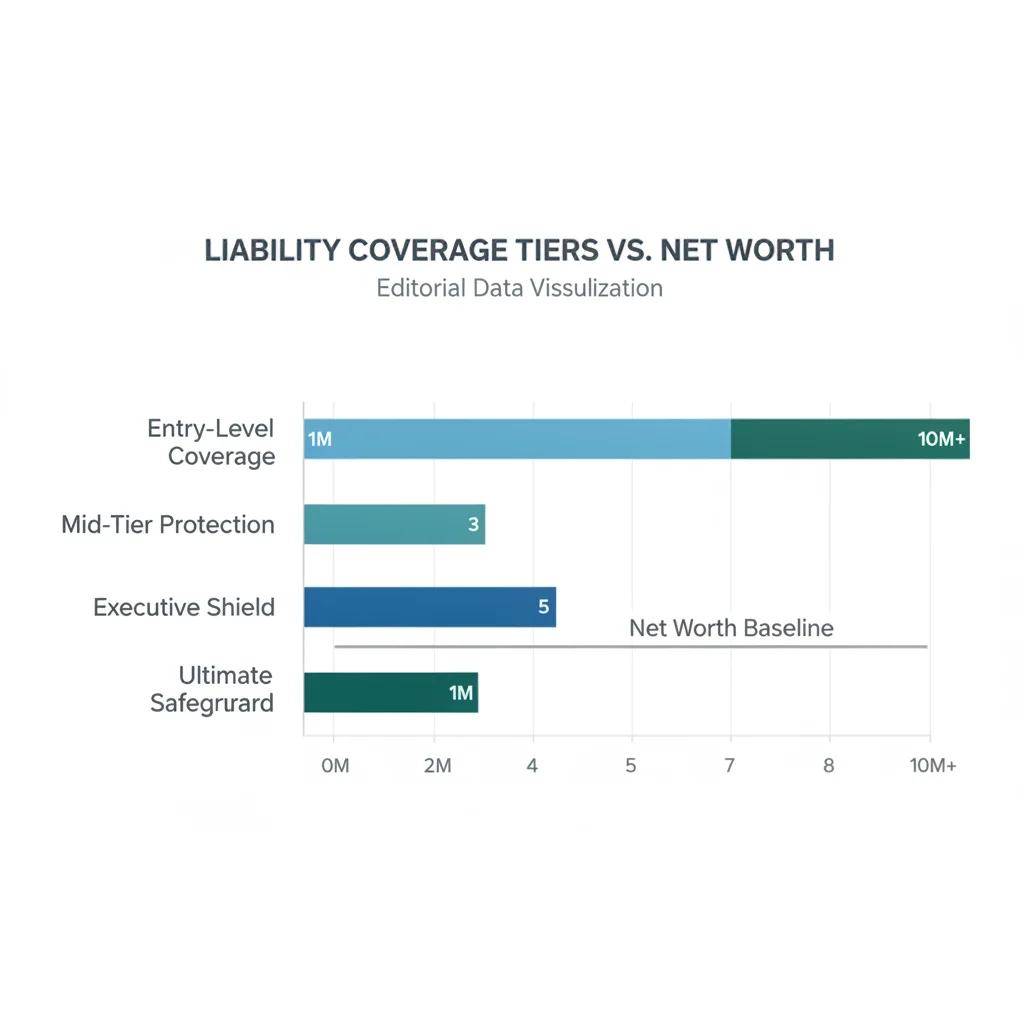
This is why choosing your liability limits isn't just an insurance decision — it's a personal finance decision. The more assets you have, the more you stand to lose if your coverage is too thin. Our article on why your liability limits should reflect your net worth explains this relationship in detail.
What Creditors Can Actually Come After
If a judgment is entered against you and your insurer has exhausted its obligation, the winning party becomes a creditor. Depending on your state's laws, they may be able to pursue:
- Bank accounts and savings: Often among the easiest assets to reach via garnishment orders.
- Investment accounts: Brokerage accounts and non-retirement investment portfolios are generally accessible to creditors.
- Home equity: Some states offer a homestead exemption that protects a portion of your home equity, but this varies widely and often has a cap.
- Wage garnishment: A creditor can petition to have a portion of your paycheck withheld and redirected to satisfy a debt.
- Future income and assets: Judgments can last 10–20 years in many states and may be renewed, meaning assets you acquire later can also be targeted.

Certain assets do enjoy legal protection in most states. Qualified retirement accounts like 401(k)s and IRAs often have strong creditor protection under federal law. But you shouldn't bet your financial future on the assumption that enough of your assets are protected — the safer move is ensuring your coverage limits make a judgment against you unlikely to exceed what your insurer will pay.
Don't Skip the Umbrella Policy
If your net worth is $200,000 or more, a personal umbrella policy is one of the smartest, most affordable protections you can buy. For roughly $200 per year, you typically add $1 million in liability coverage above your auto (and homeowners) limits. Most insurers require you to carry a minimum auto liability limit — often 250/500 — before adding an umbrella, so adjust your base policy accordingly.
Review Your Limits After Major Life Changes
Got a raise, paid down your mortgage, or inherited assets? Your liability exposure just changed. Make a habit of reviewing your liability limits whenever your net worth increases meaningfully — at least every two to three years or after any major financial event. What felt like adequate coverage five years ago may leave a significant gap today.
For a detailed picture of what financial exposure looks like when damages top your limits, see our dedicated guide on what happens when damages exceed your liability limits.
Legal Defense: Your Insurer Stands With You (Up to a Point)
One of the most underappreciated parts of a liability policy is the legal defense provision. When you're sued after an accident, your insurer typically assigns an attorney to represent you — at no additional cost to you. This coverage applies even if the lawsuit is ultimately found to be groundless.
That said, there are important boundaries. Your insurer controls the defense strategy. Their attorney's primary obligation is to resolve the case within your policy limits, which may not align perfectly with your interests if damages are likely to exceed those limits. In those situations, you may want to consult a personal attorney independently.
The defense coverage also ends at your policy's limits in most states. If a judgment exceeds your limits, your insurer's legal obligation is satisfied, and you're left managing any remaining exposure on your own. Our article on liability coverage and legal defense goes deeper on what your insurer will and won't fight for in court.
Setting Limits That Actually Protect You
State minimum liability requirements are a legal floor, not a financial strategy. Most state minimums — often as low as 25/50/25 — would be exhausted by a single hospitalization after a serious accident. Setting your limits based only on what's required by law is one of the more common and costly mistakes drivers make.
A more practical approach ties your liability limits to your financial picture:
- Estimate your net worth: Add up your home equity, savings, investment accounts, and other significant assets. This is roughly what's at stake.
- Set limits at or above that figure: If you have $250,000 in net worth, carrying $100,000/$300,000 in bodily injury coverage offers some protection but leaves a gap. Moving to $250,000/$500,000 closes it meaningfully.
- Consider an umbrella policy: A personal umbrella policy typically adds $1 million or more in liability coverage above your auto (and homeowners) policy for a relatively modest premium — often $150–$300 per year. This is one of the most cost-effective ways to protect significant assets.
For a structured framework on this, read how much liability coverage you actually need. If you're also weighing optional coverage add-ons that work alongside liability, our overview of optional coverage add-ons is a helpful companion.
Don't Skip the Umbrella Policy
If your net worth is $200,000 or more, a personal umbrella policy is one of the smartest, most affordable protections you can buy. For roughly $200 per year, you typically add $1 million in liability coverage above your auto (and homeowners) limits. Most insurers require you to carry a minimum auto liability limit — often 250/500 — before adding an umbrella, so adjust your base policy accordingly.
Review Your Limits After Major Life Changes
Got a raise, paid down your mortgage, or inherited assets? Your liability exposure just changed. Make a habit of reviewing your liability limits whenever your net worth increases meaningfully — at least every two to three years or after any major financial event. What felt like adequate coverage five years ago may leave a significant gap today.
The Real Cost of Underinsuring
It can be tempting to keep liability limits low to save on premiums. The math feels straightforward: pay less now, hope nothing happens. But the financial math of an at-fault accident involving serious injuries tells a different story.
Average medical costs for a single serious car accident injury can run from $50,000 to well over $500,000 depending on severity. Add lost wages, long-term care, and pain-and-suffering claims, and a $100,000 bodily injury limit can evaporate quickly. The difference in annual premium between minimum-liability and robust coverage (e.g., 100/300/100 vs. 25/50/25) is often $200–$500 per year — far less than the exposure gap it closes.
Put simply: underinsuring to save $20 a month makes sense until it doesn't. And when it stops making sense, the consequences tend to be severe and lasting.
State Minimums Are Not a Safety Net
Every state requires some minimum level of liability insurance to legally operate a vehicle, but those minimums are designed to ensure basic compensation for accident victims — not to protect your assets. In most states, the minimum bodily injury limit per accident is $50,000 or less, which a single serious injury can exhaust entirely. Treating the minimum as the default is a common but risky approach.
Judgment Timelines Can Stretch for Years
A civil judgment in most states remains collectible for 10 to 20 years, and creditors can often renew them. This means that even if you don't have significant assets today, a judgment entered against you now can follow you as your financial situation improves. Wage garnishment and future asset seizure are both tools available to creditors in most jurisdictions.

All claims are backed by peer-reviewed research. Sources on request.