Key Takeaways
Why "Enough" Liability Coverage Is the Most Important Insurance Question
Most drivers think about car insurance in terms of what they're required to carry. They find out the state minimum, add it to their policy, and move on. The problem is that state minimums were designed to protect other people from uninsured drivers — not to protect you from financial catastrophe after an at-fault accident.
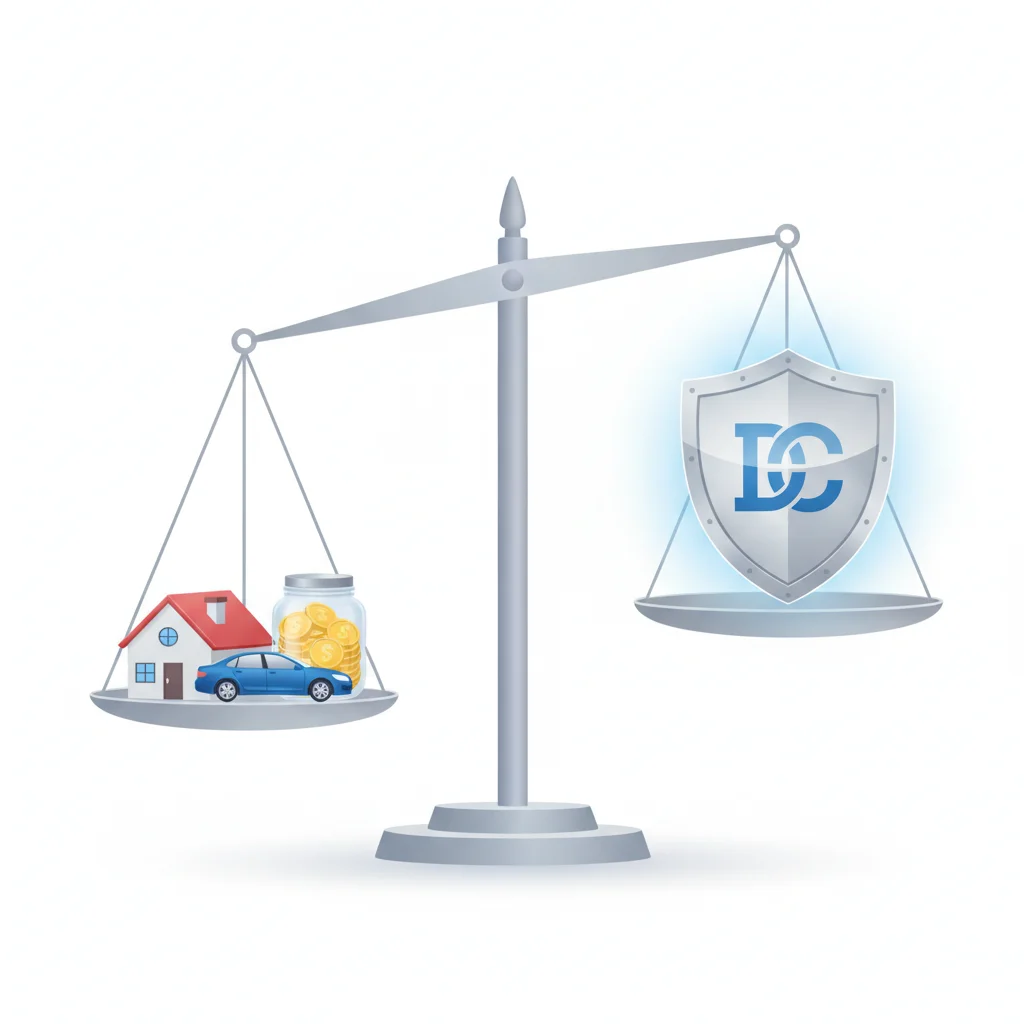
Liability coverage is the one component of your auto policy that works entirely for the benefit of others: the people you injure, the vehicles you damage, the property you destroy. But what you choose to carry determines the boundary between what your insurer absorbs and what you personally owe. Cross that boundary, and a lawsuit can reach your savings account, your home equity, your retirement nest egg.
Liability coverage from the ground up provides the foundational explanation of how the coverage works. This guide picks up from there and walks you through a practical framework for deciding how much you actually need — based on what you have to lose, how much risk you generate on the road, and what expanded coverage realistically costs.

The good news: this doesn't have to be complicated. Once you understand the four or five inputs that drive the decision, most drivers can arrive at the right answer in less than half an hour.
Net Worth Estimate
A rough calculation of your assets minus liabilities — the primary number that should anchor your liability limit decision.
Current Insurance Policy Declarations Page
Shows your existing liability limits in the split-limit format so you know your starting point before making changes.
State Minimum Liability Requirements
Confirms the legal floor for your state so you know the baseline you must meet before evaluating whether to go higher.
Insurance Quote Comparison Tool
Lets you price out the cost of higher liability limits across multiple insurers to find the best value for expanded coverage.
Personal Umbrella Policy Quote
Provides pricing on excess liability coverage that activates above your auto policy limits, useful for high-net-worth drivers.
What you will need
Step-by-Step: Setting the Right Liability Limits
Work through each step in sequence. If you've already completed some of this groundwork — you know your current limits, you've estimated your net worth — feel free to skip ahead. But don't skip step five: matching your limits to your profile is where most drivers make the most consequential error.
Decode Your Current Liability Limits
Before you can decide whether your limits are adequate, you need to understand exactly what they say. Pull out your declarations page — the one-page summary at the front of your policy — and locate the liability section. You'll typically see numbers expressed in a split-limit format like 100/300/100.
Those three numbers represent three separate caps:
- $100,000 — maximum paid per injured person in a single accident
- $300,000 — maximum paid for all bodily injuries combined in a single accident
- $100,000 — maximum paid for property damage in a single accident
Some policies use a combined single limit (CSL) instead, such as $300,000 — a single pool covering both bodily injury and property damage without per-person sub-limits. Each structure has tradeoffs. For a deeper look at how these formats create real-world gaps, see how liability coverage limits are expressed and what the numbers really mean.
Look Up Your State's Minimum Requirements
Every state mandates a minimum level of liability coverage as a condition of registering and legally operating a vehicle. These minimums vary significantly — from as low as 15/30/5 in some states to 25/50/25 or higher in others. A handful of states use no-fault frameworks that adjust how bodily injury liability applies.
You can find your state's requirements on your state's Department of Motor Vehicles or Department of Insurance website. Write down the minimums — you'll use them as a reference point, not as a target.
Think of the state minimum as the floor of a building. It keeps you legal, but it's rarely the floor you want to live on. Liability coverage from the ground up walks through why minimums exist and how they were originally set, which helps explain why most financial advisors recommend carrying significantly more.
Calculate Your Exposed Net Worth
Your exposed net worth is the core input for liability limit decisions. It's the value a plaintiff's attorney is essentially targeting if they pursue you after an accident exceeds your policy limits. Calculate it as follows:
- Add up your liquid and investable assets: checking and savings account balances, brokerage accounts, retirement accounts (note: retirement accounts have varying levels of protection from creditors depending on your state)
- Add your home equity (current market value minus your mortgage balance)
- Add the value of any other real property, vehicles, or business interests you own
- Subtract your outstanding debts: mortgage, car loans, student loans, credit card balances
The resulting figure is your net worth — and it's the number you're trying to shield with your liability coverage. A rough estimate is fine here. You're not filing a tax return; you're establishing a ballpark for coverage decisions.
[in_content_images:0]For a more detailed exploration of how this relationship works, why your liability limits should reflect your net worth makes the case clearly.
Assess Your Personal Risk Exposure
Net worth is the primary driver, but your lifestyle and driving habits also shape how much liability risk you're actively generating. Consider each of the following factors honestly:
- Annual mileage: Higher mileage means more exposure. Commuters who drive 20,000 miles per year face statistically more accident risk than retirees who drive 5,000.
- Driving environment: Dense urban driving — stop-and-go traffic, frequent lane changes, pedestrians — carries higher risk than rural highway driving.
- Teen or young drivers on your policy: Younger drivers have significantly higher accident rates. Adding one to your policy is a strong argument for raising limits.
- Vehicle type: Driving a large SUV, pickup, or vehicle with a high damage potential to smaller vehicles around you increases your property damage exposure.
- Frequency of driving others: If you regularly carpool, drive family members, or use your personal vehicle for volunteer or delivery work, your liability exposure expands.
Drivers with high mileage, young drivers on the policy, or frequent urban driving should lean toward higher limits even if their net worth doesn't yet demand it.
Match Your Limits to Your Risk Profile
With your net worth and risk exposure in hand, you can now select a coverage tier that genuinely protects you. Use this framework as a starting point:
| Net Worth | Suggested Minimum Limits | Consider Also |
|---|---|---|
| Under $50,000 | 50/100/50 | Stay current; revisit annually |
| $50,000–$150,000 | 100/300/100 | Standard recommended floor for most drivers |
| $150,000–$500,000 | 250/500/100 | Personal umbrella policy worth pricing |
| Over $500,000 | Max auto limits + umbrella | Umbrella of $1M–$2M strongly advisable |
These are guidelines, not rules. If your driving risk factors are elevated — teen on the policy, high mileage, urban commuting — consider moving up one tier regardless of where your net worth falls.
Liability insurance and personal asset protection explains in detail what happens when a judgment exceeds your limits and how coverage functions as a financial firewall for your assets.
Price the Premium Difference
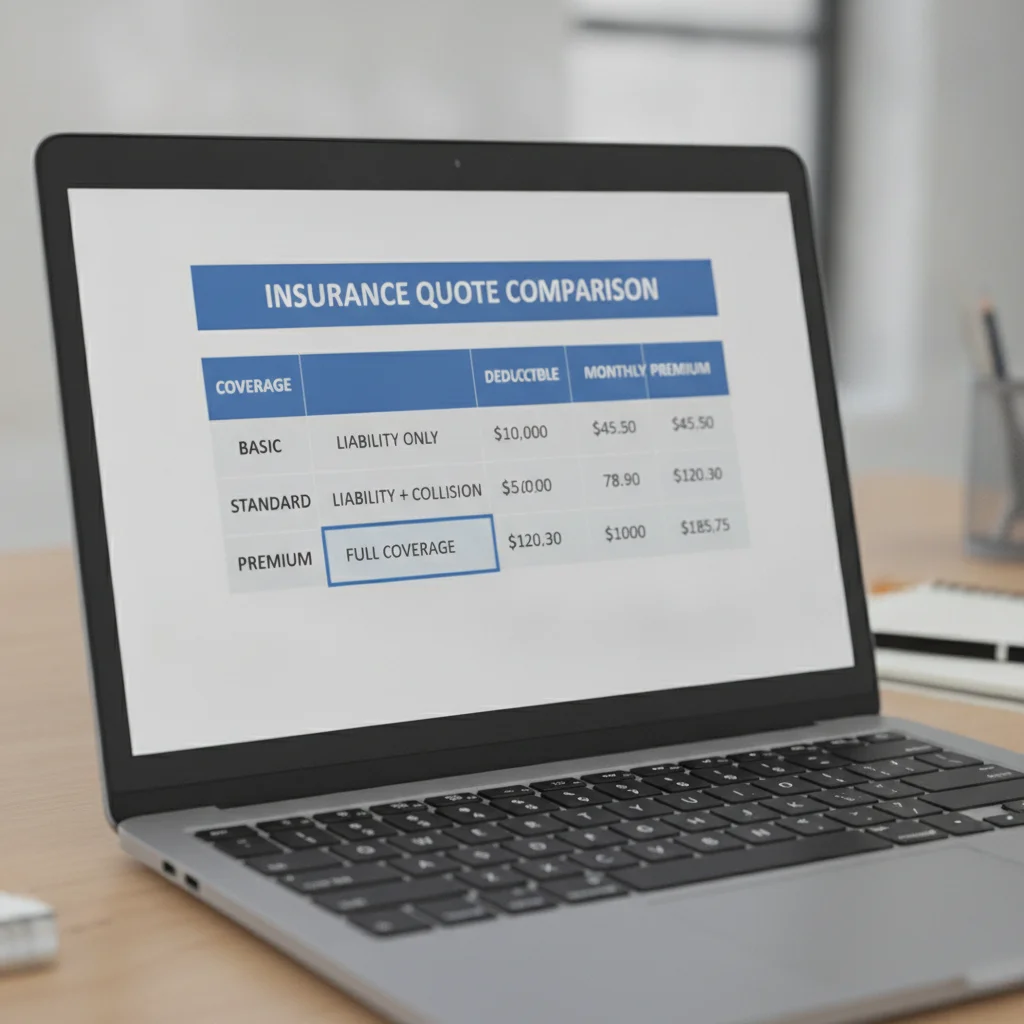
Once you've identified the limit tier that fits your risk profile, get a quote for the actual cost difference. This step surprises most drivers — liability coverage is typically the least expensive component of an auto policy to increase, because the insurer is covering your risk to others, not the cost of repairing your own vehicle.
Contact your insurer directly or use an online quote tool to price the following jumps specifically:
- Your current limits → 100/300/100 (if you're not there yet)
- 100/300/100 → 250/500/100
- 250/500/100 → maximum available auto limits
- Maximum auto limits + a $1 million umbrella policy
Write down each premium difference per month, then evaluate whether the additional protection is worth the cost. In most cases, moving from mid-tier to high-tier limits adds less to your premium than a single dinner out each month. For context on how insurers arrive at your specific rate, how insurers calculate your liability premium walks through every variable they consider.
[in_content_images:2]Make Your Decision and Update Your Policy
With the numbers in front of you — your net worth, your risk profile, and the actual premium differences — you're now in a position to make an informed decision. Choose the limits that cover your exposed net worth, account for your driving risk factors, and fit within your budget without cutting corners on protection.
To update your policy:
- Contact your insurer by phone, app, or agent to request a mid-term endorsement, or wait until your renewal date
- Confirm the new limits will appear on your declarations page before the change takes effect
- If adding an umbrella, confirm the underlying auto limits meet the umbrella carrier's requirements
- Store the updated declarations page somewhere accessible — your glove box, cloud storage, or your insurer's app
If you're unsure whether liability-only coverage is right for your vehicle or whether you should also be carrying comprehensive and collision, liability vs. full coverage covers that decision separately. And if you're weighing umbrella policies against simply raising your auto limits, umbrella insurance vs. high liability limits makes the comparison clear.
Don't Copy a Neighbor's Coverage Limits
Liability needs are highly individual. A renter with no investments and minimal savings faces a very different risk profile than a homeowner with equity, retirement accounts, and a side business. Basing your limits on what someone else carries — or what your agent defaulted to years ago — can leave you badly exposed. Run through the assessment steps in this guide for your own situation.
Review Your Limits After Major Life Changes
Buying a home, inheriting assets, getting married, or starting a business all change what you have at stake in a lawsuit. Many drivers set their liability limits once and forget them for years. Make a habit of reviewing coverage whenever your financial picture shifts significantly — at minimum, every two to three years.
Get the Premium Difference Before Deciding
Before you assume higher limits are unaffordable, ask your insurer to quote the step up. Going from 50/100/50 to 100/300/100 frequently costs $10–$25 per month on a standard policy. That incremental cost is almost always worth the dramatically expanded protection. Numbers vary by state, insurer, and driving history, but the gap is usually smaller than drivers expect.
Consider an Umbrella Policy at the Ceiling
Most standard auto policies max out at 250/500/100 or 300/500/100 in liability limits. If your net worth exceeds those figures, a personal umbrella policy — typically $1 million or more in additional coverage — kicks in above your auto policy and usually costs $150–$300 per year. It's one of the most cost-effective ways to protect significant assets.
Bundle Your Review With Your Annual Renewal
Your renewal notice is the perfect trigger for a liability review. Set a calendar reminder two weeks before your renewal date each year to revisit your limits, check whether your net worth has changed, and compare quotes if needed. This keeps coverage current without requiring you to think about insurance more than once a year.
State Minimums Won't Save Your Assets
Every state sets a floor for liability coverage, but those floors are dangerously low. A single serious accident can generate medical bills, lost-wage claims, and property damage that far exceeds a 25/50/25 policy. If a court judgment exceeds your limits, creditors can pursue your savings, home equity, and other assets to satisfy the difference. Your minimum-required policy is a legal checkbox — not a financial safety net.
Underinsuring Is a Financial Risk, Not Just a Legal One
Many drivers focus on avoiding a traffic ticket for carrying no insurance, but the bigger threat is carrying too little. If you cause an accident that injures multiple people or totals a luxury vehicle, a low-limit policy can be exhausted within minutes of a settlement discussion. The gap between what your insurer pays and what you owe becomes your personal liability — and collecting on that gap is exactly what plaintiff attorneys are trained to do.
Understanding the Coverage Gap and How to Close It
There's a moment in every serious accident claim when coverage runs out — when the insurer writes its last check and the remaining balance becomes the defendant's personal problem. That gap is where financial lives get derailed. Understanding it concretely helps explain why limit decisions matter so much.
Consider a scenario: you're at fault in an accident that sends two people to the hospital. One has $90,000 in medical bills and lost wages. The other has $85,000. Total bodily injury claim: $175,000. Your property damage: $42,000 to a newer SUV. If you're carrying 50/100/50 limits, your insurer pays $90,000 for person one, $85,000 for person two (within the $100,000 aggregate), and $42,000 for property — but only up to your $50,000 property limit, leaving $8,000 unpaid on the vehicle alone. The total shortfall in this scenario: approximately $8,000 from property damage — manageable. Now run the same numbers with a $150,000 medical bill for one person and a $75,000 vehicle, and the gaps grow fast.
This is exactly the territory covered in liability insurance and personal asset protection — specifically what happens after the insurer's obligation ends and how creditors can pursue personal assets to satisfy the remainder.
The two most practical tools for closing the gap are:
- Higher auto liability limits — raising your split limits to 250/500/100 or higher, where your insurer allows it
- A personal umbrella policy — a separate layer of coverage that activates above your auto (and homeowners) liability limits, typically available in $1 million increments
Umbrella insurance vs. high liability limits walks through when each approach makes more sense and how they work together. For many drivers with significant assets, the answer is both: max out your auto limits first, then layer an umbrella on top.
Troubleshooting Common Liability Limit Mistakes
Even careful drivers make predictable errors when setting liability coverage. Here are the most common ones — and how to correct them.
Mistake: Choosing limits based on premium alone
The cheapest policy is always the one with the lowest limits. Optimizing for monthly premium without accounting for exposure is like buying a smoke detector based on which one makes the least noise. The cost difference between minimums and genuinely protective limits is usually modest. Always price the gap before deciding.
Mistake: Forgetting to update after life changes
Your liability needs at 25 with a rented apartment are very different from your needs at 40 with a paid-down home, retirement savings, and a college fund. A policy set and forgotten drifts further out of alignment with your actual risk exposure every year. Annual reviews fix this.
Mistake: Focusing only on bodily injury, ignoring property damage
Property damage limits get far less attention than bodily injury limits, but a $25,000 or $50,000 property damage cap is easy to exhaust when newer vehicles routinely cost $50,000–$80,000 or more. Raise your property damage limit alongside your bodily injury limits — the incremental premium is usually small.
Mistake: Assuming an umbrella replaces good auto limits
Umbrella policies typically require a minimum underlying auto liability limit — often 250/500/100 — before they'll activate. Carrying low auto limits and buying an umbrella doesn't work the way most people assume. You need solid auto limits as the foundation; the umbrella adds the excess layer above them.
Mistake: Not shopping for better rates after raising limits
If cost is a concern, compare quotes before assuming your current insurer offers the best rate for higher limits. Rate structures vary significantly by carrier, and switching insurers at renewal — while maintaining the same or better limits — can sometimes save money overall. Liability limits vs. full coverage is a useful companion if you're also deciding whether to add or remove other coverage components at the same time.


All claims are backed by peer-reviewed research. Sources on request.