Key Takeaways
Option A
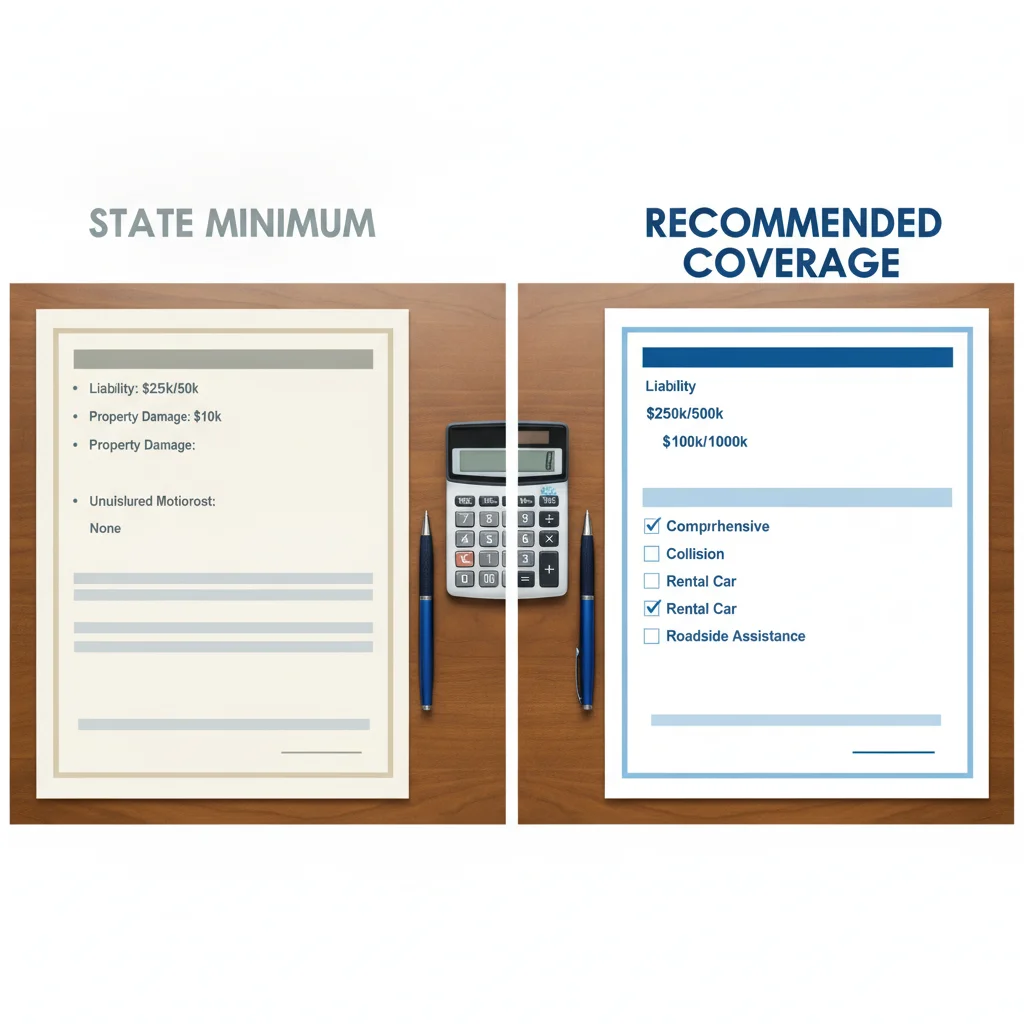
State Minimum Coverage
The legal floor — nothing more.
Best for: Drivers with minimal assets, older low-value vehicles, and a strict short-term budget who understand and accept the financial risk.
Option B
Recommended Coverage Levels
The practical standard for real-world protection.
Best for: Most drivers who own assets, have savings to protect, or regularly drive in traffic-heavy or high-cost areas.
If you own a vehicle worth less than $4,000 and have no significant savings or assets
State Minimum Coverage
When there are no assets to protect and the vehicle itself has little value, minimum coverage limits financial exposure to premiums rather than lawsuit judgments.
If you have a savings account, home equity, or retirement funds
Recommended Coverage Levels
Assets are reachable through civil judgments after a serious accident — higher liability limits are the first line of defense against losing them.
If you commute daily on highways or drive frequently in urban traffic
Recommended Coverage Levels
Higher exposure means higher odds of a costly at-fault accident. State minimums are far more likely to be exhausted in multi-vehicle or high-speed crashes.
If you are financing or leasing your vehicle
Recommended Coverage Levels
Lenders and lessors contractually require comprehensive and collision coverage — minimum-only policies violate loan terms and can trigger forced-place insurance at much higher cost.
If you want maximum budget savings and fully understand the risk you are accepting
State Minimum Coverage
Minimum coverage is a legitimate choice for informed adults with limited budgets, as long as you have a clear plan for out-of-pocket liability if minimums are exceeded.
What 'State Minimum' Actually Means — and What It Doesn't Cover
Every state that requires auto insurance sets a floor — a minimum amount of liability coverage you must carry to legally register and drive a vehicle. These limits are expressed as three numbers, such as 25/50/25, which means $25,000 per-person bodily injury, $50,000 per-accident bodily injury, and $25,000 property damage per accident. For a full state-by-state breakdown, see state minimum liability requirements at a glance.
Here is what those numbers do not tell you: they say nothing about what happens to your own vehicle, your own medical bills, or what happens when the other driver has no insurance at all. State minimum policies typically include:
- Bodily injury liability — pays for injuries you cause to others
- Property damage liability — pays for damage you cause to others' vehicles or property
That is frequently the entire list. Collision coverage (damage to your own car), comprehensive coverage (theft, weather, fire), uninsured/underinsured motorist coverage, and medical payments or PIP are optional in most states — and minimum-only policies almost never include them.

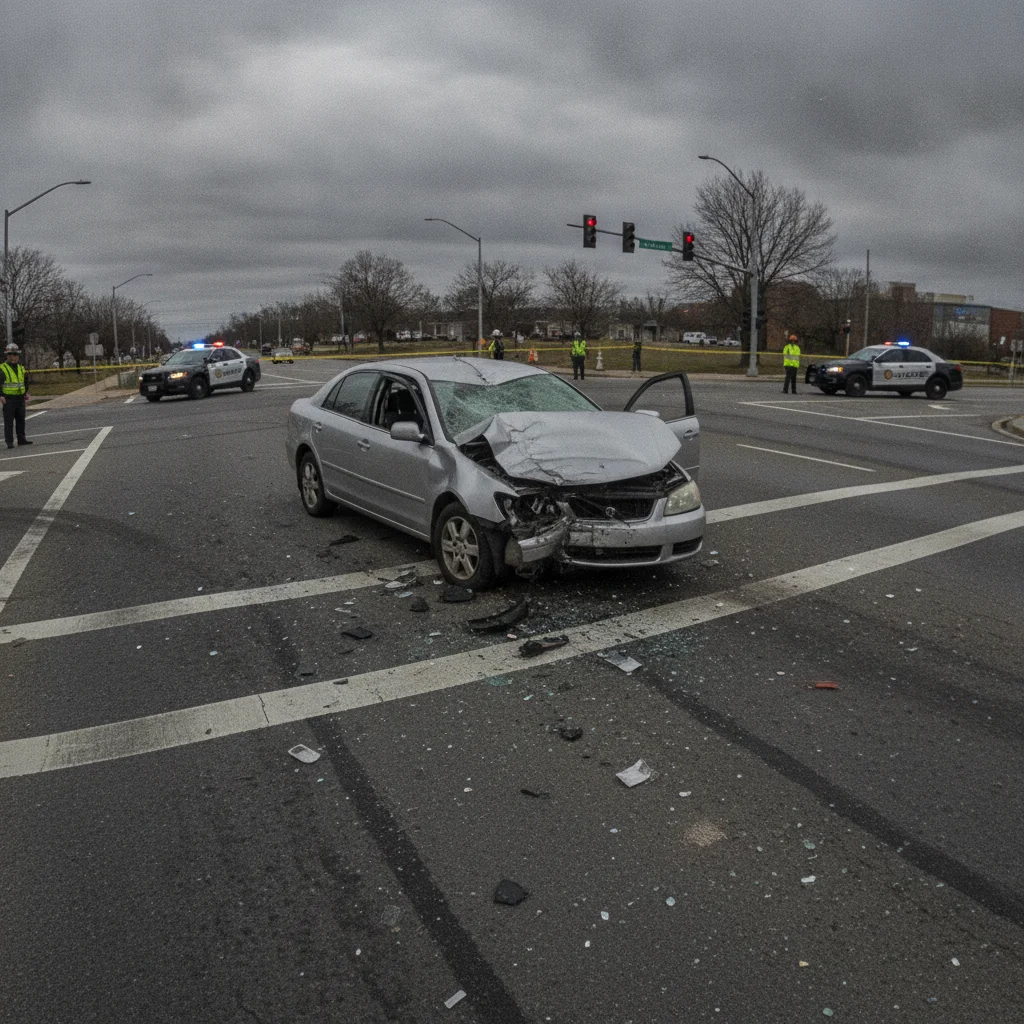
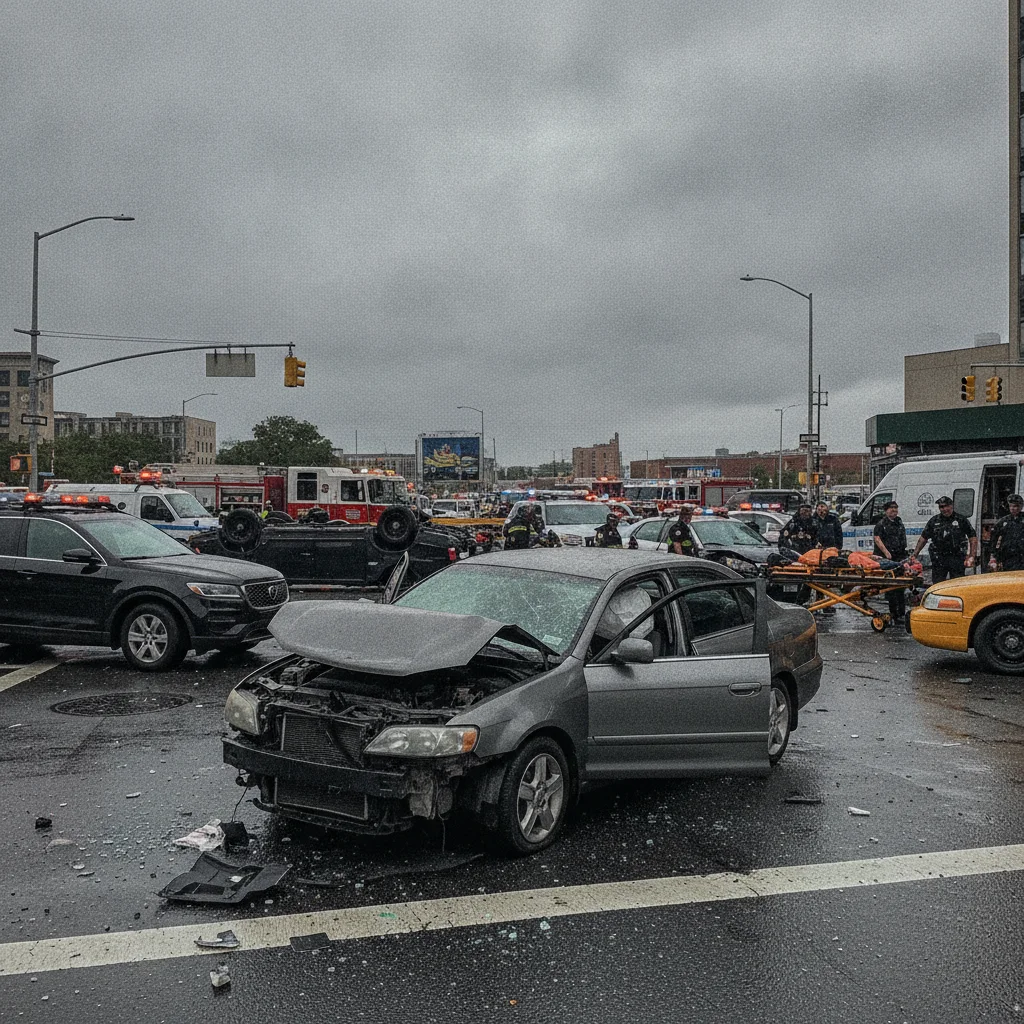
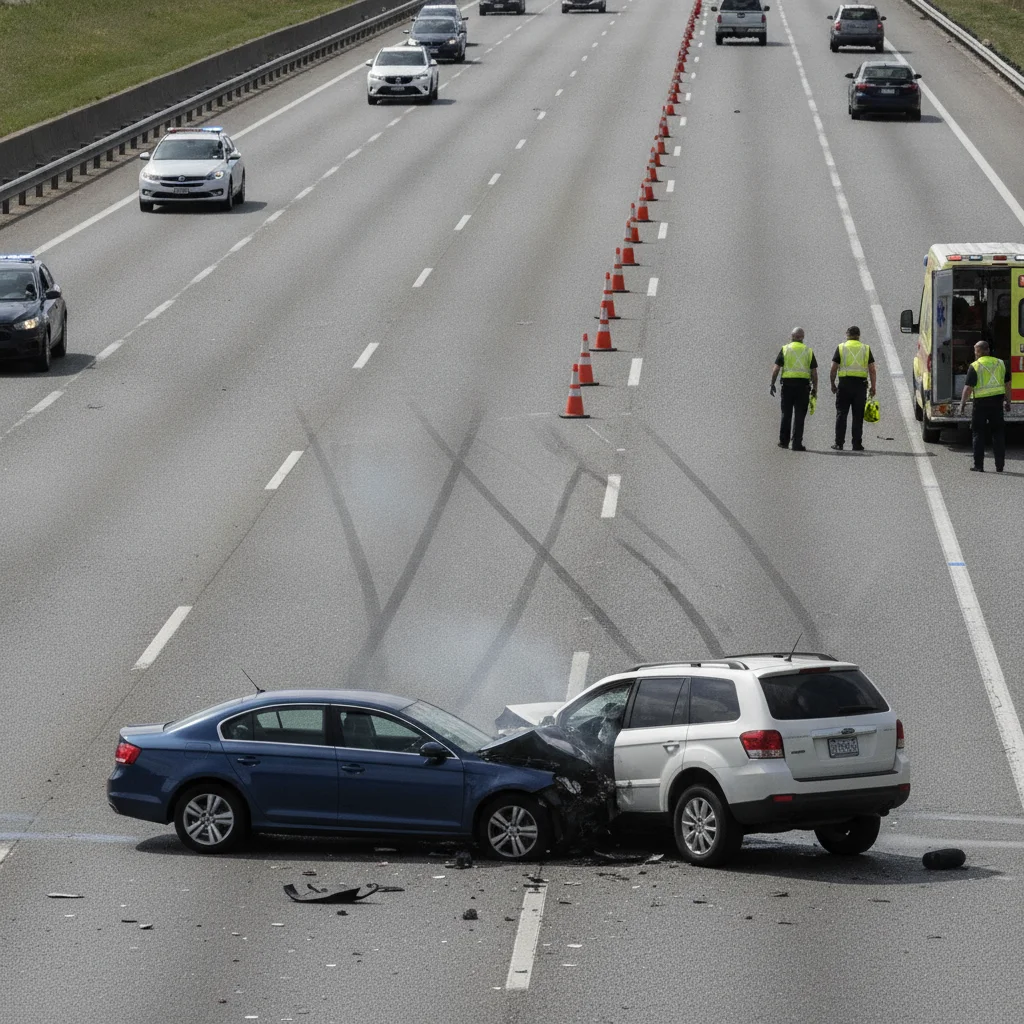
The practical implication: if you rear-end someone at highway speed, total their SUV, and send two people to the hospital, a 25/50/25 policy will be exhausted in minutes. Everything beyond those limits comes out of your pocket — wages, savings, future earnings. That is not a theoretical risk. It is the outcome in thousands of U.S. accident claims every year.
Minimum Requirements Vary Significantly by State
Some states set minimum limits as low as 10/20/10 — just $10,000 in property damage coverage. Others require higher floors, and a few mandate personal injury protection (PIP) regardless of fault. The state minimum you see on your declarations page is the floor your insurer must provide, not a recommendation. Always confirm your state's current requirements before making coverage decisions, since legislatures periodically update them.
What 'Recommended Coverage' Looks Like in Practice
There is no universal authority that sets "recommended" limits, but the insurance industry, financial planners, and most consumer advocates converge on a practical standard: 100/300/100 for liability, plus uninsured motorist coverage at matching levels, and collision and comprehensive if your vehicle has meaningful value.
Breaking that down:
- $100,000 per-person bodily injury — covers serious injury claims from a single victim
- $300,000 per-accident bodily injury — covers multi-person accidents without exhausting limits immediately
- $100,000 property damage — handles newer vehicles, commercial property, and multi-car pile-ups more realistically
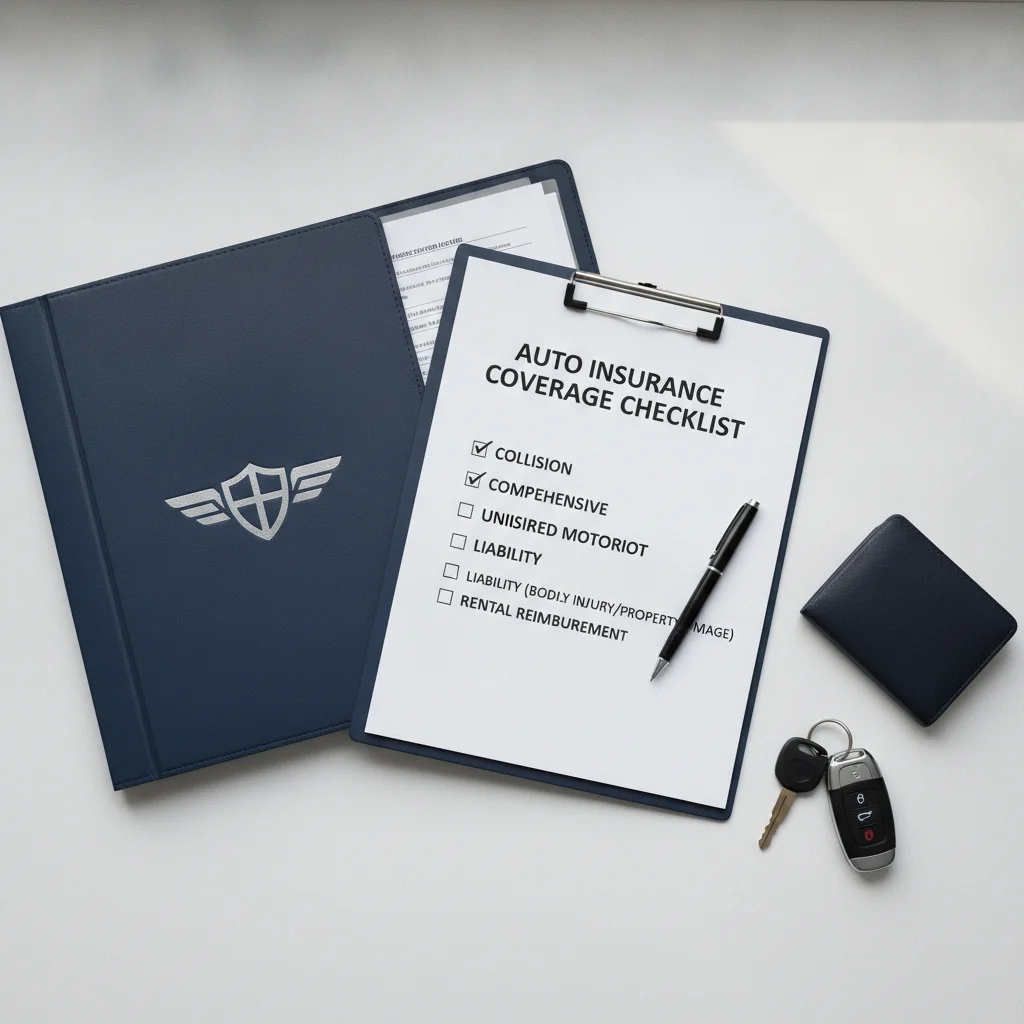
Beyond liability, a well-rounded policy typically adds:
- Uninsured/underinsured motorist (UM/UIM) — protects you when the at-fault driver is uninsured, which affects roughly 1 in 8 U.S. drivers
- Collision coverage — pays for your own vehicle repairs after an at-fault crash
- Comprehensive — covers theft, hail, flood, and other non-collision losses
- Medical payments or PIP — covers your own injury costs regardless of fault
For drivers with substantial assets, an umbrella policy — which typically starts at $1 million in additional liability coverage for around $150–$300 per year — is the next logical step. Explore optional coverage add-ons including umbrella policies and what they cover.
The core logic of recommended coverage is simple: liability insurance protects your net worth, not just your car. The higher your assets, the more you have to lose in a lawsuit that exceeds your policy limits.
1 in 8
U.S. drivers are uninsured
According to the Insurance Research Council, approximately 12.6% of motorists were uninsured as of recent estimates — a key reason UM/UIM coverage matters even when you drive carefully.
$48,000+
Average new vehicle transaction price
Cox Automotive data shows the average new car price regularly exceeds the property damage limits of most state minimum policies, creating automatic coverage gaps.
$500K+
Average jury award in serious injury cases
Jury Verdict Research data indicates median verdicts in severe injury auto cases often exceed $500,000 — far beyond what minimum liability limits can cover.
$30–$60
Typical monthly cost to upgrade coverage
Consumer Reports and insurer data suggest the monthly premium difference between minimum and recommended coverage is often less than many drivers assume.
Head-to-Head: Minimum vs. Recommended Coverage Compared
The differences between minimum and recommended coverage go far beyond the liability cap numbers. The table below shows how these two approaches diverge across every dimension that matters in a real claim.
| Criterion | State Minimum Coverage | Recommended Coverage (100/300/100+) |
|---|---|---|
| Typical liability limits | 25/50/25 (varies by state) | 100/300/100 |
| Bodily injury per accident | $30,000–$50,000 cap | $300,000 cap |
| Property damage per accident | $10,000–$25,000 | $100,000 |
| Covers your own vehicle damage | No — not included | Yes — collision & comprehensive |
| Uninsured motorist protection | Rarely included | Included at matching limits |
| Medical payments / PIP | Not included | Typically included |
| Adequate for new vehicle replacement | No — limits too low | Yes — in most scenarios |
| Asset protection in a lawsuit | Minimal — gaps likely | Strong — limits cover most claims |
| Typical monthly premium (illustrative) | $40–$80/month | $80–$160/month |
| Required for financed/leased vehicles | No — violates lender terms | Yes — meets lender requirements |
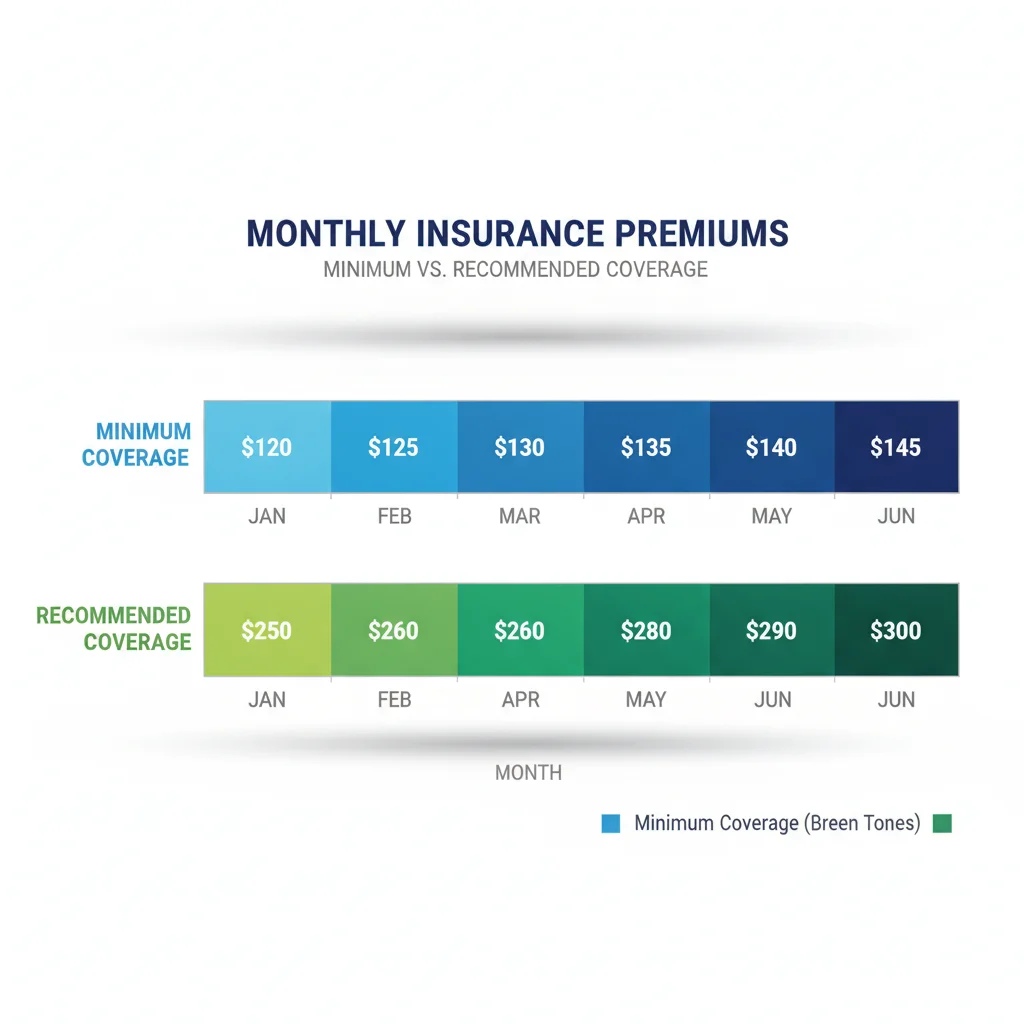
The cost column deserves closer attention. Many drivers assume moving from minimum to recommended coverage doubles or triples their premium. In reality, the gap is often $20–$50 per month — sometimes less — depending on your state, driving record, and insurer. For context on how quickly minimum limits get drained in a real accident, read the real cost of carrying only minimum liability coverage.
The property damage column is particularly telling. The national average new vehicle transaction price is now above $48,000. A 25/50/25 policy's $25,000 property damage limit does not cover one new car, let alone two. A 100/300/100 policy's $100,000 property damage limit handles most realistic scenarios without leaving a gap.
Specific Scenarios Where Minimum Coverage Fails
Abstract risk is easy to dismiss. Concrete scenarios are harder to ignore. Here are four common crash situations and how each coverage level responds:
Scenario 1: You rear-end a newer sedan at a stoplight
Vehicle repair: $22,000. With a 25/50/25 policy, you are within property damage limits — barely. But if the other driver reports neck pain and soft-tissue injuries and files a claim, $25,000 in bodily injury coverage may not cover their ER visit, physical therapy, and lost wages. With 100/300/100, you have room to resolve the claim without a personal judgment against you.
Scenario 2: You cause a multi-vehicle accident on the highway
Two vehicles, three injured occupants. Medical claims alone run $80,000. A 50/50 per-accident bodily injury limit pays $50,000 across all three claimants. The remaining $30,000 is yours to pay. A 300/300 limit covers the full claim. See situations where minimum liability leaves you legally exposed for more crash-specific examples.
Scenario 3: An uninsured driver hits you
If you carry only minimum coverage and have no UM/UIM add-on, you absorb your own injuries and vehicle damage out of pocket. Recommended coverage includes matching UM/UIM limits specifically to handle this scenario.
Scenario 4: Your car is stolen or totaled in a hailstorm
Minimum-only policies provide zero payment for your own vehicle loss. Comprehensive coverage — part of the recommended stack — pays for theft and weather damage. This distinction matters especially for anyone driving a vehicle worth more than $10,000.
For a structured framework on setting the right limits for your specific situation, see how much liability coverage do you actually need.
The Cost Calculation: Is the Premium Difference Worth It?
The most common objection to recommended coverage is cost. It is a legitimate concern, especially for younger drivers or those on fixed incomes. But the math often surprises people when they actually run it.
Consider a driver in a mid-size city with a clean record switching from a 25/50/25 liability-only policy to a 100/300/100 policy with collision, comprehensive, and UM/UIM. The additional premium might run $30–$60 per month — call it $480 per year on the higher end. Against that, consider:
- A single at-fault accident that exceeds minimum limits can generate a civil judgment in the tens or hundreds of thousands of dollars
- A judgment can result in wage garnishment, bank account levies, and liens on real property
- That financial consequence can follow you for years — in some states, up to 20 years
Paying $480 per year in additional premium to avoid that exposure is not a close call for most drivers with any assets whatsoever. The risk-to-cost ratio heavily favors recommended coverage. If budget is the primary constraint, consider comparing liability-only and full coverage trade-offs to find the right balance for your situation.
One practical middle ground: increase liability limits to 100/300/100 without adding collision if your vehicle is older and low-value. You get the most critical protection — the liability shield for your assets — while keeping the premium increase modest. Liability coverage fundamentals explains exactly what that protection covers and why it is the most legally consequential part of your policy.
Who Should Actually Consider Minimum Coverage?
Honesty matters here. Minimum coverage is not automatically the wrong choice for everyone. There is a narrow set of circumstances where it makes rational sense:
- You own a vehicle worth less than $3,000–$4,000 and the cost of collision and comprehensive exceeds the vehicle's value over a two- to three-year horizon
- You have no significant assets — no savings, no home equity, no retirement accounts — making you essentially judgment-proof even if a plaintiff wins in court
- You drive very rarely — infrequent use meaningfully reduces accident exposure, though it does not eliminate it
- You have a plan for the worst-case scenario and understand exactly what you are accepting
The key word is informed. Minimum coverage chosen deliberately by someone who understands the risk is a different thing entirely from minimum coverage chosen because it was the default or the cheapest option on the comparison page without understanding what it excludes.
If your situation is uncertain — if you have even modest savings, a vehicle worth more than $10,000, or a regular commute — the math almost always points toward recommended levels. The premium difference rarely justifies the financial exposure you are accepting by staying at the minimum floor.
Bottom line: state minimum coverage is a legal status, not a protection strategy. Build your coverage decisions around what you actually have to lose.

All claims are backed by peer-reviewed research. Sources on request.