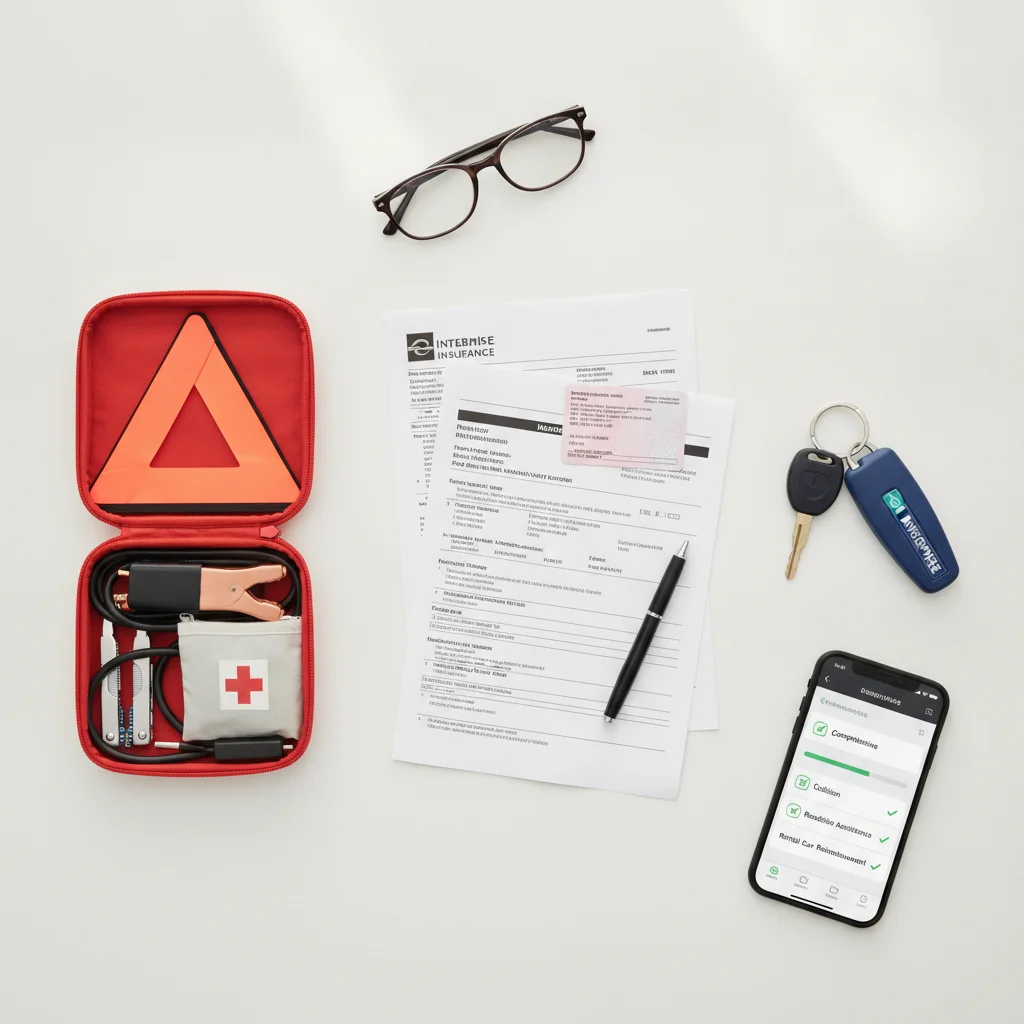
Key Takeaways
Why Budget-Driven Add-On Decisions Require a Different Framework
Walk into any insurance renewal conversation without a plan and you'll either overpay for coverage you don't need or skip protections that could cost you thousands. Optional add-ons are where insurers make comfortable margins, and where budget-conscious drivers make the most avoidable mistakes — in both directions.
The fundamental problem is that optional coverages are presented as a menu, not a priority stack. Agents rarely tell you which items are redundant with benefits you already have, which ones statistically almost never pay out, and which ones fill a genuine gap in your protection. That's exactly what this guide does.
Before you can prioritize intelligently, you need the full picture of what's available. If you haven't already, start with the full landscape of optional car insurance add-ons — it maps every major option, what each costs, and which driver profiles benefit most. Then come back here to apply the budget filter.

The framework for tight-budget decisions comes down to three questions for every add-on you're considering: What financial loss does it protect against? How likely is that loss given your specific situation? And do you already have coverage for it somewhere else? Run every candidate through that filter before spending a dollar.
Start Here: Audit What You Already Have
The single most common money-wasting mistake I saw in a decade working dealership finance offices was people paying for coverage their credit card, health insurer, or auto club already provided. Before you add anything, inventory what you're already carrying.
Credit cards: Premium travel cards from Visa, Mastercard, and Amex frequently include rental car collision damage waivers as a cardholder benefit. If yours does, you don't need rental car reimbursement from your insurer — you need a rental car when yours is in the shop, and that's a different product. Read the actual card benefit document, not just the marketing summary.
Health insurance: Medical payments (MedPay) and personal injury protection (PIP) both cover accident-related medical costs, but if you have robust health insurance with a manageable deductible, the incremental value of MedPay or PIP shrinks considerably. In no-fault states PIP is usually mandatory anyway, but where it's optional, your health plan's strength matters.
Auto club memberships: AAA and similar clubs provide roadside assistance that's nearly identical to what insurers sell as a roadside add-on. If you're already paying for AAA, adding roadside through your insurer is pure duplication. The insurer's version might save you a few dollars annually, but only if you cancel the club membership — not if you carry both.
Stacking optional coverages creates expensive redundancy that most drivers never notice until claim time. Do the audit before you do anything else.
The Short List: Add-Ons That Consistently Deliver Real Value
Once you've stripped out redundancies, you can focus your limited premium budget on coverages that actually move the needle. These are the ones I've seen pay off repeatedly — and the ones I'd carry myself on a tight budget.
Prioritize gap insurance on any financed vehicle in its first three years
New vehicles depreciate faster than loan balances shrink in the early years. If your car is totaled or stolen, standard collision and comprehensive pay market value — which can be thousands less than your remaining loan balance. Gap insurance covers that difference, preventing a situation where you're making payments on a car you no longer have.
Add uninsured/underinsured motorist coverage even when money is tight
Roughly one in eight U.S. drivers carries no liability insurance, and a significant portion carry only state minimum limits that won't come close to covering a serious accident. UM/UIM coverage steps in when the at-fault driver can't pay — and it's typically one of the least expensive add-ons per dollar of protection it provides.
Match your deductible to your actual cash reserve, not an arbitrary number
A high deductible saves on premium but forces you to absorb a large out-of-pocket hit after a claim. If your savings can't cover that deductible without creating a financial crisis, the premium savings are illusory — you've just pre-funded a future crisis at a discount. The deductible-to-savings ratio matters more than the dollar amount in isolation.
Skip MedPay or PIP if you have strong health insurance with a low deductible
MedPay and PIP cover accident-related medical costs, but if your health plan already provides comprehensive coverage with a manageable deductible, the overlap means you'd be paying twice for the same protection. The calculus changes in no-fault states where PIP is mandatory or in situations where health coverage has significant gaps.
Drop comprehensive and collision coverage on vehicles worth less than 10x their annual combined premium
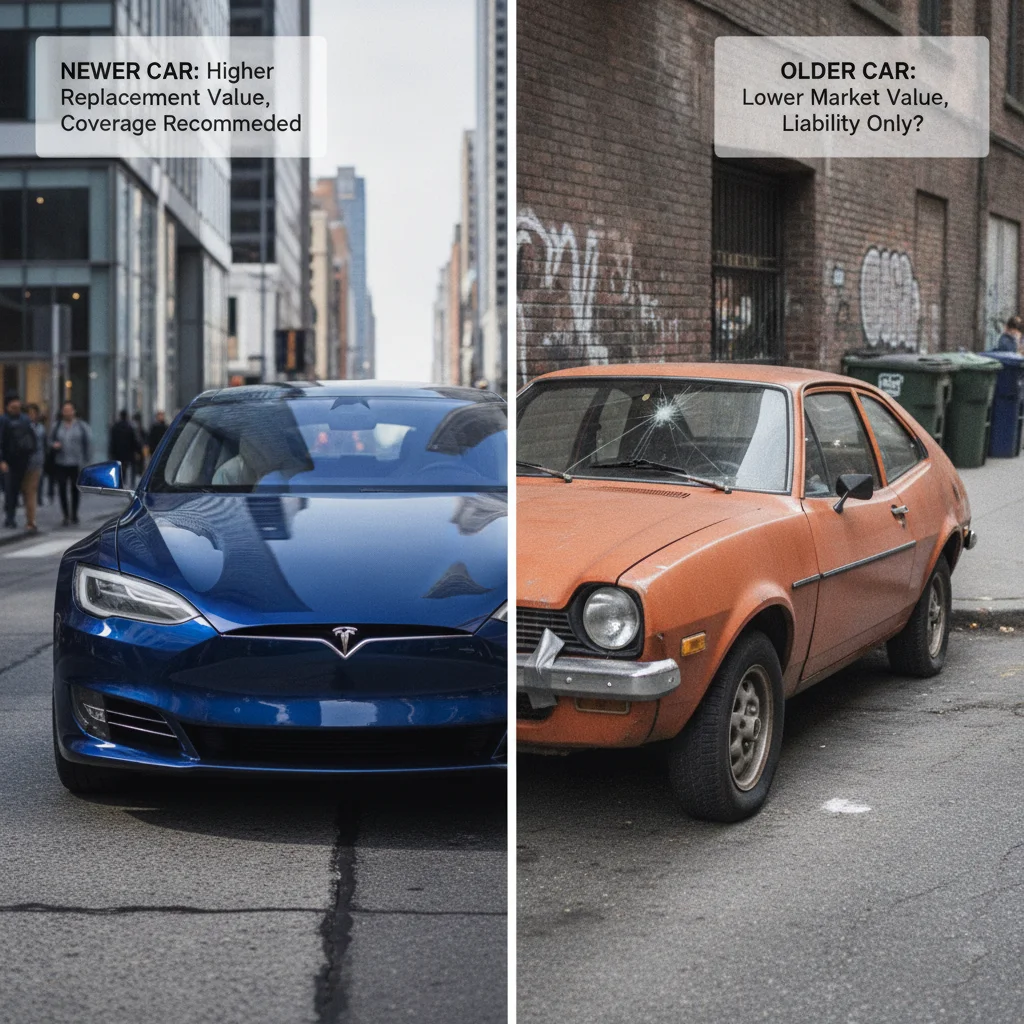
Once a vehicle's market value falls below a certain threshold, the math on comprehensive and collision stops working in your favor. You're paying annual premiums that approach what you'd collect in a total-loss claim, especially after your deductible is subtracted. Dropping these coverages on a low-value vehicle frees up significant premium dollars.
Buy add-ons through your insurer, not through the dealership finance office
Dealerships sell add-ons like gap insurance and tire-and-wheel protection at a significant markup, often rolled into your loan principal so you pay interest on the inflated price. The identical coverage purchased through your insurer typically costs a fraction of the dealer price and can be canceled without penalty.
Notice what's not on this list: roadside assistance (if you have AAA), rental reimbursement (if your card covers it), and most accident forgiveness riders, which are priced to benefit the insurer more than you. For a candid look at which add-ons routinely pay off versus which mostly generate insurer profit, see which add-ons rarely pay off and which routinely do.
1 in 8
U.S. drivers carrying no auto insurance
According to the Insurance Research Council's 2023 estimates, approximately 12.6% of motorists are uninsured, reinforcing the value of UM/UIM coverage.
20%
Average new car depreciation in year one
Industry data from Carfax and Edmunds consistently shows new vehicles lose roughly 15–25% of value in the first 12 months, the window where gap insurance provides the most protection.
3–5x
Dealer gap insurance markup over insurer price
Consumer advocacy groups including the Consumer Financial Protection Bureau have documented that dealer-sold gap products routinely cost 3 to 5 times more than equivalent insurer-sold coverage.
$900+
Potential annual savings from eliminating redundant add-ons
Drivers who audit and remove duplicated coverages — roadside from AAA holders, rental from credit card holders — frequently recover several hundred to over $900 annually depending on policy and state.
Matching Add-Ons to Your Specific Situation
The right coverage set isn't universal — it's determined by your vehicle's value, your loan or lease status, your neighborhood, and your financial cushion. Here's how to read your own situation.
You're financing or leasing
Gap insurance is close to non-negotiable in the first two to three years of a loan on a new vehicle. New cars depreciate roughly 20% in the first year; if your car is totaled or stolen, your standard comp and collision payout covers market value — not what you owe. The delta can easily be $3,000–$8,000. Buy gap through your insurer, not the dealership's finance office — dealer-sold gap typically runs $400–$900 upfront versus $20–$40 per year through an insurer. If you're leasing, check our guide on which optional coverages make sense for lease drivers, since leasing creates specific financial exposure standard policies don't cover.
You're driving an older paid-off car
If your vehicle is worth less than $4,000–$5,000, comprehensive and collision coverage may cost more annually than you'd ever collect on a claim. Dropping those coverages eliminates the need for gap insurance too. In that scenario, your budget is better spent maximizing your liability limits and, if uninsured motorists are a local problem, your UM/UIM coverage.
You drive a lot or commute in high-traffic areas
Higher mileage and urban driving increase accident probability and the odds of encountering underinsured motorists. Uninsured/underinsured motorist coverage becomes more valuable the more exposure you accumulate. Conversely, if you drive under 7,500 miles per year, some insurers offer low-mileage discounts that can offset the cost of retaining a key add-on or two — check the discounts page for what your insurer offers.
You have a thin emergency fund
Lower your deductible if your savings can't absorb a $1,000–$2,000 hit without serious disruption. The premium difference between a $500 and $1,000 deductible is usually modest; the financial shock of the higher deductible when you least expect it is not. This isn't an add-on per se, but it's the most overlooked lever budget drivers have.
PIP Requirements Vary Significantly by State
Personal injury protection (PIP) is mandatory in no-fault states including Florida, Michigan, New York, and New Jersey, but optional or unavailable in tort states. The value of adding optional MedPay or PIP depends heavily on your state's rules and your existing health coverage. Always check your state's minimum requirements before treating PIP as a discretionary line item.
Gap Insurance Is Time-Sensitive
Gap insurance typically only makes financial sense during the period when your loan balance exceeds your vehicle's market value — usually the first two to three years of a new car loan, depending on your down payment and loan term. Once you've built enough equity that market value exceeds your payoff amount, gap insurance has no benefit and should be canceled promptly.
Add-Ons to Evaluate Skeptically (or Skip)
Some optional coverages are marketed heavily because they're profitable for insurers. That doesn't mean they're worthless — but it means you should pressure-test them before adding them to a tight budget.
Rental car reimbursement
This is worth buying only if you have no credit card rental benefit and your budget can't absorb a rental out-of-pocket while your car is repaired. The typical payout is $30–$50 per day with a cap — often around $900 total. If your repairs take two weeks, the math works. If you have a spare vehicle or can arrange rides, skip it.
Roadside assistance from your insurer
At roughly $5–$15 per year added to your policy, this seems like a bargain — until you realize it often carries per-incident service fees or towing mile limits that reduce its value. If you're already paying for AAA or your vehicle is under a manufacturer roadside program, this is pure duplicate spend.
Accident forgiveness
Insurers sell this as protection against a rate increase after your first at-fault accident. What they don't advertise: you may already have it as an earned loyalty benefit after several claim-free years. Check your policy before paying extra for something you might already have.
New car replacement
This coverage replaces a totaled new car with a brand-new equivalent model rather than paying market value. It sounds appealing, but it's expensive and only applies during the first one to two model years. Gap insurance accomplishes the core goal — protecting you from owing more than the car is worth — at a much lower cost. Unless you're financing a high-value vehicle and the delta between gap and new car replacement is minimal, gap wins.
Check Before You Add: Policy Loyalty Benefits
Many insurers quietly add accident forgiveness or diminishing deductible benefits after three to five years of claim-free coverage as a loyalty reward. Before paying extra for accident forgiveness as an add-on, call your insurer and ask specifically whether it's already part of your policy. You may be about to pay for something you already have.
Bundle Discounts Can Offset Add-On Costs
If you're adding a coverage and the premium increase feels painful, check whether bundling home or renters insurance with the same carrier unlocks a multi-policy discount. In many cases, the bundling discount more than covers the cost of one or two add-ons you'd otherwise skip. See <a href="/car-insurance/rates-and-savings/discounts-and-deals">discounts worth stacking</a> for the full list of savings levers.
Niche add-ons
Some insurers now offer things like pet injury coverage as an add-on or custom equipment coverage. These aren't bad products — they fill real gaps for the right driver. But on a tight budget, they belong at the bottom of the priority list unless you have a specific, high-probability exposure they address.
When Life Changes, Your Add-Ons Should Too
Insurance is not a set-it-and-forget-it product, and optional add-ons are where that truth hits hardest. A coverage that made sense two years ago can be dead weight today — or a gap you've unwittingly created.
“Insurance is not a product you buy once and forget. It should be a living document that reflects your actual financial exposure at any given moment. Most people set it up when they buy a car and never look at it again — that's where avoidable losses happen.”
— J. Robert Hunter, Former Director of Insurance, Consumer Federation of America
Think through these trigger events:
- You paid off your car loan: Gap insurance is no longer needed. Cancel it immediately and redirect those premium dollars.
- Your car aged significantly: Reassess whether comprehensive and collision still make sense given the vehicle's current market value.
- You changed jobs and lost health coverage: MedPay or PIP suddenly becomes more valuable when your health insurance gap widens.
- You moved: A move from a rural area to a dense urban environment increases your UM/UIM exposure and accident probability. A move in the other direction may let you drop or downgrade certain coverages.
- You added a teen driver: The risk profile of your policy changes significantly. Review which add-ons matter most when insuring teen drivers before assuming your current coverage set still fits.
Major life events — job loss, divorce, a death in the family — often reorganize both your financial priorities and your actual coverage needs. Know when to re-evaluate your optional add-ons rather than waiting for renewal to prompt the conversation.

The best habit I can recommend: schedule a 20-minute insurance review every 12 months, right before your renewal date. Pull up your declarations page, cross-reference your current add-ons against your current situation, and run the three-question filter again. Thirty minutes of attention each year consistently beats shopping reactively after something goes wrong.
Building Your Prioritized Add-On Stack
Here's a practical decision sequence for assembling a coverage set that fits a tight budget without leaving dangerous gaps uncovered.
- Lock in your required coverages first. State minimums are a floor, not a target. If you can afford to raise liability limits above minimums, do it — liability claims are where underinsurance produces the most financially catastrophic outcomes.
- Audit existing benefits. Eliminate every add-on that duplicates what your credit card, health insurer, or auto club already provides.
- Add gap insurance if you're financing. Buy it through your insurer, not the dealership. Confirm whether your lender requires a specific minimum and buy exactly that — not more.
- Add UM/UIM coverage if your state allows it and your liability limits aren't rock-solid. Stack it to match your liability limits if the premium is manageable.
- Evaluate MedPay or PIP based on your health coverage quality. Weak health insurance or a high deductible makes this addition more defensible.
- Assess your vehicle's value before adding or keeping comprehensive and collision. If the car's worth less than 10x the annual combined premium for those coverages, dropping them is rational.
- Everything else is optional in the truest sense. Roadside, rental reimbursement, accident forgiveness, and niche add-ons earn a spot only after the above priorities are satisfied and only if you've confirmed no duplication.
Before you finalize your purchase or renewal, run through the pre-purchase optional add-on checklist — it's designed to surface coverage gaps before you sign anything, which is the cheapest time to fix them.
Also worth checking: what you actually risk by skipping comprehensive coverage. That article runs the numbers on what drivers lose when they drop this coverage on vehicles that still warrant it — useful ballast against the temptation to cut too aggressively.

All claims are backed by peer-reviewed research. Sources on request.