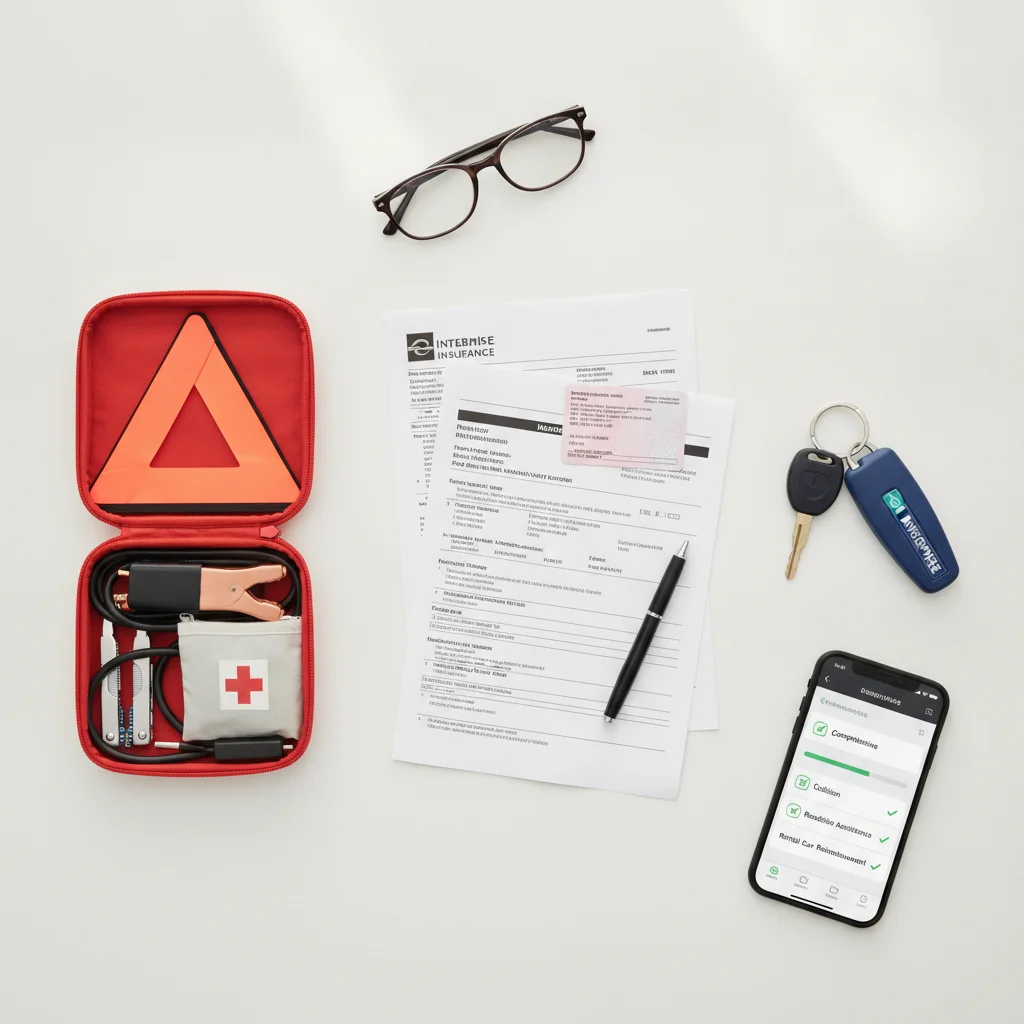
Key Takeaways
If your vehicle manufacturer includes complimentary roadside assistance for the first few years, call the insurer's roadside line and confirm the service radius and claim impact before adding the rider to your policy—you're likely paying for redundant protection.
Manufacturer roadside programs from brands like Toyota, Hyundai, and BMW typically cover 3–5 years with no usage impact on your insurance record, making insurer-based roadside redundant during that window.
Never buy GAP insurance at the F&I desk. Walk out, call your insurer the same afternoon, and add it to your policy for a fraction of the dealer price—usually $20–$40 per year versus $400–$900 rolled into your loan.
Dealer GAP is one of the highest-margin products sold in the finance office. When financed into a 72-month loan at 6% APR, a $700 GAP product actually costs closer to $900 in total—versus less than $200 total through your insurer over the same period.
When adding rental reimbursement, check current rates in your market and set your daily limit to at least the midpoint of what a compact sedan rents for locally—not the carrier's default minimum, which often hasn't kept pace with post-pandemic rental price increases.
Average daily car rental rates jumped significantly after 2021 and remain elevated in many markets. A $30/day policy limit that seemed adequate in 2019 may now cover less than half of a typical rental.
If you drive for a rideshare platform even occasionally—one weekend a month—get the rideshare endorsement. Insurers can and do deny claims that occur during rideshare activity on personal policies, even if you weren't actively carrying a passenger at the time.
The coverage gap during Period 1 (app on, waiting for match) is where many gig drivers discover their personal policy is void. Insurers treat any active app status as commercial use in many policy definitions.
Before adding mechanical breakdown insurance, pull the specific list of excluded components from the policy contract—not just the marketing summary. MBI contracts vary significantly in what they define as 'mechanical failure' versus 'wear and tear.'
Wear-and-tear exclusions are the most common reason MBI and extended warranty claims are denied. Knowing exactly what's excluded before you buy prevents a nasty surprise when you actually need the coverage.
Why Optional Coverages Exist—and When They Actually Matter
Every state requires a baseline of liability insurance, and lenders require comprehensive and collision if you're financing. Everything beyond that is optional—which means insurers sell it separately, often at a markup, and many buyers skip it without understanding what they're giving up.
Here's the honest framing: optional coverages exist because the standard policy has deliberate gaps. A comprehensive and collision policy pays to repair or replace your car, but it doesn't cover your rental while the shop has your vehicle for three weeks. It doesn't bridge the difference between your car's depreciated market value and what you still owe the bank. It doesn't dispatch a tow truck at 2 a.m. These are real financial risks, and insurers designed these add-ons to address them—at a price.
The question isn't whether optional coverages are worthwhile in the abstract. The question is whether each specific coverage is worthwhile for your specific situation. That depends on your car's age and value, your loan balance, your daily driving habits, and how much disruption you can absorb out of pocket.
This guide walks through every major optional coverage category, what it actually does, what it typically costs, and which driver profiles benefit most. If you want a condensed term-by-term reference, the optional add-ons glossary has you covered. But if you want to understand the real-world value behind each one, read on.
Roadside Assistance: What It Covers and What It Doesn't
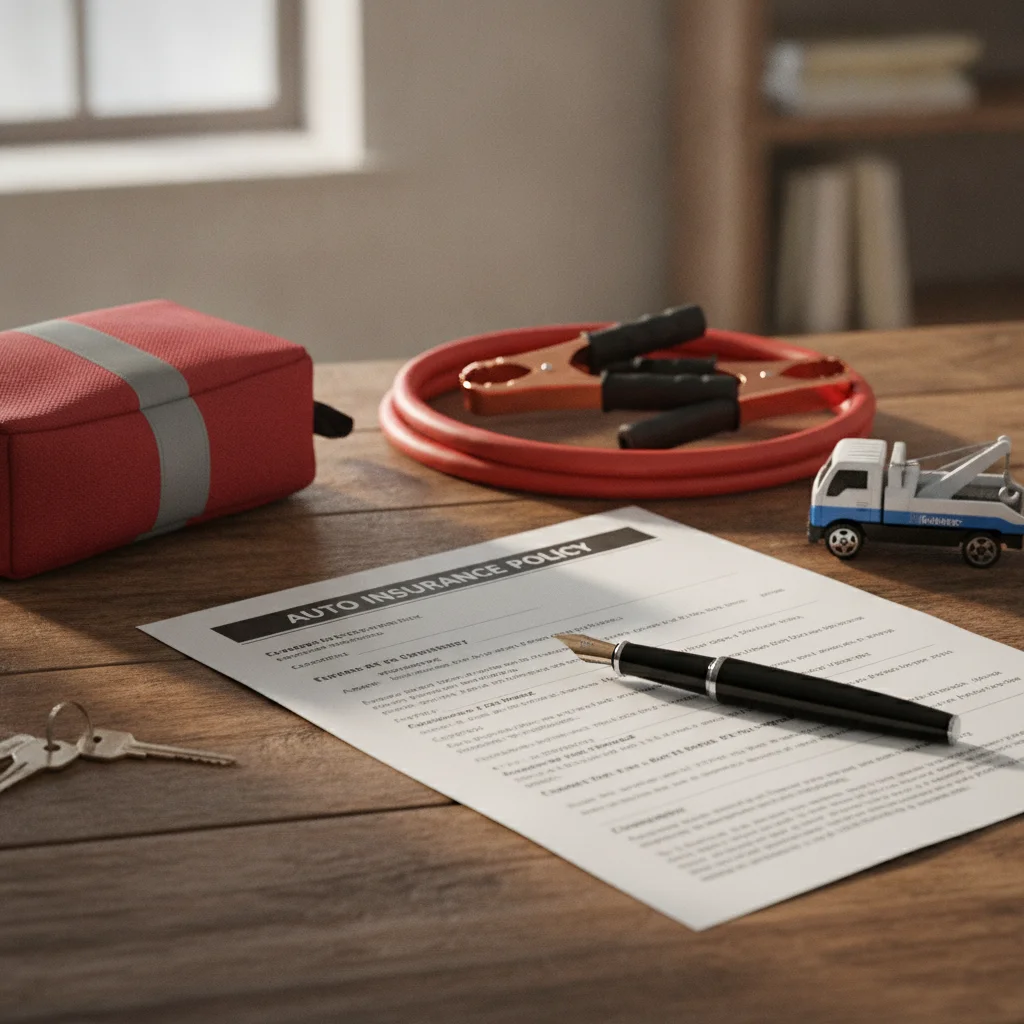
Roadside assistance is one of the most widely purchased optional add-ons, and also one of the most misunderstood. Adding it to your policy typically costs between $3 and $15 per month, depending on the insurer and your location. Compare that to an AAA Classic membership at roughly $70–$90 per year, and the insurer version looks like a deal—until you read the fine print.
Standard Services Covered
- Towing (usually to the nearest qualified repair facility)
- Battery jump-start or replacement
- Flat tire change (using your spare)
- Fuel delivery (typically 1–3 gallons)
- Lockout service
- Winching if your car is stuck in mud, snow, or a ditch
Common Limitations
Insurance-based roadside assistance is usually tied to the vehicle, not the driver. If you're stranded in a rental or a friend's car, you're not covered. Many policies also cap towing distance—commonly 10 to 25 miles—before you pay per-mile overages. AAA and standalone motor clubs tend to offer longer tow ranges and don't require a claim to be filed, which matters because some insurers count a roadside assistance call as a claim on your record even if no money changes hands.
If your vehicle manufacturer includes complimentary roadside assistance for the first few years, call the insurer's roadside line and confirm the service radius and claim impact before adding the rider to your policy—you're likely paying for redundant protection.
Manufacturer roadside programs from brands like Toyota, Hyundai, and BMW typically cover 3–5 years with no usage impact on your insurance record, making insurer-based roadside redundant during that window.
Never buy GAP insurance at the F&I desk. Walk out, call your insurer the same afternoon, and add it to your policy for a fraction of the dealer price—usually $20–$40 per year versus $400–$900 rolled into your loan.
Dealer GAP is one of the highest-margin products sold in the finance office. When financed into a 72-month loan at 6% APR, a $700 GAP product actually costs closer to $900 in total—versus less than $200 total through your insurer over the same period.
When adding rental reimbursement, check current rates in your market and set your daily limit to at least the midpoint of what a compact sedan rents for locally—not the carrier's default minimum, which often hasn't kept pace with post-pandemic rental price increases.
Average daily car rental rates jumped significantly after 2021 and remain elevated in many markets. A $30/day policy limit that seemed adequate in 2019 may now cover less than half of a typical rental.
If you drive for a rideshare platform even occasionally—one weekend a month—get the rideshare endorsement. Insurers can and do deny claims that occur during rideshare activity on personal policies, even if you weren't actively carrying a passenger at the time.
The coverage gap during Period 1 (app on, waiting for match) is where many gig drivers discover their personal policy is void. Insurers treat any active app status as commercial use in many policy definitions.
Before adding mechanical breakdown insurance, pull the specific list of excluded components from the policy contract—not just the marketing summary. MBI contracts vary significantly in what they define as 'mechanical failure' versus 'wear and tear.'
Wear-and-tear exclusions are the most common reason MBI and extended warranty claims are denied. Knowing exactly what's excluded before you buy prevents a nasty surprise when you actually need the coverage.
If you drive a newer vehicle under manufacturer warranty, check your owner's manual. Many brands—Toyota, BMW, Hyundai, Kia—include 24/7 roadside assistance free of charge for 3–5 years. Paying for it through your insurer on top of that is pure overlap.
Who benefits most: Drivers of older, high-mileage vehicles without manufacturer coverage, solo commuters driving in rural or low-traffic areas, and anyone without a reliable spare or the ability to change a tire themselves.
Rental Car Reimbursement: The Coverage Most People Regret Skipping
Rental reimbursement is the optional coverage I've seen buyers most often wish they'd added after the fact. The math is simple: if your car is in the shop for 15 days after an accident, and a rental runs $55 per day, you're looking at $825 out of pocket. The coverage costs roughly $3–$5 per month—about $40 per year. One multi-day claim wipes out a decade of premiums.
The coverage pays for a rental vehicle while your car is being repaired after a covered claim. Typical limits are expressed as a daily maximum and a per-incident cap—for example, $40/day up to $1,200. Higher limits are available and worth the modest premium if your area has elevated rental rates.
What Rental Reimbursement Does Not Cover
- Rentals needed because your car broke down mechanically (not a covered collision or comprehensive event)
- Situations where the other driver was at fault—their liability coverage should pay your rental
- Rentals that exceed the policy's daily or total limit
Raise Your Rental Reimbursement Daily Limit
Most policies default to $30–$40 per day for rental reimbursement—a limit set years ago that no longer reflects market rates. Current compact sedan rentals average $45–$60 per day in most US markets. Upgrading to a $50/day limit typically costs less than $2 more per month and can mean the difference between full coverage and a daily out-of-pocket bill.
Document Your Aftermarket Mods Before Insuring Them
Before adding custom parts and equipment coverage, photograph every modification with a timestamp and keep all receipts in a dedicated folder—digital or physical. Insurers will ask for proof of value at claim time, and undocumented modifications are frequently settled at lower amounts than their actual worth.
Audit Your Optional Coverages Every Policy Renewal
Your car's depreciation trajectory, loan balance, and driving habits all change over time. Set a reminder at each renewal to reassess whether each optional coverage still makes financial sense. GAP insurance, for example, becomes unnecessary once your loan balance drops below your car's market value—which can happen faster than most drivers expect if they're making extra principal payments.
Check your existing policy limits carefully. Many default policies cap rental reimbursement at $30/day, which doesn't come close to covering a full-size sedan at current market rates. Bump your daily limit to at least $45–$50 for modest extra cost.
For a broader look at which policy features buyers routinely overlook, see features drivers most often overlook when comparing quotes.
Who benefits most: Anyone who depends on a single vehicle for commuting, parents managing school drop-offs, and buyers who can't afford to maintain a backup car.
GAP Insurance: Essential for New and Financed Vehicles
GAP stands for Guaranteed Asset Protection, and it addresses a specific but significant financial risk: the gap between what your insurer pays when your car is totaled and what you still owe your lender.
New vehicles depreciate approximately 15–20% in the first year. If you financed 90–100% of the purchase price, rolled in negative equity from a trade-in, or signed a long-term loan (72–84 months), you can easily owe $4,000–$8,000 more than your car is worth within months of driving it off the lot. If the car is totaled, your comprehensive or collision coverage pays actual cash value—the depreciated market price. GAP coverage pays the difference so you're not left making loan payments on a car you no longer have.
20%
Average first-year vehicle depreciation
According to Carfax and industry data, new vehicles lose approximately 15–20% of their value in the first year, creating an immediate GAP exposure for buyers who financed with less than 20% down.
$55/day
Average US daily car rental rate
According to travel industry data tracked through 2023–2024, average domestic car rental rates remain elevated, making low rental reimbursement caps ($30/day) increasingly inadequate for most claimants.
$700
Average dealer GAP insurance markup
Consumer advocacy groups and insurance industry research consistently show dealer-sold GAP products priced $400–$900 above what the same protection costs when added to a personal auto policy.
10–30%
Savings from telematics programs
Insurers including Progressive, State Farm, and Allstate report that safe-driver telematics participants save between 10% and 30% on their premiums compared to standard rated policies.
3 weeks
Average repair time for major collision damage
Industry repair data shows that significant structural or airbag-related collision repairs can take 15–25 business days, underscoring the practical value of adequate rental reimbursement limits.
Where to Buy GAP Insurance
Dealers will offer GAP at the F&I office, typically bundled into your loan at $400–$900, which you'll pay interest on for the life of the loan. Your insurer sells it as an add-on for roughly $20–$40 per year—a fraction of the dealer price. Unless there's a specific dealer incentive, buy it through your insurer or lender, not the dealership.
Never Buy GAP Insurance From the Dealer
Dealer-sold GAP insurance is one of the highest-profit products in the finance office. Prices range from $400 to $900, and when financed into your loan, you'll pay interest on it for years. Your auto insurer offers identical or comparable protection for $20–$40 per year. Always add GAP through your insurer or lender—not the dealership. If you've already accepted dealer GAP within the last 30 days, check whether you can cancel it for a refund; many states require dealers to provide a refund if you cancel within a defined window.
Rideshare Drivers Must Have a Rideshare Endorsement
Driving for Uber, Lyft, DoorDash, or any similar platform without a rideshare endorsement on your personal policy leaves you exposed to a coverage gap that neither your insurer nor the platform will fully fill. If you have an accident during Period 1 and file a claim on your personal policy, your insurer may deny it entirely when they discover the rideshare app was active. The endorsement costs $10–$20 per month—far less than the liability exposure you carry without it.
Who benefits most: Buyers who put less than 20% down, anyone with a loan term of 60 months or longer, buyers who rolled negative equity into a new loan, and anyone leasing a vehicle (where GAP is often required by the lessor).
If you drive an electric vehicle, check out the EV insurance guide—EVs depreciate differently than ICE vehicles, and GAP calculations can work out differently depending on the brand and model.
Mechanical Breakdown Insurance vs. Extended Warranty
Mechanical breakdown insurance (MBI) is one of the best-kept secrets in auto insurance. It covers repair costs for mechanical failures that aren't caused by accidents—engine failure, transmission problems, electrical faults—essentially the same category of repairs an extended warranty covers, but typically at lower cost and with more consumer protections.
Not every insurer offers MBI. GEICO is the most well-known carrier that does, offering it for vehicles under 15 months old and fewer than 15,000 miles at the time of purchase. Premiums run around $25–$30 per month with a $250 deductible per repair visit—still less expensive than many dealer extended warranties for comparable coverage.
MBI vs. Extended Warranty: Key Differences
| Feature | MBI (Insurer) | Dealer Extended Warranty |
|---|---|---|
| Average annual cost | $300–$400 | $1,000–$2,500 upfront or financed |
| Regulated by | State insurance commissioner | Varies; often lightly regulated |
| Claims process | Insurer adjuster | Warranty administrator (can be slow) |
| Transferable on sale | Sometimes | Often yes (selling point) |
| Deductible | Yes, typically $100–$250 | Yes, varies widely |
Dealers push extended warranties aggressively because the profit margins are enormous—sometimes 50% or more. If you're offered one in the F&I office, ask for the full contract terms before agreeing to anything, and compare it to MBI from your insurer if you want that type of protection.
If your vehicle manufacturer includes complimentary roadside assistance for the first few years, call the insurer's roadside line and confirm the service radius and claim impact before adding the rider to your policy—you're likely paying for redundant protection.
Manufacturer roadside programs from brands like Toyota, Hyundai, and BMW typically cover 3–5 years with no usage impact on your insurance record, making insurer-based roadside redundant during that window.
Never buy GAP insurance at the F&I desk. Walk out, call your insurer the same afternoon, and add it to your policy for a fraction of the dealer price—usually $20–$40 per year versus $400–$900 rolled into your loan.
Dealer GAP is one of the highest-margin products sold in the finance office. When financed into a 72-month loan at 6% APR, a $700 GAP product actually costs closer to $900 in total—versus less than $200 total through your insurer over the same period.
When adding rental reimbursement, check current rates in your market and set your daily limit to at least the midpoint of what a compact sedan rents for locally—not the carrier's default minimum, which often hasn't kept pace with post-pandemic rental price increases.
Average daily car rental rates jumped significantly after 2021 and remain elevated in many markets. A $30/day policy limit that seemed adequate in 2019 may now cover less than half of a typical rental.
If you drive for a rideshare platform even occasionally—one weekend a month—get the rideshare endorsement. Insurers can and do deny claims that occur during rideshare activity on personal policies, even if you weren't actively carrying a passenger at the time.
The coverage gap during Period 1 (app on, waiting for match) is where many gig drivers discover their personal policy is void. Insurers treat any active app status as commercial use in many policy definitions.
Before adding mechanical breakdown insurance, pull the specific list of excluded components from the policy contract—not just the marketing summary. MBI contracts vary significantly in what they define as 'mechanical failure' versus 'wear and tear.'
Wear-and-tear exclusions are the most common reason MBI and extended warranty claims are denied. Knowing exactly what's excluded before you buy prevents a nasty surprise when you actually need the coverage.
Who benefits most: Buyers of new or near-new vehicles who want protection beyond the factory warranty without paying dealer prices, and anyone who kept a vehicle past its powertrain warranty expiration.
New Car Replacement and Better Car Replacement Coverage
Standard comprehensive and collision pays actual cash value when your car is totaled—what the car was worth the moment before the accident, not what you paid for it. If your car is three months old and gets totaled, the insurer might pay $28,000 on a vehicle you bought for $32,000. New Car Replacement coverage eliminates that gap without a separate GAP policy.
Under new car replacement coverage, if your vehicle is totaled within a defined window—typically the first one or two model years, and sometimes capped at a certain mileage—the insurer pays to replace it with a brand-new equivalent vehicle rather than its depreciated value. This is more comprehensive than GAP, which only covers your loan balance. New Car Replacement pays the full replacement cost.
Better Car Replacement takes this further: if your car is totaled, the insurer pays for a vehicle one model year newer with fewer miles than yours had. It's offered by a small number of carriers and is worth inquiring about if you drive an older vehicle.
Cost and Availability
New Car Replacement typically adds 5–15% to your collision and comprehensive premium. It's only available for new vehicles, and most insurers drop the coverage eligibility after the car reaches a certain age. If you're considering it, buy it when you buy the car—you can't add it later once the vehicle has depreciated.
Don't Assume Your Credit Card Covers Rentals
Many credit cards offer rental car insurance as a benefit, but the coverage is typically secondary (it kicks in after your auto policy pays) and often excludes certain vehicle types, countries, or rental lengths exceeding 15–30 days. Read your card's benefits guide carefully before waiving rental coverage at the counter or skipping rental reimbursement on your policy.
Rideshare Drivers Risk Claim Denial Without an Endorsement
Personal auto policies almost universally exclude coverage during commercial use. If you're driving for Uber or Lyft and have an accident during Period 1 (app active, no passenger yet), neither your personal policy nor the platform's insurance may cover you without a rideshare endorsement. This isn't a technicality—insurers will investigate and deny claims based on rideshare app logs.
New Car Replacement Has a Short Eligibility Window
Most insurers only offer new car replacement coverage if you add it when the vehicle is brand new—typically within the first model year and under a specific mileage threshold. You cannot add this coverage retroactively once the car has depreciated. If you want it, add it at the time of purchase or within the first policy period.
Who benefits most: Buyers of new vehicles who want maximum financial protection in the first two years and prefer a single-product solution over layering GAP and standard collision.
Custom Parts and Equipment Coverage
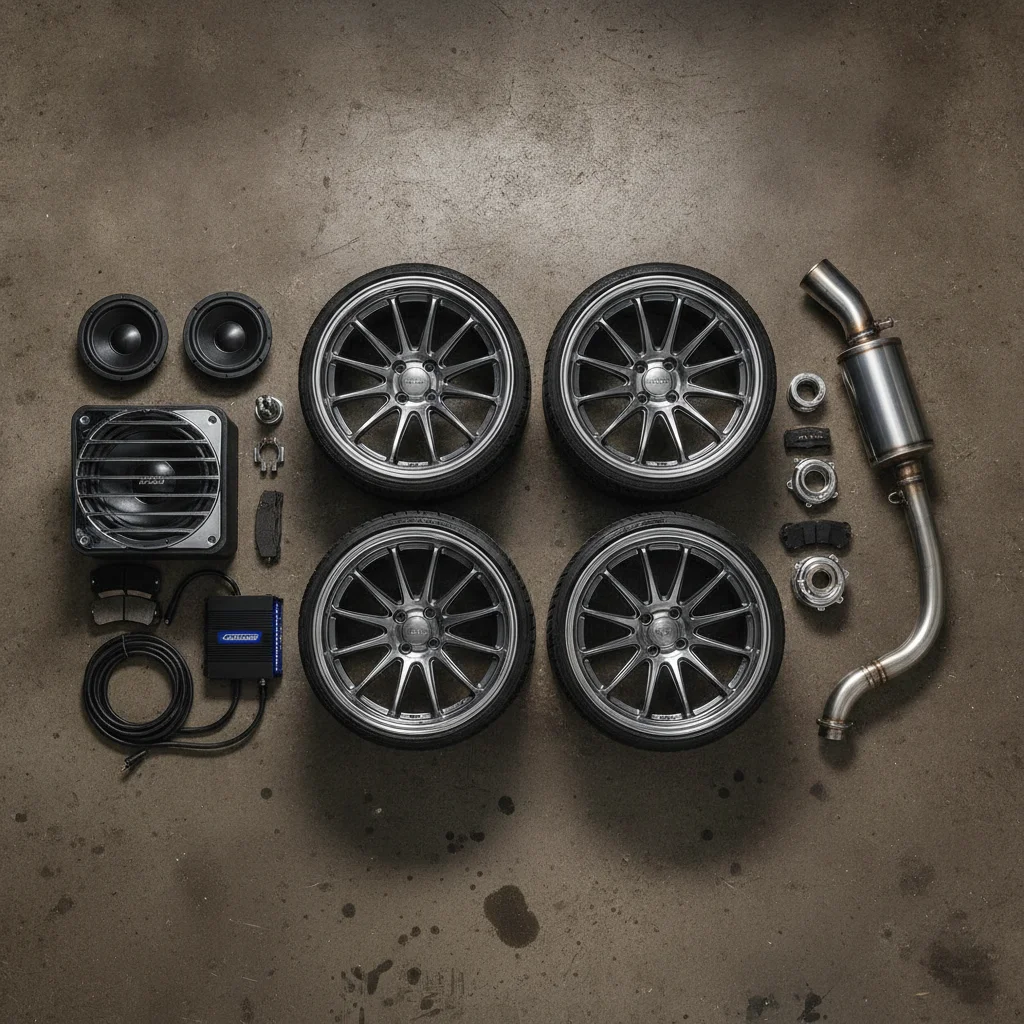
Your standard comprehensive and collision policy covers your vehicle as it came from the factory. Aftermarket modifications—lift kits, custom wheels, upgraded audio systems, performance exhaust, vinyl wraps—are almost universally excluded from the standard policy, even if they're physically attached to the car.
Custom Parts and Equipment (CPE) coverage, sometimes called aftermarket parts coverage, extends your policy to cover those modifications up to a specified limit, typically $1,500–$5,000, though higher limits are available. You'll need to document what you've installed, often with purchase receipts and photos, and the coverage pays to repair or replace those items if damaged in a covered event.
What Typically Qualifies
- Custom wheels and tires beyond factory spec
- Lift kits and suspension modifications
- Performance parts (cold air intakes, tuning chips, upgraded brakes)
- Custom paint, wraps, or body kits
- Upgraded audio or entertainment systems
- Tonneau covers, bed liners (for trucks), and running boards
GAP Insurance Is Different From New Car Replacement
GAP insurance pays the difference between your loan balance and the car's actual cash value when it's totaled. New Car Replacement coverage pays to replace your totaled car with a brand-new equivalent vehicle. If your loan balance is lower than the replacement cost, GAP would leave a shortfall that New Car Replacement would cover. They're complementary products, not substitutes.
MBI Is Not Available From All Carriers
Mechanical breakdown insurance is offered by a relatively small number of insurers—GEICO is the most prominent—and typically only on newer vehicles. If your current insurer doesn't offer it and you want this type of coverage, it may be worth switching carriers or purchasing a standalone product rather than accepting a dealer warranty by default.
Telematics Programs Share Your Driving Data
Usage-based insurance programs collect data on your speed, acceleration, braking, mileage, and the time of day you drive. While safe drivers often benefit financially, it's worth understanding that this data could theoretically affect your rates if your driving patterns change. Review each insurer's data usage and retention policy before enrolling.
Who benefits most: Truck owners who've customized their beds or suspension, car enthusiasts who've added performance or aesthetic modifications, and anyone who's invested more than $1,000 in aftermarket equipment.
Rideshare and Usage-Based Insurance Add-Ons
Two coverage categories have emerged in recent years that reflect how driving behavior has changed: rideshare endorsements for gig drivers, and usage-based or pay-per-mile programs for low-mileage drivers.
Rideshare Coverage Endorsements
If you drive for Uber, Lyft, or a similar platform, you have a coverage gap that most drivers don't realize until it's too late. The rideshare company's insurance covers Period 2 (app on, waiting for a ride request) and Period 3 (en route to or carrying a passenger) only partially, and your personal auto policy explicitly excludes commercial use. The gap is Period 1—you've accepted a ride but are still en route to the passenger.
A rideshare endorsement, added to your personal policy, fills that gap. It costs roughly $10–$20 per month and ensures you have continuous coverage across all phases of the gig. Without it, you could find yourself uninsured during an accident that occurs in that transition window.
Never Buy GAP Insurance From the Dealer
Dealer-sold GAP insurance is one of the highest-profit products in the finance office. Prices range from $400 to $900, and when financed into your loan, you'll pay interest on it for years. Your auto insurer offers identical or comparable protection for $20–$40 per year. Always add GAP through your insurer or lender—not the dealership. If you've already accepted dealer GAP within the last 30 days, check whether you can cancel it for a refund; many states require dealers to provide a refund if you cancel within a defined window.
Rideshare Drivers Must Have a Rideshare Endorsement
Driving for Uber, Lyft, DoorDash, or any similar platform without a rideshare endorsement on your personal policy leaves you exposed to a coverage gap that neither your insurer nor the platform will fully fill. If you have an accident during Period 1 and file a claim on your personal policy, your insurer may deny it entirely when they discover the rideshare app was active. The endorsement costs $10–$20 per month—far less than the liability exposure you carry without it.
Usage-Based and Pay-Per-Mile Programs
Usage-based insurance (UBI) programs—like Progressive's Snapshot, State Farm's Drive Safe & Save, or Allstate's Drivewise—monitor your driving behavior (speed, braking, mileage, time of day) via a telematics device or app and adjust your premium accordingly. Safe, low-mileage drivers can save 10–30% on their base premium.
Pay-per-mile programs like Metromile (now part of Lemonade) charge a low base rate plus a per-mile fee—often 3–7 cents per mile. If you drive fewer than 8,000 miles per year, this model frequently beats standard premium pricing significantly.
For other ways to reduce your insurance costs, the car insurance discounts and deals hub covers programs many drivers leave on the table.
Who benefits most: Gig economy drivers need rideshare endorsements without exception. UBI and pay-per-mile programs suit remote workers, retirees, and urban dwellers who drive infrequently.
Which Optional Coverages Make Sense for Your Driver Profile
Rather than approaching optional coverages as a checklist, match them to your actual situation. Here's how to think about it by driver type:
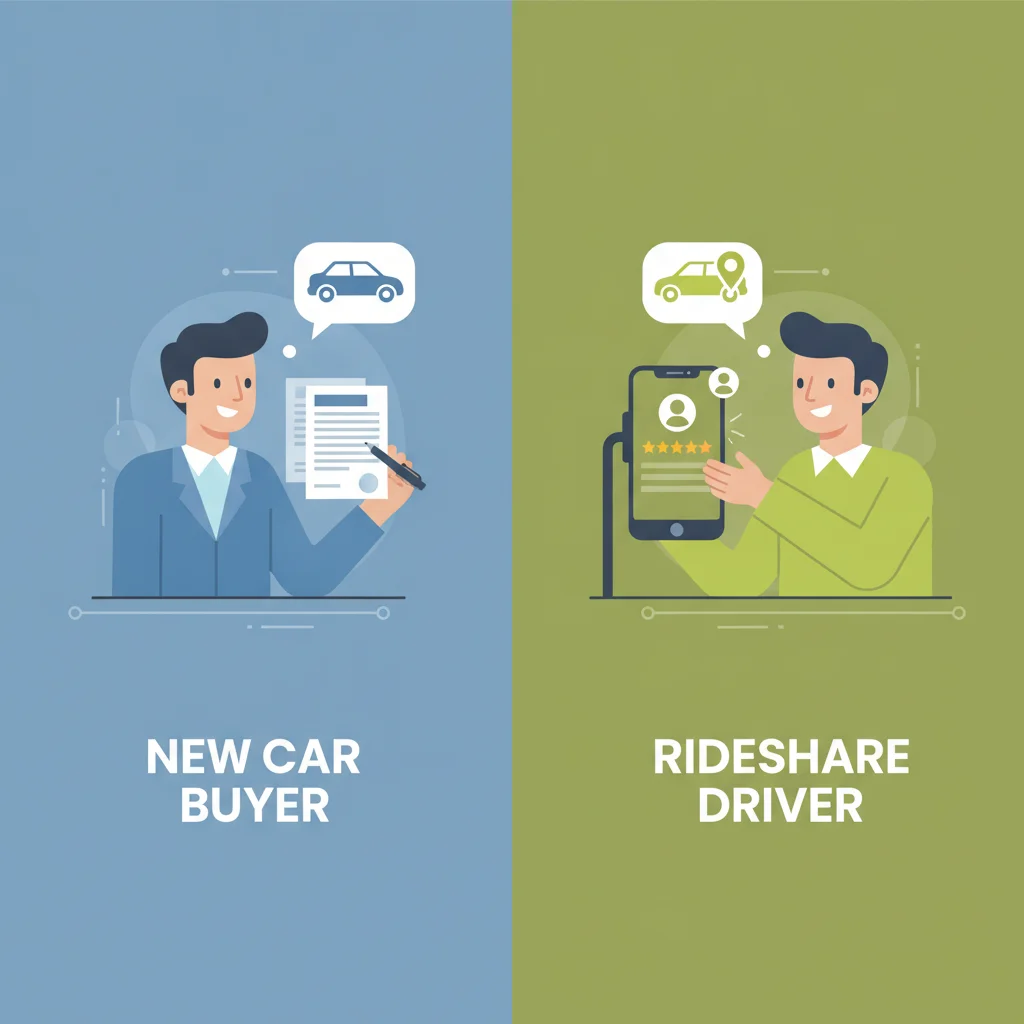
The New Car Buyer With a Loan
Priority coverages: GAP insurance (buy through your insurer, not the dealer), new car replacement if available, rental reimbursement at adequate daily limits. If you've added any factory-order options or accessories post-purchase, add CPE coverage. Skip roadside assistance if your manufacturer provides it free.
The Long-Term Owner of an Older Vehicle
Your car's market value may be low enough that comprehensive and collision are questionable—let alone optional add-ons. But roadside assistance becomes more relevant as mechanical reliability decreases. MBI makes sense only if the vehicle is still relatively young. Skip GAP and new car replacement entirely.
The Daily Commuter
Rental reimbursement is nearly essential—you depend on your car to get to work, and an at-fault accident could leave you carless for weeks. Consider usage-based programs to lower your base premium if your commute is moderate and you're a safe driver.
The Rideshare or Delivery Driver
A rideshare endorsement is non-negotiable. Without it, you're driving commercially with a personal policy that won't pay a claim during the coverage gap. This is one of the costliest mistakes I've seen gig drivers make.
The Vehicle Modifier or Enthusiast
Custom parts and equipment coverage should match the total value of your aftermarket investments. Document everything with photos and receipts before adding the coverage.
If your premium budget is constrained and you need to prioritize ruthlessly, the guide to choosing optional add-ons on a tight budget walks through exactly that exercise.
“Most drivers spend more time picking out floor mats than reviewing their insurance coverage options. The optional add-ons are where policies actually differ in ways that matter when something goes wrong.”
— J. Robert Hunter, Former Director of Insurance at the Consumer Federation of America
How to Shop These Add-Ons Without Overpaying
Optional coverages are priced very differently across insurers, and the insurer you use for your base policy isn't always the cheapest or best source for every add-on. Here's how to approach the process.
Get the Full Quote Breakdown
When comparing quotes, ask each insurer to itemize every coverage line, including optional ones you're interested in. Many comparison tools lump optional coverages into a single total premium, making it hard to see what each add-on actually costs at that carrier. Push for the line-item breakdown.
Compare the Source, Not Just the Price
GAP insurance is a good example: the dealer charges $500–$900 upfront (financed into your loan), while your insurer charges $20–$40 per year. Even if the insurer's version has a modestly different definition of covered events, the cost difference is so large that the insurer almost always wins. For roadside assistance, compare the insurer's tow radius and service limits against AAA or your vehicle's manufacturer program before defaulting to adding it to your policy.
Review What You Already Have
Before adding any optional coverage, audit your existing protections:
- Does your credit card provide rental car coverage for purchases made on the card?
- Does your vehicle's warranty include roadside assistance?
- Does your health insurance cover medical payments that would otherwise go through MedPay or PIP?
- Does your employer provide a backup vehicle or transportation reimbursement?
Paying for something you already have is pure waste. Run the audit before you add anything.
Raise Your Rental Reimbursement Daily Limit
Most policies default to $30–$40 per day for rental reimbursement—a limit set years ago that no longer reflects market rates. Current compact sedan rentals average $45–$60 per day in most US markets. Upgrading to a $50/day limit typically costs less than $2 more per month and can mean the difference between full coverage and a daily out-of-pocket bill.
Document Your Aftermarket Mods Before Insuring Them
Before adding custom parts and equipment coverage, photograph every modification with a timestamp and keep all receipts in a dedicated folder—digital or physical. Insurers will ask for proof of value at claim time, and undocumented modifications are frequently settled at lower amounts than their actual worth.
Audit Your Optional Coverages Every Policy Renewal
Your car's depreciation trajectory, loan balance, and driving habits all change over time. Set a reminder at each renewal to reassess whether each optional coverage still makes financial sense. GAP insurance, for example, becomes unnecessary once your loan balance drops below your car's market value—which can happen faster than most drivers expect if they're making extra principal payments.
Don't Assume Your Credit Card Covers Rentals
Many credit cards offer rental car insurance as a benefit, but the coverage is typically secondary (it kicks in after your auto policy pays) and often excludes certain vehicle types, countries, or rental lengths exceeding 15–30 days. Read your card's benefits guide carefully before waiving rental coverage at the counter or skipping rental reimbursement on your policy.
Rideshare Drivers Risk Claim Denial Without an Endorsement
Personal auto policies almost universally exclude coverage during commercial use. If you're driving for Uber or Lyft and have an accident during Period 1 (app active, no passenger yet), neither your personal policy nor the platform's insurance may cover you without a rideshare endorsement. This isn't a technicality—insurers will investigate and deny claims based on rideshare app logs.
New Car Replacement Has a Short Eligibility Window
Most insurers only offer new car replacement coverage if you add it when the vehicle is brand new—typically within the first model year and under a specific mileage threshold. You cannot add this coverage retroactively once the car has depreciated. If you want it, add it at the time of purchase or within the first policy period.
20%
Average first-year vehicle depreciation
According to Carfax and industry data, new vehicles lose approximately 15–20% of their value in the first year, creating an immediate GAP exposure for buyers who financed with less than 20% down.
$55/day
Average US daily car rental rate
According to travel industry data tracked through 2023–2024, average domestic car rental rates remain elevated, making low rental reimbursement caps ($30/day) increasingly inadequate for most claimants.
$700
Average dealer GAP insurance markup
Consumer advocacy groups and insurance industry research consistently show dealer-sold GAP products priced $400–$900 above what the same protection costs when added to a personal auto policy.
10–30%
Savings from telematics programs
Insurers including Progressive, State Farm, and Allstate report that safe-driver telematics participants save between 10% and 30% on their premiums compared to standard rated policies.
3 weeks
Average repair time for major collision damage
Industry repair data shows that significant structural or airbag-related collision repairs can take 15–25 business days, underscoring the practical value of adequate rental reimbursement limits.
GAP Insurance Is Different From New Car Replacement
GAP insurance pays the difference between your loan balance and the car's actual cash value when it's totaled. New Car Replacement coverage pays to replace your totaled car with a brand-new equivalent vehicle. If your loan balance is lower than the replacement cost, GAP would leave a shortfall that New Car Replacement would cover. They're complementary products, not substitutes.
MBI Is Not Available From All Carriers
Mechanical breakdown insurance is offered by a relatively small number of insurers—GEICO is the most prominent—and typically only on newer vehicles. If your current insurer doesn't offer it and you want this type of coverage, it may be worth switching carriers or purchasing a standalone product rather than accepting a dealer warranty by default.
Telematics Programs Share Your Driving Data
Usage-based insurance programs collect data on your speed, acceleration, braking, mileage, and the time of day you drive. While safe drivers often benefit financially, it's worth understanding that this data could theoretically affect your rates if your driving patterns change. Review each insurer's data usage and retention policy before enrolling.
Optional Car Insurance Add-Ons: A Complete Glossary
A plain-language reference defining every major optional auto insurance term, from GAP to mechanical breakdown insurance to custom parts coverage. Useful for quickly confirming what any add-on actually means before you buy.
Choosing Optional Add-Ons on a Tight Budget
A prioritization framework for buyers who can't afford every optional coverage and need to identify which add-ons provide the most financial protection per premium dollar in their specific situation.
NAIC Consumer Insurance Search Tool
The National Association of Insurance Commissioners' free tool for looking up insurer complaint ratios, licensing status, and financial ratings by state—useful for evaluating whether an insurer offering an optional coverage is worth trusting.
EV Insurance Guide
A detailed resource on how auto insurance works differently for electric vehicles, including how depreciation curves affect GAP calculations and which optional coverages matter most for EV owners.
Car Insurance Discounts and Deals Hub
A comprehensive look at discounts drivers commonly overlook—telematics programs, loyalty discounts, bundling, and professional affiliations—that can offset the cost of adding optional coverages.
CFPB Auto Loan and Insurance Complaint Database
The Consumer Financial Protection Bureau's database of real complaints filed against insurers and lenders, including GAP and extended warranty disputes—useful for researching insurer behavior before purchasing add-ons.
Revisit Annually
Your coverage needs aren't static. As your car ages and depreciates, some coverages (GAP, new car replacement) may no longer be necessary. As your loan balance drops below your car's market value, you can drop GAP. As your driving habits change—switching to remote work, starting a side gig—your coverage mix should change too. Set a calendar reminder to review your optional coverages every 12 months.

All claims are backed by peer-reviewed research. Sources on request.