Key Takeaways
Why Redundant Coverage Quietly Drains Your Wallet
Here's something most insurance agents won't volunteer: a significant portion of the optional coverages they're pitching you may already exist somewhere in your financial life. Your Visa Signature card might cover rental cars. Your AAA membership covers towing. Your employer health plan covers accident-related injuries. Yet every year, millions of drivers pay their insurer a second — sometimes third — time for the exact same protection.
This isn't an accident. Insurers and dealerships profit handsomely from add-ons, and they're not incentivized to ask, "Do you already have this?" That job falls to you. Before you review the full landscape of what's available, it's worth understanding what you likely already own. The full landscape of optional coverages is broad — which makes it that much easier to accidentally pay for something twice.
The goal of this article is straightforward: walk through the most common overlap scenarios, explain why drivers fall into them, and show you exactly how to audit your coverage stack so you're only paying for what's genuinely filling a gap.

The Most Common Mistakes Drivers Make When Stacking Add-Ons
These aren't edge-case errors made by uninformed buyers. They're systematic traps baked into the way coverage is sold — at the dealership finance office, at policy renewal, and every time an agent pitches an upgrade. Recognizing them is the first step to avoiding them.
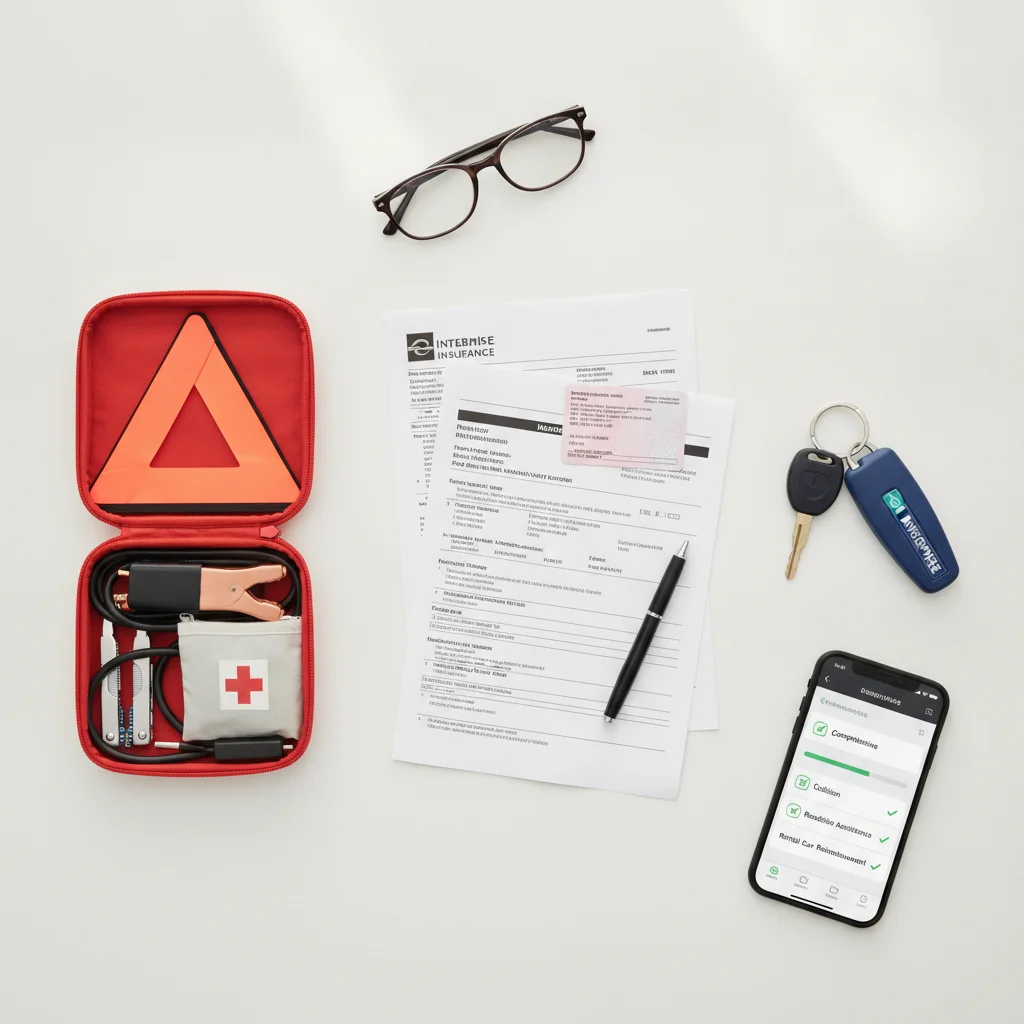
Paying for roadside assistance through your insurer when an auto club membership or credit card already provides it.
Why it happens: Insurers bundle roadside assistance as an affordable-seeming line item — often $5–$10/month — and most buyers don't think to check whether their AAA membership or Visa Signature card already covers the same services.
Purchasing rental reimbursement coverage when a credit card already provides primary or secondary rental collision protection.
Why it happens: Credit card rental benefits are often buried in 30-page benefits guides that few people read. Agents sell rental reimbursement as an easy upsell at renewal, and buyers assume their card only covers fraud and purchase protection.
Carrying both Personal Injury Protection (PIP) or MedPay and a robust employer-sponsored health plan without evaluating the overlap.
Why it happens: In states where PIP is optional, agents recommend it as a safety net — and it can be. But drivers with low-deductible, comprehensive health coverage often already have adequate medical protection for accident injuries, making the duplicate auto medical coverage largely redundant.
Buying GAP coverage from a dealer or insurer without realizing the auto lender already bundled it into the loan.
Why it happens: GAP is frequently added to loan agreements as a default product, sometimes without the buyer realizing it's a separate charge rolled into the financed amount. Dealers then offer it again at signing, and some insurers offer it a third time — creating triple-coverage on a single risk.
Adding accident forgiveness or diminishing deductible riders without understanding that safe-driver discounts from a separate program may already reward the same behavior.
Why it happens: These riders are marketed as rewards for good driving, and they sound valuable in isolation. Buyers rarely compare them against telematics-based discount programs their insurer already offers, which can provide equivalent or greater premium reductions without an added cost.
Purchasing extended warranty or mechanical breakdown insurance through an insurer without checking whether an automaker's certified pre-owned (CPO) warranty already covers the same components.
Why it happens: Finance managers routinely present extended warranties as essential, and buyers under pressure at the signing table rarely think to cross-reference what the CPO warranty covers. The result is often overlapping powertrain and major systems coverage.
Dropping Coverage Without Confirming Substitutes
Don't remove an add-on from your policy until you have written confirmation of what your alternative source actually covers. Credit card benefits change at renewal, and club membership tiers vary. Assuming a benefit exists without verifying the current terms is how drivers end up unprotected at exactly the wrong moment.
Secondary Coverage Isn't the Same as Primary Coverage
Many credit card rental benefits are secondary — meaning they pay only after your auto insurance has already paid out. If your goal is to avoid filing a claim on your primary policy, secondary card coverage won't accomplish that. Confirm whether your card's benefit is primary or secondary before dropping your insurer's rental coverage.
Where Your Existing Coverage Actually Lives
Before you can spot redundancy, you need a clear map of what you already own. Most drivers are sitting on more coverage than they realize across four main sources:
Credit Cards
Premium travel and rewards cards — Visa Signature, World Elite Mastercard, many American Express products — routinely include secondary rental car collision coverage, roadside dispatch, and travel accident insurance. The catch: these benefits vary by card, and some require you to pay for the entire rental with that card to activate them. Log into your card's benefits portal or call the number on the back and specifically ask about auto-related protections.
Auto Club Memberships
AAA and similar clubs (AARP's roadside program, Allstate Motor Club) provide towing, lockout service, fuel delivery, and battery jump-starts — the core of what insurers call roadside assistance. If you're already paying $60–$130/year for a club membership and then adding $5–$10/month for roadside assistance on your policy, you're paying twice for the same tow truck.

Health Insurance
Your group health plan or individual marketplace policy covers medical treatment regardless of how the injury occurred — including car accidents. Personal injury protection (PIP) and medical payments coverage (MedPay) sold as auto add-ons cover similar ground. In states where PIP is optional, evaluate your health plan's deductibles and out-of-pocket limits before assuming you need a parallel auto medical coverage layer.
Loan and Lease Agreements
GAP coverage is the biggest landmine here. Lenders frequently roll GAP into the loan at origination — sometimes without clearly disclosing it as a separate line item. Then dealers offer it again at closing, and insurers offer it a third time. Check your loan agreement's itemized charges before accepting GAP anywhere else. See also how this dynamic plays out specifically for lessees: optional coverages for leased cars.
$410
Average annual cost of common optional add-ons
A 2023 analysis by the Insurance Information Institute found that drivers who carry multiple optional coverages spend an average of $410 more per year on premiums beyond state minimums.
58%
Credit cardholders unaware of auto rental benefits
A J.D. Power survey found that nearly 58% of premium credit cardholders were unaware their card included some form of auto rental collision protection.
3-in-10
Drivers paying for duplicate roadside assistance
According to AAA, roughly 3 in 10 members who also carry auto insurance have redundant roadside coverage on their policy, paying for the same service twice.
$700+
Typical dealer markup on GAP coverage
The Consumer Financial Protection Bureau has noted that dealer-sold GAP products frequently carry markups of $700 or more compared to insurer-issued equivalents — and may already be duplicated in the loan.
How to Run Your Own Coverage Audit
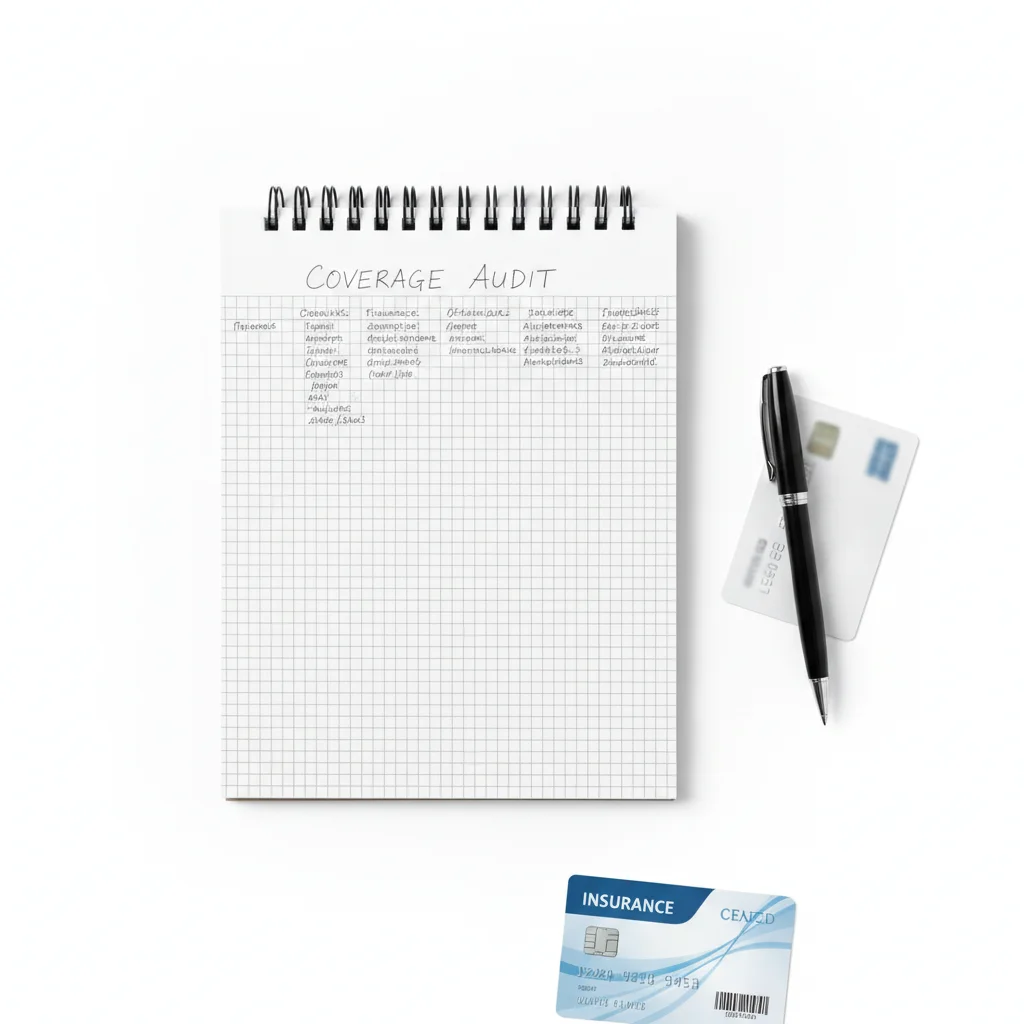
An audit doesn't require a spreadsheet wizard. It requires 45 minutes and a willingness to actually read the fine print. Here's the process I recommend:
- List every active policy and membership — auto insurance, health insurance, homeowner's/renter's insurance, credit card benefits, auto club memberships, and any coverage embedded in your auto loan or lease.
- For each one, extract the auto-relevant benefits — towing, rental reimbursement, medical payments, personal property coverage, roadside assistance, GAP, depreciation protection.
- Create a simple side-by-side comparison — column per source, row per coverage type. Anywhere you see the same row covered by multiple columns, you have potential redundancy.
- Check coverage limits and exclusions — redundancy only matters if the existing coverage is actually sufficient. A credit card that covers $25/day on a rental isn't a true substitute if you'd need $45/day for a comparable vehicle.
- Contact each provider to confirm active status — benefit programs change at annual renewal. A benefit your card offered last year may have been quietly dropped.
Once you've mapped the overlaps, you're in position to have a real conversation with your insurer about dropping or reducing specific add-ons. Prioritizing coverages on a tight budget becomes dramatically easier when you've already eliminated the redundant ones.
GAP Coverage Can Be Sold Three Times on One Loan
It's legally possible — and unfortunately common — for a buyer to pay for GAP through the lender, the dealership, and the insurer on the same vehicle purchase. Only one GAP product will ever pay out on a total loss. Request a complete itemized breakdown of your loan documents before accepting GAP from any secondary source, and dispute any redundant charges immediately through your lender's customer service department.
Mid-Term Changes Can Recover Money Now
You don't have to wait until renewal to act on your audit findings. Most auto insurers allow you to remove optional coverages mid-term and will issue a prorated premium refund for the remaining policy period. Call your insurer's service line, confirm the refund amount before making changes, and document the conversation in writing. Drivers who act at audit rather than waiting for renewal often recover $50–$150 in refunded premium within weeks.
The Coverages That Rarely Have a Free Substitute
Eliminating redundancy is not the same as stripping your coverage bare. Some optional add-ons don't have a meaningful free equivalent, and cutting them is a genuine gamble. Be honest with yourself about which column these fall into.
Uninsured/Underinsured Motorist Property Damage (UMPD)
If an uninsured driver totals your car, there's no credit card benefit or health plan that steps in to replace your vehicle. UMPD fills that gap and is often worth carrying even if you're otherwise well-covered.
Comprehensive Coverage on a Newer Vehicle
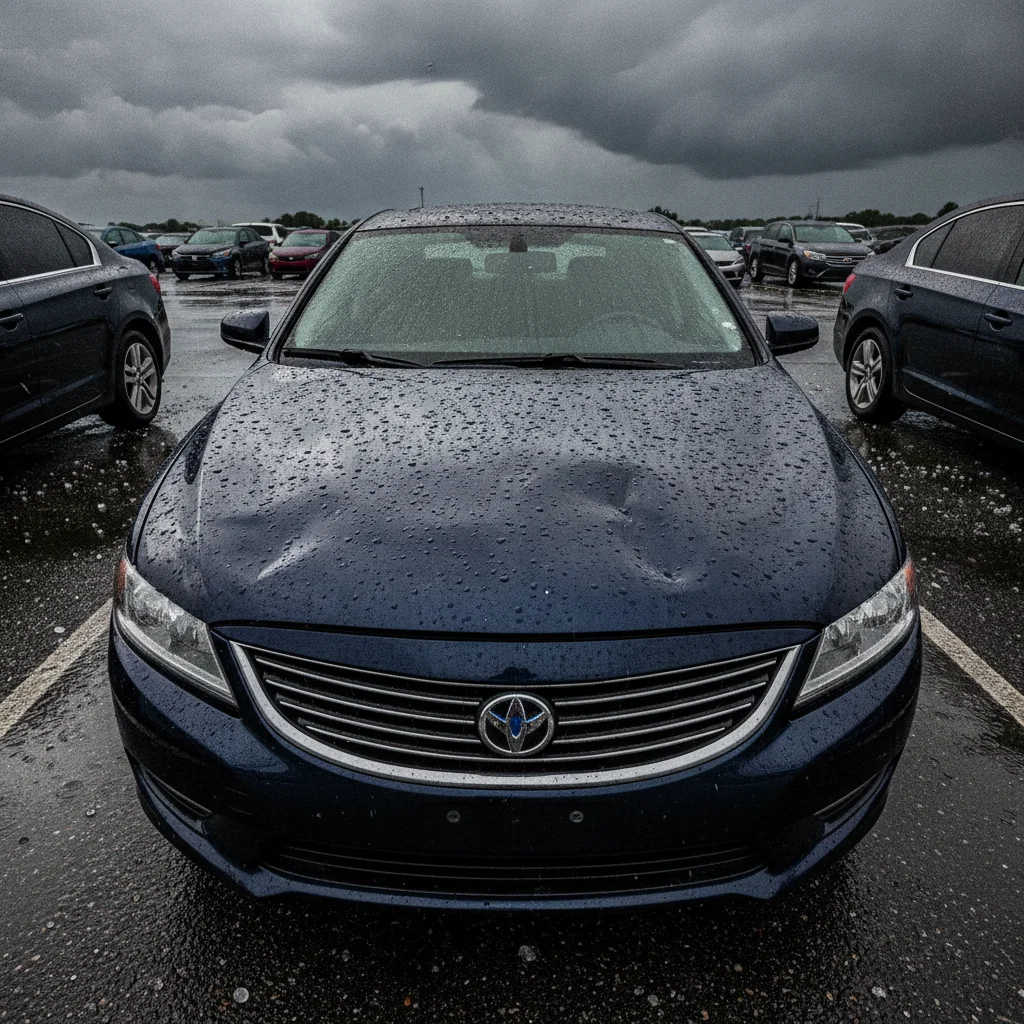
Theft, hail, flooding, and deer strikes are not covered by credit cards or club memberships. If your vehicle holds significant value, collision and comprehensive coverage is rarely redundant — it's foundational.
Umbrella Liability
No consumer-facing credit card or club membership replicates excess liability protection. If your assets exceed your standard auto liability limits, a personal umbrella policy is a true gap-filler, not a duplication.
The honest version of add-on evaluation isn't "buy nothing extra" — it's understanding which add-ons actually pay off versus which ones are pure margin for the insurer. Those are different questions with different answers.
Premium savings from eliminating overlaps can also be redirected strategically. For instance, adjusting your deductible is one lever — compare that approach against other savings tactics in our look at raising deductibles versus stacking discounts. And before you finalize any changes, browse the discounts and deals available to drivers — elimination and discount-stacking together often produce the largest premium reductions.
Putting It Together: What to Do Before Your Next Renewal
Coverage audits are most actionable at renewal, but you don't have to wait. Most policies allow mid-term endorsement changes, meaning you can drop a redundant add-on today and receive a prorated refund. Here's a concrete action plan:
- Pull your current declarations page and highlight every optional coverage line with its monthly cost.
- Cross-reference against your credit card benefits guide — most card issuers publish these online; search your card name plus "guide to benefits."
- Verify your auto club membership scope — some clubs distinguish between basic and premium tiers, and only premium covers longer tows or more service calls.
- Request an itemized breakdown of your auto loan charges — GAP, credit insurance, and extended warranties are often buried in the financed amount rather than disclosed upfront.
- Call your insurer and explicitly ask: "If I dropped roadside assistance and rental reimbursement, what would my premium change to?" Get the number in writing before deciding.
The average driver who completes this process finds $100–$300 in annual savings by cutting genuine duplicates — without reducing actual protection by a single dollar. That's not a small number over the life of a vehicle. It's the difference between overpaying out of inertia and making a deliberate, informed choice about where your money goes.
GAP Coverage Can Be Sold Three Times on One Loan
It's legally possible — and unfortunately common — for a buyer to pay for GAP through the lender, the dealership, and the insurer on the same vehicle purchase. Only one GAP product will ever pay out on a total loss. Request a complete itemized breakdown of your loan documents before accepting GAP from any secondary source, and dispute any redundant charges immediately through your lender's customer service department.
Mid-Term Changes Can Recover Money Now
You don't have to wait until renewal to act on your audit findings. Most auto insurers allow you to remove optional coverages mid-term and will issue a prorated premium refund for the remaining policy period. Call your insurer's service line, confirm the refund amount before making changes, and document the conversation in writing. Drivers who act at audit rather than waiting for renewal often recover $50–$150 in refunded premium within weeks.

All claims are backed by peer-reviewed research. Sources on request.