Key Takeaways
Leasing Changes Your Insurance Risk Profile
When you lease a car, you never own it. That single fact rewires your entire financial exposure in a way most drivers underestimate when they sit down at the F&I desk. The leasing company — the lessor — retains ownership and has a vested interest in the vehicle's condition and insured value throughout the entire lease term. That's why your lease contract specifies minimum insurance requirements that go well beyond what most states mandate.
You're legally on the hook for a car that depreciates fast, that you must return in near-perfect condition, and whose payoff amount may exceed its market value the moment you drive it off the lot. Miss those nuances and you could face a five-figure bill after an accident or theft — even if your insurer pays out in full.
This isn't about buying every product an insurance agent or dealer pitches at you. It's about identifying the coverages where a lessee faces genuinely different and elevated risk, and skipping the ones that simply don't apply to your situation. For a broader look at the entire landscape of optional add-ons, see Optional Car Insurance Coverages: The Full Landscape From Roadside to Rental.
GAP Insurance — The One Coverage Lessees Can't Afford to Skip
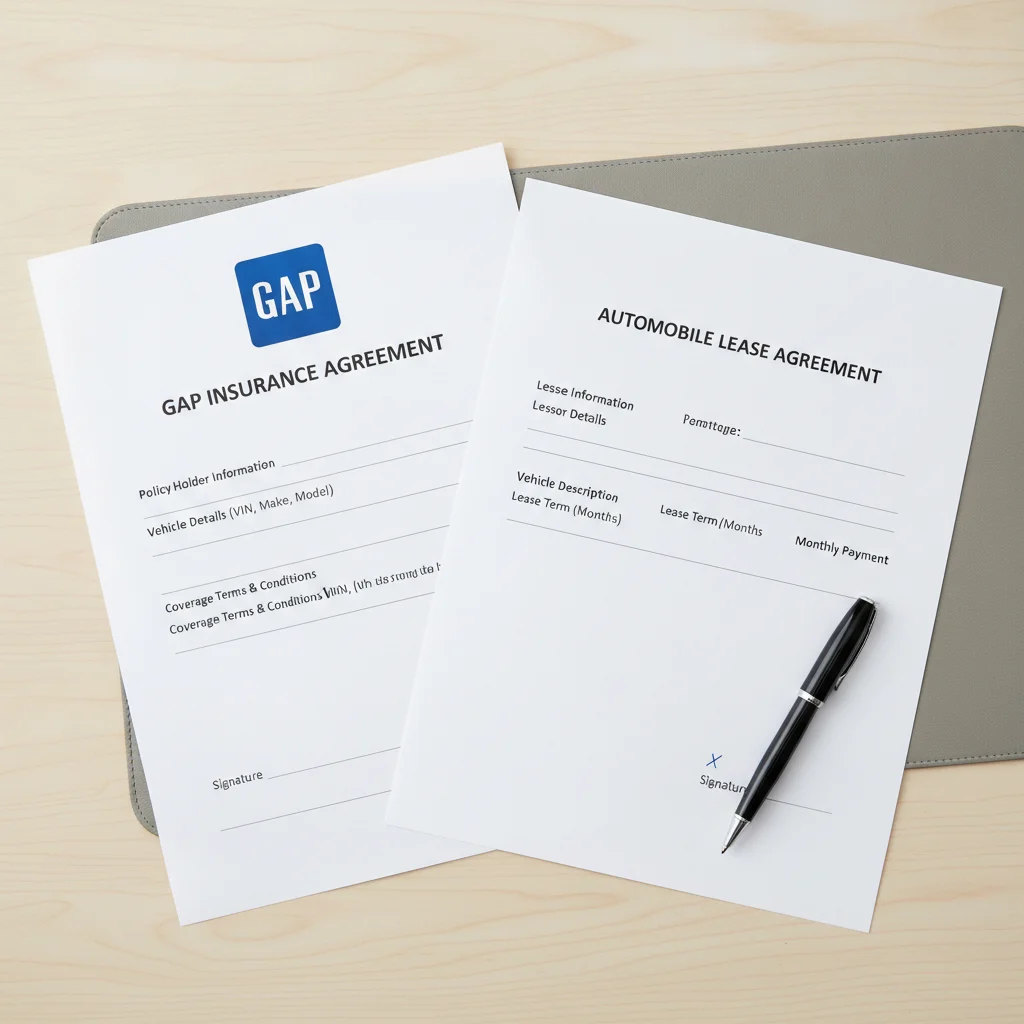
Guaranteed Asset Protection (GAP) covers the difference between what your insurer pays after a total loss and what you still owe on the lease. This gap is not hypothetical — it's structural. New vehicles lose 15–25% of their value in the first year alone. A car you leased for $40,000 with a residual payoff of $30,000 may only be worth $24,000 eighteen months in. If it's totaled, your insurer pays $24,000 (minus your deductible). The remaining $6,000-plus comes out of your pocket unless you have GAP.
Lessors sometimes include GAP coverage in the lease itself — check your contract before buying it separately. If your lease does include it, that's one line item you don't need from your insurer. If it doesn't, buy it from your insurer rather than the dealer; dealer-sourced GAP bundled into monthly payments costs significantly more over a 36- or 48-month term.
For a full breakdown of why lenders and lessors mandate certain coverages in the first place, Lenders, Leases, and Mandatory Physical Damage Coverage explains the logic behind these requirements.
GAP insurance is structural protection for lessees — the math almost always justifies the premium.
Collision and Comprehensive — Required, Not Optional
These aren't technically optional for lessees — your lease contract mandates them. But how you configure them matters. Specifically, the deductible level you choose directly affects your out-of-pocket cost after a claim, and lessors sometimes specify maximum allowable deductibles (often $500 or $1,000).
Choosing a higher deductible lowers your premium but increases your financial exposure at claim time. Since you're driving a vehicle you don't own and must return in good condition, a lower deductible is often the smarter trade-off for lessees — even if it costs more monthly. A single parking lot ding that you're responsible for repairing could exceed the annual premium savings from a higher deductible.
[in_content_images:1]Collision and comprehensive also interact directly with GAP coverage. The insurer pays actual cash value first; GAP covers the remainder. This means letting your comprehensive or collision lapse — even briefly — creates a financial risk chain that leaves you personally exposed on a vehicle you don't even own.
Lessees should strongly consider a lower deductible — you're repairing a car you'll have to return.
Excess Wear-and-Tear Protection — Valuable, But Shop the Source
Lease return inspections are not generous. Scratches, interior stains, tire wear, small dents — these are measured against a strict standard that varies by lessor. Charges at lease-end for excess wear and tear can run from a few hundred to several thousand dollars, depending on the vehicle and the inspector's assessment.
Many lessors sell their own wear-and-tear protection at the time of signing. Third-party insurers and some auto clubs offer competing products that cover the same return-condition liability, often at lower cost. Before you purchase from the dealership, price the third-party alternative.
Key questions to ask about any excess wear-and-tear policy: What's the per-item claim limit? Does it cover tires? What counts as normal versus excess wear? What's excluded (e.g., smoking damage, pet damage)? A cheap policy with narrow definitions may not cover the damage category that actually costs you at turn-in.
Excess wear-and-tear protection pays for itself if even one minor damage item is flagged at lease return.
Rental Reimbursement — Check Your Lease Package First
If your car is in the shop after a covered claim, rental reimbursement coverage pays for a replacement vehicle — typically $30–$50 per day up to a set number of days. For lessees of newer luxury or near-luxury vehicles, this matters because your standard of mobility likely includes something comparable to what you're leasing, not a basic economy car.
Here's the catch: many manufacturer lease packages already include courtesy vehicle provisions, especially for warranty-covered repairs. If your lease covers service loaners, adding rental reimbursement is duplication for a significant portion of scenarios. Review your lease benefits booklet carefully before adding this coverage to your policy.
Where rental reimbursement genuinely earns its keep for lessees is in at-fault accident scenarios, where courtesy loaner programs may not apply. At $15–$30 per year added to your premium, it's rarely expensive — but verify you're not paying twice for the same benefit.
Rental reimbursement is cheap insurance, but check your lease package before paying for coverage you already have.
Roadside Assistance — Likely Redundant for Most Lessees
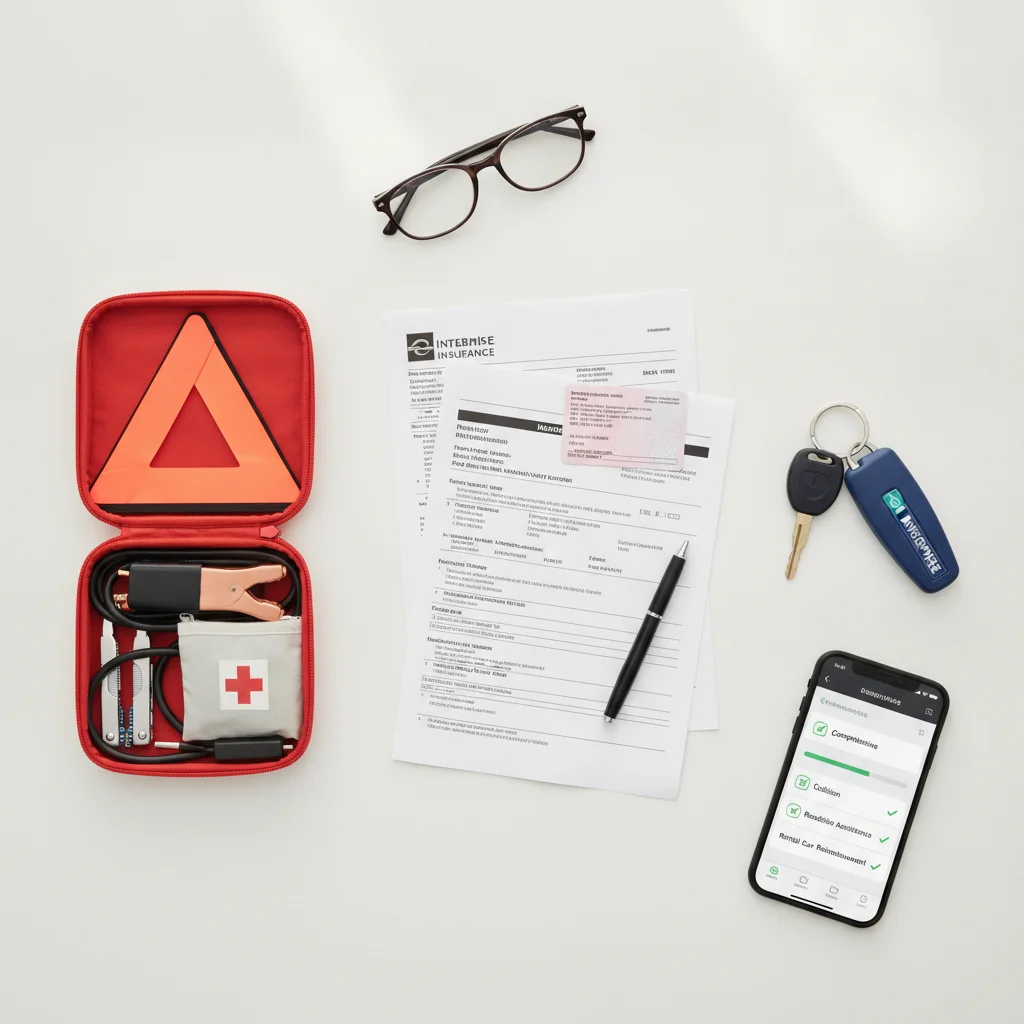
New leased vehicles almost universally come with manufacturer roadside assistance for the lease term. Flat tire? Battery jump? Lockout? Towing? It's almost certainly covered already under the manufacturer's program, which often mirrors or exceeds what an insurer's roadside add-on provides.
Adding roadside assistance through your auto insurer when you're already covered is a straightforward waste of money — typically $5–$15 per month you'll never use because you'll call the manufacturer's line instead. This is a textbook example of redundant coverage, and it's addressed directly in Stacking Optional Coverages: Avoiding Redundant Protection You're Already Paying For.
The one exception: if you're in the final months of a lease and the manufacturer's roadside program has expired, a brief policy add-on may make sense as you transition to your next vehicle.
Manufacturer roadside assistance on new leases almost always makes insurer roadside coverage redundant.
New Car Replacement Coverage — Understand How It Applies to a Lease
New car replacement coverage pays to replace your totaled vehicle with a brand-new equivalent, rather than compensating you for depreciated actual cash value. Sounds great for lessees — but the mechanics are different when you don't own the car.
After a total loss on a lease, the insurer typically pays the lessor the vehicle's actual cash value. GAP (if you have it) covers the remainder of the lease payoff. New car replacement doesn't change this equation — it's structured for owners who want to avoid depreciation loss, not lessees whose liability is defined by the lease payoff amount, not the cost of a new vehicle.
If your insurer offers a version that pays the full replacement cost to the lessor, eliminating any GAP situation entirely, that's worth evaluating. But in many standard policy structures, new car replacement offers lessees little incremental value over a solid combination of comprehensive, collision, and GAP coverage. Read the policy terms carefully and ask your insurer exactly what happens on a total loss under a lease before paying extra for this coverage.
[in_content_images:2]New car replacement coverage was built for owners — lessees should verify it actually changes their total-loss outcome.
Diminished Value Claims — A Lessor Complication Worth Understanding
Diminished value refers to the reduction in a vehicle's market value after it has been repaired following an accident. In most states, the owner of a vehicle can file a diminished value claim against an at-fault driver's liability insurer. As a lessee, you don't own the car — so this claim typically belongs to the lessor, not you.
Here's where this becomes your problem: some lease agreements hold you financially responsible if the car's residual value at lease-end is impacted by accident history. If the lessor discovers the vehicle has a Carfax entry and determines you owe for value reduction beyond normal wear, that's a lease-end charge you didn't anticipate.
A few insurers offer diminished value coverage as an add-on. For lessees, the value is narrow — you'd need to confirm your lease actually creates this liability and that the coverage would apply to a vehicle you don't own. This is a situation where the specific language in both your lease contract and the insurance policy needs to align before you spend money on it.
Diminished value liability depends on your specific lease terms — don't buy coverage without reading both documents first.
Umbrella Liability Coverage — Smart for High-Value Lease Drivers
Leasing often puts drivers in newer, higher-value vehicles than they might otherwise purchase outright. That changes the liability calculation. If you're involved in a serious accident in a $55,000 SUV and the damages and injuries exceed your auto policy's liability limits, your personal assets are exposed.
A personal umbrella policy extends your liability coverage — typically by $1 million or more — across your auto and home policies, usually for $150–$300 per year. For drivers leasing vehicles in the luxury or near-luxury segment, this is an underused protection that provides significant coverage relative to its cost.
Lessors don't require umbrella coverage, but the financial logic applies regardless of whether you own or lease. High-value vehicle drivers with meaningful personal assets — retirement accounts, home equity, investment portfolios — have the most to protect. See Liability Coverage for context on how liability limits work before deciding how much umbrella protection makes sense for your situation.
An umbrella policy costing $200 a year can shield millions in personal assets from a single serious accident.
Before You Add Anything, Read Your Lease Contract
The most overlooked tool in the lessee's arsenal is the lease contract itself. Before you agree to any optional coverage, comb through your agreement for three things: what the lessor already provides, what they require you to maintain, and what your liability is at lease-end for wear and damage.
Many lease packages from manufacturers include roadside assistance, courtesy vehicles, and maintenance services that would otherwise be sold to you as insurance add-ons. Paying twice for those is dead money. Conversely, some lease contracts hold you responsible for diminished value or excess mileage in ways that specific coverages can offset.
Your Lease Minimum Coverage Requirements May Exceed State Minimums
Most states set minimum liability limits far below what lessors require. A state may mandate $25,000 per person in bodily injury liability, while your lease contract demands $100,000 or more. Always read the insurance requirements section of your lease before setting your coverage limits — and update your policy before you take delivery. Driving off the lot with a non-compliant policy puts you in breach of contract from day one.
Budgeting for Coverage? Prioritization Matters
If you're working with limited premium dollars, not every optional coverage on this list carries equal urgency. GAP should come first, followed by appropriate deductible levels on your required collision and comprehensive. For a prioritized framework on making the most of your coverage budget, see <a href="/car-insurance/coverage-types/optional-add-ons/choosing-optional-car-insurance-add-ons-on-a-tight-budget">Choosing Optional Car Insurance Add-Ons on a Tight Budget</a>.
If you're still in the pre-signing phase and want a structured way to evaluate your coverage needs, Evaluating Optional Add-Ons Before Buying a Car: A Pre-Purchase Checklist walks through exactly how to do that before you're locked in. And since some optional coverages can actually overlap with protections you already have elsewhere, Stacking Optional Coverages: Avoiding Redundant Protection You're Already Paying For is worth a read before you finalize your policy.
Ask Your Insurer One Specific Question
Before adding any optional coverage, ask your insurer: 'How does this coverage apply specifically under a lease, where I don't hold title to the vehicle?' Some products — like new car replacement — are structured around ownership and deliver limited benefit to lessees. A direct question forces a direct, policy-specific answer rather than a general sales pitch.
Time Your Coverage Review Strategically
The best time to audit your coverage stack is 60–90 days before your lease ends. Manufacturer roadside programs may be expiring, wear-and-tear liability becomes imminent, and any unresolved accident history needs to be on your radar. Building in this review window gives you time to add protection if needed — or to flag issues before the lessor's inspector does.
Once you understand where your lease exposure actually sits, building the right coverage stack becomes straightforward. The eight optional coverages below are evaluated specifically through the lessee's lens — what matters, what doesn't, and where the real financial risk lies.
The Bottom Line for Lessees
Leasing shifts risk in specific, predictable ways that your standard auto policy — built with vehicle owners in mind — doesn't automatically account for. The good news is that you don't need to buy every optional coverage available. You need to buy the ones that address the risks unique to not holding title.
That short list starts with GAP insurance, runs through appropriate deductible levels on your mandatory collision and comprehensive, and extends to excess wear-and-tear protection if your driving history or usage patterns create real return-condition exposure. Beyond those, every other optional coverage needs to be vetted against your specific lease terms before you spend money on it.
For an honest assessment of which add-ons tend to deliver real value versus those that mostly benefit the insurer's bottom line, The Add-Ons That Rarely Pay Off—and the Ones That Routinely Do gives you that breakdown without the sales pitch. And if your life circumstances change during your lease term — a job change, a move, a growing household — Death, Divorce, and Job Loss: When to Re-Evaluate Your Optional Car Insurance Add-Ons is a useful framework for auditing your coverage at any point.
The dealers and F&I managers I worked alongside were very good at presenting every optional product as essential. Most weren't — and the same applies to insurance. Know your actual exposure, buy to cover it specifically, and don't pay for protection you already have somewhere else.

All claims are backed by peer-reviewed research. Sources on request.