Key Takeaways
Option A
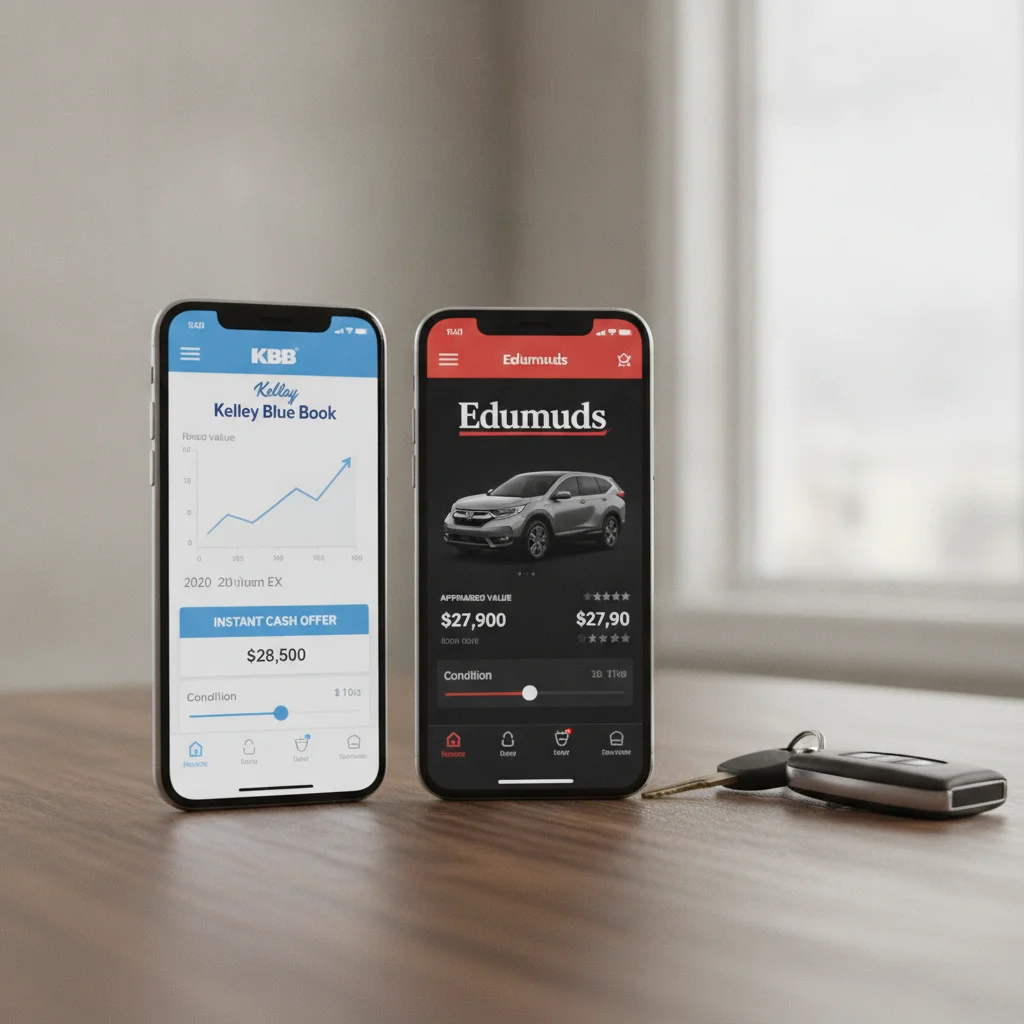
Kelley Blue Book (KBB)
The most recognized name in car valuation.
Best for: Sellers who want a widely recognized number that buyers already know and trust by brand name.
Option B
Edmunds Instant Market Value (IMV)
The data-driven, transaction-based alternative.
Best for: Sellers who want a figure grounded in real recent transactions and closer to what dealers actually pay.
If you're selling privately and want the most market-accurate asking price
Edmunds Instant Market Value (IMV)
Edmunds IMV is built from real transaction data, making it a closer reflection of what buyers are actually paying right now in your region.
If you want a number buyers will immediately recognize and not argue with
Kelley Blue Book (KBB)
KBB is the most recognizable valuation brand in the US. Many buyers walk in already having checked it, so listing your price in relation to KBB reduces friction.
If you're trading in at a dealership and want to walk in prepared
Kelley Blue Book (KBB)
KBB's trade-in range is widely referenced by consumers, and showing the dealer their own benchmark keeps the conversation grounded in a familiar reference point.
If the tools disagree by more than $2,000 and you need to know which to trust
Edmunds Instant Market Value (IMV)
Large gaps usually mean local supply-demand is diverging from national averages. Edmunds IMV updates more frequently from transaction data, so it catches these shifts faster.
If you're pricing a high-mileage or older vehicle where condition adjustment matters most
Edmunds Instant Market Value (IMV)
Edmunds factors in real-market depreciation curves for high-mileage examples more granularly than KBB's condition buckets, reducing the risk of mispricing.
Why the Two Numbers Are Never Identical
Pull up the same car on Kelley Blue Book and Edmunds and you'll almost always see different numbers — sometimes by a few hundred dollars, sometimes by $2,000 or more. That spread isn't random, and it doesn't mean one tool is broken. It means they're measuring slightly different things using different inputs.
KBB has been around since 1926 and built its brand on dealer relationships and consumer surveys. Over time it layered in auction data and market signals, but its methodology still blends multiple data streams that include self-reported condition assessments and regional adjustments that can lag behind fast-moving markets. Cox Automotive, the parent company, has substantial dealer data flowing through the system — which helps accuracy but also reflects dealer-side pricing interests.
Edmunds Instant Market Value (IMV) takes a different approach. It's built primarily from actual transaction records — what cars really sold for, not what they were listed at. That distinction matters a lot. A car listed at $18,500 that sold for $17,200 ends up in the Edmunds dataset at $17,200. KBB may still reflect the listed price environment if it hasn't fully incorporated completed-transaction corrections. For a deeper explanation of how each tool constructs its number, see what each valuation tool is actually measuring.
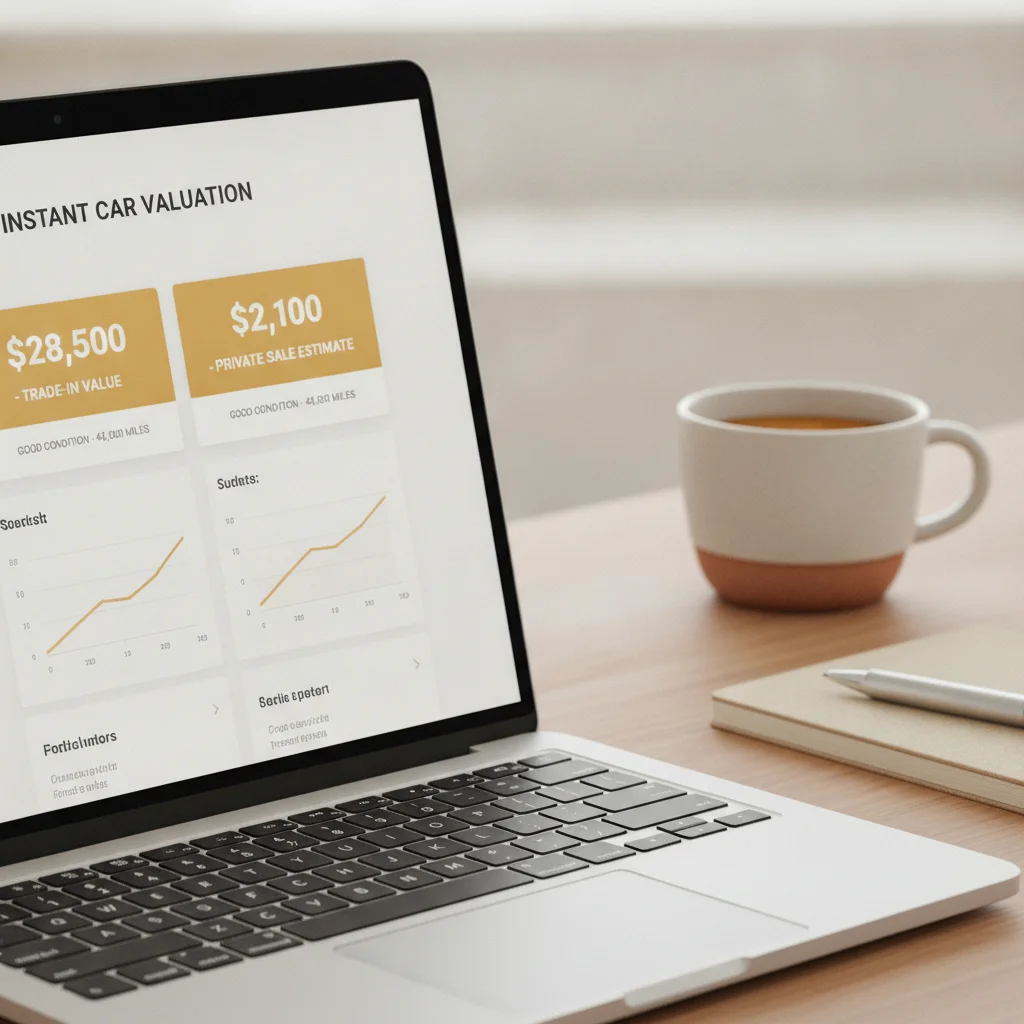
The bottom line: KBB tends to reflect a blend of market sentiment and dealer-influenced pricing. Edmunds IMV tends to reflect what money actually changed hands at. For sellers, that difference is consequential.
Head-to-Head: How KBB and Edmunds Stack Up
Here's a direct comparison of the two tools across the criteria that matter most when you're pricing a car to sell:
| Criterion | Kelley Blue Book (KBB) | Edmunds IMV |
|---|---|---|
| Primary data source | Surveys, dealer input, auction data blend | Completed transaction records |
| Update frequency | Weekly (can lag volatile markets) | Near real-time from transaction feed |
| Value types offered | Private party, trade-in, dealer retail | IMV (private/dealer), trade-in estimate |
| Brand recognition with buyers | Very high — household name | Moderate — known among car shoppers |
| Accuracy to actual sale price | Good; can run slightly high | Strong; closely tracks real transactions |
| Market context data | Limited — range only | Days on market, price trends included |
| Instant cash offer available | Yes, through partner dealers | Yes, through Edmunds dealer network |
| Best use case | Buyer-facing price anchoring, trade-in negotiation | Setting a realistic private-party asking price |
$1,200
Typical KBB-to-Edmunds spread on used sedans
Internal analysis of side-by-side tool outputs on comparable vehicles consistently shows KBB private-party running $800–$1,500 above Edmunds IMV for mainstream sedans in good condition.
~70%
Car buyers who check KBB before purchasing
Cox Automotive's annual Car Buyer Journey study has consistently found KBB to be the most-visited third-party valuation site among consumers in the US market.
14–21 days
Lag time for KBB to reflect sharp market shifts
Industry observers and dealer groups have noted KBB values can trail fast-moving market corrections by two to three weeks due to its blended data methodology.
$2,000+
Gap when tools diverge on high-mileage vehicles
Vehicles with over 100,000 miles or more than 10 model years old show the widest KBB-to-Edmunds gaps, often because depreciation curves become highly model-specific.
One thing the table can't fully capture: how quickly each tool responds to market shifts. In a fast-appreciating or fast-depreciating market — like the used-car spike of 2021-2022 or subsequent softening — Edmunds IMV tends to update more responsively because it's pulling from recent closed transactions. KBB can lag by weeks in volatile conditions because its data blend takes longer to recalibrate.
That lag worked against sellers during the post-pandemic softening: some KBB values stayed elevated while actual sale prices had already dropped, leading sellers to overprice and sit on listings longer than necessary.
What Sellers Usually Get Wrong About These Tools
The biggest mistake sellers make is treating either number as a guaranteed sale price. Both KBB and Edmunds are estimates derived from aggregated data — your specific car, in your specific zip code, in this week's market, may land above or below either figure.
Mistake 1: Using the wrong value type
Both tools offer multiple value types: private party, trade-in, dealer retail. These are not interchangeable. If you're selling to another person directly, use the private-party value. If you're trading in, use the trade-in figure. Mixing them up can leave you $1,500–$3,000 off your asking price before you've even started negotiating. See the difference between trade-in value and market value for a clear breakdown of why those numbers diverge.
Mistake 2: Entering condition inaccurately
Both tools ask you to self-report condition. Most sellers rate their car one condition tier higher than a buyer or dealer would. Rate your car honestly — or even conservatively — and compare that to what similar cars with similar miles are actually listed for in your market. Getting the most accurate estimate from KBB walks through exactly which inputs move the needle most.
Mistake 3: Ignoring local listing prices
Valuation tools give you a national or regional baseline. Your actual competition is the three or four similar cars listed within 50 miles of you right now. Pull those listings on CarGurus, Autotrader, or Facebook Marketplace. If every comparable in your area is $1,200 below your KBB private-party figure, that's the real market, and you need to price accordingly.

When the tools disagree significantly — say, more than $2,000 on a $15,000 car — that's often a signal worth investigating. What it usually means when valuation tools disagree by a lot explains the specific situations — older vehicles, niche trims, regional supply imbalances — where gaps get wide.
Condition Ratings Aren't Standardized Across Tools
KBB and Edmunds use slightly different definitions for condition tiers like "Good" or "Very Good." A car you rate as "Very Good" on KBB might align more closely with "Good" on Edmunds, which can account for some of the gap between their outputs. Always read each tool's condition definitions carefully before selecting your rating — don't just pick the highest tier that feels close.
The Case for KBB: Brand Recognition Has Real Value
There's a practical argument for citing KBB that has nothing to do with accuracy: buyers know it. When you post a car for $14,900 and include a line like "priced at KBB private-party value," a meaningful percentage of buyers will accept that framing as legitimate without pushing back hard. That brand recognition is a negotiating asset.
KBB has also partnered broadly with dealers and financial institutions, so when a buyer is financing a private-party purchase or a credit union is underwriting the loan, there's a reasonable chance their lender is referencing KBB somewhere in the process. Being aligned with KBB's figure can smooth financing hurdles for your buyer.
The honest pros and cons of relying on KBB to price your car takes a longer look at where KBB's strengths genuinely hold and where they fall short — worth reading before you commit to a KBB-anchored price.
For trade-ins specifically, KBB's Instant Cash Offer feature (available through participating dealers) can generate a real written offer you can walk into a dealership with. That's a concrete floor for your trade-in negotiation, not just a number on a screen. If you're comparing multiple trade-in tools, how KBB, Edmunds, and CarGurus differ on trade-in estimates is the right next read.
The Case for Edmunds IMV: Closer to What Buyers Actually Pay
If your goal is to price competitively without leaving money on the table, Edmunds IMV has a structural advantage: it's calibrated to what transactions actually closed at, not what dealers hoped to get or what surveys suggested. That makes it a sharper tool for sellers who want to move a car in a reasonable timeframe at a fair price.
Edmunds also displays market context around the IMV — how many days similar vehicles are sitting on lots, what the spread of listing prices looks like, and whether the IMV is trending up or down. That surrounding data is often more useful than the single number itself. A car sitting at 45 days average tells you something different about your pricing flexibility than one that's moving in 12 days.
For sellers of vehicles that depreciate quickly — high-mileage examples, older domestic trucks, entry-level economy cars — Edmunds IMV tends to reflect the steep real-world depreciation curves more accurately than KBB's condition-bucket system. KBB's "Fair" to "Good" to "Very Good" tiers can feel broad and imprecise when you're trying to account for 180,000 miles on a 12-year-old crossover. Edmunds builds depreciation more granularly into IMV based on actual transaction patterns for that specific cohort of vehicles.
To understand exactly what feeds Edmunds' figure, how Edmunds Instant Market Value is calculated gives a detailed breakdown of the data inputs and why it often runs slightly below KBB's private-party estimate.
The Smart Seller's Approach: Use Both, Then Check Listings
Don't pick one tool and ignore the other. The smartest pricing strategy uses both as goalposts, then ground-truths both against what's actually for sale near you.
- Run both tools with identical inputs. Same mileage, same condition tier, same options. Note the spread between them.
- If they're within $500 of each other, you have a tight, reliable range. Price at the midpoint or slightly above if you have room to negotiate.
- If they diverge by $1,000–$2,000, lean toward Edmunds IMV for your floor and KBB private-party for your ceiling. List closer to KBB, but be ready to justify the delta with condition or features.
- If they diverge by more than $2,000, stop and research why before you list. Check local listings on at least two platforms. The gap usually signals something specific about your car's segment or local market that neither tool is capturing cleanly.
- Set your list price 5–10% above your target net. Buyers will negotiate. Build room into your ask so you can land where you actually want to be.
For sellers navigating a trade-in alongside a purchase, the same logic applies — knowing both figures arms you better against dealer lowball offers. The trade-in strategies hub covers how to use these numbers tactically in a dealership negotiation.
If you're buying used and want to understand how these tools apply from the buyer's side, the buying used cars guide explains how valuation tools factor into evaluating a seller's asking price. And if you want to understand where NADA fits in — particularly if a dealer cites it during negotiation — which valuation dealers are actually using explains when and why dealers reach for NADA over KBB.
The tools are reference points, not verdicts. Your job is to triangulate between them, confirm against active listings, and price where real buyers in your market are actually buying — not where an algorithm thinks they should be.

All claims are backed by peer-reviewed research. Sources on request.