Key Takeaways
Trade-In Value vs. Market Value
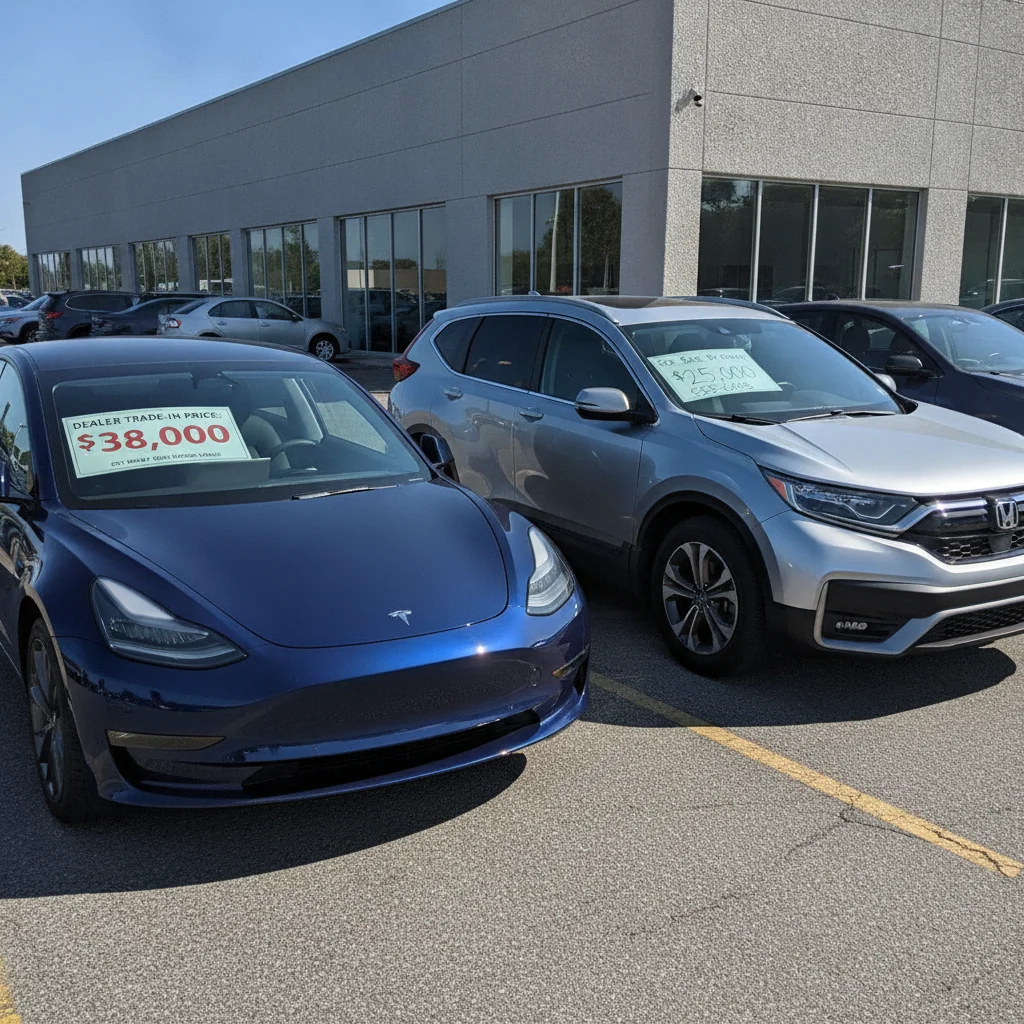
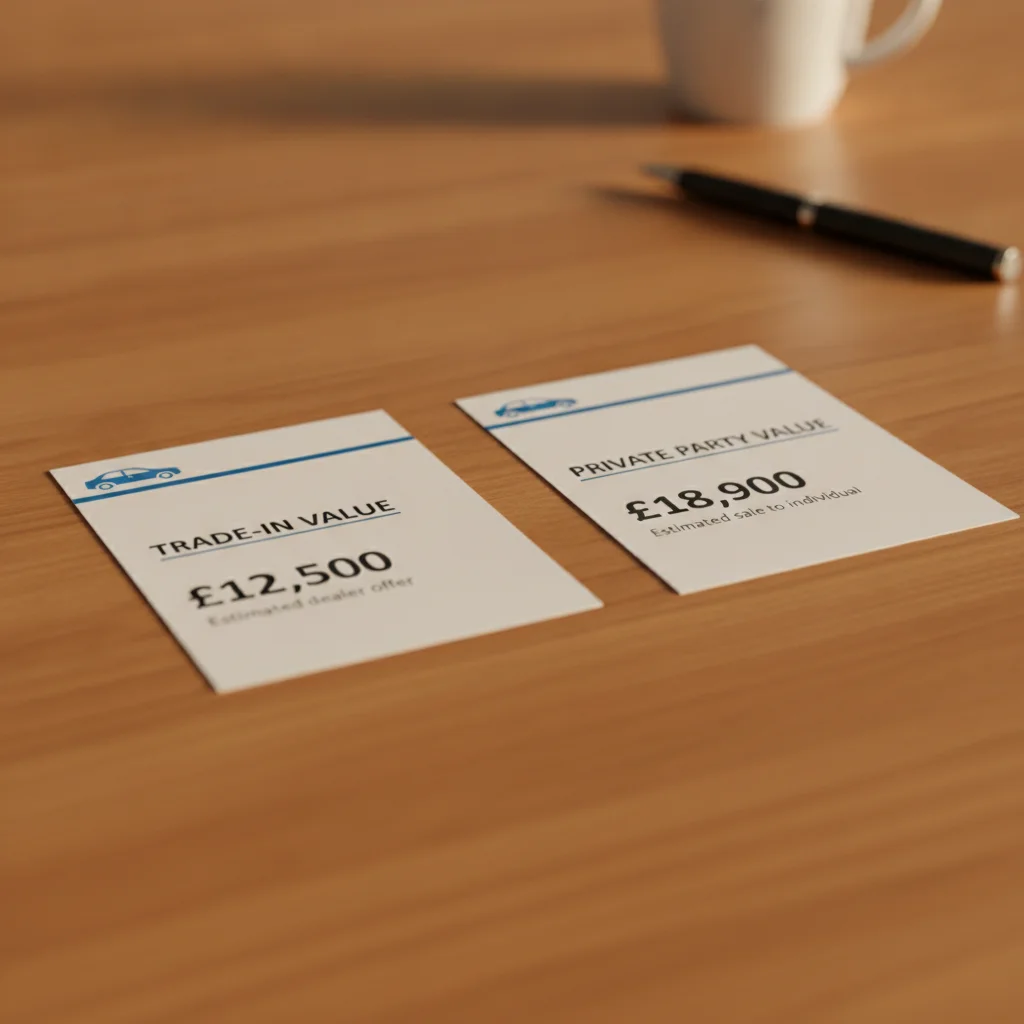
Trade-in value is the amount a dealership offers to buy your car when you're purchasing another vehicle from them. Market value — often called private-party value — is what a buyer in the open market would realistically pay for the same car. These two numbers are never the same, and the gap between them typically ranges from $1,000 to $4,000 or more depending on the vehicle.
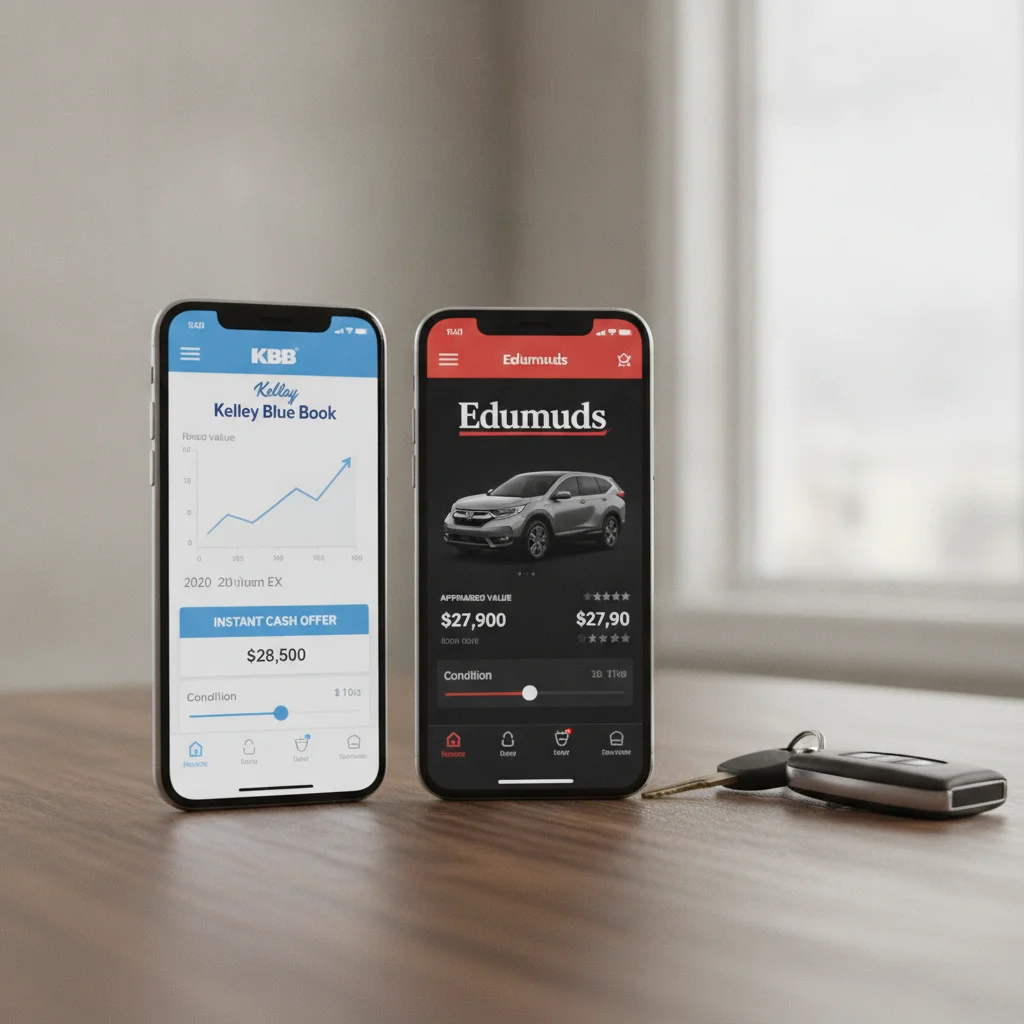
Valuation tools like Kelley Blue Book publish both figures separately. The KBB Trade-In Range reflects what dealers pay; the KBB Private Party Value reflects what individual buyers pay. Conflating the two is one of the most common and expensive mistakes sellers make.
The Two Numbers Dealers Hope You'll Confuse
When you walk into a dealership ready to trade in your car, the appraiser isn't using the same number you pulled up on Kelley Blue Book's home page. And if you're not careful, that confusion costs you money — sometimes a lot of it.
There are two fundamentally different valuations attached to your vehicle: what a dealer will pay you to take it off your hands, and what a private buyer in your market would willingly pay for the same car. These are not interchangeable figures. They serve different purposes, they're calculated differently, and they reflect entirely different business realities.
The dealer trade-in value is a wholesale-adjacent number. It accounts for the dealer's costs and risk. The private-party market value is a retail-adjacent number — what the end consumer pays. Understanding which number applies to your situation, and why the gap between them exists, is the foundation of any smart trade-in negotiation.
This isn't about dealers being dishonest (though low-ball tactics do exist). It's about understanding the mechanics of a used car transaction so you don't leave money on the table by accident. See the Valuation Tools hub to get oriented on the tools available before you price your car.
What Trade-In Value Actually Represents
Trade-in value is not what your car is worth to the world — it's what your car is worth to a specific business operating under specific cost constraints. When a dealer appraises your vehicle, they're running a mental (and increasingly algorithmic) calculation that looks roughly like this:
- Estimated resale price: What can we list this car for on our lot or send it to auction for?
- Minus reconditioning costs: What will it cost to inspect, detail, replace worn items, and certify the vehicle for resale?
- Minus carrying costs: How long will it sit on the lot, and what does that cost us in floor plan interest and overhead?
- Minus auction/wholesale risk: If we can't sell it retail, what will we lose sending it to auction?
- Minus desired gross profit: What margin do we need to make this trade-in worth absorbing?
What's left after all those deductions is approximately what they'll offer you. It's a back-calculated number, not a reflection of your car's actual consumer demand.
$1,000–$4,000
Typical trade-in to market value gap
Based on industry averages across mainstream used vehicles priced between $10,000 and $30,000 in normal market conditions.
~10–15%
Average dealer reconditioning margin applied to trades
Dealerships typically budget 10–15% of a vehicle's anticipated retail price for inspection, detailing, repairs, and certification before resale.
3–7%
Negotiation discount below asking on private sales
Private party sellers typically accept 3–7% below initial asking price after buyer negotiation, according to historical transaction data.
$1,400+
Potential sales tax savings from trade-in credit
In a state with 7% sales tax, a $20,000 trade-in credit on a new car purchase eliminates tax on that portion of the transaction.
Dealers frequently use appraisal platforms like vAuto, which pulls real-time auction data and days-on-market statistics for your specific vehicle in your region. That data is often more current than KBB's published ranges. So even if KBB says your trade-in range is $18,000–$20,000, a dealer seeing soft local auction comps for your model might come in at $16,500 and have data to defend it.
Private party value and trade-in value are calculated using completely different inputs — understanding that distinction changes how you read any appraisal you receive.
KBB Trade-In Range Is a Floor, Not a Ceiling
Kelley Blue Book's Trade-In Range reflects what dealers nationwide have paid for vehicles matching your description. It's a reasonable benchmark, but it's not a guarantee. Dealers in markets with soft used-car demand may offer below the range; dealers in high-demand markets or with thin inventory may offer above it. Always cross-check with real competing offers.
Tax Trade-In Rules Vary by State
Not every state applies the trade-in tax credit the same way. Most states deduct the trade-in value before calculating sales tax on the new purchase, but a handful do not. Before assuming the tax offset reduces your private-sale advantage, verify your state's specific trade-in tax treatment through the state DMV or a tax professional.
What Market Value (Private-Party Value) Means
Private-party market value is the price a motivated but informed buyer would pay to purchase your car from you directly — no dealer middleman, no lot markup, no reconditioning premium built into the sticker. It's a consumer-to-consumer price.
KBB's Private Party Value and Edmunds' Private Party Price both try to estimate this figure. They factor in condition, mileage, regional supply and demand, historical transaction data, and current listing prices. But the most accurate signal of market value isn't a tool's estimate — it's what comparable cars are actually listed for and selling at in your area right now.
Check CarGurus, AutoTrader, or Facebook Marketplace and filter by your exact make, model, trim level, mileage range, and zip code. The listings you see are asking prices. The sold prices are typically 3–7% lower after negotiation. That adjusted range is your real market value.
Market value is almost always higher than trade-in value for a simple reason: the private buyer is the end consumer. They're paying to own and use the car, not to profit from reselling it. That difference in intent is what creates the price gap.
For a detailed comparison of how KBB and Edmunds arrive at their respective numbers, see Kelley Blue Book vs. Edmunds: Which Number Should Sellers Trust?.
“The moment you understand that a dealer's trade-in offer is a derived number — backed out from their anticipated retail profit — you stop treating it as a verdict on your car's worth and start treating it as an opening position in a business negotiation.”
— Dean Merritt, Used Car Valuation and Private Party Sales Specialist
How Big Is the Gap — and What Drives It?
For most mainstream used cars priced in the $10,000–$30,000 range, the gap between trade-in value and private-party market value runs $1,500 to $4,000. On trucks, popular SUVs, and vehicles with strong secondary market demand, that spread can climb above $5,000. On aging economy cars with soft retail demand, the gap may compress to $500–$1,000 because the dealer has less margin opportunity anyway.
Several factors widen or narrow the gap:
- Vehicle age and desirability
- A 3-year-old truck with a strong resale history gives a dealer more profit opportunity on the back end, so they may offer relatively more — but they also expect more in return when they sell it. Net gap often stays wide.
- Condition relative to market norms
- A car with deferred maintenance, high wear items, or accident history gets a heavier discount because the dealer's reconditioning cost estimate goes up fast. Private buyers can also see those issues, but they don't necessarily mark up their deduction the same way dealers do.
- Local market saturation
- If there are 40 similar cars listed within 50 miles of the dealership, their auction risk is higher and the trade-in offer drops. Private buyers in that same market are also more selective, but a well-priced private listing can still find a buyer.
- Timing and inventory needs
- When a dealer is short on a specific used car type, they may offer closer to market value to stock the lot. This is rare but real — end of month, model changeover periods, and regional shortages can temporarily compress the gap.
Get Three Offers Before the Dealer Visit
Before walking into any dealership, collect instant cash offers from at least three sources: CarMax (in-person or online), Carvana, and KBB Instant Cash Offer. These are written, time-stamped offers the dealer must compete with. Arriving without competing bids is like negotiating with one hand tied behind your back.
Keep Trade-In and New Car Talks Separate
Never let the dealer combine your trade-in value and new car price into a single monthly payment discussion. Always agree on the out-the-door new car price first, in writing. Then negotiate the trade-in as a separate standalone transaction. Bundling these gives dealers too many levers to adjust numbers without you noticing.
The bottom line: the gap is structural, not accidental. Dealers are buying wholesale and selling retail, and the spread between those two prices is their business model. Knowing this going in means you won't be surprised or manipulated by a low first offer.
The Tax Offset: When Trade-In Value Isn't as Bad as It Looks
Before you automatically conclude that private sale is always superior, factor in one significant variable: sales tax savings on trade-ins.
In most U.S. states, when you trade in a vehicle as part of a new car purchase, the dealer applies the trade-in value as a credit against the purchase price — and you only pay sales tax on the net amount. If your state has a 7% sales tax and your trade-in is valued at $20,000, that's potentially $1,400 in tax savings versus buying the new car outright after selling privately.
Here's what that looks like in practice:
| Scenario | New Car Price | Trade-In Credit | Taxable Amount | Tax (7%) |
|---|---|---|---|---|
| Trade-in | $35,000 | $20,000 | $15,000 | $1,050 |
| Private sale first | $35,000 | $0 | $35,000 | $2,450 |
In this example, the trade-in saves $1,400 in tax. If the dealer's offer was $1,500 below what you'd net from a private sale, the real difference is only $100 — and you saved the time and hassle of a private transaction.
The math shifts based on your state's tax rate, your car's value, and how far the dealer's offer is from market value. Run the numbers for your specific situation. See Dealer Trade-In vs. Private Party Sale for a full side-by-side financial comparison.
KBB Trade-In Range Is a Floor, Not a Ceiling
Kelley Blue Book's Trade-In Range reflects what dealers nationwide have paid for vehicles matching your description. It's a reasonable benchmark, but it's not a guarantee. Dealers in markets with soft used-car demand may offer below the range; dealers in high-demand markets or with thin inventory may offer above it. Always cross-check with real competing offers.
Tax Trade-In Rules Vary by State
Not every state applies the trade-in tax credit the same way. Most states deduct the trade-in value before calculating sales tax on the new purchase, but a handful do not. Before assuming the tax offset reduces your private-sale advantage, verify your state's specific trade-in tax treatment through the state DMV or a tax professional.
Tactics to Narrow the Gap at the Dealership
Knowing the gap exists is step one. Shrinking it is step two. Here's what actually works:
- Get competing instant offers before you go. CarMax, Carvana, Vroom, and KBB Instant Cash Offer all produce written, time-stamped offers that dealers will compete against. Bring printouts. A dealer who knows you'll drive 20 minutes to CarMax if they don't sharpen their number will often sharpen their number.
- Negotiate the trade-in separately from the new car price. Dealers love to bundle these into a monthly payment conversation — that's how they obscure whether you're winning or losing on each element. Negotiate the new car price to your target first, then negotiate the trade-in as a separate line item.
- Know your KBB Trade-In Range — not just the private-party value. Bringing in a private-party value and demanding the dealer match it will get you nowhere. Bring the KBB Trade-In Range and push for the top of that range. That's a defensible anchor.
- Document your car's condition honestly but thoroughly. Recent service records, new tires, replaced brakes, a clean Carfax — these counter the reconditioning discount the dealer builds into their offer. Every documented maintenance item reduces their assumed reconditioning cost.
- Time your trade-in strategically. End of month, end of quarter, and periods when used inventory is tight are when dealers have the most incentive to pay closer to market value on trades.
If after doing all of this the dealer still won't move past a number you consider too low, you have a real decision to make: accept the convenience of the trade-in or invest the time to sell privately. That calculation is covered in detail in Trade-In Value vs. Private Sale Price: Where the Money Really Goes.
Get Three Offers Before the Dealer Visit
Before walking into any dealership, collect instant cash offers from at least three sources: CarMax (in-person or online), Carvana, and KBB Instant Cash Offer. These are written, time-stamped offers the dealer must compete with. Arriving without competing bids is like negotiating with one hand tied behind your back.
Keep Trade-In and New Car Talks Separate
Never let the dealer combine your trade-in value and new car price into a single monthly payment discussion. Always agree on the out-the-door new car price first, in writing. Then negotiate the trade-in as a separate standalone transaction. Bundling these gives dealers too many levers to adjust numbers without you noticing.
The Bottom Line: Use Both Numbers as Anchors
Walk into any car transaction knowing two numbers: your car's KBB Trade-In Range (top of range as your floor) and its private-party market value (what you'd realistically net selling it yourself, after accounting for negotiation). The spread between those two figures is the negotiating terrain you're working in.
Don't accept a first offer without a counteroffer. Don't confuse a low trade-in appraisal with your car being worth less than you think — it may just mean the dealer's reconditioning estimate is aggressive or their local auction comps are soft. Challenge those assumptions with competing offers and documented condition.
And if the gap is wide enough that it survives the tax offset calculation, seriously consider the private sale route. More time, more friction — but often $2,000 to $4,000 more in your pocket. For more on private party value vs. trade-in value, see our full breakdown of how each number is built and what it costs sellers who pick the wrong one.
The difference between trade-in value and market value isn't a mystery — it's just business math. Once you understand the inputs, you can negotiate the outputs.

All claims are backed by peer-reviewed research. Sources on request.