Key Takeaways
Our Verdict
Neither short-term opportunism nor long-term patience is universally superior — the right strategy depends on your vehicle type, your financial situation, and how well you can read current market signals. Short-term timing wins when an identifiable demand spike is already underway. Long-term timing wins when your vehicle has seasonal appeal and you can absorb additional depreciation while waiting. For most sellers, the smartest move is treating these not as competing strategies but as a layered decision: know your target window, but be ready to act if a short-term opportunity lands first.
| Best for | Recommended |
|---|---|
| Sellers whose vehicle aligns with a current, identifiable demand spike | Short-term timing strategy |
| Owners of trucks, convertibles, or seasonal vehicles with clear spring/summer peaks | Long-term timing strategy |
| Sellers facing ongoing depreciation on a high-mileage or aging vehicle | Short-term timing strategy |
| Owners of newer low-mileage vehicles with strong residuals who can afford to wait | Long-term timing strategy |
Why Timing the Sale of Your Car Actually Matters
Most sellers spend a lot of energy on pricing and presentation — cleaning the car, pulling a Carfax, writing a solid description — and almost no energy thinking about when to list. That's a mistake, because timing can shift your final sale price by a meaningful margin, sometimes more than any detail work you'd do to the car itself.
The core question is straightforward: do you act on a favorable market condition that exists right now, or do you hold out for a better window that's still a few months away? Both approaches have legitimate logic behind them. Both also have real costs if you get them wrong.
Holding out for the perfect moment can backfire — depreciation doesn't pause while you wait, and market conditions can shift faster than most sellers expect. But acting too early, before demand peaks, means leaving money on the table just as surely as acting too late.
This comparison breaks down both strategies — what each one requires, when each one wins, and how to figure out which one fits your specific situation.

Short-Term Timing: Catching the Wave That's Already Here
Short-term timing means identifying a current market condition — something happening right now or within the next four to six weeks — and moving quickly to list while that condition is in your favor. The window is narrow by definition. The payoff is a faster sale at a higher price, without the carrying costs of waiting.
What Short-Term Triggers Look Like
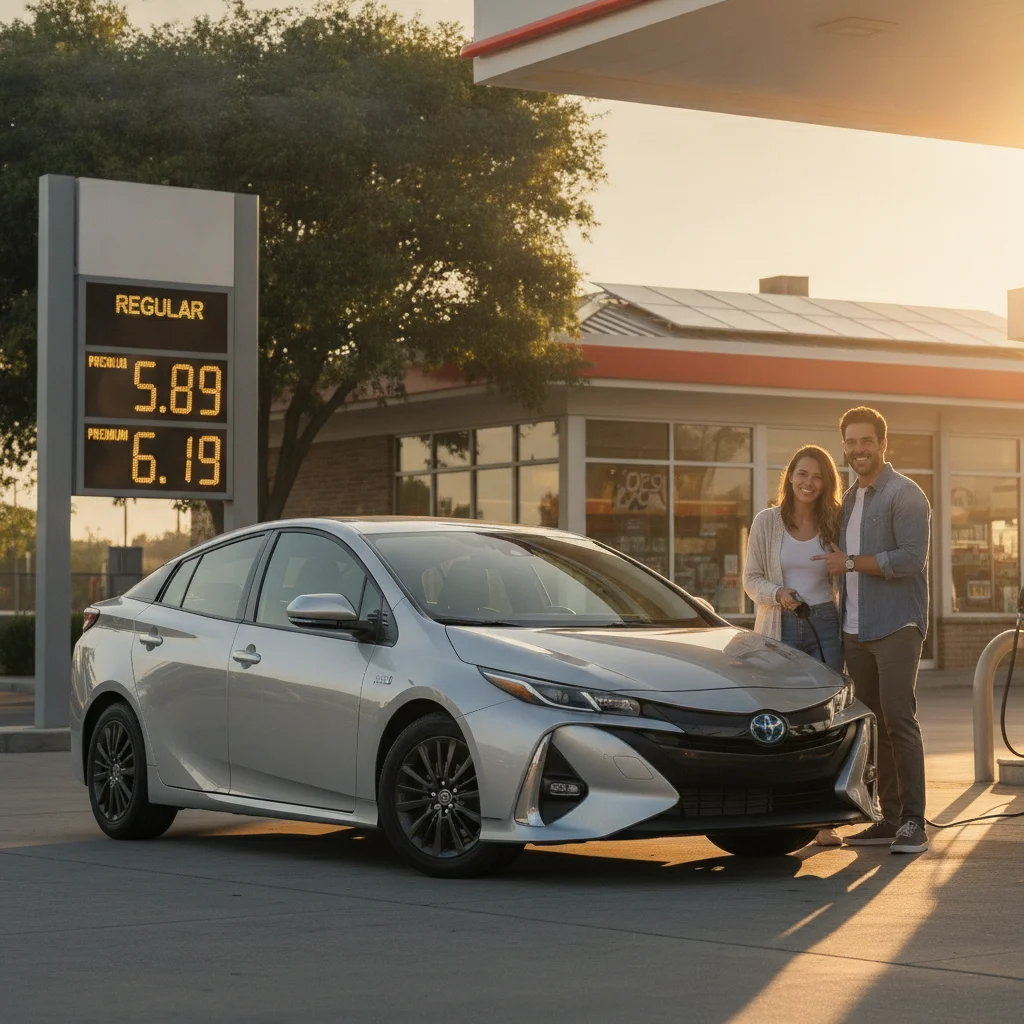
- Gas price spikes: When fuel prices surge, demand for fuel-efficient vehicles and hybrids follows within days to weeks. This opportunity window is real but short — buyers act fast when they feel pain at the pump, and so does the market price premium.
- Tax refund season: Late February through mid-April sees a predictable surge in used car buying as refund checks land. Private party buyers with cash in hand are more decisive and less price-sensitive than at other times of year.
- Inventory shortages: When new car inventory tightens — due to supply chain issues, manufacturer production cuts, or dealer allocation problems — used car prices rise to fill the gap. If you're watching that happen right now, acting quickly beats waiting for a seasonal peak that may arrive in a softer market.
- Model-year changeover: When a new generation of your vehicle is announced or launched, your current-gen model takes a depreciation hit. Selling before that announcement becomes common knowledge protects your resale value.
The Risks of Short-Term Timing
Short-term triggers require fast execution. If you're not ready to list — clean title in hand, photos taken, price researched — you can miss the window entirely. Used car booms fade faster than most sellers anticipate, and sellers who hesitate or spend two weeks debating their asking price often find the demand spike has passed before their listing goes live.
Short-term timing also requires you to accurately identify whether what you're seeing is a genuine spike or just normal week-to-week fluctuation. Not every uptick in Craigslist inquiries means you're in a seller's market.
Have Your Listing Package Ready Before You Need It
The sellers who benefit most from short-term timing triggers are the ones who are already prepared — title located, photos taken, price researched. If you need two weeks to get the car ready after you spot a demand spike, the window may already be closing. Treat your listing materials as an asset to prepare in advance, not a task to start when the moment arrives.
Check Multiple Platforms Before Setting Your Price
KBB, CarGurus, Autotrader, and Facebook Marketplace often show different value estimates for the same vehicle. Checking all of them gives you a realistic range and helps you identify whether your local market is running above or below national averages. <a href="/buying-a-car/negotiating-and-deals/timing-your-purchase/regional-market-timing-why-the-best-month-to-buy-varies-by-location">Local timing matters as much as national trends</a>, and regional pricing gaps can be significant.
Long-Term Timing: Positioning for a Known Seasonal Peak
Long-term timing is a more deliberate strategy. You identify a predictable demand window — usually tied to season, buyer behavior, or annual market patterns — and you plan your sale around it months in advance. This approach trades immediacy for precision. You're not reacting to what's happening; you're anticipating what will happen.
The Seasonal Patterns That Drive Long-Term Timing
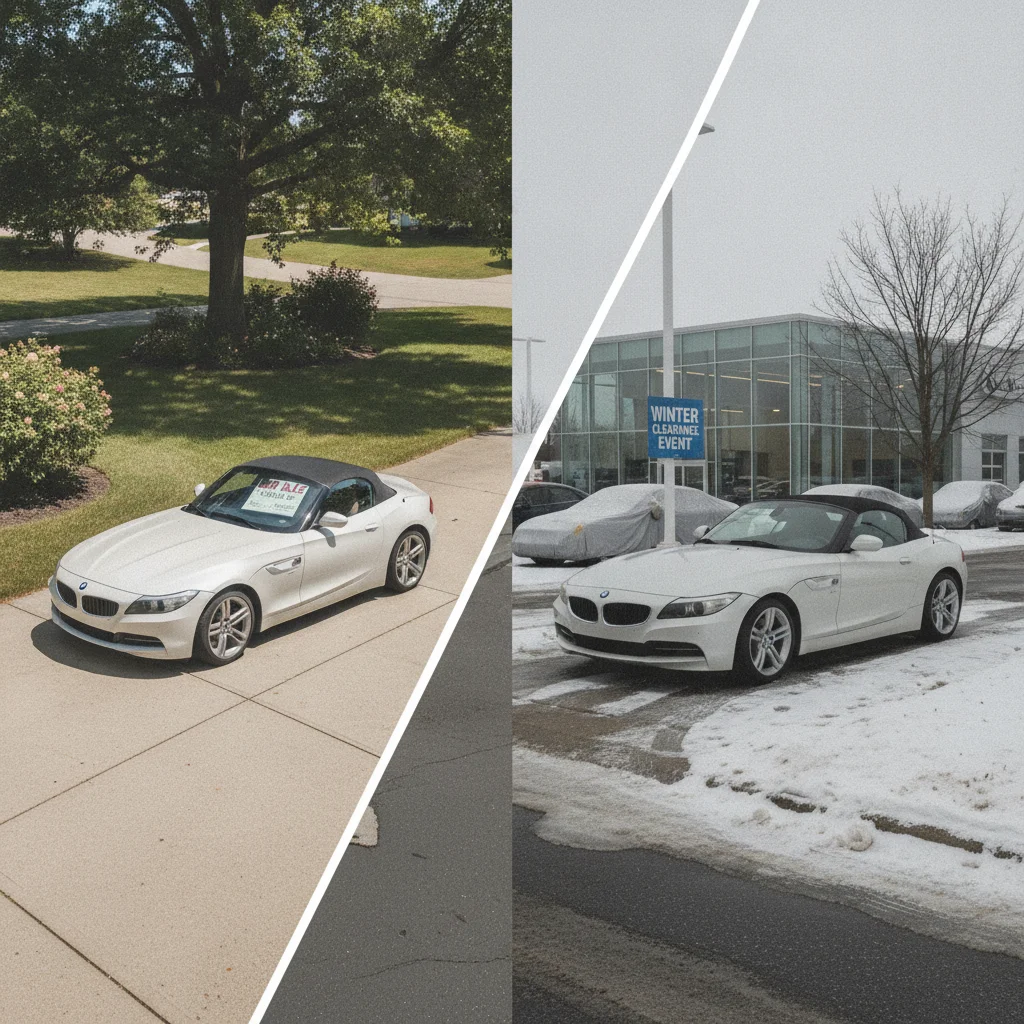
- Spring surge (March through May): This is the most reliably strong window for most vehicle types. Tax refunds overlap with improving weather, and buyers who've been sitting on the sidelines through winter start moving. Convertibles, motorcycles, and sports cars see the biggest premiums. Trucks and SUVs also sell well as outdoor and project season begins.
- Late summer before school year: Families purchasing second vehicles before the school year creates a secondary demand window in July and August. Minivans, crossovers, and practical sedans benefit most from this.
- Avoiding year-end softness: November and December are historically the weakest months for private party used car sales. Buyers are focused elsewhere, and those who are shopping often know you're a motivated seller if you're listing in December. Year-end conditions favor buyers, not sellers.
The Real Cost of Long-Term Patience
Here's the math that many sellers skip: if you're holding a vehicle for four to six months to catch a spring peak, you're still losing value every month you own it. A vehicle depreciating at $200–$400 per month accumulates $800–$2,400 in additional depreciation during a six-month hold. If the spring premium you're targeting is only $500–$700 above what you'd get today, the math doesn't work in your favor.
Timing myths cost sellers real money precisely because they encourage holding without accounting for ongoing carrying costs. Long-term timing only makes sense when the expected seasonal premium materially exceeds the depreciation and ownership costs you'll absorb while waiting.
Don't Confuse 'Planning to Sell in Spring' with a Strategy
Deciding that spring is the right window is only the beginning of a long-term timing strategy. You still need to calculate whether the expected premium exceeds the depreciation you'll accumulate in the meantime. A vehicle losing $350 per month that you hold from November through April has given up roughly $2,100 in value. If the spring premium in your segment is $800, the math argues against waiting. Don't let a vague seasonal preference substitute for actual arithmetic.
Hot Markets End Before Most Sellers Expect
If you're in what feels like a seller's market — quick inquiries, above-book offers, buyers moving fast — resist the temptation to hold out for an even better offer. <a href="/selling-your-car/pricing-your-car/market-timing/why-sellers-overestimate-how-long-a-hot-market-will-last">Used car booms fade faster than most sellers anticipate</a>. The seller who lists and closes during the peak outperforms the seller who waits for the absolute top of the market and ends up selling into a declining one.
Side-by-Side: How the Two Strategies Stack Up
Neither strategy is inherently better — they optimize for different things. Here's a direct comparison across the criteria that matter most to sellers.
| Short-Term Timing | Long-Term Timing | |
|---|---|---|
| Primary driver | Reactive — responds to current market event | Proactive — targets known seasonal peak |
| Time horizon | Days to 4–6 weeks | 1–6 months of planning and holding |
| Depreciation exposure | Minimal — act quickly and exit | Higher — accumulates during hold period |
| Execution speed required | High — must be ready to list immediately | Moderate — can prepare methodically |
| Predictability | Low — depends on volatile market signals | Higher — seasonal patterns are more reliable |
| Best vehicle types | Fuel-efficient cars, hybrids, high-demand segments | Convertibles, trucks, sports cars, SUVs |
| Risk if timed wrong | Miss the window, sell at ordinary price | Carry costs exceed seasonal premium gained |
| Competing listings | Often lower — fewer sellers are reacting fast | Higher — spring listings flood the market |
One thing this table can't fully capture: execution difficulty. Short-term timing demands speed and readiness. Long-term timing demands discipline and the financial ability to carry the vehicle — including insurance, any maintenance costs, and continued depreciation — through the holding period. Both require more active management than most sellers expect.
Peak seasons bring more buyers but also more competing listings — a factor that the raw seasonal data doesn't always reflect. More demand in spring also means more sellers listing in spring, which can compress your pricing advantage if you're in a crowded segment.
Vehicle Type Changes Everything
The right timing strategy depends heavily on what you're selling. The same market conditions that create a premium for one vehicle type can be irrelevant — or even negative — for another.
$1,200+
Potential spring premium for convertibles and sports cars
iSeeCars data has consistently shown spring listings for convertibles and roadsters outperform December listings by $1,200–$2,500 depending on model and condition.
3–4 weeks
Typical duration of a gas-spike demand window for fuel-efficient vehicles
Consumer search behavior for fuel-efficient cars typically peaks within three to four weeks of a significant gas price surge, then normalizes as buyers adapt.
15–20%
More used vehicle listings in April–May vs. December
Listing volume data from major platforms shows spring creates both more buyers and more sellers, compressing some of the seasonal pricing advantage for common vehicle types.
$200–$400
Monthly depreciation cost during a hold period
Average monthly depreciation on a mid-range used vehicle varies by age, mileage, and segment but commonly runs $200–$400 per month, directly eroding any timing premium.
Fuel-Efficient Vehicles and Hybrids
These benefit most from short-term, event-driven timing. Gas price spikes create immediate, intense demand. When fuel prices surge, demand for hybrid and fuel-efficient vehicles follows quickly. If you own a Prius, a hybrid crossover, or a fuel-sipping compact and you're watching gas prices climb, that's your signal — not the calendar.
Trucks and SUVs
These sell well year-round but peak in spring when buyers are gearing up for towing, hauling, and outdoor season. Long-term timing toward a March–May listing window is generally worthwhile if you're not already in that window. The demand for capable trucks is also relatively insensitive to fuel prices compared to cars, so short-term gas-spike triggers are less relevant here.
Convertibles and Sports Cars
These have the strongest seasonal skew of any common vehicle type. Listing a convertible in January in a northern climate is rough. Listing the same car in April or May when the first warm weekends hit is a materially different experience — more lookers, faster offers, and a buyer who's emotionally motivated. Long-term timing toward spring is almost always the right call for these vehicles.
EVs and Plug-In Hybrids
EV timing is more complex because it's influenced by policy changes (tax credit eligibility, state incentives), new model announcements, and charging infrastructure development — not just seasons. Watch for new model announcements from the manufacturer you're selling, because those depress used prices quickly. Regional factors also matter significantly. Seasonal demand and regional inventory patterns differ by climate, economy, and local preferences.
High-Mileage or Aging Vehicles
For a vehicle with 120,000 miles or a model that's more than eight years old, neither timing strategy delivers large premiums. Depreciation has flattened, but condition and mechanical integrity matter much more than the listing month. For these vehicles, stop optimizing for timing and focus on presentation, documentation, and honest pricing.
The Hybrid Approach: Staying Ready While Watching a Target Window
The most practical strategy for most sellers isn't a pure commitment to either approach. It's a layered posture: identify your ideal seasonal target window, but get your vehicle ready to list now so you can move fast if a short-term opportunity appears before your target date.
Getting ready means:
- Pulling your title and making sure it's clean and accessible
- Doing the detailing, minor touch-up, and any inexpensive mechanical repairs that affect first impressions
- Taking professional-quality photos that you can use immediately
- Researching your current market value on multiple platforms (KBB, CarGurus, Autotrader) so your pricing is already calibrated
- Deciding in advance whether you're doing a private party sale, a dealer trade-in, or both simultaneously
The optimal timing window differs depending on whether you're trading in or selling privately — so get clear on your exit path before you start watching the market.
When you're fully prepped, a short-term trigger becomes an opportunity you can actually act on. Without that preparation, a one-week demand spike passes while you're still getting the car washed.
If no short-term trigger appears before your target window, you list on schedule during the seasonal peak you planned for. Either way, you're not passively waiting — you're actively managing the decision.
Also pay attention to the micro-level factors once you've decided to list. Listing algorithms and buyer browsing habits favor certain posting windows — Thursday and Friday evenings tend to outperform Monday mornings for initial visibility, which affects how many people see your listing in the critical first 24–48 hours after it goes live.
How to Make the Final Call
Here's the decision framework I'd walk through with anyone trying to sort this out:
- Check your depreciation rate first. How fast is your vehicle losing value month over month right now? If the answer is more than $300/month, every month you delay costs you money that a timing strategy has to overcome just to break even.
- Identify your vehicle's seasonal profile. Does your vehicle type have a meaningful spring premium? If you're selling a minivan or a family SUV in October, spring may be worth waiting for. If you're selling a pickup truck in March, you're already at or near peak — don't wait.
- Scan for active short-term triggers. Are gas prices spiking? Is there an inventory shortage in your segment? Has a new model been announced? Any of these can override seasonal logic and make the right timing right now.
- Calculate the carrying cost of waiting. Be honest about insurance, potential repairs, and depreciation over the hold period. Compare that to your estimated seasonal premium. If the math favors waiting, wait. If it doesn't, don't let calendar superstition override arithmetic.
- Decide on your exit path before timing becomes the question. Maximizing your trade-in value when buying another car involves different timing logic than a private party sale. Get that sorted first.
If you're on the buying side of the equation and want to understand how dealers think about timing from their end, a few clear signals can tell you when patience pays and when delay costs you money — the same logic applies in reverse when you're the seller.


All claims are backed by peer-reviewed research. Sources on request.