
Key Takeaways
Search dealer inventory by days-on-lot using third-party aggregator sites before you visit. Filter for vehicles over 45 days old — those are the ones where the manager has the most incentive to approve a below-invoice deal.
Carrying costs (floor-plan financing) accrue daily on unsold new vehicles. A 60-day-old unit costs the dealer real money every week it sits, shifting negotiating leverage meaningfully toward the buyer.
When a salesperson quotes you a monthly payment, respond with: 'I'd prefer to agree on the out-the-door price first.' Repeat this calmly every time the conversation drifts back to payment.
Payment framing is the single most effective tool dealers use to obscure actual vehicle cost. Anchoring on out-the-door price prevents margin recovery through term extension or fee inflation.
Verify the exact expiration date of any promotional financing offer — some manufacturer year-end promotions end on December 26th or 28th, not December 31st. Confirm the expiry date in writing from the dealer.
Missing a promotional rate cutoff by one day can cost thousands in interest. Manufacturer incentive programs have firm end dates, and not all dealers communicate changes proactively.
Get GAP insurance from your auto insurer, not the dealer's F&I office. The same coverage typically costs $20–$40 per year through an insurer versus $400–$900 as a dealer add-on rolled into your loan.
GAP insurance is a commodity product — coverage terms are nearly identical regardless of source. Buying it from a dealer and financing it over 60 months dramatically inflates its effective cost.
If a dealer won't budge on vehicle price, negotiate the documentation fee and other dealer-added fees instead. These are entirely discretionary and can range from $100 to $999 depending on the state.
Documentation fees are pure dealer revenue with no cost basis. In competitive year-end conditions, asking a dealer to reduce or waive their doc fee is a legitimate negotiating move that many buyers overlook.
Why Year-End Is Different From Every Other Buying Window
Most months give dealers one deadline to worry about: the end-of-month sales count. Year-end is different. From roughly November 1 through December 31, three distinct quota clocks run simultaneously — monthly, quarterly, and annual. When those deadlines pile on top of manufacturer incentive programs and model-year changeover pressure, the result is a buyer's market unlike anything the rest of the calendar produces.
To understand why, you need to think like a dealer principal. New-car franchises operate on thin margins — often 2–5% on the vehicle itself — but they earn significant bonus money when they hit volume thresholds set by the manufacturer. These stair-step incentives pay the dealer a flat bonus (sometimes $500–$1,500 per unit) retroactively on every vehicle sold that month once a target is crossed. That structure creates an urgency that is almost invisible to the average buyer but very real to everyone working on the floor.
Timing really can shift the deal in your favor, but not all timing windows are equal. Year-end stacks incentives in a way that no single month-end can replicate, and this guide breaks down exactly how to exploit each layer.
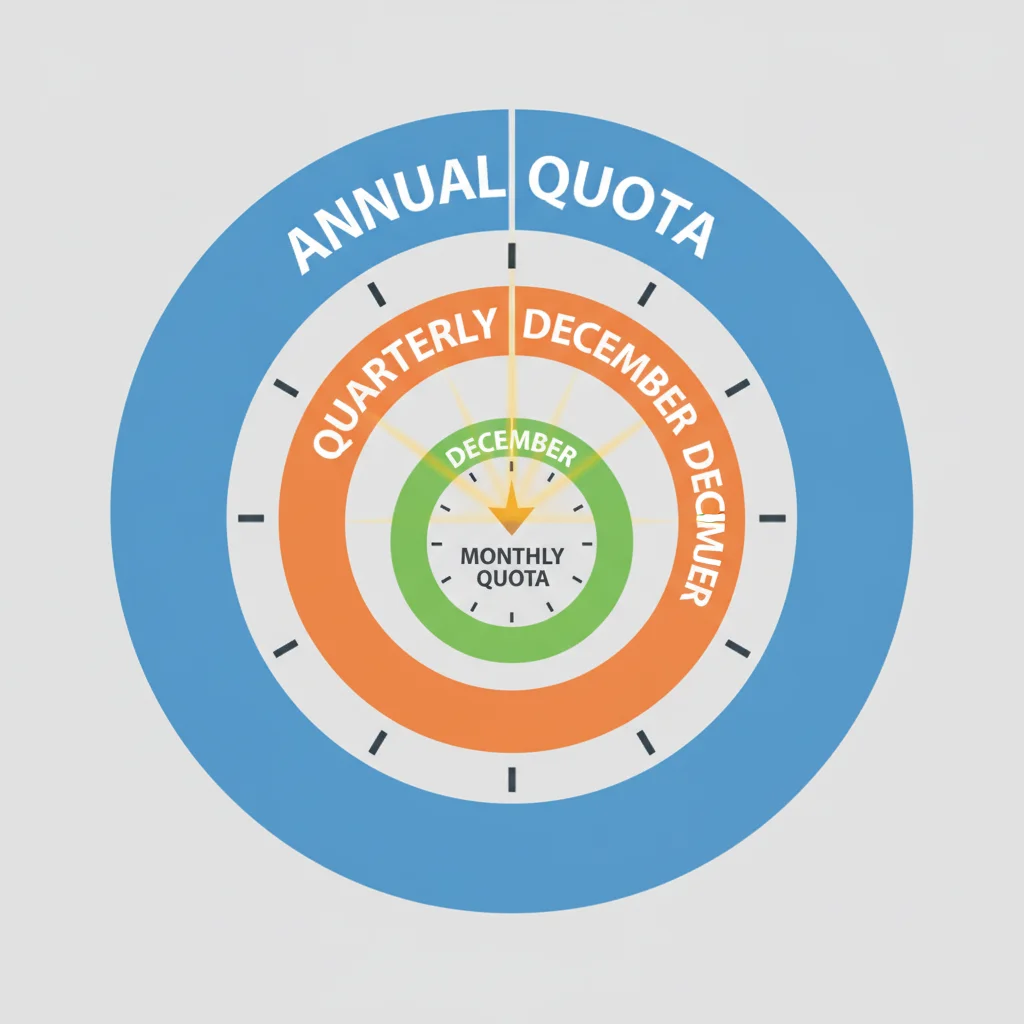
There is also a psychological dimension. Sales staff and finance managers are often chasing personal year-end bonuses tied to unit counts. A salesperson who is four deals away from their annual bonus tier at December 27th is far more motivated to work a tight deal than the same person in July. That human element is something smart buyers can quietly factor into every conversation they have on the lot.
The Dealer Incentive Calendar: How Quotas Stack Up in Q4
To map the year-end opportunity precisely, it helps to understand each layer of pressure dealers face:
Monthly Sales Quotas
Every franchise dealer has a monthly sales objective negotiated with the manufacturer. Miss it, and you lose allocation priority — meaning the next popular model might go to a competing dealer in your metro area. Hit it, and you earn stair-step bonuses. In November and December, these monthly quotas are often set aggressively because manufacturers want to clear current-model-year inventory before new models roll in.
Quarterly Quotas (Q4: October–December)
Q4 is the final quarter of most automakers' fiscal or model-year sales cycle. Dealers who fall short of their Q4 cumulative target can lose preferred financing rates, marketing co-op funds, and manufacturer support. As October ends flat or slow, the pressure to make up ground in November and December intensifies.
Annual Quotas
The biggest lever. A dealer who finishes the year above their annual threshold earns what insiders call "back-end money" — manufacturer bonuses that can reach into six figures for high-volume stores. This annual bonus is binary: you either hit the number or you don't. That makes the last two weeks of December an almost desperate sprint for any dealer sitting just below their annual target.
5–8%
Average discount below MSRP in final days of December
Automotive transaction data consistently shows the last three business days of December produce the deepest discounts of the calendar year on non-luxury vehicles.
$1,500
Typical stair-step bonus per unit above threshold
Manufacturer stair-step incentive programs can pay dealers $500–$1,500 per vehicle retroactively once a monthly sales threshold is crossed, creating urgency to sell.
$6,000
Interest saved on 0% APR vs. 6.5% on $35K over 60 months
On a $35,000 vehicle financed over 60 months, the difference between 0% APR and a market rate of 6.5% totals approximately $6,000 in interest charges.
45+ days
Lot age that signals maximum dealer negotiating flexibility
Vehicles sitting on a dealer's lot for 45 or more days generate carrying costs and represent unsold quota units, making dealers significantly more willing to accept aggressive offers.
10–15%
Private-sale premium over dealer trade-in offer
Selling a used vehicle privately typically yields 10–15% more than a dealer trade-in appraisal, with the gap widening further during winter when wholesale demand softens.
Both month-end and year-end promise better deals, but they work differently. At year-end, the stacking of all three quota types is the core distinction. A month-end in April applies only monthly pressure; the final day of December applies all three at once, plus model-year clearance pressure. That combination is what makes it singular.
Search dealer inventory by days-on-lot using third-party aggregator sites before you visit. Filter for vehicles over 45 days old — those are the ones where the manager has the most incentive to approve a below-invoice deal.
Carrying costs (floor-plan financing) accrue daily on unsold new vehicles. A 60-day-old unit costs the dealer real money every week it sits, shifting negotiating leverage meaningfully toward the buyer.
When a salesperson quotes you a monthly payment, respond with: 'I'd prefer to agree on the out-the-door price first.' Repeat this calmly every time the conversation drifts back to payment.
Payment framing is the single most effective tool dealers use to obscure actual vehicle cost. Anchoring on out-the-door price prevents margin recovery through term extension or fee inflation.
Verify the exact expiration date of any promotional financing offer — some manufacturer year-end promotions end on December 26th or 28th, not December 31st. Confirm the expiry date in writing from the dealer.
Missing a promotional rate cutoff by one day can cost thousands in interest. Manufacturer incentive programs have firm end dates, and not all dealers communicate changes proactively.
Get GAP insurance from your auto insurer, not the dealer's F&I office. The same coverage typically costs $20–$40 per year through an insurer versus $400–$900 as a dealer add-on rolled into your loan.
GAP insurance is a commodity product — coverage terms are nearly identical regardless of source. Buying it from a dealer and financing it over 60 months dramatically inflates its effective cost.
If a dealer won't budge on vehicle price, negotiate the documentation fee and other dealer-added fees instead. These are entirely discretionary and can range from $100 to $999 depending on the state.
Documentation fees are pure dealer revenue with no cost basis. In competitive year-end conditions, asking a dealer to reduce or waive their doc fee is a legitimate negotiating move that many buyers overlook.
November: The Underrated Early Window
Most buyers fixate on December as the prime year-end window. That's a mistake — or at least an incomplete view. November offers its own set of advantages that December can't fully replicate, and missing them means losing two to three weeks of quality buying opportunity.
Lower Foot Traffic, More Salesforce Attention
Before Thanksgiving, dealership foot traffic is historically lower than at any other point in Q4. Fewer buyers competing for salesperson attention means longer, more deliberate conversations and less pressure on you to decide quickly. Dealers are aware their lots will get busier in December, so November becomes a motivated seller's market without the crowds.
Thanksgiving Weekend Events
The Friday through Monday of Thanksgiving weekend is one of the most heavily advertised car-buying windows of the year. Manufacturers fund significant "Black Friday" and "Cyber Monday" promotional rates — often 0% APR for 60–72 months or substantial cash-back offers — specifically to drive November numbers. These aren't gimmicks; they represent real manufacturer subsidies on financing costs that directly reduce your total purchase price when structured correctly.
The catch: these promotions are typically available only on current model-year inventory, not on new-model-year vehicles that arrived in fall. Identifying which VINs qualify before you walk in saves time and prevents the classic bait-and-switch to a non-qualifying trim level.
Not All Thanksgiving Promotions Are Equal
Manufacturer Black Friday events vary dramatically in value by brand and region. Some offer genuine 0% APR on popular models; others advertise "up to $5,000 cash back" on trims that were already slow sellers with high MSRPs. Always compare the promotional price against the actual market transaction price for that model before assuming a holiday deal is a good deal.
High-Demand Models Are Immune to Year-End Pressure
If the vehicle you want has a waiting list or is selling consistently above MSRP, year-end quota pressure will not produce a discount. Dealers have no incentive to negotiate when buyers are queuing up. Check current transaction prices on your target model before investing time in year-end negotiation on a vehicle that isn't discounting.
November Month-End Still Matters
Even outside Thanksgiving promotions, the last three to four business days of November carry month-end quota pressure. A dealer who needs ten more units to hit their November number on November 28th is negotiating from a weak position. Timing your purchase around quota deadlines can add thousands to your negotiating leverage.
December: When Every Pressure Point Converges
December is the main event, but it's not uniform. The month breaks into three distinct phases, each with different buyer dynamics.
Phase 1: December 1–14
Early December is relatively calm. Manufacturers publish their holiday promotion schedules (often called "Year-End Sales Events"), and buyers can comparison-shop rates and cash offers across brands. Inventory is at its fullest for the year, giving you the widest selection. Dealers aren't yet anxious about annual quotas — that pressure builds later. This is the best phase for test-driving, financing pre-approval, and researching exact VINs you want, without the time pressure that comes later.
Phase 2: December 15–26
Mid-December is when quota anxiety starts becoming visible on the floor. Dealers who are behind on their annual numbers begin approving deals their management would have rejected in October. This is also when manufacturer-to-dealer incentive cash — money the manufacturer pays the dealer, not the buyer directly — often reaches its peak. That cash gives dealers flexibility to discount below invoice without losing money on the unit itself.

Phase 3: December 27–31
The final stretch. Research from automotive transaction data consistently shows that the last three business days of December produce the lowest average transaction prices of the year — often 5–8% below MSRP on non-luxury vehicles and somewhat less on luxury models. Annual quota pressure is fully realized. Dealers are offering deals they will not repeat in January.
The tradeoff: inventory has been picked over. Popular colors, trims, and packages may be gone. If you have a highly specific configuration in mind, this phase may disappoint you. If you're flexible on specs, it's the single best buying window of the year.
Paper Your Deal Before December 31st
Manufacturer incentives, promotional APR offers, and stair-step bonuses all reset at midnight on December 31st. A verbal agreement made on December 30th that isn't documented with a signed buyer's order may not survive into the new year at the same terms. If you negotiate a year-end deal but cannot take delivery immediately, ensure a signed purchase agreement and accepted deposit are in place before the year ends. Dealers can and do withdraw unpapered deals when the incentive window closes.
Confirm Incentive Eligibility on Your Specific VIN
Not every vehicle on a dealer's lot qualifies for every advertised promotion. Manufacturer incentives are often tied to specific model codes, trim levels, or production date ranges. Before spending time negotiating, ask the dealer to confirm in writing which specific incentives apply to the VIN you want. Discovering at the finance office that your chosen unit doesn't qualify for the 0% APR you planned around can derail the entire deal.
“The last week of December is the one moment of the year when the dealer needs you more than you need them. Every unsold unit on that lot is a missed annual bonus. Buyers who understand that dynamic and come prepared can negotiate deals that simply aren't available any other time.”
— Ivan Drury, Director of Insights, Edmunds
Model-Year Clearance vs. Holiday Promotions: Reading the Fine Print
Year-end buying involves two distinct types of discount that are often conflated but work very differently. Understanding the difference prevents you from being steered toward the wrong deal.
Model-Year Clearance Discounts
When a new model year arrives — typically August through October for most brands — the prior model year becomes "clearance" inventory. A 2024 model sitting on a lot in December 2024 is technically a year old in automotive terms, even if it has zero miles. Dealers know this depreciation is coming and are motivated to move these units. You benefit from the knowledge that the moment you drive off the lot, that car is competing against brand-new 2025 models in any future resale scenario.
Clearance deals can be substantial — sometimes $3,000–$6,000 below the equivalent new-model-year vehicle — but they come with a residual-value tradeoff. If you plan to keep the car five or more years, this matters less. If you lease or trade every two to three years, buy the current model year instead.
Holiday Promotional Rates
These are manufacturer-subsidized financing offers: 0% APR, deferred payments, or cash-back bonuses. They are funded by the manufacturer's captive finance arm (Ford Motor Credit, Toyota Financial Services, etc.) and are designed to move volume, not to reduce the selling price. In fact, choosing a promotional rate sometimes means giving up cash-back incentives that could be applied to the selling price.
The math matters here. A $2,500 cash-back offer applied to the down payment at a market rate of 6.5% APR on a 60-month loan versus 0% APR with no cash back: on a $35,000 vehicle, the 0% APR saves approximately $6,000 in interest — making it the better deal. But on a shorter loan term or a smaller purchase, cash back wins. Run both scenarios before choosing.
Always Run Both Financing Scenarios
When a dealer offers 0% APR, calculate the total cost both with the promotional rate and with a cash-back incentive applied instead. On loans shorter than 48 months or purchase prices below $25,000, cash back often beats 0% APR. Ask the finance office to print both payment schedules before you choose.
Shop the Last Tuesday or Wednesday of December
The highest-pressure days are typically the last two to three business days of December. Visiting on a Tuesday or Wednesday rather than a weekend gives you more floor time with managers, who are more likely to be available mid-week to approve deal exceptions. Weekend lots get crowded, reducing your leverage.
Lock Your Deal Before January 1st in Writing
If you negotiate a year-end deal on December 30th but can't take delivery until January 2nd, get a buyer's order signed and a deposit accepted before midnight December 31st. The promotional rates and incentives expire with the calendar year — a deal not papered before year-end may not survive into January at the same terms.
Search dealer inventory by days-on-lot using third-party aggregator sites before you visit. Filter for vehicles over 45 days old — those are the ones where the manager has the most incentive to approve a below-invoice deal.
Carrying costs (floor-plan financing) accrue daily on unsold new vehicles. A 60-day-old unit costs the dealer real money every week it sits, shifting negotiating leverage meaningfully toward the buyer.
When a salesperson quotes you a monthly payment, respond with: 'I'd prefer to agree on the out-the-door price first.' Repeat this calmly every time the conversation drifts back to payment.
Payment framing is the single most effective tool dealers use to obscure actual vehicle cost. Anchoring on out-the-door price prevents margin recovery through term extension or fee inflation.
Verify the exact expiration date of any promotional financing offer — some manufacturer year-end promotions end on December 26th or 28th, not December 31st. Confirm the expiry date in writing from the dealer.
Missing a promotional rate cutoff by one day can cost thousands in interest. Manufacturer incentive programs have firm end dates, and not all dealers communicate changes proactively.
Get GAP insurance from your auto insurer, not the dealer's F&I office. The same coverage typically costs $20–$40 per year through an insurer versus $400–$900 as a dealer add-on rolled into your loan.
GAP insurance is a commodity product — coverage terms are nearly identical regardless of source. Buying it from a dealer and financing it over 60 months dramatically inflates its effective cost.
If a dealer won't budge on vehicle price, negotiate the documentation fee and other dealer-added fees instead. These are entirely discretionary and can range from $100 to $999 depending on the state.
Documentation fees are pure dealer revenue with no cost basis. In competitive year-end conditions, asking a dealer to reduce or waive their doc fee is a legitimate negotiating move that many buyers overlook.
A few clear signals can tell you when patience pays and when delay costs money. When manufacturer promotional rates are available and your credit score qualifies you for them, that is one of the clearest "buy now" signals the market produces.
Your Trade-In During Year-End: Timing It Right
Trading in your current vehicle during the year-end window introduces a complication that most buyers don't think about until they're sitting in the finance office: used-car wholesale values drop in winter.
Wholesale auction prices — the floor beneath any trade-in offer you'll receive — are driven by retail demand for used cars. In November and December, demand for used vehicles softens in cold-weather markets as buyers defer purchases until spring. That means a dealer appraising your trade-in has less upside on reselling it quickly and will offer you less accordingly. On a popular late-model sedan or crossover, the winter wholesale dip can be $500–$1,500 compared to what the same vehicle would fetch in March or April.
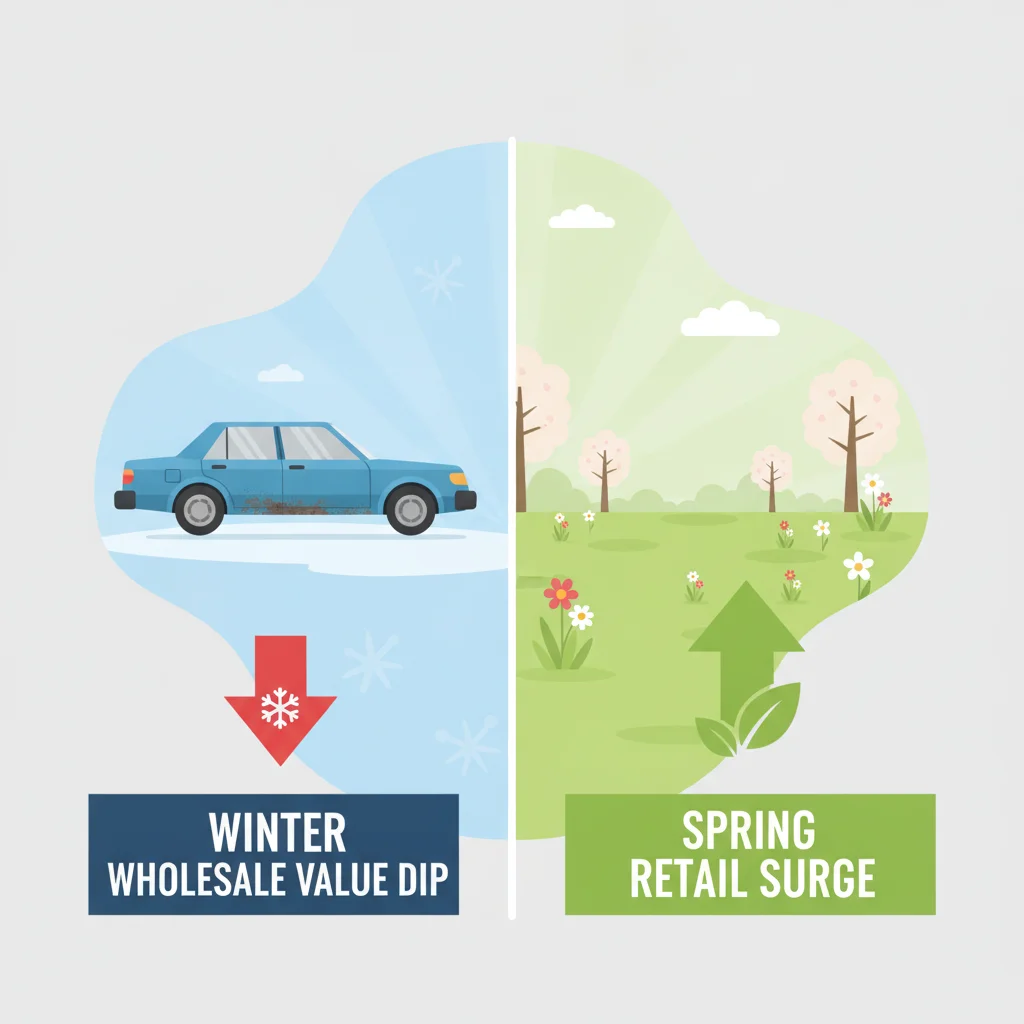
There are two ways to manage this:
- Sell privately before December. A private-party sale in October or early November typically yields 10–15% more than a dealer trade-in at any time of year, and you avoid the winter wholesale dip. The tradeoff is the time and effort of selling it yourself.
- Negotiate the trade separately. Always negotiate the purchase price of your new car to your satisfaction before introducing a trade-in. Once the new-car price is locked, then discuss trade value. Bundling them allows dealers to give you more on the trade while recovering it on the new-car side, and vice versa.
Maximizing your trade-in value when buying another car requires treating the two transactions as independent negotiations, even if they ultimately close together. Dealers prefer to blend them; you should resist that framing.
If you're coming off a lease return, the timing dynamics shift further. Lease returns flood specific segments with low-mileage used inventory at predictable times of year, and Q4 is often when three-year lease cycles from 2021's surge in new-car sales return to market — creating used-inventory opportunity alongside new-car clearance.
How to Negotiate in a Year-End Window
Year-end leverage is real, but it doesn't automatically translate into savings. You still need to negotiate correctly. Here's the sequence that consistently produces the best outcomes.
Step 1: Get Pre-Approved Before You Walk In
Walking in with a pre-approval letter from your bank or credit union gives you a concrete benchmark for the dealer's financing offer. Dealers earn reserve income on financing — meaning they mark up the rate the lender offers them and pocket the difference. A pre-approval kills that leverage. If the dealer's captive finance offer beats your pre-approval (common during 0% APR promotions), great — use theirs. If not, you have a ready alternative.
Step 2: Identify the Specific VIN You Want Before Visiting
Use the manufacturer's inventory search tool or a third-party aggregator to identify the exact VIN — including trim, color, and option package — that you want before you contact the dealer. This prevents the classic substitution move where you're shown a different unit when your target isn't available. Knowing the VIN also allows you to research how long that specific unit has been on the lot. A vehicle sitting for 60-plus days is a much weaker negotiating position for the dealer than one that arrived last week.
Step 3: Negotiate Price Before Financing or Trade
Anchor the conversation to out-the-door price — the total you will pay including all fees, taxes, and documentation charges — not to monthly payments. Monthly payment framing lets dealers absorb discounts by extending loan terms rather than actually reducing the price. State clearly: "I want to agree on the out-the-door price first. We can discuss financing and my trade-in separately after that."
Step 4: Use Competing Quotes
Contact at least three dealers with the same target vehicle. Tell each one you are getting quotes from multiple dealers and will buy from the lowest out-the-door price this week. Year-end quota pressure makes dealers unusually responsive to this approach — especially in the December 15–31 window when every sale counts toward annual bonuses.
Search dealer inventory by days-on-lot using third-party aggregator sites before you visit. Filter for vehicles over 45 days old — those are the ones where the manager has the most incentive to approve a below-invoice deal.
Carrying costs (floor-plan financing) accrue daily on unsold new vehicles. A 60-day-old unit costs the dealer real money every week it sits, shifting negotiating leverage meaningfully toward the buyer.
When a salesperson quotes you a monthly payment, respond with: 'I'd prefer to agree on the out-the-door price first.' Repeat this calmly every time the conversation drifts back to payment.
Payment framing is the single most effective tool dealers use to obscure actual vehicle cost. Anchoring on out-the-door price prevents margin recovery through term extension or fee inflation.
Verify the exact expiration date of any promotional financing offer — some manufacturer year-end promotions end on December 26th or 28th, not December 31st. Confirm the expiry date in writing from the dealer.
Missing a promotional rate cutoff by one day can cost thousands in interest. Manufacturer incentive programs have firm end dates, and not all dealers communicate changes proactively.
Get GAP insurance from your auto insurer, not the dealer's F&I office. The same coverage typically costs $20–$40 per year through an insurer versus $400–$900 as a dealer add-on rolled into your loan.
GAP insurance is a commodity product — coverage terms are nearly identical regardless of source. Buying it from a dealer and financing it over 60 months dramatically inflates its effective cost.
If a dealer won't budge on vehicle price, negotiate the documentation fee and other dealer-added fees instead. These are entirely discretionary and can range from $100 to $999 depending on the state.
Documentation fees are pure dealer revenue with no cost basis. In competitive year-end conditions, asking a dealer to reduce or waive their doc fee is a legitimate negotiating move that many buyers overlook.
Step 5: Review the Finance Office Carefully
The finance and insurance (F&I) office is where dealers recapture margin lost in negotiation through add-on products: extended warranties, paint protection packages, GAP insurance, and tire-and-wheel coverage. Some of these have legitimate value; most are significantly overpriced when purchased from the dealer. GAP insurance, for instance, is typically available from your auto insurer for $20–$40 per year — versus $400–$900 from a dealer. Politely decline anything you didn't budget for before entering the showroom.
When Year-End Timing Does NOT Work in Your Favor
Year-end is a strong buyer's window, but it is not universal. Several conditions can neutralize or reverse the advantage entirely.
High-Demand, Low-Inventory Models
If a vehicle is selling at MSRP or above because demand exceeds supply — a pattern that was widespread from 2021 through 2023 and persists on certain EVs and hybrids — year-end quota pressure is irrelevant. Dealers don't need to discount a vehicle buyers are waiting months to get. Post-pandemic inventory swings changed when traditional timing strategies work. Before assuming year-end leverage, check the days-on-lot data for your target model in your market.
Newly Released Models
A model that launched in fall of the current year has no clearance pressure and no surplus inventory. Dealers have full sticker leverage on it. Year-end promotions, if offered at all, will be minimal. If the vehicle you want is brand new to the market, the timing playbook in this guide doesn't apply — and you may be better served by waiting six to twelve months until dealer inventory normalizes.
Luxury Vehicles With Fixed Residuals
Some luxury brands operate on strict pricing programs that limit dealer discount latitude regardless of the time of year. Manufacturers like Porsche, Ferrari, and certain Mercedes-Benz AMG variants have allocation-controlled distribution that insulates them from quota pressure. Year-end promotions exist in luxury, but the discount ceiling is lower and the competition for inventory can actually be higher as year-end bonuses flow to affluent buyers.
Luxury Brands Use Different Incentive Structures
Premium brands like BMW, Mercedes-Benz, and Lexus do participate in year-end events, but their stair-step incentive programs are less aggressive and their allocation models are different from volume brands. Year-end savings on luxury vehicles are real but typically shallower — expect 2–4% below MSRP rather than 5–8%.
State Tax Rules Affect Year-End Urgency
In some states, buyers can deduct sales tax on a vehicle purchase made in the current tax year. If you're in a state where this applies and are near the deduction threshold, completing a purchase before December 31st carries an additional financial benefit beyond the incentives discussed in this guide. Confirm your state's rules with a tax advisor.
Electric Vehicle Incentives Have Separate Timing Logic
Federal EV tax credits and state incentive programs operate on their own legislative calendars and may expire, change income caps, or shift vehicle eligibility independent of model-year or manufacturer events. If you are buying an EV, verify current credit availability separately — year-end dealer incentives and federal EV credits can stack, but the rules differ by vehicle and buyer income.
When You Need a Specific Configuration
As mentioned earlier, late December inventory is picked over. If you need a specific color, AWD/FWD designation, towing package, or technology trim, the December 27–31 window may leave you with nothing to buy. In that case, the right move is early-to-mid December — you get most of the promotional benefits with the full inventory selection intact.
A Week-by-Week Action Plan for November–December
The following sequence gives you a concrete playbook for executing a year-end purchase from research through signing.
Early November (Weeks 1–2)
- Finalize your target vehicle: make, model, trim, must-have options.
- Pull your credit report and correct any errors. Your score determines which manufacturer financing tiers you qualify for — a difference of 30 points can move you in or out of 0% APR eligibility.
- Get pre-approved from your bank or credit union. This takes 1–2 business days and costs you nothing.
- Research invoice prices and recent transaction data using resources like those listed in the resource section below.
Late November (Weeks 3–4: Thanksgiving Window)
- Monitor manufacturer websites starting November 1 for Thanksgiving/Black Friday promotional announcements — they typically go live the first or second week of November.
- Identify specific VINs at local dealers that qualify for promotional financing.
- Visit dealers mid-week before Thanksgiving to test drive without buying pressure. Salespeople are eager but not desperate yet.
- If a Thanksgiving-weekend deal meets your criteria, buy it — don't assume December will be better. For popular trims, it may not be.
December 1–14
- Request out-the-door price quotes from three or more dealers via email. Put your target VIN in the subject line.
- Use competing quotes to drive each dealer's price down iteratively. Most dealers will improve their offer at least once when shown a lower competitor quote.
- Confirm which incentives apply to your VIN — not all promotions apply to all inventory on the lot.
December 15–26
- Make your purchase if you've found your configuration. Quota pressure is building and deals are real.
- If you're flexible on specs, wait — but have your financing and trade-in negotiation ready to execute quickly.
- Avoid the week of Christmas Eve/Christmas Day for final negotiation — dealerships run skeleton crews and managers who can approve deep discounts may be absent.
December 27–31
- If you are flexible on configuration, this is the maximum-discount window. Bring your pre-approval, your competing quotes, and be ready to decide same-day.
- Focus on vehicles that have been on the lot 45-plus days — these carry the most dealer anxiety and the most room to negotiate.
- Verify that manufacturer promotional rates haven't expired early (some end December 26th, not December 31st).

Always Run Both Financing Scenarios
When a dealer offers 0% APR, calculate the total cost both with the promotional rate and with a cash-back incentive applied instead. On loans shorter than 48 months or purchase prices below $25,000, cash back often beats 0% APR. Ask the finance office to print both payment schedules before you choose.
Shop the Last Tuesday or Wednesday of December
The highest-pressure days are typically the last two to three business days of December. Visiting on a Tuesday or Wednesday rather than a weekend gives you more floor time with managers, who are more likely to be available mid-week to approve deal exceptions. Weekend lots get crowded, reducing your leverage.
Lock Your Deal Before January 1st in Writing
If you negotiate a year-end deal on December 30th but can't take delivery until January 2nd, get a buyer's order signed and a deposit accepted before midnight December 31st. The promotional rates and incentives expire with the calendar year — a deal not papered before year-end may not survive into January at the same terms.
Whether you act on a favorable market window this month or hold for a seasonal peak later depends on your specific situation. For most buyers with a clear vehicle target and solid financing in place, year-end is the window — don't over-engineer the timing once your preparation is complete.
Edmunds True Market Value (TMV)
Shows actual transaction prices for specific vehicle configurations in your ZIP code. Essential for knowing whether a year-end price quote represents a real discount or just a lower sticker.
Consumer Reports Build & Buy
Aggregates dealer pricing and connects buyers to pre-negotiated prices. Useful during year-end when you want to benchmark dealer quotes against a transparent reference point.
NADA Guides
Provides trade-in, private-party, and retail value estimates for used vehicles. Use it to establish your trade-in floor before entering any year-end negotiation where your current car is involved.
Timing Your New Car Purchase to Get a Better Deal
A detailed look at how end-of-month, end-of-year, and model changeover timing shifts negotiating dynamics — with data on what each window actually delivers in average savings.
The Best Times of Year to Negotiate the Lowest Car Price
Covers quota deadlines, holiday promotions, and model-year transitions across the full calendar — a useful companion to this year-end playbook for buyers with flexible timing.
Trade-In Strategies Hub
A curated collection of articles on maximizing trade-in value, negotiating separately, and choosing between private sale and dealer trade — directly relevant when selling your current car during a year-end purchase.

All claims are backed by peer-reviewed research. Sources on request.