Key Takeaways
Our Verdict
Neither route is universally better — the right timing strategy depends on which sale channel you choose. Trade-ins offer speed and certainty but require you to negotiate within a narrow dealer-driven window. Private listings offer more money but demand you align with seasonal buyer demand. Nail the timing for whichever path you pick and you could put an extra few thousand dollars in your pocket compared to acting without a plan.
| Best for | Recommended |
|---|---|
| Sellers buying a new car simultaneously and short on time | Trade-In |
| Sellers with a desirable, well-maintained vehicle and 4–8 weeks to spare | Private Listing |
| Sellers facing an imminent new model year drop | Trade-In |
| Sellers listing in peak spring demand season with flexible timing | Private Listing |
Why Timing Is Different for Each Sale Channel
Most sellers frame the trade-in vs. private sale debate purely around money — and fair enough, there's a real dollar gap between the two. But there's a layer most people skip: the optimal timing window is completely different depending on which path you take. A strategy that squeezes maximum value out of a dealer trade-in will actually cost you money if you apply it to a private listing, and vice versa.
Here's the core tension. Dealers run on inventory cycles, quarterly sales targets, and wholesale auction floors. Private buyers run on seasonality, tax refund cash, and personal need. Those two markets don't peak at the same time, and they don't respond to the same pressures. If you haven't decided which route you're taking before you start timing your sale, you're making a plan without knowing your destination.
See our guide to trade-in timing across the model year for a deeper look at how dealer cycles affect what you're offered, and check out trade-in strategies if you're still weighing how to approach a dealer negotiation.
How the Trade-In Timing Window Works
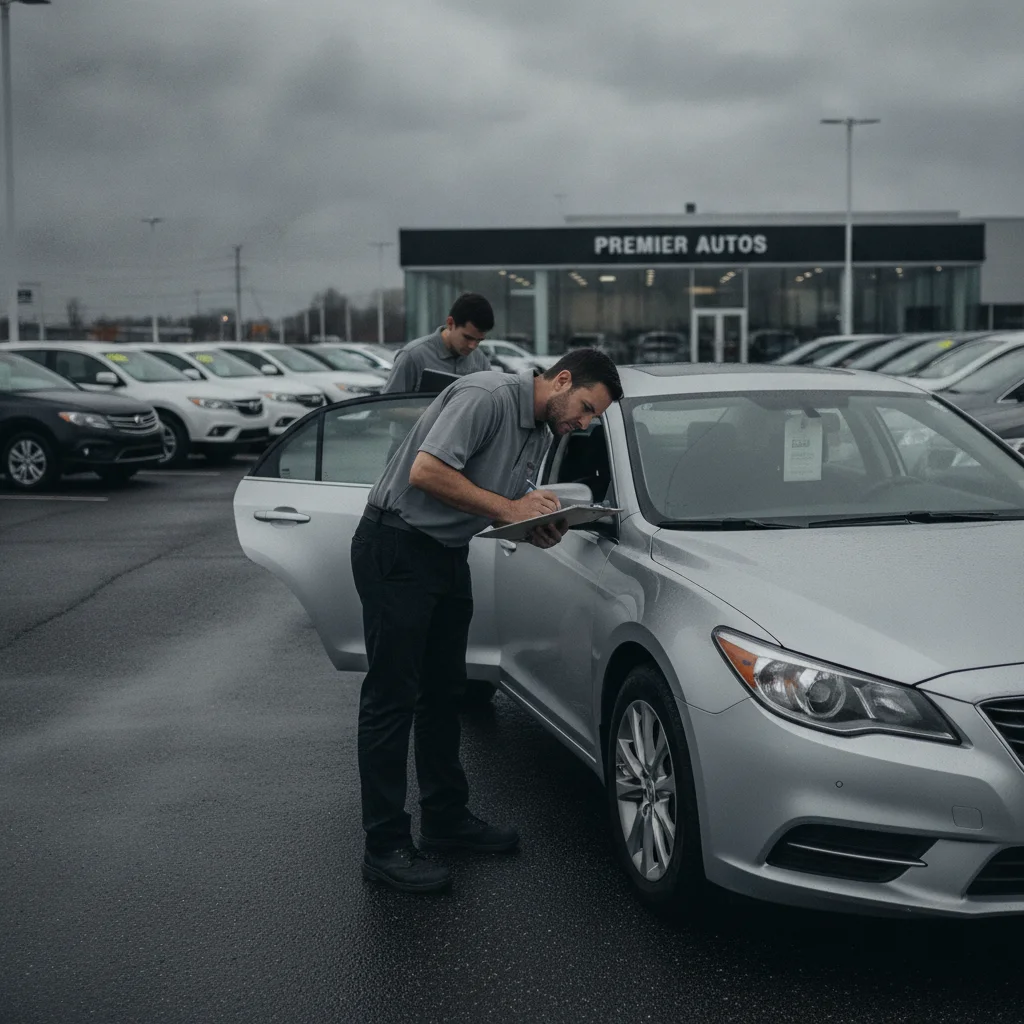
When you trade in, you're not selling to a buyer who fell in love with your car on a Saturday afternoon. You're selling to a business that needs to move metal, hit targets, and manage floor inventory. That changes everything about when you should show up.
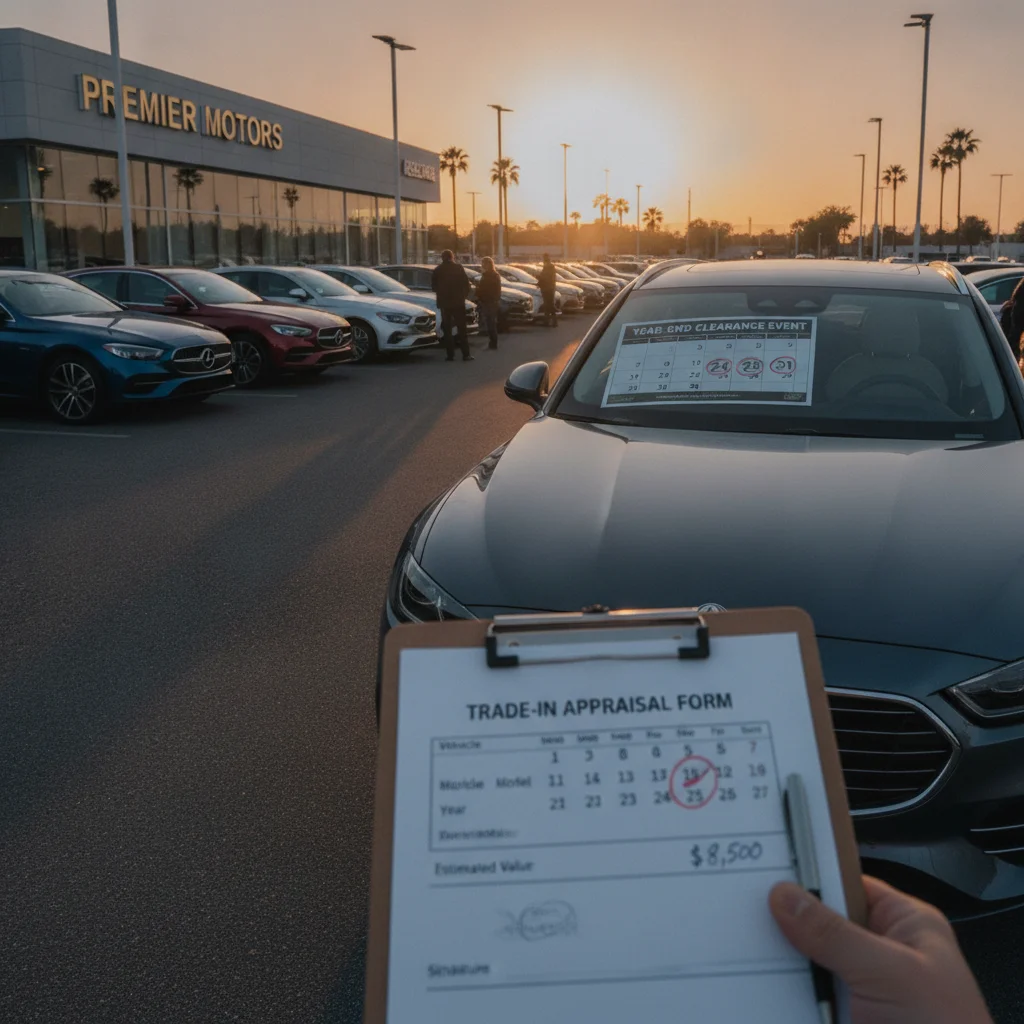
End-of-Month and End-of-Quarter Pressure
Dealers and their salespeople are incentivized by manufacturer bonuses that reset monthly and quarterly. Walk in during the last three to five business days of any month — and especially the last days of March, June, September, or December — and you'll find a dealership more motivated to close deals, which often means a slightly better trade-in appraisal as part of a package.
Model Year Changeover
When next year's models start arriving (typically July through October depending on brand), dealers need to clear current-year new car inventory. Their appetite for used inventory actually dips during this transition because their lots are crowded. Avoid trading in right as new model year vehicles flood the lot. Wait until the changeover settles — usually by late October — when dealers are back in a rhythm and actively looking to stock their used car sections.
Mileage Thresholds Matter More Here
Dealers use auction-floor benchmarks almost universally. Crossing 30,000, 60,000, or 100,000 miles drops your trade-in offer in a hard, mechanical way. If you're at 58,000 miles and can trade in before a road trip pushes you over 60,000, it's worth the urgency. Private buyers are more forgiving of mileage in context; dealers are not.
Get Three Trade-In Quotes Before the Dealer
Before you walk into any dealership for a trade-in appraisal, get written offers from CarMax, Carvana, and at least one additional instant-offer platform. These numbers cost you nothing and give you a legitimate floor to reference during dealer negotiations. Dealers know you can walk, and that knowledge alone can shift an appraisal by several hundred dollars.
Price Your Private Listing Right the First Time
Set your private asking price at or just below the top of comparable listings in your market — not above it. Overpriced listings go stale fast, and days-on-market is visible to buyers on most platforms. A stale listing triggers suspicion that something is wrong with the car, which kills your negotiating position. Price to generate 3–5 inquiries in the first week and you'll close faster and closer to your target.
For a side-by-side breakdown of what you'll actually net in your pocket after taxes and fees on each path, see where the money really goes on a trade-in vs. private sale.
$1,500–$5,000+
Typical trade-in vs. private sale price gap
Industry estimates from Edmunds and Kelley Blue Book consistently show private sale prices exceeding dealer trade-in offers by this range, varying by vehicle type and condition.
15–20%
Average depreciation hit in first model year
According to Carfax and industry depreciation studies, vehicles typically lose 15–20% of value in the first year, making early-cycle timing critical for sellers.
February–May
Peak private car sale season in the US
AutoTrader and Cars.com marketplace data consistently identify this window as generating the highest buyer traffic and fastest listing turnover.
How the Private Listing Timing Window Works
Private listings live and die by buyer demand — and buyer demand has a very clear annual rhythm. Get this right and you can close faster and at a higher price. Get it wrong and your listing sits, and a stale listing is a liability.
Spring Is King
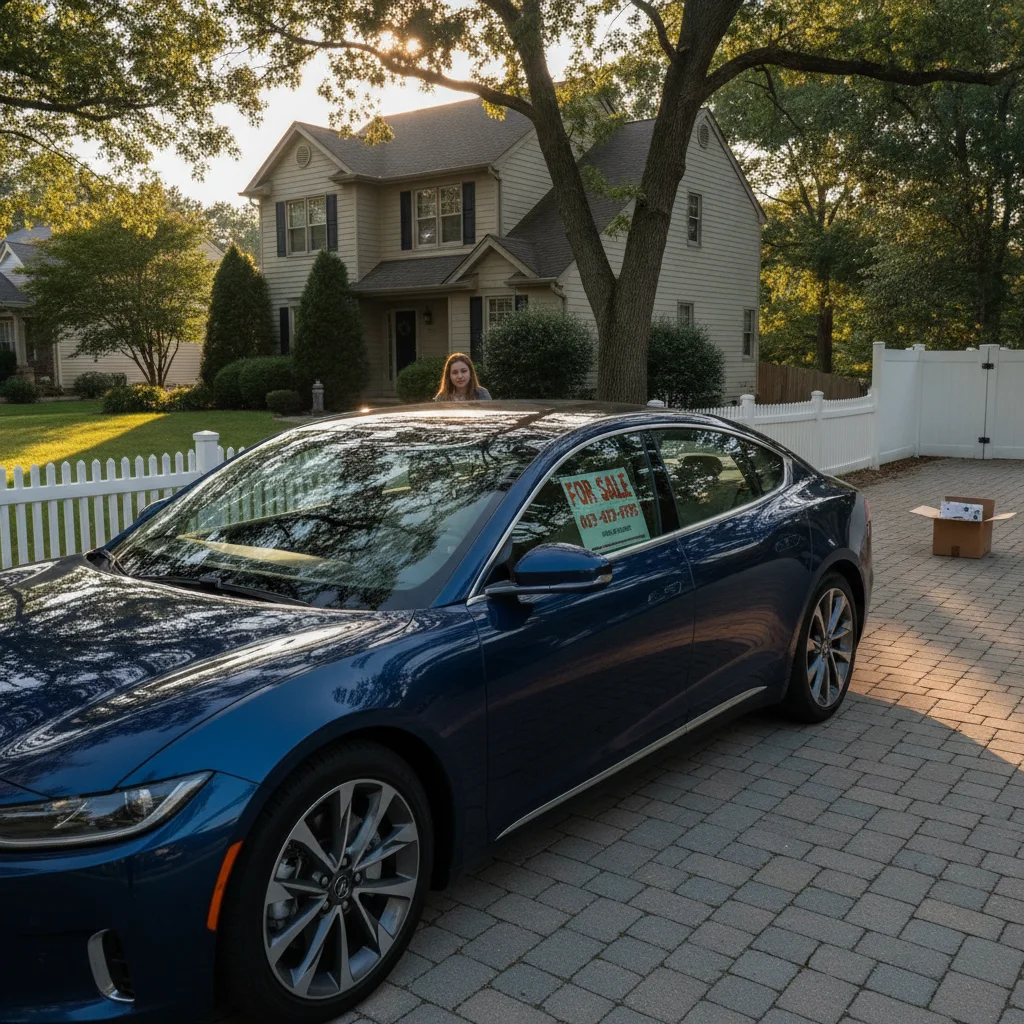
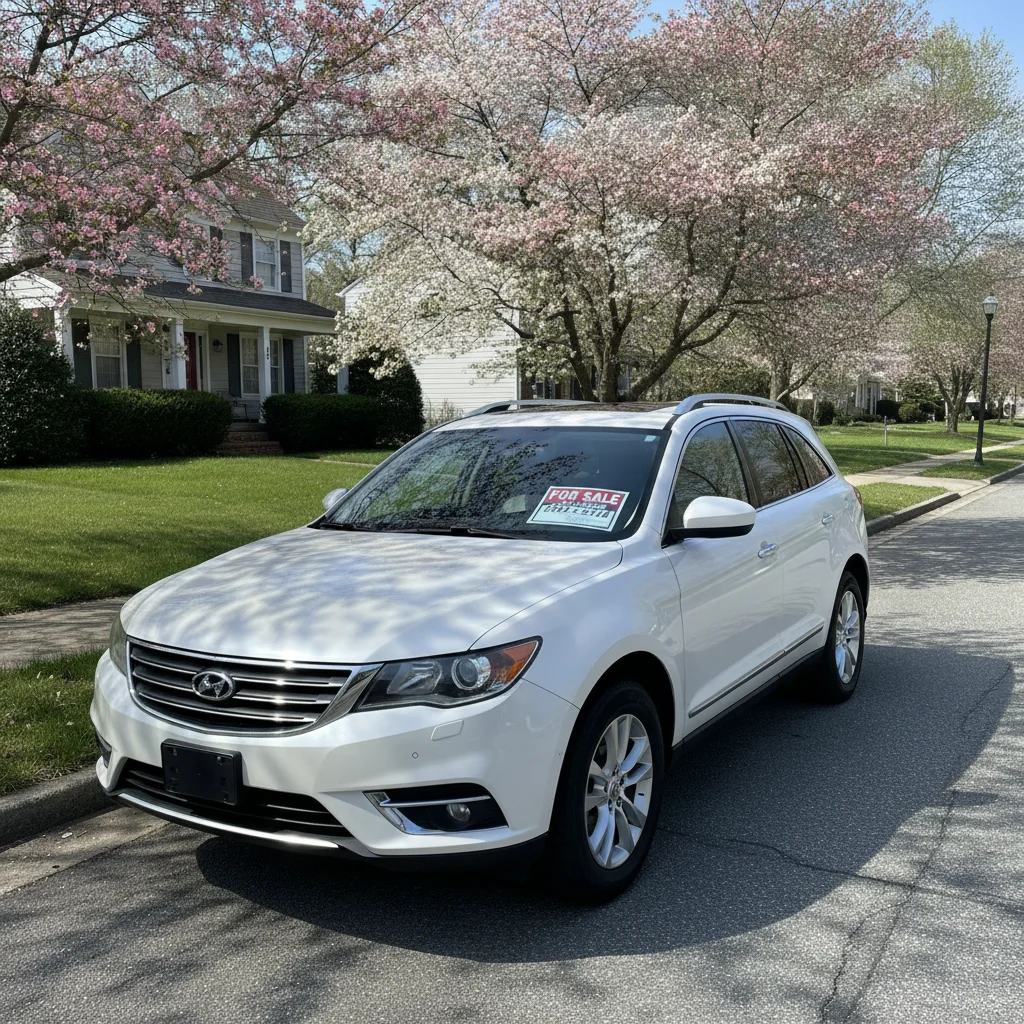
February through May is the strongest window for private car sales in the US, and it's not close. Tax refunds hit bank accounts in February and March. Buyers who wintered without a reliable vehicle start shopping. College graduates and families planning summer road trips enter the market. If you have any flexibility on when to list, aim to have your car cleaned, photographed, and posted by late February or early March.
New Model Year Drop: The Private Seller's Biggest Risk
This is where private sellers get hurt more than trade-in sellers. When the 2026 models start arriving on dealer lots, buyers searching for a 2024 or 2025 immediately have a mental anchor — they know the new version exists. Your older model takes a perceived value hit that is harder to fight in a private negotiation than in a dealer appraisal. List before the new model hits showrooms, not after. Our guide on listing before a new model year drop walks through exactly how to time that window.
Summer and Fall: Know Your Vehicle Type
Trucks, SUVs, and AWD vehicles hold buyer interest through the summer and into fall. Convertibles and sports cars peak in late spring. Sedans are relatively flat year-round but soften in December and January. Align your listing window with your vehicle's category, not just the calendar.
If you're deciding between acting now versus waiting for a seasonal peak months away, the short-term vs. long-term timing strategies breakdown is worth reading before you commit to a date.
Don't List Privately Right Before a New Model Announcement
Once a manufacturer announces or leaks next-year specs, private buyers use that as leverage to push your price down — even if the new model is months away from delivery. Monitor your vehicle's model year announcement calendar and aim to have your listing active, or your trade-in completed, before that news cycle hits. Our guide on <a href="/selling-your-car/pricing-your-car/market-timing/listing-before-a-new-model-year-drop-timing-the-window-correctly">timing a listing before the model year drop</a> explains how to track that window.
Avoid Acting Without Running Both Scenarios
Too many sellers commit to trade-in or private sale on instinct and then time their move without ever running the alternate scenario. Spend 30 minutes getting an instant trade-in offer online and checking comparable private listings on your local market before you decide. The numbers may surprise you — and the right channel decision should come before the timing decision, not after.
Direct Comparison: Trade-In vs. Private Listing by Timing Factor
Let's put the key timing variables side by side so you can see exactly where the two paths diverge and where they overlap.
| Timing Factor | Trade-In | Private Listing | |
|---|---|---|---|
| Best calendar window | End of month/quarter; Oct–Nov post-changeover | Late Feb through May (spring peak) | |
| New model year impact | Moderate — dealer adjusts appraisal | High — buyers perceive older model as devalued | |
| Mileage threshold sensitivity | Very high — hard valuation drops at benchmarks | Moderate — negotiable with the right buyer | |
| Time required to execute | 1–3 days once you visit dealers | 2–8 weeks on average | |
| Seasonal demand effect | Low — dealer need driven by inventory/targets | High — buyer pool shrinks in winter months | |
| Risk of value loss from waiting | Low if timed to dealer cycles | High if listing stagnates or season passes | |
| Tax offset benefit (simultaneous purchase) | Yes — sales tax on net price difference | No — pay full sales tax on new purchase | |
| Price ceiling potential | Capped at wholesale-plus margin | Closer to retail — highest potential return |
The table makes clear that the two channels respond to almost opposite timing logic in several key areas. Dealer pressure cycles and mileage thresholds matter primarily to trade-in sellers. Seasonal demand and model year awareness matter primarily to private sellers. Only the condition of the market at a macro level — rising or falling used car values — affects both routes equally.
The Financial Gap: Is the Timing Effort Worth It?
Before you decide which path to optimize your timing around, you need a realistic number for what the effort gap looks like in dollars. The honest answer: it depends on the vehicle, but the range is meaningful.
For a mainstream sedan in the $15,000–$20,000 range, you'll typically see a $1,500–$3,000 gap between what a dealer offers at trade-in versus what a private buyer pays. For a clean, well-maintained truck or SUV in the $30,000–$45,000 range, that gap can reach $4,000–$6,000 or more. On paper, the private sale wins on price almost every time.
But timing changes the math. A private listing that sits for eight weeks and then drops its price twice may end up netting less than a timely trade-in offered during a strong dealer incentive period. A trade-in executed poorly — right after a new model year drop or at a high-mileage threshold — can give back the convenience premium entirely.
The real question isn't just "which pays more" but "which pays more given my timeline and circumstances." See the full breakdown in dealer trade-in vs. private party sale: which puts more money in your pocket.
How to Choose a Path and Lock In Your Timing
Here's a practical decision framework. Answer these questions honestly and a clear path usually emerges.
Step 1: What's your vehicle's realistic private sale appeal?
A high-mileage economy sedan is a harder private sale than a clean low-mileage truck. If you expect your vehicle to appeal to a wide pool of private buyers, the extra effort is likely worth it. If it's a niche vehicle or has known issues, dealers absorb those risks better — and you'll spend less time fielding lowball offers.
Step 2: Are you buying simultaneously?
If you're trading in at the same dealership where you're buying your next car, the tax offset in states that charge sales tax on the net difference can meaningfully close the gap between trade-in and private sale values. Factor that in before assuming the private route wins financially. More on that tradeoff at trading in vs. selling privately when buying a new car.
Step 3: Where are you in the calendar year?
If you're reading this in January, the math likely favors holding 4–6 weeks and listing privately in late February or March — assuming your vehicle suits that market. If you're in October and the new model year just dropped, trading in may be the cleaner move rather than fighting buyer perception for months in a private listing.
Step 4: What does your mileage clock look like?
If you're under a major threshold (30k, 60k, 100k), this affects trade-in valuation far more than private sale. Don't push past a threshold before visiting dealers. For private listings, mileage matters but is negotiable with the right buyer.
Get Three Trade-In Quotes Before the Dealer
Before you walk into any dealership for a trade-in appraisal, get written offers from CarMax, Carvana, and at least one additional instant-offer platform. These numbers cost you nothing and give you a legitimate floor to reference during dealer negotiations. Dealers know you can walk, and that knowledge alone can shift an appraisal by several hundred dollars.
Price Your Private Listing Right the First Time
Set your private asking price at or just below the top of comparable listings in your market — not above it. Overpriced listings go stale fast, and days-on-market is visible to buyers on most platforms. A stale listing triggers suspicion that something is wrong with the car, which kills your negotiating position. Price to generate 3–5 inquiries in the first week and you'll close faster and closer to your target.
Common Timing Mistakes That Cost Sellers Money
I've seen these errors repeatedly — both in my shop when customers ask why their car didn't get the number they expected, and in the broader market data. Avoid these regardless of which path you choose.
- Listing privately in November or December: Buyer demand drops, listings stagnate, and price cuts follow. Unless your vehicle is a 4WD or snow-season truck, winter private listings underperform.
- Trading in right after a new model year hits your vehicle's nameplate: The dealer's appraiser knows exactly what just landed on the lot and will price your trade accordingly. Timing the trade two to three months before the new model arrives is almost always a better move.
- Letting a private listing go stale: Days-on-market is visible to buyers on most platforms. A listing that's been up 45 days triggers skepticism. If you're going private, price correctly from day one and set a drop-dead date for a decision — don't let it drift.
- Crossing a mileage threshold right before a dealer visit: If you're at 59,200 miles, don't drive 1,000 more miles before you go get an appraisal. That threshold matters to a dealer's wholesale calculation more than almost any other single factor.
- Ignoring the tax offset on trade-ins: In most states, you only pay sales tax on the difference between your trade-in value and the new purchase price. That's real money that narrows the private sale advantage more than most sellers realize.
Don't List Privately Right Before a New Model Announcement
Once a manufacturer announces or leaks next-year specs, private buyers use that as leverage to push your price down — even if the new model is months away from delivery. Monitor your vehicle's model year announcement calendar and aim to have your listing active, or your trade-in completed, before that news cycle hits. Our guide on <a href="/selling-your-car/pricing-your-car/market-timing/listing-before-a-new-model-year-drop-timing-the-window-correctly">timing a listing before the model year drop</a> explains how to track that window.
Avoid Acting Without Running Both Scenarios
Too many sellers commit to trade-in or private sale on instinct and then time their move without ever running the alternate scenario. Spend 30 minutes getting an instant trade-in offer online and checking comparable private listings on your local market before you decide. The numbers may surprise you — and the right channel decision should come before the timing decision, not after.
The timing your purchase hub is also worth a scan if you're coordinating a sale with a simultaneous new car buy — the buy-side timing decisions interact directly with how and when you should move your current vehicle.
Making the Final Call
Here's the bottom line, straight. Neither channel is the right answer for every seller, and timing alone doesn't determine outcome — but poor timing will consistently cost you money on either path.
If you decide on a trade-in, execute it at end of month or end of quarter, before major mileage thresholds, and a few months before your vehicle's new model year arrives. Show up informed — get competitive quotes from CarMax or a third-party service first so the dealer knows you've done your homework.
If you decide on a private listing, target late February through April for your listing window, price aggressively enough to generate real inquiries within the first two weeks, and do not let the listing stagnate. Get ahead of any new model year announcement for your vehicle — once the next generation is confirmed and publicized, your leverage with private buyers drops fast.
The timing decision and the channel decision are intertwined. Make them together, not sequentially. That's how sellers consistently walk away with more money than average — not because they got lucky, but because they planned the whole move before they started driving.


All claims are backed by peer-reviewed research. Sources on request.