Key Takeaways
Why Documentation Is Your First Line of Defense
Most drivers treat the moments after a crash as pure chaos — adrenaline, phone calls, maybe tears. That's understandable. But those same minutes are the only window you'll ever have to capture physical evidence that hasn't been altered, cleaned up, or driven away.
Insurance adjusters reconstruct accidents from whatever they're given. Attorneys and judges do the same. If your account of what happened conflicts with the other driver's, the evidence you collected at the scene — or didn't — often determines who wins. A few well-framed photos and a one-page written account can be worth thousands of dollars in a disputed claim.
This guide walks you through what to document, in what order, and with what level of detail. It also covers what courts and adjusters actually look for — because that's different from what most drivers instinctively photograph.
For context on what comes next once you leave the scene, see our step-by-step guide to filing a claim. But first, let's secure the evidence.
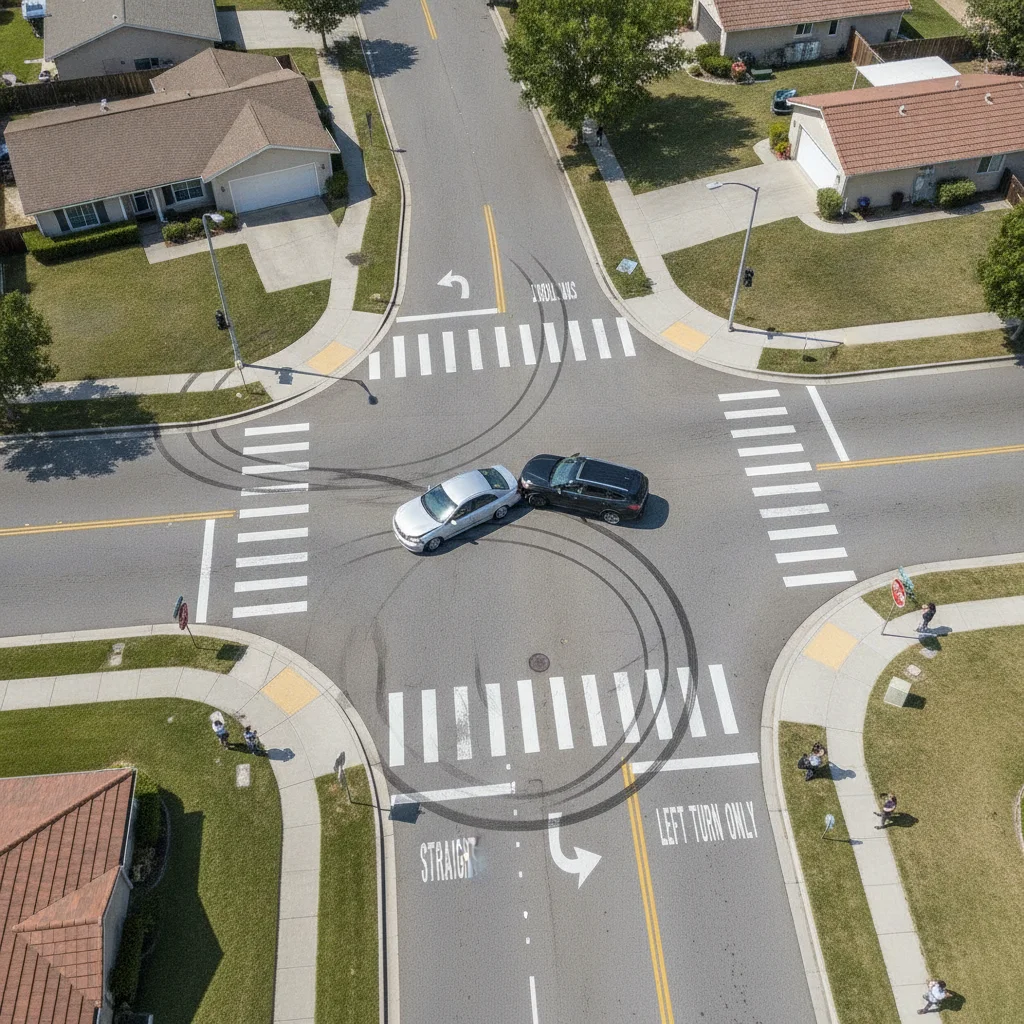
Step One: Secure Safety, Then Start Documenting
Before you pull out your phone, make sure you're not standing in a live traffic lane. Move to the shoulder if it's safe to do so. Turn on your hazard lights. Check for injuries. Your safety and the safety of others comes first — always.
Once you're in a safe position, start documenting before anything is moved. This is critical. Police often ask drivers to move vehicles out of traffic, which can erase vital positional evidence. Get your photos first if it's safe to do so without obstructing traffic further.
Move Vehicles Only After Documenting
Police and other drivers may pressure you to move your vehicle out of the road immediately. Before you do, take your establishing wide shots. Even 60 seconds of documentation before moving can preserve critical positional evidence. If moving is genuinely urgent for safety, do it — but try to mark the final resting positions of both vehicles with chalk or a dropped object first.
Use Panoramic Mode for Intersection Photos
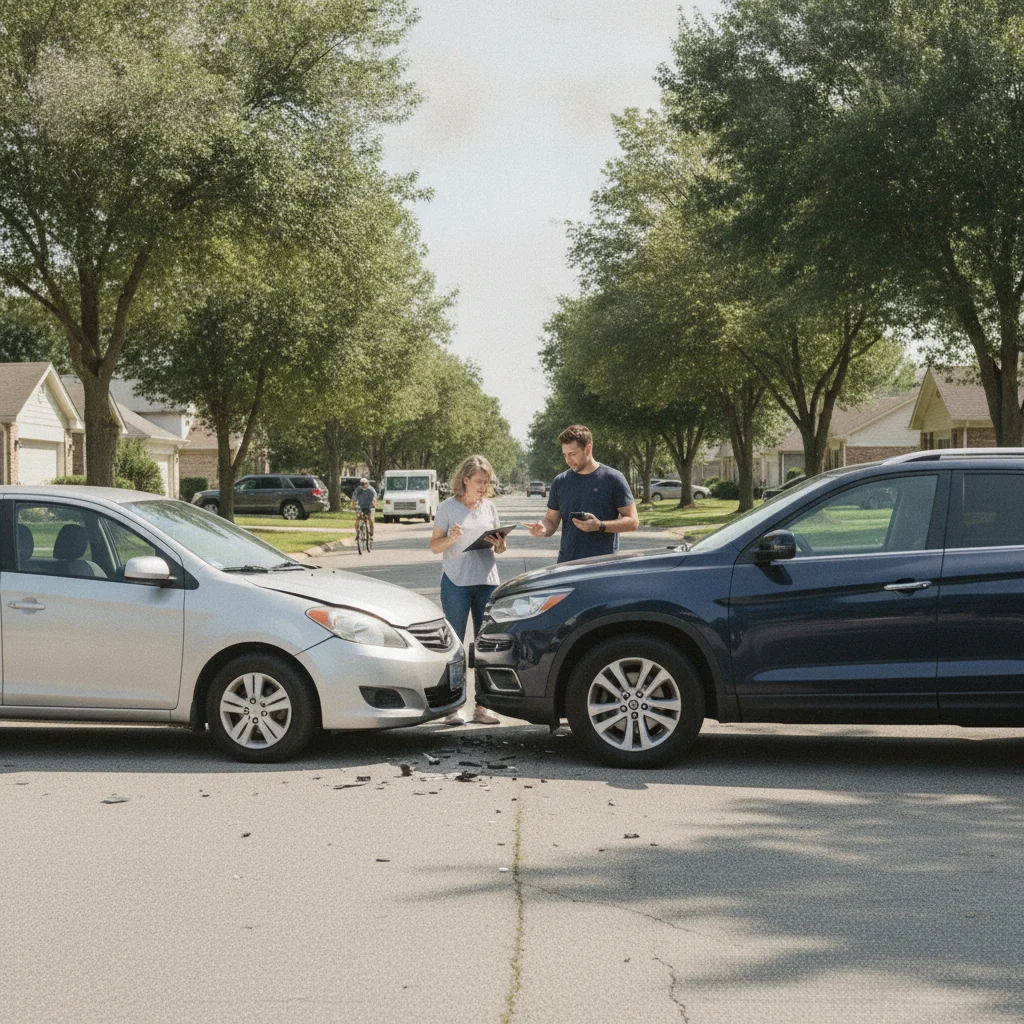
Standard photos often miss the full context of an intersection — the sight distances, the positions of traffic controls, and the layout of lanes. Use your phone's panoramic mode to capture a full 180-degree sweep of the scene. This is especially useful for proving or disproving sightline claims later.
Keep Your Tone Neutral at the Scene
Anything you say at the scene can be used against you. Apologizing, speculating about fault, or making statements like 'I didn't see you' are often interpreted as admissions. Stick to checking on people's wellbeing and exchanging required information. Let your documentation do the rest.
Be aware of your legal obligations while doing this. Many states require you to stay at the scene, render aid if needed, and report the accident to police above a certain damage threshold. See what the law requires at an accident scene so you're not inadvertently creating a legal problem while solving one.
The Photography Sequence That Actually Holds Up
Most people photograph the dents and stop there. That's not enough. Here's the sequence that produces documentation adjusters and attorneys find genuinely useful:
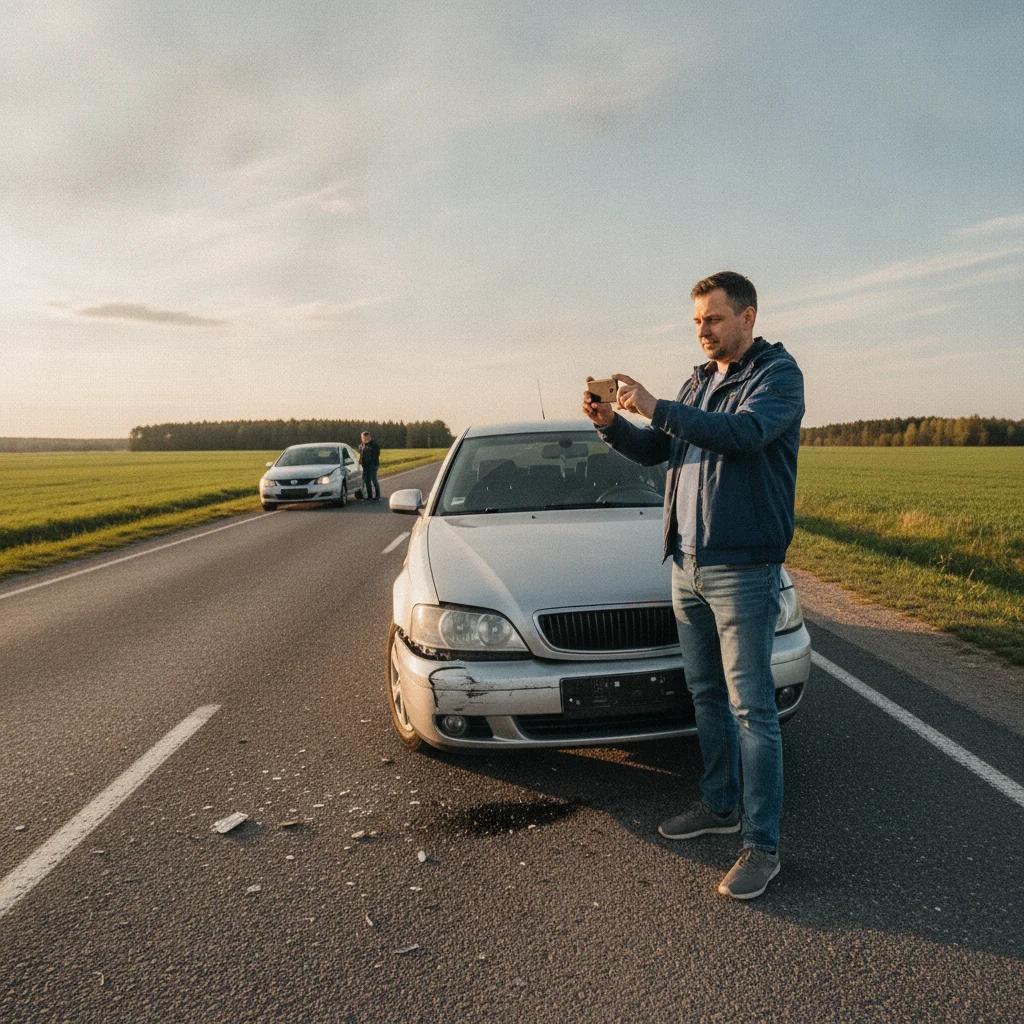
- Wide establishing shots: Stand back and photograph the full scene from multiple angles — both directions of traffic, the intersection or road section where the crash occurred, and the position of both vehicles relative to each other and lane markings.
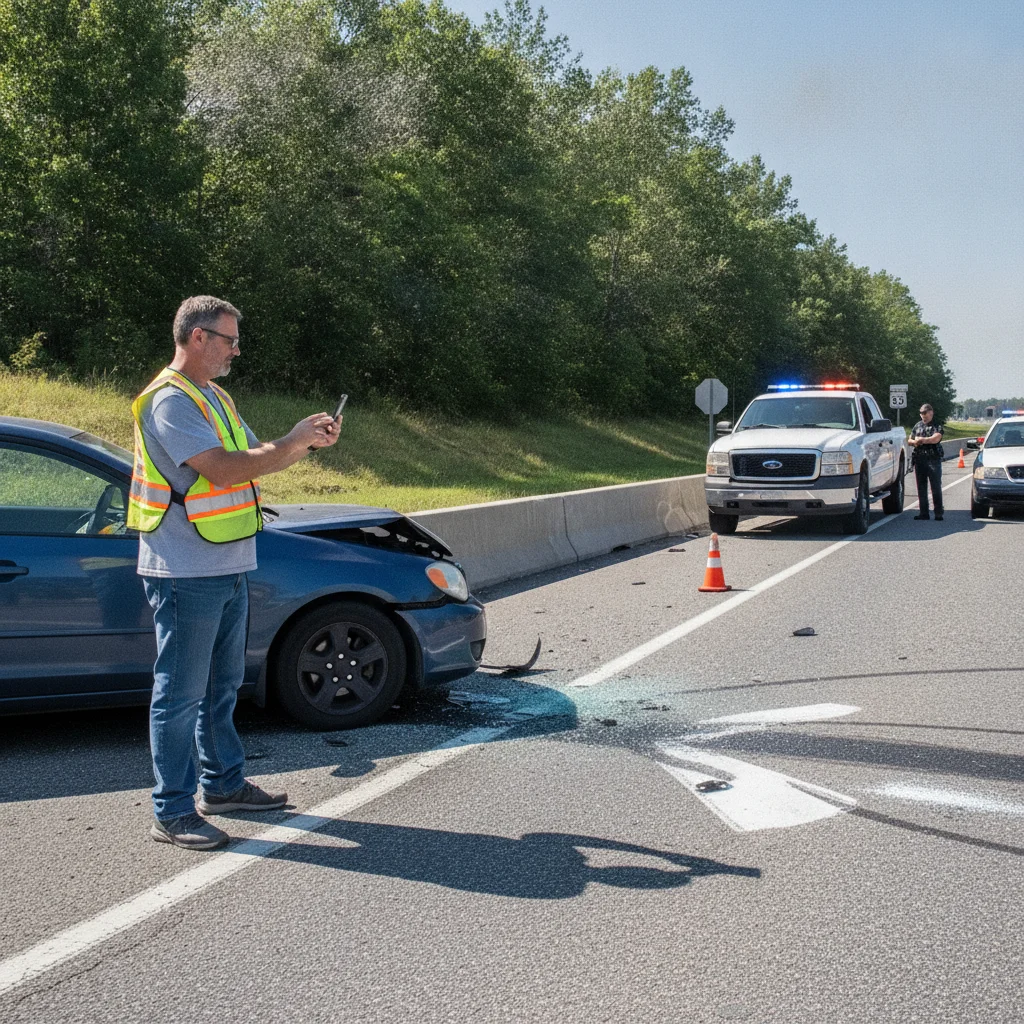
- Road conditions and context: Capture skid marks, debris fields, potholes, faded lane markings, missing signs, wet pavement, gravel, or any other conditions that may have contributed. These disappear quickly once traffic resumes.
- Traffic controls: Photograph every stop sign, traffic light, yield sign, or speed limit sign relevant to the intersection. Include whether any were obscured by foliage or damage.
- Vehicle damage — all of it: Document every point of damage on both vehicles, not just the impact zones. Include pre-existing damage you can see, which may matter when the other party inflates their claim.
- License plates: Get a clear, readable photo of both vehicles' plates immediately. People occasionally drive away.
- VINs: Photograph the VIN on the dashboard of each vehicle through the windshield.
- The other driver's documents: Photograph their insurance card and driver's license rather than copying numbers by hand — it's faster and eliminates transcription errors.
- Injuries: If you or a passenger has visible injuries, document them. Courts treat contemporaneous injury photos very differently from photos taken days later.
- Witnesses: If bystanders are at the scene, photograph them in frame with their consent (or at minimum get their contact information). Witness presence is easy to prove with a timestamp.
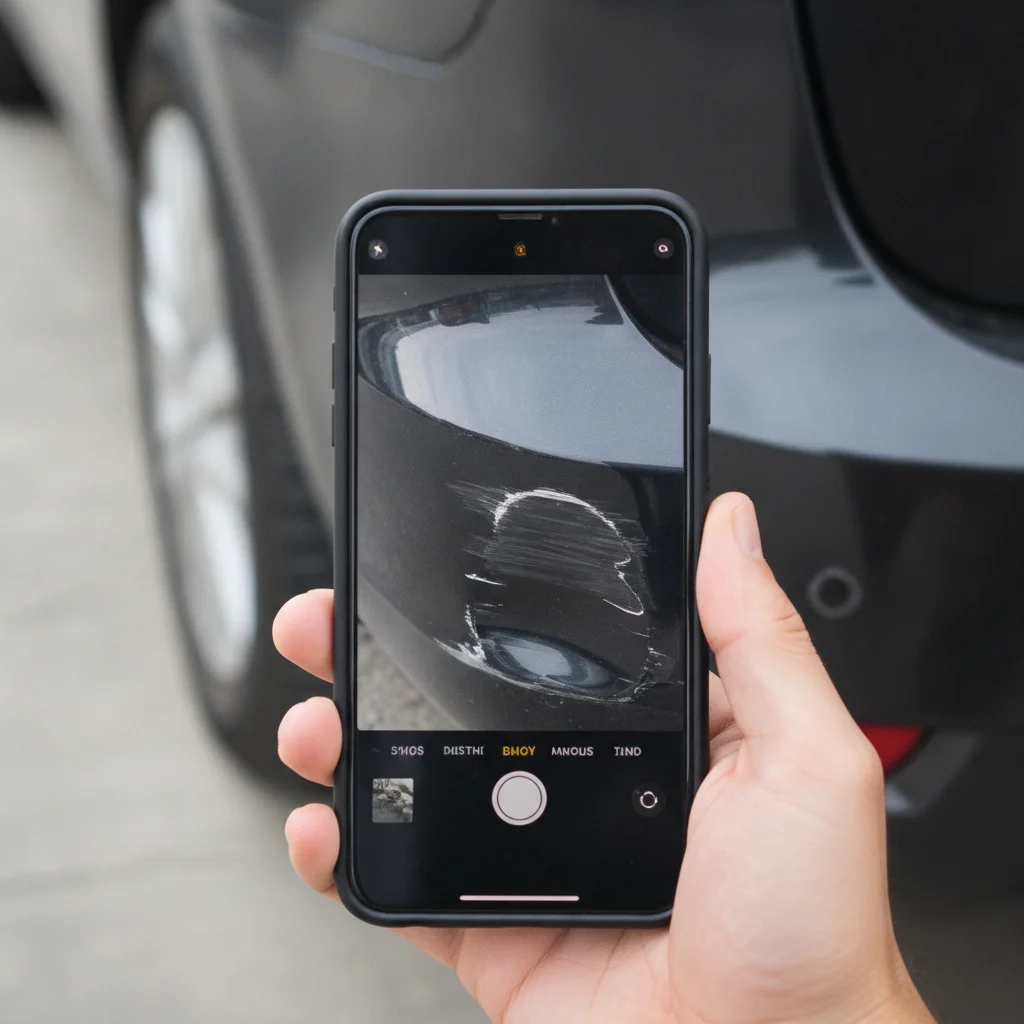
For a more detailed breakdown of photo evidence specifically, see what to capture and why it matters for your claim.
6 million+
Police-reported car crashes annually in the U.S.
According to the National Highway Traffic Safety Administration, millions of crashes result in insurance claims every year, making proper documentation a near-universal need.
~50%
Disputed liability claims with conflicting driver accounts
Insurance Research Council data indicates that roughly half of all bodily injury claims involve some degree of disputed liability between parties.
72 hours
Window for significant memory degradation after trauma
Cognitive psychology research consistently shows that eyewitness memory accuracy drops sharply in the first 72 hours following a stressful event.
Best Practices for Scene Documentation
Knowing what to do is one thing. Doing it consistently under stress requires having internalized a repeatable process. These practices apply whether you're in a fender-bender in a parking lot or a serious multi-car collision.
Enable location and timestamp data on your phone's camera before you need it.
Photos with embedded GPS coordinates and accurate timestamps are substantially more credible in disputes because they establish where and when the image was taken. A photo without metadata can be challenged as taken at a different location or time. This setting takes thirty seconds to enable and never needs to be changed again.
Photograph skid marks before they're driven over or washed away.
Skid marks are one of the most forensically valuable pieces of evidence at any crash scene. Their length, direction, and position can be used to calculate pre-impact speed and lane position. They're also ephemeral — a few passing cars or a rain shower can eliminate them entirely within minutes.
Record a short video walkthrough of the entire scene, narrating what you observe.
A narrated video provides context that static photos cannot — the relative positions of vehicles, the distance to traffic signals, the condition of the road surface across a wider area. Your narration also captures your contemporaneous observations, which carry evidentiary weight because they were recorded immediately after the event.
Never delete any photo or video from the scene, even if it looks redundant.
You cannot know at the scene which image will prove decisive later. An apparently duplicate photo might have a slightly different angle that clarifies a key detail. Storage is cheap; recreating destroyed evidence is impossible. Preserve everything and let your attorney or adjuster identify what's relevant.
Get witness contact information before they leave the scene.
Witness testimony from an uninvolved third party carries significant weight with adjusters and juries alike. But witnesses rarely return voluntarily — once they leave the scene, they're typically gone for good. Thirty seconds of conversation can preserve testimony that would otherwise disappear.
Write your personal account within 24 hours, not 24 days.
Human memory degrades fastest in the first 24 to 72 hours after a traumatic event. Details you feel certain about at the scene — exact speed, precise lane position, the sequence of events — become genuinely less accurate within days. A written account created the same day is treated as far more reliable than one reconstructed weeks later.
Writing Your Account: What to Record and When
Photos capture physical reality. Your written account captures sequence and intent — two things photographs often can't convey on their own. Write your account as soon as you can, ideally the same day, while sensory details are still accurate.
Your written account should include:
- Your starting point and destination at the time of the crash
- Exact time and weather conditions (light rain, glare, fog, bright sun in eyes)
- Your speed and lane position in the seconds before impact
- What you saw the other driver do — or fail to do
- Any sounds or sensations before impact (braking, honking, skidding)
- What happened immediately after impact — where each vehicle came to rest
- Statements made by the other driver at the scene — verbatim if possible
- Names and badge numbers of responding officers
- Whether an ambulance was called and who was transported
Your Written Account Is Not for the Other Driver
The personal account you write after an accident is for you, your insurer, and potentially your attorney — not for sharing with the other party or their insurance company. Volunteer only what you're legally required to disclose at the scene. Anything additional should go through proper claims channels.
Dashcam Footage Has Chain-of-Custody Requirements
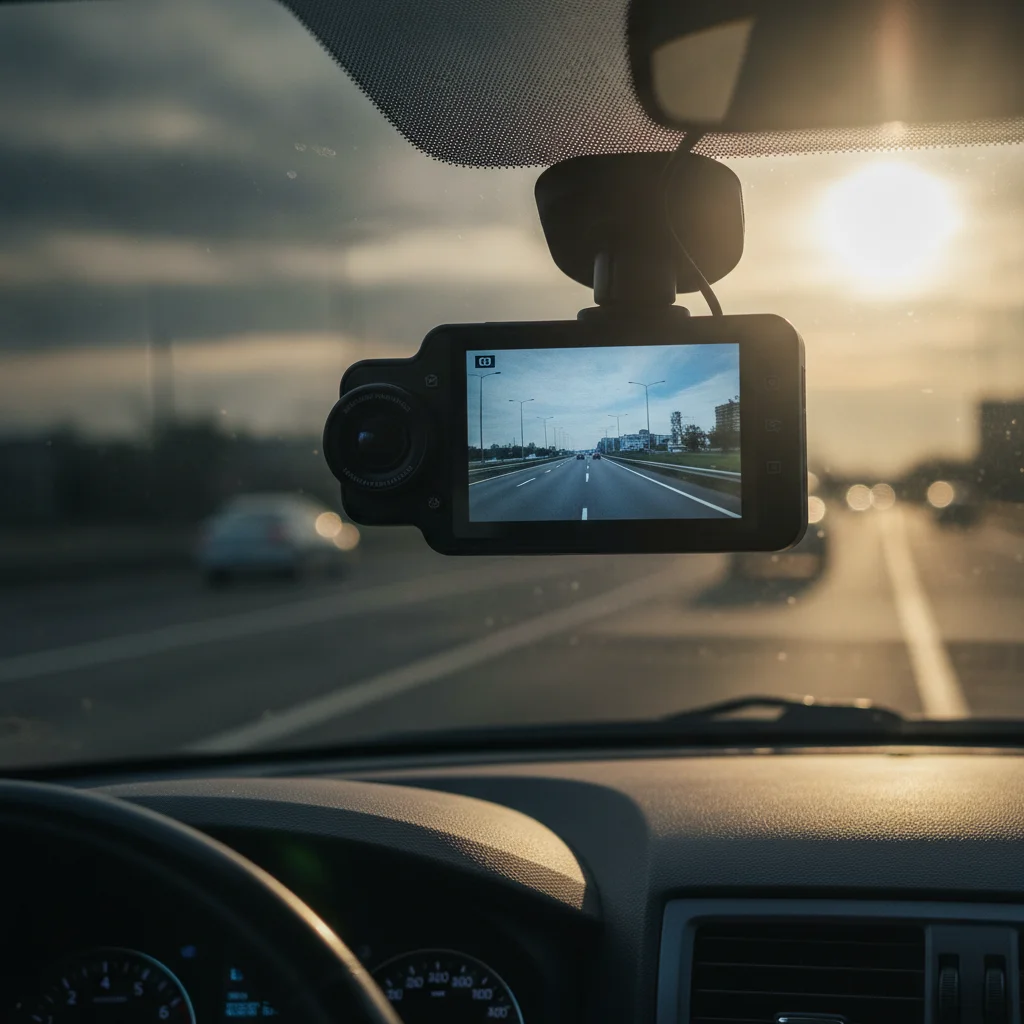
If you have dashcam footage of the accident, don't just leave it on the device and assume it will be fine. Copy the file to a separate storage location immediately and note the date and time you did so. Some insurers and courts are skeptical of footage that cannot demonstrate it was preserved promptly and without editing.
Not All States Require a Police Report for Minor Accidents
Reporting thresholds vary by state — some require a report for any accident with injury, while others only mandate reporting above a property damage dollar threshold. Check your state's requirements. Failing to file when required can affect your claim and create legal exposure, even if the accident seemed minor.
Keep this account private — share it with your attorney or insurance representative, not the other driver or their insurer. Your written notes are work product and potentially privileged depending on context.
Also document your physical condition in the hours and days after the crash. Whiplash, back injuries, and concussions often don't present until 24–72 hours post-impact. A dated written log of symptoms strengthens any subsequent injury claim significantly.
What Courts and Adjusters Actually Look For
Here's where most accident guides go wrong: they tell you to collect evidence without explaining why specific evidence matters to the people evaluating your claim. Courts and adjusters aren't looking at your photos the same way you are.
Adjusters prioritize:
- Point of impact on each vehicle — to validate each driver's account of the sequence
- Damage consistency — does the damage pattern match the claimed collision angle?
- Pre-existing damage — so it's not attributed to this accident
- Road conditions — because they affect comparative fault percentages
- Timestamps on photos — to establish timeline and verify positions before vehicles moved
Courts prioritize:
- Sightlines — could the driver have seen the hazard in time to stop? Photos of the sight triangle at an intersection are extremely probative.
- Skid marks and their length — expert witnesses use these to calculate pre-braking speed
- Traffic control compliance — did the light placement give adequate warning?
- Contemporaneous witness statements — accounts taken at the scene carry far more weight than those collected weeks later
- Chain of custody for physical evidence — dashcam footage that was copied and preserved immediately is treated differently from footage retrieved from a device weeks later
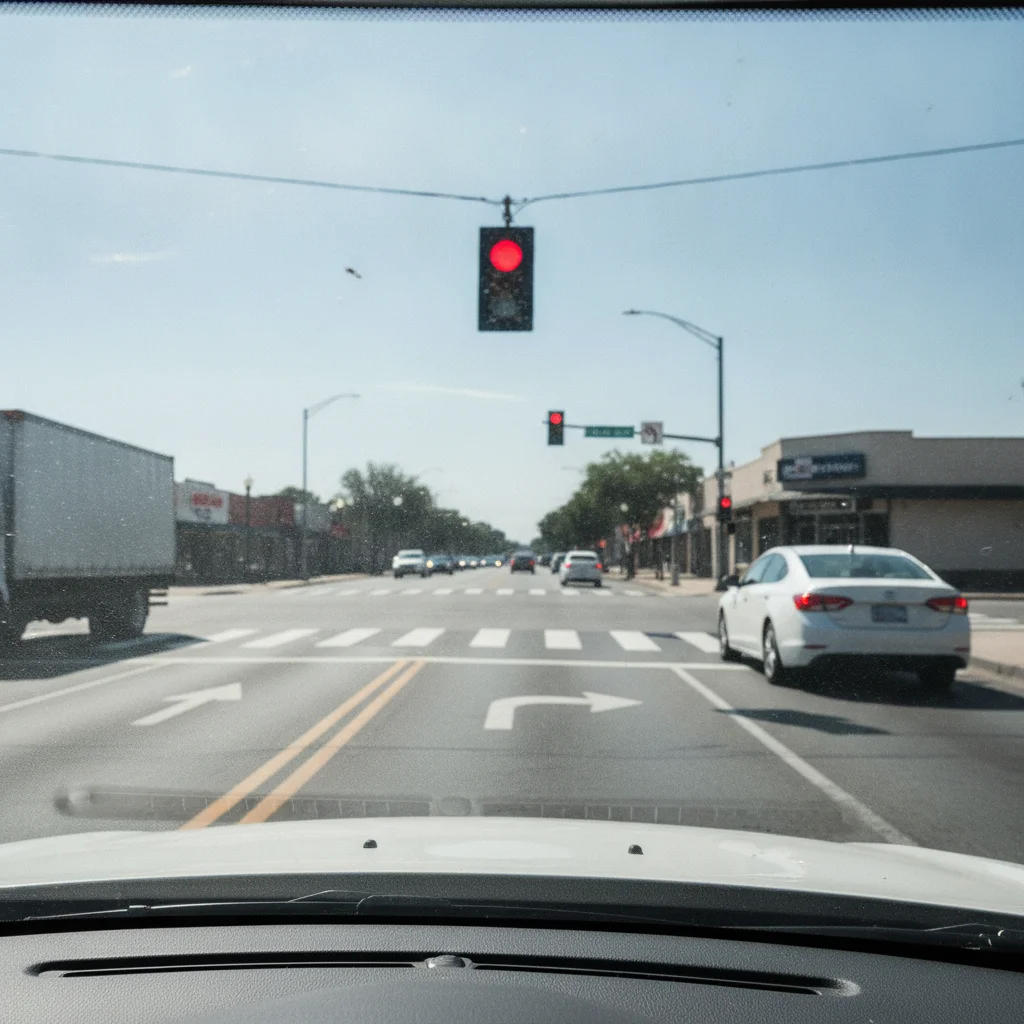
If you have a dashcam, preservation protocol matters enormously. See how to handle dashcam footage after an accident for the right steps.
“The most common mistake I see in disputed accident cases isn't bad driving — it's the complete absence of evidence. The party who documented the scene has a tremendous advantage over the party who didn't.”
— Randall Stokes, Personal injury attorney with over 20 years of auto accident litigation experience
Information Exchange and Report Filing
Documentation doesn't stop with photos and notes. You also need to exchange the right information with the other driver and understand what reports need to be filed — and by whom.
At minimum, exchange:
- Full legal name and address
- Driver's license number and state
- Insurance company name and policy number
- Vehicle make, model, year, and plate number
For a complete checklist of everything to collect, see what information to exchange after a car accident.
Beyond the exchange, you may need to file separate reports depending on your state and the severity of the accident. A police report filed at the scene, a driver's accident report filed with your DMV, and your own insurance company's first notice of loss are three distinct documents that serve different purposes. Confusing them or missing one can create complications down the line. See the difference between accident reports, police reports, and DMV filings.
One scenario that often catches drivers off guard: parking lot accidents. Fault logic is different, surveillance footage often exists, and many drivers assume it's a minor matter not worth documenting carefully. That's a mistake. See how parking lot accident claims actually work.
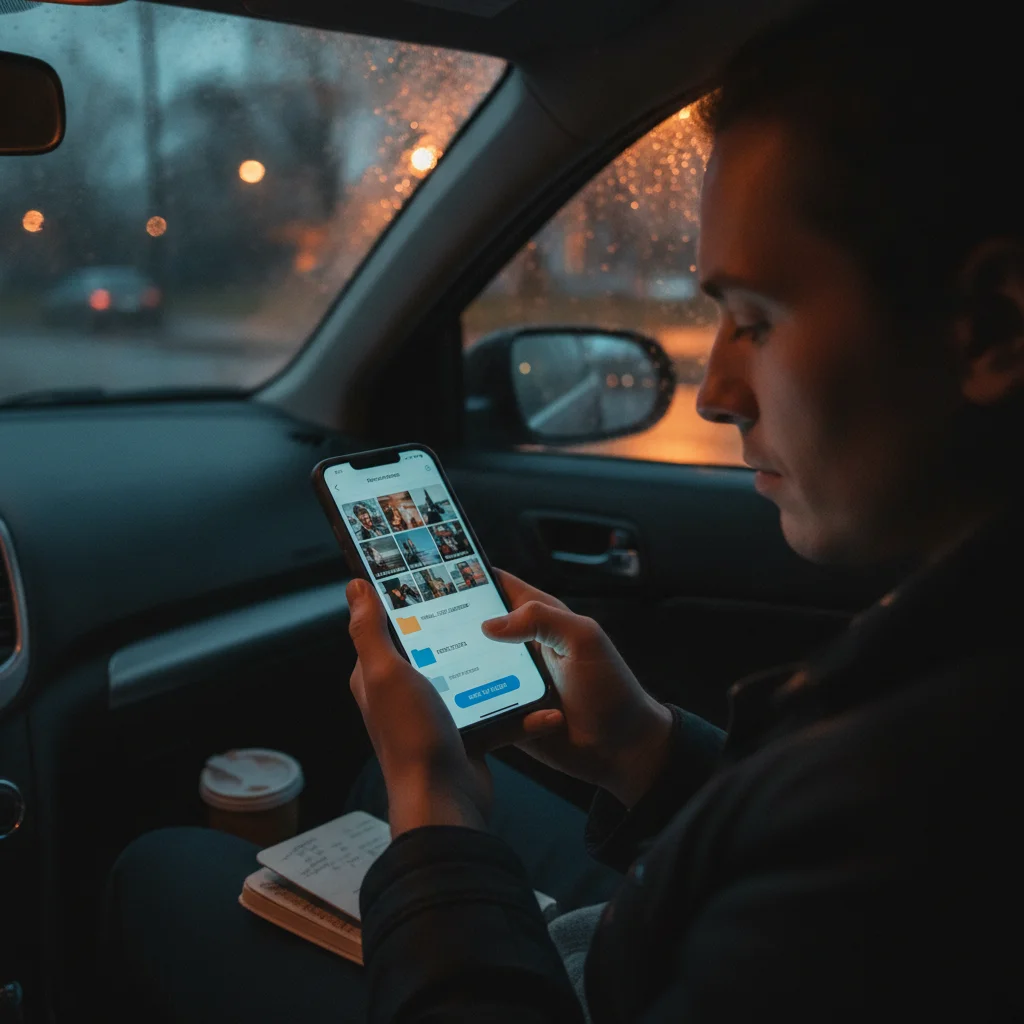
Organizing Everything for Your Claim
Gathering evidence is only half the work. How you organize and transmit it to your insurer affects how efficiently your claim moves through the process.
Create a single folder — on your phone, cloud storage, or both — immediately after the accident. Label it with the date and location. Drop every photo, video, screenshot, and document into it. This eliminates the common problem of losing evidence across multiple text threads, email chains, and camera rolls.
When you're ready to file, having organized documentation helps in two ways: it speeds up the adjuster review, and it signals that you're a credible, prepared claimant — which subtly influences how seriously your account is taken.
For what happens after you've submitted your documentation, see our guide on filing a liability claim from scene to settlement, or if this was a collision claim, the step-by-step collision claim walkthrough.
The accident scene closes the moment vehicles are moved and the parties disperse. Everything you do in those first minutes either builds your case or leaves gaps in it. Do the work while you're still there.

All claims are backed by peer-reviewed research. Sources on request.