Key Takeaways
Parking Lot Accident
A parking lot accident is any collision, scrape, or impact that occurs on private or semi-public parking property rather than a public roadway. These incidents can involve two moving vehicles, a moving vehicle striking a parked car, or a vehicle hitting a fixed object like a bollard or curb. Because parking lots are typically private property, they operate under different legal and insurance rules than on-street crashes.
Most states do not treat parking lot accidents as standard traffic violations, meaning no police report is legally required in many jurisdictions — but that doesn't mean fault or liability disappears.
Why Parking Lots Are a Legal Gray Zone
Most drivers assume that once they pull off a public road, the traffic rulebook takes a back seat. That assumption causes problems. Parking lots occupy a legal middle ground: they're typically owned by private entities — stores, hospitals, apartment complexes — yet they're open to the public and involve vehicle operation that carries real liability.
Because lots aren't public roadways, law enforcement often has limited jurisdiction or simply won't respond to fender-benders there. That means no official traffic citation, no automatic determination of fault, and no state-generated accident report to anchor your insurance claim. What you're left with is an evidence problem — and whoever documents the scene better tends to win the dispute.
That said, private property status doesn't mean anything goes. Most states extend their traffic statutes to cover parking lots open to public use. Speeding, failure to yield, and driving under the influence are still enforceable offenses in parking lots in the majority of jurisdictions. The traffic laws hub that govern public roads often carry over — drivers just don't realize it.
Private Property Doesn't Mean No Consequences
Many drivers assume that because a parking lot is private property, the legal stakes are lower. They're not. Hit-and-run statutes apply in parking lots in most states. Liability for injuries is the same as anywhere else. And your insurer will still investigate fault — they just won't have a police report to lean on.
No-Fault States and Parking Lot Accidents
In no-fault insurance states, your own Personal Injury Protection (PIP) coverage pays your medical expenses after a parking lot crash regardless of who caused it. You generally can't sue the other driver for pain and suffering unless injuries meet a defined threshold. However, property damage claims — repairs to your vehicle — still follow fault-based rules even in no-fault states.
The absence of a police report doesn't eliminate your legal or financial exposure. Your insurer will still investigate fault using witness accounts, photos, and any available surveillance footage. Build your case at the scene just as you would after an on-road collision.
Right-of-Way Rules Specific to Parking Lots
Parking lots have an internal hierarchy that most drivers were never formally taught. Understanding it is the fastest way to know whether you're likely to be found at fault — or not.
Thoroughfares vs. Feeder Lanes
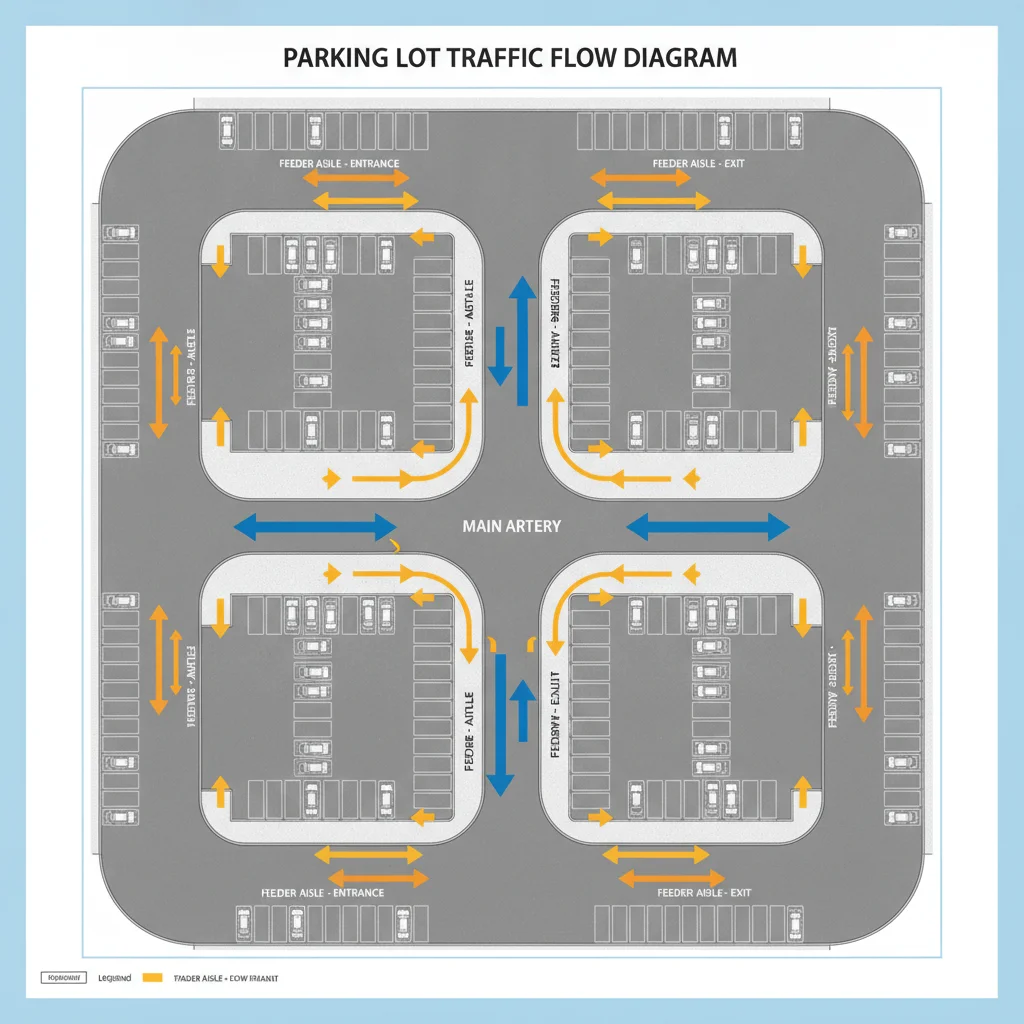
Most lots have two types of lanes. Thoroughfares (also called main lanes or through-lanes) are the wider arteries that connect the lot to the entrance and exit. Feeder lanes (or parking aisles) are the narrower rows running between parking spaces. The general rule: drivers on thoroughfares have right-of-way over drivers emerging from feeder lanes. If you pull out of a parking aisle into a main lane and get hit, you're likely at fault.
Backing Out of a Space
Reversing vehicles almost always carry the heavier fault burden. When you back out of a space, you're entering an active traffic lane, which means you must yield to all vehicles already traveling in that lane. This is true whether the lane is a thoroughfare or a feeder lane. Even if another driver was going too fast, a reversing driver who didn't clear the space before pulling back is typically assigned primary fault. See the guide on reversing safely for how to minimize this exposure.
Four-Way Intersections Inside the Lot
Many larger lots have internal intersections with stop signs. Standard right-of-way rules apply — yield to the driver on your right if you arrive simultaneously. Without signage, treat unmarked lot intersections like unmarked road intersections. If both drivers claim they had the right of way, the physical damage pattern (which corner of each vehicle was hit) often tells the real story.
Photograph the Lot Layout, Not Just the Damage
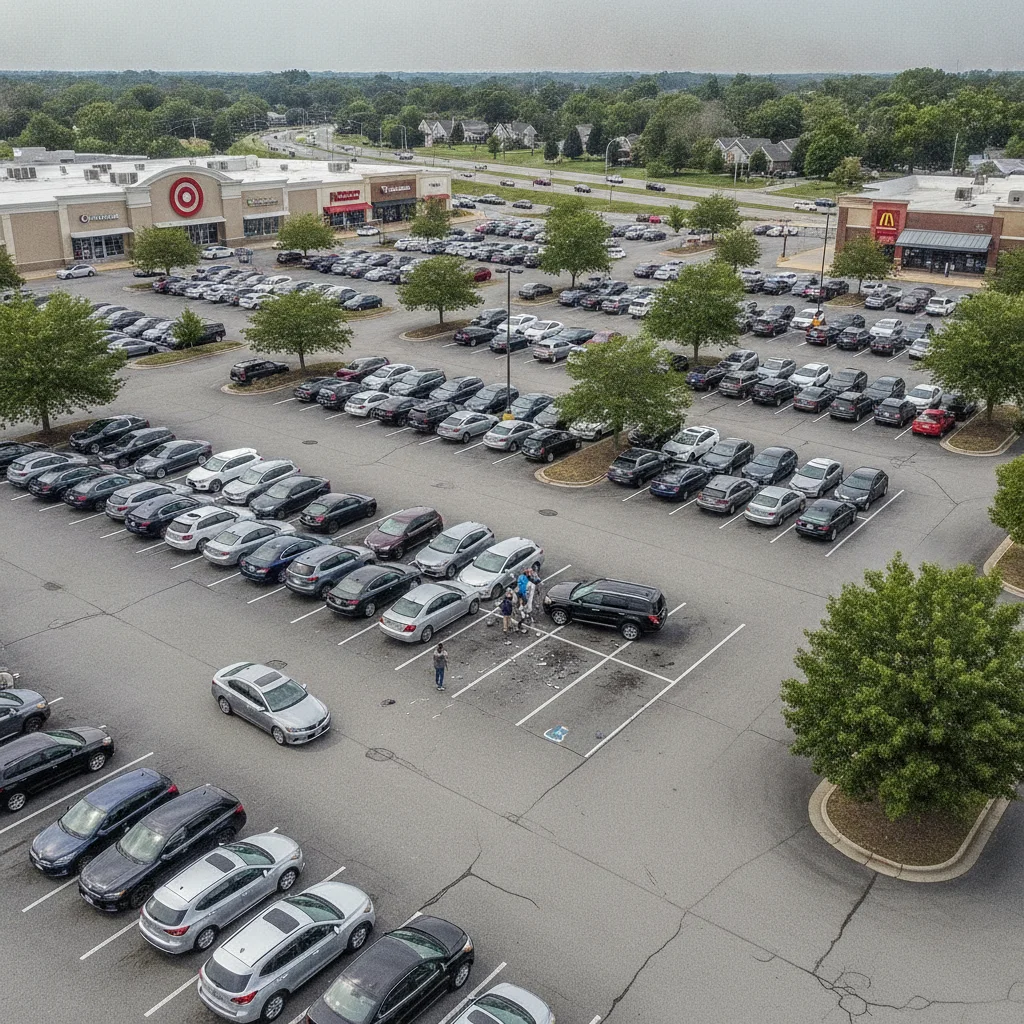
Wide-angle photos of the entire accident area — including lane markings, signage, sight-line obstructions, and the position of both vehicles — are often more valuable to an adjuster than close-up damage shots alone. These images establish context about who had right-of-way and what each driver could reasonably see. Take them before either vehicle is moved.
Call Your Insurer Before Giving Any Statement
The other driver's insurer may contact you quickly and request a recorded statement. You're not obligated to provide one without consulting your own insurer or an attorney first. Anything you say in that statement can be used to shift fault. Let your insurer's claims team guide the communication process — that's what your premiums pay for.
How Fault Is Actually Assigned — And Why It's Often Split
Insurance adjusters don't work in absolutes. When two cars collide in a parking lot, the adjuster's job is to assign a percentage of fault to each party — not simply declare one driver guilty and one innocent. This is called comparative negligence, and it directly affects how much each insurer pays out.
~20%
Share of all vehicle accidents occurring in parking lots
According to the National Safety Council, approximately one in five vehicle accidents happens in a parking lot or garage.
50,000+
Crashes in parking lots annually causing injury
The NSC estimates more than 50,000 people are injured and 500 are killed in parking lot accidents each year in the U.S.
66%
Drivers who admit to distracted driving in parking lots
A 2019 National Safety Council survey found two-thirds of drivers reported engaging with their phones or other distractions while driving in parking lots.
24–72 hrs
Typical surveillance footage retention window
Most commercial parking lot camera systems overwrite footage within one to three days, making prompt preservation requests essential after any disputed incident.
For example: you're backing out of a space and a car comes flying down the aisle at twice the reasonable speed. You didn't yield, but they were speeding. An adjuster might assign 60% fault to you and 40% to the speeding driver. You'd only recover 40% of your damages from their insurer (in a comparative fault state), while they'd recover 60% of theirs from yours.
In states that use contributory negligence instead — a small minority — any fault on your part could bar you from recovery entirely. Knowing which system your state uses matters. The at-fault vs. no-fault state rules article walks through how liability coverage behaves differently depending on where you live.
Factors Adjusters Weigh
- Traffic flow direction — Was either driver traveling against the natural flow of the lot?
- Posted signage — Were there stop signs, yield signs, or painted arrows that either driver ignored?
- Speed — Even without posted limits, a reasonable speed in a parking lot is generally 5–10 mph. Evidence of higher speed shifts fault significantly.
- Visibility — Were there obstructions (large SUVs, pillars, cart corrals) that reduced sight lines?
- Witness statements — Pedestrians and other drivers can be highly credible third-party witnesses.
“Fault in a parking lot accident is rarely black and white. Every driver in the lot owed a duty of care to everyone else in it — the question is always who breached that duty and by how much.”
— Robert Passmore, Senior Vice President, Personal Lines Policy, American Property Casualty Insurance Association
The Role of Surveillance Footage in Disputed Claims
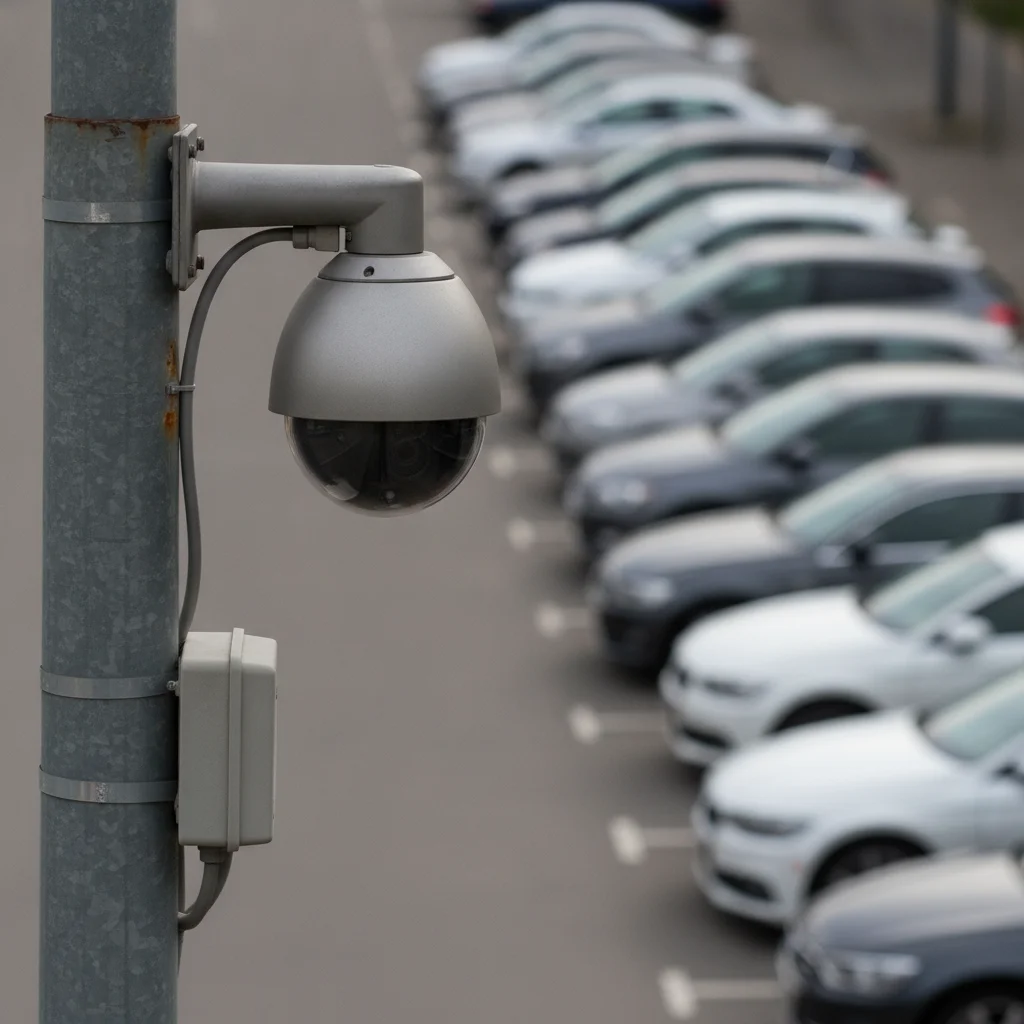
Retail parking lots are among the most surveilled spaces in the country. Major chains, hospitals, and shopping centers typically run extensive camera systems covering their lots — primarily to deter theft, but the footage often captures vehicle accidents in full.
The catch: you have to act fast. Most systems overwrite footage on a rolling 24 to 72-hour cycle. If you wait three days to file your claim, that video may be gone. Here's what to do immediately after an accident in a surveilled lot:
- Note the name and address of the property owner before leaving the scene.
- Ask the property manager or store manager on duty to flag and preserve the relevant footage.
- Have your insurance company send a formal preservation letter (sometimes called a litigation hold letter) to the property owner as quickly as possible.
- If you have an attorney, they can issue a spoliation letter — a legal demand to preserve evidence — which creates liability for the property owner if footage is destroyed after receipt.
Even dashcam footage from your own vehicle or a witness's car can serve a similar function. If you don't already have a dashcam, a single parking lot dispute can make you a believer. The accident documentation guide covers what to photograph and in what order — much of it applies equally in parking lots.
What Coverage Actually Pays for Parking Lot Damage
Coverage questions after a parking lot accident depend on who's at fault and what type of damage occurred. Here's how the main coverage types respond:
Collision Coverage
This is your primary tool. Collision and comprehensive coverage pays to repair your vehicle when you collide with another car or object, regardless of fault. You'll pay your deductible, and your insurer handles the rest. If the other driver is at fault and identified, your insurer may subrogate — meaning they pursue the other driver's insurer to recover what they paid, and potentially reimburse your deductible too.
Liability Coverage
If you're at fault, your liability coverage pays for damage to the other person's vehicle and any injuries they sustain. This is why carrying adequate liability limits matters — a multi-car parking lot pileup involving pedestrian injuries can generate claims that far exceed minimum state-required limits.
Uninsured Motorist Property Damage (UMPD)
If someone hits your parked car and flees — a hit-and-run — UMPD coverage (where available) steps in. Not all states mandate this coverage, and not all policies include it, so check your declarations page. Without UMPD and without identifying the responsible driver, you're relying entirely on your collision coverage.
Medical Payments / PIP
Injuries in parking lots are more common than people expect, especially involving pedestrians. MedPay or Personal Injury Protection (PIP) covers medical expenses for you and your passengers regardless of fault. In no-fault states, PIP is the primary mechanism for injury claims regardless of where the accident occurs.
Immediate Steps to Protect Yourself After a Parking Lot Crash
The actions you take in the first ten minutes after a parking lot collision have an outsized effect on your claim outcome. Here's the sequence that protects you legally and financially:
- Stop and stay. Leaving the scene without exchanging information — even in a parking lot — can constitute a hit-and-run under many state laws. The fact that it's private property doesn't change this in most jurisdictions.
- Check for injuries first. Before worrying about vehicles or insurance, confirm that everyone involved — including pedestrians nearby — is uninjured. Call 911 if anyone is hurt.
- Exchange information. Get the other driver's full name, phone number, insurance company, policy number, and license plate. Take a photo of their driver's license and insurance card directly.
- Document everything. Photograph both vehicles from multiple angles, close-up shots of damage, the broader lot layout, any signage, and the road surface (skid marks, debris). Timestamp matters.
- Gather witnesses. Anyone who saw the accident is potentially valuable. Get their contact information even if you don't plan to involve them — circumstances change.
- Notify your insurer promptly. Most policies require timely notification. Delaying can complicate your claim or give the insurer grounds to question coverage.
- Request surveillance footage preservation. As described above, act the same day if possible.
Avoid the missteps that commonly undermine claims — don't admit fault at the scene, don't post about the accident on social media, and don't give a recorded statement to the other driver's insurer without consulting your own first. The common post-accident mistakes article covers these traps in detail.
Photograph the Lot Layout, Not Just the Damage
Wide-angle photos of the entire accident area — including lane markings, signage, sight-line obstructions, and the position of both vehicles — are often more valuable to an adjuster than close-up damage shots alone. These images establish context about who had right-of-way and what each driver could reasonably see. Take them before either vehicle is moved.
Call Your Insurer Before Giving Any Statement
The other driver's insurer may contact you quickly and request a recorded statement. You're not obligated to provide one without consulting your own insurer or an attorney first. Anything you say in that statement can be used to shift fault. Let your insurer's claims team guide the communication process — that's what your premiums pay for.
Special Situations: Parked Cars, Shopping Carts, and Pedestrians
Not every parking lot incident involves two moving vehicles. These common scenarios have their own fault and coverage logic:
Hitting a Parked Car
The moving vehicle is virtually always at fault. If the parked car's owner is absent, you're legally required in most states to leave a note with your contact information. Failing to do so transforms a simple accident into a criminal hit-and-run. Your liability coverage pays for the parked car's damage; your collision coverage handles your own vehicle.
Shopping Cart Damage
A loose cart that rolls into your car is typically a property-owner liability issue — if the store negligently maintained the cart return or the lot's slope allowed carts to roll freely. In practice, these claims are difficult to win without evidence, and most drivers end up using their collision coverage. The store's premises liability insurance is the theoretical avenue, but adjusters at retailers are skeptical of these claims without compelling proof.
Pedestrian Strikes
Striking a pedestrian — even at low speed — is one of the most serious incidents that can occur in a parking lot. Pedestrians almost always have right-of-way, and the driver carries significant fault exposure. Bodily injury liability coverage is the relevant coverage, and injury claims in parking lots can be substantial. This is another reason why minimum liability limits are often insufficient for real-world exposures.
Door-Ding Incidents
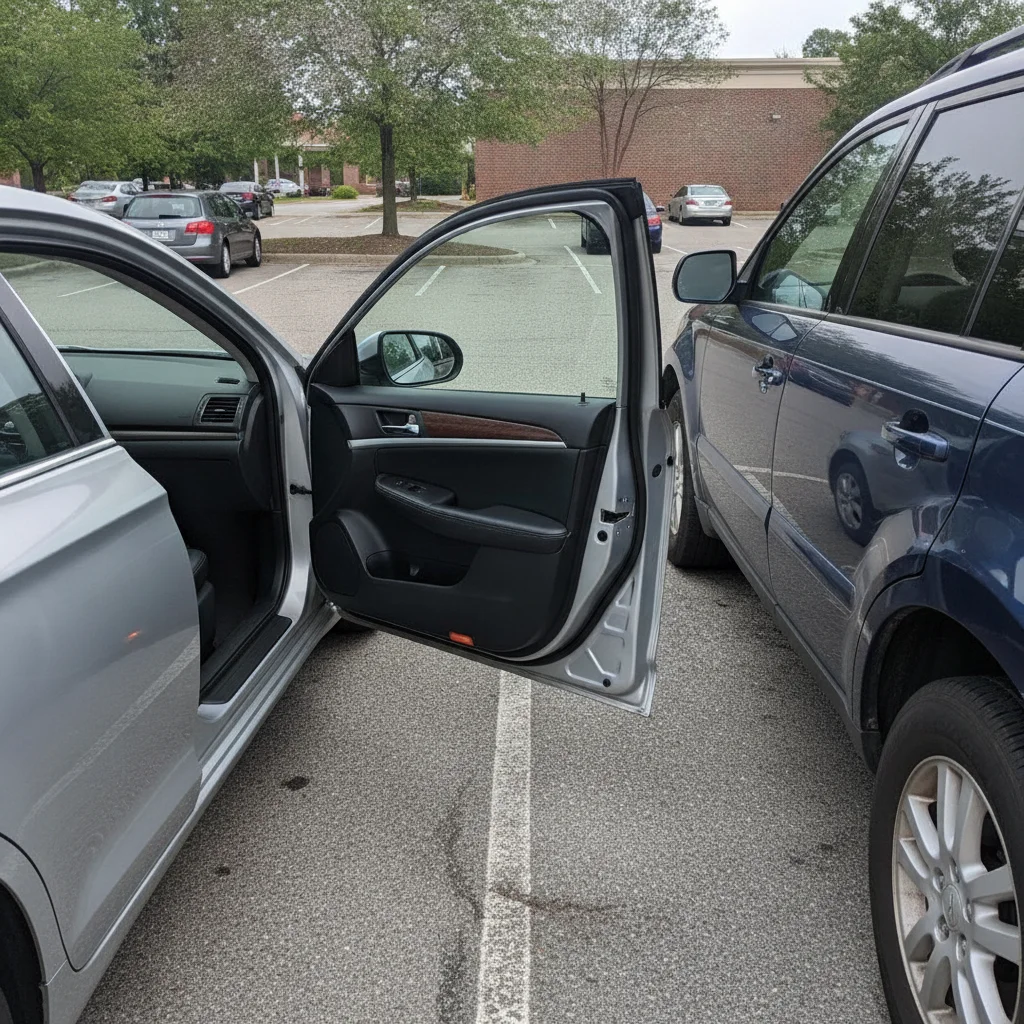
Opening your car door into another vehicle is technically your liability. If the other driver is present, you should exchange information. If the damage is minor and the other car is unattended, leaving a note is the ethical and legally safer move. Your liability coverage would technically apply, but many drivers handle minor door-ding claims directly out of pocket to avoid premium impact.
For single-vehicle incidents — backing into a bollard, clipping a curb — the dynamics shift considerably. The single-car accident coverage guide explains how your own coverage responds and when third parties can still be involved.
Private Property Doesn't Mean No Consequences
Many drivers assume that because a parking lot is private property, the legal stakes are lower. They're not. Hit-and-run statutes apply in parking lots in most states. Liability for injuries is the same as anywhere else. And your insurer will still investigate fault — they just won't have a police report to lean on.
No-Fault States and Parking Lot Accidents
In no-fault insurance states, your own Personal Injury Protection (PIP) coverage pays your medical expenses after a parking lot crash regardless of who caused it. You generally can't sue the other driver for pain and suffering unless injuries meet a defined threshold. However, property damage claims — repairs to your vehicle — still follow fault-based rules even in no-fault states.

All claims are backed by peer-reviewed research. Sources on request.