| Information required by law | Name, license, registration, insurance — in all 50 states |
| Time to notify your insurer | Same day as the accident, whenever possible |
| Police report availability | Typically 3–10 business days after the incident |
| Medical evaluation window | Within 24–72 hours, even without symptoms (Insurance claim best practice) |
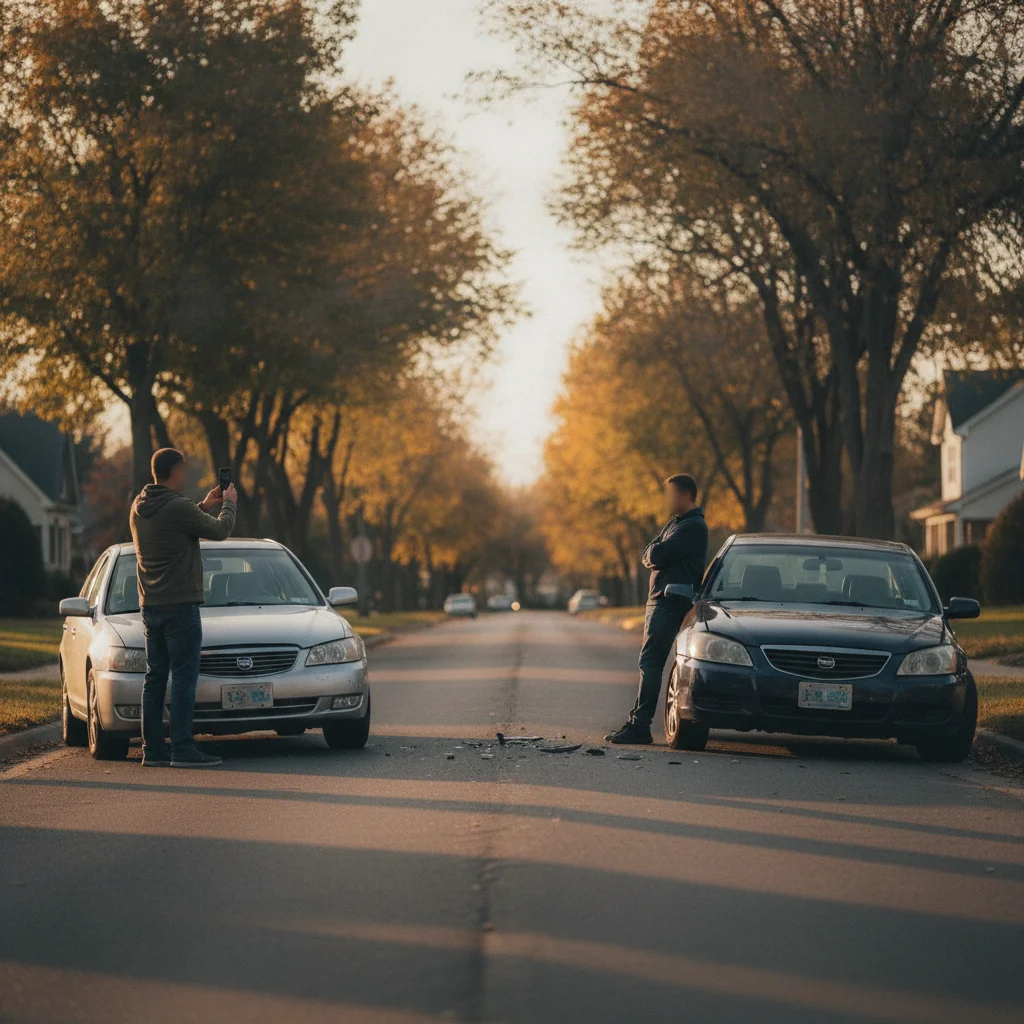
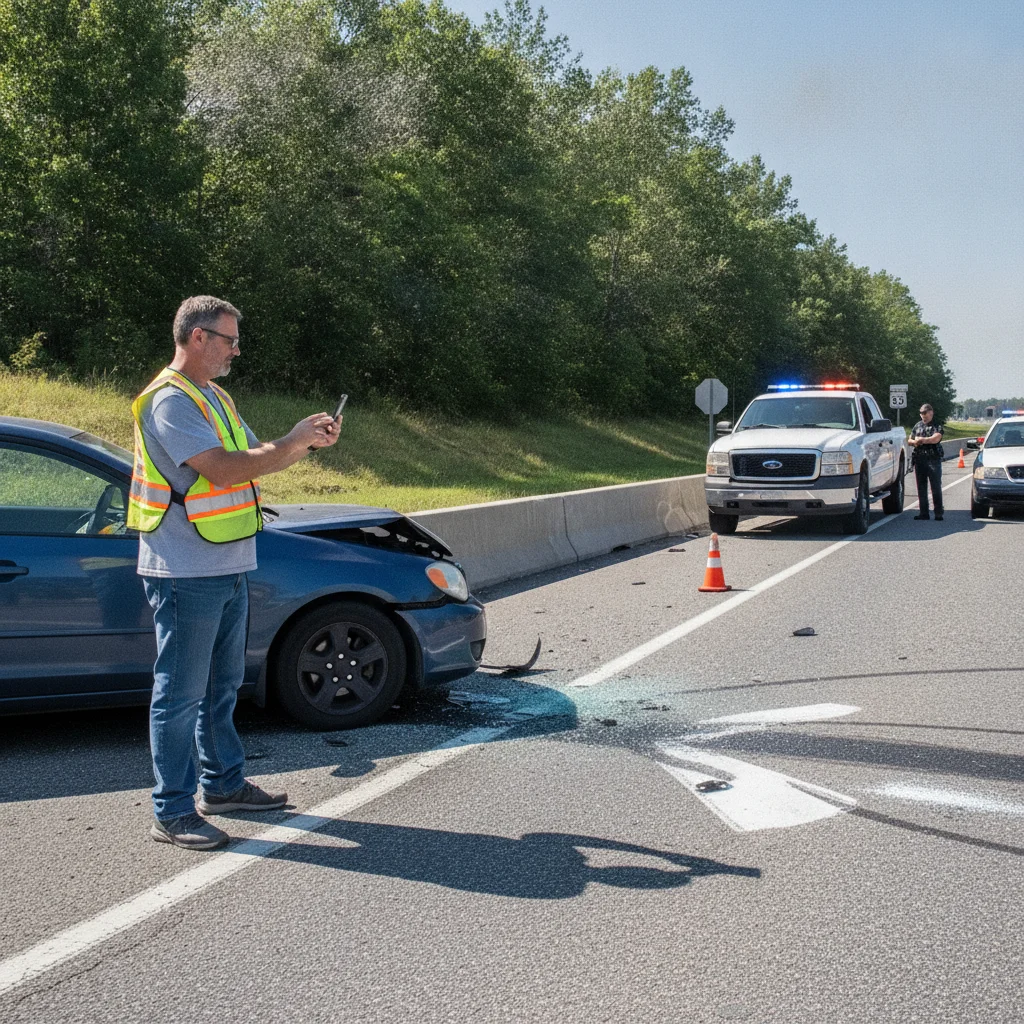
| Minimum photos to take | Both vehicles, all damage, license plates, road conditions, street signs |
| What to do if the other driver flees | Call 911, note the plate number, file a hit-and-run report |
Why the Information You Collect Matters
Most people walk away from a minor fender-bender thinking the hard part is over. It's not. What you collect—or fail to collect—in the next 15 minutes directly shapes your insurance claim, any potential legal dispute, and your ability to recover costs. Missing a single piece of information can mean weeks of delays, disputed liability, or even an out-of-pocket repair bill.
This article is a field reference, not a narrative. Use it to know exactly what you need, why you need it, and what to do if someone refuses to provide it. For a broader walkthrough of everything that should happen from the moment of impact through filing your claim, see the complete accident procedures guide.
| Information required by law | Name, license, registration, insurance — in all 50 states |
| Time to notify your insurer | Same day as the accident, whenever possible |
| Police report availability | Typically 3–10 business days after the incident |
| Medical evaluation window | Within 24–72 hours, even without symptoms (Insurance claim best practice) |
| Minimum photos to take | Both vehicles, all damage, license plates, road conditions, street signs |
| What to do if the other driver flees | Call 911, note the plate number, file a hit-and-run report |
One important mindset shift: collecting information is not the same as admitting fault or engaging in a dispute. Stay businesslike. You're gathering a record—nothing more.
Information to Get from the Other Driver
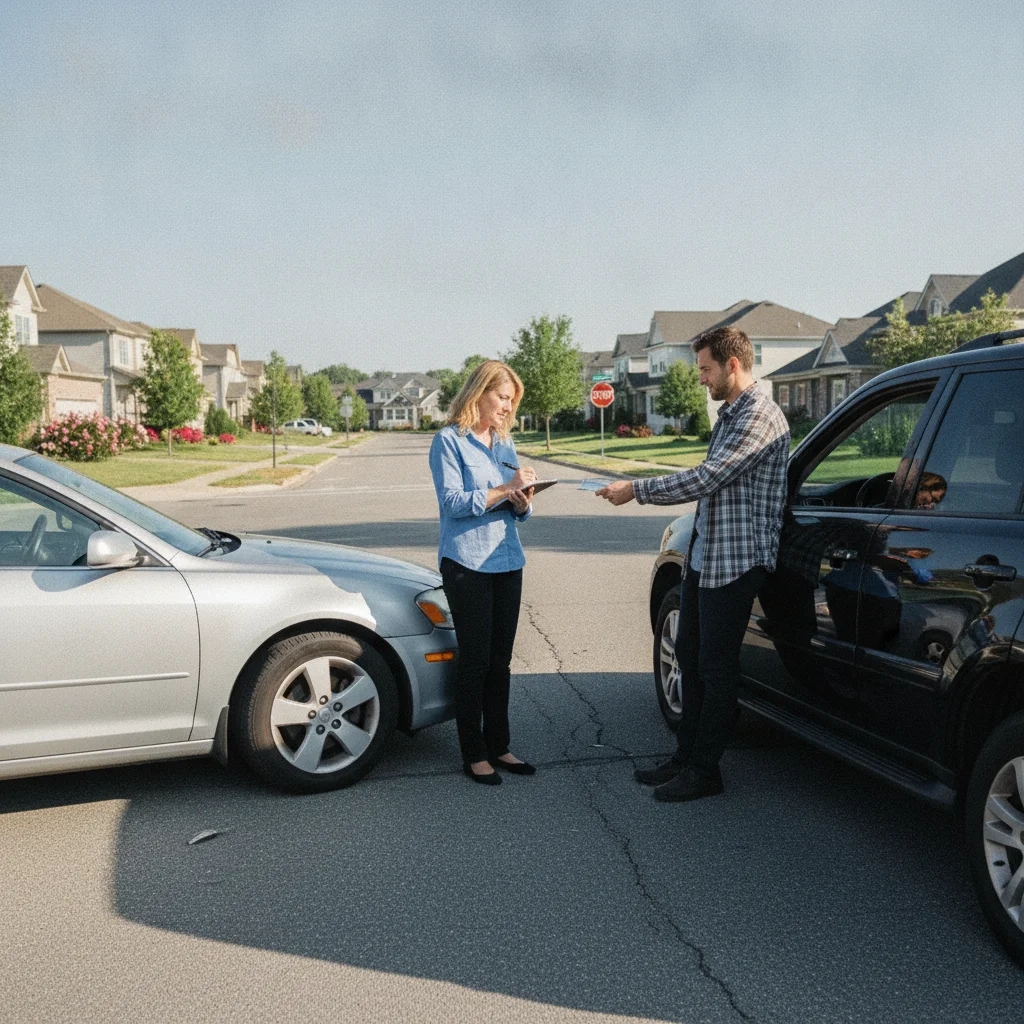
This is the core exchange. You are legally required to provide this information in every U.S. state, and so is the other driver. If they refuse, note that refusal and call the police immediately.
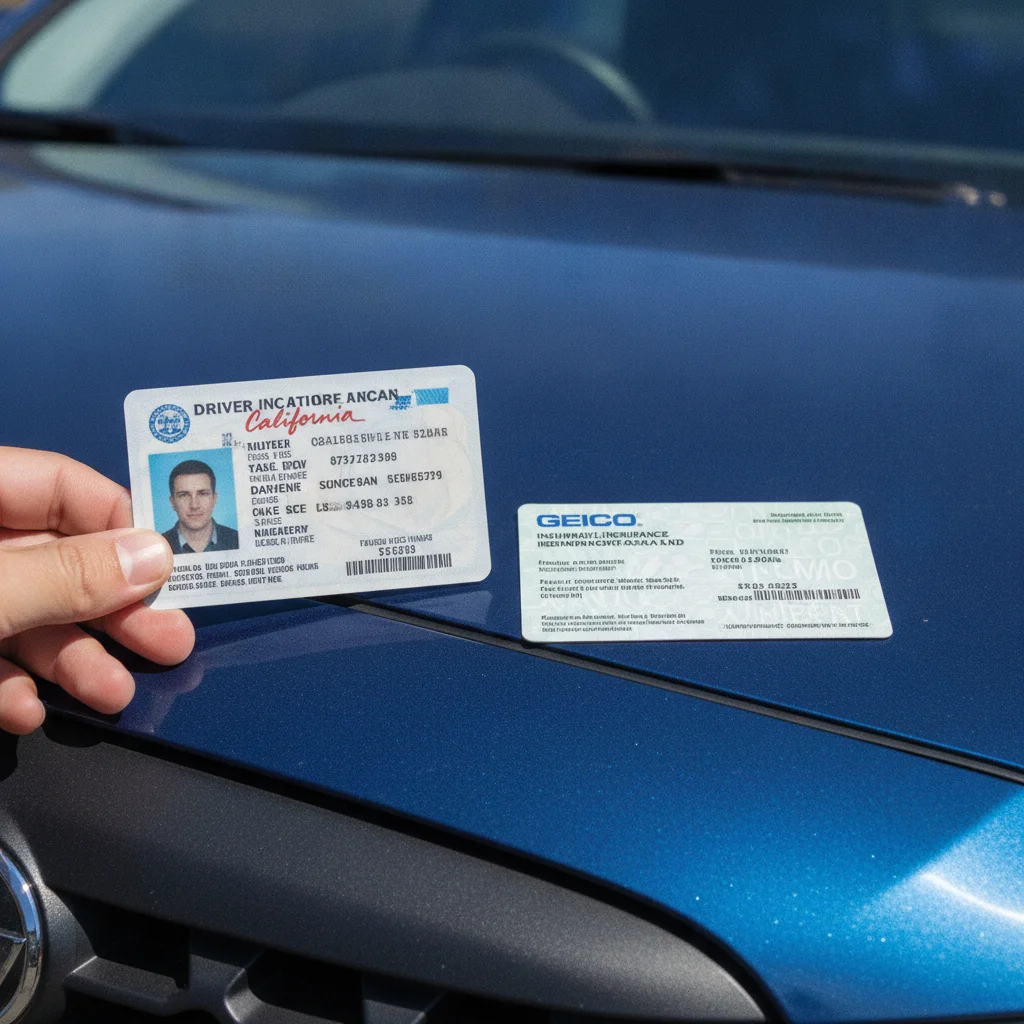
Driver Identity
- Full legal name — exactly as it appears on their license, not a nickname
- Driver's license number — photograph the license front and back if they permit it
- State of issuance
- Date of birth — useful for insurance lookup if the license number is transcribed incorrectly
- Home address — required for official reports and potential civil claims
- Phone number — get both mobile and any secondary number
Vehicle Information
- License plate number — photograph it; don't rely only on hand-written transcription
- Vehicle identification number (VIN) — typically visible through the windshield on the driver's side dashboard, or on the door jamb sticker
- Make, model, year, and color
Insurance Information
- Insurance company name
- Policy number
- Claims phone number — usually printed on the insurance card
- Name of the insured — this may differ from the driver if someone borrowed the vehicle
When the Driver and the Insured Are Different People
If someone borrowed a vehicle from a friend, family member, or employer, the registered owner's insurance policy is typically the primary coverage — not the driver's personal policy. Get the registered owner's name, contact information, and insurer details in addition to the driver's information. Both parties may ultimately be involved in the claim.
Write Your Own Account Before You Leave
Memory of accident details degrades significantly within hours. Before you start your car to leave, write down — or voice-record on your phone — your account of what happened: the sequence of events, road conditions, weather, speed estimates, traffic signals, and anything the other driver said. Your contemporaneous notes carry legal weight and can correct gaps in the official police report.
Keep a Documentation Folder From Day One
Every piece of paper, photo, and message related to the accident belongs in one place. Create a dedicated folder — physical or in a cloud drive — immediately after the crash. Include scene photos, the other driver's information, police report copies, medical records, and all insurer correspondence. If the claim turns into a dispute months later, this folder is your evidence file.
If the vehicle is registered to someone other than the driver—a parent, employer, or fleet company—get that person's name and contact information as well. Their insurance is what will actually cover the claim.
Witness and Bystander Information
Independent witnesses are worth more than you'd expect. Insurers and attorneys treat third-party accounts as significantly more credible than the conflicting statements of the two drivers involved. If anyone stopped, walked over, or is standing nearby after the crash, approach them before they leave.
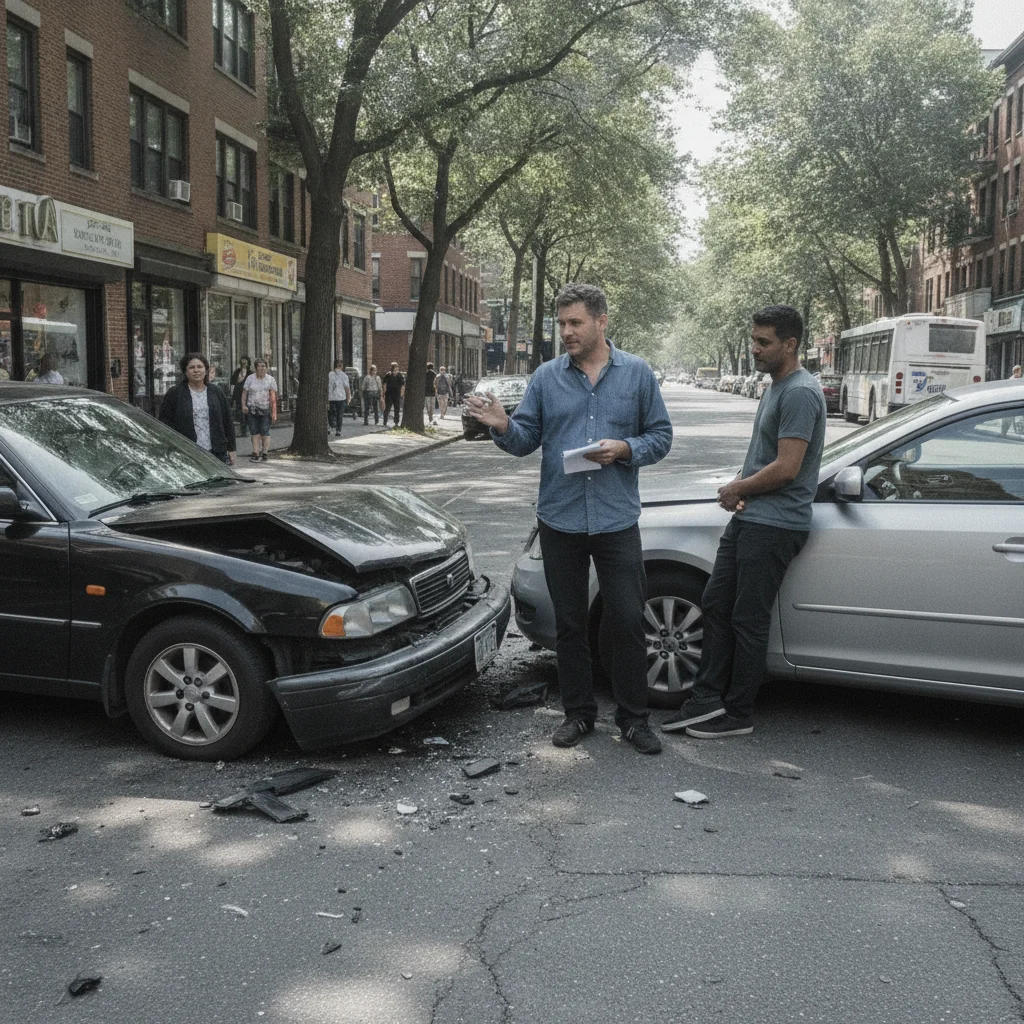
For each witness, collect:
- Full name
- Phone number (and email if they're willing)
- A brief verbal account — ask what they saw, then make a short note of it while it's fresh. Don't coach them.
- Whether they're willing to provide a statement to your insurer
Don't pressure anyone. If someone doesn't want to give their name, a phone number alone is still useful. Note the approximate location they were standing when they witnessed the accident—their viewing angle matters.
6 million+
Car accidents reported in the U.S. annually
According to the National Highway Traffic Safety Administration (NHTSA), approximately 6 million police-reported crashes occur each year in the United States.
~50%
Of accident injuries show delayed symptoms
Medical and insurance professionals widely report that roughly half of soft-tissue injuries from car accidents are not immediately apparent at the scene.
3–10 days
Typical wait for an official police crash report
Most law enforcement agencies make crash reports available within 3 to 10 business days through their records department or online portal.
Surveillance cameras on nearby businesses, traffic cameras, and dashcam footage from other vehicles can also serve as witnesses. Note the addresses of any businesses with visible cameras facing the scene, and photograph any dashcams you see mounted in nearby cars or buses.
For detailed guidance on documenting the full scene—including camera angles and what photos will actually hold up—see how to document an accident scene.
Information from the Police Report
When officers respond to the scene, they generate a crash report. That document becomes the official record of the incident and your insurer will request it. Here's what to collect before they leave:
- Officer's name and badge number
- Police department or agency name
- Report number — this is how you request the official report later
- How to obtain a copy — ask the officer directly. Most departments have an online portal or records request process.
In minor collisions where no injuries occurred, police may not respond or may decline to file a formal report. In that case, many states allow—or require—drivers to file a self-report directly with the DMV. Ask the dispatcher when you call 911 whether a report will be filed, and ask what your obligation is to self-report.
When the Driver and the Insured Are Different People
If someone borrowed a vehicle from a friend, family member, or employer, the registered owner's insurance policy is typically the primary coverage — not the driver's personal policy. Get the registered owner's name, contact information, and insurer details in addition to the driver's information. Both parties may ultimately be involved in the claim.
Write Your Own Account Before You Leave
Memory of accident details degrades significantly within hours. Before you start your car to leave, write down — or voice-record on your phone — your account of what happened: the sequence of events, road conditions, weather, speed estimates, traffic signals, and anything the other driver said. Your contemporaneous notes carry legal weight and can correct gaps in the official police report.
Keep a Documentation Folder From Day One
Every piece of paper, photo, and message related to the accident belongs in one place. Create a dedicated folder — physical or in a cloud drive — immediately after the crash. Include scene photos, the other driver's information, police report copies, medical records, and all insurer correspondence. If the claim turns into a dispute months later, this folder is your evidence file.
Even if police respond, always write your own account of the accident independently. Memory degrades within hours, and your contemporaneous notes carry legal weight. Write down what happened, the road and weather conditions, traffic signals or signs nearby, and the sequence of events as you experienced them.
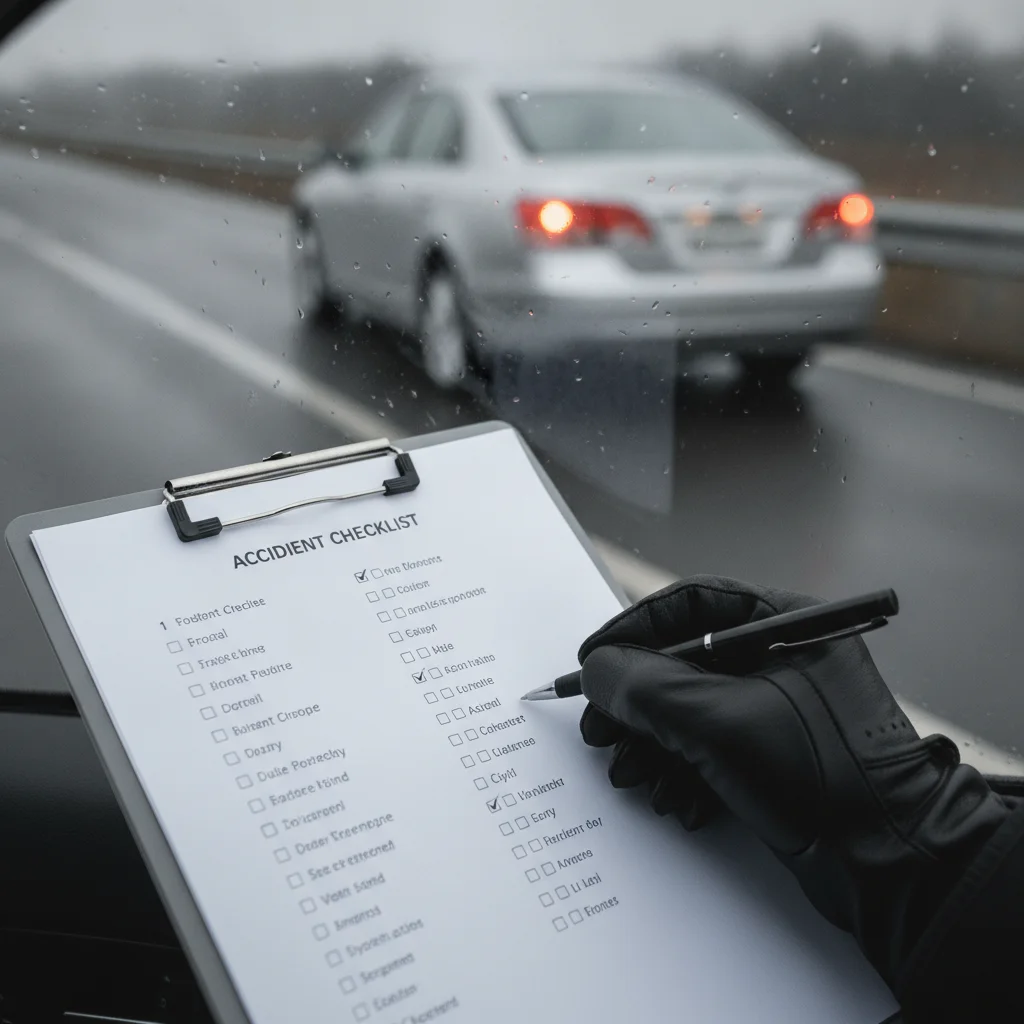
For a structured checklist of everything to do at the scene, including documentation tasks, see the post-accident scene checklist.
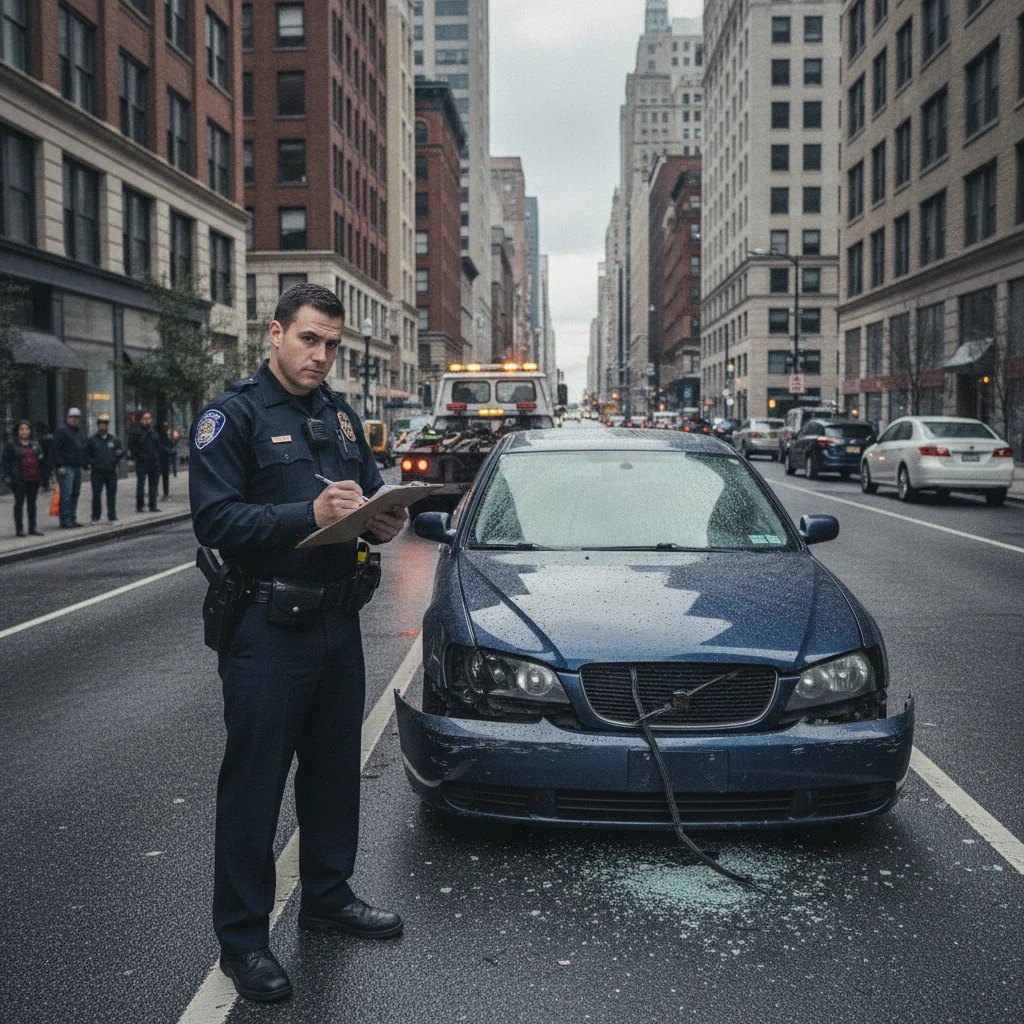
What to Do If the Other Driver Refuses to Cooperate
Refusal to exchange information is illegal in all 50 states. If the other driver refuses to provide their name, license, registration, or insurance information, do not argue and do not leave the scene.
- Call 911 immediately. Request that an officer respond. Explain that the other driver is declining to exchange information.
- Document what you can independently. Photograph the other vehicle—license plate, VIN through the windshield, make and model—without needing their cooperation.
- Note any identifying details about the driver: approximate age, description, and anything they said.
- Do not block their vehicle or physically prevent them from leaving—that creates a separate legal problem for you.
- If they flee, you're dealing with a hit-and-run. Keep the license plate number and call police. Your uninsured motorist coverage may apply.
VIN (Vehicle Identification Number)
A unique 17-character code assigned to every motor vehicle. It encodes the manufacturer, model, year, and production sequence. At an accident scene, the VIN is visible through the driver's side windshield or on the door jamb sticker.
Liability coverage
The portion of an auto insurance policy that pays for damages or injuries you cause to others. It does not cover your own vehicle or your own medical bills.
Uninsured motorist coverage
An optional but widely recommended policy add-on that covers your costs when the at-fault driver has no insurance, or in a hit-and-run where the other driver cannot be identified.
Crash report number
The unique identifier assigned by law enforcement to the official record of a traffic accident. You use this number to request a copy of the report from the agency's records department.
Named insured
The person listed on an insurance policy as the primary policyholder. In cases where someone borrows a vehicle, the named insured on the vehicle's policy is typically who bears primary coverage responsibility.
Subrogation
The process by which your insurer, after paying your claim, pursues the at-fault driver's insurance company to recover those costs. Accurate contact and policy information from the other driver makes this process possible.
An uncooperative driver is not the end of your claim. Your insurer has investigators who can identify a vehicle from a plate number. What matters is that you documented everything you could and reported it promptly.
If you've never dealt with an accident before, the car accident basics for first-time drivers is worth reading before an incident happens—not after.
After the Scene: Filing and Follow-Up
Collecting information at the scene is step one. What you do with it in the next 24–72 hours determines your outcome.
Notify Your Insurer
Call your insurance company the same day, even if you're unsure whether you'll file a claim. Most policies require prompt notification as a condition of coverage. Give them the information you collected—they'll take it from there and contact the other driver's insurer directly.
Request the Police Report
Reports typically take 3–10 business days to become available. Use the report number you collected at the scene. Many departments post them online; others require an in-person or mail request with a small fee.
Get a Medical Evaluation
Even if you feel fine, see a doctor within 24–72 hours. Whiplash, concussion, and soft-tissue injuries frequently don't produce symptoms until the day after a crash—and if you haven't been evaluated, an insurer or opposing attorney can argue that your injuries weren't caused by the accident. See when to get a medical evaluation after an accident for a full explanation of the timing and why it matters legally.
Organize Your Documentation
Create a single folder—physical or digital—containing: photos from the scene, the other driver's information, witness contacts, the police report number and eventual copy, your written account, any medical records from post-accident evaluation, and all correspondence with insurers. If the claim or dispute drags on, this folder is your evidence file.
When the Driver and the Insured Are Different People
If someone borrowed a vehicle from a friend, family member, or employer, the registered owner's insurance policy is typically the primary coverage — not the driver's personal policy. Get the registered owner's name, contact information, and insurer details in addition to the driver's information. Both parties may ultimately be involved in the claim.
Write Your Own Account Before You Leave
Memory of accident details degrades significantly within hours. Before you start your car to leave, write down — or voice-record on your phone — your account of what happened: the sequence of events, road conditions, weather, speed estimates, traffic signals, and anything the other driver said. Your contemporaneous notes carry legal weight and can correct gaps in the official police report.
Keep a Documentation Folder From Day One
Every piece of paper, photo, and message related to the accident belongs in one place. Create a dedicated folder — physical or in a cloud drive — immediately after the crash. Include scene photos, the other driver's information, police report copies, medical records, and all insurer correspondence. If the claim turns into a dispute months later, this folder is your evidence file.
NHTSA Crash Reporting Resources
The National Highway Traffic Safety Administration provides state-by-state guidance on how to obtain official crash reports and self-reporting obligations after an accident.
Insurance Information Institute — After an Accident
The III offers a concise breakdown of what steps to take after a crash, including how to work with your insurer and what documentation to preserve for your claim.
State DMV Self-Report Forms
Most state DMVs publish downloadable crash self-report forms for incidents where police do not respond. Search your state DMV website for the SR-1 or equivalent form.
Post-Accident Scene Checklist (Printable)
A printable checklist covering every documentation and communication task at the scene. Keep one in your glove box so you don't have to rely on memory after a stressful crash.
The first 10 minutes after a car accident article covers the immediate priority steps before you even think about information exchange—worth reading so you have the full sequence clear in your mind.

All claims are backed by peer-reviewed research. Sources on request.