Key Takeaways
Why Fuel Efficiency Myths Persist — and Why They're Expensive
Fuel efficiency myths are remarkably sticky. Some come from genuine advice that was accurate decades ago. Others spread because they sound plausible, or because a friend swore by them. And a few persist simply because bad habits are easy to keep and hard to examine.
The cost adds up quietly. A driver who idles excessively, pays for premium fuel their car doesn't need, or skips tire pressure checks can easily lose hundreds of dollars a year without noticing — because each individual loss feels small. But over 12,000 to 15,000 miles of annual driving, the math gets uncomfortable fast.
This article is about separating what actually works from what just feels like it should. We'll look at the most widespread fuel efficiency myths, explain why they're wrong using real data, and give you concrete things you can do instead. The good news: most of the fixes are free or very low-cost, and they work starting on your very next drive.
If you're also curious about how your driving behavior stacks up in terms of real-world impact, this ranked breakdown of fuel-draining habits puts the numbers side by side clearly.
The Myths — Corrected
Below are the most common fuel efficiency misconceptions, paired with what the evidence actually shows. Read through all of them — you may be surprised how many have shaped your own habits.
Myth
You need to let your engine warm up for several minutes before driving, especially in winter.
Fact
Modern fuel-injected engines are ready to drive gently within 30 seconds. Extended idling wastes fuel and doesn't meaningfully warm the drivetrain.
This one has genuine roots. Carbureted engines — the kind found in cars built before roughly the mid-1980s — really did benefit from a warm-up period because they relied on a choke system to manage the fuel-air mixture until the engine reached operating temperature. Skipping that warm-up could cause rough running or stalling.
Modern engines with electronic fuel injection don't have that problem. The computer manages the mixture precisely from the first second. The fastest way to bring a modern engine (and especially the transmission and wheel bearings) to operating temperature is to drive it gently — not to sit in your driveway burning fuel.
The EPA estimates that a vehicle idling for just two minutes uses roughly the same fuel as driving about one mile. If you're warming up for five to ten minutes every cold morning, you're burning a meaningful amount of gas every single week for zero benefit. The real cost of idling is higher than most people assume once you calculate it across a full winter season.
What you should do in cold weather: start the car, let it idle for about 30 seconds while you buckle up, then drive away at moderate engine speeds. Your heater will actually warm the cabin faster this way, too, since heat comes from the engine coolant — which only warms up when the engine is under load.
Myth
Premium fuel gives you better gas mileage in any car, so it's worth the extra cost.
Fact
Premium fuel only improves performance and efficiency in engines specifically designed and tuned for it. In a regular-grade engine, it's money wasted.
Premium gasoline has a higher octane rating — typically 91 or 93 — compared to regular's 87. Octane is a measure of a fuel's resistance to premature ignition, which engineers call knock or ping. High-compression and turbocharged engines are designed to take advantage of this resistance, producing more power and efficiency from premium fuel.
If your owner's manual says "premium recommended" or "premium required," then yes — use it, or at minimum use it when towing or driving hard. But if your manual says "regular unleaded," your engine's computer is calibrated for 87 octane. Putting in premium doesn't unlock hidden power or efficiency. The engine simply can't use the higher octane the way a high-compression engine can.
The price difference between regular and premium averages around 30–60 cents per gallon nationally. On a 15-gallon fill-up, that's $4.50–$9.00 extra — for no measurable benefit in a regular-grade vehicle. Over a full year of driving, that's $175–$350 straight into the gas station's pocket.
One nuance: some modern engines with knock sensors can partially adapt to higher octane fuel and produce slightly more power, but this doesn't translate to meaningfully better fuel economy. The math almost never works in the driver's favor unless the car specifically requires or strongly recommends premium.
Myth
Filling up in the morning gets you more gas for your money because the fuel is denser in the cold.
Fact
Gasoline at retail stations is stored underground where temperature barely fluctuates, making morning fill-ups no denser or cheaper than afternoon fill-ups.
This myth has a kernel of physics truth: liquids do expand slightly with heat, so cooler gasoline is marginally denser. In theory, a gallon of cold gasoline contains fractionally more energy than a warm gallon.
The problem is that underground fuel storage tanks — which is where the gasoline at every retail station lives — are insulated from surface temperature changes. The fuel stays at a relatively constant temperature year-round, typically in the 50–60°F range regardless of whether it's July or January above ground.
Even in climates with dramatic temperature swings, the difference in fuel density between morning and afternoon is negligible at the retail level. The EPA and multiple automotive engineers have studied this and consistently found that timing your fill-up for morning temperatures provides no practical savings. You're better off spending that energy finding a station with competitive pricing or using a rewards program strategically. Gas rewards programs can deliver real savings, unlike morning fill-up timing.
Myth
Turning off the A/C and opening windows is always better for fuel economy.
Fact
At highway speeds, open windows create enough aerodynamic drag to offset or exceed the fuel cost of running the air conditioner.
This myth is speed-dependent, and that's the key nuance most people miss. At low speeds — city driving, stop-and-go traffic, speeds under roughly 45 mph — the aerodynamic drag from open windows is minimal. In that context, turning off the A/C and rolling down windows genuinely does save fuel because the A/C compressor load on the engine is significant.
But at highway speeds, aerodynamic drag grows with the square of velocity. Open windows create turbulence that the engine must work harder to overcome. Multiple real-world tests, including those by Consumer Reports and SAE International, have found that at 65 mph, the drag penalty from open windows can be greater than the fuel cost of running the A/C — meaning windows-up with A/C running is the more efficient choice on the highway.
The practical takeaway: use windows-down in city driving when it's not brutally hot, and switch to A/C at highway speeds. Also, park in shade when possible — a cooler cabin means the A/C doesn't have to work as hard for the first few minutes of your drive, which is when it draws the most power.
Myth
Your tires only need air when they look flat — you can tell by looking.
Fact
A tire can lose 25–50% of its proper inflation pressure and still appear visually normal. Only a gauge gives you an accurate reading.
Modern radial tires have stiff sidewalls that don't bulge visibly until they're severely underinflated. A tire that looks perfectly fine might be running 7–10 PSI below its recommended pressure — and at that level, it's meaningfully affecting your fuel economy, handling, and tire longevity simultaneously.
The Department of Energy estimates that for every 1 PSI drop below recommended inflation across all four tires, fuel economy decreases by roughly 0.2%. That sounds small, but most drivers have tires that lose 1–2 PSI per month naturally. A tire that starts a winter 8 PSI low is costing you about 1.6% in fuel economy — roughly an extra fill-up per year for a driver doing 15,000 miles.
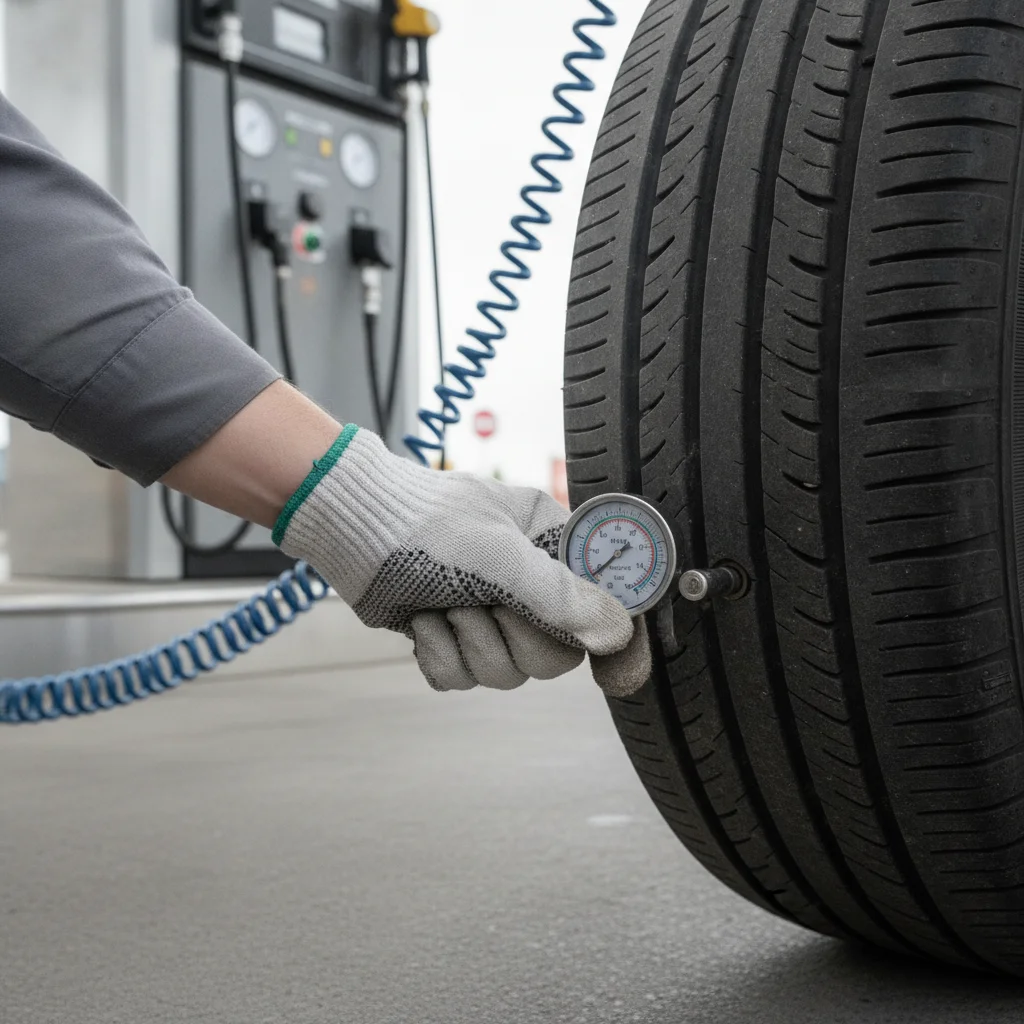
Beyond fuel economy, underinflated tires run hotter (which accelerates wear and increases blowout risk), have a larger contact patch that creates more rolling resistance, and reduce handling precision. The fix is completely free: a basic tire pressure gauge costs $5–$10, or you can use the one at most gas stations for free or a quarter.
Check pressure monthly and before long trips. Check when the tires are cold — driving heats the air inside and raises the reading artificially. The correct pressure is on the door jamb sticker, not the maximum pressure number molded into the tire sidewall.
Myth
A bigger engine always means worse fuel economy.
Fact
Engine displacement is just one factor in fuel economy — a turbocharged four-cylinder often outperforms a large V8, but the relationship is more complex than size alone.
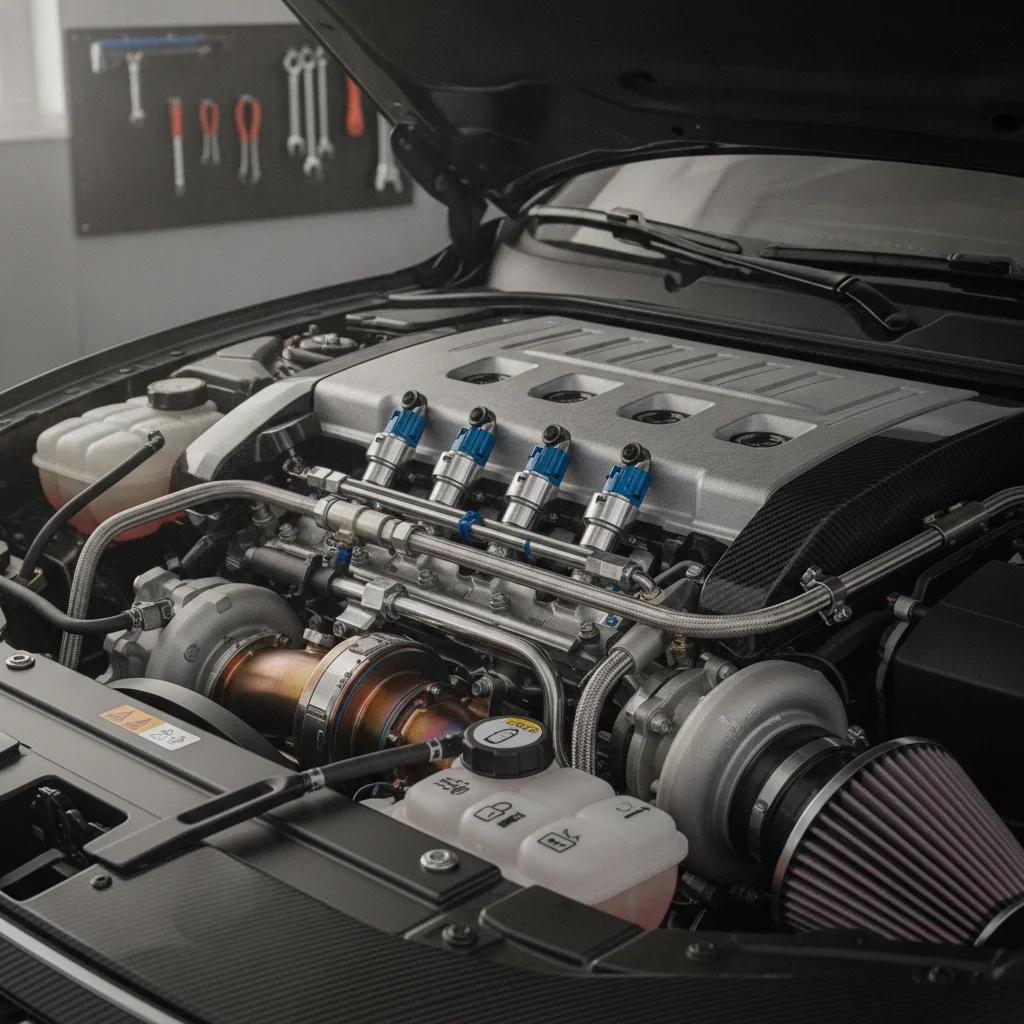
Engine size matters, but it's not the whole story. A large-displacement engine running lightly loaded at highway cruise may actually operate more efficiently than a small engine working near its limit. Modern turbocharged four-cylinder engines can produce V6-level power while returning V4-level fuel economy — but only when driven gently. Push them hard and the turbos spin up, fuel consumption rises, and the efficiency advantage shrinks.
Load is the critical variable. An engine burns fuel roughly in proportion to the work it's doing. A large V8 in a pickup truck hauling a heavy trailer may actually be more efficient for that specific task than a smaller engine that has to work at 90% of its capacity just to maintain speed. The full picture of engine size and fuel economy explores how technology, load, and driving style interact in ways that simple displacement numbers don't capture.
When comparing vehicles, look at the EPA estimated MPG for your actual driving profile (city vs. highway mix), and factor in how you actually drive. A sports car with a large engine driven calmly on the highway might match a small economy car driven aggressively in the city.
Myth
Hypermiling techniques — like drafting behind trucks or turning off the engine downhill — are great ways to save fuel.
Fact
Some hypermiling techniques work well and are safe, but others create real accident risk and can damage your vehicle. Not all fuel savings are worth the tradeoff.
Hypermiling is the practice of maximizing fuel economy through driving technique, and it sits on a wide spectrum from sensible to genuinely dangerous. Smooth acceleration, anticipating stops, and maintaining steady highway speeds? Excellent, safe, and effective. Drafting within a few feet of a semi-truck at 70 mph? Illegal in most states, extremely dangerous, and not worth the modest fuel savings.
Turning off your engine while moving — a technique called "engine-off coasting" — disables your power steering and power brakes on most conventional vehicles, creating serious safety hazards especially in unexpected situations. Some newer hybrids are designed to coast with the engine off in specific conditions, but conventional vehicles are not.
A detailed breakdown of hypermiling techniques separates the methods that actually work from the ones that put you and others at risk. The safe techniques — consistent speed, gentle braking, minimizing AC and electrical loads — can realistically improve your MPG by 10–15% without any danger.
[warning_callout]Myth
Fuel additives and efficiency gadgets sold at auto parts stores can meaningfully improve your MPG.
Fact
The vast majority of aftermarket fuel additives and efficiency devices have no credible scientific evidence of effectiveness under real-world conditions.
Walk through any auto parts store and you'll see shelves of products promising 10%, 15%, even 20% fuel economy improvements. Magnets that "align fuel molecules," tablets you drop in your gas tank, intake vortex generators, and fuel line ionizers all make bold claims. The Federal Trade Commission has repeatedly warned consumers about these products and taken action against specific manufacturers for deceptive marketing.
Fuel injector cleaners are the one legitimate category with some nuance: for vehicles with significantly dirty injectors (usually older, high-mileage cars or those that have sat unused for a long time), a cleaner can restore proper spray patterns and recover lost efficiency. But for a modern vehicle that's been maintained normally, the injectors are already clean and the cleaner does essentially nothing measurable.
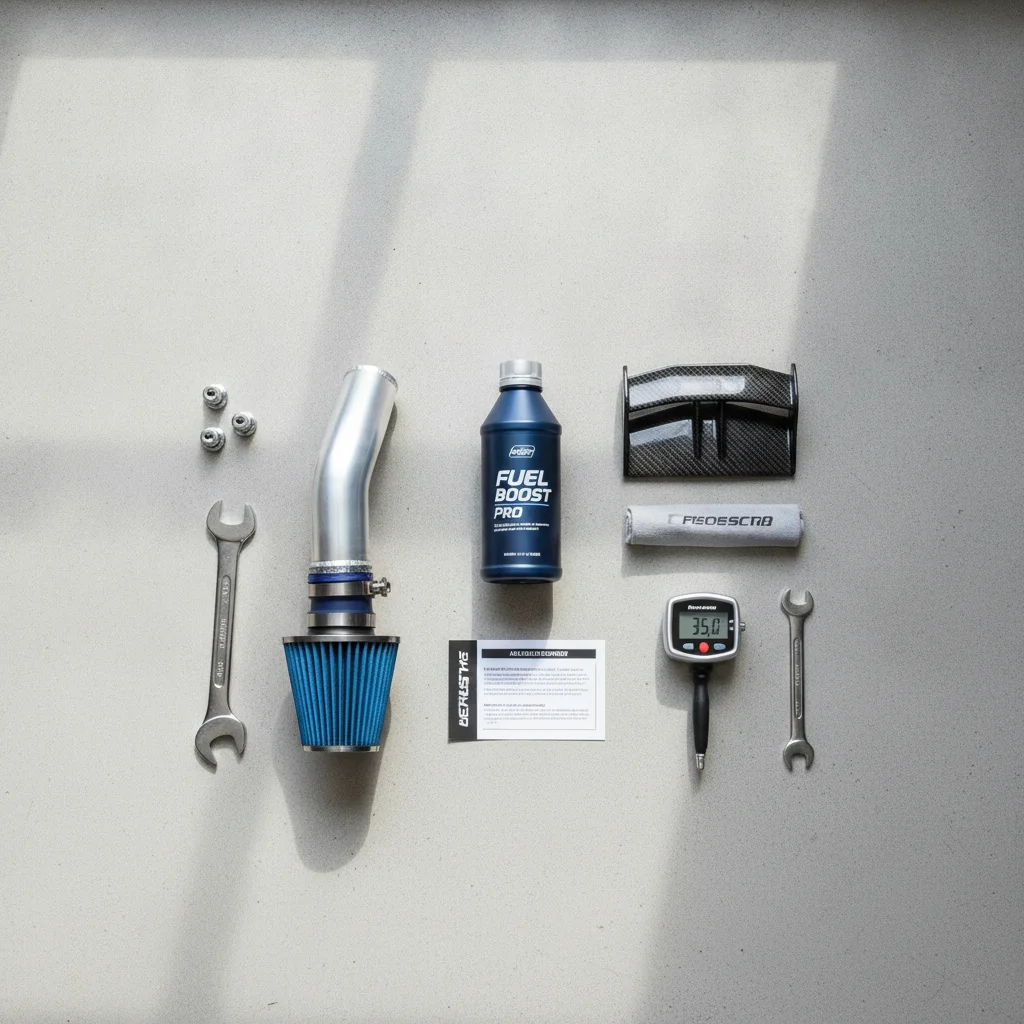
The real efficiency gains are boring because they're not products: proper tire inflation, smooth driving, reduced weight, minimized idling, and correct fuel grade for your engine. None of them require buying anything. A careful look at fuel-saving accessories reviews the full landscape, including the few categories where there is some evidence of benefit and the many where there is none.
Up to 30%
Fuel economy lost to aggressive driving
According to the U.S. Department of Energy, aggressive acceleration and hard braking can reduce highway fuel economy by 15–30% and city economy by even more.
~24%
City MPG drop in extreme cold
The EPA estimates fuel economy in city driving can fall by nearly 24% in cold weather conditions compared to driving in mild temperatures.
$350+
Annual premium fuel cost for regular-grade car
At a 50-cent-per-gallon premium price difference, a driver filling up weekly wastes roughly $350 per year using premium fuel in an engine designed for regular.
0.2% per PSI
MPG lost to underinflation
The U.S. Department of Energy estimates fuel economy drops approximately 0.2% for every 1 PSI below recommended pressure across all four tires.
2 min = 1 mile
Fuel burned idling vs. driving
The EPA estimates that two minutes of engine idling consumes roughly the same amount of fuel as driving approximately one mile at normal speeds.
What Actually Moves the Needle on Fuel Economy
Now that we've cleared the deck, let's talk about what genuinely works. The biggest levers on fuel economy aren't secret — they're just less exciting than the myths.
Smooth, Steady Driving
Gradual acceleration and early, gentle braking are the single most impactful habits you can build. Every time you floor the accelerator and then brake hard, you're converting fuel into heat and brake dust instead of forward motion. Studies by the U.S. Department of Energy consistently show that aggressive driving reduces highway fuel economy by 15–30% and city fuel economy by even more.
Tire Pressure Checks
Keeping tires inflated to the manufacturer's recommended pressure (found on the door jamb sticker, not the sidewall of the tire) is free, takes two minutes with a gauge, and can recover 0.5–3% of your fuel economy. Make it a monthly habit and do it when tires are cold for the most accurate reading.
Reducing Unnecessary Weight and Drag
Remove roof racks when you're not using them. Don't haul around a trunk full of gear you don't need. At highway speeds, aerodynamic drag is the dominant force working against your engine — anything that disrupts smooth airflow costs you fuel. Some aftermarket accessories claim to help, but the most effective drag reduction is simply removing what's already on the car.
Air Conditioning Strategy
At low speeds (under 45 mph), open windows are more efficient than A/C. At highway speeds, the drag penalty from open windows usually outweighs the A/C load — so windows up and A/C on is the right call. If you can park in shade, your cabin will be cooler when you start, which reduces how hard the A/C has to work initially.
Cruise Control on Flat Roads
Cruise control maintains a steadier speed than most human drivers can, especially on long highway stretches. That consistency reduces fuel-consuming speed fluctuations. The caveat: on hilly terrain, cruise control can actually downshift and accelerate at inopportune moments, so use judgment based on the road ahead.
For a deep dive into how your car's technology is designed to support these habits, this overview of fuel system technology explains features like variable valve timing and start-stop systems in plain terms.
Dangerous Hypermiling Tactics to Avoid
Drafting closely behind semi-trucks, engine-off coasting in conventional vehicles, and running significantly underinflated tires for lower rolling resistance are all techniques that create genuine accident and injury risk. Any fuel savings from these methods are not worth the safety cost. Stick to techniques that don't compromise your control of the vehicle or the safety of those around you.
Don't Ignore Your Temperature Gauge While Chasing MPG
Some drivers who block grille openings to reduce aerodynamic drag — a real hypermiling technique — inadvertently restrict engine cooling airflow. Overheating an engine can cause catastrophic, expensive damage in minutes. <a href="/maintenance-and-ownership/vehicle-maintenance/warning-signs/why-ignoring-the-temperature-gauge-is-one-of-the-costliest-mistakes-drivers-make">Monitoring your temperature gauge</a> is especially important if you've made any modifications to airflow around the engine.
Check Tire Pressure Before Long Trips — Not After
Tire pressure rises as tires heat up during driving. If you check pressure mid-trip, you'll get a falsely high reading that leads you to underinflate the tires when you correct it. Always check when the car has been sitting for at least three hours for an accurate cold-tire reading.
Seasonal and Environmental Factors You Can't Ignore
Fuel economy isn't just about driving habits — your environment plays a real role too. Cold temperatures cause gasoline to burn less efficiently, thicken fluids that create drag, and force your engine to work harder just to reach operating temperature. The EPA estimates that fuel economy in city driving can drop by up to 24% in cold weather compared to mild conditions.
Summer heat brings its own challenges: more A/C use, higher fuel vapor pressure (which affects combustion), and road surface heat that can subtly alter tire rolling resistance. Neither season is kind to MPG.
A full seasonal breakdown covers the specific impacts by temperature range and gives practical strategies for each season. The short version: don't skip the warm-up entirely in extreme cold, but keep it brief — 30 seconds to a minute before moving slowly is plenty for a modern car.
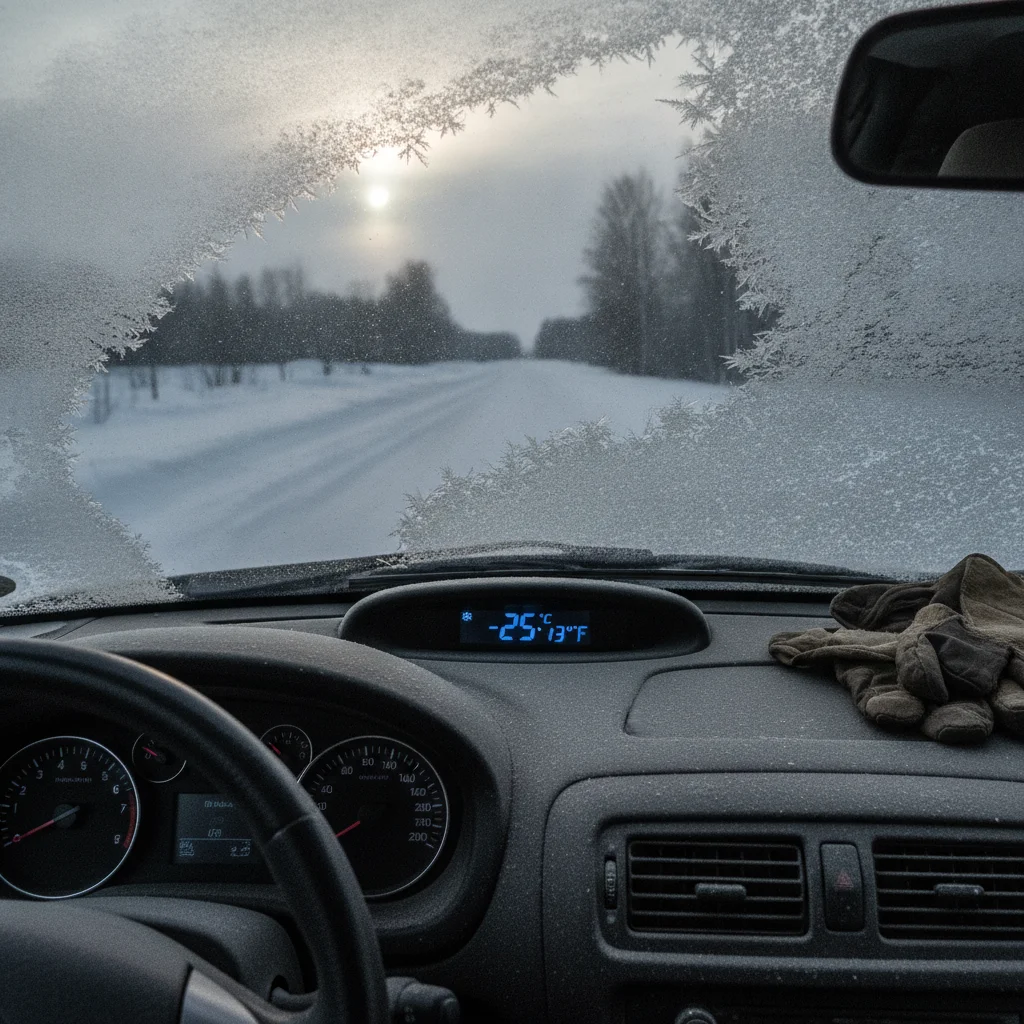
It's also worth knowing that the type of gasoline blend sold in your area changes seasonally. Winter blends have a lower energy content than summer blends, which is one reason you may notice slightly worse MPG in winter even if your driving habits don't change. This isn't a myth — it's chemistry, and there's nothing you need to do about it other than understand why your numbers dip.
Your Owner's Manual Is the Authority on Fuel Grade
No article, mechanic opinion, or gas station attendant should override what your owner's manual says about fuel grade. If it says regular, use regular. If it says premium required, use premium — not as a suggestion but as an engineering requirement for that engine. Deviating from the specified grade either wastes money or, in the case of ignoring a required premium specification, can cause long-term engine damage through persistent knock that the knock sensors can't fully compensate for.
The Bigger Picture: Fuel Costs and Financial Decisions
Fuel efficiency rarely exists in a vacuum. The car you buy, how you insure it, and how much you pay to register and maintain it all interact with how much fuel costs you over time. A vehicle that gets 35 MPG instead of 25 MPG can save you $500–$900 per year at current gas prices, depending on how much you drive — and that gap compounds over five or six years of ownership.
If you're evaluating a vehicle purchase and fuel economy is part of the decision, be honest about your real-world driving mix. EPA ratings are measured under controlled conditions; your actual results will depend on your commute, climate, load, and habits. Most drivers see real-world MPG about 10–15% below the EPA estimate.
The myths we debunked here also rhyme with misconceptions in other financial decisions. Used car myths can be just as costly as fuel myths, and insurance misconceptions are another area where confident-sounding wrong beliefs drain money quietly.
For drivers thinking about going electric, the fuel cost equation changes significantly — though EV charging has its own set of myths worth understanding before you assume the savings will be automatic.
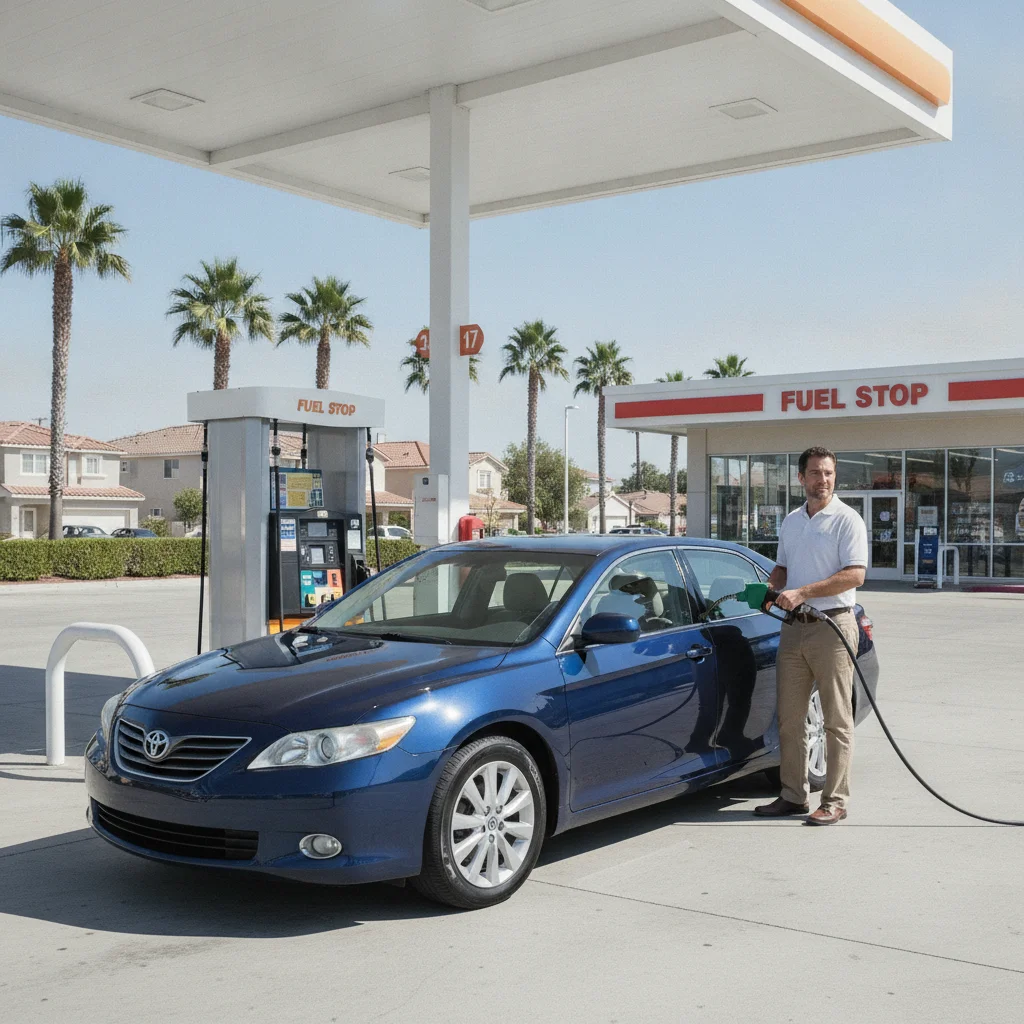
Finally, if you've been considering fuel rewards programs to offset costs at the pump, an honest look at gas rewards programs can help you decide which ones are actually worth the effort and which ones are structured to benefit the program more than you.
The bottom line is straightforward: good information saves money. The myths in this article persist because they feel reasonable, but most of them either do nothing or actively cost you. Dropping even two or three of these habits can easily put $200–$400 back in your pocket over the course of a year — with no new product to buy and no complicated technique to master.

All claims are backed by peer-reviewed research. Sources on request.