Key Takeaways
Genuine savings with minimal behavior change
Most programs reward purchases you're already making — groceries, gas fill-ups — so you don't need to reroute your life to earn. The savings accumulate quietly in the background.
Stackable discounts multiply per-gallon value
Using a rewards credit card, a grocery fuel program, and a station app simultaneously is permitted by most programs and can compound savings to $0.20–$0.30 per gallon or more.
Grocery programs offer outsized value during promotions
Chains like Kroger frequently run 2x or 4x point promotions on specific items, allowing shoppers to accumulate enough fuel savings for $0.50–$1.00 off per gallon in a single week.
Credit card cash back is simple and automatic
Flat-rate gas credit cards require no tracking, no partner stations, and no expiration management — the savings show up as statement credits with no action required beyond the initial setup.
High-mileage drivers benefit most
The per-gallon savings rate is the same for everyone, but drivers who consume 700–1,000+ gallons per year turn modest per-gallon discounts into several hundred dollars in annual savings.
Free to participate in most programs
Station loyalty apps and grocery fuel programs typically cost nothing to join. The only investment is a few minutes of setup, making the risk of trying them essentially zero.
Credit card interest quickly erases all rewards value
A balance of $500 carried at 26% APR generates roughly $130 in annual interest — wiping out a full year of gas rewards from even the best cash-back cards. These cards only make financial sense for borrowers who pay in full each month.
Points often expire before you can use them
Many grocery fuel programs reset unused points monthly or after 30 days of inactivity. Drivers who forget to track their balance may lose accumulated savings without realizing it.
Station loyalty ties you to a single brand
Co-branded station cards and proprietary apps only deliver value at affiliated locations. If that brand's prices run $0.15 higher than nearby competitors, the loyalty discount may simply close the gap rather than create real savings.
Per-fill redemption caps limit large-tank vehicles
Grocery fuel rewards typically cap redemptions at 20–35 gallons per transaction. Owners of trucks, SUVs, or vehicles towing trailers may not be able to redeem their full discount in a single stop.
Program complexity encourages unintended spending
Bonus-point promotions on specific grocery products create a subtle nudge to buy items you wouldn't otherwise purchase. Over time, these small impulse buys can exceed the value of the fuel discount earned.
Low-mileage and EV drivers see little return
A driver who fills up just once or twice a month has limited opportunity to accumulate meaningful rewards. Electric vehicle owners gain almost no benefit from gas-focused programs, making setup effort hard to justify.
Our Verdict
Gas rewards programs are genuinely worth using for drivers who fill up frequently and can pay off credit card balances monthly. The savings are real but modest — typically adding up to $100–$250 per year for average drivers who stack programs strategically. Where they fall short is in complexity: juggling multiple programs, tracking expiration dates, and avoiding the temptation to overspend to earn rewards can quietly erode those gains.
Best for daily commuters and high-mileage drivers who already shop at grocery chains with fuel rewards and can commit to one good cash-back credit card used exclusively for gas purchases.
How Gas Rewards Programs Actually Work
Gas rewards programs come in three main flavors, and understanding the difference between them is the first step toward knowing which ones are worth your time.
Credit card rewards typically offer a flat or tiered cash-back rate — often 2–5% on gas purchases — that accumulates as statement credits or points redeemable for fuel. Cards co-branded with specific gas station chains (like Shell or ExxonMobil) usually offer deeper per-gallon discounts at those stations but limited value elsewhere.
Grocery store fuel rewards work by converting your grocery spending into cents-per-gallon discounts. Chains like Kroger, Albertsons, and Giant Eagle award roughly one point per dollar spent, with 100 points typically translating to $0.10 off per gallon at affiliated stations. Promotions on specific products can accelerate earnings dramatically.
Gas station apps and loyalty programs — such as BPme, Shell's Fuel Rewards, or GasBuddy Pay — offer direct per-gallon discounts in exchange for signing up and fueling consistently at that brand's stations. Discounts typically range from $0.03 to $0.10 per gallon as a baseline, with bonus offers layered on top.
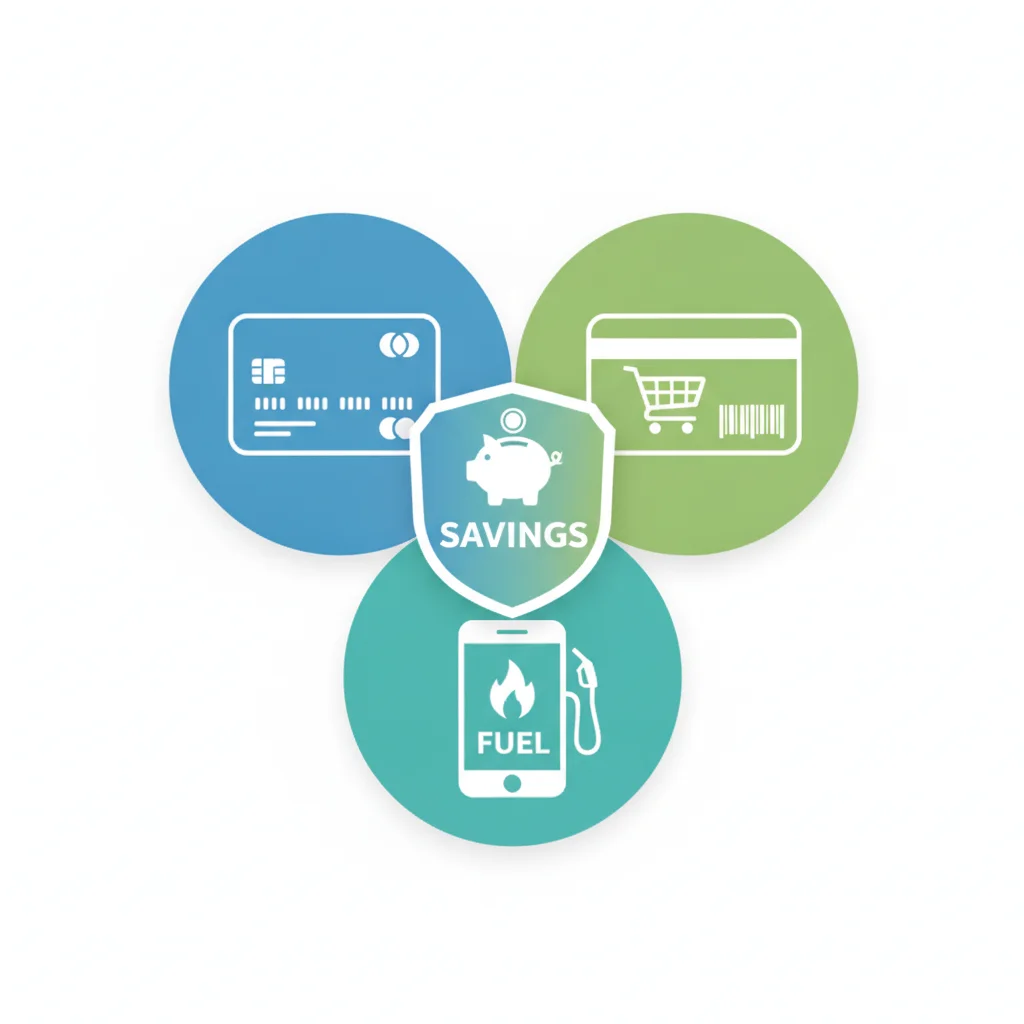
Each model has a different earning structure, and the best value depends on your driving habits, where you shop, and how much mental bandwidth you want to give to tracking rewards. The good news: you don't have to pick just one.
The Real Savings: What the Numbers Look Like
Let's put some concrete numbers on this, because "save money on gas" is easy to say and harder to quantify.
The average American driver uses about 500 gallons of gas per year, according to the U.S. Energy Information Administration. At a savings rate of $0.10 per gallon — a reasonable estimate from a single solid rewards program — that's $50 per year. Not life-changing, but real.
Stack two or three programs, and the picture improves. A driver who uses a 3% cash-back credit card for gas, earns grocery fuel points from weekly shopping, and redeems a station app discount might realistically save $0.20–$0.30 per gallon on a regular basis. On 500 gallons, that's $100–$150 annually — enough to cover a couple of oil changes.
500 gal
Average annual gas consumption per U.S. driver
According to the U.S. Energy Information Administration, the typical American driver consumes approximately 500 gallons of gasoline per year.
$0.10–$0.30
Per-gallon savings from stacked rewards programs
Drivers who layer a gas credit card, grocery fuel points, and a station app discount can realistically capture $0.10 to $0.30 off per gallon on a consistent basis.
~$150
Estimated annual savings for average stacking driver
At $0.25–$0.30 per gallon on 500 annual gallons, a disciplined rewards stacker can save roughly $125–$150 per year without changing driving habits.
4%
Top cash-back rate on gas from select credit cards
Cards like the Costco Anywhere Visa offer up to 4% cash back on gas purchases (up to $7,000/year), one of the highest flat rates available for fuel spending.
The math gets better for high-mileage drivers. If you're logging 20,000+ miles per year in a vehicle averaging 25 mpg, you're consuming roughly 800 gallons annually. That same $0.25/gallon stacked savings now adds up to $200 per year — and some drivers do meaningfully better than that during promotional periods.
For context on broader fuel costs, it's worth thinking about what else affects your fuel bill. Fuel efficiency myths that cost drivers money can quietly inflate your consumption, making every cent of rewards savings matter more — or less — depending on how efficiently your car actually runs.
Pros of Gas Rewards Programs
When used thoughtfully, gas rewards programs offer genuine advantages for a wide range of drivers. Here's where they consistently deliver.
Genuine savings with minimal behavior change
Most programs reward purchases you're already making — groceries, gas fill-ups — so you don't need to reroute your life to earn. The savings accumulate quietly in the background.
Stackable discounts multiply per-gallon value
Using a rewards credit card, a grocery fuel program, and a station app simultaneously is permitted by most programs and can compound savings to $0.20–$0.30 per gallon or more.
Grocery programs offer outsized value during promotions
Chains like Kroger frequently run 2x or 4x point promotions on specific items, allowing shoppers to accumulate enough fuel savings for $0.50–$1.00 off per gallon in a single week.
Credit card cash back is simple and automatic
Flat-rate gas credit cards require no tracking, no partner stations, and no expiration management — the savings show up as statement credits with no action required beyond the initial setup.
High-mileage drivers benefit most
The per-gallon savings rate is the same for everyone, but drivers who consume 700–1,000+ gallons per year turn modest per-gallon discounts into several hundred dollars in annual savings.
Free to participate in most programs
Station loyalty apps and grocery fuel programs typically cost nothing to join. The only investment is a few minutes of setup, making the risk of trying them essentially zero.
The stacking opportunity is worth highlighting separately: because most programs don't explicitly prohibit layering, a well-organized driver can routinely capture savings from a credit card reward, a grocery fuel discount, and a station app discount simultaneously. That's where the cumulative value really builds.
Cons of Gas Rewards Programs
The downsides are real too, and they tend to catch drivers off guard. A program that looks attractive at sign-up can quietly underperform once you're in it.
Credit card interest quickly erases all rewards value
A balance of $500 carried at 26% APR generates roughly $130 in annual interest — wiping out a full year of gas rewards from even the best cash-back cards. These cards only make financial sense for borrowers who pay in full each month.
Points often expire before you can use them
Many grocery fuel programs reset unused points monthly or after 30 days of inactivity. Drivers who forget to track their balance may lose accumulated savings without realizing it.
Station loyalty ties you to a single brand
Co-branded station cards and proprietary apps only deliver value at affiliated locations. If that brand's prices run $0.15 higher than nearby competitors, the loyalty discount may simply close the gap rather than create real savings.
Per-fill redemption caps limit large-tank vehicles
Grocery fuel rewards typically cap redemptions at 20–35 gallons per transaction. Owners of trucks, SUVs, or vehicles towing trailers may not be able to redeem their full discount in a single stop.
Program complexity encourages unintended spending
Bonus-point promotions on specific grocery products create a subtle nudge to buy items you wouldn't otherwise purchase. Over time, these small impulse buys can exceed the value of the fuel discount earned.
Low-mileage and EV drivers see little return
A driver who fills up just once or twice a month has limited opportunity to accumulate meaningful rewards. Electric vehicle owners gain almost no benefit from gas-focused programs, making setup effort hard to justify.
The credit card issue deserves special attention. Carrying a balance on a rewards card at 24–29% APR will wipe out months of fuel savings in a single billing cycle. This is a non-negotiable condition: rewards credit cards are only worth it if you pay the full statement balance every month, every time.
It's also worth noting that rewards programs are structured to benefit frequent buyers — if you drive a fuel-efficient vehicle, a hybrid, or especially an EV, the math may simply not be in your favor. If you're curious about the broader cost comparison between fueling and charging, charging costs and savings for EVs makes for a useful contrast.
Redemption Caps: Read the Fine Print
Most grocery fuel reward programs limit how many gallons you can discount in a single transaction — commonly 20 to 35 gallons. If you drive a truck with a 36-gallon tank, you may not be able to redeem your full savings in one fill. Some programs allow you to run a second transaction immediately after the first to redeem the remainder, but this varies by chain and by station. Always check your specific program's terms before assuming you'll capture the full discount.
Which Type of Program Gives You the Most Value?
Not all gas rewards programs are created equal, and the best one for you depends heavily on your lifestyle.
Grocery Fuel Rewards: Highest Ceiling, Best for Families
If you already spend $150–$300 per week at a grocery chain that offers fuel points, this category can easily outperform everything else. During promotional weeks — when specific products earn 2x or 4x points — you can accumulate enough for $0.50 to $1.00 off per gallon. That's significant. The limitation is geographic: you need to live near both an affiliated grocery store and a partnered gas station.
Gas Credit Cards: Best for Simplicity and Consistency
A card offering 3–5% cash back on gas doesn't require you to track points or worry about partner stations. The savings are automatic and predictable. Cards like the Costco Anywhere Visa (4% on gas, up to $7,000/year) or the Citi Custom Cash (5% on your top spending category) can deliver strong returns for disciplined cardholders. Just be ruthless about paying the balance.
Station Apps and Loyalty Programs: Best as a Supplement
Standalone station apps rarely justify brand loyalty on their own — the base discounts are modest. But layered on top of a grocery reward or credit card discount, they add a few extra cents per gallon with minimal effort. Sign up for the app at any station you already use regularly, and let it run quietly in the background.
One practical note: where you fill up matters beyond just the rewards. Gas station choices that affect fuel quality and economy is worth considering alongside rewards value — chasing a $0.05 discount to a lower-quality station isn't always the better deal for your engine long-term.
Common Mistakes That Erase Your Savings
Even drivers who sign up for the right programs often undermine their own savings in a few predictable ways.
- Spending more to earn more. Grocery fuel rewards create a subtle incentive to buy promoted products you wouldn't otherwise purchase. If you're buying $20 of bonus-point items just to earn $0.10 off a gallon, you've lost the trade.
- Ignoring expiration dates. Many programs expire unused points after 30–90 days of account inactivity or at the end of a calendar month. Check your balance before it resets to zero.
- Overlooking the per-fill redemption cap. Most grocery programs cap redemptions at 20–35 gallons per fill. If you're driving a truck or towing a trailer, you may not be able to redeem your full discount in one stop.
- Carrying a rewards card balance. Worth repeating: interest charges at 20%+ APR make rewards cards net-negative almost immediately if you carry a balance.
- Choosing grade based on rewards rather than your car's needs. Some programs offer bonus savings on premium fuel. That's worth nothing if your car runs on regular — and could encourage you to overpay unnecessarily. Premium vs. regular gas — when the upgrade is worth it explains when that choice really matters.
Avoiding these mistakes is largely about treating your rewards program like a system rather than a windfall. Small, consistent behaviors compound into real savings; opportunistic splurges usually don't.
How to Stack Programs Without Overcomplicating It
You don't need a spreadsheet to stack gas rewards effectively. A simple, sustainable setup beats an elaborate one that falls apart after a month.
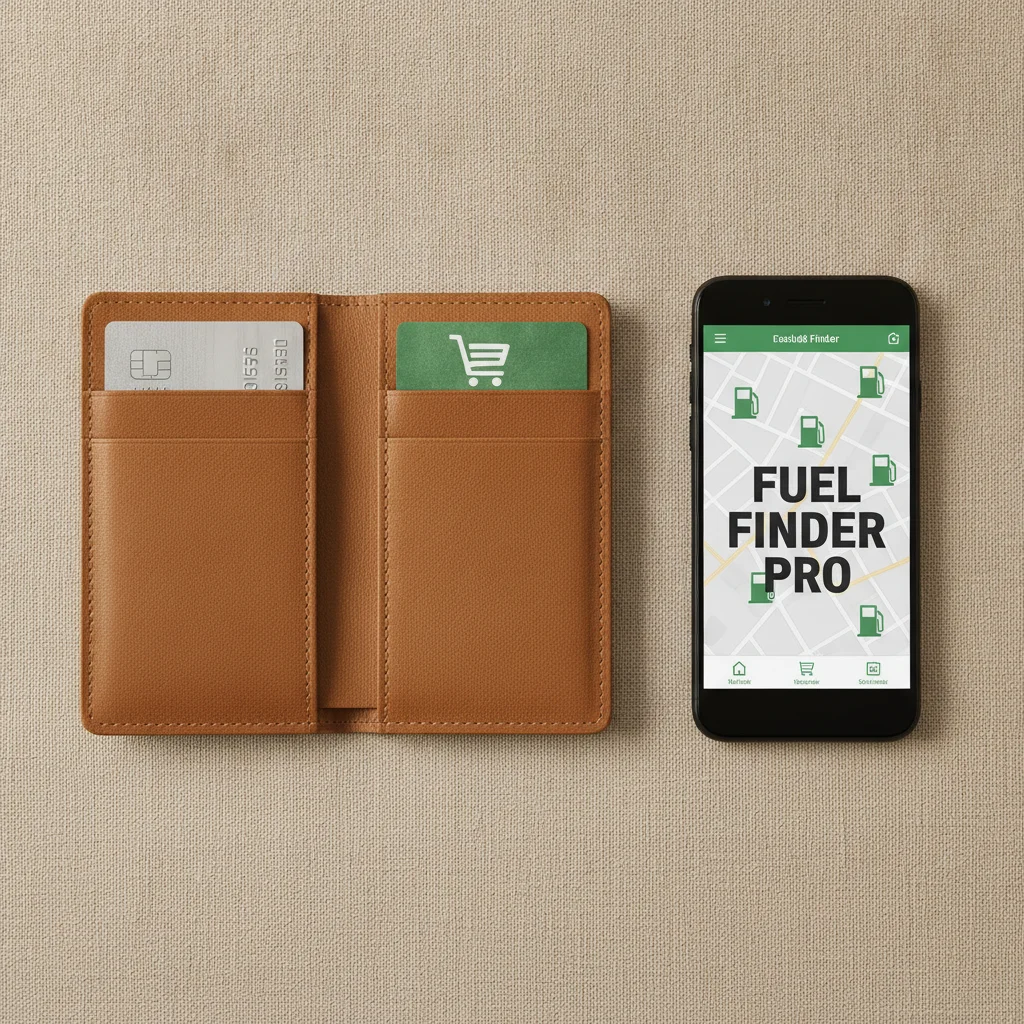
Here's a practical three-layer approach that works for most drivers:
- Layer 1 — Credit card: Pick one gas-optimized cash-back card and use it every time you fill up. Set up autopay for the full statement balance.
- Layer 2 — Grocery program: If you shop at a chain with fuel rewards, make sure your loyalty card is linked and scan it at every grocery visit. Let the points accumulate passively.
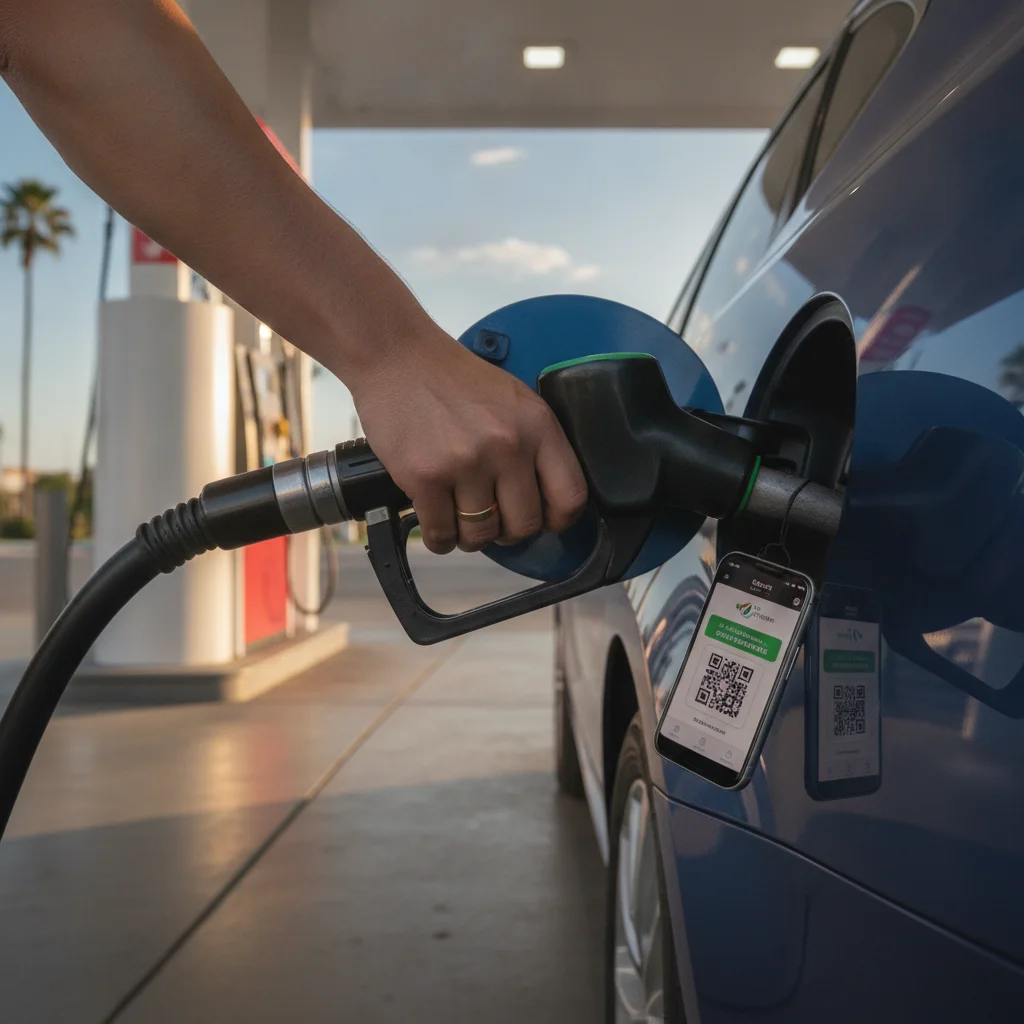
- Layer 3 — Station app: Download the app for one or two stations you already use. Enable any available discount or wallet payment link. Check for bonus promotions once a month.
That's it. Three steps, maybe 30 minutes of setup total, and you're capturing most of the available savings without adding meaningful friction to your routine.
If you're already focused on stretching every mile further, rewards programs pair well with smarter driving habits. Similarly, thinking carefully about what you spend on accessories and add-ons is worth doing: fuel-saving accessories — what actually works can help you separate genuine efficiency gains from marketing noise.
Think of gas rewards the same way you might think about a diminishing deductible program: the value is real, but it only materializes if you're consistent and you understand the conditions attached. Programs that reward steady, habitual behavior tend to pay off. Programs that require you to change your behavior significantly to earn usually don't.

All claims are backed by peer-reviewed research. Sources on request.