Key Takeaways
Why Used Car Myths Are Especially Expensive
Buying used is supposed to be the smart money move — skip the new-car depreciation hit, pay less, drive essentially the same vehicle. And it can be smart. But the used car market is where misinformation thrives, because the deals are more complicated, the risks are more hidden, and the mistakes are harder to undo once you're holding the keys.
Unlike buying new, where you're comparing sticker prices on identical vehicles, every used car is its own puzzle. That complexity is exactly where myths take root. Buyers carry beliefs into the lot that sound reasonable on the surface — beliefs about inspection reports, insurance costs, negotiation room, and mileage — and those beliefs cost real money. Sometimes a few hundred dollars. Sometimes several thousand.
The myths below aren't obscure edge cases. They're the ones I see trip up buyers repeatedly, across all price points and vehicle types. Clearing them out of your head before you shop is one of the most valuable things you can do. For a parallel look at how these same dynamics play out when you're negotiating with dealers on new vehicles, see common dealer negotiation myths.
The Myths, Corrected
Let's go through the most damaging misconceptions one by one. Each one has a grain of plausibility — that's why they persist. The corrections aren't complicated, but they require you to think differently about how used car transactions actually work.
Myth
A clean vehicle history report means the car has no serious problems.
Fact
A history report only reflects what was officially reported — independent shop repairs, flood damage, and frame issues often never appear in the database.
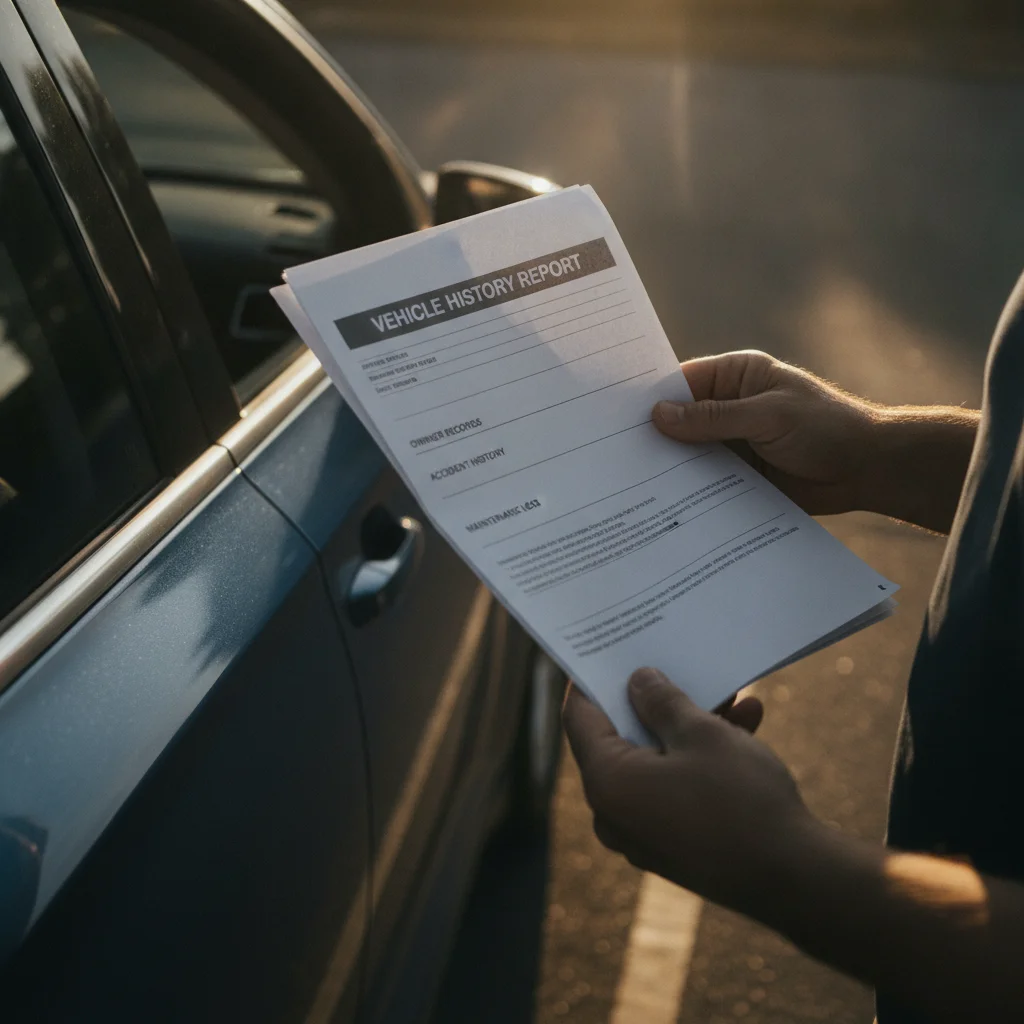
Vehicle history reports from Carfax and AutoCheck are genuinely useful tools, but buyers treat them as final verdicts when they're really just a starting point. These reports compile data from insurance claims, DMV records, and participating repair shops. The critical word is participating. An estimated 50% of collision repairs are handled by independent shops that don't report to these databases.
A car can have a clean history report and still have a bent frame from an unreported accident, flood damage that wasn't filed as an insurance claim, or a rebuilt title from another state that didn't cross over into the database. A pre-purchase inspection from an independent mechanic — budget $100–$175 — will catch things no database ever will. The report rules out known red flags; the inspection reveals the unknowns.
Myth
Dealers don't negotiate on used cars the way they do on new cars.
Fact
Used car pricing is often more negotiable than new car pricing, especially on vehicles that have been sitting on the lot for 30 days or more.
This myth actually has the used vs. new comparison exactly backwards. On new cars, dealer invoice pricing and manufacturer-set holdback create a relatively narrow band of negotiation. On used cars, the dealer set the asking price themselves based on what they paid at auction or trade-in, current market conditions, and their own margin targets — which means there's more room for movement, not less.
Dealers track exactly how long each used vehicle has been on the lot. After 30 days, carrying costs accumulate. After 60 days, the vehicle is often wholesaled at a significant loss. If you can identify a car that's been sitting — by asking directly or checking the listing date on the third-party sites — you have real leverage. Make an offer 8–12% below asking and see what happens. The worst outcome is a counteroffer.
For more on negotiation dynamics with dealers, see common dealer negotiation myths — many of those principles apply equally to used car transactions.
Myth
Older cars are always cheaper to insure than newer ones.
Fact
Insurance premiums on older vehicles depend on repair costs, theft rates, and coverage type — not age alone.
Age is one variable in an insurer's pricing formula, but it's far from the dominant one. A ten-year-old Land Rover Discovery or BMW 5 Series can carry higher collision and comprehensive premiums than a three-year-old Toyota Camry, simply because parts are expensive and labor hours are higher. Certain older vehicles — particularly full-size pickups and some imported SUVs — also have elevated theft rates that push comprehensive premiums up regardless of model year.
What often makes an older car cheaper to insure is the owner's decision to drop comprehensive and collision, not the insurer's pricing. If you make that choice on a financed vehicle, your lender will add force-placed insurance at a much higher cost than you'd have paid for coverage you selected yourself. Always get actual insurance quotes on the specific vehicle before you finalize your budget. Insurance discount myths can also affect what you actually pay once you have a policy.
Myth
Low mileage is the best indicator of a used car's quality.
Fact
How miles were accumulated matters as much as the total — a high-mileage highway commuter can outlast a low-mileage car used for short city trips.
Mileage is a proxy for wear — but it's an imprecise one. A 90,000-mile vehicle used almost exclusively for highway driving has typically experienced less engine wear, fewer cold starts, less brake usage, and lower thermal stress than a 45,000-mile vehicle driven three miles at a time in stop-and-go city traffic. Short trips are particularly hard on engines because the motor never fully reaches operating temperature, causing incomplete combustion and accelerated moisture buildup in the oil.
Low mileage can also be a red flag in disguise. A car driven very few miles over many years may have dried-out seals, cracked rubber hoses, corroded brake components, and old fluids that have degraded past their service life — all of which cost money to address. When evaluating a low-mileage vehicle, ask to see service records that confirm regular oil changes and fluid service regardless of mileage. If those records don't exist, budget for deferred maintenance.
Myth
Buying from a private seller is always riskier than buying from a dealer.
Fact
Private sellers may carry more unknowns, but dealers are not risk-free — and private party prices are often significantly lower for the same vehicle.
The appeal of buying from a dealer is the perception of accountability — if something goes wrong, you know where to find them. That's real, but it's also limited. Used cars at dealers are typically sold as-is, with no implied warranty on non-CPO vehicles. The dealer's lot and reconditioning process don't guarantee the car is mechanically sound, and some dealers actively mask problems with fresh paint and detailing.
Private sellers, by contrast, often have complete service records, know the car's full history firsthand, and price it lower because they're not running a business with overhead. The risk management strategy is the same either way: run the history report, get the independent inspection, and don't pay without a clean title transfer. The private sale myths that cost sellers article covers the transaction from the other side and is useful reading for understanding what motivated sellers are actually dealing with.
Myth
A Certified Pre-Owned car doesn't need an independent inspection.
Fact
CPO vehicles are inspected against a manufacturer checklist, but that inspection is done by the selling dealer — an independent check adds meaningful protection.
CPO programs require vehicles to pass a multi-point inspection, typically 100–200 items depending on the manufacturer. But that inspection is performed by the dealership's own technicians, who have an incentive to certify as many vehicles as possible. Items that are borderline — slightly worn brake pads, a tire at the minimum tread depth, a subtle oil seep — may pass the checklist even if they're close to requiring service.
An independent mechanic has no financial stake in whether you buy the car. They'll tell you exactly what they see, including deferred maintenance the CPO inspection glossed over. The CPO warranty has real value, but it doesn't mean the car is in perfect shape today — it means certain repairs are covered if problems emerge later. Paying $150 for an independent inspection on a $25,000 CPO vehicle is always worth it. For more on what CPO programs actually cover versus what buyers assume, see CPO myths that cost buyers money.
Myth
You can trust a seller who says the car was 'never in an accident.'
Fact
Private sellers may not know the car's full history, and some conceal known damage — verbal assurances have no legal or financial weight.
A seller who bought the car two years ago genuinely may not know about a fender bender from the previous owner's tenure. They're not lying — they just don't know. But a verbal statement about accident history, even a sincere one, gives you nothing you can act on if structural damage surfaces after the sale.
Always verify independently. The history report is the starting point, but as noted earlier, it only captures reported incidents. The independent inspection — specifically an undercarriage inspection and a check for uneven panel gaps, mismatched paint, and overspray — is what actually tells you whether the car has had collision work. Overspray on weather stripping, slightly misaligned door panels, and bolt heads with disturbed paint are all physical evidence no verbal assurance can override.
Myth
The listed price on a used car includes everything you'll pay.
Fact
Dealer fees, documentation charges, registration, taxes, and optional add-ons can add $1,500–$4,000 or more to the final out-of-pocket cost.
The sticker price is the opening number, not the closing one. Dealers routinely add documentation fees (ranging from $50 to over $900 depending on the state), dealer preparation fees, advertising fees, and title and registration costs. On top of those, many finance offices present aftermarket products — extended warranties, paint protection, gap insurance, tire and wheel coverage — during the signing process, often framed as monthly payment additions that seem small but add thousands over the loan term.
Before you sit down at the finance desk, ask for a complete out-the-door price in writing that includes every fee, tax, and charge. Evaluate any add-on product on its own merits against third-party alternatives, not against its monthly payment amount. Gap insurance, for example, is sometimes worth having — but dealers often charge two to four times what your own insurer would charge for the same coverage. Auto loan APR myths cover the financing side of this equation in detail.
~50%
Collision repairs never reported to history databases
Industry estimates suggest roughly half of all collision repairs are handled by independent shops that don't report to Carfax or AutoCheck, leaving significant gaps in vehicle history records.
$1,500–$4,000+
Typical dealer fees added above sticker price
Documentation fees, title charges, registration, and add-ons routinely push the final out-of-pocket cost well above the advertised used car price, particularly at franchise dealerships.
2–4x
Dealer gap insurance markup vs. insurer price
Finance offices commonly charge two to four times what a buyer's own auto insurer would charge for equivalent gap coverage, making dealer-offered gap a costly default.
$100–$175
Cost of a pre-purchase inspection
A professional pre-purchase inspection from an independent mechanic typically costs between $100 and $175 — a small fraction of what undetected mechanical issues can cost after purchase.
30–60 days
Used car lot age that signals negotiation leverage
Dealers typically begin aggressively discounting used inventory after 30 days on the lot and wholesaling vehicles by 60 days — giving informed buyers meaningful price leverage on aged stock.
Insurance and Financing: Two Areas Where Myths Hit Hardest
The sticker price on a used car is only part of your actual cost. What you pay to insure it and finance it can easily add up to more than the price difference between a smart buy and a bad one. Unfortunately, these two areas are loaded with myths that set buyers up to underpay on protection or overpay on interest.
Insurance Costs on Used Cars
Older cars are not automatically cheap to insure. Your premium depends on the cost to repair or replace the vehicle, the car's theft profile, your driving history, and the coverage you carry — not just the vehicle's age. A ten-year-old luxury SUV with expensive imported parts can cost significantly more to insure than a three-year-old economy sedan.
Many buyers also drop comprehensive and collision on older vehicles without doing the math. If you're financing the car, your lender will require both anyway. If you're paying cash, the right question is whether you could absorb the full replacement cost if the car were totaled or stolen tomorrow. For most buyers with cars worth $8,000–$15,000, keeping comprehensive is worth it — the annual premium is usually a small fraction of the vehicle's value.
The way your insurer categorizes the vehicle matters too. A used performance model or a vehicle with a high theft rate can carry premiums that surprise buyers who assumed age equals discount. Check actual insurance quotes on any used vehicle before you finalize your budget. See what actually drives your insurance rate for a deeper breakdown of premium factors.
Dropping Coverage on a Financed Used Car
If you're financing a used car and drop comprehensive or collision coverage to save on premiums, your lender will add force-placed insurance to your loan — typically at rates two to three times higher than what you would have paid for coverage you chose yourself. Force-placed insurance also protects only the lender, not you. Always carry the coverage your loan requires, and shop your own insurer for the best rate rather than accepting the lender's default.
Don't Negotiate From the Asking Price
Accepting the dealer's asking price as a starting point anchors the entire negotiation in the dealer's favor. Before you make any offer, research the vehicle's actual market value using Edmunds, KBB, and comparable listings in your area. Your offer should be based on market data, not a percentage off asking. Buyers who skip this step routinely overpay by $1,000–$3,000 on mid-range used vehicles.
Financing a Used Car
Used car loans typically carry higher interest rates than new car loans — sometimes significantly higher. A buyer who gets excited about a $12,000 used car and finances it at 9% APR over 60 months is going to pay roughly $3,100 in interest over the loan's life. That's not abstract — that's money that could have covered two years of insurance or a major repair.
Getting preapproved from your bank or credit union before you shop is one of the most effective cost-control moves in a used car transaction. It gives you a rate benchmark, tells you exactly what you can afford, and removes the dealer's ability to manage the conversation around monthly payments instead of total price. For a full breakdown of how preapproval actually works, see preapproval myths that cost car buyers money.

How to Protect Yourself Before You Sign
Knowing the myths is step one. Translating that knowledge into transaction habits is step two. Here's the short version of what separates buyers who get good deals from buyers who get burned.
Run the History Report — Then Go Further
Pull a Carfax or AutoCheck report on every vehicle you're seriously considering. These reports are genuinely useful for spotting title problems, odometer fraud flags, major accident disclosures, and the number of previous owners. But they have hard limits: they only report what was reported. A car that was repaired at an independent shop after a rear-end collision may show a clean history even if the structural repair was shoddy.
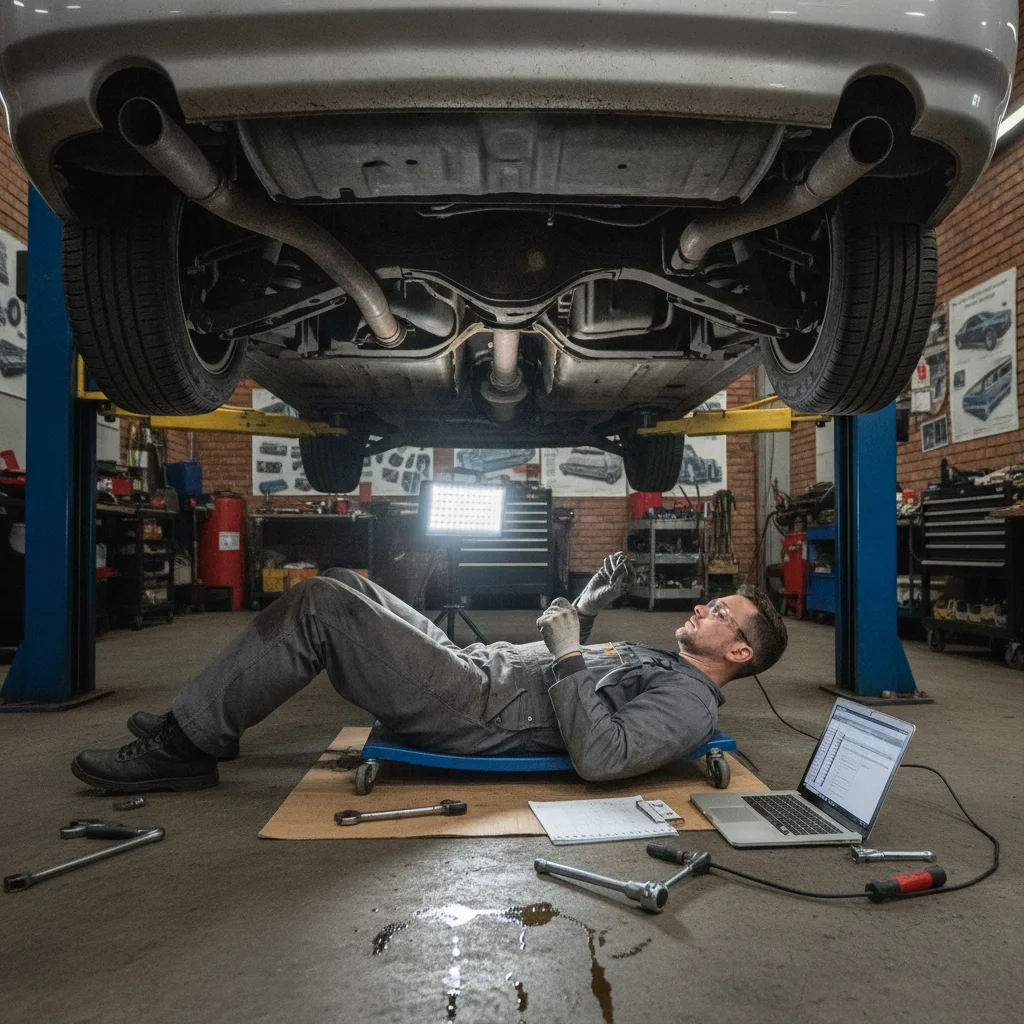
The fix is a pre-purchase inspection (PPI) from an independent mechanic — not the dealership's service center. A PPI typically costs $100–$175 and should include a lift inspection of the undercarriage, a check for rust and frame damage, fluid condition analysis, and a basic scan for error codes. Any seller who refuses to let you take the car to a mechanic is telling you something important.
Price the Car Before You Talk to Anyone
Used car prices are not arbitrary. Edmunds, Kelley Blue Book, and the NADA Guides all publish market-based valuations that reflect real transaction data. Look up the specific vehicle — year, trim, mileage, condition, and your zip code — before you make contact with the seller. Walk in knowing what fair market value looks like, and don't let anyone convince you to anchor to the asking price instead.
If you're trading in a vehicle while buying used, keep those two transactions completely separate in the negotiation. Dealers profit from bundling them. Settle on the price of the car you're buying first, then negotiate your trade-in separately. For a detailed look at trade-in myths that cost sellers money, see trade-in value myths that cost car sellers.
Understand What CPO Actually Covers
Certified Pre-Owned programs are marketed as peace-of-mind purchases, and they can be — but only if you read what you're actually buying. CPO warranties vary significantly by manufacturer. Some cover powertrain only; others include bumper-to-bumper protection. Deductibles, mileage caps, and exclusion lists differ widely. Ask for the warranty documentation in writing before you agree to pay the CPO premium, and compare it to what an aftermarket extended warranty would cost on the same vehicle. For more on where CPO programs mislead buyers, see CPO myths that cost buyers money.
Don't Skip the Depreciation Math
When you're comparing a two-year-old vehicle to a five-year-old one, think about where each one sits on the depreciation curve, not just the current price gap. A vehicle that's already taken its steepest drops may hold value better over your ownership period than one that's still depreciating rapidly. Depreciation myths trip up buyers who focus only on the purchase price and ignore what the car will be worth when it's time to sell or trade.
Never Skip the Pre-Purchase Inspection
No matter how clean the history report looks or how convincing the seller is, an independent pre-purchase inspection is non-negotiable on any used car purchase above $5,000. A mechanic who specializes in the brand you're buying can spot issues that no database, no test drive, and no visual inspection will catch. If a seller refuses to allow an independent inspection, walk away — that refusal is the most important information they've given you.
Bottom Line: Verify Before You Buy
The used car market rewards preparation and punishes assumptions. Every myth on this list persists because it feels logical — lower price means lower insurance, history report means clean car, dealers won't move on used prices. None of those beliefs hold up consistently under real transaction conditions.
The buyers who come out ahead are the ones who verify independently at every stage: they pull the history report and pay for an inspection, they get a loan preapproval and compare it to dealer financing, they research insurance costs before they fall in love with a specific vehicle.
Used cars offer genuinely good value — but that value is earned by doing the homework, not assumed by default. If you're also comparing the used market to buying new, new car buying myths are worth reading before you make a final call on direction.


All claims are backed by peer-reviewed research. Sources on request.