
Key Takeaways
Why Cheaper Isn't the Same as Smarter
Auto insurance advertising is built around one number: the premium. Every TV spot, every comparison site, every mailer promises you can pay less. And that relentless focus on price has trained drivers to shop accordingly — find the lowest quote, click buy, done.
The problem is that two policies at the same price can perform completely differently when you file a claim. And two policies where one is $40 cheaper per month can end up costing you thousands more when something actually goes wrong. The gap between what a policy costs and what it actually covers is where drivers lose real money.
This article breaks down the most persistent myths about finding cheaper auto insurance — myths that feel like smart shopping but often lead to serious coverage gaps. If you want to go deeper on how coverage details separate a bargain from a trap, see this breakdown of what distinguishes a good policy from a cheap one.
Myth
The cheapest premium always saves you the most money.
Fact
The cheapest premium saves you money on paper until you file a claim — at which point higher deductibles, lower limits, and missing coverages can cost far more than the premium difference.
This is the central myth that makes all the others possible. When drivers anchor on premium as the measure of value, every other coverage decision gets distorted. You drop comprehensive to save $15 a month and then face a $4,000 repair bill when a tree falls on your car. You raise your deductible to $2,500 to lower your quarterly bill, then realize you can't afford to file a claim on a $2,800 repair without financial strain.
Premium and cost of coverage are two different numbers. The premium is what you pay the insurer. Your cost of coverage — the real figure — is your premium plus your out-of-pocket exposure in any given claim scenario. Comparing only premiums is a fundamentally flawed strategy that most comparison sites make worse by design.
Myth
State minimum liability coverage is all you legally need, so it's fine.
Fact
State minimums are legal floors designed to protect other drivers, not you. They are often far too low to cover real accident costs, leaving you personally liable for the balance.
State minimum liability limits vary widely — some states require as little as $15,000 per person in bodily injury coverage. The average emergency room visit for a serious car accident routinely exceeds that. If you're at fault in an accident and the injured party's bills top your policy limits, the insurer pays their limit and stops. The rest comes from you — your wages, savings, and assets — through a civil judgment.
"Legal" does not mean "adequate." Most insurance professionals recommend at least 100/300/100 limits ($100,000 per person, $300,000 per accident in bodily injury, $100,000 in property damage) as a starting point for anyone with assets to protect. Dropping to minimums to save on premium is one of the highest-risk cost-cutting decisions a driver can make.
The related myth here is that your health insurance will cover the rest. Health insurance covers your medical bills — not the liability you owe to others you injure. Those are separate problems requiring separate coverage.
Myth
Bundling your home and auto insurance always gives you the best deal.
Fact
Bundling can offer real discounts, but the combined cost still may exceed what you'd pay using separate specialized insurers for each policy.
Bundling discounts are real — typically 5–15% off each policy. But that discount applies to the insurer's base rate, which may be uncompetitive to begin with. An insurer that's expensive on auto but cheap on home might end up costing you more bundled than you'd pay with two separate companies that are each strong in their respective coverage type.
The right move is to get your current bundle's total cost, then separately shop your auto and home coverage independently. If the sum of two best-in-class separate policies beats the bundle price, the bundle isn't saving you anything — it's just making the discount feel meaningful.
Bundling also creates lock-in. When one policy is up for renewal and you're considering switching, you have to account for the discount you'd lose on the other policy. That friction is partly the point from the insurer's perspective.
Myth
A higher deductible always makes financial sense because you rarely file claims.
Fact
Whether a high deductible is smart depends on your specific claim history, your vehicle's value, and whether you actually have that deductible amount available as liquid cash when you need it.
The logic sounds clean: if you haven't filed a claim in five years, raising your deductible from $500 to $2,000 saves you premium money you'd never spend anyway. But this reasoning has two holes in it.
First, past claim frequency doesn't predict future events. Hailstorms, deer strikes, and parking lot damage aren't distributed evenly across time. One bad year can wipe out several years of deductible savings instantly.
Second — and this is the one most people skip — a deductible is only useful if you can actually pay it when a claim happens. Many drivers raise their deductible to reduce monthly payments precisely because money is tight. That means if they need to file a claim, they may be unable to afford the repair even with insurance, which functionally voids the coverage. A $2,000 deductible you can't pay when the time comes is not a cost-saving strategy; it's a coverage gap with extra steps.
[in_content_images:2]Myth
Comprehensive coverage is basically the same as full coverage and covers everything.
Fact
Comprehensive and collision are two separate coverages. Neither is called 'full coverage,' and together they still don't cover everything — like mechanical failure, your own medical bills, or a gap between payout and loan balance.
"Full coverage" isn't an insurance term. It's a colloquial shorthand that usually means a policy includes liability, comprehensive, and collision — but even that combination leaves significant gaps. It doesn't include medical payments or personal injury protection (unless added), gap coverage, rental reimbursement, or roadside assistance.
Comprehensive covers non-collision losses: theft, vandalism, weather events, animal strikes, and fire. Collision covers damage from hitting another vehicle or object. They do not overlap. Dropping one to save money means creating a specific category of loss you're now self-insuring against — sometimes without realizing it.
The real cost of skipping comprehensive coverage is worth understanding in detail, especially for drivers in areas with high theft rates, frequent hail, or heavy deer populations. Collision coverage myths add another layer to this — many drivers don't understand what their collision coverage actually triggers.
Myth
Loyalty to one insurer means you're getting the best rate available to you.
Fact
Insurers typically do not reward long-term customers with their most competitive rates. Shopping the market every one to two years is one of the most reliable ways to avoid overpaying.
Insurance companies compete aggressively for new customers and often offer their sharpest pricing as acquisition pricing. Long-term customers, by contrast, may experience gradual rate creep — small increases year over year that compound significantly over time without any corresponding change in their risk profile.
This isn't predatory; it's structural. Acquisition costs are high, so insurers price new business competitively. Retention costs are lower, so that pricing urgency eases over time. The result is that a driver who hasn't shopped their insurance in five years is often paying more than someone with an identical risk profile who switched recently.
The practical answer: get competing quotes every 12 to 24 months, especially after any life change — new vehicle, move, marriage, or teen driver added to the policy. You don't have to switch every time, but you should know what the market would charge you. Some insurers will also match competitive quotes when asked directly.
Myth
Discounts are automatically applied to your policy — you don't need to ask.
Fact
Many discounts require you to proactively request them, provide documentation, or enroll in a program. Insurers don't audit your life looking for ways to charge you less.
Good student discounts, defensive driving course credits, low-mileage discounts, and usage-based telematics programs are among the most commonly missed savings — not because drivers don't qualify, but because they didn't know to ask or didn't follow through on enrollment.
The onus is on the policyholder to surface qualifying information. Your insurer doesn't know you completed a defensive driving course unless you tell them and submit proof. They don't know your college student is on the dean's list unless you submit documentation. Telematics programs that track safe driving for discounts require active opt-in.
Discount myths that cost drivers real money covers this in detail — including the widespread belief that all insurers offer the same discounts in the same amounts, which they don't. Discount structures vary significantly by company and by state.
Myth
Older cars don't need comprehensive or collision coverage because they're worth less.
Fact
Vehicle value alone shouldn't determine whether you carry physical damage coverage — your ability to absorb the loss out of pocket is the more relevant variable.
The standard advice — drop comprehensive and collision once your car's value falls below 10 times the annual premium for those coverages — has logic behind it. But it's incomplete. It assumes you can comfortably replace or repair the vehicle out of pocket if you total it or it gets stolen. That assumption doesn't hold for every driver.
A $6,000 car with $400 in annual comprehensive and collision premiums might seem like a candidate for dropping coverage by the math. But if losing that vehicle would mean $6,000 in unplanned expense you don't have liquid access to, the coverage is still doing real work for you — it's protecting your financial stability, not just your car's Blue Book value.
This myth also intersects with another one: the belief that older cars are always cheaper to insure. Used car myths around insurance costs are worth reviewing before you make any ownership decisions based on assumed savings.
The Real Cost of Coverage Gaps
Coverage gaps aren't theoretical. They show up in specific, painful situations: a hailstorm that totals your car while you're carrying only liability coverage; an at-fault accident where your bodily injury limits run out before the injured party's medical bills do; a stolen vehicle where you assumed theft was covered under your existing policy.

Each of these scenarios has one thing in common — the driver made a decision based on premium cost without fully understanding what they were giving up. The math of insurance savings only works in your favor when you account for both the premium savings and the potential out-of-pocket exposure from reduced coverage.
$1,771
Average annual U.S. auto insurance premium
According to Bankrate's 2024 analysis of national rate data, this figure masks wide variation based on coverage level, with minimum-coverage policies averaging around $635 annually.
43%
Drivers who haven't compared rates in 3+ years
A 2023 J.D. Power insurance shopping study found that a significant share of drivers stay with their current insurer without actively benchmarking competing quotes.
$1,200+
Median gap insurance claim payout
Industry data from the American Financial Services Association shows drivers without gap coverage on financed vehicles often owe thousands more than their insurer pays out after a total loss.
5–15%
Typical bundling discount range
The Insurance Information Institute reports home-and-auto bundling discounts in this range, though the base rates from which the discount applies vary significantly by insurer.
One calculation worth doing before you drop any coverage: take your annual premium savings and divide it into your vehicle's actual cash value or the liability limits you're reducing. That's how many years of savings it takes to break even on a single bad claim. For most drivers, that number is sobering.
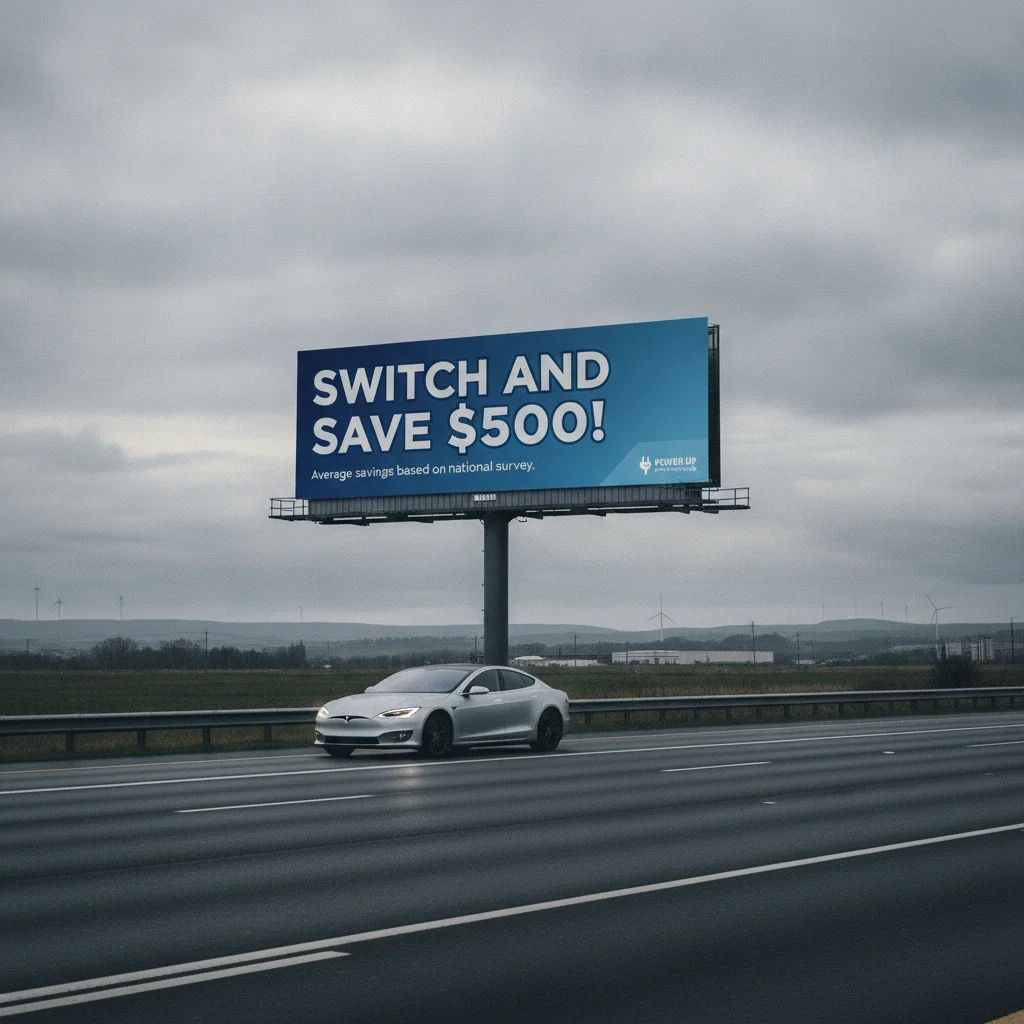
Switching insurers is another area where the math gets distorted. Ads routinely promise hundreds in annual savings, but those figures require scrutiny. Here's an honest look at what switching savings claims actually mean and how to evaluate whether the switch is genuinely worth making.
Don't Drop Coverage Based on Premium Alone
Before removing any coverage type to lower your premium, calculate what your out-of-pocket exposure would be in the most likely claim scenario for that coverage. For comprehensive, that's weather damage or theft. For collision, it's an at-fault accident. If that number would cause you financial hardship, the premium savings aren't worth it.
Minimum Liability Limits Can Expose Your Assets
If you carry state minimum liability limits and cause a serious accident, your insurer pays up to the limit and stops. Any judgment above that amount is your personal liability — payable from savings, income, and assets. Anyone with a home, retirement account, or regular income should carry limits well above the state minimum.
Telematics Programs Can Raise Your Rate Too
Usage-based insurance programs that monitor driving behavior can lower premiums for safe drivers — but some programs also allow insurers to use the data to increase rates if your driving patterns score poorly. Read the program terms carefully before enrolling, particularly if your driving involves a lot of late-night hours, hard braking, or high-speed highway travel.
Shopping Smarter: What to Compare Beyond the Quote
Comparing auto insurance effectively means looking past the premium line to at least four other variables: deductible amounts, coverage limits, exclusions, and claims handling reputation. Each of these affects your real cost of ownership more than the monthly sticker price in most claim scenarios.

Start with the declarations page, not the marketing summary. The declarations page lists your actual coverage types, limits, and deductibles. Compare these across quotes side by side, not just the bottom-line premium. A $50/month cheaper policy that carries a $2,000 higher deductible costs you more in any claim under $2,000 — which is a lot of claims.
Second, check exclusions. Most standard policies exclude specific situations in fine print — using your personal vehicle for rideshare, flooding in some comprehensive definitions, or mechanical breakdown. If those exclusions match your actual driving life, that cheap policy may cover nothing when you need it.
Third, look at claims satisfaction data. J.D. Power, AM Best, and state insurance department complaint ratios are publicly available. An insurer with a poor claims track record is a liability regardless of their premium, because that's the only moment the policy has to perform.
For more on how the whole rate picture fits together — including factors beyond your control — the rate factors hub covers what actually drives your premium up or down. And if you're focused on legitimate ways to reduce costs, the discounts and deals hub covers what most drivers leave on the table.
Your Deductible Must Be Cash You Actually Have
A deductible is money you owe before your insurer pays anything on a physical damage claim. If you've raised your deductible to $2,000 or $2,500 to reduce your premium, you need that amount accessible — not invested, not in a CD, not on a credit card you're already carrying a balance on. Drivers who can't pay their deductible when a claim occurs are effectively uninsured for that loss. Set your deductible at the highest amount you could write a check for today without financial strain.

All claims are backed by peer-reviewed research. Sources on request.