Key Takeaways
Gap Insurance for EVs
Gap insurance — short for Guaranteed Asset Protection — pays the difference between what your car insurer says your vehicle is worth at the time of a total loss and what you still owe on your auto loan. For electric vehicle owners, this gap can be especially wide because many EVs lose value faster than the loan balance shrinks during the early years of ownership. Without gap coverage, you could owe thousands of dollars out of pocket after a crash or theft even after your primary insurer pays its share.
Gap coverage is typically calculated as the difference between the actual cash value (ACV) paid by your comprehensive or collision insurer and the outstanding principal on your auto loan, excluding past-due payments, late fees, and extended warranty costs rolled into the loan.
The Unique Depreciation Problem Facing EV Owners
When you drive a new gas-powered sedan off a dealership lot, conventional wisdom says you've just lost roughly 10–15% of its value the moment it becomes a used car. With many electric vehicles, that first-year hit can be substantially larger — and the forces behind it are different enough that they deserve their own analysis.
EV depreciation follows a distinct set of rules compared to internal combustion vehicles. Battery technology advances rapidly, meaning a model that seemed cutting-edge at purchase can look dated within 18 months when a successor offers meaningfully more range or faster charging. That consumer perception translates directly into resale value pressure on the older unit.
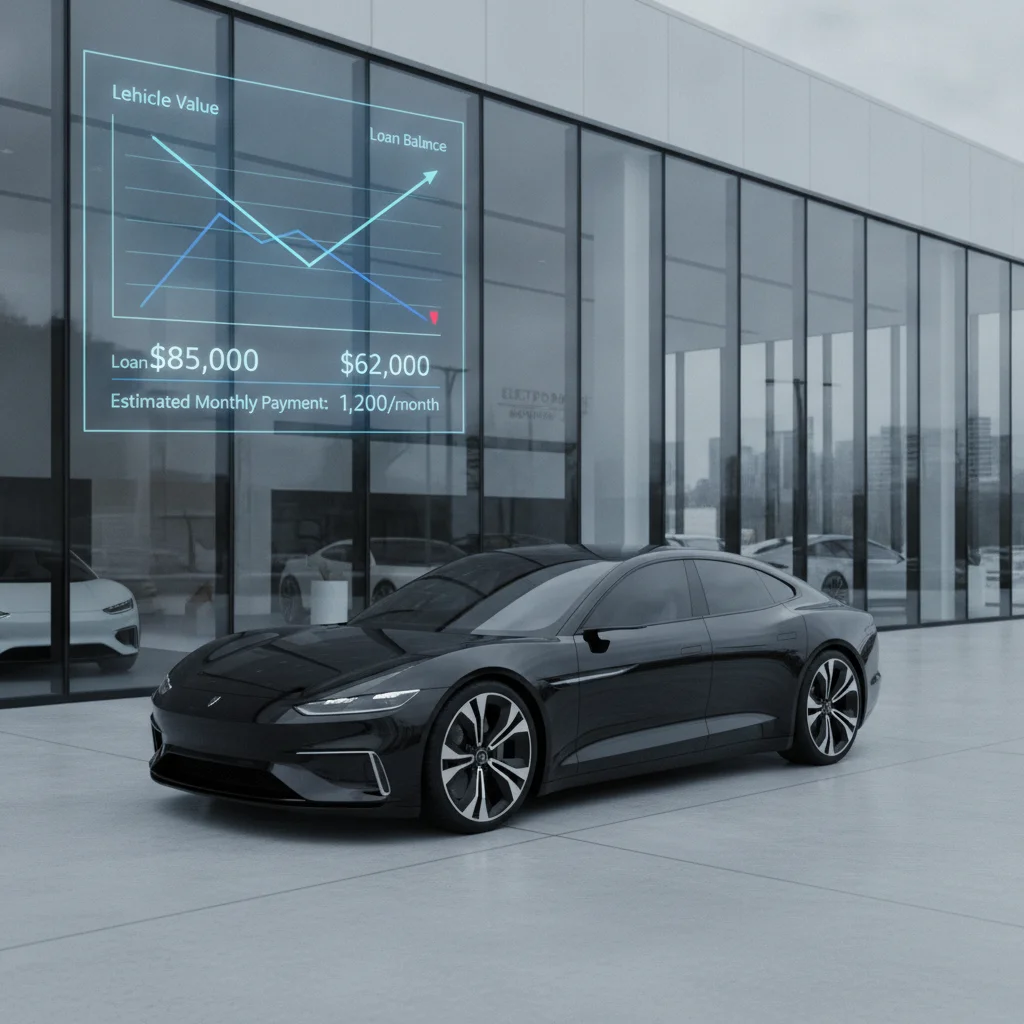
Data from automotive valuation firms consistently shows several mass-market EV models depreciating 30–50% over three years — a rate that substantially exceeds comparable gas vehicles in the same price segment. Some early-adopter buyers who financed $45,000 to $55,000 EVs found themselves holding loan balances of $38,000 to $43,000 on vehicles the market valued at $28,000 to $32,000 by year two.
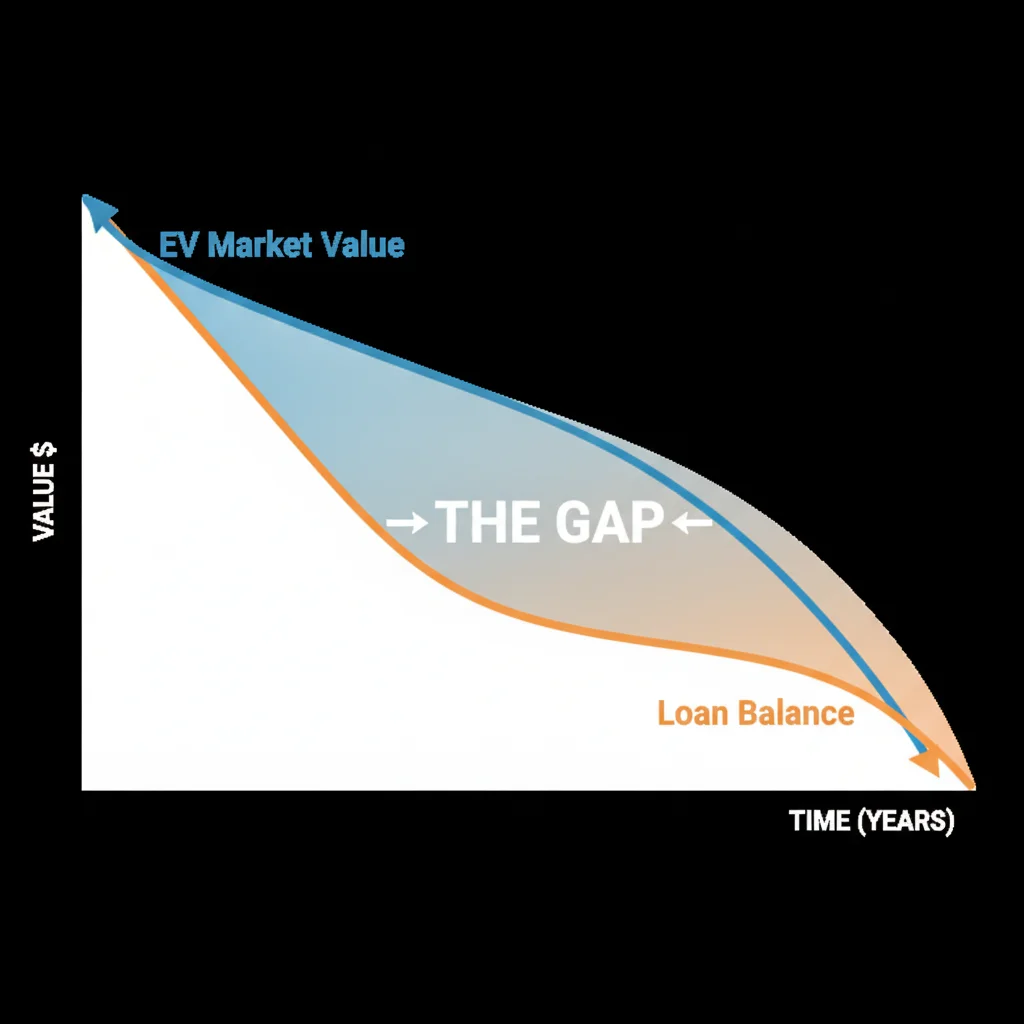
That math describes precisely the situation gap insurance is designed to address. When your lender is owed more than your vehicle is worth, you are said to be "underwater" or have "negative equity." A total-loss event — a severe accident, flood damage, or theft — triggers an insurance payout based on actual cash value, not your loan payoff amount. The shortfall is entirely your financial responsibility unless you hold gap coverage.
Leased EVs Are Usually Already Covered
If you're leasing your electric vehicle rather than financing it, gap protection is typically included in the lease agreement at no additional charge. Before purchasing any supplemental gap product on a leased vehicle, read your lease contract — most standard auto leases from captive finance arms (manufacturer-affiliated lenders) incorporate gap coverage as a standard lease term. Purchasing additional gap coverage on a leased vehicle is almost never necessary.
Gap Insurance Doesn't Cover Everything in Your Loan
Gap policies contain exclusions that EV buyers should understand before assuming complete coverage. Most policies will not cover negative equity rolled in from a prior vehicle trade-in, delinquent payments, late fees, or add-on products like extended warranties or paint protection packages that were financed into the loan principal. Your gap coverage applies to the vehicle's financed purchase price, not the total amount you owe if that total includes non-vehicle charges.
Gap Claims Require Your Primary Insurer to Settle First
If your EV is totaled or stolen and you need to file a gap claim, the process requires your comprehensive or collision insurer to settle the claim and issue payment first. Only after that settlement is complete can you file the gap claim for the remaining shortfall. Budget for potential delays between the primary settlement and gap claim resolution — this timeline can span several weeks depending on your insurers' processes.
How Gap Insurance Actually Works
The mechanics of a gap claim are straightforward, though the dollar amounts involved can be startling if you've never walked through the math. Consider a scenario: you purchase an EV for $52,000, put 10% down ($5,200), and finance $46,800 over 72 months at 7% APR. Fourteen months later, the vehicle is totaled in a collision.
Your comprehensive and collision insurer determines the vehicle's actual cash value is $34,500 — reflecting the steep first-year and second-year depreciation typical of that model segment. After applying your $1,000 deductible, the insurer cuts you a check for $33,500. But your loan payoff at that point is approximately $41,200. Without gap insurance, you owe your lender $7,700 — for a car you no longer own.
49%
Average 3-year depreciation for some EV models
iSeeCars analysis found select mass-market EVs losing nearly half their value within three years, compared to roughly 39% for the average gas vehicle.
$7,500
Federal EV tax credit that can create instant negative equity
Buyers who finance the full MSRP before applying the federal clean vehicle credit can start their loan period underwater by the full credit amount.
72 months
Common EV loan term that extends negative equity window
Industry data shows more than 40% of EV buyers in 2023 selected loan terms of 72 months or longer, maximizing the period during which depreciation exceeds principal paydown.
$20–$60
Annual cost of gap coverage through an auto insurer
Most major personal auto insurers offer gap or loan/lease payoff endorsements at a fraction of the cost of dealership-sold gap products.
20–30%
First-year value loss for many EV models
Multiple valuation sources including Edmunds and Kelley Blue Book report first-year depreciation rates for several EV segments significantly exceeding the 15–20% gas-vehicle average.
Gap insurance, assuming you had purchased it, would cover that $7,700 shortfall (minus your deductible in states where that applies to gap claims). You walk away with the loan discharged, free to begin financing a replacement vehicle without carrying forward negative equity.
It's worth understanding what gap coverage does not cover. Most policies exclude the amount by which your loan balance exceeds the original vehicle value at purchase — meaning if you rolled negative equity from a previous vehicle into your EV loan, that portion may not be covered. Late fees, extended warranty costs, credit insurance premiums, and other non-vehicle charges folded into your loan are also typically excluded. Understanding exactly when gap coverage pays off requires reading policy terms carefully rather than assuming blanket protection.
Shop Gap Coverage Before You Sign
Before accepting a dealership's gap insurance offer, call your auto insurer and ask for a quote on a loan/lease payoff endorsement. In most cases, the insurer's version costs a fraction of the dealership product and provides equivalent protection. If you've already purchased the dealership gap policy and are within the cancellation window (often 30 days), you may be able to cancel and switch — check your paperwork.
Reassess Your Gap Coverage Every Six Months
Your need for gap insurance changes as your loan balance decreases and your vehicle's depreciation rate slows. Every six months, look up your vehicle's current market value using a third-party tool and compare it to your loan payoff amount. Once your loan balance falls below market value, you have positive equity and can drop gap coverage — eliminating the premium cost going forward.
Why EVs Face a Steeper Gap Than Gas Vehicles
Several EV-specific forces conspire to make the gap between loan balance and market value wider and more persistent than it typically is for gas-powered vehicles.
Technology Obsolescence Risk
Internal combustion engine technology evolves slowly. A 2021 gas-powered compact sedan is not dramatically less capable than a 2024 version in ways most buyers notice day-to-day. Electric vehicles, by contrast, are competing on range, charging speed, and software capability — metrics that are improving rapidly. A 2021 EV offering 250 miles of range competes unfavorably against 2024 models offering 330 miles at similar price points. That real functional difference depresses resale value on earlier-generation models faster than comparable engine-age comparisons in the gas market.
Federal Tax Credit Dynamics
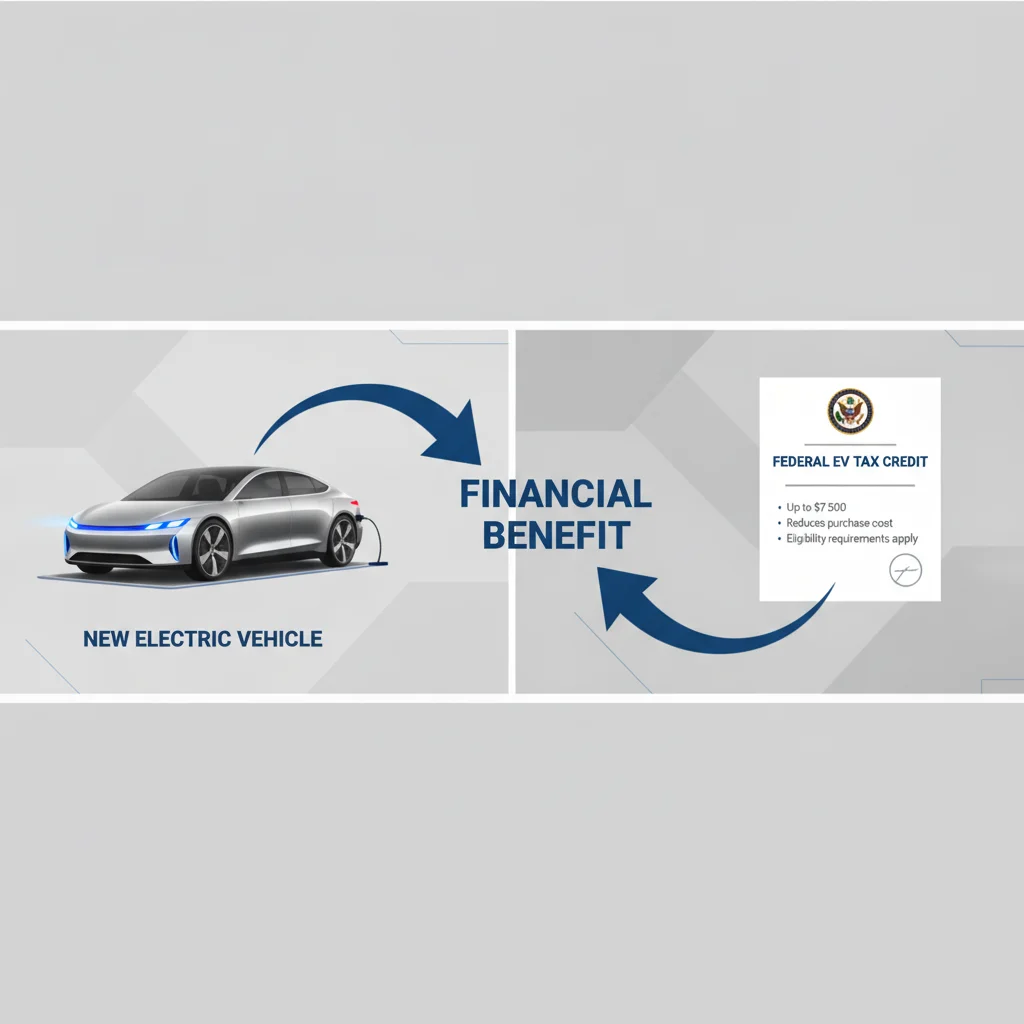
The federal EV tax credit — up to $7,500 for eligible new vehicles under the Inflation Reduction Act — creates a valuation quirk that matters enormously for gap calculations. If you financed the full MSRP on day one, then claimed a $7,500 credit on your taxes, your effective purchase price dropped without any corresponding reduction in your loan balance. From a gap perspective, you were effectively underwater by the amount of that credit the moment you took delivery. Buyers who explored federal and state EV tax credit eligibility before financing often structured their deals to apply the credit at purchase through dealership point-of-sale transfers — a practice that helps close this initial gap.
Battery Anxiety and Range Degradation Perception
Used EV buyers heavily discount vehicles whose battery capacity has degraded, even modestly. Consumer surveys consistently show used EV shoppers willing to pay a premium for certified battery health reports and manufacturer-backed battery warranties. A vehicle that has lost 8–10% of its original range — entirely normal battery chemistry behavior — can see its resale value decline disproportionately relative to that functional loss. This perception-driven depreciation is not something any loan amortization schedule is designed to accommodate.
Market Saturation in Specific Segments
The EV market has seen explosive entry-level and mid-range inventory growth since 2021. When a manufacturer introduces a refreshed or next-generation model, used inventory of the prior generation floods the market simultaneously — a supply event that suppresses prices across that segment. Gas vehicle markets see this too, but the EV transition period amplifies the frequency and magnitude of these events.
“The challenge with insuring electric vehicles is that the financial exposure isn't just about premiums — it's about how quickly technology cycles create valuation cliffs that loan schedules weren't designed to accommodate. Gap coverage is one of the few tools buyers have to bridge that mismatch.”
— Ivan Drury, Director of Insights at Edmunds
Calculating Your Personal Gap Risk
Not every EV purchase carries equal gap risk. The factors that determine your exposure are calculable, and running the numbers before you sign — or shortly after — tells you definitively whether gap coverage makes financial sense for your situation.
Key Variables to Assess
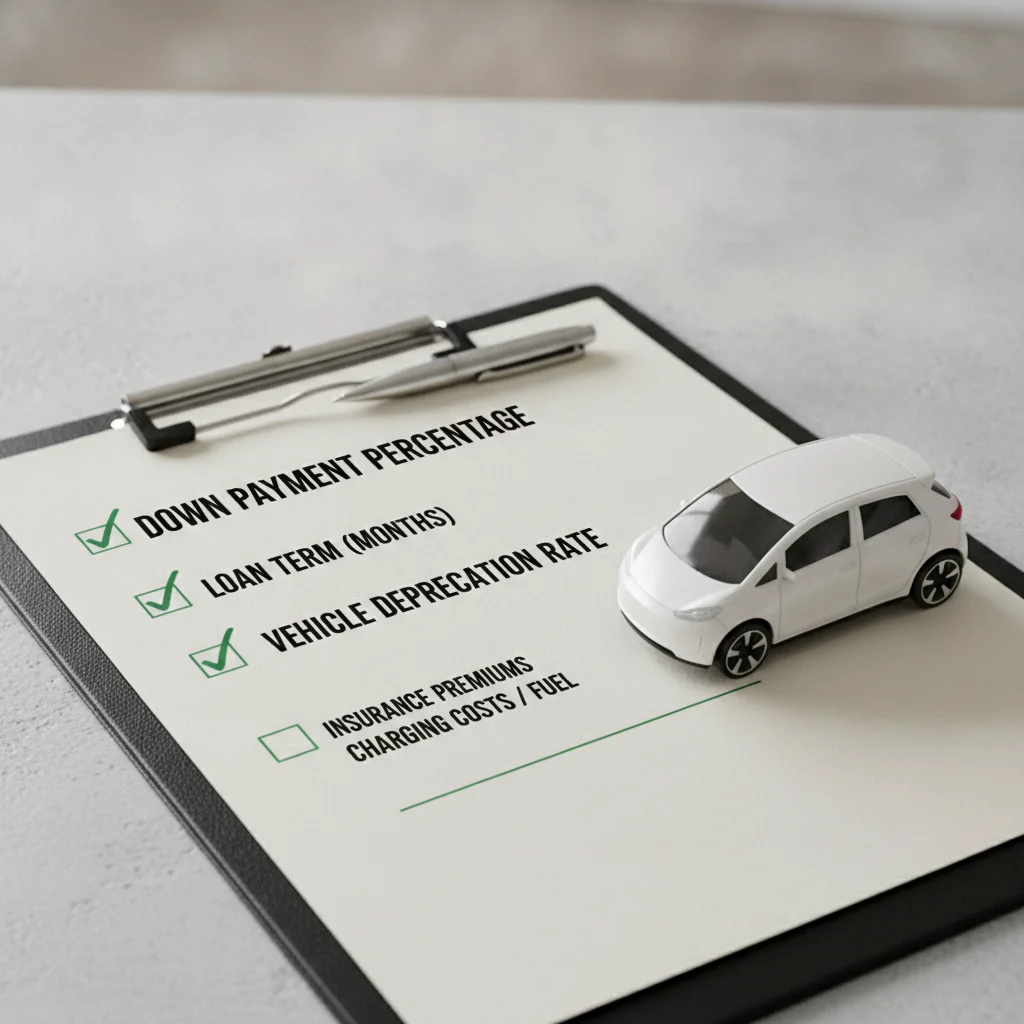
- Down payment percentage: Buyers who put 20% or more down significantly reduce initial gap risk. A large down payment means your loan balance starts close to the used-car value of the vehicle, leaving little room for a harmful gap to form.
- Loan term length: 72- and 84-month loans have become common for expensive EVs, but they amortize principal slowly in the early years. The longer your term, the longer the window during which you are likely to be underwater.
- Model-specific depreciation rates: EV depreciation varies significantly by brand and segment. Luxury EVs from established brands with strong residual values carry less gap risk than mass-market models in crowded segments where new competitors are arriving frequently.
- Tax credit structure: If you claimed or will claim a credit that wasn't applied at the point of sale, factor that amount into your effective negative equity position from day one.
A Quick Estimation Method
Look up your vehicle's current market value using a third-party valuation tool. Compare that to your current loan payoff amount (available from your lender's app or monthly statement). If your payoff exceeds market value by more than your liquid emergency savings, gap coverage is a financially rational purchase. Reassess every six months — as your loan balance falls and the steepest depreciation years pass, you'll eventually reach positive equity and can drop the coverage.
Where to Buy Gap Coverage — and What It Actually Costs
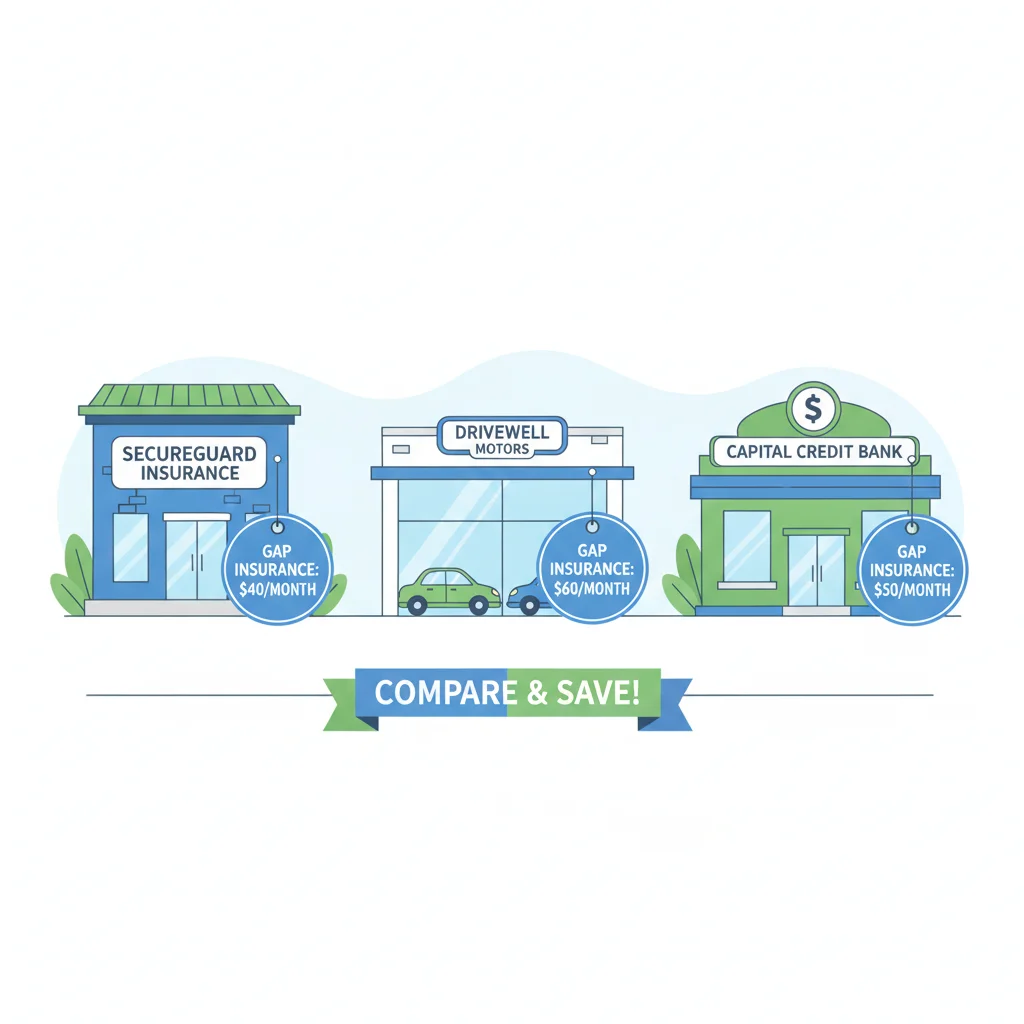
Gap insurance is sold through three primary channels: auto insurers, dealerships, and occasionally credit unions or banks at the time of loan origination. The source matters considerably for both price and terms.
Through Your Auto Insurer
Most major auto insurers offer gap coverage — sometimes called "loan/lease payoff coverage" — as a policy endorsement. Annual cost typically ranges from $20 to $60 depending on the insurer and your vehicle's value. This is almost always the most cost-effective option. Coverage can be added or dropped at any renewal period, giving you flexibility as your equity position changes. EV insurance already carries higher base premiums than comparable gas vehicles, so shopping gap coverage separately from the rest of your policy bundle makes sense.
Through the Dealership
Dealership finance offices frequently offer gap products as part of a finance-and-insurance (F&I) menu. These products are not inherently inferior in coverage terms, but they are almost always more expensive — often $400 to $900 — and dealers frequently roll this cost into your loan principal, meaning you're financing the gap product and paying interest on it for the life of the loan. If you do purchase dealership gap coverage, negotiate the price separately and resist pressure to bundle it without a clear cost disclosure.
Through Your Lender
Some credit unions and banks offer gap coverage at loan origination at competitive rates. If your lender offers this option, compare the total cost carefully against your insurer's endorsement price before deciding.
One important caveat: if you total your vehicle and have gap coverage through the dealership or lender, the claim process runs through your primary insurer first. The gap policy pays only after the primary insurer has settled. Understanding that sequence prevents confusion about how the claim is filed and how long total resolution takes. Underinsuring your EV creates cascading financial risks that extend beyond the gap itself — the coverage decisions compound.
Gap Insurance vs. Other EV-Specific Coverage Considerations
Gap insurance addresses one specific financial exposure — loan payoff shortfall after a total loss. It exists alongside other coverage decisions that EV owners face that have no direct gas-vehicle equivalent.
Actual Cash Value vs. Agreed Value
Standard auto insurance policies pay actual cash value after a total loss, which is the market value of your vehicle on the date of the loss. For rapidly depreciating EVs, this can produce a payout considerably lower than what you paid — or what you feel the vehicle is worth. Some insurers offer agreed value policies that lock in a payout amount at policy inception, regardless of what the market says at claim time. The choice between agreed value and actual cash value coverage significantly affects your total-loss payout and changes your gap exposure calculation substantially.
New-Car Replacement Coverage
Available from select insurers, new-car replacement pays the cost of replacing your totaled vehicle with a new equivalent model — not just its depreciated cash value. This is more expensive than standard ACV coverage but eliminates the depreciation hit entirely in the first year or two. If you carry new-car replacement, your gap exposure is dramatically reduced because the payout benchmark rises to replacement cost rather than used-car market value.
Shop Gap Coverage Before You Sign
Before accepting a dealership's gap insurance offer, call your auto insurer and ask for a quote on a loan/lease payoff endorsement. In most cases, the insurer's version costs a fraction of the dealership product and provides equivalent protection. If you've already purchased the dealership gap policy and are within the cancellation window (often 30 days), you may be able to cancel and switch — check your paperwork.
Reassess Your Gap Coverage Every Six Months
Your need for gap insurance changes as your loan balance decreases and your vehicle's depreciation rate slows. Every six months, look up your vehicle's current market value using a third-party tool and compare it to your loan payoff amount. Once your loan balance falls below market value, you have positive equity and can drop gap coverage — eliminating the premium cost going forward.
Battery-Specific Coverage
Some insurers now offer endorsements that cover battery degradation below manufacturer-warranted thresholds, or that provide supplemental coverage for battery replacement costs after a partial-loss event. This is distinct from gap coverage but addresses another financial exposure unique to EV ownership. As battery replacement costs can reach $10,000–$20,000 or more on some models, this coverage category deserves evaluation alongside gap insurance when building out your total EV insurance strategy.
The overall picture is that EV ownership carries a more complex insurance decision matrix than gas vehicle ownership. The financial consequences of underinsuring an electric vehicle can accumulate across several coverage gaps simultaneously — the gap between loan and value, between ACV payout and replacement cost, and between standard coverage and battery-specific risks. Addressing each requires understanding how they interact.
When Gap Insurance Is — and Isn't — Worth the Cost
Gap insurance is not universally necessary. There are EV purchase scenarios where the risk of negative equity is low enough that gap coverage adds unnecessary cost rather than meaningful protection.
When Gap Coverage Makes Strong Financial Sense
- You financed more than 80% of the vehicle's purchase price.
- Your loan term is 60 months or longer.
- You're purchasing a model in a competitive, fast-evolving segment where next-generation vehicles are expected within 18–24 months.
- You claimed or expect to claim an EV tax credit that wasn't applied at point of sale, creating instant negative equity.
- Your vehicle's first-year depreciation rate is projected above 20% based on comparable models' historical data.
When You May Not Need Gap Coverage
- You made a down payment of 20% or more and are using a shorter loan term (48 months or fewer).
- You're purchasing a model with historically strong residual values and low depreciation rates.
- You have sufficient liquid savings to cover a potential loan shortfall without financial strain.
- You're leasing rather than buying — lease gap coverage is typically included in the lease agreement itself.
The decision ultimately comes down to your risk tolerance and your financial flexibility. For most EV buyers using standard financing terms, the modest cost of gap coverage through an auto insurer — often under $60 annually — is a straightforward hedge against a low-probability but high-consequence event. As your equity position strengthens and the steepest depreciation years pass, dropping the coverage is equally simple. The key is actively monitoring your loan-to-value ratio rather than setting your coverage and forgetting it for the full loan term. Understanding how depreciation affects vehicle value over time gives you the framework to make those equity assessments with confidence.
Leased EVs Are Usually Already Covered
If you're leasing your electric vehicle rather than financing it, gap protection is typically included in the lease agreement at no additional charge. Before purchasing any supplemental gap product on a leased vehicle, read your lease contract — most standard auto leases from captive finance arms (manufacturer-affiliated lenders) incorporate gap coverage as a standard lease term. Purchasing additional gap coverage on a leased vehicle is almost never necessary.
Gap Insurance Doesn't Cover Everything in Your Loan
Gap policies contain exclusions that EV buyers should understand before assuming complete coverage. Most policies will not cover negative equity rolled in from a prior vehicle trade-in, delinquent payments, late fees, or add-on products like extended warranties or paint protection packages that were financed into the loan principal. Your gap coverage applies to the vehicle's financed purchase price, not the total amount you owe if that total includes non-vehicle charges.
Gap Claims Require Your Primary Insurer to Settle First
If your EV is totaled or stolen and you need to file a gap claim, the process requires your comprehensive or collision insurer to settle the claim and issue payment first. Only after that settlement is complete can you file the gap claim for the remaining shortfall. Budget for potential delays between the primary settlement and gap claim resolution — this timeline can span several weeks depending on your insurers' processes.
All claims are backed by peer-reviewed research. Sources on request.