
Key Takeaways
Protects against large out-of-pocket balances after total loss
Subprime borrowers with minimal down payments can easily owe $5,000–$10,000 more than a car's ACV within the first two years of the loan. Without gap coverage, a totaled vehicle leaves you still making payments on a car you no longer own.
High APRs mean you stay underwater longer
At 18% APR on a 72-month loan, the majority of early payments go to interest rather than principal — keeping your loan balance close to its starting point for years while the car depreciates steadily. This extends the risk window significantly compared to a prime borrower.
Provides a financial safety net on a tight budget
Subprime borrowers typically have less cash in reserve to absorb financial shocks. Gap coverage converts a potentially catastrophic unexpected expense into a manageable, predictable monthly or annual cost.
Can be bought cheaply through an insurer or credit union
When purchased as an add-on to your auto insurance policy — rather than through a dealership — gap coverage costs as little as $20–$60 per year, making it one of the more affordable protections available on a limited budget.
Coverage is cancellable once equity is established
Unlike warranties or service contracts baked into the loan, standalone gap insurance from an insurer can be cancelled the moment your loan balance drops below the car's actual cash value — so you're never paying for protection you no longer need.
Dealer-sold gap is almost always significantly overpriced
Dealership finance offices routinely mark up gap insurance by hundreds of dollars. When the cost is rolled into a subprime loan, you end up paying interest on that inflated price for years — turning a $600 product into a $900+ expense.
Does not cover rolled-in negative equity
If you traded in an upside-down vehicle and your prior loan's negative equity was folded into your new loan balance, gap insurance typically won't cover that portion. This is one of the most misunderstood exclusions in the product.
Payout caps can leave a remaining balance uncovered
Many gap policies cap their payout at 25% above the vehicle's ACV. If you're severely underwater — owing 40% or 50% more than the car's value — the policy may not close the entire gap, leaving you with a residual balance.
Unnecessary if you made a substantial down payment
Buyers who put 20% or more down have already absorbed the steepest depreciation hit. Their loan-to-value ratio starts favorable enough that a gap may never materialize during the normal life of the loan.
Shorter loan terms reduce or eliminate the risk period
On a 36- or 48-month subprime loan, principal paydown happens quickly enough that many borrowers reach positive equity well before the midpoint of their loan — making gap coverage a cost with diminishing returns.
Deductible is not covered by default
Standard gap insurance does not pay your auto insurance deductible after a total loss. If your deductible is $500 or $1,000, that amount comes out of your pocket regardless — which some buyers don't realize until it's too late.
Our Verdict
For most subprime borrowers — especially those who made little or no down payment on a long loan term — gap insurance is a genuinely worthwhile protection, not a dealer gimmick. The math simply works against you: high interest rates mean you pay down principal slowly while the car depreciates quickly, leaving you underwater for years. That said, the product is routinely overpriced at dealerships, and some borrowers with solid equity buffers simply don't need it.
Gap insurance on a subprime loan makes the most sense for buyers who put down less than 20%, financed for 60 months or longer, or purchased a vehicle known for rapid depreciation.
Why Subprime Borrowers Face a Unique Gap Problem
When you finance a car with a subprime auto loan — typically meaning a credit score below 620 — several financial forces combine to put you at greater risk of being "upside-down," or owing more on the loan than the vehicle is actually worth. Understanding why this happens is the first step to deciding whether gap insurance is a smart spend or an unnecessary add-on for your situation.
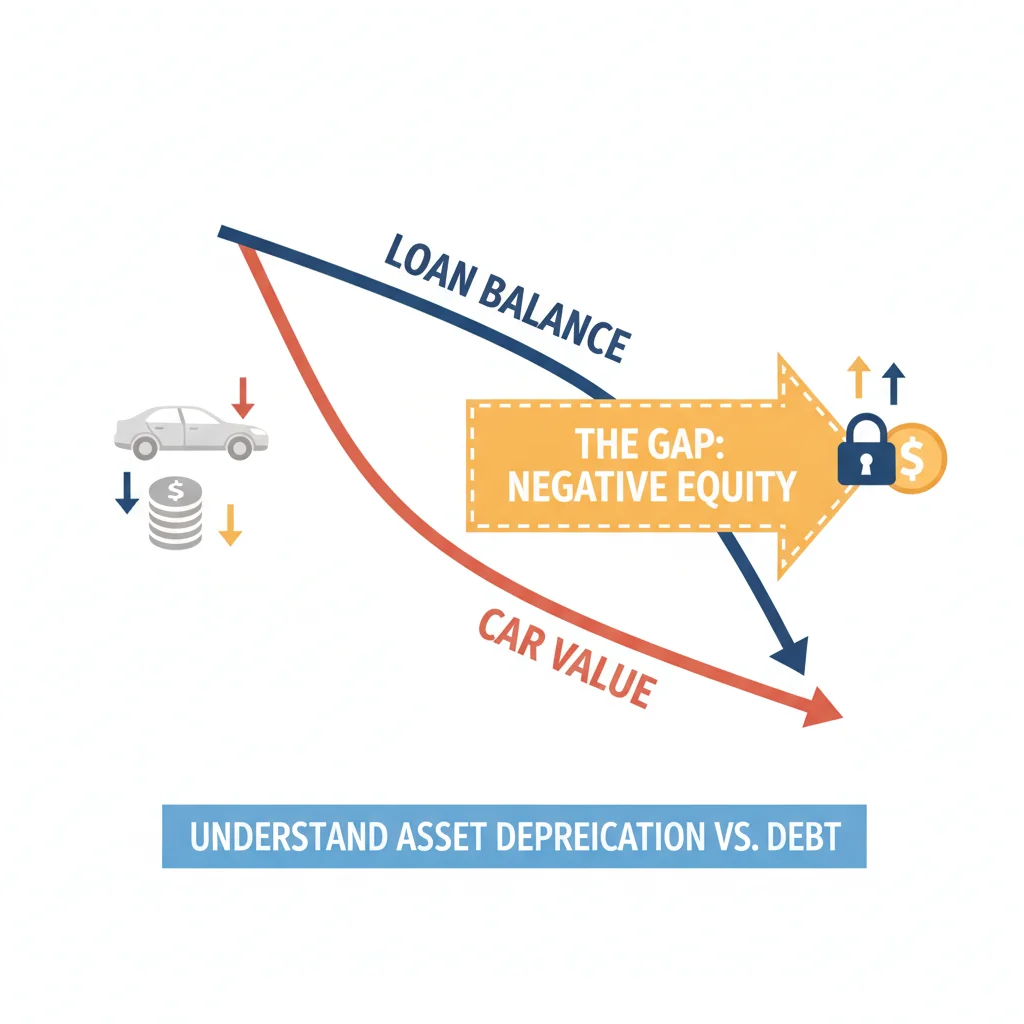
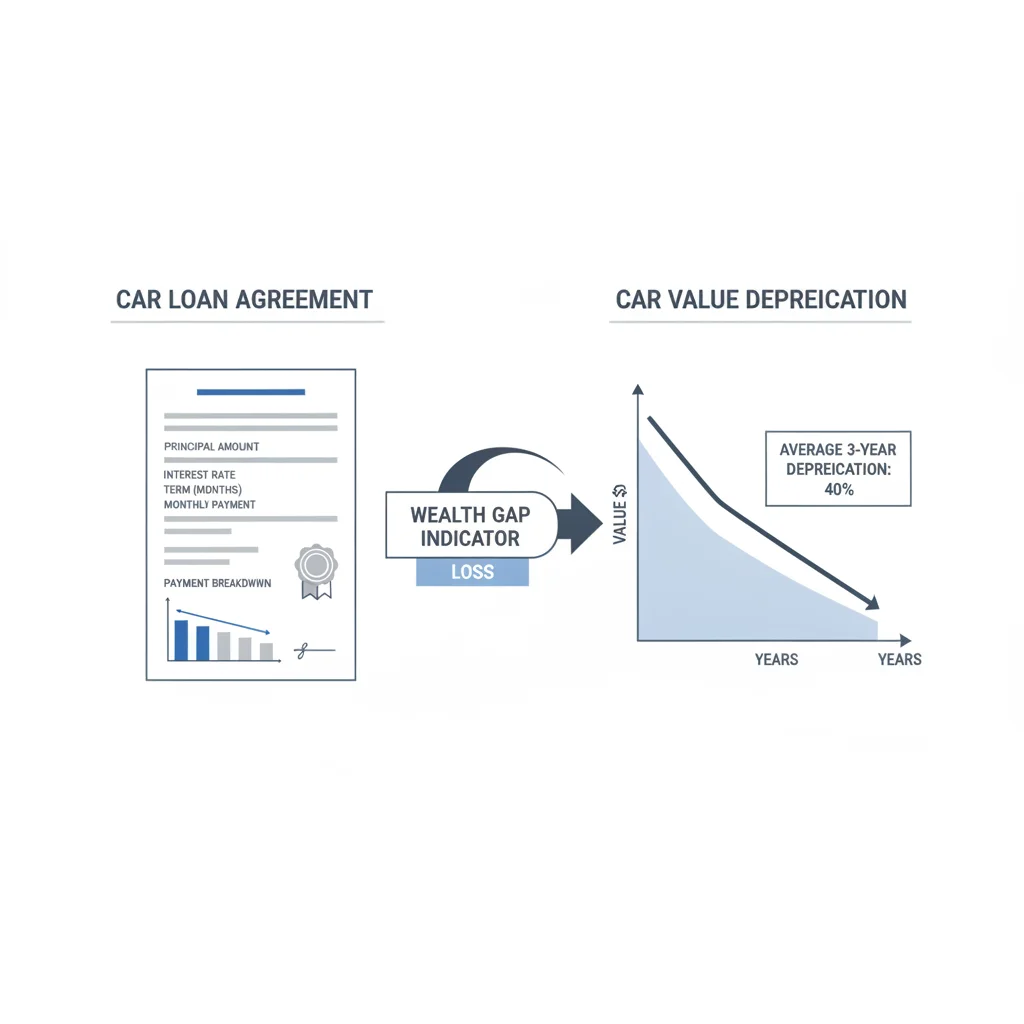
The moment a new car is driven off the dealer lot, it loses roughly 10–15% of its purchase price. On a used car, the drop is less severe but still meaningful. Meanwhile, a subprime loan charges a significantly higher interest rate than a prime loan — often 12% to 20% or more depending on your credit profile. At those rates, a large portion of each early monthly payment goes toward interest rather than reducing the principal. That means you build equity in the vehicle very slowly during exactly the period when the car is losing value the fastest.
The result is a gap — sometimes a large one — between what you owe and what your insurer would pay if the car were totaled or stolen. Standard comprehensive and collision insurance only pays the car's actual cash value (ACV) at the time of loss, not your remaining loan balance. If your car is worth $18,000 but you still owe $24,500, you would be left responsible for $6,500 out of pocket even after the insurance payout — unless you have gap coverage.
For a deeper look at how depreciation drives this math, see Gap Insurance and Depreciation: Why the Gap Exists and Whether Coverage Is Worth It.
What Gap Insurance Actually Pays — and What It Doesn't
Before evaluating whether gap insurance is worth buying, you need to know precisely what the product does. Gap insurance — short for Guaranteed Asset Protection — pays the difference between your lender's payoff amount and the actual cash value settlement your auto insurer provides after a covered total loss or theft.
What 'Actual Cash Value' Means for Your Claim
Actual cash value (ACV) is what your insurer determines the vehicle was worth at the time of the total loss — based on age, mileage, condition, and comparable sales in your area. This is almost always less than what you paid, less than the remaining loan balance on a subprime loan, and sometimes less than what you expect. The ACV determination is also negotiable; if you believe your insurer's figure is too low, you can dispute it with documented evidence of comparable vehicle prices.
Gap Insurance Has a Different Name at Some Insurers
At many major auto insurance companies, gap coverage is marketed under the name 'Loan/Lease Payoff Coverage' or 'Auto Loan/Lease Gap Coverage' rather than 'gap insurance.' The underlying protection is functionally the same. When shopping your insurer, ask specifically about loan payoff coverage to make sure you're comparing equivalent products.
When Gap Coverage Ends Automatically
Dealer-sold gap products typically expire at the end of the loan term or when the vehicle is paid off, whichever comes first. Insurer-sold gap coverage can be cancelled at any time by the policyholder — which is a meaningful advantage, since you can drop it as soon as your loan balance falls below your car's estimated market value and stop paying for protection you no longer need.
Here's a concrete example:
| Item | Amount |
|---|---|
| Remaining loan balance | $24,500 |
| Car's actual cash value (insurer payout) | $18,000 |
| Gap amount owed without coverage | $6,500 |
| Gap insurance covers | $6,500 |
| Out-of-pocket cost to you | $0 (minus deductible on some policies) |
However, gap insurance does not cover:
- Your auto insurance deductible (unless you purchase a separate "deductible waiver" rider)
- Overdue loan payments or late fees rolled into your balance
- Extended warranties or other add-on products that were financed into the loan
- Mechanical repairs or wear and tear
- Negative equity from a previous vehicle trade-in that was rolled into this loan
That last exclusion is especially relevant to subprime borrowers. If you traded in an upside-down vehicle and the dealership rolled your remaining negative equity into your new loan, that amount is typically not covered by gap insurance — and it can quietly inflate your loan balance by thousands of dollars. For a comprehensive breakdown of coverage limits and fine print, see Gap Insurance Explained: What It Covers and When You Actually Need It.
The Case For Gap Insurance on a Subprime Loan
Given the financial dynamics of subprime lending, there are real, concrete reasons to take gap coverage seriously. Here's where the math genuinely works in your favor.
Protects against large out-of-pocket balances after total loss
Subprime borrowers with minimal down payments can easily owe $5,000–$10,000 more than a car's ACV within the first two years of the loan. Without gap coverage, a totaled vehicle leaves you still making payments on a car you no longer own.
High APRs mean you stay underwater longer
At 18% APR on a 72-month loan, the majority of early payments go to interest rather than principal — keeping your loan balance close to its starting point for years while the car depreciates steadily. This extends the risk window significantly compared to a prime borrower.
Provides a financial safety net on a tight budget
Subprime borrowers typically have less cash in reserve to absorb financial shocks. Gap coverage converts a potentially catastrophic unexpected expense into a manageable, predictable monthly or annual cost.
Can be bought cheaply through an insurer or credit union
When purchased as an add-on to your auto insurance policy — rather than through a dealership — gap coverage costs as little as $20–$60 per year, making it one of the more affordable protections available on a limited budget.
Coverage is cancellable once equity is established
Unlike warranties or service contracts baked into the loan, standalone gap insurance from an insurer can be cancelled the moment your loan balance drops below the car's actual cash value — so you're never paying for protection you no longer need.
~30%
Subprime borrowers who are immediately underwater
Industry estimates suggest roughly 30% of subprime auto loan originations result in negative equity from day one, driven by minimal down payments and high financing costs.
18–20%
Typical APR range for deep subprime auto loans
According to Experian's State of the Automotive Finance Market reports, deep subprime borrowers (scores below 500) face average APRs approaching 20% on new vehicle loans.
$5,900
Average negative equity carried by underwater borrowers
Edmunds data has consistently shown that underwater trade-ins carry an average negative equity balance near $6,000, a figure that often gets rolled into the next loan.
$20–$60/yr
Annual cost of insurer-sold gap coverage
Most major auto insurers offer gap or loan/lease payoff coverage as a standalone endorsement, typically costing a fraction of dealer-sold products.
When Gap Insurance Is Oversold — or Just Not Needed
The product has genuine value in the right circumstances, but gap insurance is also one of the most aggressively upsold items in the car-buying process — particularly at dealerships working with subprime customers who may feel they have less negotiating leverage. Here's when you should push back.
Dealer-sold gap is almost always significantly overpriced
Dealership finance offices routinely mark up gap insurance by hundreds of dollars. When the cost is rolled into a subprime loan, you end up paying interest on that inflated price for years — turning a $600 product into a $900+ expense.
Does not cover rolled-in negative equity
If you traded in an upside-down vehicle and your prior loan's negative equity was folded into your new loan balance, gap insurance typically won't cover that portion. This is one of the most misunderstood exclusions in the product.
Payout caps can leave a remaining balance uncovered
Many gap policies cap their payout at 25% above the vehicle's ACV. If you're severely underwater — owing 40% or 50% more than the car's value — the policy may not close the entire gap, leaving you with a residual balance.
Unnecessary if you made a substantial down payment
Buyers who put 20% or more down have already absorbed the steepest depreciation hit. Their loan-to-value ratio starts favorable enough that a gap may never materialize during the normal life of the loan.
Shorter loan terms reduce or eliminate the risk period
On a 36- or 48-month subprime loan, principal paydown happens quickly enough that many borrowers reach positive equity well before the midpoint of their loan — making gap coverage a cost with diminishing returns.
Deductible is not covered by default
Standard gap insurance does not pay your auto insurance deductible after a total loss. If your deductible is $500 or $1,000, that amount comes out of your pocket regardless — which some buyers don't realize until it's too late.
One of the clearest signals that gap coverage may not be necessary is a strong down payment. If you put 20% or more down on a vehicle, you've already absorbed the steepest portion of initial depreciation. Your loan balance starts well below the car's value, and the gap — if it ever materializes — tends to be small and relatively brief.
Loan term also plays a major role. A 36- or 48-month loan pays down principal much faster than a 72- or 84-month loan, meaning you reach positive equity sooner. How Loan Terms and Down Payments Affect Whether Gap Insurance Is Necessary goes deeper on exactly this calculation if you want to run the numbers for your own situation.
Also worth noting: some gap policies have a payout cap — often 25% above the vehicle's ACV. If your loan balance far exceeds the vehicle's value, your coverage may not be sufficient to close the entire gap. Why Gap Insurance Doesn't Help Every Upside-Down Borrower explains these limitations in detail.
Dealer Gap vs. Insurer Gap: A Price Comparison That Matters
Where you buy gap insurance has an enormous impact on what you pay. Many subprime buyers purchase it through the dealership finance office, often without realizing it's available elsewhere at a significantly lower price.
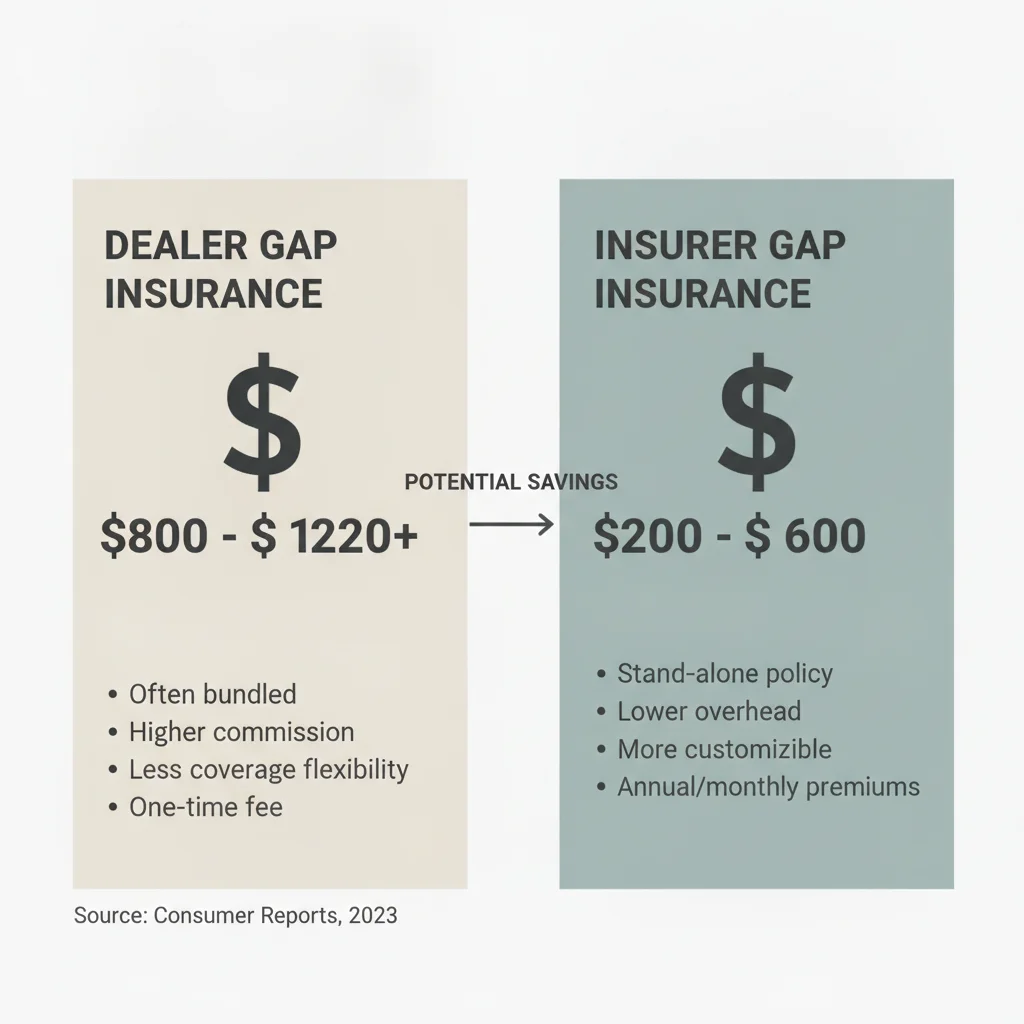
Dealership-sold gap coverage typically costs between $400 and $900 upfront — and that cost is usually rolled into your loan, meaning you'll pay interest on it for the life of the loan. On a subprime loan at 18% APR, a $600 gap product could actually cost you closer to $900 by the time you've paid it off.
By contrast, many major auto insurers and credit unions sell standalone gap insurance as an add-on to your existing comprehensive policy for as little as $20 to $60 per year. That's a potential savings of hundreds of dollars over the same coverage period. Some lenders, particularly credit unions, include gap coverage as a built-in loan feature at no additional cost.
- Dealership F&I office: $400–$900 rolled into loan; interest accrues on the balance
- Auto insurer add-on: $20–$60/year; cancellable when you no longer need it
- Credit union: Sometimes free with the loan, or low-cost add-on
The practical takeaway: if you decide gap insurance is right for you, shop it separately from your auto insurer before signing anything at the dealership. You may find coverage that costs a fraction of what the finance office is offering — and you can cancel it the moment your loan balance drops below the car's value, which dealer-purchased products often don't allow.
If you're still in the process of securing financing, exploring loan preapproval through a credit union or bank before visiting a dealership can also give you access to bundled gap products at much lower rates.
How to Decide: A Step-by-Step Checklist
Rather than relying on a blanket yes or no, use the following questions to evaluate your specific situation:
- How much did you put down? Less than 10% means you're almost certainly upside-down from day one. Gap coverage is probably worth it. More than 20% and you may have a meaningful equity buffer already.
- How long is your loan term? Anything 60 months or longer on a subprime rate means slow principal paydown. The gap period will be extended. Consider coverage. At 36–48 months, run the numbers before deciding.
- What's the vehicle's depreciation profile? Some vehicles hold their value much better than others. Trucks and certain SUVs tend to retain ACV longer; domestic sedans can depreciate sharply. Check used car value guides to estimate your vehicle's trajectory.
- Did you roll negative equity into this loan? If yes, your balance is already inflated beyond the car's value — and remember, that rolled-in equity is not covered by most gap policies. This may make gap less useful than it appears.
- Where are you being offered gap coverage? If it's the finance office at the dealership, get a competing quote from your insurer before agreeing. The same coverage from your insurer will almost always be cheaper.
- Can you afford the potential shortfall without coverage? If your loan balance could exceed your ACV by $3,000–$8,000 or more and you don't have savings to cover that scenario, the risk of going unprotected is real.
See also Gap Insurance: What It Covers, What It Doesn't, and When You Actually Need It for a broader look at how to evaluate this coverage type. And explore the full range of optional add-ons to understand which extras are genuinely protective and which are typically not worth the cost.

All claims are backed by peer-reviewed research. Sources on request.