Key Takeaways
Option A
Cabin Air Filter
The passenger protector — keeps the air you breathe clean.
Best for: Drivers who prioritize interior air quality, allergy sufferers, and anyone who runs their HVAC system regularly.
Option B
Engine Air Filter
The engine guardian — keeps combustion clean and efficient.
Best for: Every driver, full stop — a clogged engine filter affects fuel economy, performance, and long-term engine health.
If you or your passengers suffer from allergies or asthma
Cabin Air Filter
A fresh cabin filter — ideally a HEPA or activated-carbon upgrade — can meaningfully reduce pollen, mold spores, and fine particulates inside the cabin where you actually breathe.
If your car feels sluggish or fuel economy has dropped
Engine Air Filter
A restricted engine air filter starves combustion of oxygen, forcing the engine to work harder and burn more fuel. Replacing it is one of the cheapest performance fixes available.
If you drive in a dusty, rural, or high-pollution environment
Engine Air Filter
Dirt roads and construction zones load engine filters far faster than average. Inspect yours every 10,000 miles in these conditions rather than waiting for the standard interval.
If your climate control airflow seems weak
Cabin Air Filter
A severely clogged cabin filter blocks airflow through the HVAC system, making your blower motor work harder and reducing heating and cooling effectiveness dramatically.
If you want the single best return on a $20 DIY maintenance investment
Engine Air Filter
Engine air filter replacement is among the easiest and highest-impact DIY jobs on any car, with direct benefits to efficiency and engine longevity.
Two Filters, Two Completely Different Purposes
Most drivers know their car has an air filter. Fewer realize it has two — and that the two do entirely different things for entirely different parts of the vehicle. Mixing them up, or ignoring one while servicing the other, is one of the most common oversights in routine car maintenance.
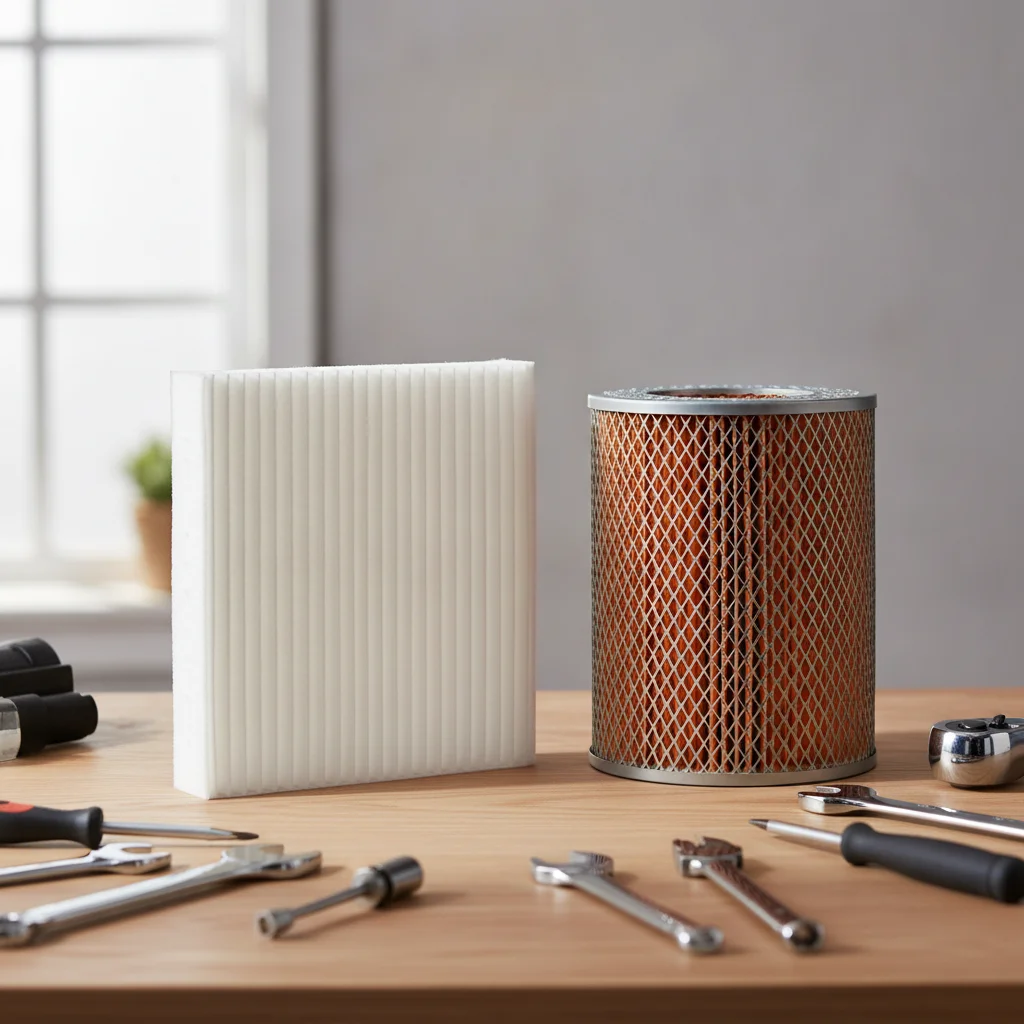
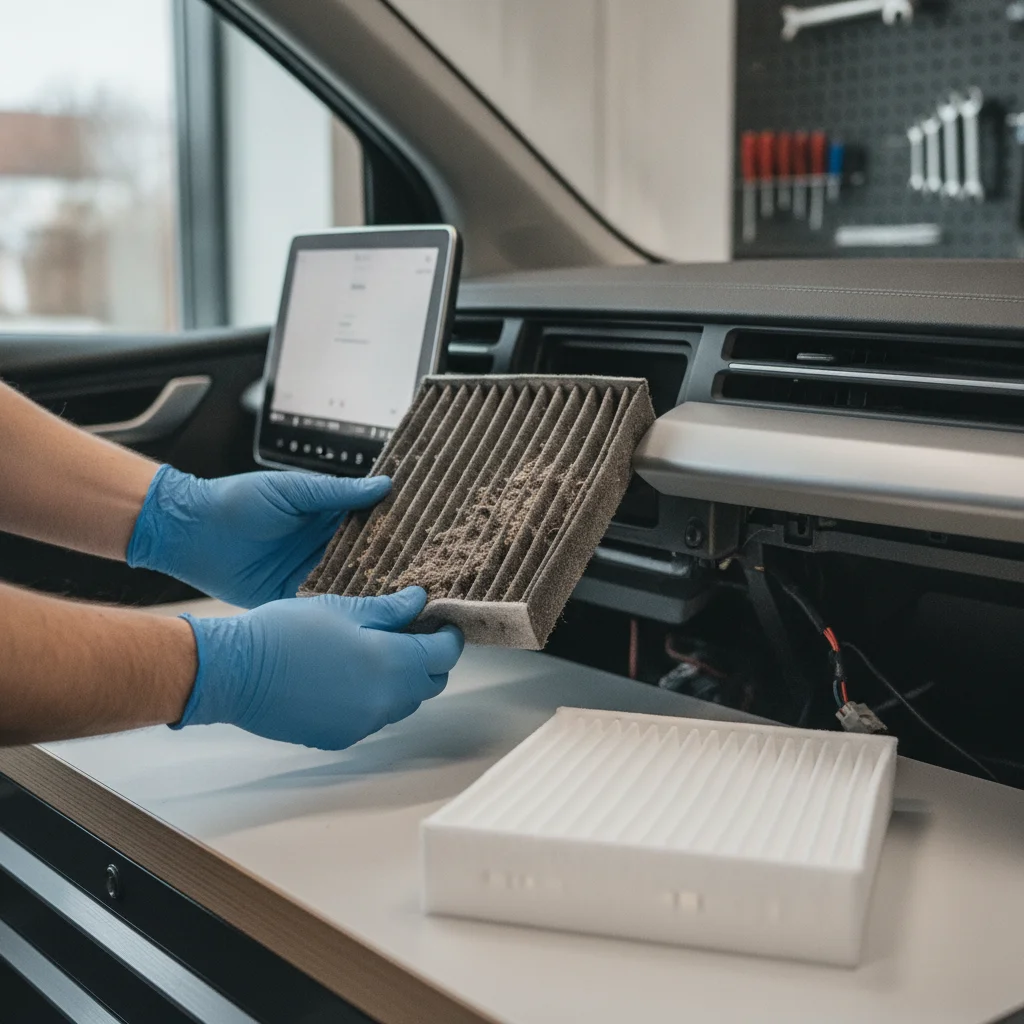
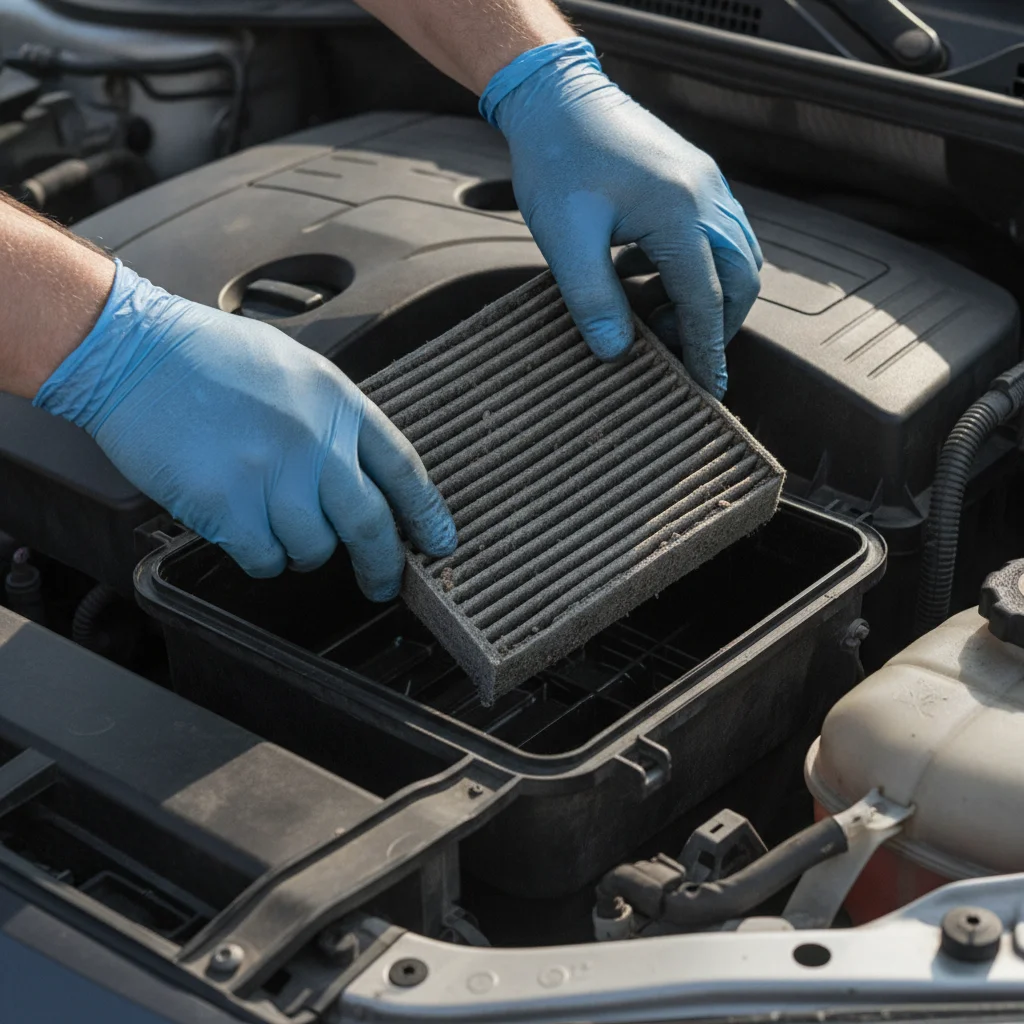
The cabin air filter sits inside the HVAC system, typically behind the glove box or under the dashboard. Its sole job is to clean the air coming into the passenger compartment before you breathe it. The engine air filter lives in the engine bay inside the air intake housing. Its job is to prevent dirt, dust, insects, and debris from entering the engine and damaging internal components.
Same basic concept — a filter cleaning incoming air — but the stakes and the symptoms of failure are completely different. Understanding both is essential for any driver who wants to stay on top of a sound maintenance schedule.
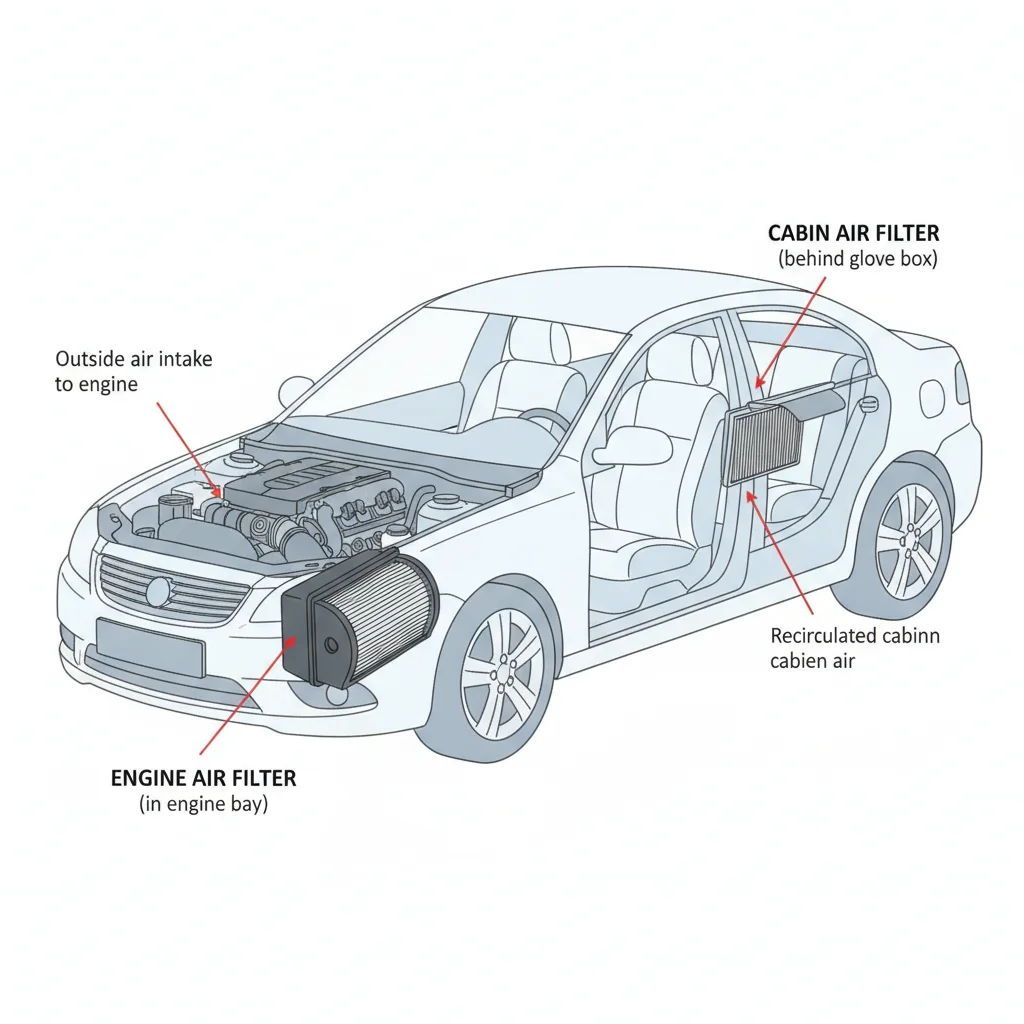
For a thorough side-by-side reference on replacement timing and procedures, see our full guide to both filters. This article goes deeper on what each filter actually protects and what the real-world consequences of neglect look like.
Cabin Air Filter: What It Protects and How It Fails
The cabin air filter is a relatively modern addition to automotive design — most vehicles didn't include one until the late 1990s and early 2000s. Today, virtually every new car sold in the United States has one, yet surveys consistently show that a significant portion of drivers have never replaced theirs.
The filter is typically made of pleated paper or a multi-layer synthetic media and is designed to trap:
- Pollen and mold spores
- Road dust and fine particulates
- Diesel exhaust soot and combustion byproducts
- Insects and larger debris
- In activated-carbon versions: odors and some volatile organic compounds (VOCs)
When it works correctly, you don't notice it — air flows freely and the cabin stays reasonably free of outdoor irritants. When it clogs, the symptoms are more varied than most people expect.
Signs Your Cabin Filter Needs Replacing
- Reduced airflow from vents even at high fan speeds
- Musty or stale odors when the HVAC is running
- Increased dust accumulation on the dashboard and interior surfaces
- Allergy symptoms worsening while driving
- Blower motor noise increasing as it strains against restricted airflow
Don't Confuse Filter Types at the Parts Store
Cabin air filters and engine air filters are sold in the same aisle at most auto parts retailers, and the packaging can look nearly identical if you're not reading carefully. Always verify the filter type, your vehicle's year, make, and model, and confirm whether the part number matches what's listed in your owner's manual. Installing a cabin filter in an engine airbox — or vice versa — is more common than you'd expect.
Used Car? Assume Both Filters Need Attention
When you buy a used vehicle without complete service records, there's no reliable way to know the last time either filter was replaced. Both cabin and engine air filters are inexpensive enough that replacing them immediately makes sense as a maintenance reset. It's a $50–$80 total investment that eliminates a genuine unknown and ensures you're starting your ownership with a clean baseline.
That last point matters more than most people realize. A severely clogged cabin filter can cause premature blower motor failure — a repair that runs $200–$600 at a shop, compared to a $15–$30 filter replacement. The cabin filter is a low-cost component protecting a significantly more expensive one.
For EV owners, this applies equally. Cabin air filters in electric vehicles degrade at the same rate as in gas-powered cars — the common assumption that EVs need less maintenance doesn't apply here.
Engine Air Filter: What It Protects and How It Fails
The engine air filter has been a standard component since the earliest days of the automobile. Internal combustion engines require a precise ratio of air and fuel to run efficiently, and that incoming air must be clean. Even microscopic abrasive particles — fine sand, road dust, brake dust — can accelerate wear on cylinder walls, pistons, and rings if they bypass the filter.
A modern engine air filter is typically a pleated paper element housed in a plastic airbox. It's designed to capture particles as small as a few microns while maintaining adequate airflow for combustion. Performance-oriented vehicles sometimes use oiled cotton gauze filters (like those from K&N), which offer lower restriction and are washable rather than disposable.
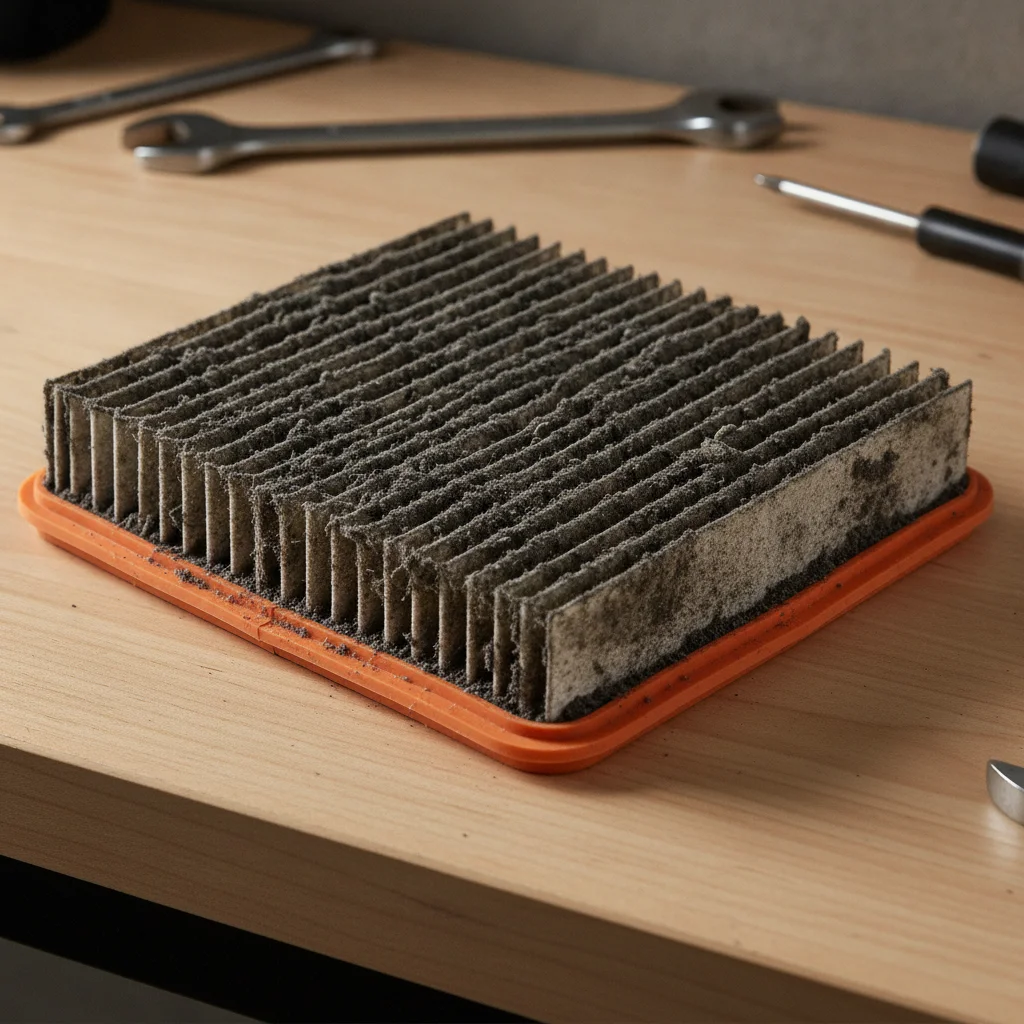
What Happens When the Engine Filter Clogs
Unlike the cabin filter, which primarily affects passenger comfort, a clogged engine air filter has measurable effects on how the vehicle runs:
- Reduced fuel economy — the engine compensates for restricted airflow by injecting more fuel, or runs less efficiently overall
- Sluggish acceleration — particularly noticeable at highway speeds or under load
- Rough idling — in older vehicles without sophisticated engine management systems
- Increased emissions — a rich fuel mixture produces more hydrocarbons and carbon monoxide
- Potential check engine light — modern vehicles monitor air-to-fuel ratios through mass airflow (MAF) sensors, which can trigger fault codes when airflow is severely restricted
The good news: replacing an engine air filter is genuinely one of the easiest DIY jobs on any car. Changing your own engine air filter typically takes under 10 minutes and requires no tools beyond your hands. Even on vehicles where the airbox is slightly awkward to access, the process rarely exceeds 20 minutes.
25%
Drivers who have never replaced their cabin filter
A 2019 survey by the Car Care Council found roughly 1 in 4 vehicle owners had never replaced their cabin air filter, despite manufacturer recommendations.
10%
Potential fuel economy loss from a clogged engine filter
The U.S. Department of Energy estimates that a severely restricted engine air filter can reduce fuel economy by up to 10% in older carbureted vehicles; modern fuel-injected engines see smaller but still measurable losses.
$20
Average DIY engine filter replacement cost
Most standard engine air filters for common vehicles retail between $15 and $35, making it one of the lowest-cost maintenance items with direct mechanical impact.
2x
Faster filter clogging in dusty environments
Industry data suggests filters in high-dust environments (unpaved roads, agricultural areas, construction zones) can reach end-of-life in half the miles recommended for normal driving conditions.
Head-to-Head: Replacement Intervals, Cost, and Consequences
Both filters operate on replacement schedules, not just symptom-driven service. The problem is that neither filter gives obvious, dramatic warning signs until it's well past its useful life. By that point, you've already been running on degraded protection for months or thousands of miles.
| Criterion | Cabin Air Filter | Engine Air Filter |
|---|---|---|
| What it protects | Occupants — air quality in the cabin | Engine — internal combustion components |
| Location | Behind glove box or under dash | Engine bay, inside the airbox |
| Typical replacement interval | 15,000–25,000 miles or annually | 15,000–30,000 miles |
| Average filter cost (DIY) | $15–$35 | $20–$50 |
| Shop replacement cost (parts + labor) | $50–$100 | $60–$120 |
| DIY difficulty | Easy — 5 to 15 minutes | Very easy — under 10 minutes |
| Consequences of neglect | Poor air quality, HVAC strain, blower wear | Reduced fuel economy, performance loss, engine wear |
| Upgrade options | HEPA, activated carbon filters | Reusable oiled cotton gauze (K&N, etc.) |
| Applies to EVs? | Yes — fully applicable | No — EVs have no combustion engine |
One important nuance on replacement intervals: the figures above reflect typical driving conditions. If you regularly drive on unpaved roads, through heavy construction zones, or in areas with elevated pollen counts or air pollution — accelerate your inspection schedule by 30–50%. A filter that lasts 20,000 miles in suburban Connecticut might need replacement at 12,000 miles in rural Arizona.
Cost is also worth keeping in perspective. Both filters are inexpensive parts. The markup comes from labor at a dealership or shop — a 15-minute job can carry a $50–$100 labor charge. If a service advisor recommends replacing either filter during a routine oil change, it's worth asking to see the old filter. A reputable shop will show you. A heavily soiled filter is easy to assess visually: look for discoloration, visible debris trapped in the pleats, and structural degradation of the filter media.
How to Read Your Filters Visually
You don't need a mechanic to assess whether a filter needs replacement. Both cabin and engine filters can be evaluated with a basic visual inspection — and once you know what to look for, it takes about 60 seconds each.
Engine Air Filter: What to Look For
- Gray or black discoloration across the pleats (new filters are typically white or off-white)
- Visible debris — leaves, insects, or compacted dirt lodged in the folds
- Structural damage — tears, compressed pleats, or a deformed housing seal
- Oil contamination — indicating a potential PCV (positive crankcase ventilation) system issue worth investigating separately
Cabin Air Filter: What to Look For
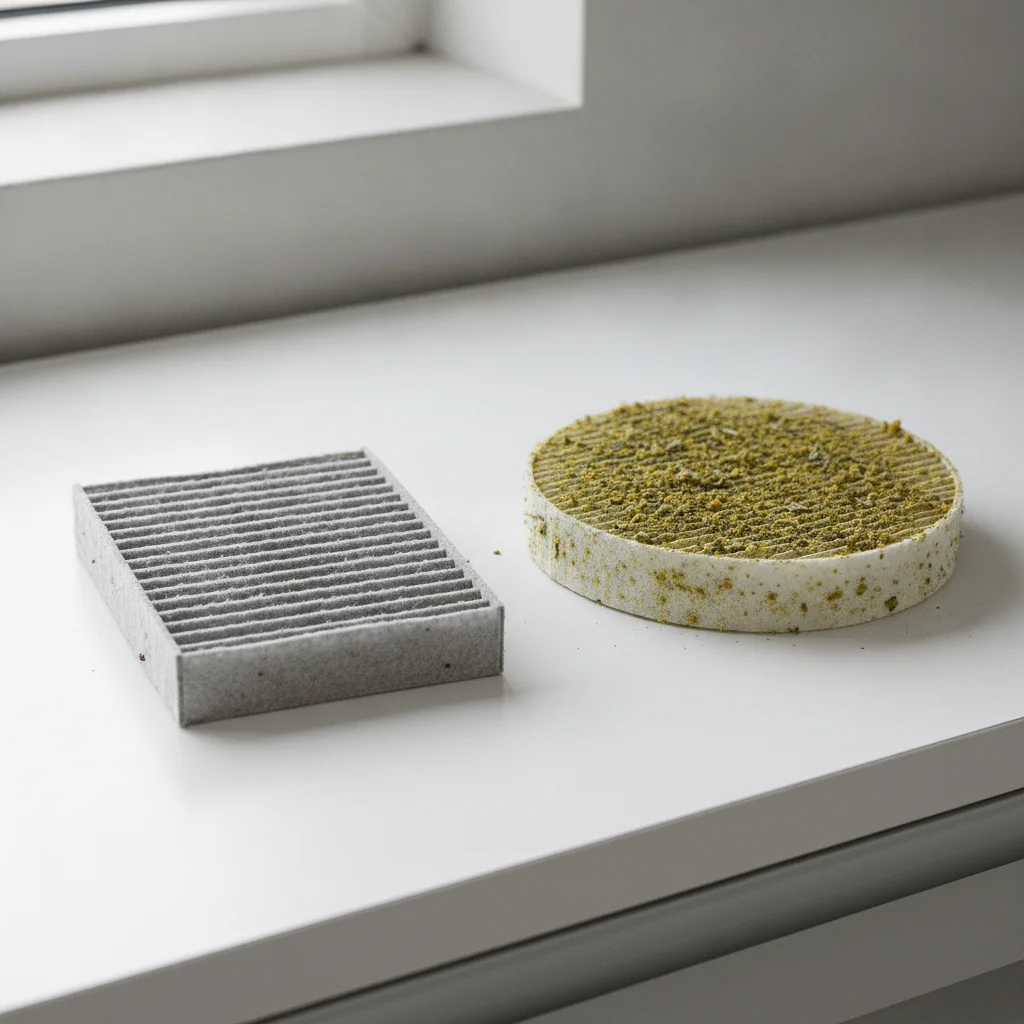
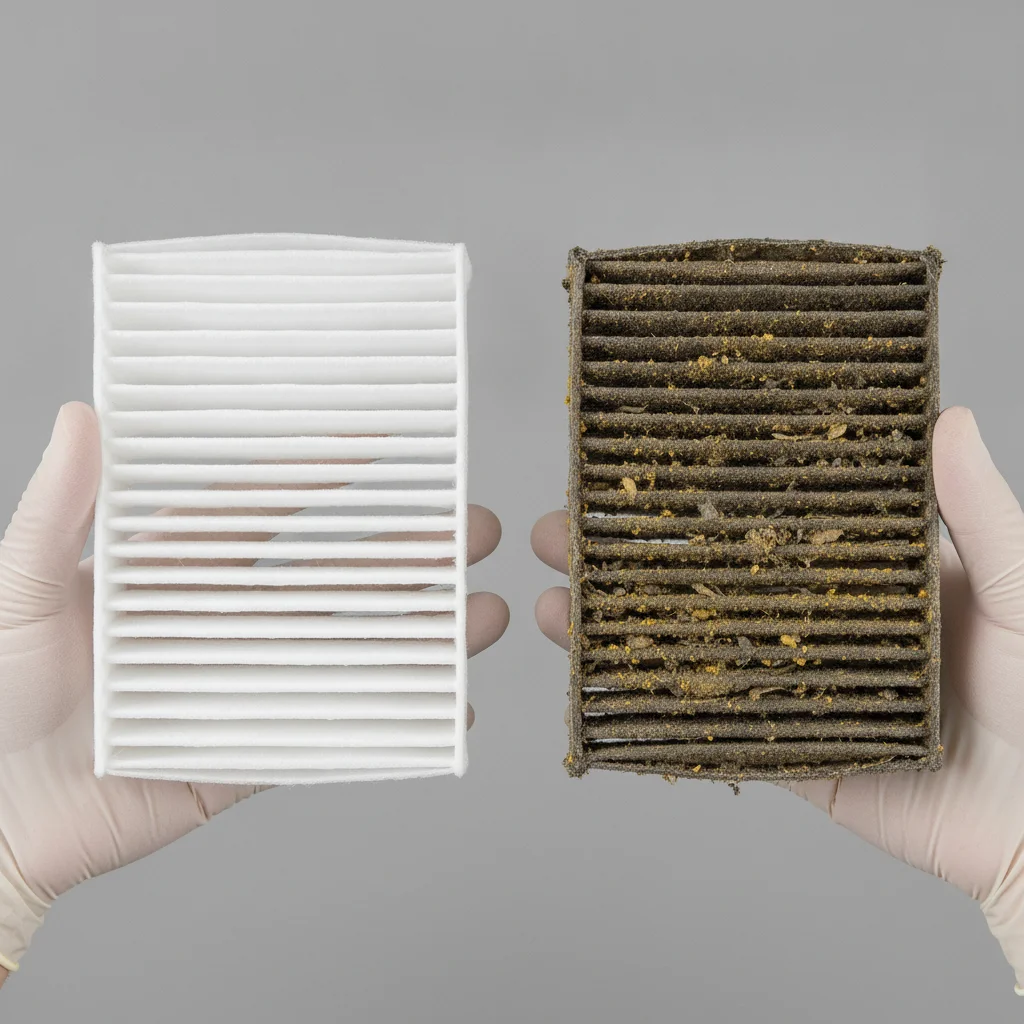
- Heavy gray or brown discoloration
- Visible pollen, fur, or debris accumulation
- Odor when you remove the filter — a musty or earthy smell indicates biological growth
- Structural deformation — a crushed or misshapen filter that no longer seals properly against its housing
As a rule of thumb: if you look at a filter and can't see light through the pleats when held up to a bright source, it's time to replace it. That's not a technical specification, but it's a reliable field indicator that experienced technicians use routinely.
Diving deeper into what engine restriction actually costs you in efficiency terms, research into clogged engine air filter effects shows how modern fuel-injected vehicles compensate — and why that compensation still comes at a cost.
Which One Should You Replace First — and When?
If you're unsure when either filter was last replaced — a common situation with used cars or vehicles you've owned for several years without tracking service records — inspect both. The cost of two replacement filters is modest, and the peace of mind is genuine.
For a newly purchased used vehicle with no service history, replacing both filters immediately is reasonable default maintenance. Think of it as resetting your maintenance baseline rather than a reactive repair.
If your vehicle is current on service and you're simply building better maintenance habits going forward, here's a practical decision framework:
- Check your owner's manual for the manufacturer's recommended replacement intervals for both filters. These are your primary reference point.
- Inspect both filters visually at every oil change — this costs nothing and takes two minutes.
- Adjust for your driving environment. High dust, high pollen, or high mileage warrants earlier action.
- Replace the engine filter first if you can only address one — it protects a more expensive and critical system.
- Don't overlook the cabin filter if you or your passengers have respiratory sensitivities. The air quality difference between a fresh cabin filter and a two-year-old one can be dramatic.
Don't Confuse Filter Types at the Parts Store
Cabin air filters and engine air filters are sold in the same aisle at most auto parts retailers, and the packaging can look nearly identical if you're not reading carefully. Always verify the filter type, your vehicle's year, make, and model, and confirm whether the part number matches what's listed in your owner's manual. Installing a cabin filter in an engine airbox — or vice versa — is more common than you'd expect.
Used Car? Assume Both Filters Need Attention
When you buy a used vehicle without complete service records, there's no reliable way to know the last time either filter was replaced. Both cabin and engine air filters are inexpensive enough that replacing them immediately makes sense as a maintenance reset. It's a $50–$80 total investment that eliminates a genuine unknown and ensures you're starting your ownership with a clean baseline.
Neither filter is a set-it-and-forget-it component. Both degrade continuously with use, and both have clear manufacturer guidance on replacement timing. The only real mistake is ignoring the schedule entirely — which, according to service data, a surprisingly large share of American drivers do. Building filter inspection into your regular oil change routine is the simplest fix. Most shops will check both if you ask, at no additional charge.

All claims are backed by peer-reviewed research. Sources on request.