Key Takeaways
Brake Service
Brake service refers to the inspection, maintenance, or replacement of the components that slow and stop your vehicle. This includes brake pads (the friction material that grips the rotor), brake rotors (the metal discs the pads clamp against), and brake fluid (the hydraulic fluid that transmits pedal force to the calipers). Each of these components wears or degrades on a different schedule, meaning a complete brake service isn't always a single event.
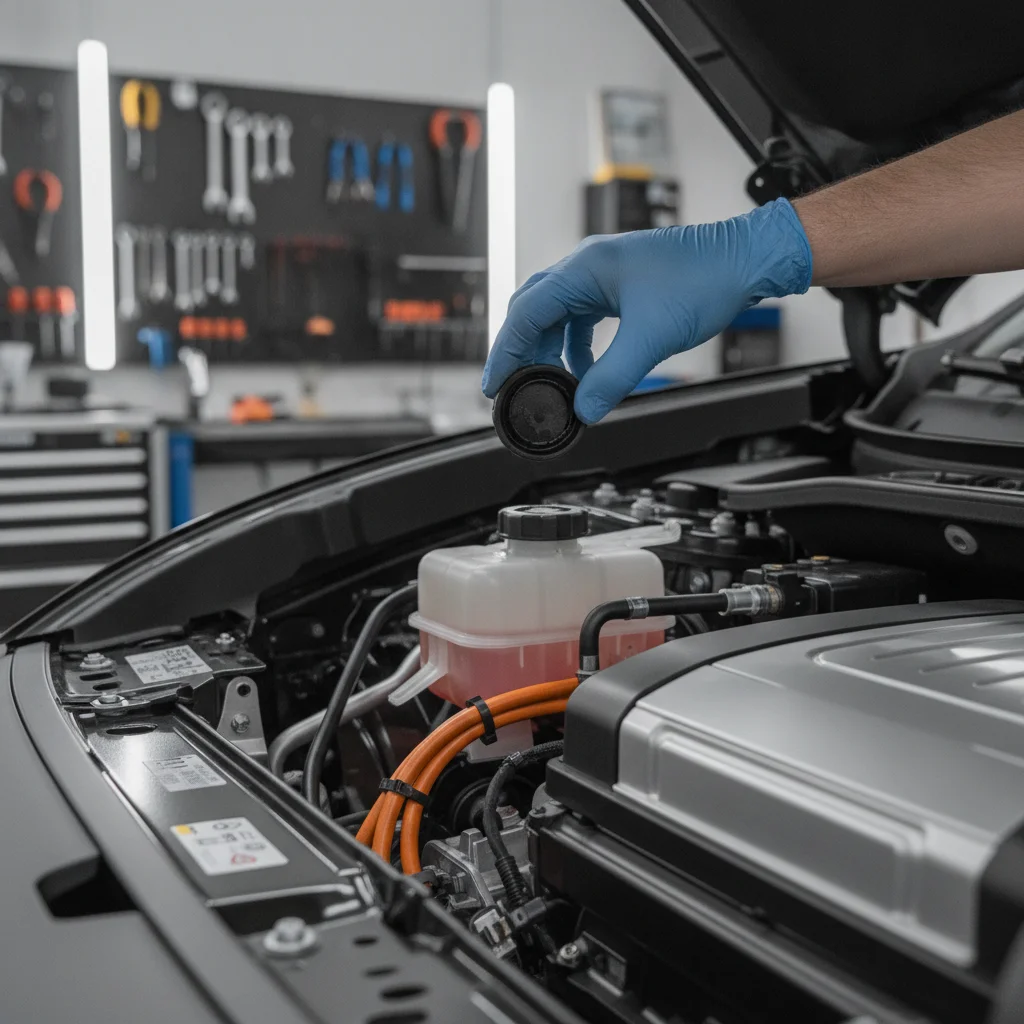
Brake fluid is hygroscopic — it absorbs moisture from the atmosphere over time — which lowers its boiling point and can introduce corrosion into the hydraulic system, independent of how often friction brakes are physically applied.
Why Brakes Are a System, Not a Single Part
Most drivers think about brakes only when something feels wrong — a squeal, a shudder, or a longer-than-usual stopping distance. But by the time any of those symptoms appear, at least one component has already been in distress for a while. The reason brake service tends to catch people off guard is simple: pads, rotors, and fluid each wear or degrade on completely different timelines, and most routine oil-change inspections only glance at one of the three.
Understanding how these three components interact — and what each one's service interval actually looks like — is the difference between proactive maintenance and an expensive emergency repair. This guide breaks down each component, explains its typical service schedule, and describes how the condition of one affects the others.
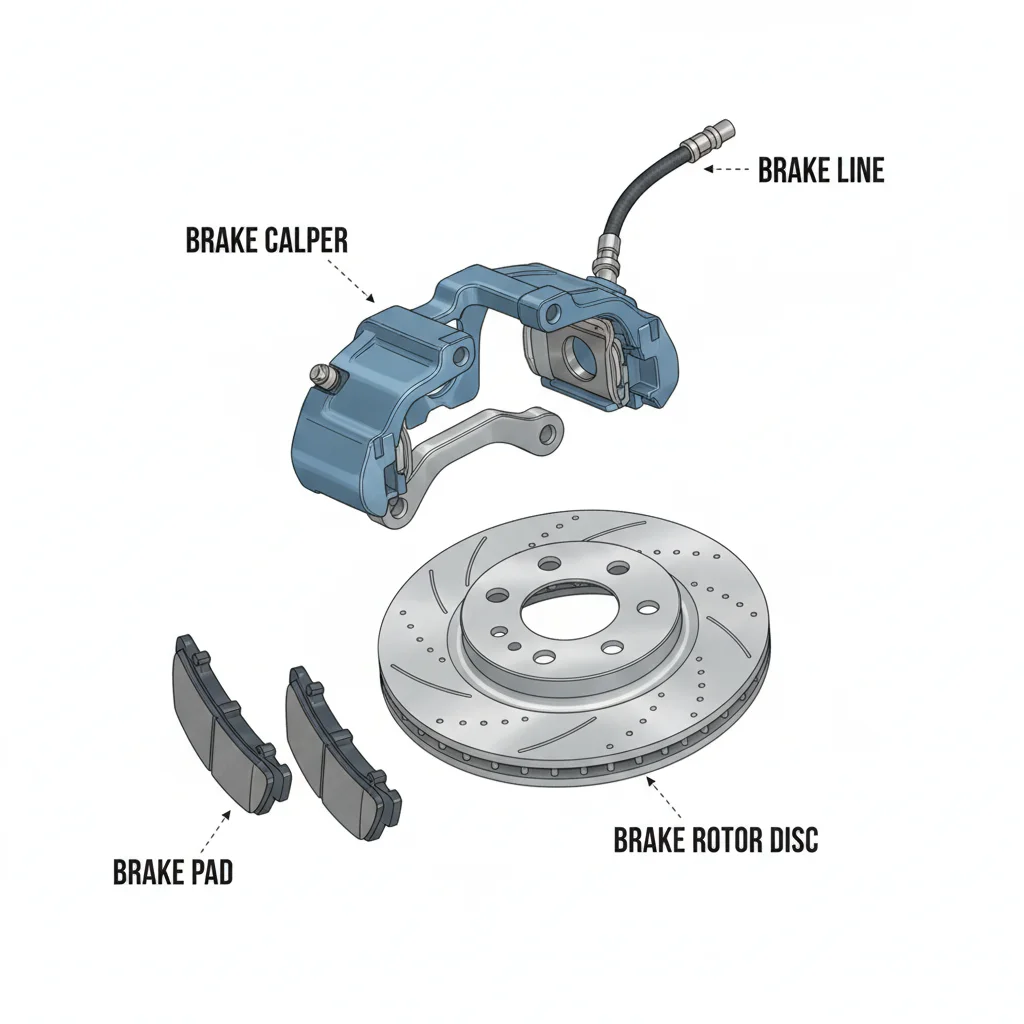
Think of it this way: brake pads are the consumable, rotors are the workhorse, and brake fluid is the quiet enabler. Neglect any one of them and the others pay the price.
Brake Pads: The Component You'll Replace Most Often
Brake pads are the first line of contact in your stopping system. When you press the pedal, hydraulic pressure forces the pads against the spinning rotor, converting kinetic energy into heat through friction. That friction wears the pad material down over time — which is exactly what it's designed to do. The question is how fast.
Typical Service Interval
Brake pad lifespan varies widely: 25,000 to 70,000 miles is the commonly cited range, but that spread reflects real differences in driving conditions and pad compound. City driving with frequent hard stops can burn through pads in under 30,000 miles. A highway commuter in the same vehicle could see 60,000 miles or more from the same set.
25K–70K
Miles typical brake pad lifespan
Range reflects differences in driving style, pad compound, and vehicle weight — city drivers trend toward the lower end.
2–3 years
Recommended brake fluid flush interval
Most OEM service guides and industry technician standards recommend flushing brake fluid on this schedule regardless of mileage.
3–4%
Water content that drops boiling point significantly
Research cited by the Society of Automotive Engineers shows fluid with 3–4% water content can have a boiling point 100°F lower than fresh fluid.
60–70%
Share of braking force handled by front brakes
Vehicle dynamics during deceleration shift weight forward, requiring front brakes to do the majority of stopping work on most passenger vehicles.
$150–$300
Typical savings from timely pad replacement
Replacing pads before rotors are damaged avoids the additional rotor replacement cost, which typically adds $100–$250 or more per axle.
Pad Thickness: What the Numbers Mean
New pads typically start at 10–12mm of friction material. Most manufacturers recommend replacement when pads reach 2–3mm. Many modern pads include a wear indicator — a small metal tab that contacts the rotor when thickness drops to the warning threshold, producing that familiar high-pitched squeal. Some vehicles display a low-pad warning light on the dashboard.
One important distinction: front and rear pads wear at very different rates. Front brakes manage roughly 60–70% of braking force on most vehicles, so front pads typically need replacement more often. It's common for drivers to service front brakes twice before the rears need attention.
Pad Material Matters
- Organic/non-asbestos (NAO): Quiet and gentle on rotors, but wear faster and produce more brake dust. Common on economy vehicles.
- Semi-metallic: More durable and heat-resistant, better for performance driving, but noisier and harder on rotors.
- Ceramic: Quieter than semi-metallic, produce less visible dust, and offer long service life — but cost more upfront.
Ask for Pad Thickness in Millimeters
When a shop says your brakes 'look fine,' ask for the actual millimeter measurement on each corner. A reading of 4mm means you have roughly one service cycle left; 2–3mm means replacement is overdue on most vehicles. Documented numbers let you track wear rate between visits and plan accordingly.
Schedule Fluid Flushes Separately From Pad Work
Brake fluid service rarely aligns with pad replacement intervals, so it's easy to skip if you only think about brakes when pads wear out. Put a recurring 2-year calendar reminder on your phone specifically for brake fluid. It's one of the cheapest brake services and one of the most commonly missed.
If you're evaluating a used vehicle, the condition of the brake pads is one of the most telling indicators of how the car was driven. See our guide to evaluating brake performance on a test drive for what to look and feel for before you buy.
Rotors: The Long Game With a Hard Limit
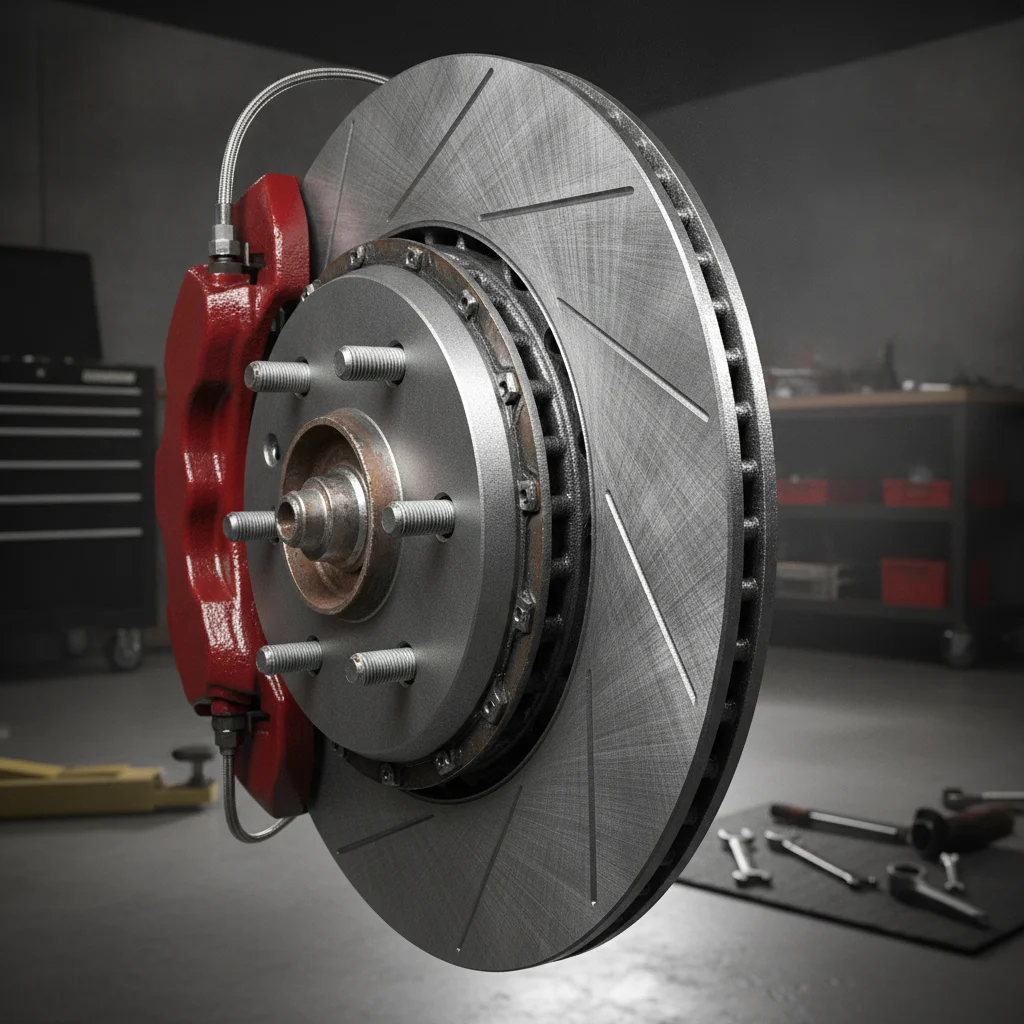
Brake rotors — the disc-shaped metal components that your pads clamp against — last considerably longer than pads, but they're not indefinite. Rotors face two primary threats: physical wear from friction (measured as thickness) and heat stress (measured by warping and cracking).
Typical Service Interval
Most rotors are designed to last through two to three sets of brake pads, typically falling somewhere between 50,000 and 70,000 miles for standard driving. Performance or slotted rotors used in track driving may have shorter lifespans due to more intense heat cycles. Budget rotors on economy vehicles can warp after as few as 30,000 miles under hard use.
Minimum Thickness: The Non-Negotiable
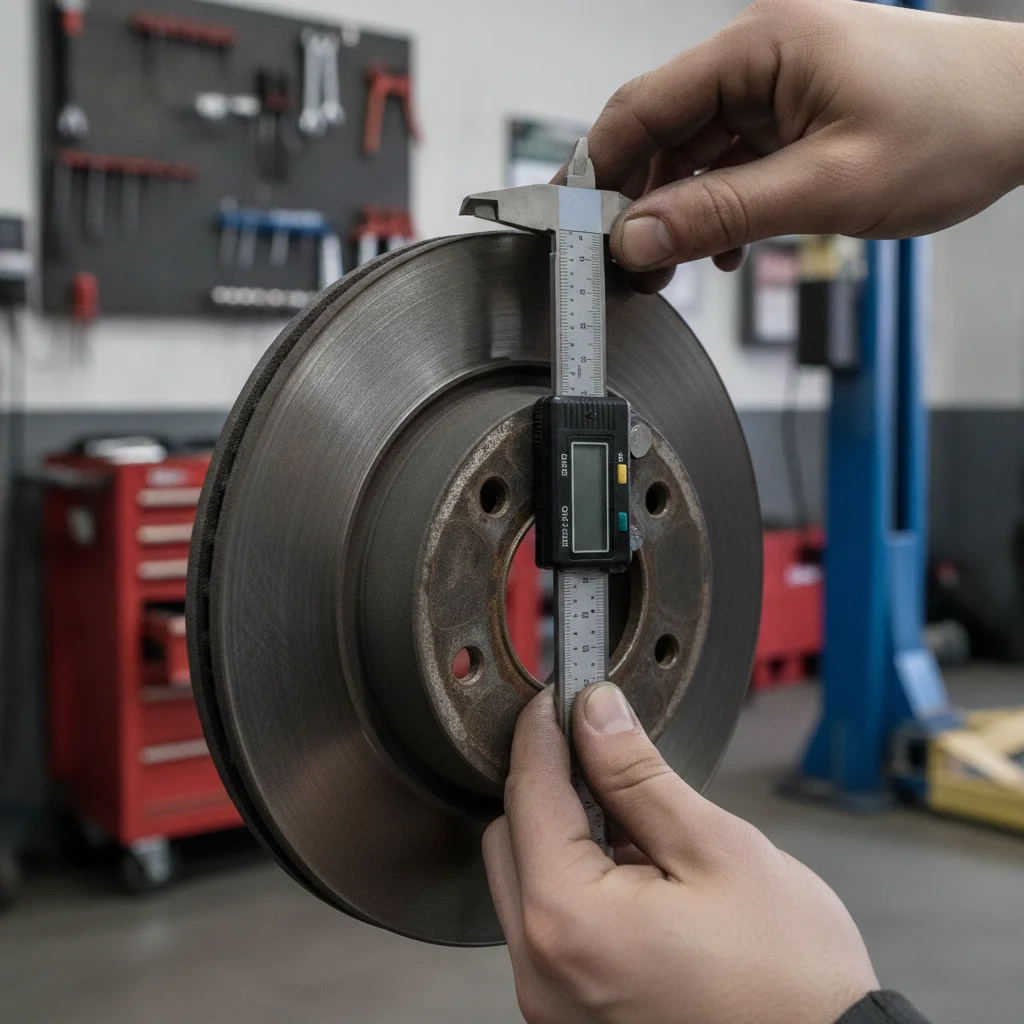
Every rotor has a minimum thickness specification stamped on its edge or listed in the vehicle's service manual. Once a rotor wears below that threshold — typically after repeated machining or friction wear — it can't safely dissipate heat, which increases stopping distances and raises the risk of rotor failure under stress. A qualified technician measures rotor thickness with a micrometer at each brake service.
Warping and Surface Condition
The familiar steering-wheel shudder or pulsating brake pedal under moderate braking is almost always rotor warping — technically called lateral runout or disc thickness variation. This typically results from uneven heat distribution, often caused by sitting with the brakes applied right after a hard stop (trapping heat in one spot) or from over-torqued lug nuts that distort the rotor hat.
Lightly warped or scored rotors can sometimes be resurfaced (machined) by a shop, provided enough material remains above the minimum thickness spec. In practice, the cost difference between resurfacing and replacing budget rotors is often small enough that replacement makes more economic sense.
Resurfacing vs. Replacing Rotors
Some shops offer rotor resurfacing (also called turning or machining) as a lower-cost alternative to replacement. This removes a thin layer of rotor material to eliminate grooves and restore a flat surface. It's only viable if the rotor remains above its minimum thickness spec after machining. On vehicles where budget rotors cost $30–$50 each, replacement often makes more economic sense than a $20–$30 resurfacing that leaves little safety margin.
EV Rotor Rust Is a Real Concern
Electric vehicle owners who rarely use friction brakes should periodically make several firm brake applications to scrub surface rust off rotors. This is especially important after the vehicle sits for extended periods in wet climates. Persistent surface rust from disuse can lead to uneven rotor surfaces and reduced braking effectiveness even when pad thickness is still substantial.
Brake Fluid Color Isn't Always Reliable
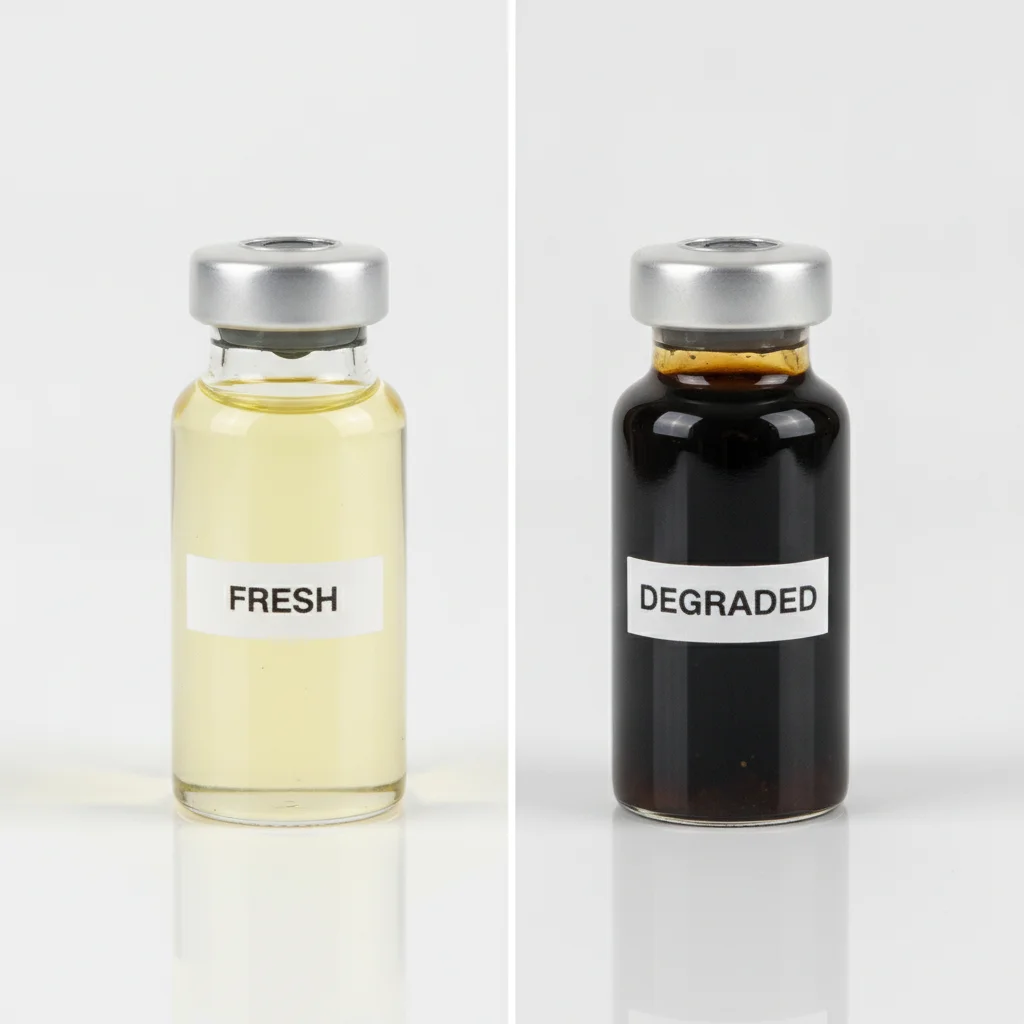
While severely degraded fluid does turn dark brown, color alone isn't a definitive indicator of moisture content. Some fluid formulations stay relatively clear even when contaminated. The most reliable check is a test strip designed to detect copper content (a proxy for moisture-induced corrosion) or a refractometer that directly measures boiling point. Many shops offer this test for free or at minimal cost.
Rust: Normal vs. Problematic
A thin layer of surface rust on rotors after a vehicle sits overnight or through wet weather is completely normal and clears within the first few brake applications. Deep pitting, rust grooves, or a rust ridge at the outer edge of the rotor — which forms because the pad doesn't contact that area — are signs of significant corrosion and warrant replacement.
Brake Fluid: The Invisible Service Interval
Of the three brake service items, fluid is the most overlooked — and the one most likely to be skipped entirely because there's nothing visible to wear out. Brake fluid doesn't get consumed the way oil does. It doesn't thin out or turn black. Most drivers never open the brake fluid reservoir at all. That's a problem.
Why Fluid Degrades Without Obvious Signs
Brake fluid is hygroscopic, meaning it actively absorbs moisture from the air over time. Even a sealed system isn't perfectly airtight — moisture enters slowly through rubber hoses, reservoir caps, and seals. As water content climbs, the fluid's boiling point drops. Brake fluid under normal conditions has a dry boiling point above 400°F; with just 3–4% water content, that threshold can fall below 300°F.
This matters because braking generates intense heat at the caliper. If fluid boils — a condition called vapor lock — it converts to compressible gas, causing the pedal to suddenly feel soft or sink to the floor. This is a rare but serious safety event, most likely to occur during sustained heavy braking such as long downhill grades or track driving.
Typical Service Interval
Most manufacturers recommend a brake fluid flush every 2 years or 30,000 miles, whichever comes first. Some vehicles specify longer intervals; always check the owner's manual. The 2-year guideline is a reliable rule of thumb for drivers who don't track their car. A simple test strip from any auto parts store can measure moisture content in under a minute and confirm whether a flush is actually needed.
“Brake fluid is probably the most overlooked maintenance item on any vehicle. People will obsess over oil changes and tire pressure, but the fluid that actually stops the car? They assume it never needs attention. That assumption is wrong, and it's the kind of wrong that shows up at the worst possible moment.”
— Kevin Sullivan, ASE Master Technician and automotive safety educator
For EV and hybrid owners, brake fluid service deserves special attention. Because regenerative braking handles most deceleration, friction brakes on these vehicles are used infrequently — so pads may look brand new for years. But the fluid is still absorbing moisture on schedule. For more on this, see why EV brake fluid still needs changing regardless of pad wear.
If you want to stay on top of brake fluid between professional service visits, it's one of several key checks covered in our guide to fluid checks every driver should do.
Ask for Pad Thickness in Millimeters
When a shop says your brakes 'look fine,' ask for the actual millimeter measurement on each corner. A reading of 4mm means you have roughly one service cycle left; 2–3mm means replacement is overdue on most vehicles. Documented numbers let you track wear rate between visits and plan accordingly.
Schedule Fluid Flushes Separately From Pad Work
Brake fluid service rarely aligns with pad replacement intervals, so it's easy to skip if you only think about brakes when pads wear out. Put a recurring 2-year calendar reminder on your phone specifically for brake fluid. It's one of the cheapest brake services and one of the most commonly missed.
How the Three Components Affect Each Other
Brake pads, rotors, and fluid don't operate in isolation. The condition of each one influences the wear rate and performance of the others — which is exactly why evaluating them together at each service is worth the time.
Worn Pads → Damaged Rotors
This is the most common and costly chain reaction in brake neglect. When pad friction material wears completely through, the metal backing plate contacts the rotor directly. The resulting metal-on-metal grinding rapidly scores deep grooves into the rotor surface. What started as a straightforward pad replacement becomes a full brake job requiring rotor replacement — typically adding $100–$250 per axle in parts alone.
Warped Rotors → Accelerated Pad Wear
A rotor with significant thickness variation or runout creates uneven contact with the pad surface. Instead of smooth, even wear across the full pad face, the pad develops high and low spots. This uneven loading not only wears pads faster but can cause brake judder and reduce effective braking force.
Degraded Fluid → Corrosion and Caliper Damage
Water-contaminated brake fluid doesn't just threaten boiling point. Moisture in the hydraulic system promotes internal corrosion of brake calipers, wheel cylinders (on drum brakes), and steel brake lines. Corroded caliper pistons can seize — either failing to apply braking force or, more dangerously, failing to release it, which causes a single brake to drag continuously. A dragging caliper generates sustained heat that can warp rotors and cook pads on that corner alone.
The practical takeaway: a comprehensive brake inspection that checks all three components takes roughly the same time as checking just one. Ask your shop to document pad thickness, rotor thickness, and fluid condition at every service visit. Those numbers tell a much more complete story than a pass/fail assessment.
Building Your Personal Brake Service Timeline
No single schedule fits every driver. The right timeline for brake service depends on vehicle type, driving environment, and usage patterns. Here's how to think through your own situation.
Assess Your Driving Profile
- City/stop-and-go driving: Expect to be at the lower end of pad life ranges (25,000–35,000 miles). Schedule pad inspections every 15,000 miles or once a year.
- Highway-dominated commuting: Pad life tends toward 50,000–70,000 miles. Inspections every 20,000–25,000 miles or at each tire rotation are reasonable.
- Mountain or hilly terrain: Sustained downhill grades apply sustained brake heat. Check pads more frequently and consider higher-performance pad compounds if descending is a regular part of your route.
- Towing or hauling: Added vehicle weight significantly increases brake workload. Treat pad inspection intervals as if you're a city driver regardless of actual road type.
Align Brake Checks With Existing Service Visits
The easiest habit is to pair brake inspections with tire rotations, which most manufacturers recommend every 5,000–7,500 miles. Wheels come off anyway, giving a technician direct visual access to the pads and rotors. Many shops include this inspection at no additional charge.
Set a separate calendar reminder for brake fluid — every 2 years regardless of mileage. It's inexpensive (typically $80–$150 for a full flush) and disconnected from any mileage-based service, so it's easy to forget without a standalone reminder.
EV and Hybrid Drivers: A Different Math
If you drive an EV or plug-in hybrid, regenerative braking does the heavy lifting during deceleration, dramatically extending pad and rotor life. Some EV drivers report original pads lasting 100,000 miles or more. The catch is that rotors can develop surface rust from disuse faster than they wear from friction. Occasional firm brake applications help maintain rotor surface condition. And as noted, fluid service remains on the same 2-year schedule. For a deeper look at how this changes maintenance math, see how regenerative braking affects your brake pads over time.
For drivers who want to take brake pad replacement into their own hands, it's one of the most accessible DIY maintenance jobs. Our step-by-step brake pad replacement guide walks through the process and explains where the real savings come from.
Resurfacing vs. Replacing Rotors
Some shops offer rotor resurfacing (also called turning or machining) as a lower-cost alternative to replacement. This removes a thin layer of rotor material to eliminate grooves and restore a flat surface. It's only viable if the rotor remains above its minimum thickness spec after machining. On vehicles where budget rotors cost $30–$50 each, replacement often makes more economic sense than a $20–$30 resurfacing that leaves little safety margin.
EV Rotor Rust Is a Real Concern
Electric vehicle owners who rarely use friction brakes should periodically make several firm brake applications to scrub surface rust off rotors. This is especially important after the vehicle sits for extended periods in wet climates. Persistent surface rust from disuse can lead to uneven rotor surfaces and reduced braking effectiveness even when pad thickness is still substantial.
Brake Fluid Color Isn't Always Reliable
While severely degraded fluid does turn dark brown, color alone isn't a definitive indicator of moisture content. Some fluid formulations stay relatively clear even when contaminated. The most reliable check is a test strip designed to detect copper content (a proxy for moisture-induced corrosion) or a refractometer that directly measures boiling point. Many shops offer this test for free or at minimal cost.

All claims are backed by peer-reviewed research. Sources on request.