Key Takeaways
EV Tire Rotation
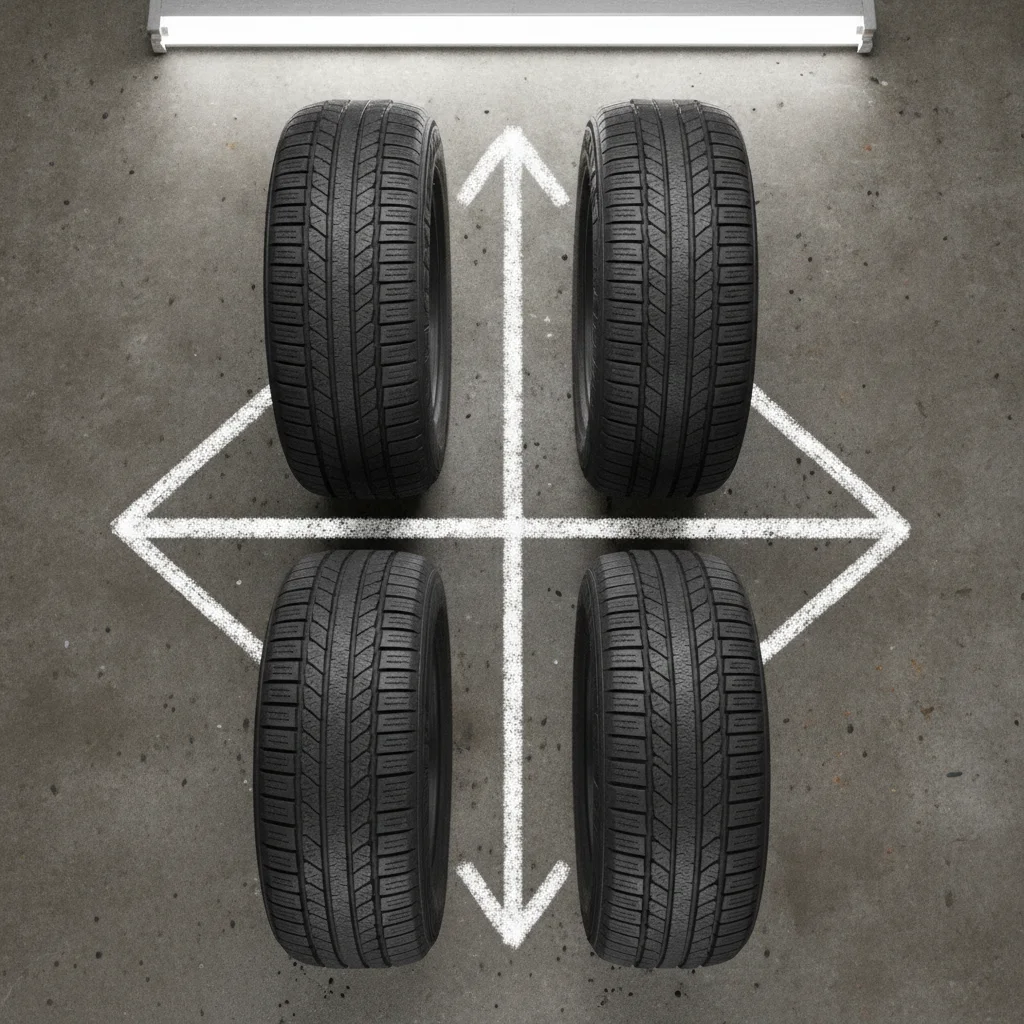
Tire rotation is the practice of periodically moving each tire to a different position on the vehicle — front to rear, side to side, or diagonally — so that all four tires wear down at the same rate. On electric vehicles, this task is more urgent than on gas-powered cars because EVs are heavier, deliver torque instantly, and often run on tires with shallower tread designed specifically for low rolling resistance. Skipping rotation causes uneven wear that shortens tire life and can quietly cost hundreds of dollars per set.
Many EVs also run staggered fitments — wider tires at the rear than the front — which limits rotation options and makes adherence to the manufacturer's recommended schedule even more critical.
Why EV Owners Underestimate Tire Wear
The "no oil changes" selling point for electric vehicles is legitimate and genuinely saves money. But it has a side effect: it conditions EV owners to think maintenance is largely optional. That assumption doesn't hold up when it comes to tires.
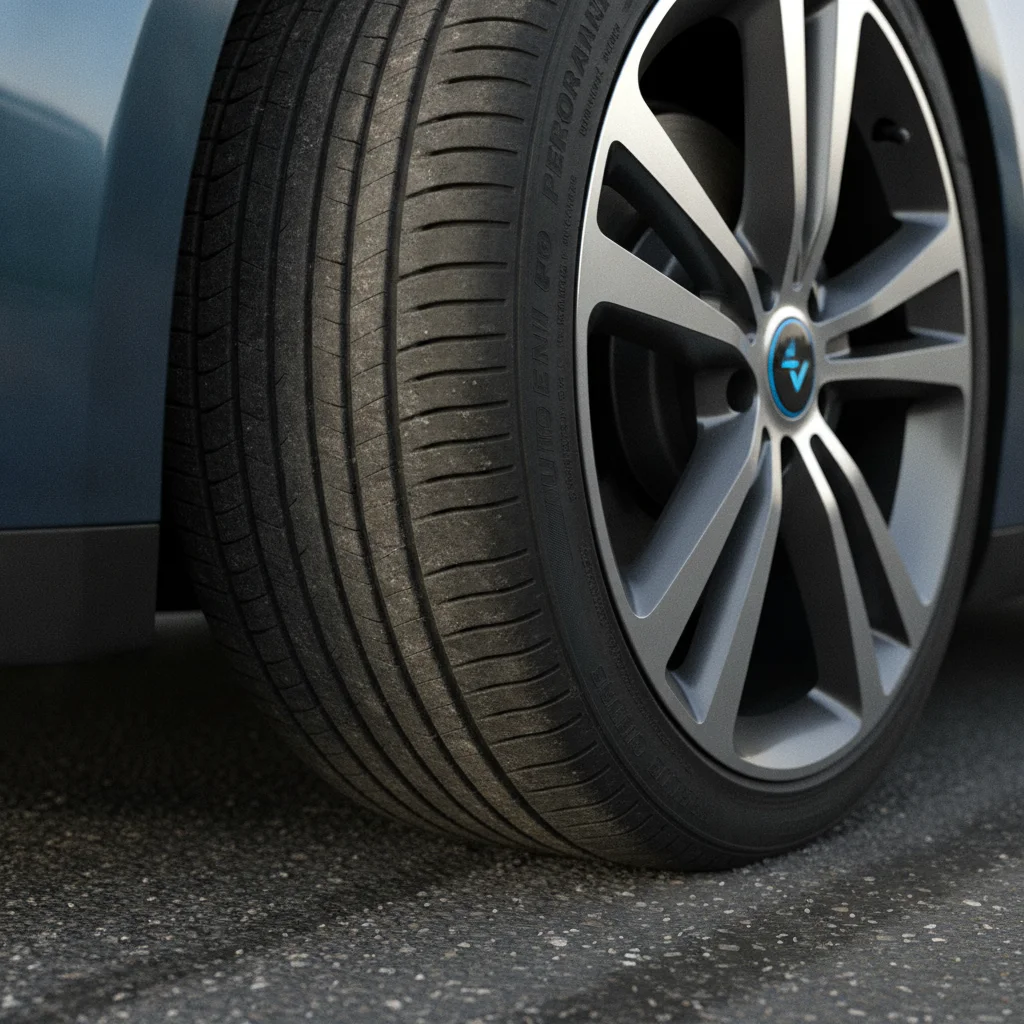
In reality, EVs are harder on tires than most equivalent gas cars for two compounding reasons. First, they're heavier. The battery pack alone can add 1,000 pounds or more compared to a similar-sized ICE vehicle. More mass means more downward pressure on each tire at every moment the car is moving. Second, electric motors deliver their full torque output instantly — there's no gradual build-up through a rev range. Every time you press the accelerator, the tires absorb a sharp rotational force that scrubs microscopic layers of rubber off the contact patch.
The result is measurable: studies and real-world fleet data consistently show EV tires wearing 20–30% faster than those on comparable combustion vehicles. That's not a marginal difference — it can mean losing thousands of miles of tire life per set.
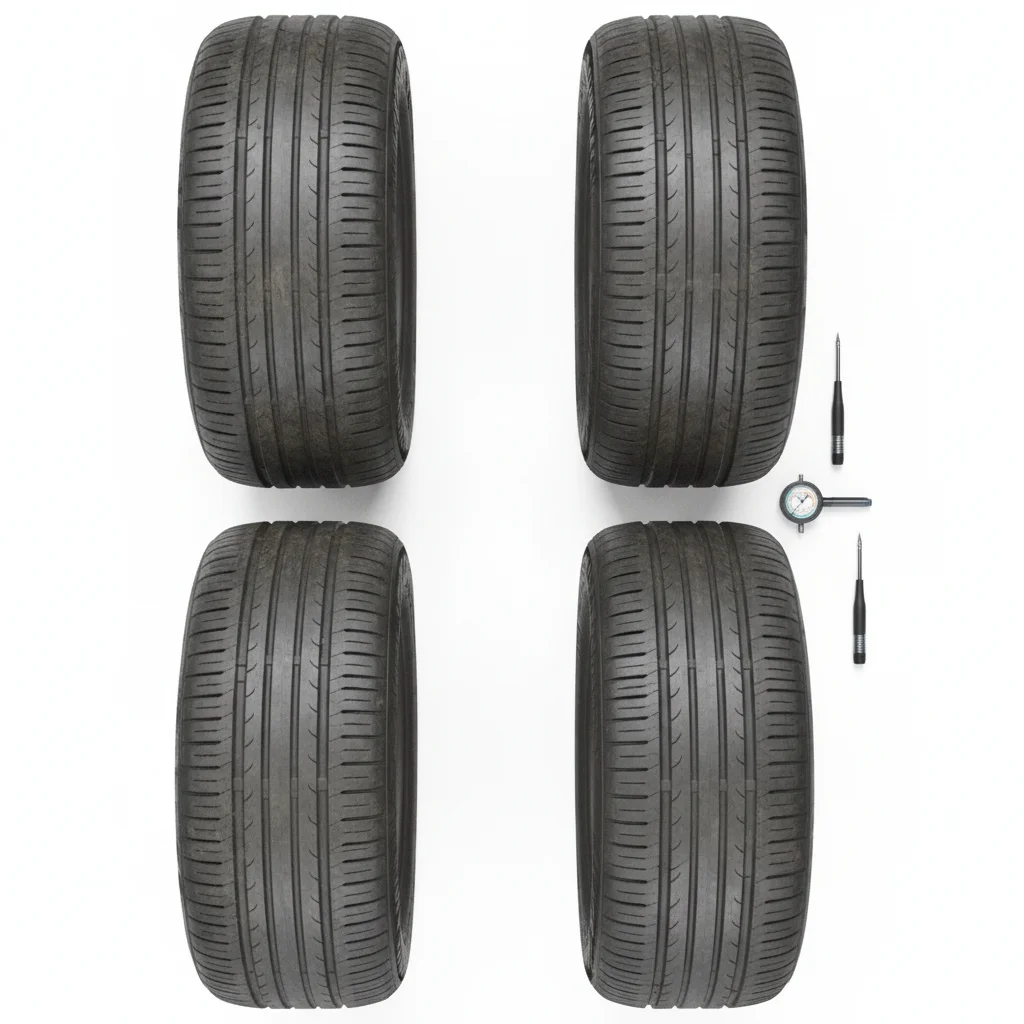
Yet most EV owners, accustomed to the "low maintenance" narrative, check their tires infrequently and rotate them even less often. Some assume the onboard tire pressure monitoring system (TPMS) is enough of a safety net. It isn't. TPMS alerts you when pressure drops dangerously low — it tells you nothing about uneven tread wear developing across your axles. See our full breakdown of why EV tire wear happens faster for the detailed mechanics behind this.
TPMS Is Not a Wear Monitor
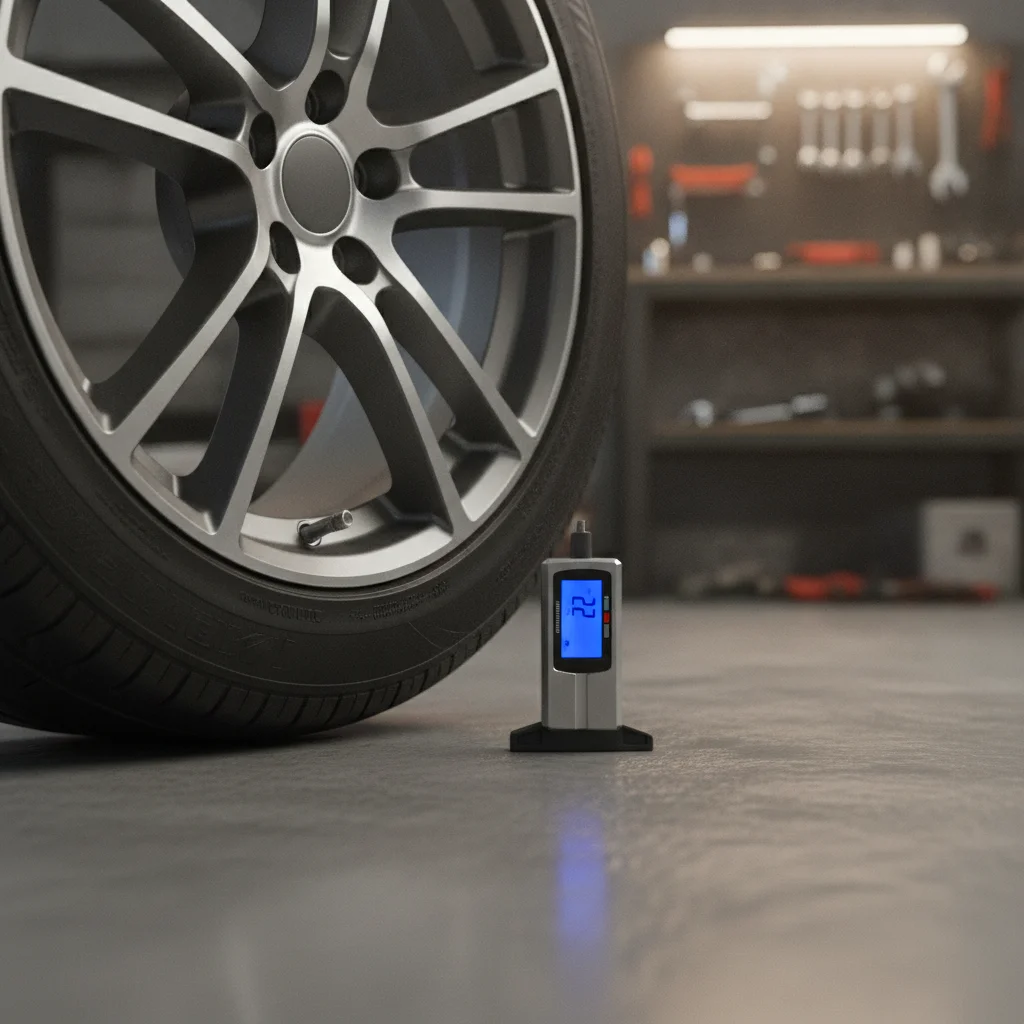
The tire pressure monitoring system in your EV alerts you when air pressure drops below a threshold — typically 25% below the recommended PSI. It does not measure tread depth, detect cupping, or flag uneven wear between axles. Many owners interpret a TPMS silence as "tires are fine," but the system simply isn't designed to catch the kind of gradual, uneven wear that rotation prevents. Visual inspection and measured tread depth checks remain essential.
What Skipping Rotation Actually Costs You
Let's put real numbers on this. An EV-specific tire — designed for low rolling resistance and rated for the extra load — typically costs $200–$375 per tire at retail. A full replacement set runs $800–$1,500 depending on the vehicle and brand. A routine rotation service at a shop costs $25–$50, or nothing if your dealer includes it in a service package.
20–30%
Faster tire wear on EVs vs. gas cars
Consistent with real-world fleet data and studies cited by major tire manufacturers including Michelin and Bridgestone.
$800–$1,500
Average cost of a full EV tire replacement set
Retail pricing for EV-rated tires varies by model; performance EVs trend toward the higher end of this range.
$25–$50
Typical cost of a single tire rotation service
Many dealership service departments and tire shops offer rotation for this price, with some including it in maintenance packages.
5,000–7,500 mi
Recommended EV tire rotation interval
Interval recommended by most major EV manufacturers including Tesla, GM, and Hyundai in their respective owner's manuals.
40–60%
Potential tire life extension with proper rotation
Tire manufacturers estimate consistent rotation can extend usable tread life by 40–60% compared to no rotation on drive-axle tires.
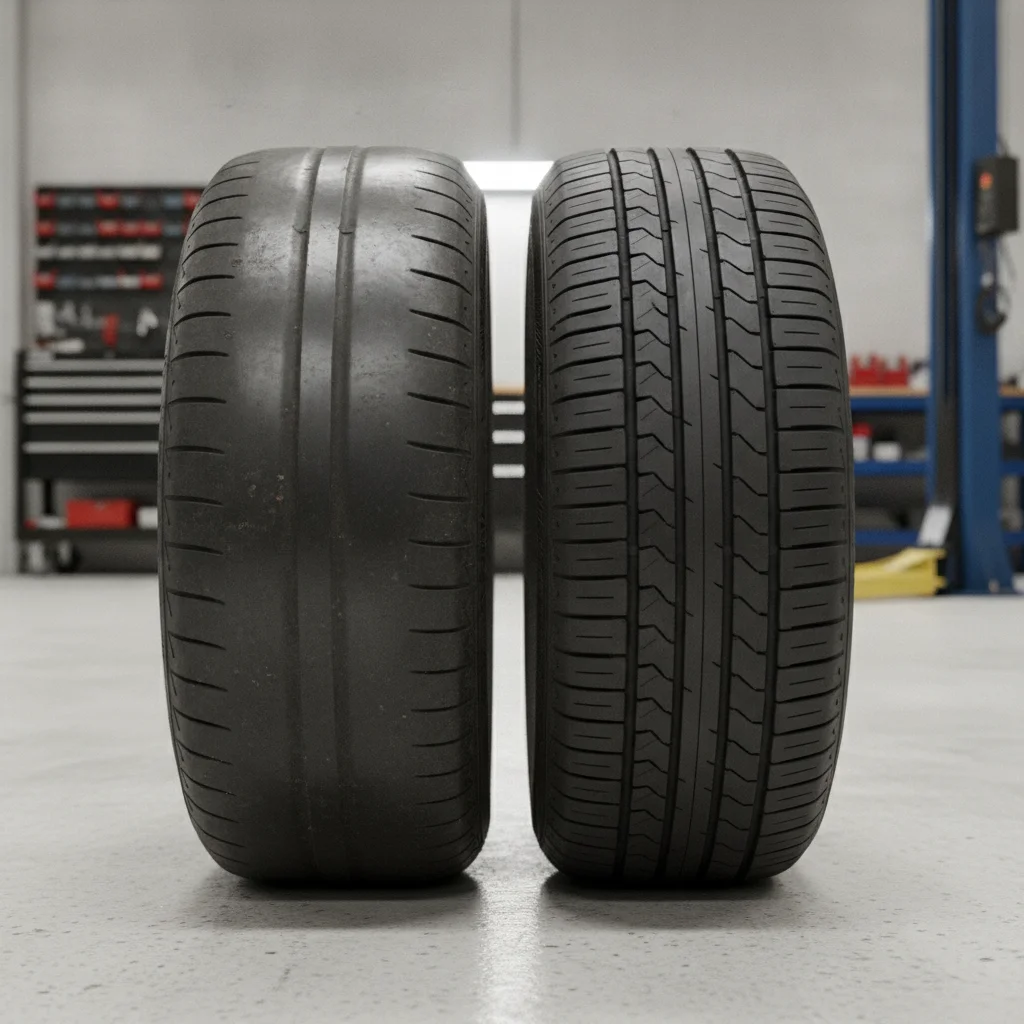
If you skip rotations, here's what plays out: front tires on a front-wheel-drive EV (like many Chevy Bolts) or rear tires on a rear-wheel-drive EV (like rear-drive Tesla Model 3 variants) wear significantly faster than the non-driven axle. Within 20,000–25,000 miles without rotation, you may find yourself replacing two tires that are down to the wear indicators while the other two still have usable life. You now have a mismatched set — which most tire manufacturers and safety guidelines recommend against — so you end up buying four anyway.
That's a $1,000+ expense that a $40 rotation service every 6,000 miles would have deferred by years. The math isn't complicated; the problem is that the damage accumulates invisibly until it's too late.
There's a warranty angle too. Many tire manufacturers include mileage warranties of 40,000–60,000 miles. But the fine print almost universally requires documented rotation at specified intervals. Skip it, and the manufacturer can — and routinely does — deny warranty claims for premature wear. You're not just losing tire life; you're losing coverage you already paid for in the purchase price.
Check the Fine Print on Your Tire Warranty
Before assuming your tires are covered for premature wear, pull out the warranty card that came with them and look for the rotation requirement. Most mileage warranties require rotation every 5,000–7,500 miles with documentation. If your EV came with an OEM tire warranty through the manufacturer, the same rules typically apply. A few minutes of reading now can save a warranty denial later.
Set Your Next Rotation Reminder Right Now
Open your phone, note your current odometer reading, and set a calendar reminder for when you hit the next 5,000-mile mark. If your EV's infotainment system allows custom service reminders, program one there too. The single biggest reason EV owners skip rotations isn't negligence — it's that there's no built-in service trigger to catch it. Create your own.
How EV Rotation Schedules Differ From Gas Cars
Traditional advice for gas-powered vehicles has long been "rotate your tires every oil change" — roughly every 5,000–7,500 miles for most modern engines. Since EV owners never go in for oil changes, that mental trigger disappears entirely. There's no built-in service appointment to piggyback a rotation onto.
EV manufacturers typically recommend rotation every 5,000–7,500 miles regardless. Some, like Tesla, have updated their guidance over time in response to customer complaints about rapid wear, moving toward shorter intervals for high-performance variants. Check your owner's manual — don't rely on general advice or dealer defaults, because recommendations vary meaningfully by model.
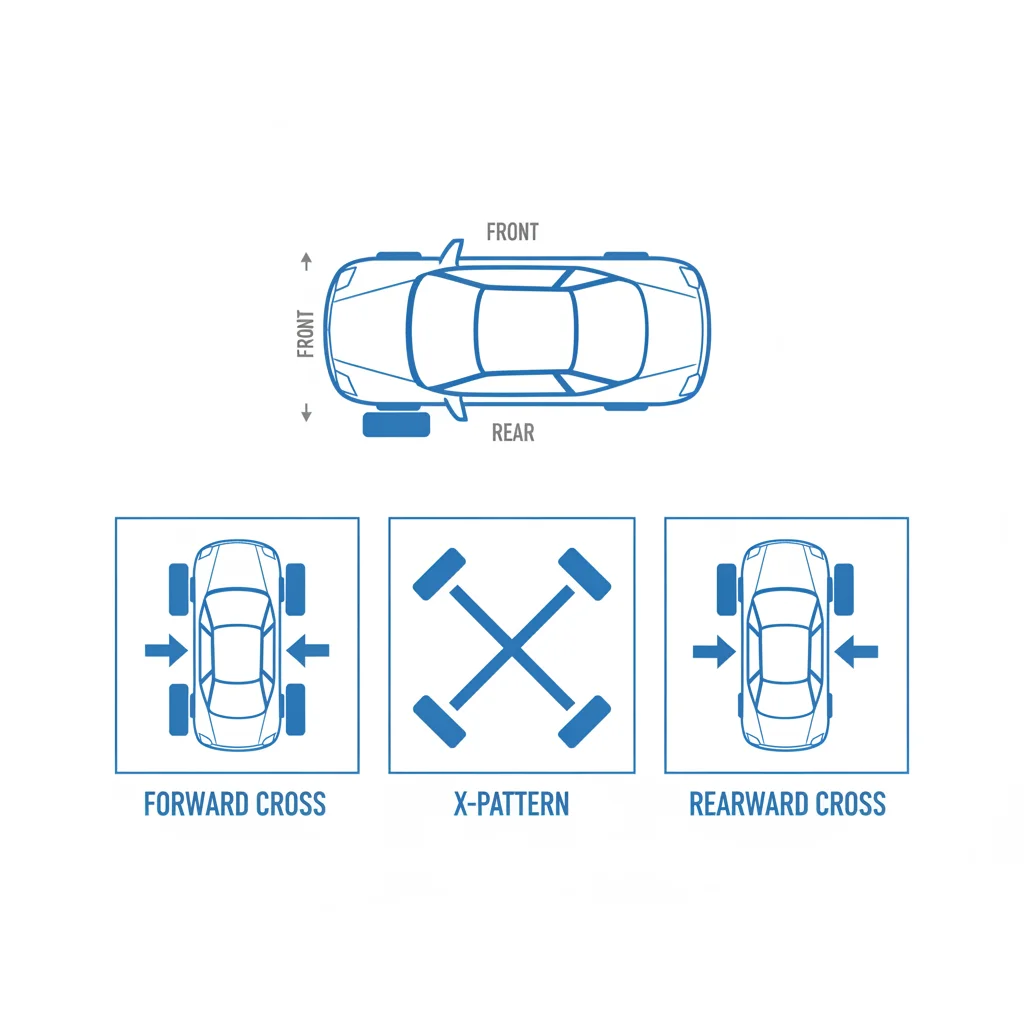
The complicating factor for many EVs is staggered fitment. Performance-oriented models — the Porsche Taycan, BMW iX, certain Tesla Model S and Model X configurations — come with wider, lower-profile rear tires than front tires. You cannot do a standard front-to-rear swap with staggered sizes. Your options are limited to swapping left-to-right on the same axle (which only helps with camber-related wear) or replacing sooner. For these vehicles, understanding which rotation patterns apply to your drivetrain is essential before assuming any rotation is possible at all.
For EVs with uniform tire sizes on all four corners — including many Chevy Bolts, Nissan LEAFs, and base Tesla Model 3 configurations — standard rotation patterns apply fully. A forward cross or X-pattern rotation distributes wear evenly across all four tires.
“Electric vehicles demand more from their tires than any other consumer vehicle category. The combination of weight and instant torque is relentless on rubber. Rotation isn't optional maintenance — it's the single most cost-effective thing an EV owner can do to protect a significant investment.”
— Jake Fisher, Senior Director of Auto Testing, Consumer Reports
The Compounding Effects Beyond Tire Life
Uneven tire wear isn't just a cost issue — it degrades the driving experience and introduces safety variables that matter on a 4,000+ pound vehicle traveling at highway speeds.
Handling and Braking
When front and rear tires have significantly different tread depths, the vehicle's balance shifts. Braking distances increase when worn tires can't grip the road surface as effectively. In wet conditions, tires with shallow or uneven tread are substantially more prone to hydroplaning. The regenerative braking systems that make EVs efficient also place specific demands on rear tires during deceleration — demanding consistent grip across all four corners.
TPMS Accuracy
Most TPMS systems use indirect pressure monitoring via wheel speed sensors. When tires wear unevenly, wheel speeds diverge slightly, which can trigger false alerts or — more dangerously — mask real pressure drops. You end up either ignoring a warning you've learned to dismiss, or missing a real one.
Alignment Drift
Heavy EVs are more susceptible to alignment drift, especially on rough roads. Poor alignment accelerates uneven wear, and uneven wear makes alignment harder to correct accurately. It's a feedback loop. Keeping tires rotated and maintaining consistent tread depth across axles gives your alignment check a reliable baseline. For a closer look at how these systems interact, see our piece on tire pressure and alignment working together.
Building a Rotation Habit Without Oil Change Reminders
The practical challenge for most EV owners is the absence of a regular service cadence. Without oil changes forcing you into a shop every few months, it's easy for 15,000 miles to pass with zero maintenance appointments. Here's how to build a replacement habit.
Set Mileage-Based Reminders
Use your vehicle's built-in trip odometer or a simple calendar reminder tied to mileage. Set an alert at every 5,000-mile interval. Many EVs display lifetime odometer readings prominently — make a note of the next rotation milestone and treat it like a bill due date.
Bundle With Annual Checks
Even if your EV has no scheduled annual service, it benefits from a once-a-year check of brakes, fluids (coolant, brake fluid, washer fluid), and cabin air filter. Add tire rotation to that appointment and you've handled most of your maintenance calendar in one visit. For a comprehensive view of what EV upkeep actually looks like across the ownership period, see everything that goes into maintaining an electric vehicle.
Ask Your Dealer or Installer to Log It
Whenever you do get tires rotated, ask for a written record — date and mileage. Keep those records in a folder or take a photo. If you ever need to make a warranty claim, or when you sell the vehicle, documented maintenance history adds credibility and can support resale value.
Check the Fine Print on Your Tire Warranty
Before assuming your tires are covered for premature wear, pull out the warranty card that came with them and look for the rotation requirement. Most mileage warranties require rotation every 5,000–7,500 miles with documentation. If your EV came with an OEM tire warranty through the manufacturer, the same rules typically apply. A few minutes of reading now can save a warranty denial later.
Set Your Next Rotation Reminder Right Now
Open your phone, note your current odometer reading, and set a calendar reminder for when you hit the next 5,000-mile mark. If your EV's infotainment system allows custom service reminders, program one there too. The single biggest reason EV owners skip rotations isn't negligence — it's that there's no built-in service trigger to catch it. Create your own.
Tire rotation is one of the lowest-cost, highest-leverage maintenance tasks available to EV owners. It's not glamorous, it's not technical, and it doesn't require a specialist. What it requires is not forgetting. The irony is that the very thing that makes EVs appealing — reduced maintenance — is what makes it easy to neglect the maintenance that still matters. Don't let the savings on oil changes get quietly eroded by a set of tires that wore out two years ahead of schedule.
If you want the full picture of what EV ownership actually costs to maintain, our guide on why EVs still need regular maintenance walks through every category honestly. And remember: the same cost-cutting instinct that skips tire rotation sometimes leads owners to underinsure their vehicles too — a risk outlined in detail in the true cost of underinsuring an electric vehicle.

All claims are backed by peer-reviewed research. Sources on request.