Key Takeaways
EV Tire Wear
Electric vehicles wear out their tires faster than comparable gas-powered cars, primarily because of two factors: their significant curb weight (driven by heavy battery packs) and the instant, full torque their motors deliver from a standstill. This combination puts more rotational stress on tire rubber during acceleration and more static load stress while the vehicle sits or corners. The result is that EV owners typically need to replace tires more frequently and rotate them on a tighter schedule.
Studies from organizations including Consumer Reports have found EV tires can wear up to 20–30% faster than those on equivalent ICE vehicles, depending on driving style, powertrain layout, and tire compound.
Why EVs Are Harder on Tires Than Gas Cars
If you've owned an EV for more than a year or two, you may have noticed something unexpected: your tires look rougher than they should. You're not imagining it, and it's not a defect. It's physics — and there are two forces at work simultaneously.
Weight: The Quiet Culprit
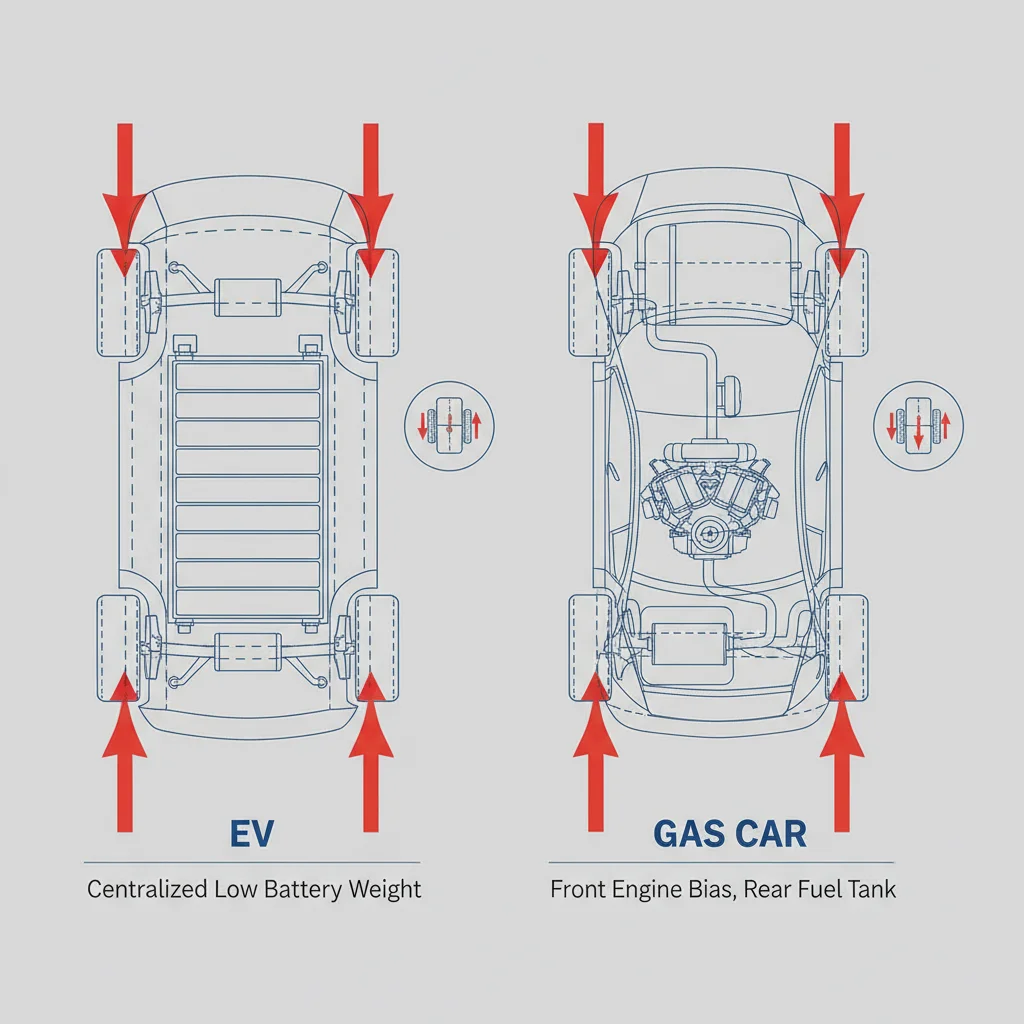
The average compact sedan runs around 3,000–3,400 lbs. Put that same body style on an electric platform and the number jumps sharply. The Tesla Model 3, for example, weighs about 3,862 lbs. The Hyundai Ioniq 6 clocks in near 4,200 lbs. Even a relatively small EV like the Chevy Equinox EV tips the scale at roughly 4,400 lbs. That extra mass — largely the battery pack — presses down on four contact patches of rubber constantly. Every mile driven, every corner taken, every parking lot maneuver multiplies that load. Tire compounds and internal structures are rated for load capacity, and operating closer to that ceiling accelerates degradation.
Instant Torque: The Active Accelerant
The second factor is what makes EVs fun to drive — and hard on tires. Electric motors produce maximum torque at zero RPM. Floor the accelerator from a stoplight in a gas car and the torque builds progressively as the engine climbs the rev range. Do the same in an EV and full torque hits immediately, spinning the drive wheels hard against the road surface. Even in normal, non-aggressive driving, the brisk throttle response most EV owners enjoy means the tires are working harder during acceleration than they would in an equivalent ICE vehicle.
For rear-wheel-drive EVs this effect is concentrated on the rear tires. For front-wheel-drive models it hammers the fronts — and they also carry the burden of steering. All-wheel-drive EVs distribute torque across all four tires but add yet more weight, so the math doesn't fully cancel out.
To understand the full picture of how this connects to your driving range, see our companion piece on tire pressure, rolling resistance, and EV range.
What EV Tire Wear Actually Looks Like
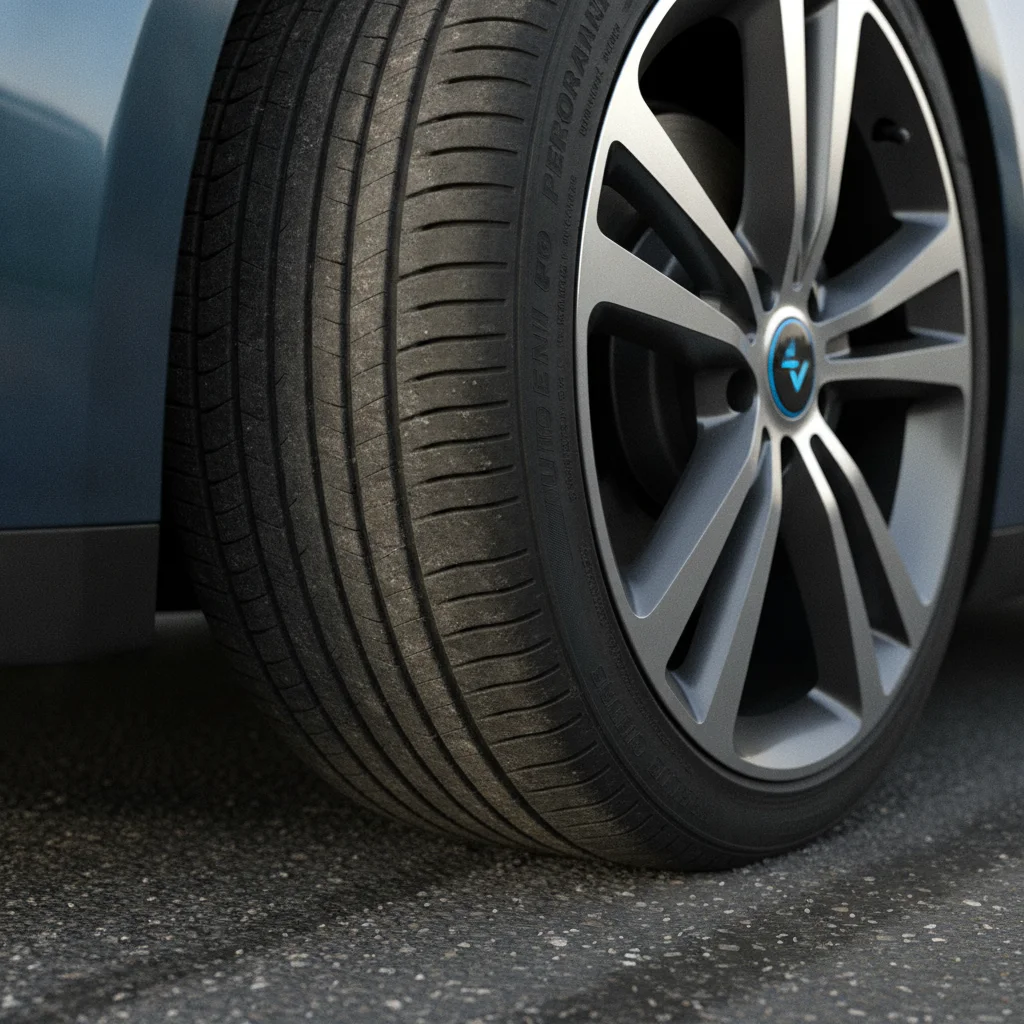
EV tire wear doesn't always look the same as what you'd see on a gas car. Knowing the patterns helps you catch problems before they become expensive.
TPMS Warnings Come Too Late
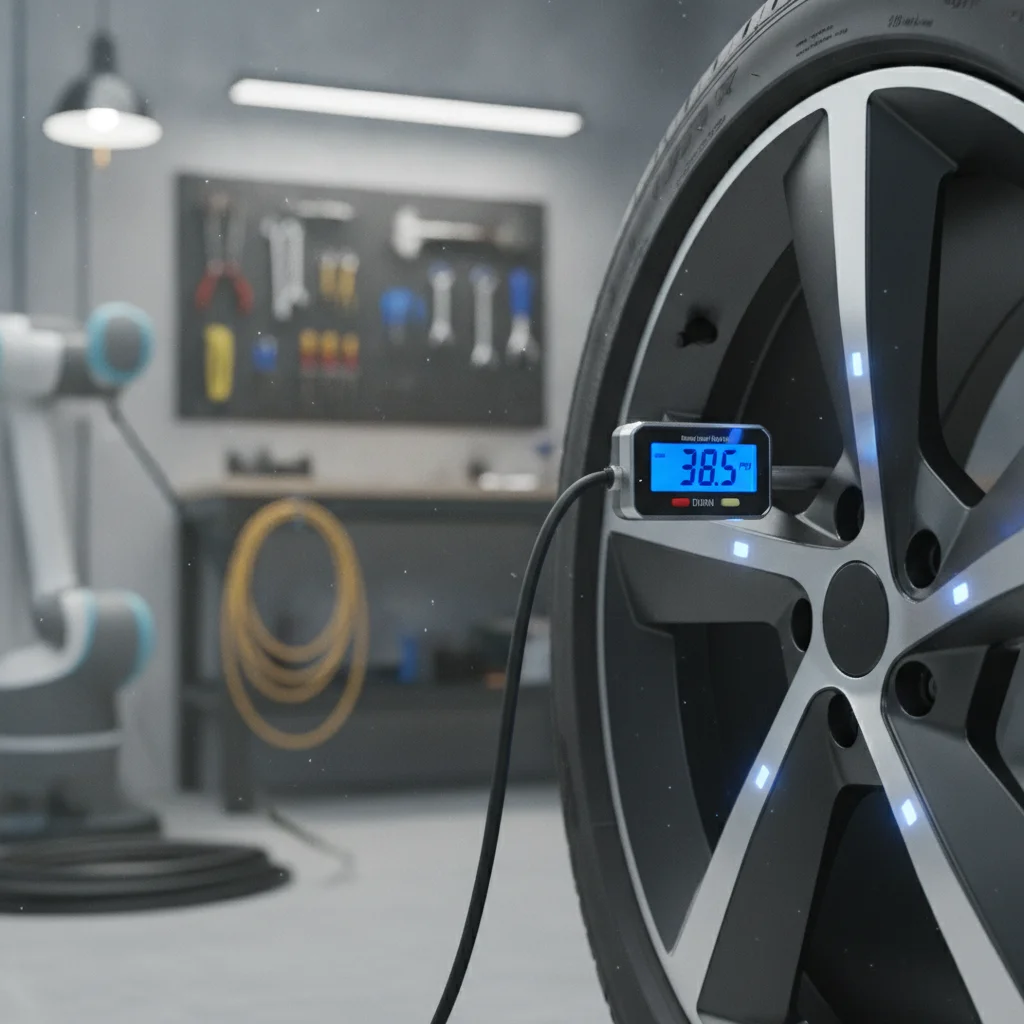
The Tire Pressure Monitoring System in your EV only triggers an alert when pressure drops roughly 25% below the recommended level. By that point, rolling resistance has been elevated for weeks or months, silently costing you range and accelerating tread wear. Monthly manual pressure checks with a quality gauge are the only reliable early warning system.
Staggered Fitments Limit Rotation Options
Some performance EVs — including certain Tesla Model S and Model 3 Performance variants — use staggered tire sizes, with wider rear tires than front. This means a simple axle-to-axle rotation isn't possible without dismounting and remounting tires on rims. Check your owner's manual before assuming a standard rotation pattern applies. A shop that isn't aware of this may rotate improperly or skip the service entirely.
Outer Edge Wear
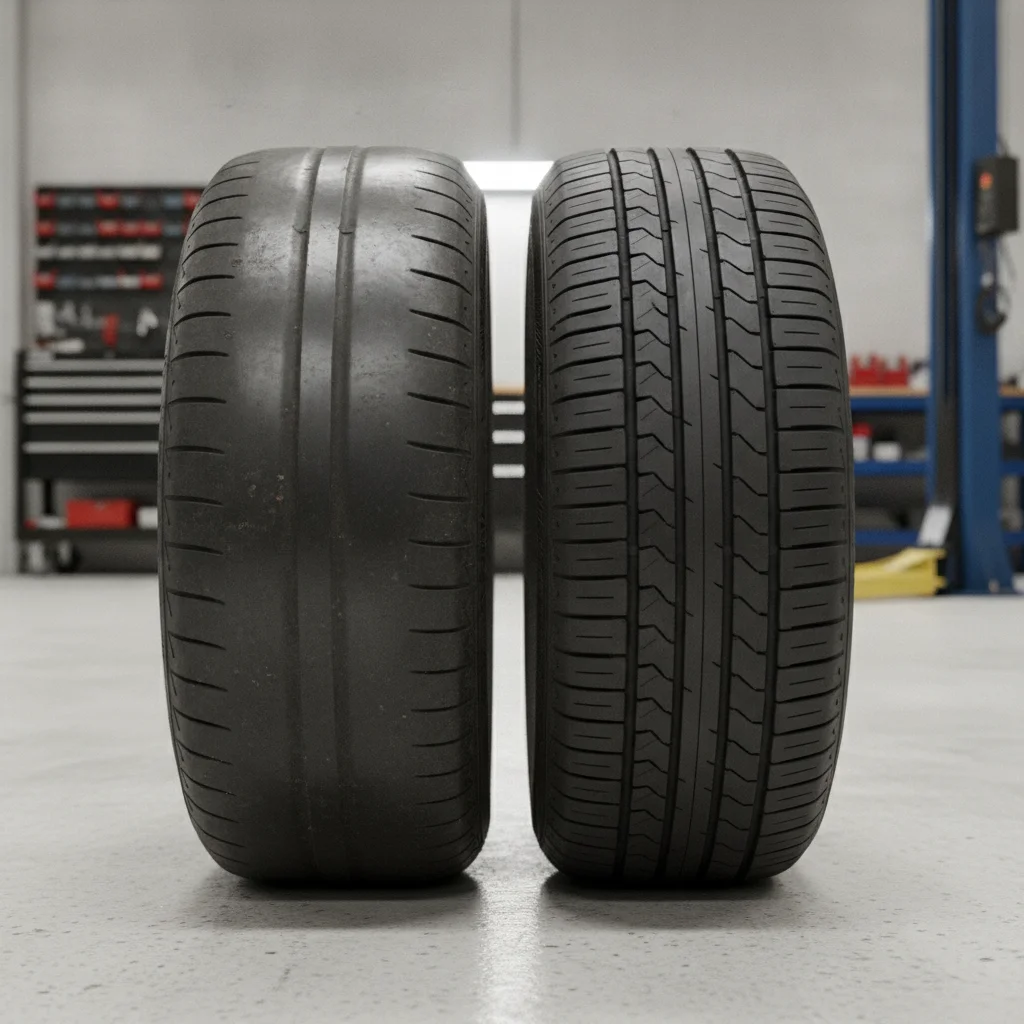
This pattern — wear concentrated at the outer shoulder of the tire — typically signals underinflation or aggressive cornering. Because EVs are heavier, any pressure drop amplifies this effect quickly. Check pressures at least monthly, or after significant temperature swings; cold air reduces tire pressure noticeably.
Center Wear (Overinflation)
Overinflating to try to maximize range is tempting but counterproductive. Running above the recommended PSI causes the center of the tread to carry most of the load, wearing it faster while also reducing the contact patch and degrading handling.
Rear-Only or Front-Only Wear
This is the most EV-specific pattern. On rear-wheel-drive EVs, the rear tires often wear significantly faster than the fronts due to torque loading during acceleration. On front-drive EVs, the fronts wear from both torque and steering duty. This imbalance is the primary reason rotation intervals are shorter for EVs than for most ICE vehicles.
One-Sided Wear (Camber Wear)
Heavier vehicles put more strain on suspension geometry. If camber — the inward or outward tilt of the wheel — is even slightly off, the added weight of an EV will produce visible one-sided wear faster than it would on a lighter gas car. If you see this pattern, alignment is the first thing to check.
20–30%
Faster tire wear vs. comparable ICE vehicles
Reported by Consumer Reports and corroborated by fleet data from tire manufacturers tracking EV-specific tread life.
5,000–6,000 mi
Recommended EV tire rotation interval
Most EV manufacturers, including Tesla and Hyundai, recommend this tighter interval versus the 7,500–10,000 miles typical for ICE vehicles.
4,000+ lbs
Average curb weight of a mainstream EV
Models like the Tesla Model Y (4,555 lbs), Ford Mustang Mach-E (4,394 lbs), and Ioniq 5 (4,321 lbs) far exceed equivalent ICE crossovers.
3–5%
Range loss from non-EV-rated replacement tires
Higher rolling resistance in standard tires versus EV-optimized compounds results in measurable efficiency loss on each charge cycle.
$600–$1,200
Cost of a full EV tire set replacement
Based on retail pricing for EV-rated all-season tires from Michelin, Continental, and Bridgestone for mainstream EV models as of 2024.
EV-Specific Tires: What's Different and Why It Matters
The tire industry noticed EV wear patterns early, and a growing segment of purpose-built EV tires has emerged. These aren't just marketing — the engineering differences are real and meaningful.
Higher Load Ratings
EV-spec tires carry higher load index numbers to handle the added vehicle weight. Fitting a standard tire rated for a lighter vehicle on an EV can result in faster wear, overheating, and in extreme cases, structural failure. Always match or exceed the OEM load rating when replacing EV tires.
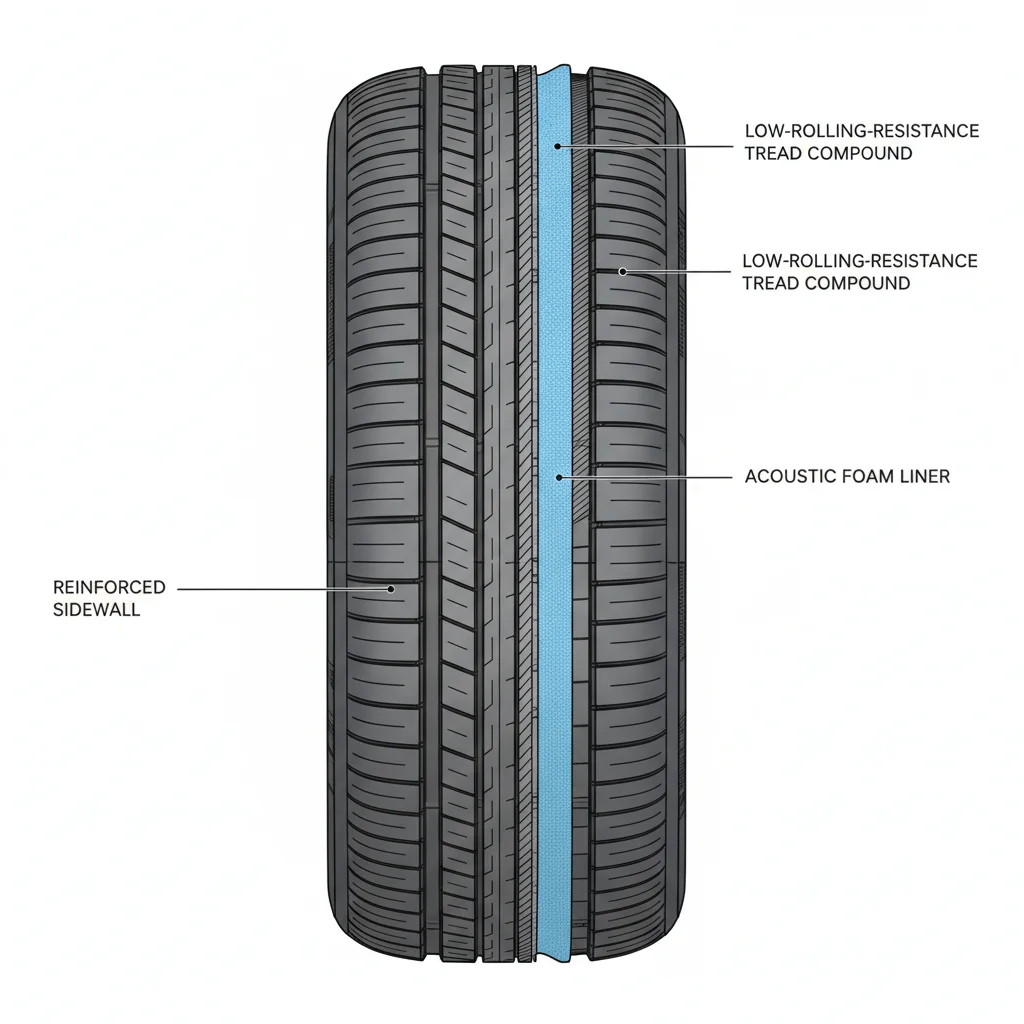
Stiffer Sidewalls
A stiffer sidewall reduces the flex that causes heat buildup under heavy loads. This also reduces rolling resistance, which matters because lower rolling resistance directly extends your driving range on a given charge.
Low Rolling Resistance Compounds
EV tires often use rubber compounds engineered to minimize energy loss. Rolling resistance is the energy the tire consumes just by deforming as it rolls. Less deformation means more of your battery's energy moves the car instead of being lost as heat in the rubber. This is one of the reasons swapping to a non-EV-rated tire can quietly reduce your real-world range by 3–5% or more.
Noise Dampening Foam
Many OEM EV tires include an acoustic foam liner on the inside of the tread. EVs are quiet enough that road noise from the tires becomes noticeable. If you're replacing OEM tires, look for models that include this feature — especially on highway-heavy commutes.
For a full breakdown of all the wear items unique to electric vehicles — not just tires — see EV wiper blades, tires, and trim.
Look for EV-Specific Tire Labels
When shopping for replacement tires, look for designations like "EV," "Electric," "e-" prefixes, or labels such as "EV Approved" on the sidewall or product listing. These indicate the tire has been load-rated and compound-tuned for heavier electric vehicles. Not every tire shop will proactively recommend these — you may need to ask specifically.
Use Eco Mode to Protect Your Tires
Most EVs offer a comfort, eco, or low-power drive mode that limits torque delivery. Driving in these modes during routine commuting — not just for efficiency — reduces the rotational stress on drive tires during each acceleration event. You'll notice less tire squeal, more predictable handling, and measurably slower wear on the drive axle tires over time.
Rotation Schedules: The Numbers EV Owners Need to Know
Tire rotation is one of the most straightforward ways to extend the life of your tires — but the interval that works for a gas car may not be frequent enough for your EV.
The Standard ICE Recommendation vs. EV Reality
Most ICE vehicle manufacturers recommend rotating tires every 7,500–10,000 miles, or roughly every other oil change. EVs don't have oil changes, so there's no built-in reminder, and the traditional intervals are too long. The recommended rotation interval for most EVs is every 5,000–6,000 miles — some manufacturers, including Tesla, have historically recommended as often as every 6,250 miles or with each tire inspection, whichever comes first.
Why Earlier Is Better
The torque-loading effect on drive axle tires means that if you wait 10,000 miles to rotate, you may find the rear tires (on an RWD EV) have already worn so much more than the fronts that rotating at that point provides only marginal benefit. Catching the imbalance early — at 5,000–6,000 miles — allows rotation to actually equalize wear across all four tires.
Rotation Patterns
Most EVs can use a standard front-to-back rotation pattern. However, some use staggered fitments — wider tires on the rear than the front — which limits options. In those cases, a side-to-side rotation with a tire dismount and remount may be required. Check your owner's manual or the sidewall specs before assuming a simple swap is possible.
The downstream costs of skipping this step are real. The article on the hidden cost of ignoring EV tire rotation makes clear just how expensive premature, uneven replacement becomes.
“The added weight of an EV battery pack combined with instant torque delivery creates a compounding effect on tire wear that most owners simply don't anticipate. Rotation intervals that worked for your last gas car are almost certainly too infrequent for your EV.”
— Jake Fisher, Senior Director of Auto Testing, Consumer Reports
Practical Steps to Slow Down EV Tire Wear
You can't eliminate the physics, but you can work with them. These are the highest-leverage things an EV owner can do right now.
1. Check Tire Pressure Monthly
This is the single most impactful maintenance habit for EV tires. Underinflation increases rolling resistance (cutting range), accelerates outer edge wear (costing you early replacement), and raises heat in the sidewall (risking structural damage). Most EVs display tire pressure directly in the infotainment screen via TPMS, but TPMS only triggers a warning when pressure drops 25% below the recommended level — by that point, you've already been losing efficiency and accelerating wear. Don't wait for the warning light; use a gauge.
2. Adjust Your Driving Style During Acceleration
You don't need to drive like you're delivering eggs. But being aware of how hard you're launching from stops — especially on wet or cold pavement — can make a measurable difference in tire life. Use the drive modes your EV offers. Putting the car in a comfort or eco mode limits torque output and directly reduces the rotational stress on drive tires during acceleration.
3. Stick to the Rotation Schedule
Set a calendar reminder or track your odometer. Don't tie it to your oil change schedule (you don't have one). Many tire shops and dealerships will rotate tires during any service visit; for EV owners, just bring the car in every 5,000–6,000 miles specifically for rotation.
4. Get an Alignment Check Annually
EV weight amplifies the wear consequences of even slight misalignment. A proper alignment check once a year — or any time you hit a significant pothole or curb — is cheap insurance. Misalignment combined with EV weight and torque is a fast route to uneven tire destruction.
5. Buy the Right Replacement Tires
When replacement time comes, don't default to the cheapest option that fits the wheel diameter. Verify the load index, speed rating, and whether the tire is marked with EV-compatible designations (look for labels like "EV Approved," "EV Ready," or manufacturer-specific tags). Spending an extra $30–$50 per tire on a proper EV-rated compound typically pays back in longevity.
Driving and charging habits are connected: certain charging behaviors that degrade the battery also tend to encourage harder acceleration patterns. If you want to understand how your charging routine affects long-term ownership costs, charging habits that quietly degrade your EV battery is worth a read.
Look for EV-Specific Tire Labels
When shopping for replacement tires, look for designations like "EV," "Electric," "e-" prefixes, or labels such as "EV Approved" on the sidewall or product listing. These indicate the tire has been load-rated and compound-tuned for heavier electric vehicles. Not every tire shop will proactively recommend these — you may need to ask specifically.
Use Eco Mode to Protect Your Tires
Most EVs offer a comfort, eco, or low-power drive mode that limits torque delivery. Driving in these modes during routine commuting — not just for efficiency — reduces the rotational stress on drive tires during each acceleration event. You'll notice less tire squeal, more predictable handling, and measurably slower wear on the drive axle tires over time.
When to Replace and What Replacement Costs
Most tires — EV or otherwise — are considered worn out at a tread depth of 2/32". For EV tires, especially in wet conditions, many safety experts recommend replacing at 4/32" because heavier vehicles take longer to stop and hydroplane more readily. A simple quarter test (insert a quarter into the tread with Washington's head pointing down — if you can see the top of his head, you're near 4/32") gives a quick field assessment.
Cost Expectations
EV-specific tires typically run $150–$300 per tire, with premium options for performance EVs going higher. A full set replacement for a mainstream EV like a Model Y or Ioniq 5 will likely cost $600–$1,200 for the tires alone, plus mounting, balancing, and disposal fees. Brands like Michelin (Pilot Sport EV), Continental (EcoContact 6), and Bridgestone (Turanza EV) have released purpose-built EV lines that are worth the premium for most owners.
Lifespan Reality Check
With proper inflation, timely rotation, and reasonable driving behavior, EV tires should last 30,000–40,000 miles for most mainstream models. Without those habits, it's realistic to see tires worn out by 20,000–25,000 miles — potentially two full replacement cycles over a typical ownership period rather than one. That's a cost difference of $600–$1,200 that comes directly from maintenance neglect.
For a comprehensive look at all the maintenance items an EV owner needs to track over the vehicle's life, see everything that goes into maintaining an electric vehicle over its lifetime.

All claims are backed by peer-reviewed research. Sources on request.