Key Takeaways
Tire Rotation Pattern
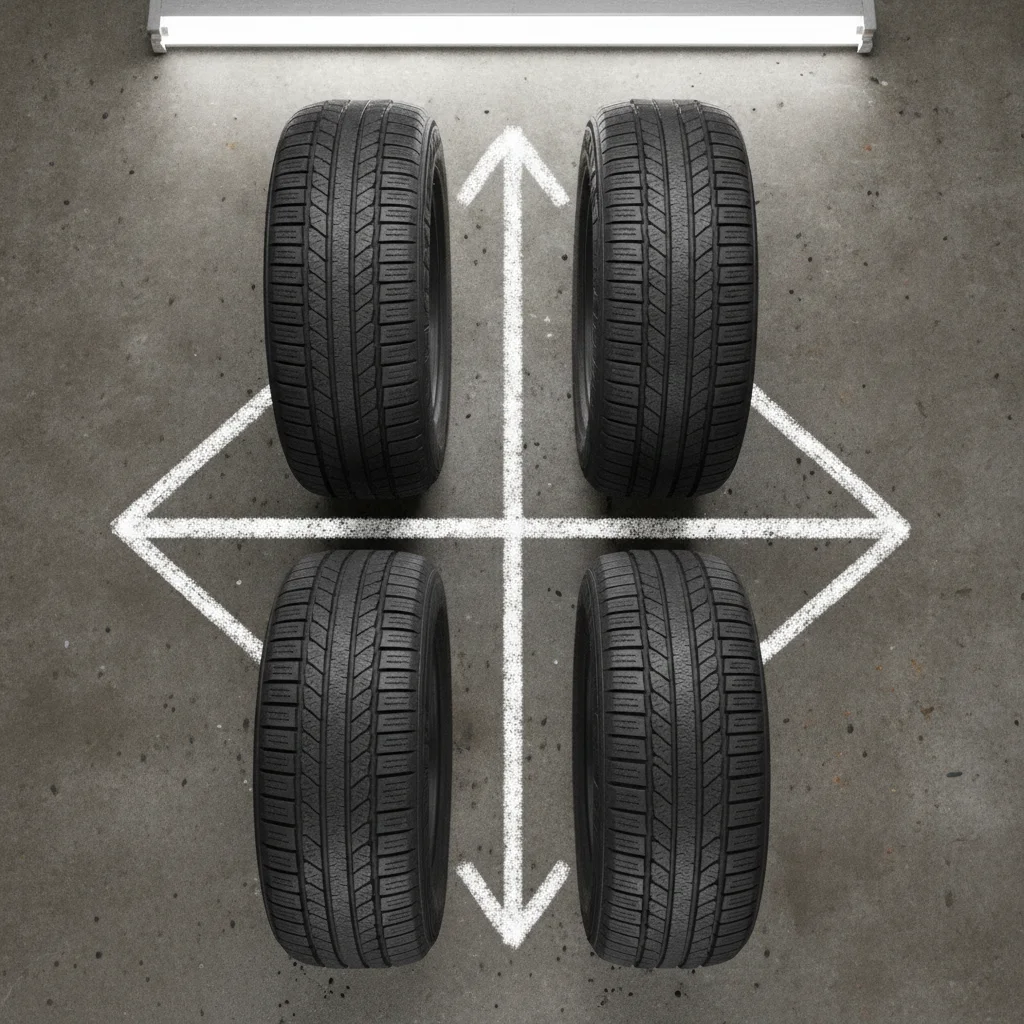
A tire rotation pattern is the specific sequence in which tires are moved from one wheel position to another during a rotation service. Different patterns — such as front-to-back, cross, or full-cross — are designed to equalize tread wear across all four tires. The correct pattern depends on your vehicle's drivetrain, tire type, and whether your tires are directional or non-directional.
The Tire Industry Association (TIA) and most vehicle manufacturers publish recommended rotation patterns by drivetrain type; consulting your owner's manual ensures compliance with warranty requirements.
Why the Pattern Is More Than Just Swapping Tires
Most drivers know tire rotation is on the maintenance checklist — but far fewer understand that how the tires are moved matters as much as whether they're moved at all. A rotation done in the wrong sequence for your drivetrain can leave certain tires still doing the bulk of the work, negating the service entirely.
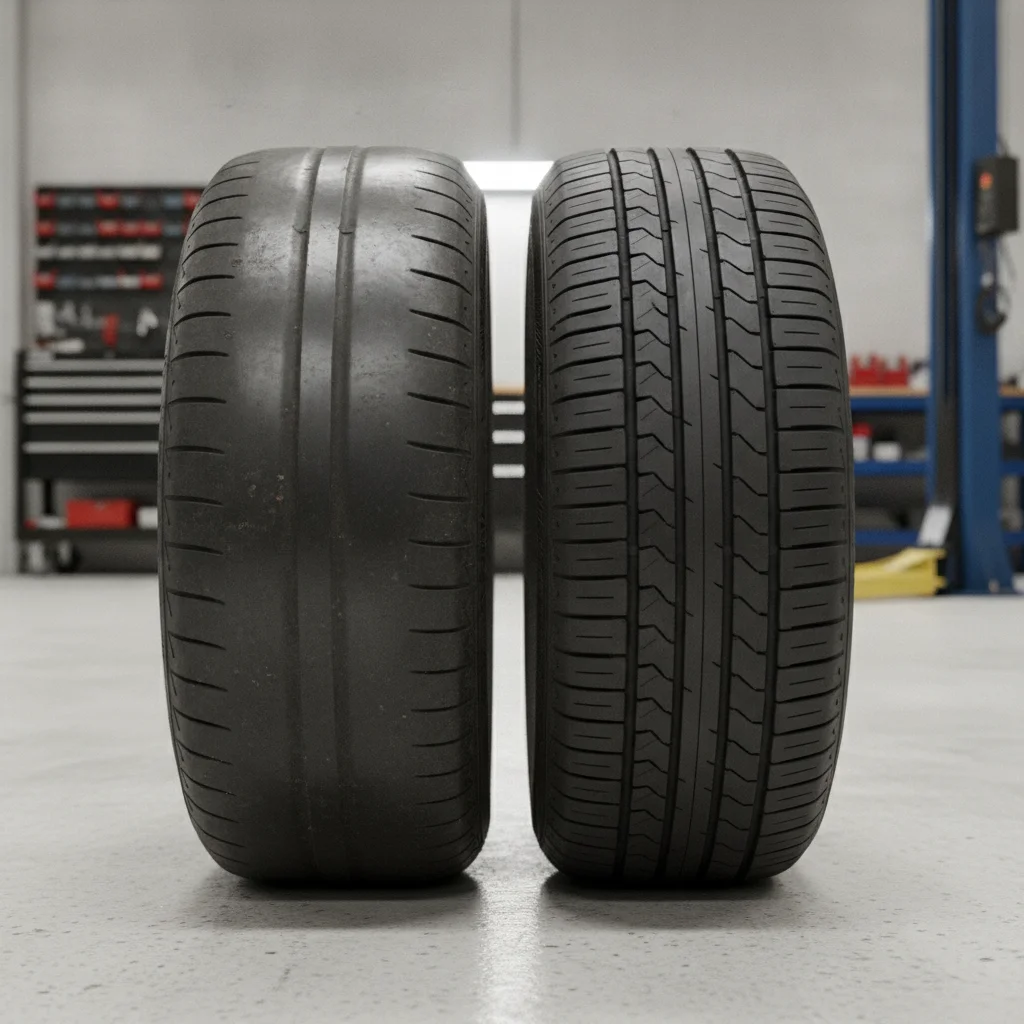
The goal of any rotation pattern is to equalize wear across all four tires. Because different wheel positions carry different loads and perform different jobs — steering, braking, driven — tires in those positions wear at different rates and in different areas. A well-executed rotation pattern redistributes those stresses so that no single tire degrades significantly faster than the others.
Uneven wear isn't just a tire-life issue. It affects ride comfort, fuel efficiency, braking distance, and handling predictability. And if you're ever assessing a used vehicle, the state of the tires tells a story — as explored in our guide on tire wear patterns and what they reveal about a used car.
Understanding rotation patterns starts with your drivetrain and tire type — the two variables that determine which of the standard sequences applies to your vehicle.
The Four Standard Rotation Patterns
The Tire Industry Association identifies several established rotation patterns. Each is designed for a specific vehicle configuration. Here's a breakdown of the four most commonly used:
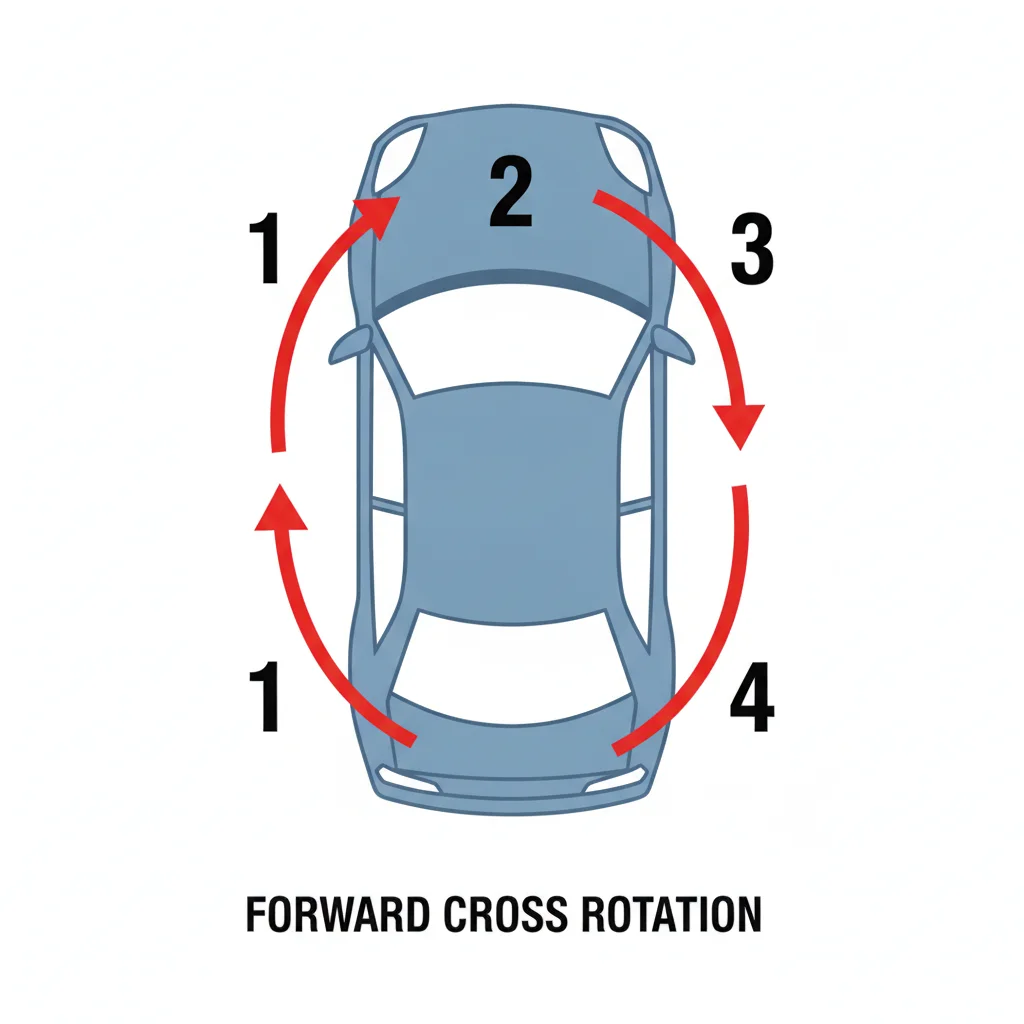
1. Forward Cross (Front-Wheel Drive)
In the forward cross, the two front tires move straight back to the rear positions on the same side. The rear tires cross diagonally to the front — right rear goes to left front, left rear goes to right front. This compensates for the extra wear FWD front tires accumulate from both driving and steering duties.
2. Rearward Cross (Rear-Wheel Drive and AWD)
The mirror image of the forward cross. Rear tires move straight forward on the same side, while front tires cross to the rear — right front to left rear, left front to right rear. This pattern works well for RWD vehicles, where the rear tires carry the primary propulsion load.
3. X-Pattern (FWD, AWD, and 4WD)
All four tires cross diagonally in a single rotation. Right front goes to left rear, left front to right rear, right rear to left front, left rear to right front. The X-pattern is particularly effective for AWD and 4WD systems, where torque distribution is more even across all positions. It is also commonly recommended by manufacturers when tread wear is already slightly uneven.
4. Front-to-Rear (Directional Tires)
Directional tires — those with a one-way tread pattern designed to channel water in a specific direction — can only move front-to-rear on the same side. Left front to left rear, right front to right rear. Moving them across the axle would reverse the tread direction, undermining wet-weather performance and potentially voiding the tire warranty.
Five-Tire Rotation: When It Applies
If your vehicle carries a full-size matching spare — same brand, model, size, and construction as the other four tires — incorporating it into a five-tire rotation cycle is recommended by some manufacturers. This distributes wear across five tires instead of four, effectively extending the life of the entire set. Check your owner's manual to confirm whether your spare qualifies and which five-tire pattern is specified.
AWD Tread Depth Tolerance Is Tight
Many AWD manufacturers specify that tread depth variation across all four tires should not exceed 2/32 of an inch. Exceeding this threshold can force the AWD system to compensate for differing wheel speeds, stressing the center differential and transfer case. If you're shopping a used AWD vehicle, measuring tread depth at all four corners during the inspection is a smart step.
If your vehicle has a full-size matching spare — identical in size and construction to the other four — many manufacturers recommend incorporating it into the rotation on a five-tire pattern. This gives each tire one cycle in the spare position, extending the life of all five tires and ensuring the spare remains road-ready.
“Tire rotation is one of the simplest, cheapest services a driver can get — and one of the most skipped. What most people don't realize is that the pattern matters as much as the interval. Doing it wrong is barely better than not doing it at all.”
— Kevin Rohlwing, Senior Vice President of Training, Tire Industry Association
Matching the Pattern to Your Drivetrain
Choosing the correct pattern isn't guesswork — it follows directly from how your vehicle sends power to its wheels and what kind of tires are installed.
30–50%
Faster front tire wear on FWD vehicles
Industry data from the Tire Industry Association shows front tires on FWD vehicles typically wear 30–50% faster than rear tires without regular rotation.
5,000–7,500 mi
Recommended rotation interval
Most vehicle manufacturers and the Tire Industry Association recommend rotating tires every 5,000 to 7,500 miles to maintain even tread wear.
2/32"
Legal minimum tread depth in most U.S. states
The majority of U.S. states set the minimum legal tread depth at 2/32 of an inch; safety organizations recommend replacing tires at 4/32" for adequate wet-weather braking.
20%
Potential tire life extension from regular rotation
Consumer tire research indicates that consistent, correctly patterned rotations can extend the usable life of a tire set by approximately 20% compared to no rotation.
Front-Wheel Drive (FWD)
FWD vehicles are the most common on American roads, and they're hardest on front tires. The front axle handles steering, acceleration, and a significant share of braking, typically causing front tires to wear 30–50% faster than rears. The forward cross is the default recommendation. If fronts are already visibly more worn, the X-pattern can help speed up equalization.
Rear-Wheel Drive (RWD)
RWD vehicles push the propulsion load onto the rear axle, causing rear tires to wear faster — especially under spirited acceleration. The rearward cross brings rear tires forward to equalize. Sports cars and trucks on RWD platforms particularly benefit from disciplined rotation schedules.
All-Wheel Drive (AWD) and Four-Wheel Drive (4WD)
AWD systems are the most demanding when it comes to rotation precision. Because all four wheels are driven, any meaningful difference in tread depth between them can stress the center differential or transfer case, which are designed to tolerate only small speed variations between axles. Some manufacturers specify maximum allowable tread-depth variation as low as 2/32 of an inch. The X-pattern or rearward cross is typically recommended, and rotation intervals are often shorter — particularly for electric AWD vehicles, as detailed in our article on tire wear on electric vehicles and why it happens faster.
Staggered Fitments
Some performance vehicles — particularly rear-drive sports cars — come from the factory with wider rear tires than front tires. This staggered setup improves handling dynamics but eliminates most rotation options. If the tires are also directional, side-to-side and front-to-rear rotation are both off the table without dismounting and remounting. Owners of these vehicles should factor in shorter tire replacement cycles when budgeting for ownership costs.
How Often You Should Be Rotating
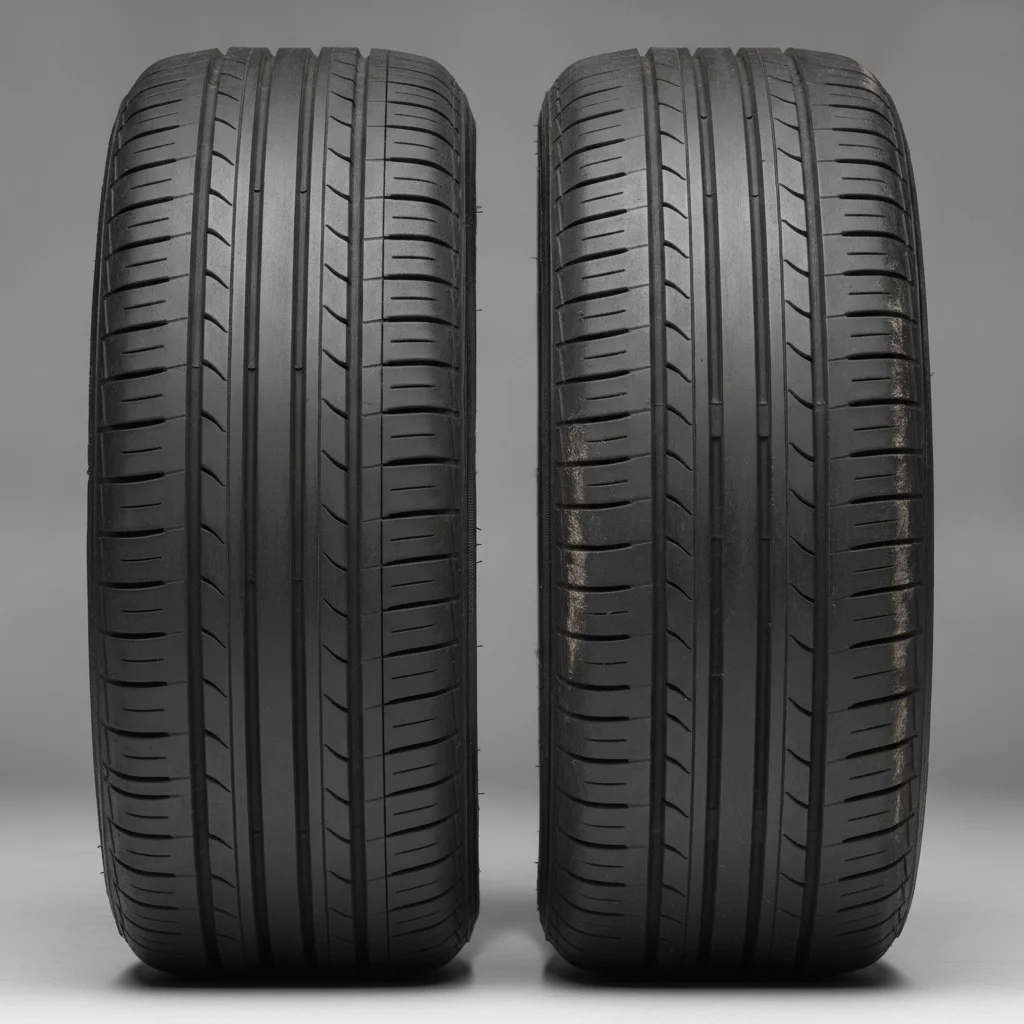
Rotation frequency is as important as the pattern itself. Rotating tires on a correct pattern but at half the necessary frequency still produces uneven wear — just more slowly.
The industry standard is every 5,000 to 7,500 miles, which for most drivers means every other oil change on a conventional 5,000-mile oil schedule, or with every oil change on a 7,500-mile synthetic schedule. Some manufacturers push this out to 10,000 miles for certain vehicles, but that's increasingly the exception.
Tie Rotations to Oil Changes
The simplest way to stay consistent is to rotate tires at every oil change if you're on a 5,000-mile oil interval, or every other change if you're on a 7,500-mile synthetic schedule. Most shops will perform both services simultaneously, reducing the number of service appointments you need each year.
Set a Mileage-Based Reminder
Unlike oil life monitors, your vehicle's onboard system has no sensor for tire rotation intervals. Set a recurring reminder at your preferred mileage interval in your phone or vehicle's trip odometer. Tracking by mileage is more reliable than tracking by months, since driving habits vary widely and are the actual driver of wear.
A few categories of drivers should consider more frequent rotation intervals:
- AWD vehicles: Every 5,000 miles is the safer interval, given differential sensitivity to tread variation.
- Electric vehicles: EV weight and instant torque accelerate wear, particularly at the rear on RWD EVs. Some EV makers recommend rotation every 3,000 to 6,000 miles. See our deeper look at the hidden cost of ignoring EV tire rotation for specifics.
- Trucks towing heavy loads: Added weight stress on the rear axle accelerates rear-tire wear, shortening the useful interval.
- High-mileage commuters: Anyone logging more than 20,000 miles per year should calendar rotations by mileage rather than time.
If you're considering a DIY rotation, the correct pattern still applies — the tools and technique must match the procedure. Our guide on tire rotation at home: the pattern, process, and payoff covers what's needed to execute a safe home rotation.
Signs You've Been Using the Wrong Pattern — or Skipping Rotations
The consequences of a wrong or missed rotation don't announce themselves immediately, but several warning signs become visible over time.
Cupping or Scalloping
This wavy, high-low pattern around the tire's circumference typically indicates a combination of worn suspension components and improper or missing rotation. The tire bounces rather than rolling smoothly, creating alternating peaks and valleys in the tread.
One-Sided Shoulder Wear
If one front tire shows heavy wear on the outer edge while the other is more even, it could indicate an alignment issue — but it can also reflect that a cross-pattern rotation was never performed, leaving the tire on the same side for too long.
Front Tires Significantly More Worn Than Rears (FWD)
On a front-wheel-drive car, this is the natural outcome of an improper or skipped rotation. If you're listing a vehicle for sale, this kind of mismatch is a red flag for informed buyers — a topic addressed in our piece on tire condition and tread depth: what sellers need to know before listing.
Vibration at Highway Speed
While wheel balance issues often cause this, severe uneven tread wear from missed rotations can also produce vibration at higher speeds. If a balance and alignment check comes back clean, the tires themselves deserve a close look.
Practical Tips for Staying on Schedule
Knowing the right pattern matters, but consistency is what actually preserves your tires. A few habits make it significantly easier to stay on track.
Tie Rotations to Oil Changes
The simplest way to stay consistent is to rotate tires at every oil change if you're on a 5,000-mile oil interval, or every other change if you're on a 7,500-mile synthetic schedule. Most shops will perform both services simultaneously, reducing the number of service appointments you need each year.
Set a Mileage-Based Reminder
Unlike oil life monitors, your vehicle's onboard system has no sensor for tire rotation intervals. Set a recurring reminder at your preferred mileage interval in your phone or vehicle's trip odometer. Tracking by mileage is more reliable than tracking by months, since driving habits vary widely and are the actual driver of wear.
Check Your Owner's Manual First
Every major manufacturer specifies its recommended rotation pattern by drivetrain. Some also specify intervals that differ from the industry standard — following the manufacturer's guidance protects your warranty coverage.
Ask Your Shop to Document the Pattern Used
A quality service shop should note which rotation pattern was performed on your vehicle's service record. If that information is absent, it's worth asking explicitly — especially if you've recently switched shops or bought a used vehicle where the service history is incomplete.
Use the Penny-Nickel Tread Test Between Services
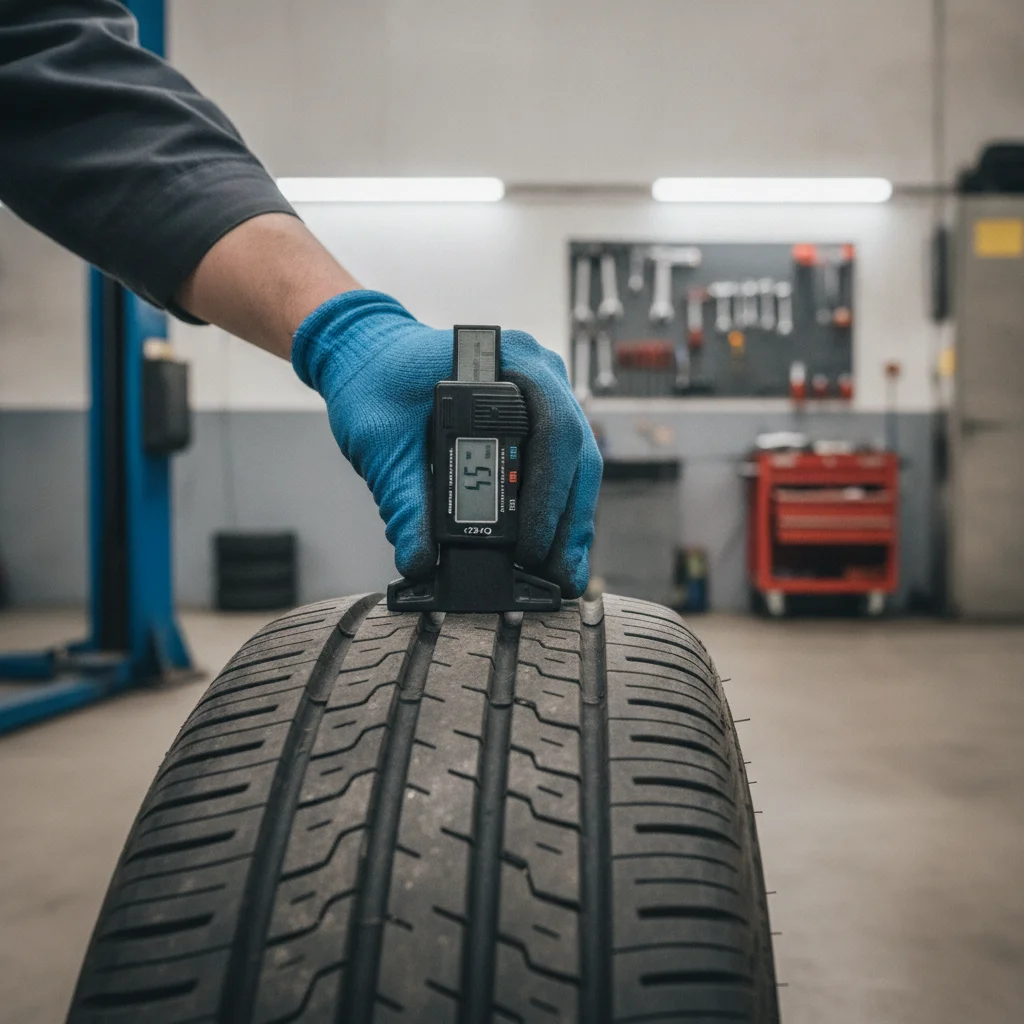
Insert a penny into the tread grooves with Lincoln's head pointing down. If you can see the top of his head, tread is below 2/32 inch and the tire is legally worn out in most states. For a more conservative check, use a nickel — if Washington's head is fully visible, tread is below 4/32 inch and handling in wet conditions is noticeably compromised.
Don't Wait for a Warning Light
Tire pressure monitoring systems (TPMS) alert you to pressure loss, not tread wear. There is no dashboard warning for a missed rotation. That gap in the feedback loop is why a mileage-based calendar reminder is more reliable than waiting to notice a problem.
For drivers who want to understand the full scope of what tires communicate about a vehicle's history — particularly before buying — our test drives and inspections hub is a practical starting point.

All claims are backed by peer-reviewed research. Sources on request.