Key Takeaways
Regenerative Braking & Brake Pad Wear
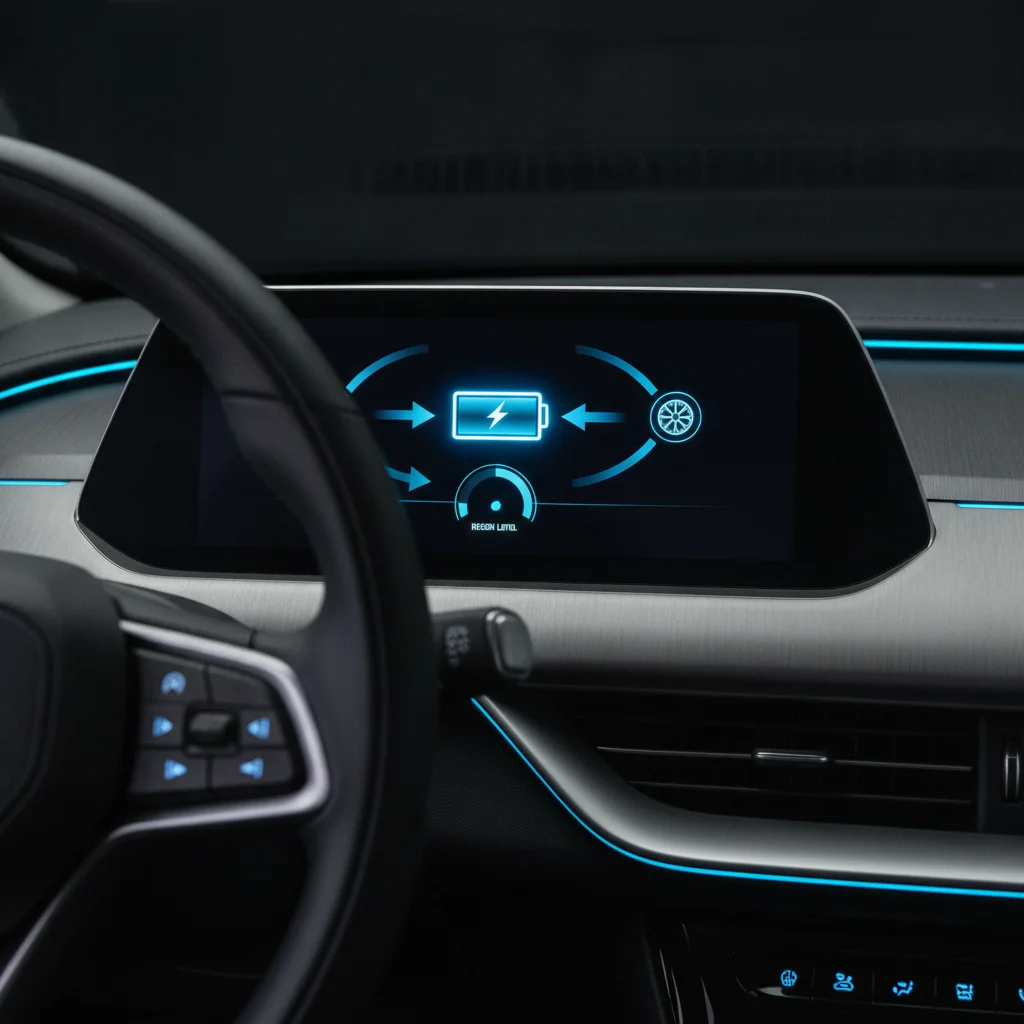
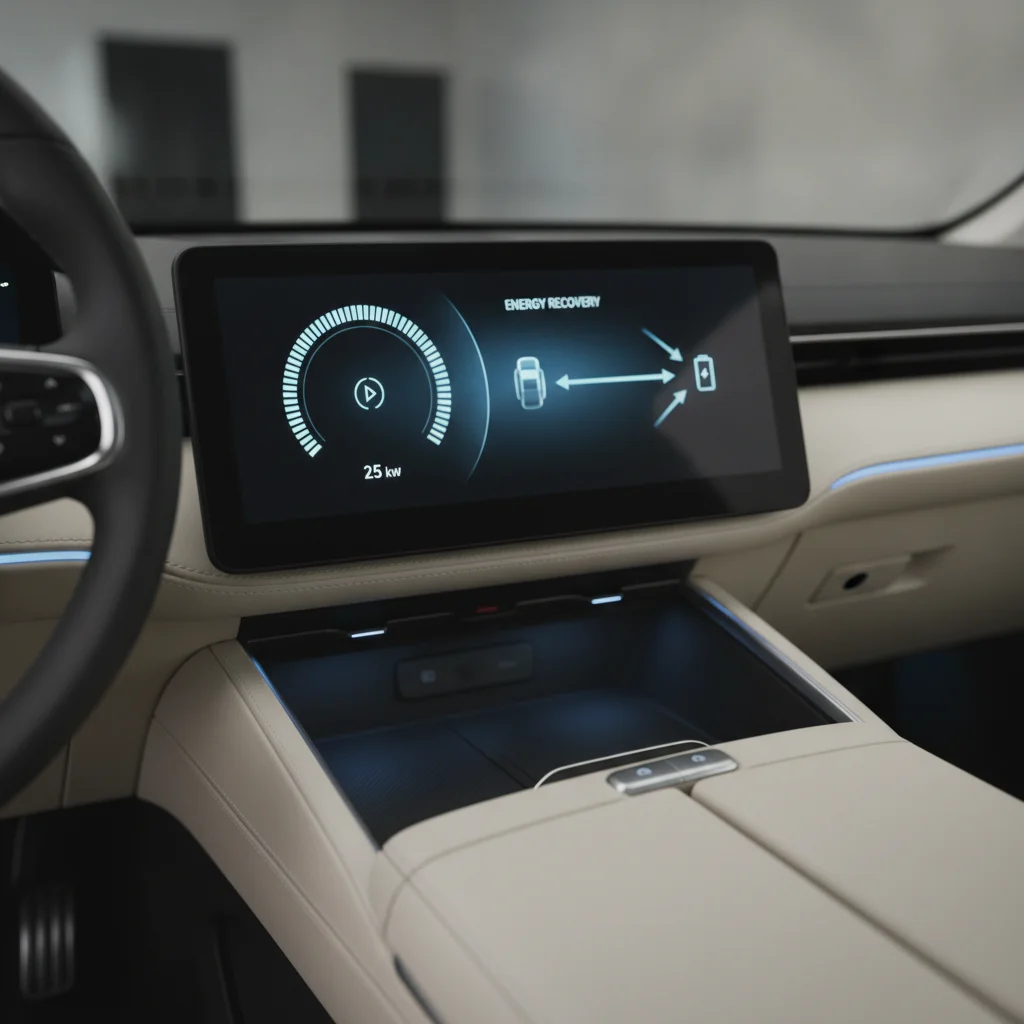
In an electric vehicle, regenerative braking uses the electric motor to slow the car down by converting kinetic energy back into electricity. Because the motor does most of the stopping work, the traditional friction brake pads — the ones that physically clamp against the rotors — are used far less often. The result is brake pads that can last two to three times longer than those on a comparable gasoline car.
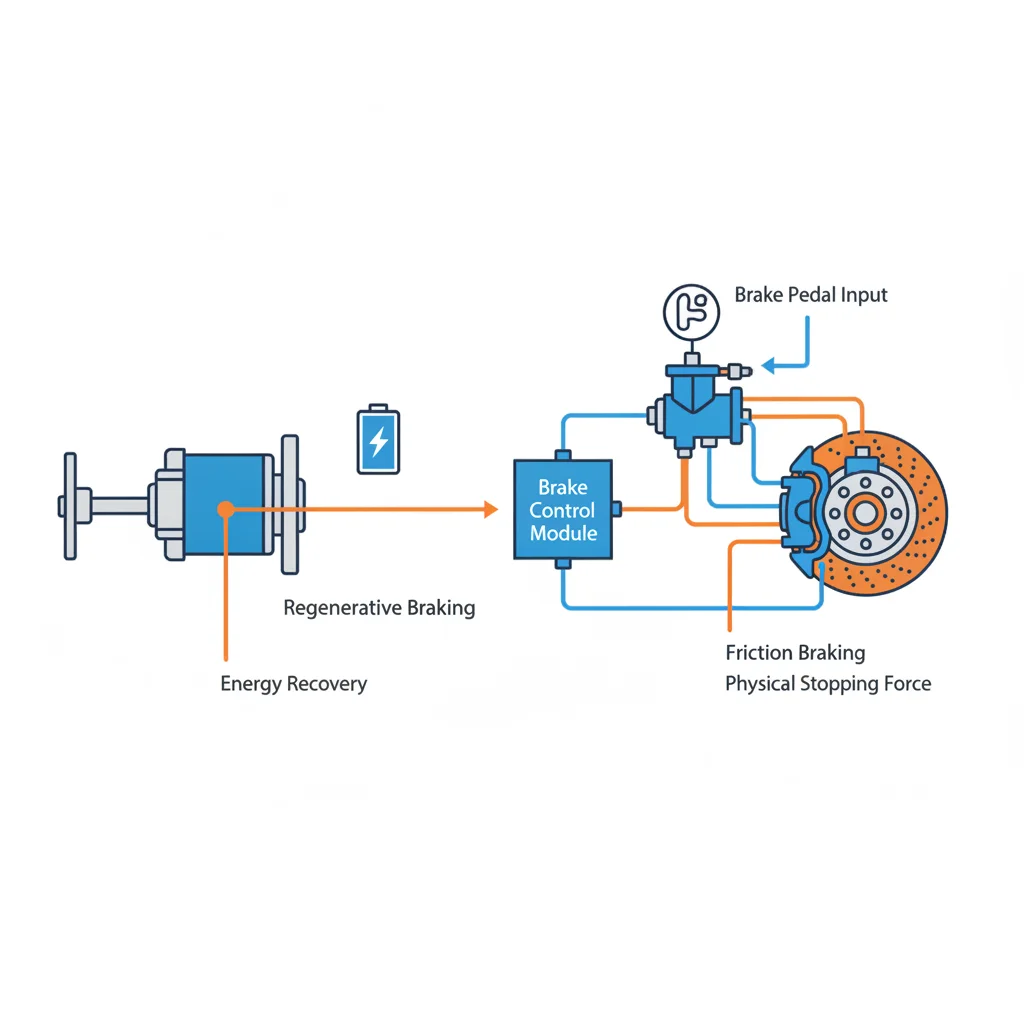
Most EVs use a blended braking system that seamlessly combines regenerative motor braking with hydraulic friction braking. The exact split between regenerative and friction braking is managed by the brake-by-wire system and varies by deceleration demand, vehicle speed, and battery state of charge.
Why Your EV's Brakes Work Differently From Day One
If you've recently switched from a gas car to an EV, you may have noticed that the brake pedal feels different — and that your service reminders for brake work seem to keep getting pushed further out. That's not a bug. It's a fundamental difference in how electric vehicles decelerate.
In a conventional car, every time you lift your foot off the gas and press the brake, friction pads clamp against metal rotors to slow the car. All that kinetic energy — your momentum — turns into heat and disappears into the air. It's wasteful and it's hard on components.
In an EV, the electric motor does something entirely different: it runs in reverse. Instead of converting electrical energy into motion, it converts your car's motion back into electrical energy, which flows into the battery pack. This is regenerative braking, and it handles the vast majority of your everyday deceleration needs without touching the friction brake system at all.
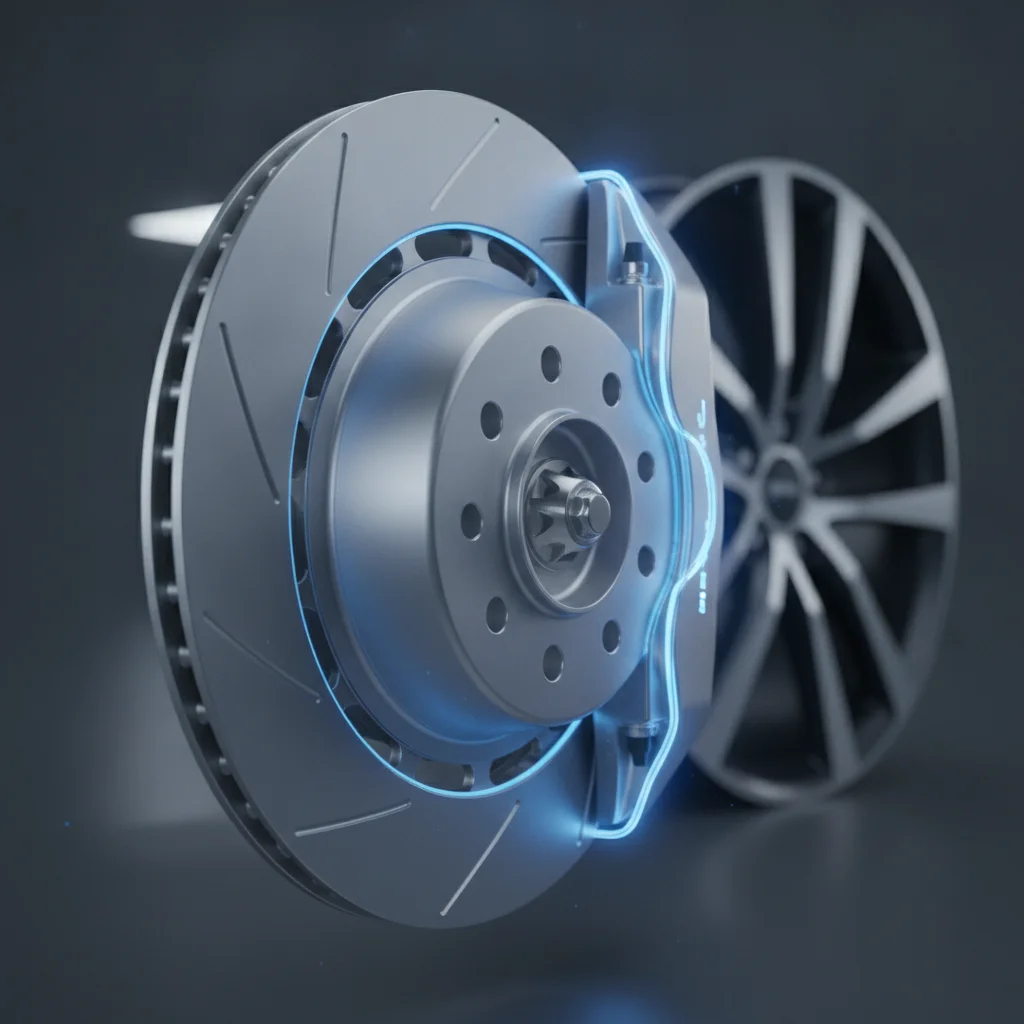
The friction brakes — the physical pads and rotors you'd recognize from any gas car — are still there. They kick in when you brake hard, at very low speeds when the motor can't efficiently recover more energy, and in emergencies. But in normal driving, they're largely along for the ride.
The practical result: brake pad wear in a typical EV is a fraction of what you'd see on a comparable gas vehicle. That changes your maintenance schedule in real ways — but it doesn't eliminate brake maintenance entirely.
The Blended Braking System: How the Split Actually Works
Most EVs don't use pure regenerative braking in isolation. They use what engineers call a blended braking system — a brake-by-wire setup that intelligently mixes regenerative and friction braking based on how hard you're pressing the pedal, how fast you're going, and how full the battery is.
Here's a simplified version of what happens in a typical braking event:
- Light deceleration (lifting off accelerator): The motor immediately begins regenerating. In many EVs, especially those with one-pedal driving enabled, this alone can bring the car from highway speed to a near stop.
- Moderate brake pedal press: The system increases regenerative braking intensity. In most cases, this is still handled almost entirely by the motor.
- Hard brake pedal press: The friction brakes engage in addition to regenerative braking. At higher deceleration demands, both systems work together.
- Emergency stop or ABS activation: The friction brakes take over fully. Regenerative systems are typically bypassed during ABS events to allow precise wheel-speed control.
- Very low speed (under ~5–7 mph): Regenerative braking becomes inefficient and the friction brakes handle the final stop.
Battery State of Charge Affects Regen
When your EV's battery is nearly full, there's limited capacity to accept regenerated energy. In this condition, the system may rely more on friction brakes than usual during deceleration. If your brake pedal feels slightly different after a full charge, this is why — it's normal behavior, not a fault. The effect diminishes as you use charge and create more headroom in the battery.
Brake Fluid Degrades on a Clock, Not a Calendar
Many EV owners mistakenly believe low brake usage means they can skip or delay brake fluid service. In reality, brake fluid absorbs atmospheric moisture continuously, even when the hydraulic system is largely idle. The degradation timeline is driven by time elapsed, not brake applications — which is why manufacturers specify fluid replacement by years, not miles.
One important caveat: the amount of regenerative braking available also depends on battery state of charge. If your battery is nearly full, there's limited capacity to accept more energy — so the system may rely more on friction braking until the battery has more room. This is why aggressive regen can feel different on a full versus depleted battery.
The sophistication of this blending is part of why EVs are able to offer such a seamless brake pedal feel despite the two very different systems working simultaneously. Drivers typically can't tell exactly where regenerative ends and friction braking begins.
What This Actually Means for Your Brake Pads
The numbers tell a clear story. Conventional gas cars typically need new brake pads every 30,000 to 70,000 miles depending on driving style and vehicle weight. EV owners frequently report pad life of 70,000 to over 100,000 miles — and some high-mileage Tesla and Chevy Bolt owners have documented going well past 150,000 miles on original pads.
70,000–100,000+
Typical EV brake pad lifespan (miles)
Industry data and owner reports consistently show EV brake pads lasting two to three times longer than those on equivalent gas vehicles.
30–50%
Estimated brake maintenance cost reduction in EVs
Consumer Reports and EV industry analyses estimate EV owners spend significantly less on brake services over a vehicle's lifetime compared to gas car owners.
2–3 years
Brake fluid replacement interval for most EVs
Most EV manufacturers, including Tesla, GM, and Hyundai, specify brake fluid replacement based on time, not brake usage or mileage.
~7 mph
Speed below which friction brakes typically engage
Regenerative braking becomes inefficient at very low speeds; most EV blended systems transition to friction braking below approximately 5–7 mph for the final stop.
This extended lifespan is real and meaningful. Brake pads for most vehicles cost between $150 and $300 per axle installed, and many cars need both front and rear pads replaced at least once during a typical ownership period. If regenerative braking effectively eliminates one or two of those service visits, that's real money saved.
For a deeper look at the underlying science behind why brake pads last so much longer, see why EV brakes outlast gas car brakes.
“The friction brakes on a Tesla are essentially a backup system for normal driving. Regenerative braking handles the vast majority of deceleration, which is why some customers are driving over 100,000 miles without ever needing a brake pad replacement.”
— Sandy Munro, Automotive manufacturing analyst and founder of Munro & Associates
One-pedal driving mode amplifies this benefit further. When you enable one-pedal mode, the EV uses very aggressive regenerative braking the moment you lift off the throttle — slowing the car more sharply and adding more energy back to the battery. In typical urban driving, you may rarely need to touch the physical brake pedal at all. This also meaningfully extends your EV's range on city routes, where frequent stops would otherwise drain the pack quickly.
The Maintenance Problem You Probably Aren't Thinking About: Rotor Rust
Here's the counterintuitive catch: using your friction brakes less can actually create a different kind of brake problem. Surface rust on rotors.
Brake rotors are made of iron. Iron rusts when exposed to moisture — rain, humidity, morning dew. On a gas car, the brake pads constantly scrub the rotor surface clean during normal driving, preventing rust from building up. On an EV where the friction brakes rarely engage, that self-cleaning action happens much less frequently.
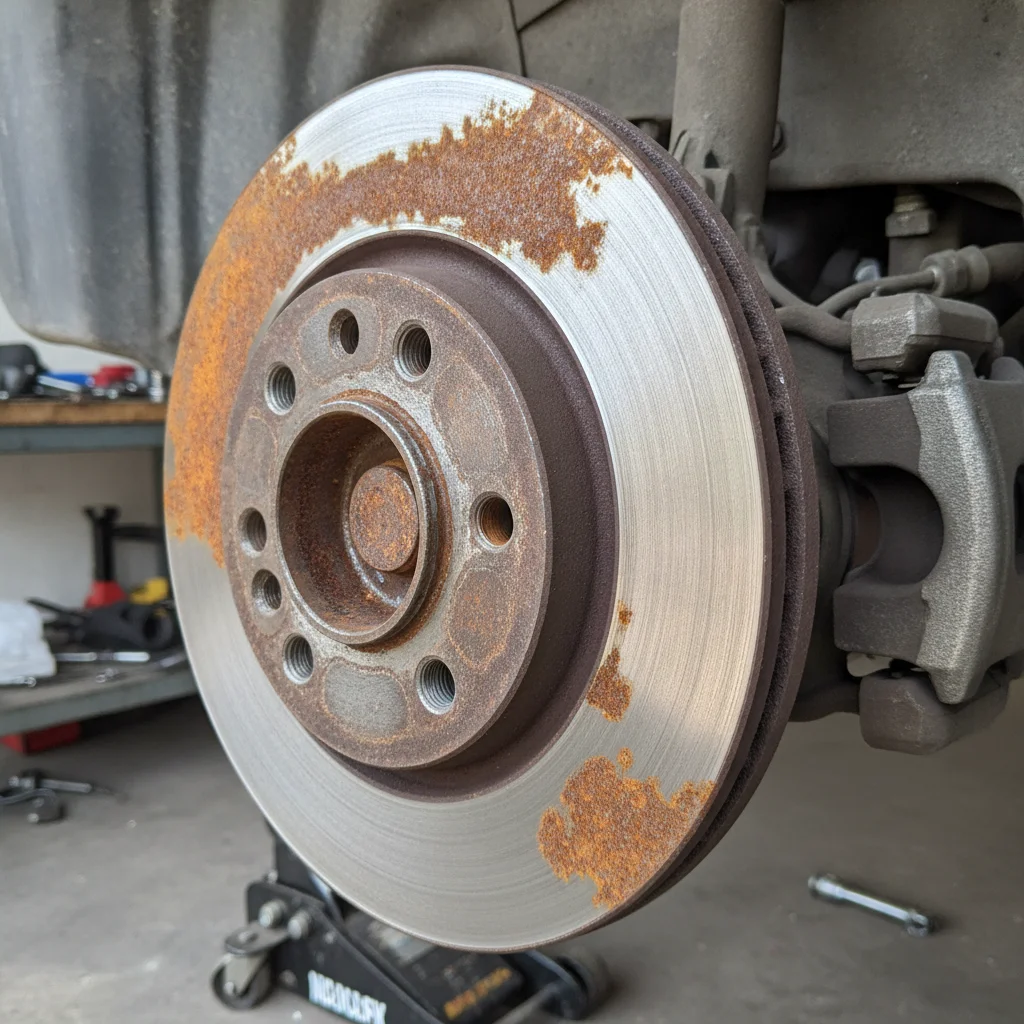
The result is that EV rotors can develop surface rust more readily, particularly if the car is parked for several days in a humid environment. In most cases, this surface rust is harmless — a few normal brake applications will clear it off. But if a car sits for extended periods (think: a second vehicle, a long trip where you left the car at the airport, or winter storage), the rust can progress to pitting or uneven rotor surfaces that cause vibration, noise, and in serious cases, reduced braking performance.
This isn't a reason to panic. But it is a reason to:
- Make deliberate friction brake applications during regular driving — a firm stop from 40 mph once or twice a week is enough to keep rotors clean.
- Have your rotors inspected annually even if the pads look perfect.
- Consider coated rotors (zinc or geomet-coated options are now widely available) if you live in a wet climate.
Make Deliberate Brake Applications Each Week
If you primarily drive in one-pedal mode, intentionally apply the friction brakes firmly at least a few times per week. A solid stop from 40 mph is enough to scrub surface rust off the rotors and keep them in healthy condition. Think of it as routine rotor hygiene — it takes seconds and can prevent a costly rotor replacement later.
EV Brakes Still Deserve Your Attention
Reduced maintenance frequency is not the same as no maintenance. Schedule a brake system inspection at least once a year, and don't skip brake fluid replacement just because your pads look fine. A few minutes with a technician annually can catch rotor corrosion or fluid degradation before it becomes a safety issue or an expensive repair.
Rotor wear from rust and uneven surface contact can sometimes require rotor replacement even when brake pads still have significant life left. This is worth factoring into your mental model of EV brake maintenance — it's not just about pad thickness.
Brake Fluid: The Maintenance Task EVs Can't Skip
EV owners sometimes assume that because their friction brakes see minimal use, the entire brake system is essentially maintenance-free. That assumption is wrong, and it can create a real safety issue.
Brake fluid is hygroscopic — it absorbs moisture from the air over time. This happens regardless of how often you physically press the brake pedal. As water content in the fluid increases, the boiling point drops. In a hard braking event, degraded fluid can boil, causing vapor bubbles in the brake lines, which leads to a soft or spongy pedal — and reduced stopping power at exactly the wrong moment.
This is why virtually every automaker, including Tesla, GM, and Hyundai, specifies a brake fluid replacement interval for their EVs — typically every two to three years. The interval is driven by time and exposure, not miles or brake use. Brake fluid service in EVs is one of those non-negotiable items that often gets overlooked by owners who assume low brake wear means low brake maintenance.
Battery State of Charge Affects Regen
When your EV's battery is nearly full, there's limited capacity to accept regenerated energy. In this condition, the system may rely more on friction brakes than usual during deceleration. If your brake pedal feels slightly different after a full charge, this is why — it's normal behavior, not a fault. The effect diminishes as you use charge and create more headroom in the battery.
Brake Fluid Degrades on a Clock, Not a Calendar
Many EV owners mistakenly believe low brake usage means they can skip or delay brake fluid service. In reality, brake fluid absorbs atmospheric moisture continuously, even when the hydraulic system is largely idle. The degradation timeline is driven by time elapsed, not brake applications — which is why manufacturers specify fluid replacement by years, not miles.
The complete brake system picture — pads, rotors, and fluid — is covered in more detail in our brake service timelines guide, which applies to both gas and electric vehicles.
How EVs, PHEVs, and Hybrids Compare on Brake Wear
Not all electrified vehicles are created equal when it comes to brake pad savings. The amount of benefit you get from regenerative braking depends heavily on how the vehicle's powertrain is set up.
| Vehicle Type | Regen Strength | Estimated Brake Pad Life | Notes |
|---|---|---|---|
| Battery EV (BEV) | High | 70,000–100,000+ mi | One-pedal driving available on most models |
| Plug-in Hybrid (PHEV) | Moderate–High | 50,000–80,000 mi | Depends on EV mode usage and engine involvement |
| Traditional Hybrid (HEV) | Moderate | 40,000–70,000 mi | System calibration varies widely by make |
| Mild Hybrid (MHEV) | Low | 35,000–60,000 mi | Regen mainly assists engine, minimal brake relief |
| Gas Vehicle | None | 30,000–60,000 mi | All deceleration via friction brakes |
For a more detailed breakdown of how different EV architectures handle energy recovery, see regenerative braking across EV types.
What You Should Actually Do Differently as an EV Owner
Owning an EV doesn't mean ignoring your brakes. It means thinking about them differently. Here's a practical maintenance framework:
Do schedule annual brake inspections
Even if your pads have 80% life remaining, a technician should check rotor surface condition, inspect the hydraulic system for leaks, and test brake fluid moisture content. Many EV service centers include this as part of a standard annual check.
Do replace brake fluid on schedule
Follow your manufacturer's interval — usually every two years for most EVs. Don't skip this because your brake pads are fine. The fluid degrades independently. If you're unsure of the last service date, have the fluid tested; most shops use a moisture probe that gives an instant reading.
Do use your friction brakes occasionally and deliberately
If you drive primarily in one-pedal mode, make a habit of performing a few firm brake applications each week to scrub the rotor surfaces clean. This takes five seconds and meaningfully reduces rust buildup risk.
Don't assume low pad wear means low brake cost
Rotors can fail from rust or surface damage independently of pads. And if you do need rotor replacement, that job typically costs $300–$600 per axle. Budget for it as a lower-frequency but real maintenance cost.
Know what changed brake feel means
Even on an EV, a spongy pedal, grinding noise, or pulling to one side is a red flag. These symptoms can indicate fluid degradation, rotor damage, or a caliper issue. Learn to distinguish normal EV brake feel from warning signs — the consequences of ignoring brake problems are the same regardless of what powers your car.
Make Deliberate Brake Applications Each Week
If you primarily drive in one-pedal mode, intentionally apply the friction brakes firmly at least a few times per week. A solid stop from 40 mph is enough to scrub surface rust off the rotors and keep them in healthy condition. Think of it as routine rotor hygiene — it takes seconds and can prevent a costly rotor replacement later.
EV Brakes Still Deserve Your Attention
Reduced maintenance frequency is not the same as no maintenance. Schedule a brake system inspection at least once a year, and don't skip brake fluid replacement just because your pads look fine. A few minutes with a technician annually can catch rotor corrosion or fluid degradation before it becomes a safety issue or an expensive repair.
EV brake maintenance is genuinely lower cost and lower frequency than gas car brake maintenance. But it isn't zero. Treat your brakes as a reduced-attention system, not a no-attention system, and you'll stay safe and avoid the expensive surprises that come from neglecting a system you forgot about.

All claims are backed by peer-reviewed research. Sources on request.