Key Takeaways
Regenerative Braking (EV Brake Wear)
In an electric vehicle, regenerative braking uses the electric motor to slow the car down by converting kinetic energy back into electricity — before the friction brakes ever engage. Because the motor does most of the stopping work, the physical brake pads and rotors experience far less wear than those in a conventional gas-powered car. The result is that EV brake components can last two to three times longer, or sometimes significantly more, depending on how the vehicle is driven.
The transition from regenerative to friction braking is managed by a hydraulic control unit (sometimes called a brake blending system) that meters how much stopping force comes from the motor versus the mechanical calipers — typically invisible to the driver.
What Actually Happens When You Press the Brake Pedal in an EV
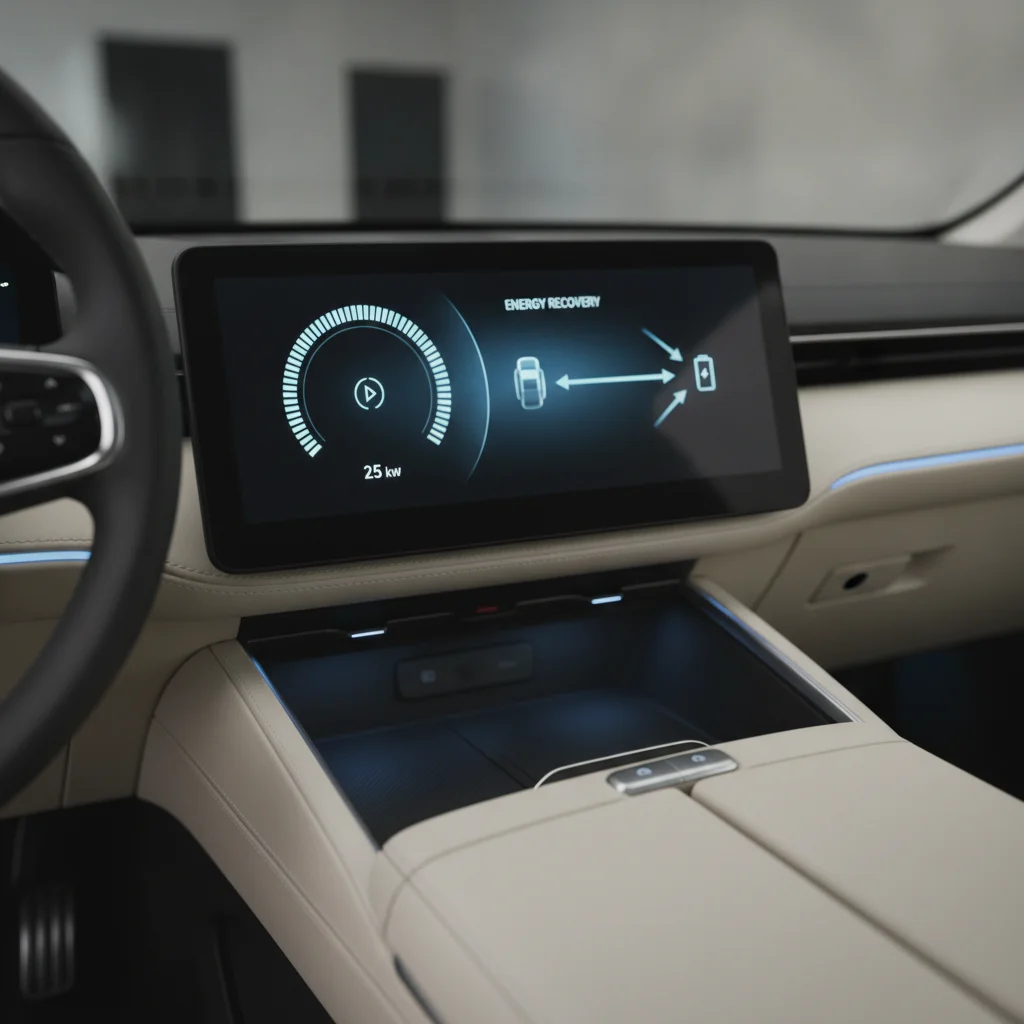
When you lift your foot off the accelerator in an electric vehicle, something the car's gas-powered equivalent simply cannot do kicks in automatically: the drive motor reverses its role and starts acting as a generator. As it resists wheel rotation, the car slows down and that kinetic energy gets fed back into the battery pack. This is regenerative braking, and it begins before you even touch the brake pedal.
By the time you do press the pedal — for a normal, moderate stop — the vehicle's brake blending system reads your input and decides how much of that deceleration should come from the motor versus the hydraulic friction brakes. In most EVs on the market today, the answer is: mostly the motor. The friction brakes, meaning the physical calipers squeezing pads against rotors, may not engage at all during gentle to moderate stops.
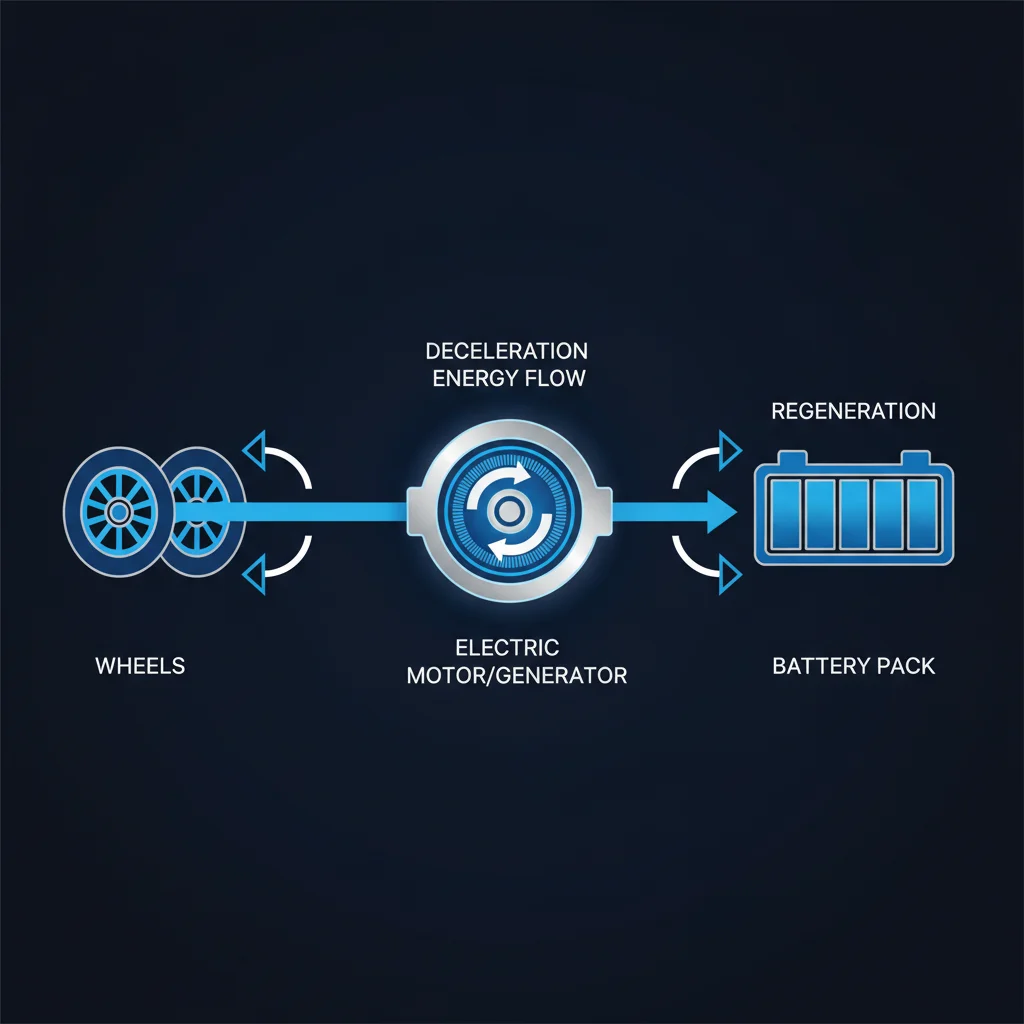
Hard braking is different. Panic stops, emergency maneuvers, or situations where the driver pushes well past the motor's maximum deceleration threshold will bring the friction system fully online. That's by design — the mechanical brake system remains the safety-critical backstop that no vehicle can do without. But in everyday driving, those moments are relatively rare.
To understand why this matters for maintenance costs and ownership, see our broader explainer on how EVs work, which covers the full picture of electric motors and drivetrains.
The Physics Behind Reduced Brake Wear
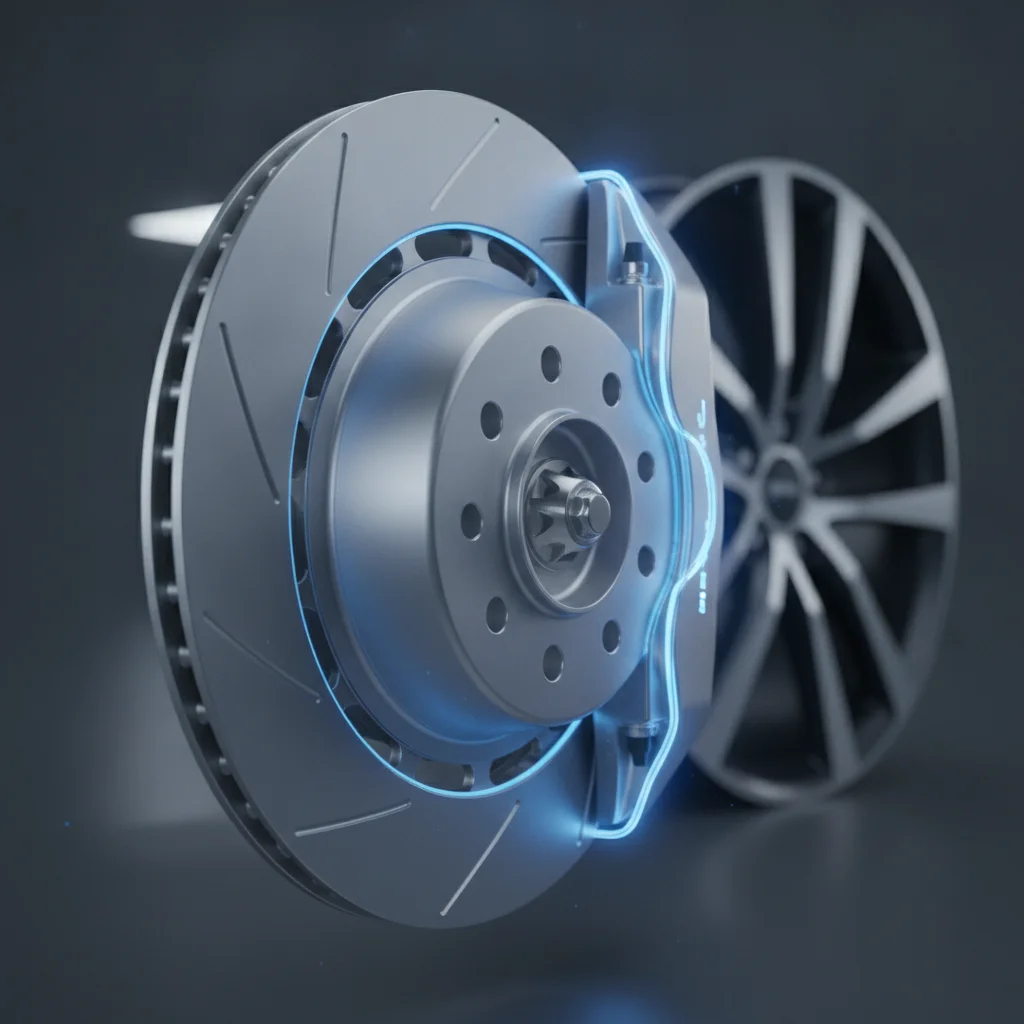
Friction brakes work by converting kinetic energy into heat. Every time a gas car slows from highway speed to a stop, that energy dissipates into the air through red-hot rotors and pads. Over thousands of repetitions, the material on the pad surface grinds down. That wear is cumulative and unavoidable.
In an EV, the motor intercepts that process upstream. Instead of converting motion into heat, it converts motion into electricity. The friction brakes only see the fraction of stops that exceed what the motor can handle — typically hard braking events or stops from very high speeds. For the typical daily driver navigating suburban streets and highway commutes, that might mean friction brake engagement drops by 70–90% compared to an equivalent gas vehicle.
70–90%
Reduction in friction brake engagement in typical EV driving
Industry estimates based on brake blending system data from major EV manufacturers, reflecting normal urban and highway driving conditions.
100,000+ mi
Reported first-set brake pad life for some EV owners
Real-world owner reports from Tesla, Chevy Bolt, and Nissan Leaf communities, representing favorable one-pedal driving conditions.
30,000–70,000 mi
Typical brake pad life in a conventional gas vehicle
Standard industry range cited by brake manufacturers including Bosch and Brembo, varying with driving style and vehicle weight.
$600–$1,200
Estimated brake service savings over 100,000 EV miles
Based on two typical pad-replacement intervals avoided at $150–$300 per axle, per independent shop labor and parts estimates.
2 years
Recommended brake fluid inspection interval for EVs
Per manufacturer guidance from Tesla, GM, and Volkswagen Group, regardless of friction brake usage levels.
Think of it this way: if a gas car's brake pads make 100 meaningful contacts per commute, an EV's pads might make 10 to 15 contacts on the same route. Multiply that reduction across 50,000 miles of driving and you understand why EV pad life is measured in years rather than months.
The energy recovery side of this equation also has a tangible benefit on your electric bill. Regenerative braking extends your EV's range by recovering kinetic energy that would otherwise be wasted as heat — so you're not just saving on brake pads, you're getting more miles per charge.
“The regenerative braking system does the heavy lifting in almost every normal driving scenario. The friction brakes are there as a safety net — and a critical one — but most EV owners will go years without those pads seeing meaningful wear.”
— Jake Fisher, Senior Director of Auto Testing, Consumer Reports
How Long Do EV Brakes Actually Last?
There is no single answer, because brake life depends on driving style, vehicle weight, regen strength settings, and local terrain. That said, real-world data and manufacturer guidance point to a consistent pattern: EV friction brakes outlast their gas-car counterparts by a significant margin.
On a typical gas car or light truck, brake pads need replacement somewhere between 30,000 and 70,000 miles, with rotors following at similar or slightly longer intervals depending on driving habits. EV owners routinely report going 80,000 to over 100,000 miles on the original pads. Some Tesla and Chevy Bolt owners have posted verified odometer readings past 150,000 miles on first-set pads, though that represents the upper end of the range under unusually favorable conditions.
Heavier EVs — full-size trucks and performance sedans — sit at the lower end of that range because their greater mass demands more stopping force, which stresses the motor's regenerative capacity and pulls the friction system in sooner. Compact EVs driven by someone who maximizes one-pedal driving will see the best results.
One-pedal driving, where the driver rarely uses the brake pedal at all, relying on aggressive regeneration to come to a full stop, is the single biggest factor in extending brake life. Not every EV supports full-stop one-pedal driving — some slow down aggressively but require a final brake tap to stop completely — so it is worth checking your vehicle's regen settings and capabilities.
Maximize Brake Life With One-Pedal Driving
If your EV supports adjustable regenerative braking strength, set it to the highest level you are comfortable with. One-pedal driving — where you lift off the accelerator to slow and stop without touching the brake pedal — delivers the maximum reduction in friction brake engagement. Practice it in low-traffic conditions first until the deceleration feel becomes intuitive.
Apply Firm Brakes Periodically to Prevent Rotor Rust
Even if you drive in full one-pedal mode, deliberately use the friction brakes firmly from around 40 mph to a complete stop at least once every few hundred miles. This sweeps surface corrosion off the rotors before it can accumulate into pitting. A weekly intentional stop during a parking lot maneuver or highway off-ramp is enough.
The Hidden Risk: Rust and Infrequent Use
Here is the counterintuitive maintenance catch that surprises many new EV owners: using your friction brakes too infrequently can actually cause problems. Brake rotors are made of iron, and iron rusts. In a gas car, the pads sweep the rotor surface constantly, mechanically removing any surface oxidation before it builds up. In an EV, rotors can sit largely untouched for weeks in wet or humid climates.
Light surface rust on a rotor is normal and typically harmless — it scrubs off the first time the friction brakes engage firmly. But if corrosion is allowed to accumulate in grooves or uneven patterns, it can eventually cause vibration, noise, or reduced braking performance. In extreme cases of neglect, particularly with vehicles that sat unused for long periods, pitted rotors may need replacement even when they have virtually no pad-contact wear.
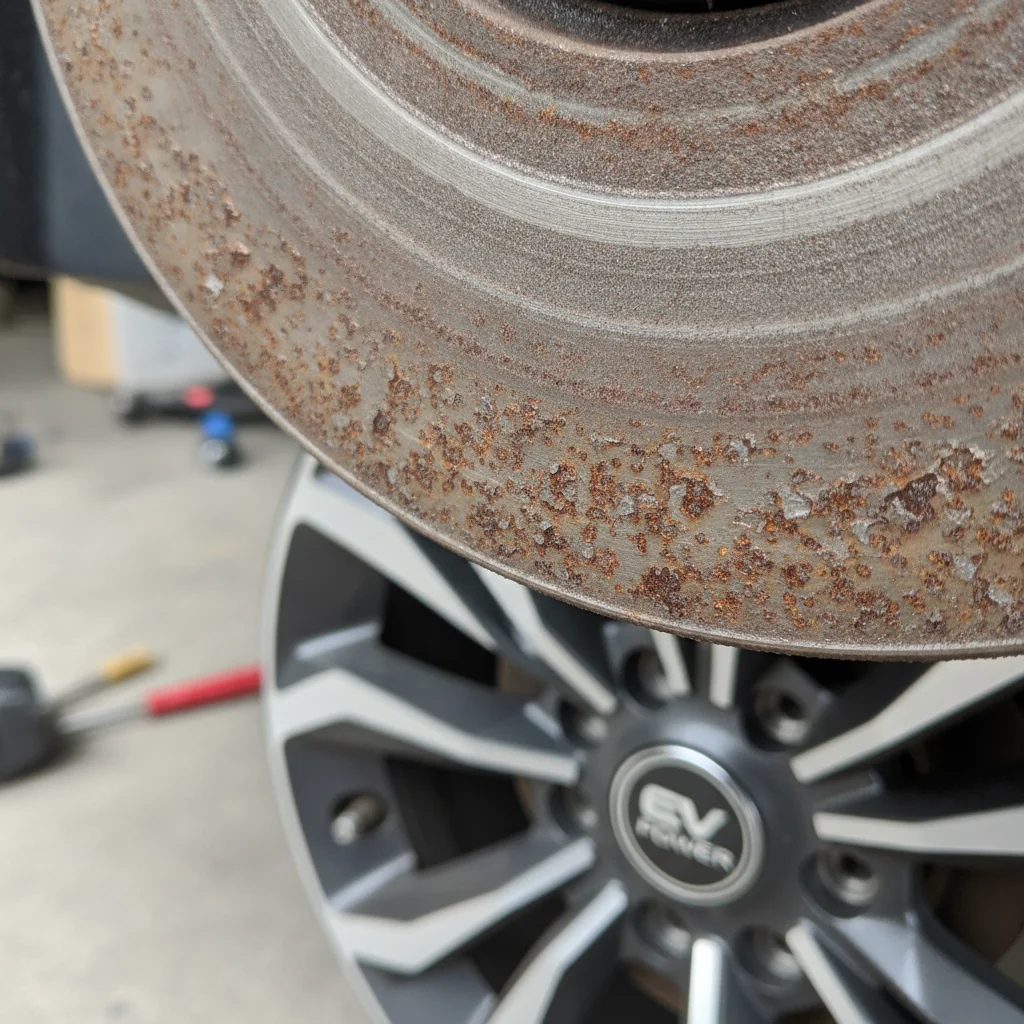
The fix is simple: occasionally use your brakes deliberately. Most EV manufacturers recommend a firm brake application from moderate speed every few hundred miles just to keep the rotor surfaces clean. You do not need to change your driving style dramatically — a handful of intentional stops per week is sufficient for most environments. In coastal or high-humidity regions, doing this more frequently is prudent.
Brake Warning Lights Still Mean What They Always Did
An EV's extended brake life does not change how the brake warning system functions. If your brake warning light illuminates, treat it with the same urgency you would in a gas car — check fluid level, pad sensors if equipped, and caliper function. Regenerative braking does not provide a safety margin for a failed hydraulic system.
Brake Fluid Service Applies to All EVs
Many EV owners assume that because pads and rotors are fine, brake maintenance can be deferred indefinitely. Brake fluid is the exception. It absorbs moisture through the hydraulic system's seals regardless of use frequency, and degraded fluid raises the risk of brake fade under hard stops. Follow your manufacturer's two-year inspection interval as a minimum.
This rotor corrosion issue has led some manufacturers, including Audi and Porsche, to develop coated or stainless-steel rotors for their EVs. These cost more upfront but largely eliminate the rust concern. Expect to see this trend spread as EV adoption grows and manufacturers seek to reduce both warranty claims and owner anxiety around brake maintenance.
What EV Brake Maintenance Still Requires
Reduced friction brake wear does not mean zero brake maintenance. There are two things EV owners consistently underestimate: brake fluid service and periodic brake system inspection.
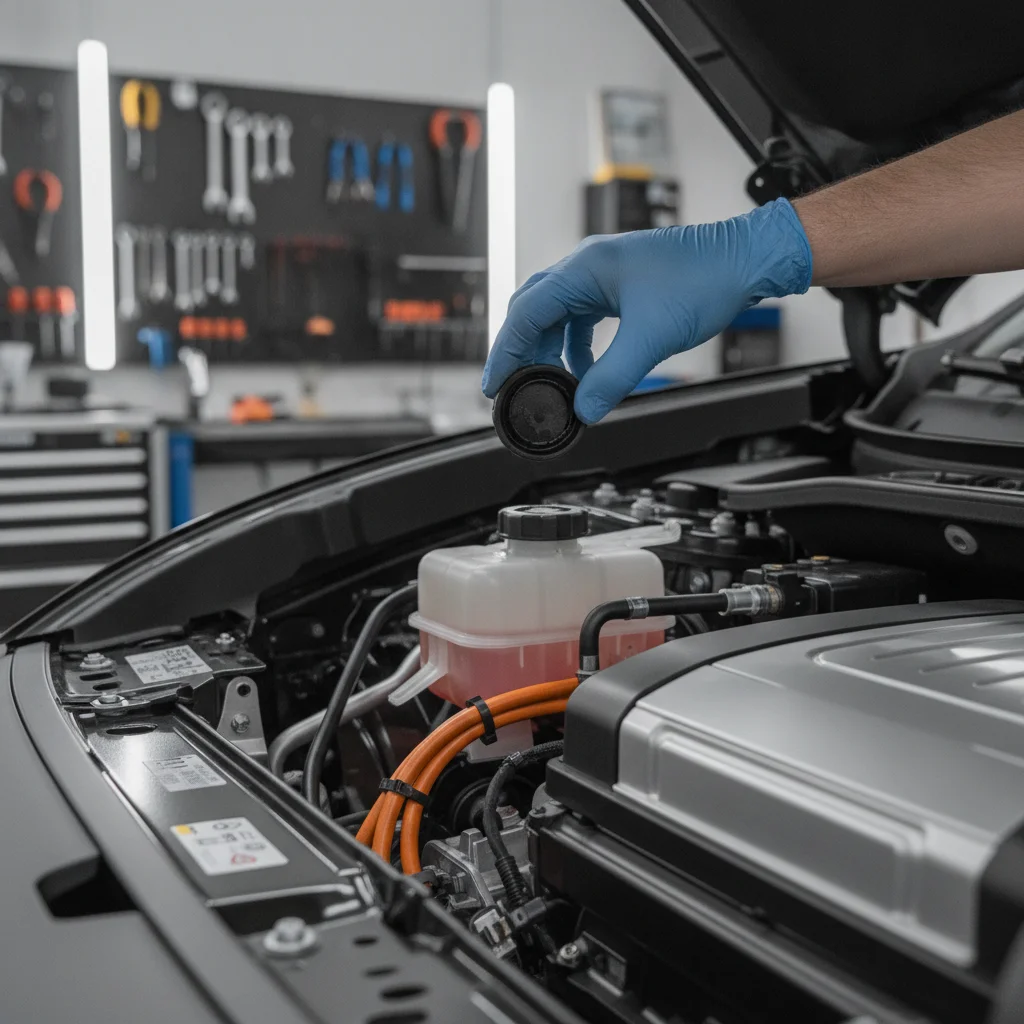
Brake fluid: Regardless of how rarely the friction brakes engage, the hydraulic fluid in your brake lines absorbs moisture from the air over time. Moisture lowers the fluid's boiling point, which can cause brake fade under sustained hard braking. Most manufacturers recommend brake fluid inspection every two years and replacement as needed — a schedule that applies to EVs just as it does to gas cars. Our detailed article on why your EV's brake fluid still needs changing walks through the service intervals in detail.
Brake inspection: Even lightly used brakes need periodic visual inspection. A technician should check caliper function (seized calipers are a real risk when brakes go long periods without full engagement), pad thickness, rotor surface condition, and brake line integrity. Most EV service schedules recommend a brake system inspection annually or every 15,000–20,000 miles.
For a clear comparison of how brake pad wear actually plays out across different EV types and configurations, this detailed breakdown on regenerative braking and brake pad wear covers the specifics by vehicle class.
Brake Warning Lights Still Mean What They Always Did
An EV's extended brake life does not change how the brake warning system functions. If your brake warning light illuminates, treat it with the same urgency you would in a gas car — check fluid level, pad sensors if equipped, and caliper function. Regenerative braking does not provide a safety margin for a failed hydraulic system.
Brake Fluid Service Applies to All EVs
Many EV owners assume that because pads and rotors are fine, brake maintenance can be deferred indefinitely. Brake fluid is the exception. It absorbs moisture through the hydraulic system's seals regardless of use frequency, and degraded fluid raises the risk of brake fade under hard stops. Follow your manufacturer's two-year inspection interval as a minimum.
How This Compares Across Hybrid and EV Types
Not all electrified vehicles capture regenerative braking energy equally, and that difference matters for brake wear projections. A full battery EV (BEV) with strong one-pedal capability gets the maximum brake-wear benefit because regeneration handles nearly all normal deceleration. A plug-in hybrid (PHEV) in EV mode behaves similarly, but once the battery depletes and the gas engine takes over, brake demands shift. A traditional hybrid (HEV) like a Toyota Prius blends the two systems continuously but still uses regenerative braking enough to meaningfully extend pad life compared to a non-hybrid gas vehicle.
Regenerative braking varies significantly across EV types — understanding your specific vehicle's system helps you set realistic maintenance expectations. A PHEV driven mostly on the gas engine will wear brakes faster than a BEV with aggressive regen settings, even though both are technically electrified.
For those curious about the fuel-efficiency dimension of the same physics, the concept is mirrored in the gas world: how you decelerate affects fuel use in gas cars too, just without the energy recovery benefit.
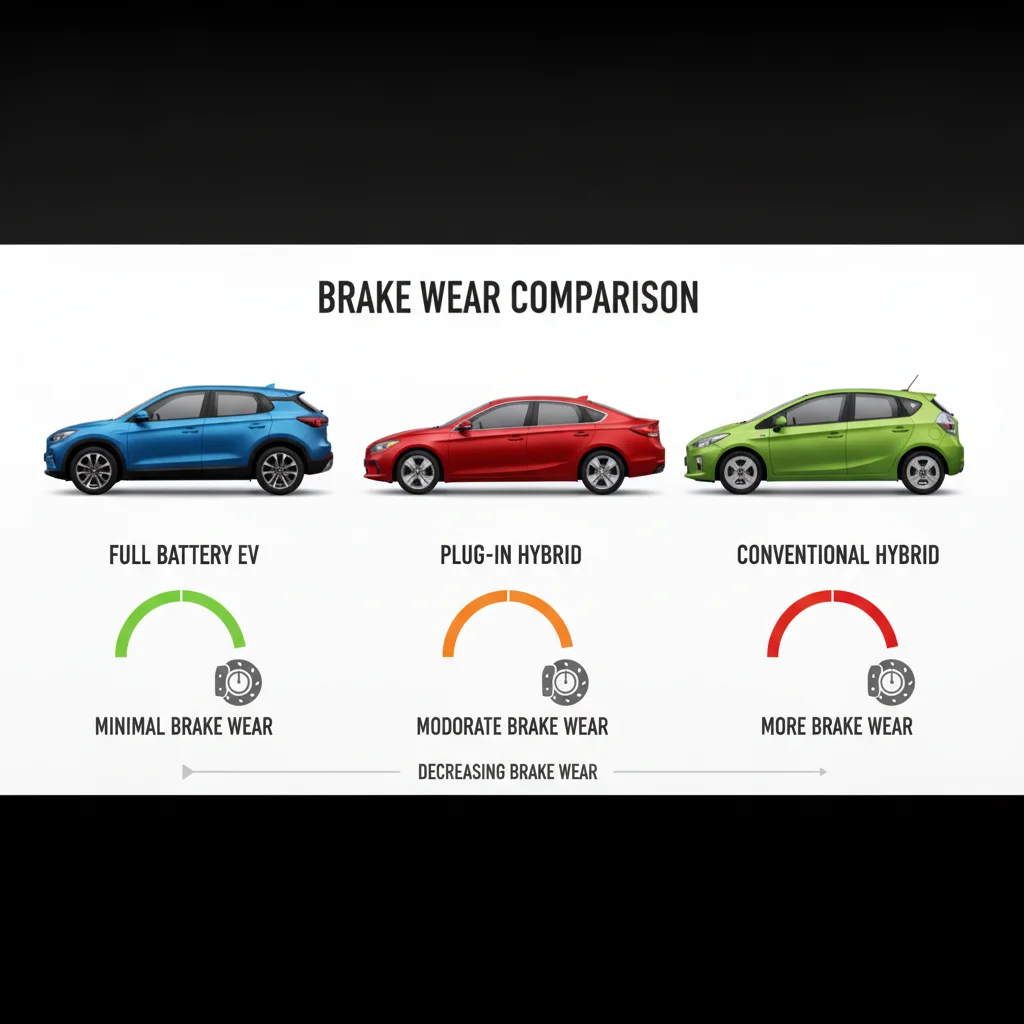
The bottom line across all vehicle types is that more electrification generally means longer brake life — but the degree varies considerably, and driving behavior remains the single biggest variable regardless of vehicle type.
Maximize Brake Life With One-Pedal Driving
If your EV supports adjustable regenerative braking strength, set it to the highest level you are comfortable with. One-pedal driving — where you lift off the accelerator to slow and stop without touching the brake pedal — delivers the maximum reduction in friction brake engagement. Practice it in low-traffic conditions first until the deceleration feel becomes intuitive.
Apply Firm Brakes Periodically to Prevent Rotor Rust
Even if you drive in full one-pedal mode, deliberately use the friction brakes firmly from around 40 mph to a complete stop at least once every few hundred miles. This sweeps surface corrosion off the rotors before it can accumulate into pitting. A weekly intentional stop during a parking lot maneuver or highway off-ramp is enough.
What This Means for Your Ownership Costs
Brake service is not the most expensive maintenance item on a gas car, but it is a recurring one. A typical brake pad replacement costs $150–$300 per axle at an independent shop, and rotor resurfacing or replacement adds another $200–$400. If a gas car owner replaces pads twice over 100,000 miles — a conservative estimate for moderate drivers — that is $600–$1,200 in brake service that an EV owner may never encounter in the same mileage window.
Multiply that across a five- to seven-year ownership period and the savings are real, if not dramatic compared to bigger ticket EV cost factors like battery replacement risk or higher insurance premiums. The brake savings tend to partially offset EV ownership costs that run higher elsewhere.
What should matter most to you as an EV owner is not skipping maintenance entirely — it is maintaining smartly. Know which systems actually wear in your vehicle, follow the manufacturer's service schedule for brake fluid, and do not assume that because your pads are fine, your entire brake system is fine. A seized caliper or corroded rotor discovered during an inspection is far cheaper to address early than the alternative.
For the broader picture on EV running costs, charging cost estimates and how they compare to gasoline fueling is worth reviewing alongside your brake savings calculation. The total-cost-of-ownership picture for EVs depends on stacking multiple smaller savings together — and brakes are a real, if often underappreciated, line item.

All claims are backed by peer-reviewed research. Sources on request.