Key Takeaways
Regenerative Braking
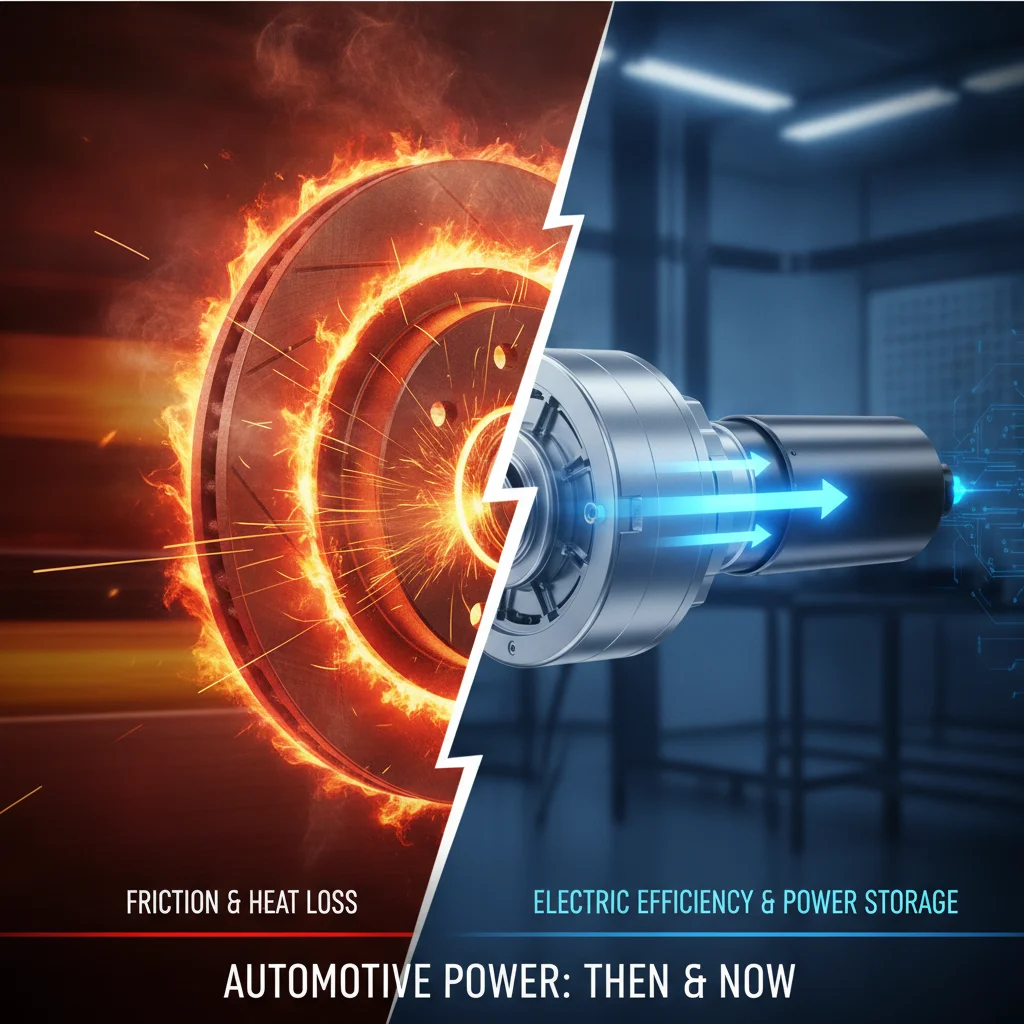
Regenerative braking is a technology used in electric and hybrid vehicles that captures the kinetic energy normally lost as heat during braking and converts it back into electricity, which is then stored in the battery. Instead of burning off that energy through friction like conventional brakes do, the electric motor runs in reverse — acting as a generator — to slow the car while simultaneously recharging the battery pack. The result is improved efficiency and extended driving range with every stop.
In technical terms, the electric motor operates as a generator during deceleration, converting mechanical energy into electrical energy through electromagnetic induction. The recovered current is conditioned by the power electronics and fed back into the high-voltage battery pack.
What Actually Happens When an EV Slows Down
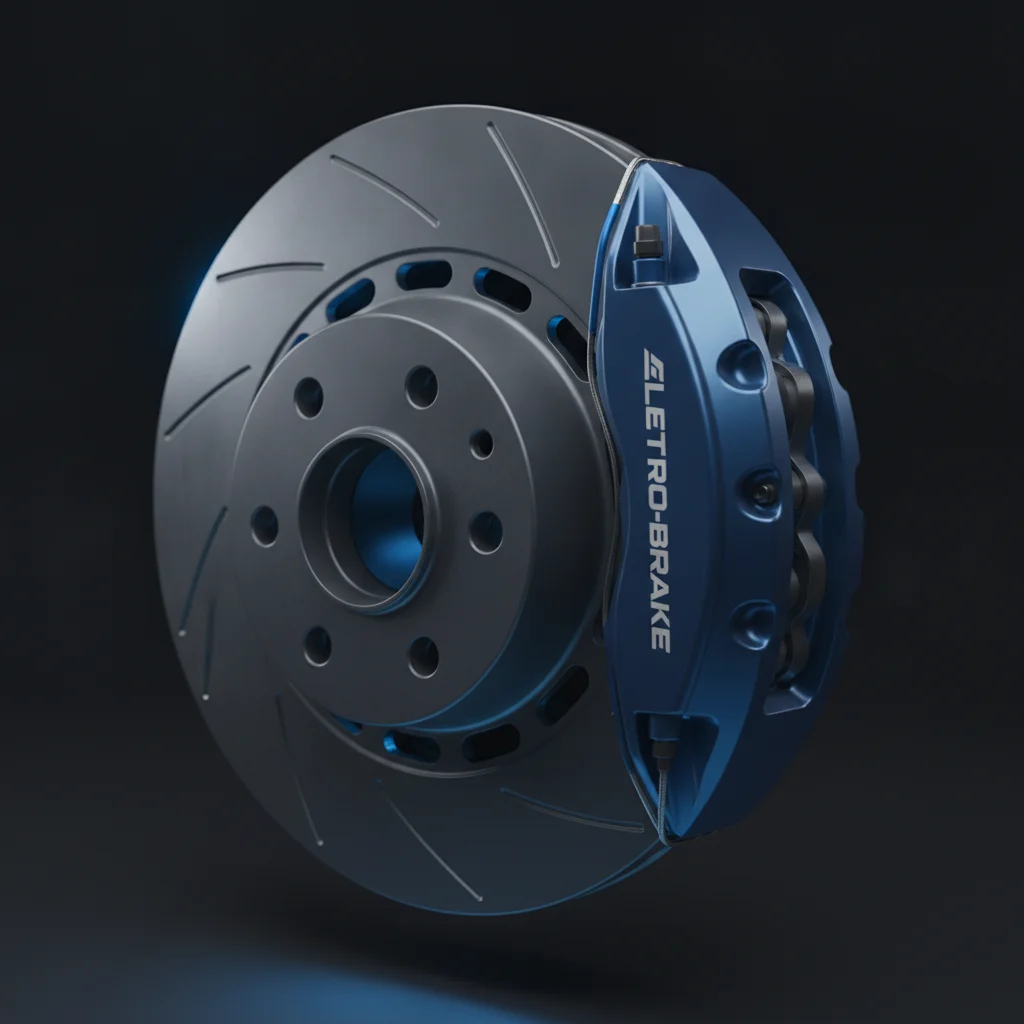
In a conventional gas-powered car, braking is a straightforward — and wasteful — process. You press the brake pedal, friction pads clamp against metal rotors, and the car's forward momentum is converted into heat that dissipates into the air. All that energy, built up by burning fuel, is simply thrown away every time you stop at a red light.
Electric vehicles take a fundamentally different approach. When you lift off the accelerator or press the brake pedal lightly, the electric motor doesn't just stop spinning — it reverses its role. Instead of consuming electricity to drive the wheels forward, it starts being driven by the wheels. That resistance is what slows the car, and in the process, the motor generates electricity that flows back into the high-voltage battery pack.
Think of it this way: the same motor that launches your EV from a stoplight becomes a generator the moment you start decelerating. The energy that would otherwise heat up brake rotors and pads is instead recaptured and stored for the next acceleration.
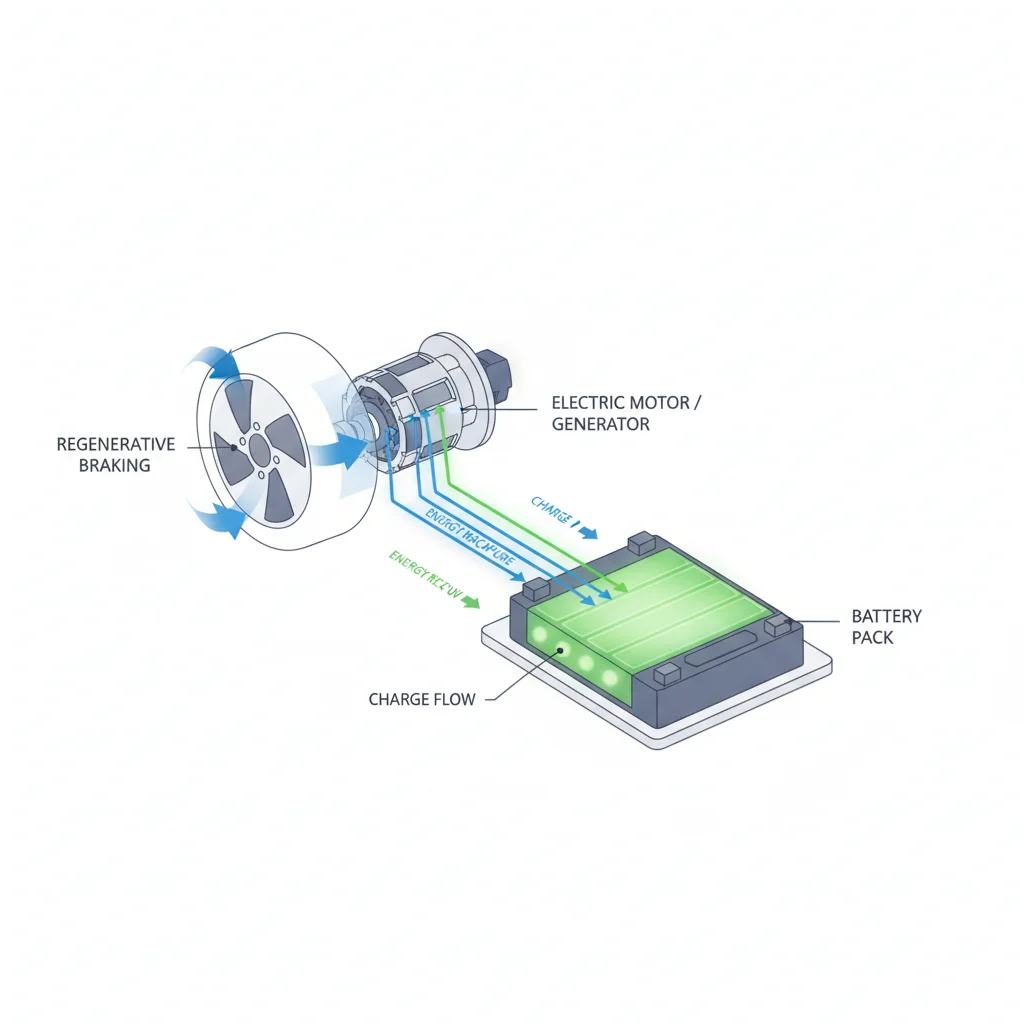
This is regenerative braking — and while the physics behind it involve electromagnetic induction and power electronics, the practical effect is simple: your car recovers energy that would otherwise be wasted. That translates directly into more miles of driving range.
Regenerative vs. Conventional Braking: Key Differences
It helps to lay out how these two braking systems compare side by side, because the differences affect everything from your maintenance costs to your driving habits.
| Feature | Conventional Braking | Regenerative Braking |
|---|---|---|
| Energy outcome | Kinetic energy lost as heat | Kinetic energy converted to electricity |
| Primary mechanism | Friction (pads + rotors) | Electric motor acting as generator |
| Brake wear | Gradual, regular wear | Significantly reduced wear |
| Effect on range | None | Extends range by recapturing energy |
| Driver feel | Predictable, consistent drag | Adjustable; can feel different at first |
| Best conditions | All conditions | City driving, frequent stops |
Conventional friction brakes aren't going away — they're still there in every EV for hard stops and emergencies. But regenerative braking takes over the vast majority of everyday deceleration duty. The blend between the two systems is managed by the car's software, often transparently to the driver.
Regen Has Limits When the Battery Is Full
Regenerative braking can only work if the battery has room to accept charge. If your battery is at or near 100%, the system can't push more electricity into it and will rely more heavily on friction brakes instead. This is one practical reason some EV drivers avoid charging to 100% before a drive with lots of downhill sections — leaving headroom lets regen work as intended.
Because friction brakes are used so much less frequently in EVs, brake pads and rotors often last dramatically longer than in gas cars. That's a real ownership cost advantage — one that's easy to overlook when comparing EVs and gas vehicles. Learn exactly why EV brakes outlast gas car brakes in our dedicated breakdown.
How Much Energy Does It Actually Recover?
This is where expectations need to be calibrated. Regenerative braking is genuinely valuable, but it's not a perpetual motion machine — you can't recover all the energy you expended accelerating, because some is always lost to heat in the motor, wiring, and battery chemistry itself.
10–30%
Energy recovered during braking
Industry estimates from EV manufacturers and independent testing suggest regenerative braking recaptures 10–30% of acceleration energy, depending on driving conditions and system tuning.
~20%
Potential urban range improvement
Some automakers and researchers estimate regenerative braking can contribute up to 20% more range in city driving cycles compared to driving without it.
2–5x
Longer brake pad lifespan in EVs
EV owners commonly report brake pads lasting two to five times longer than in comparable gas vehicles, a direct result of friction brakes being used far less frequently.
~70%
Deceleration handled by regen in city driving
In normal urban driving, regenerative braking can handle the majority of deceleration events, with friction brakes engaging primarily for hard or emergency stops.
In practice, studies and real-world data suggest regenerative braking recovers roughly 10–30% of the energy used during acceleration, depending on driving style, conditions, and how aggressively the system is tuned. In city driving with frequent stop-and-go traffic, the efficiency gains are at their most significant. On the highway, where deceleration events are infrequent, the benefit is much smaller.
Some automakers report that regenerative braking can account for up to 20% of total range in urban driving cycles. That's meaningful — it's the difference between, say, 250 and 300 miles on a charge, in the right conditions.
For a deeper look at the numbers behind these claims and how they translate to real-world range, see how regenerative braking extends your EV's range.
The contrast with gas cars is instructive. In a conventional vehicle, the only way deceleration helps fuel economy is by reducing the amount of fuel needed to maintain speed — you're not recovering anything. How you decelerate in a gas car still matters for efficiency, but the ceiling is much lower than what an EV can achieve.
One-Pedal Driving: Regenerative Braking Turned Up
Many EVs offer a driving mode that maximizes the intensity of regenerative braking — commonly marketed as "one-pedal driving." In this mode, simply lifting your foot off the accelerator causes the car to decelerate firmly enough to bring it to a complete stop without touching the brake pedal at all.
The name is slightly misleading — the brake pedal is still there and still works — but in normal city driving, many EV drivers find they barely need it. The car manages most of its own deceleration through the motor-as-generator action alone.
Adjust Regen Before You Judge It
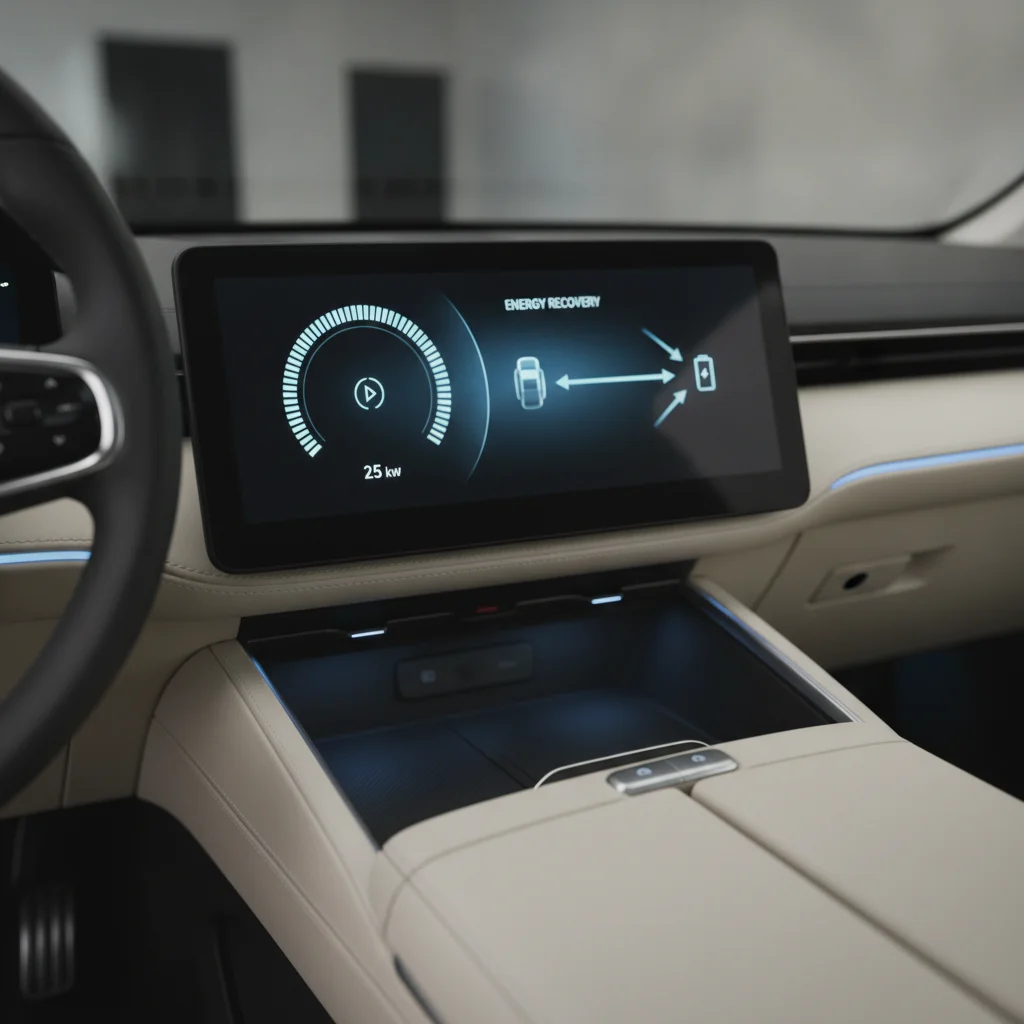
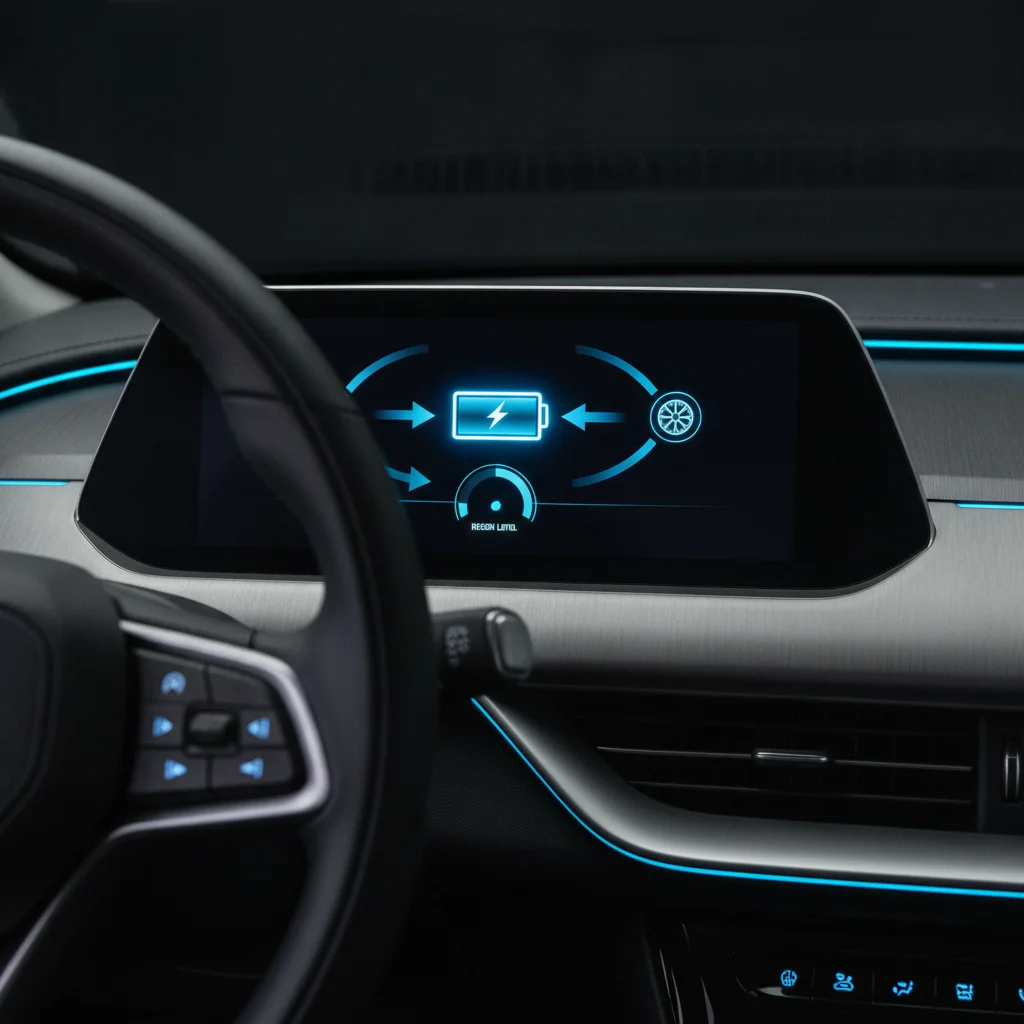
If regenerative braking feels too abrupt or too weak on your first EV test drive, look for the regen intensity settings before drawing conclusions. Most modern EVs let you tune this from the infotainment display or steering wheel paddles. Finding your preferred setting makes a meaningful difference in driving comfort and energy recovery.
Use Paddle Shifters for On-the-Fly Regen Control
Some EVs — including many Hyundai, Kia, and Genesis models — offer steering wheel paddles that let you increase or decrease regen intensity in real time while driving. Pulling the left paddle increases regen for a downhill stretch; releasing it reduces drag on the highway. This level of control makes energy management intuitive and engaging.
Drivers transitioning from gas cars sometimes find one-pedal driving jarring at first. The strong deceleration when you lift off can feel unnatural. Give yourself a week of city commuting before deciding whether you prefer high or low regen settings. Most drivers come to prefer higher regen once they adjust — it feels intuitive and gives a sense of control over energy recovery.
One-pedal driving maximizes regenerative energy capture because the motor is working harder as a generator during each deceleration event. It's particularly effective in urban environments where stops are frequent and predictable. On the highway, the benefit diminishes because stops are rare.
Not all EVs offer the same level of one-pedal capability. Some vehicles cap regen intensity to preserve a driving feel closer to a gas car. Others, like certain Tesla and Rivian models, allow very aggressive regen settings. This is worth considering if one-pedal driving appeals to you as a buyer.
How Regen Works Across Different EV Types
Regenerative braking isn't exclusive to fully battery-electric vehicles. Any vehicle with an electric motor can use it — but the degree to which each vehicle type benefits varies considerably.
- Battery Electric Vehicles (BEVs): These have the largest battery packs and the most powerful electric motors, so they can absorb and benefit from the most regenerated energy. Regenerative braking is central to BEV efficiency.
- Plug-in Hybrid Electric Vehicles (PHEVs): PHEVs use regenerative braking to charge their smaller battery pack when it's partially depleted, or to supplement the gas engine's efficiency. The smaller battery limits how much energy can be absorbed at once.
- Hybrid Electric Vehicles (HEVs): Traditional hybrids like the Toyota Prius pioneered regenerative braking in mass-market vehicles. Their systems are well-developed but limited by small battery capacity. This is a key reason why hybrids get better city MPG than highway MPG — they recover more energy in stop-and-go conditions.
The technical implementation differs across these types as well — the motor size, battery chemistry, power electronics, and software calibration all shape how effectively each vehicle captures braking energy. See how regenerative braking differs across BEVs, PHEVs, and HEVs for a full comparison.
“Regenerative braking is one of the most elegant aspects of electric vehicle design. You're not just avoiding energy waste — you're actively turning a normally lossy event into an efficiency opportunity. Over a lifetime of driving, those recoveries add up to something significant.”
— Shruti Pillai, EV systems engineer and powertrain researcher
What This Means for EV Buyers
If you're evaluating an EV purchase, regenerative braking is one of those technical features that has direct, practical consequences for your ownership experience. Here's how to think about it:
Range and Efficiency
The more stop-and-go driving you do, the more regenerative braking benefits you. City commuters who frequently encounter traffic lights and congestion will see a proportionally larger range benefit than drivers who primarily use highways. When comparing EPA range estimates, understand that the city-cycle portion of the test gives EVs credit for regenerative braking — highway numbers are typically lower for EVs relative to city numbers, which is the opposite of gas cars.
For a full picture of what affects your real-world range, the EV Range & Efficiency hub covers everything from temperature effects to tire choice.
Maintenance Savings
Because regenerative braking handles the majority of deceleration, friction brakes wear much more slowly. EV owners routinely report going significantly longer between brake jobs than they did with gas vehicles. This is a genuine, quantifiable ownership cost advantage. The EV Maintenance Basics hub breaks down where EVs cost less — and where they don't.
Driving Feel and Adjustability
Pay attention to how a prospective EV handles regenerative braking settings. Test drives should include time in both city and highway conditions. Try different regen levels. If one-pedal driving appeals to you, make sure the model you're considering supports a strong enough regen mode to bring the car to a full stop — not all do.
Adjust Regen Before You Judge It
If regenerative braking feels too abrupt or too weak on your first EV test drive, look for the regen intensity settings before drawing conclusions. Most modern EVs let you tune this from the infotainment display or steering wheel paddles. Finding your preferred setting makes a meaningful difference in driving comfort and energy recovery.
Use Paddle Shifters for On-the-Fly Regen Control
Some EVs — including many Hyundai, Kia, and Genesis models — offer steering wheel paddles that let you increase or decrease regen intensity in real time while driving. Pulling the left paddle increases regen for a downhill stretch; releasing it reduces drag on the highway. This level of control makes energy management intuitive and engaging.
During your test drive, ask the salesperson to show you how to adjust regen settings on the vehicle's infotainment system. Some EVs bury this in menus; others let you toggle it with a paddle on the steering wheel. Paddle-based regen adjustment is particularly intuitive and worth prioritizing if you care about active energy recovery.
Regenerative braking is one of the clearest examples of why EVs are genuinely different machines — not just gas cars with a different power source. Understanding how it works gives you a sharper lens for evaluating range claims, maintenance costs, and driving dynamics when comparing models.

All claims are backed by peer-reviewed research. Sources on request.