
Key Takeaways
Regenerative Braking
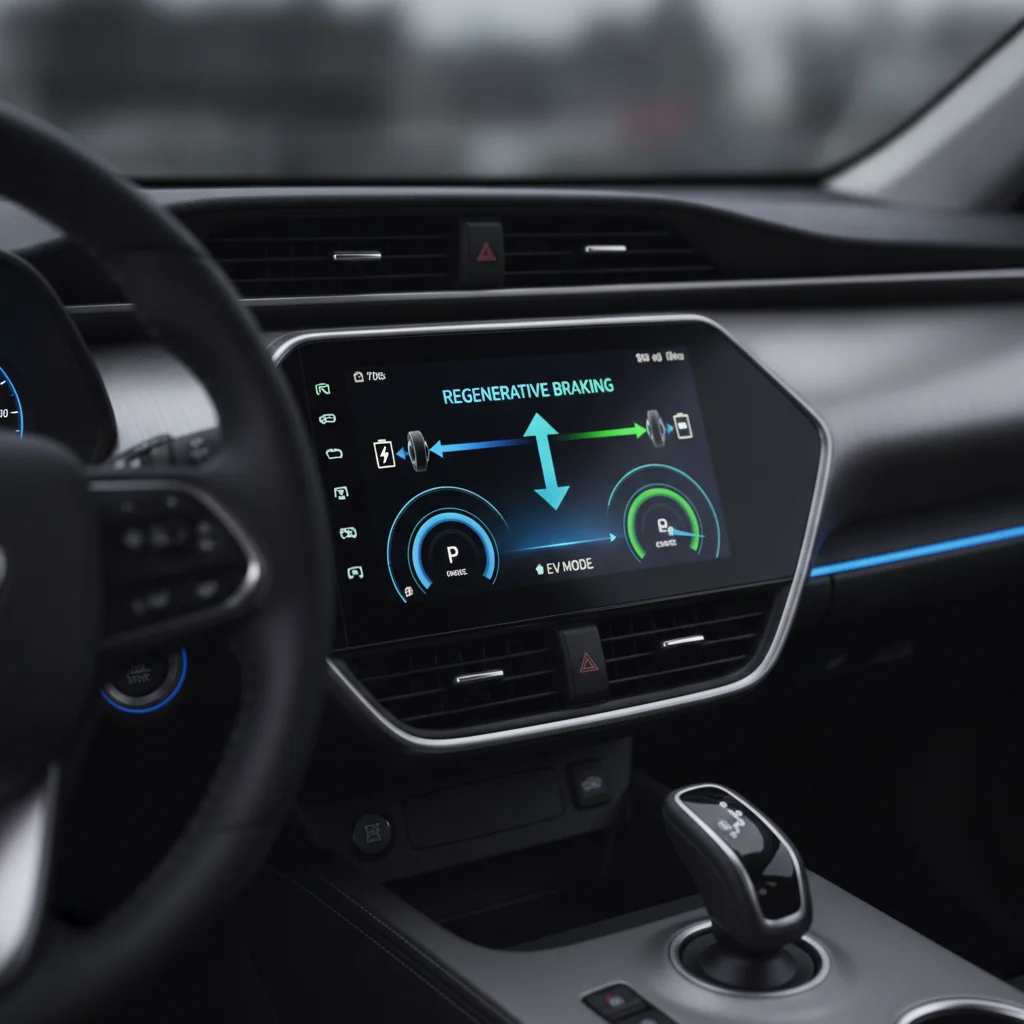
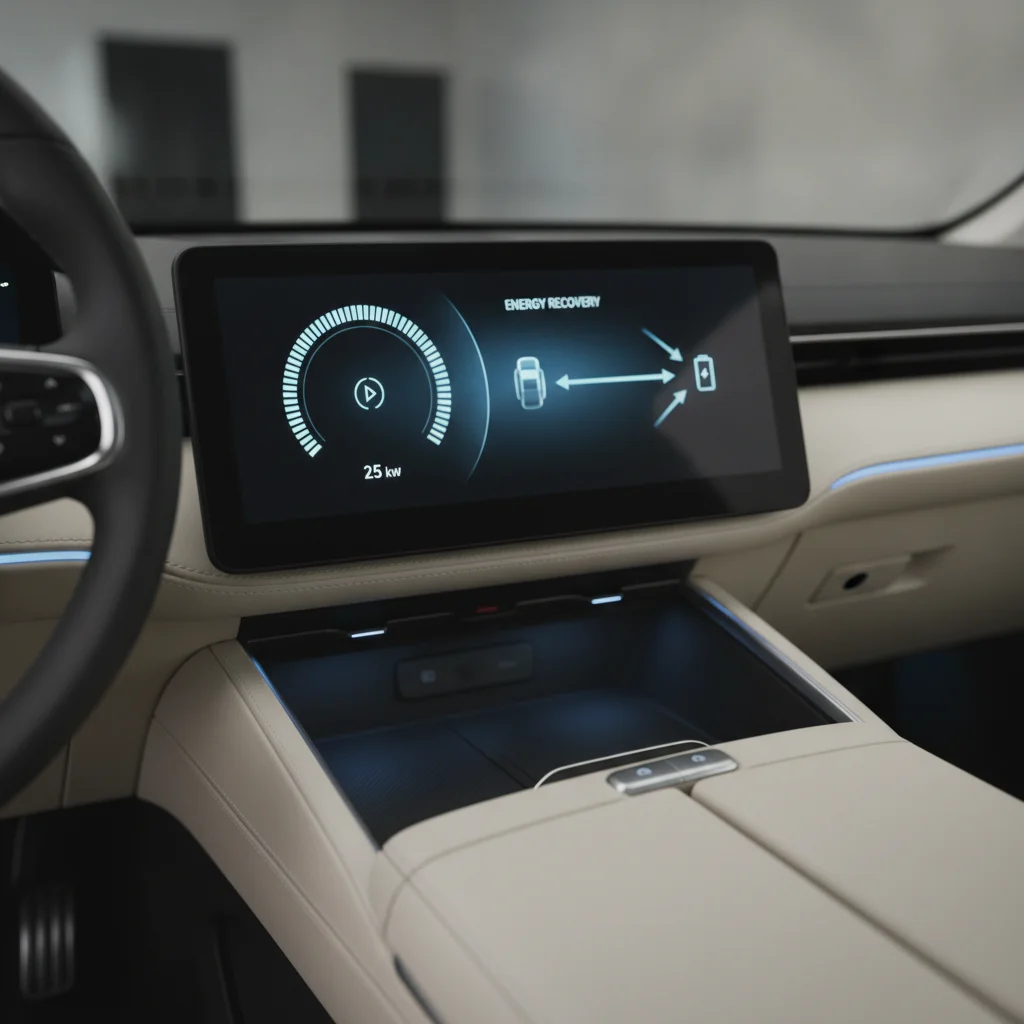
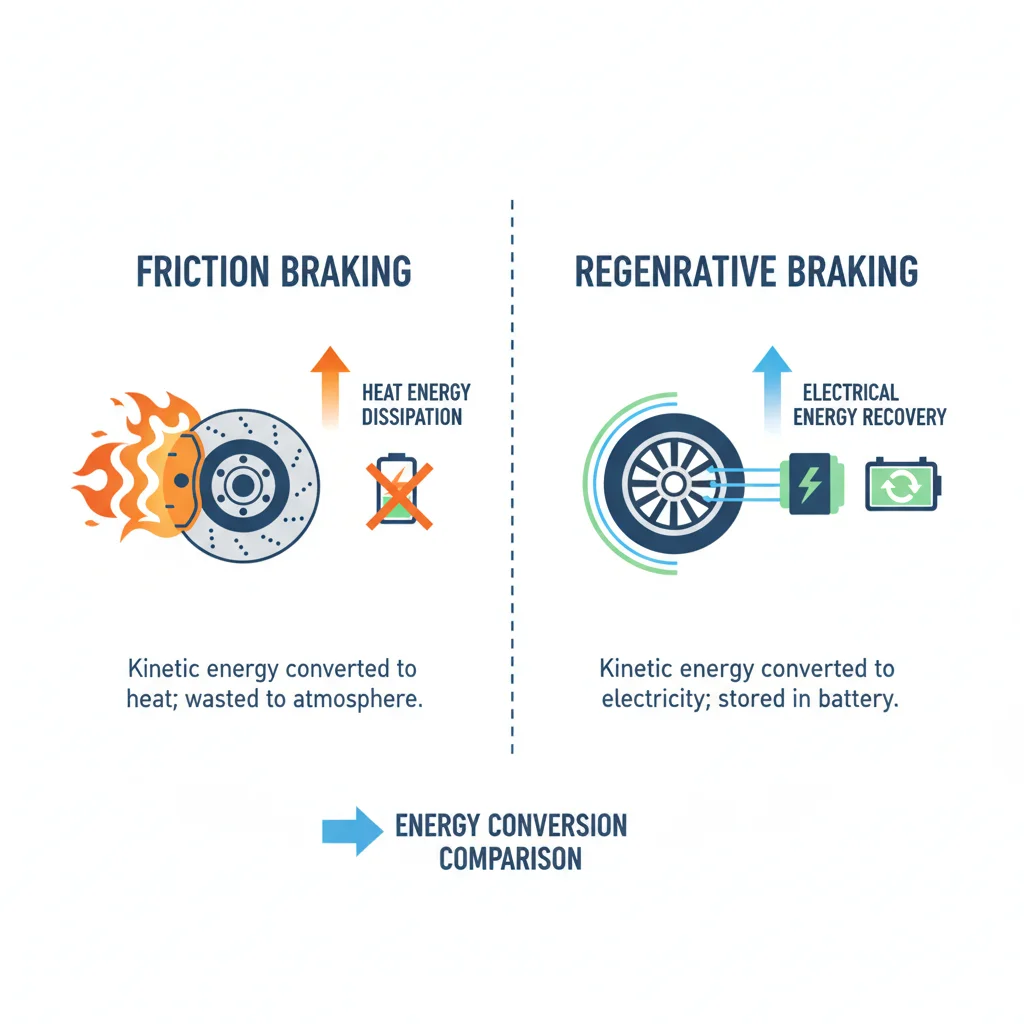
Regenerative braking is a system used in electric and hybrid vehicles that converts kinetic energy — the energy of motion — back into electricity when you slow down. Instead of wasting that energy as heat through traditional friction brakes, the car's electric motor runs in reverse, acting as a generator. The recovered electricity flows back into the battery pack, effectively extending the vehicle's range.
The motor operates as a generator by applying electromagnetic resistance to the drivetrain, producing alternating current that the inverter converts to direct current before storing it in the high-voltage battery pack.
Why Kinetic Energy Usually Goes to Waste
Every time a conventional gasoline car brakes, physics extracts a toll. The vehicle's momentum — its kinetic energy — has to go somewhere, and in a friction-braking system, it converts entirely to heat. That heat dissipates into the surrounding air, taking with it all the fuel energy that was burned to build that speed in the first place. At highway speeds or in stop-and-go traffic, those losses accumulate into a significant efficiency penalty.
For an internal combustion engine, there's no practical way to recover that heat. The thermodynamics simply don't work in the driver's favor. But electric motors operate on fundamentally different principles — and that difference is exactly what makes regenerative braking possible.
Understanding this contrast helps explain why EVs and hybrids consistently post better fuel economy numbers in city cycles than on the highway, inverting the pattern most drivers are accustomed to from gas-powered vehicles. For a deeper look at how this plays out in hybrids specifically, see how regenerative braking explains the city MPG advantage in hybrids.
The Physics Behind Energy Recovery
An electric motor and an electric generator are, at their core, the same machine operating in different directions. When current flows into the motor, it produces rotation — propelling the car forward. Run the process in reverse — apply mechanical rotation to the motor's shaft — and it produces current. This bidirectional capability is the foundation of regenerative braking.
When a driver lifts off the accelerator or applies light brake pressure, the vehicle's control system switches the motor into generator mode. The drivetrain's rotational momentum now works against electromagnetic resistance rather than being assisted by it. That resistance slows the vehicle while simultaneously producing electrical current, which the power electronics convert and route back to the high-voltage battery.
The efficiency of this energy conversion is genuinely impressive. Modern EV drivetrains can recover approximately 70% of the kinetic energy during braking — a figure that stands in stark contrast to the zero percent recovered by a friction-only system. However, the full round-trip efficiency — counting losses when that energy is later discharged to power the motor again — is closer to 60% to 65%. Still, capturing 60 cents on every kinetic dollar is a significant improvement over losing the entire dollar as heat.
“Regenerative braking is one of the most consequential efficiency advantages of electric vehicles. In urban driving, it fundamentally changes the energy equation — turning stops from losses into partial recoveries.”
— Gil Tal, Director, Plug-in Hybrid & Electric Vehicle Research Center, UC Davis
~70%
Kinetic energy recovered during braking
Modern EV drivetrains can recover approximately 70% of kinetic energy in generator mode, per Idaho National Laboratory efficiency analyses.
10–25%
Real-world range improvement from regen
Recurrent Auto and manufacturer data consistently show this range of energy recovery contribution in city driving conditions.
100,000+ mi
Reported brake pad life on many EVs
Many EV owners report going well over 100,000 miles before needing a brake pad replacement, compared to 30,000–50,000 miles on gas vehicles.
60–65%
Round-trip regen efficiency
Accounting for conversion and discharge losses, the full round-trip efficiency of regenerative braking is approximately 60%–65% of the original kinetic energy.
90%+
Battery charge level that limits regen
Above roughly 90%–95% state of charge, most EVs reduce or suspend regenerative braking to prevent overcharging the battery pack.
How Much Range Does Regen Actually Add?
This is the question most EV shoppers want answered, and the honest answer is: it depends heavily on how and where you drive.
In dense urban environments with frequent stops, traffic lights, and congestion, regenerative braking can account for recovering 20% to 25% of total energy used. Real-world data from manufacturers and independent testing consistently shows EPA city cycle ratings benefit substantially from regen. Tesla's own data, as well as third-party analyses from organizations like Recurrent and the Idaho National Laboratory, support this range of estimates.
On the open highway at a steady 70 mph, the picture changes dramatically. With few deceleration events, there's little opportunity for the regen system to operate. Highway driving is where pure EV range tends to take the biggest hit relative to EPA estimates, because the EPA cycle includes lower-speed segments that benefit from regen.
Terrain matters too. Descending a long mountain grade with regenerative braking engaged is one of the most efficient scenarios an EV can encounter. Drivers who live near hilly terrain — think the hills of San Francisco or the descents off Colorado mountain passes — often report meaningfully better real-world range numbers than the EPA rating would predict, precisely because they get extended regen events.
EPA Range Estimates Include Regen
The EPA's test cycle for EV range ratings incorporates city driving segments where regenerative braking contributes significantly to the result. This is one reason some EVs outperform their EPA rating in city use while falling short on the highway — the EPA figure already assumes regen is working in your favor during urban driving. Understanding this helps set more accurate expectations for your specific commute.
Regen Doesn't Replace ABS or Stability Systems
Regenerative braking operates within the vehicle's broader braking architecture, which includes anti-lock braking (ABS) and electronic stability control. During hard stops or low-traction situations, the vehicle's safety systems take precedence and friction brakes engage fully. Regen is blended in or out automatically — drivers don't need to manage this manually.

Regen Settings: One-Pedal Driving and Adjustable Modes
Most modern EVs give drivers meaningful control over how aggressively the system decelerates. The settings typically range from minimal regen — where the car coasts much like a conventional vehicle — to maximum regen, sometimes called one-pedal driving mode.
In one-pedal driving, lifting off the accelerator applies enough electromagnetic braking force to bring the vehicle to a complete stop without ever touching the friction brake pedal in most everyday situations. Drivers who adapt to this mode often report that it feels more intuitive than it sounds, especially in city traffic where the car effectively follows throttle input in both directions.
Lower regen settings, meanwhile, allow the car to coast more freely. Some manufacturers offer an adaptive regen mode that reads traffic ahead using radar or cameras and adjusts the deceleration rate dynamically — recovering more energy when slowing for traffic and coasting when the road ahead is clear.
Maximize Regen in City Traffic
If your EV offers multiple regen settings, experiment with the highest level during your urban commute. The adaptation period is typically short — most drivers feel comfortable with one-pedal driving within a few days. Over a week of city commuting, the difference in remaining range at the end of each day is often noticeable.
Charge to 80% for Better Regen on Cold Days
In cold weather, leaving headroom in your battery serves two purposes: it protects cell health during regenerative charging and ensures the regen system can operate at full strength from the moment you pull out of your driveway. Many EVs let you set a charge limit percentage directly in the app or vehicle settings.
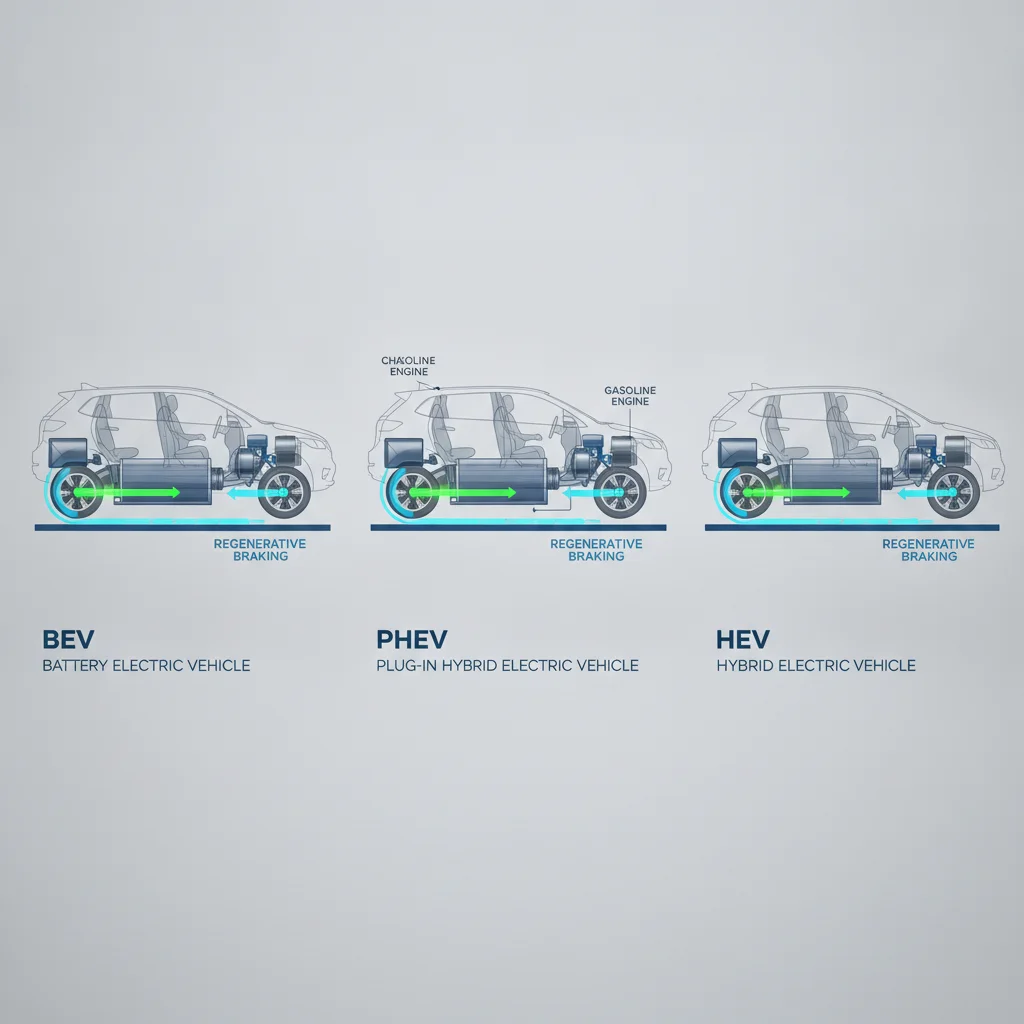
For those interested in how regen behavior differs across vehicle types — from battery EVs to plug-in hybrids — the comparison is worth understanding before you buy. See how regenerative braking works differently across EV types for a side-by-side breakdown.
Conditions That Limit Regen Effectiveness
Regenerative braking is not a free lunch — several real-world factors can constrain how much energy the system actually recovers.
Battery State of Charge
A nearly full battery has limited capacity to accept additional charge. When the pack is above roughly 90% to 95% state of charge, the vehicle's battery management system may reduce or temporarily disable regen to prevent overcharging. This is why regen effectiveness is often lower right after leaving a full charge — and why some automakers recommend charging to 80% for daily use rather than 100%.
Cold Battery Temperature
Lithium-ion cells have reduced ability to accept rapid charging at low temperatures. In freezing conditions, the BMS may throttle regen strength to protect cell integrity. This is one of the compounding reasons cold weather reduces EV range — not only does the car burn more energy on heating, it recovers less during braking.
Hard Braking Events
Regenerative braking is most effective during gradual, controlled deceleration. When a driver brakes hard — for an emergency stop or sudden traffic — the friction brakes engage fully to provide the necessary stopping force. The regen system cannot capture energy quickly enough in those situations to remain the primary braking mechanism. The two systems blend automatically, but hard stops are primarily friction-brake events.
The Secondary Benefit: Brake Pad Longevity
Range extension is the headline benefit of regenerative braking, but there's a compelling ownership cost story running alongside it. Because regen handles the majority of everyday slowing, friction brakes on EVs see a fraction of the use they'd see on a comparable gas vehicle.
This translates directly to maintenance intervals. EV owners routinely report going 70,000 to 100,000 miles or more before needing a brake pad replacement, compared to the 30,000 to 50,000 mile typical interval for conventional vehicles. The rotors often last longer too, though they're occasionally susceptible to surface rust from disuse — a separate issue from wear.
For a detailed look at the mechanics behind this extended brake life, see why EV brakes last so much longer than gas car brakes. And for the specific interaction between regen and your brake hardware, read what's actually happening to your brake pads when an EV slows down.
These reduced maintenance requirements are part of the broader ownership cost picture that makes EVs increasingly competitive with gas vehicles over a full ownership cycle. The EV maintenance basics hub covers the full scope of what routine upkeep looks like for electric vehicles.

Setting Realistic Expectations for Your Driving Pattern
The most useful frame for thinking about regenerative braking is this: it's a real efficiency gain that meaningfully extends range in certain conditions, not a magic system that eliminates range anxiety on its own.
If you commute through urban traffic, make frequent stops, and navigate hilly terrain, you can reasonably expect regen to return 15% to 25% of your energy expenditure — that's a genuine and valuable contribution to daily range. If you primarily drive long highway segments at steady speeds, regen's contribution shrinks considerably, and your EPA range estimate will be a less reliable predictor of real-world performance.
Experienced EV drivers learn to drive with regen in mind — anticipating stops earlier, coasting into decelerations, and using the paddles or drive mode selector to dial in the right regen strength for the road ahead. This isn't a dramatic behavioral change, but it is a shift in driving philosophy that pays dividends over time.
For anyone still learning how EVs work at a fundamental level, regenerative braking is one of the most elegant examples of how electric drivetrains think about energy differently than combustion systems — using physics as an ally rather than fighting it.
Maximize Regen in City Traffic
If your EV offers multiple regen settings, experiment with the highest level during your urban commute. The adaptation period is typically short — most drivers feel comfortable with one-pedal driving within a few days. Over a week of city commuting, the difference in remaining range at the end of each day is often noticeable.
Charge to 80% for Better Regen on Cold Days
In cold weather, leaving headroom in your battery serves two purposes: it protects cell health during regenerative charging and ensures the regen system can operate at full strength from the moment you pull out of your driveway. Many EVs let you set a charge limit percentage directly in the app or vehicle settings.
All claims are backed by peer-reviewed research. Sources on request.