Key Takeaways
Why EV Owners Skip This — And Why That's a Mistake
When drivers switch to electric vehicles, they rightfully celebrate the end of oil changes, spark plug swaps, and transmission fluid flushes. But that relief can slide into a dangerous assumption: that EVs need almost no maintenance at all. The cabin air filter is one of the first victims of that thinking.
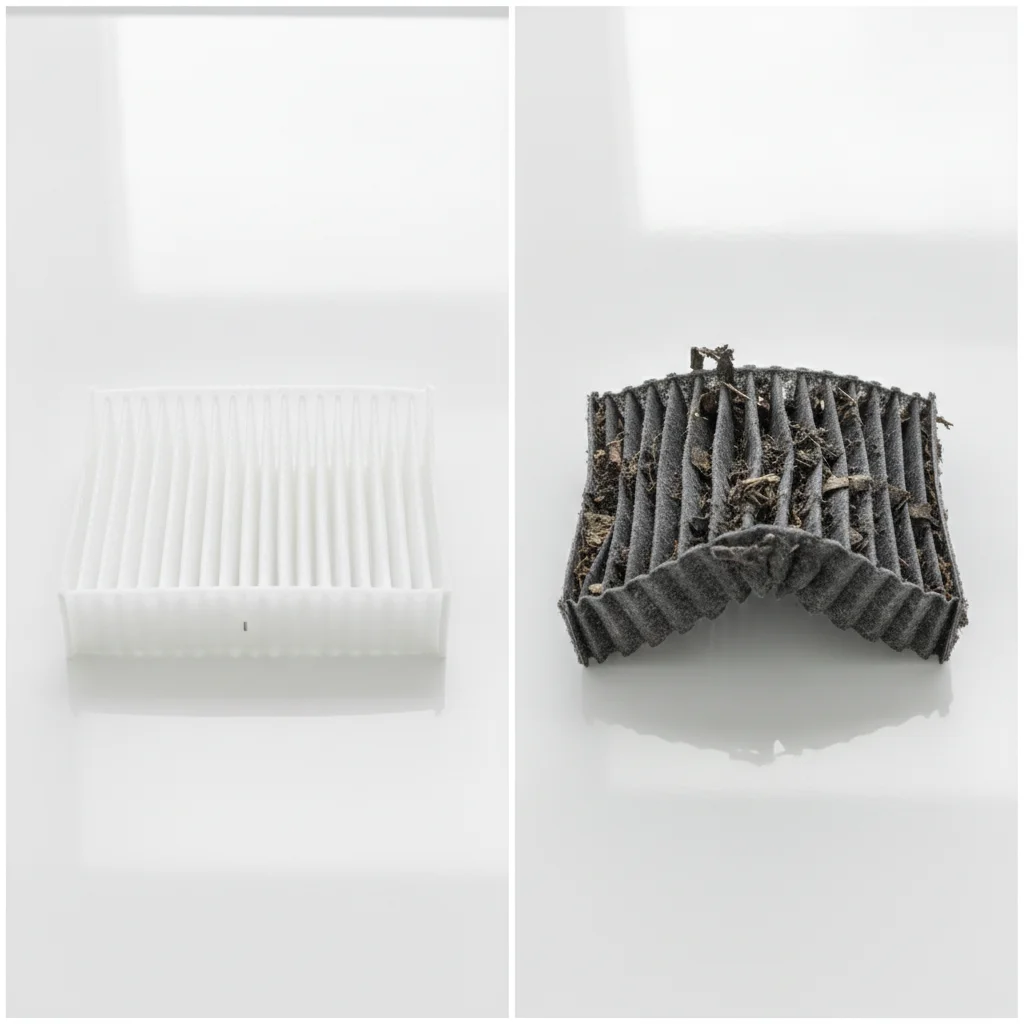
The cabin air filter in your EV does exactly the same job it does in any gas-powered vehicle — it cleans the air flowing through your heating and air-conditioning system before it reaches you and your passengers. It captures pollen, dust, mold spores, fine particulate matter, and exhaust fumes from surrounding traffic. None of that changes just because your drivetrain runs on electricity.
What does change is the stakes. In an EV, the HVAC system draws directly from the battery pack. A clogged cabin air filter forces the blower motor to work harder, pulling more current and trimming your usable range — sometimes noticeably in winter or summer when climate control is running hard. If you care about maximizing every mile per charge, a fresh filter is a cheap and easy way to keep that number up.
For the full picture of which EV maintenance tasks actually matter and which you can skip, see why electric vehicles still need regular maintenance. And if you want a complete service interval reference across your whole EV, the EV maintenance schedule is a useful companion.
What You Need Before You Start
This job requires almost nothing in the way of tools or expertise. The hardest part is usually locating the filter housing in your specific vehicle — positions vary by model. Look in your owner's manual under "cabin air filter" or "pollen filter" before you open the glove box.
What you will need
Replacement cabin air filter
The core part being swapped — must match your vehicle's make, model, and year exactly.
Phillips head screwdriver
Required on some models to remove screws securing the glove box or filter housing cover.
Flathead screwdriver or trim tool
Useful for releasing plastic clips or prying open the filter housing cover without damaging trim.
Flashlight or phone torch
Illuminates the filter housing interior for inspection and proper filter seating verification.
Vacuum cleaner with hose attachment
Cleans debris from the filter housing before installing the new filter.
Trash bag
Contains the old, dust-laden filter during removal to prevent debris from spreading in the cabin.
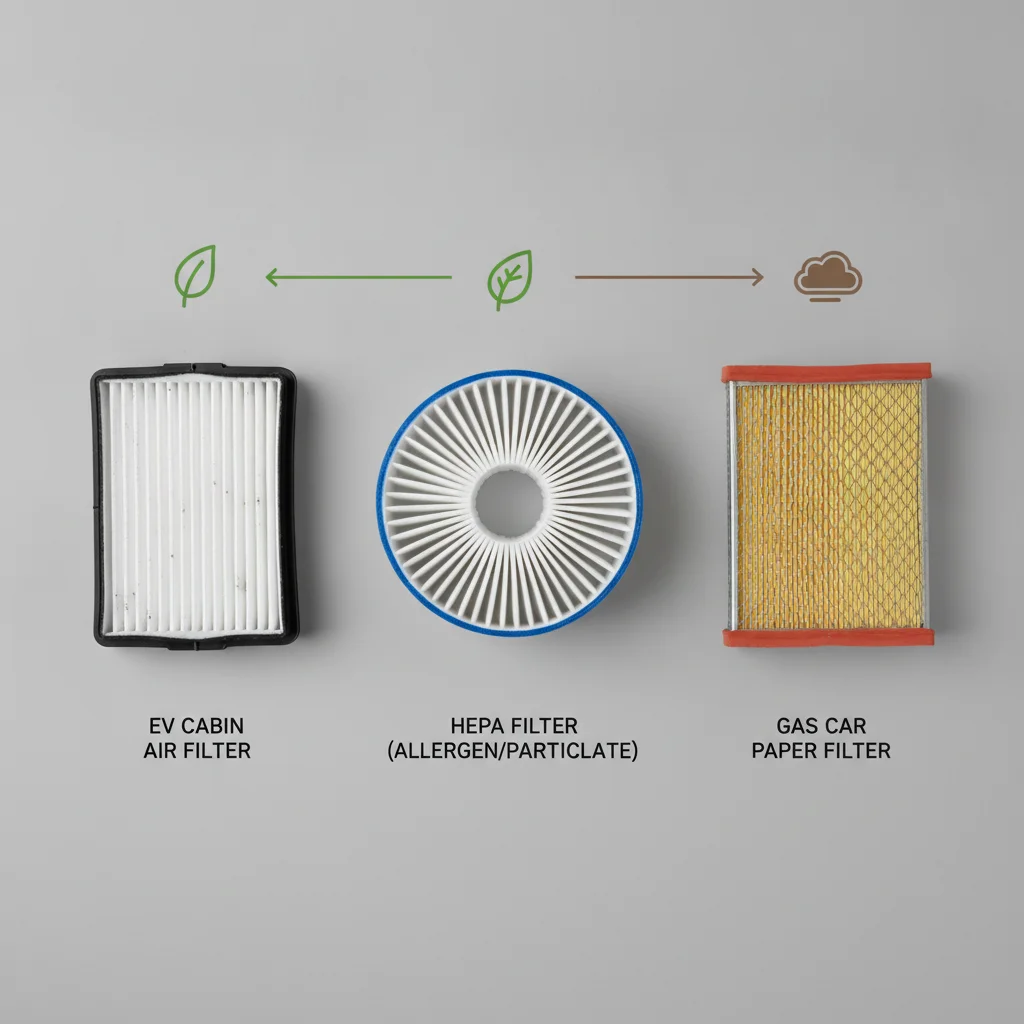
One note on filter type: many modern EVs — including several Tesla, Hyundai Ioniq, and Kia EV models — come from the factory with HEPA-grade or activated-carbon filters rather than basic paper media. These are more expensive to replace (typically $25–$60 versus $10–$25 for standard filters) but they also do a better job at fine particulate and odor filtration. Always match the replacement filter type to what your vehicle originally used, or upgrade intentionally — don't accidentally downgrade to a cheaper paper filter if your car shipped with a HEPA unit.
Don't Install the Wrong Filter Type
Using a standard paper filter in a vehicle designed for HEPA filtration leaves you with significantly weaker particulate protection. Always match or upgrade your filter type — never downgrade. Cross-reference by VIN if you're unsure what your specific vehicle came equipped with from the factory.
Wildfire and Smoke Events Demand Immediate Inspection
After prolonged exposure to wildfire smoke, your cabin air filter may be fully saturated in days rather than months. If you live in or drove through an area with heavy smoke, pull the filter and inspect it visually before relying on it for normal air quality protection.
Step-by-Step: Replacing Your EV Cabin Air Filter
The process below covers the most common cabin air filter location — behind or beneath the glove box. A smaller number of EVs (notably some Tesla models) place the filter under the hood in a dedicated air intake housing. Verify your location before starting.
Locate the cabin air filter housing
Check your owner's manual for the exact location. On most EVs — including the Chevy Bolt, Nissan Leaf, Hyundai Ioniq 5, and Kia EV6 — the filter sits behind the glove box. Tesla Model 3 and Model Y place filters under the hood near the front trunk (frunk). Some older Teslas have two separate filter panels side by side.
If you don't have a physical manual, search "[your vehicle year and model] cabin air filter location" — the OEM service documentation is typically accessible free through brand owner portals.
Open the glove box or access panel
For glove box access: empty the glove box completely. On most vehicles, you'll then squeeze the side walls inward to clear the stop tabs and let the door drop down fully, revealing the filter housing behind it. Some models use one or two small Phillips screws instead of squeeze tabs — check before applying force.
For under-hood filter access (Tesla and select others): open the hood, locate the plastic cowl or intake cover near the base of the windshield, and remove the clips or screws holding it in place.
Slide out the old filter
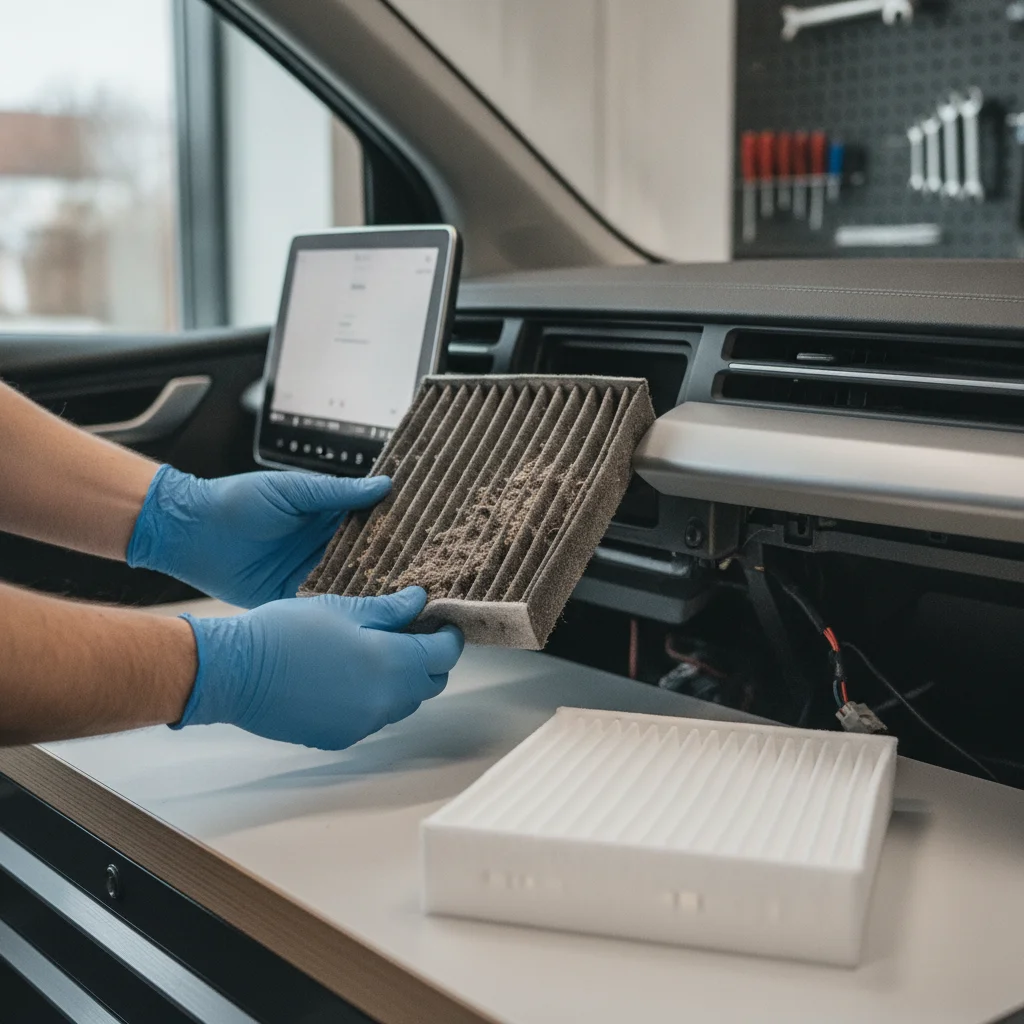
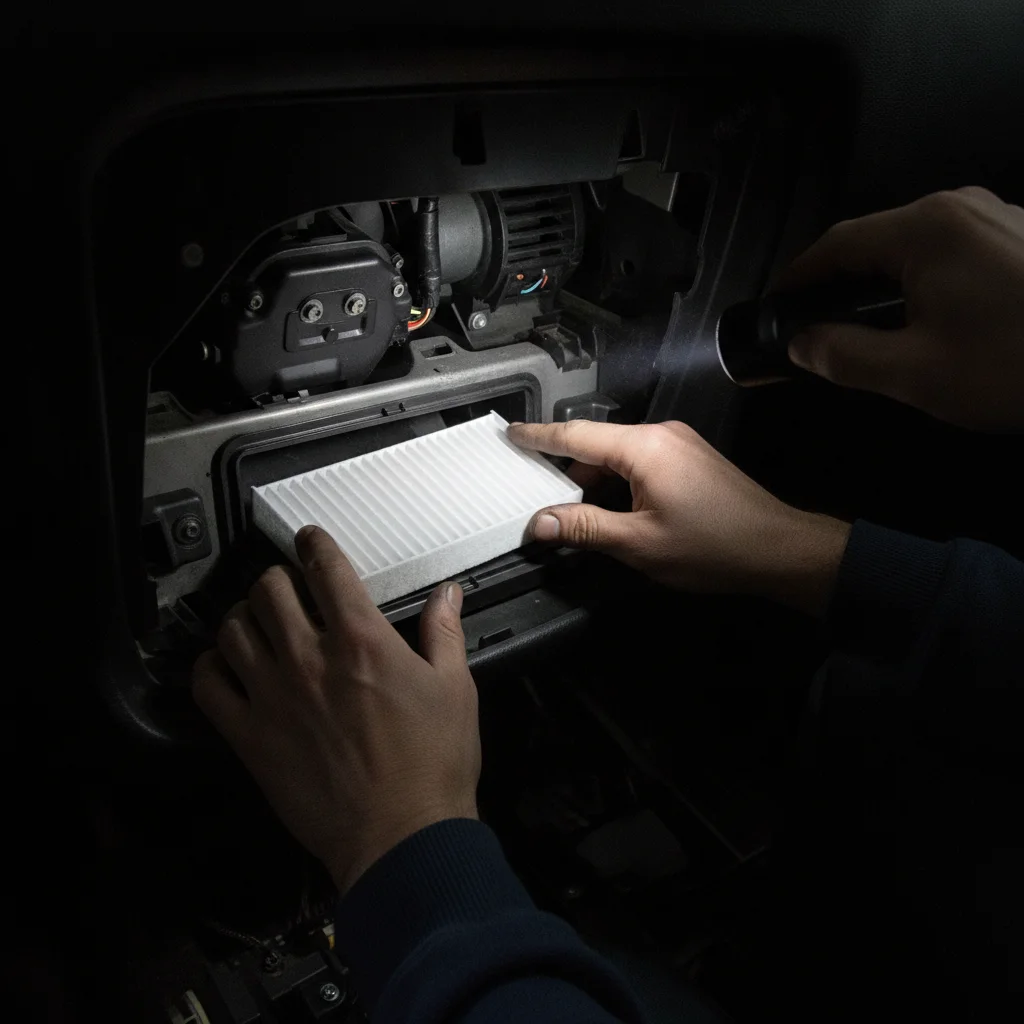
Once the housing cover is open or removed, the filter will slide or pull straight out — usually toward you or downward. Note the direction of the airflow arrows printed on the filter frame before you pull it. You'll need to install the new one in the same orientation.
Hold the old filter level as you remove it to avoid dumping accumulated debris into the housing or onto the carpet. Have a trash bag ready.
Inspect and clean the housing
Before installing the new filter, look inside the housing with a flashlight. If you see debris, leaves, or heavy dust accumulation, vacuum it out or wipe it down with a dry cloth. Don't use any liquid cleaners inside the housing — moisture trapped in the HVAC system can lead to mold growth, which defeats the purpose of a fresh filter.
Install the new filter
Slide the new filter in with the airflow arrows pointing in the same direction as the original. The arrow typically points toward the blower motor — usually downward or toward the rear of the housing. The filter should seat flush with no gaps around the edges. A poorly seated filter allows unfiltered air to bypass the media entirely, which defeats the purpose of the replacement.
If your vehicle uses a two-layer filter (paper pre-filter plus carbon layer), make sure you're installing it with the correct side facing the incoming airflow — the pre-filter layer faces the incoming air, the carbon layer faces the blower.
Reassemble and test
Reinstall the housing cover, reattach the glove box damper arm if you disconnected it, and swing the glove box back up into the locked position. Reload anything you removed from the glove box.
Start the vehicle, turn the climate control to full fan speed, and confirm airflow feels strong and even from all vents. If airflow seems weak, recheck that the filter is fully seated and the housing cover is properly closed — even a small gap can disrupt pressure.
Set a Mileage Reminder Now
Most EV infotainment systems and companion apps allow custom service reminders. Set one for 15,000 miles or 12 months from today's date — whichever comes first. This costs you nothing and eliminates the "I'll do it later" cycle that leads to three-year-old filters.
Buy Two Filters at Once
Cabin air filters are cheap and store well. Buying a second filter when you purchase your replacement means next year's swap takes zero extra planning. This is especially useful for HEPA filters, which can sometimes be harder to find locally.
How Often Should You Replace It?
The standard recommendation across most automakers is every 15,000 to 25,000 miles, or roughly once per year for average drivers. But several real-world factors push that interval shorter:
- Urban driving: Heavy traffic, diesel exhaust, and road dust load the filter faster. City drivers should lean toward the 12,000–15,000 mile end of the range.
- Allergy sufferers: If anyone in your household has seasonal allergies, replacing annually regardless of mileage is worth the $20–$40 cost.
- High wildfire or dust regions: Western U.S. drivers during wildfire season can saturate a HEPA filter in a matter of weeks of heavy smoke. Check visually after any prolonged smoke event.
- HEPA and carbon filters: These can sometimes go longer between changes under clean driving conditions, but the activated carbon layer that handles odors tends to exhaust faster than the particulate media. Follow the OEM interval and don't stretch it.
The clearest sign you've waited too long: reduced airflow from your vents even on high fan settings, a musty or stale odor when you run the climate system, or visible discoloration on a filter you've pulled out for inspection.
Cabin air filters are just one of the consumable items EVs still require. EV wear items that still need replacing covers the full list of parts that degrade regardless of your powertrain.
A Clogged Filter Drains Your Battery
This isn't a theoretical concern — a severely restricted cabin air filter forces the HVAC blower motor to draw more current to push air through the media. In an EV, every amp of additional draw comes straight out of your driving range. During peak heating or cooling seasons when climate control runs continuously, a dirty filter can have a measurable effect on how far you travel per charge. Replace on schedule.
EV Cabin Filters vs. Gas Car Cabin Filters: Key Differences
Functionally, cabin air filters serve the same purpose across both vehicle types. But there are a few EV-specific wrinkles worth knowing:
| Factor | Gas Vehicle | Electric Vehicle |
|---|---|---|
| Filter function | Cleans HVAC air for occupants | Same |
| Effect of clogging | Reduced airflow, stale air | Reduced airflow plus battery drain |
| Common filter type | Paper or synthetic media | Often HEPA or activated carbon |
| Replacement interval | 15,000–25,000 miles | Same, sometimes shorter for HEPA carbon layer |
| DIY difficulty | Easy | Easy (same procedure) |
| Part cost | $10–$25 | $20–$60 (higher for HEPA) |
There's no engine air filter equivalent in an EV — that filter cleans combustion air in gas engines and simply doesn't exist in an electric drivetrain. If you want the full breakdown of what each filter type does, cabin air filter vs. engine air filter lays it out clearly. And for gas car owners doing both filters in the same session, air filter replacement — cabin vs. engine is a practical combined guide.
What This Has to Do With Your EV Insurance
It might seem like a stretch to connect a $25 filter to your insurance policy, but there's a real thread here. Some insurers look at documented maintenance history when evaluating claims — particularly claims related to HVAC system failures or cabin air quality complaints on vehicles under extended warranty. Keeping receipts or recording your DIY filter changes is a simple habit that protects you if a related dispute ever comes up.
More broadly, understanding the true cost of EV ownership — including small but regular maintenance items like this — matters when you're shopping insurance. EVs often carry slightly higher premiums due to repair costs and parts availability. Knowing what you can handle yourself, like this filter swap, keeps your out-of-pocket ownership costs in check even if your premium is higher. See our EV insurance guide for a full picture of how EV coverage works and where premiums tend to differ from gas-car policies.
The bottom line is simple: a cabin air filter replacement is a 20-minute job that costs less than a streaming subscription and has a measurable payoff in air quality, HVAC efficiency, and potentially range. It's not glamorous maintenance, but it's exactly the kind of thing that separates owners who get full value from their EVs from those who let small neglect quietly add up.

All claims are backed by peer-reviewed research. Sources on request.