

| Average flatbed tow cost (EV) | $200–$600+ per incident (Industry roadside assistance cost surveys, 2023) |
| Typical standard towing limit | 5–15 miles (Policy comparison data, major U.S. insurers) |
| Recommended EV towing minimum | 50 miles (EV owner advocacy groups and charging network gap analysis) |
| Mobile EV charge range delivered | 15–40 miles of range (Manufacturer and third-party mobile charging service specs, 2024) |
| Insurer roadside add-on annual cost | $5–$20/year (Major U.S. auto insurer rate filings) |
| AAA Premier towing coverage | Up to 200 miles per tow (AAA membership benefit schedule, 2024) |
| Typical manufacturer roadside duration | 4–8 years or 50K–100K miles (OEM warranty documentation, major EV brands) |
| EVs requiring flatbed towing only | Most AWD and dual-motor models (OEM owner manuals and drivetrain specifications) |
Why Standard Roadside Assistance Fails EV Owners
When a gas-powered car runs dry on the highway, a roadside technician can arrive with a few gallons of fuel and have the driver back on the road within minutes. For an electric vehicle, that scenario doesn't exist. Running out of charge is a fundamentally different emergency — one that most standard roadside assistance policies were never designed to handle.
The mismatch between conventional roadside plans and EV-specific needs is more than an inconvenience. It can mean sitting stranded for hours waiting for a tow truck while a perfectly capable vehicle sits immobile because its battery hit zero. It can mean discovering that your insurer will only tow you 10 miles when the nearest Level 2 charger is 25 miles away. And it can mean paying out of pocket for services your policy didn't explicitly cover.
Standard roadside assistance policies were engineered around the assumptions of gasoline vehicles — fuel delivery, jump-starts, and short tows. EVs require a completely different set of responses, and the gap between what a boilerplate policy promises and what an EV owner actually needs can be significant. Understanding that gap before you're stranded is the entire point of this guide.
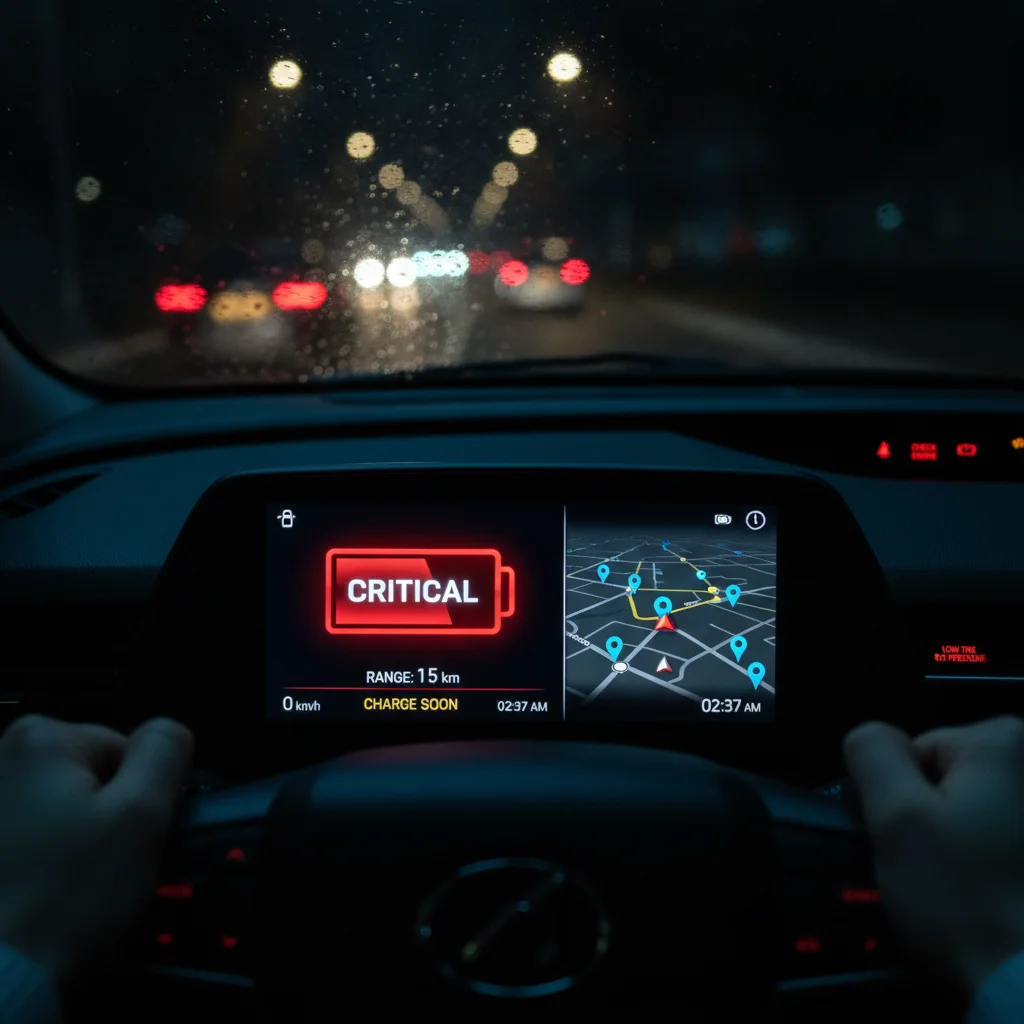
This reference covers exactly what EV-specific roadside assistance should include, what to look for in policy fine print, and how to evaluate whether your current plan is actually adequate for the vehicle sitting in your driveway.
The Core Components Every EV Roadside Policy Should Cover
Not all EV emergencies are charge-related, but the ones that are require capabilities most general-purpose plans simply don't offer. Here's a breakdown of the essential elements an EV-appropriate roadside policy must address.
| Average flatbed tow cost (EV) | $200–$600+ per incident (Industry roadside assistance cost surveys, 2023) |
| Typical standard towing limit | 5–15 miles (Policy comparison data, major U.S. insurers) |
| Recommended EV towing minimum | 50 miles (EV owner advocacy groups and charging network gap analysis) |
| Mobile EV charge range delivered | 15–40 miles of range (Manufacturer and third-party mobile charging service specs, 2024) |
| Insurer roadside add-on annual cost | $5–$20/year (Major U.S. auto insurer rate filings) |
| AAA Premier towing coverage | Up to 200 miles per tow (AAA membership benefit schedule, 2024) |
| Typical manufacturer roadside duration | 4–8 years or 50K–100K miles (OEM warranty documentation, major EV brands) |
| EVs requiring flatbed towing only | Most AWD and dual-motor models (OEM owner manuals and drivetrain specifications) |
Charge-Out Assistance (Mobile Charging)
This is the EV equivalent of emergency fuel delivery, and it's the single most glaring omission in most standard plans. A handful of specialized providers and some automaker programs now dispatch mobile charging units — essentially a vehicle carrying a portable battery pack that can add 15–40 miles of range directly to a stranded EV. That's enough to reach the nearest charging station without a tow.
When evaluating a policy, ask specifically whether it offers mobile EV charging dispatch (not just tow-to-charger service), how many miles of range a mobile unit typically delivers, and the average response time in your area. Coverage that only offers towing is not the same as coverage that offers mobile charging.
Extended Towing Distance
Standard roadside towing coverage often caps tows at 5 to 15 miles. For gas vehicles, that's usually enough to reach the nearest gas station. For EVs, the nearest compatible fast charger may be 30, 50, or even 80 miles away — particularly in rural or exurban areas. An EV-appropriate policy should offer towing coverage of at least 50 miles, with some premium plans extending to 100 miles or to the nearest dealer or charging-capable facility.
Comparing roadside assistance sources — your insurer, AAA, or your automaker's program — reveals significant differences in towing distance allowances. Manufacturer plans from Tesla, Rivian, and others often include flat-rate or unlimited towing during the vehicle's warranty period, which is worth factoring into your total coverage picture.
Flatbed-Only Towing Requirement
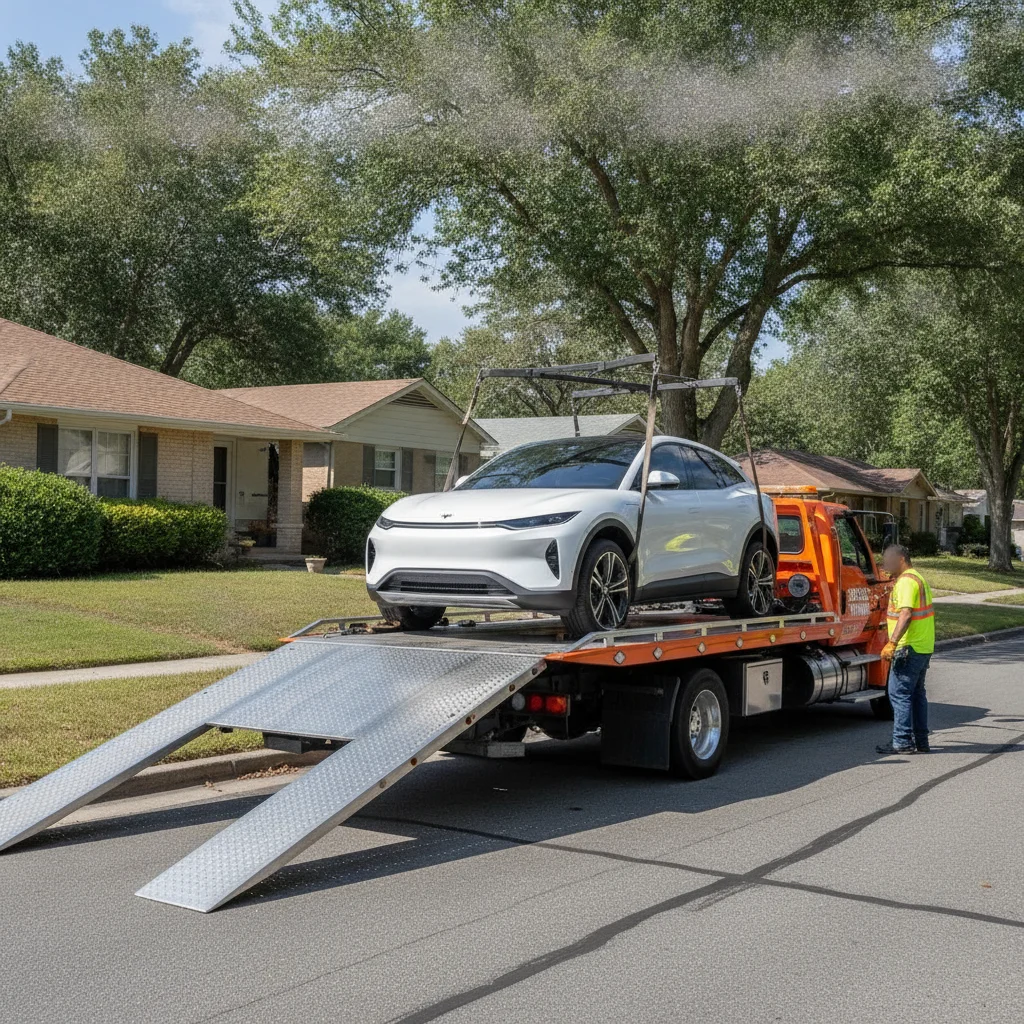
Many EVs — particularly those with front and rear motors — cannot be towed with a dolly or by lifting only two wheels. Doing so can damage the drivetrain or trigger regenerative braking systems in ways that harm motors or electronics. A quality EV roadside policy should explicitly guarantee flatbed transport. If a policy simply says "towing" without specifying the method, call and get written confirmation that flatbed service is provided for EVs.
Charging Network Navigation Assistance
Some newer EV roadside programs include a concierge-style service that helps drivers identify the nearest functioning charger, check real-time availability, and in some cases remotely communicate with the vehicle's telematics to assess remaining range. This isn't universal, but it's a meaningful differentiator for drivers who regularly travel outside major metro areas.
Trip Interruption Coverage
If your EV breaks down (not just runs out of charge) far from home and you need to wait for repairs, trip interruption coverage pays for hotel stays, meals, and alternative transportation. Standard plans may offer this for mechanical failures; confirm it applies to EV-specific failures like a malfunctioning onboard charger or battery management system issue.
Reading the Fine Print: Questions to Ask Before You Sign
Policy language around roadside assistance is notoriously vague. Phrases like "emergency fuel delivery" or "battery service" carry very specific meanings that don't translate to EV scenarios. Before purchasing or renewing any roadside assistance plan — whether as a standalone add-on, part of an auto insurance policy, or through a membership organization — work through the following checklist.
Manufacturer Plans Don't Follow Used EVs Automatically
When an EV is sold to a second owner, the original manufacturer roadside assistance program may not transfer. Policies vary by brand: some transfer with the warranty, others are tied to the original purchaser. If you're buying a used EV, contact the manufacturer directly to confirm the roadside program status before assuming you have coverage. This is an especially common gap for used Tesla and Chevrolet Bolt buyers.
"Driver Error" Exclusions Can Void Charge-Out Coverage
A number of insurer roadside add-ons include fine-print language that excludes coverage for incidents resulting from "driver error" or "failure to maintain adequate fuel." In the EV context, this language has been applied to deny coverage for charge depletion events, treating running out of battery the same as intentional neglect. Review your policy's exclusion section carefully and ask your insurer for a written clarification on how this clause applies to EVs specifically.
Check Real-Time Charger Availability Before Relying on It
Roadside assistance can tow you to a charging station, but it cannot guarantee the chargers there are operational. Before any long trip, use apps like PlugShare, ChargePoint, or your vehicle's built-in navigation to verify charger availability and recent user check-ins at your intended stops. A tow to a broken charger creates a secondary problem your roadside policy may not cover a second time in the same incident.
- Does "fuel delivery" include charge delivery? Some policies have updated their language to include mobile EV charging under fuel delivery provisions; many have not. If the policy predates 2020, assume it does not unless explicitly stated.
- What is the maximum towing distance, and is it measured from breakdown point or from a prior location? Some plans calculate towing distance from your registered home address, not your actual stranded location — a crucial distinction for road trippers.
- Is towing covered to any charger, or only to an authorized dealer? Tow-to-dealer-only provisions can leave you stranded far from your preferred charging option or home garage charger.
- Does the policy cover both AC and DC fast charging infrastructure issues? If a charger malfunction is the problem rather than battery depletion, some policies exclude coverage.
- What is the annual or per-incident cap? Roadside events with EV flatbed tows regularly cost $200–$600 or more. A $100 per-incident cap is insufficient.
- Are there excluded scenarios? Running out of charge is treated differently than a mechanical breakdown in many policies. Some explicitly exclude "driver error" situations like running the battery to zero, which can leave you without any coverage.
The EV insurance policy checklist is a useful companion document for verifying these details across your entire coverage package, not just roadside assistance.
73%
EV drivers unaware their roadside plan may exclude charge delivery
According to a 2023 J.D. Power EV experience survey, the majority of EV owners have not confirmed whether their roadside plan includes mobile charging.
35%
Of U.S. fast chargers offline at any given time
A 2023 University of California Berkeley study found charger reliability failures significantly elevate stranding risk, making towing coverage more critical.
$450
Average out-of-pocket flatbed tow cost without adequate coverage
Based on national roadside towing rate data compiled by AAA and independent fleet operators, 2023.
2x
Higher likelihood of needing towing vs. fuel delivery for stranded EVs
Analysis of EV roadside calls handled by Agero's dispatch network, 2022–2023, showed towing was the dominant response for EV incidents.
Only 12%
Of insurer roadside add-ons explicitly mention EV mobile charging
A 2024 policy language review across 25 major U.S. auto insurers found EV-specific charging provisions remain rare in standard roadside add-ons.
Provider Landscape: Where EV Roadside Assistance Actually Lives
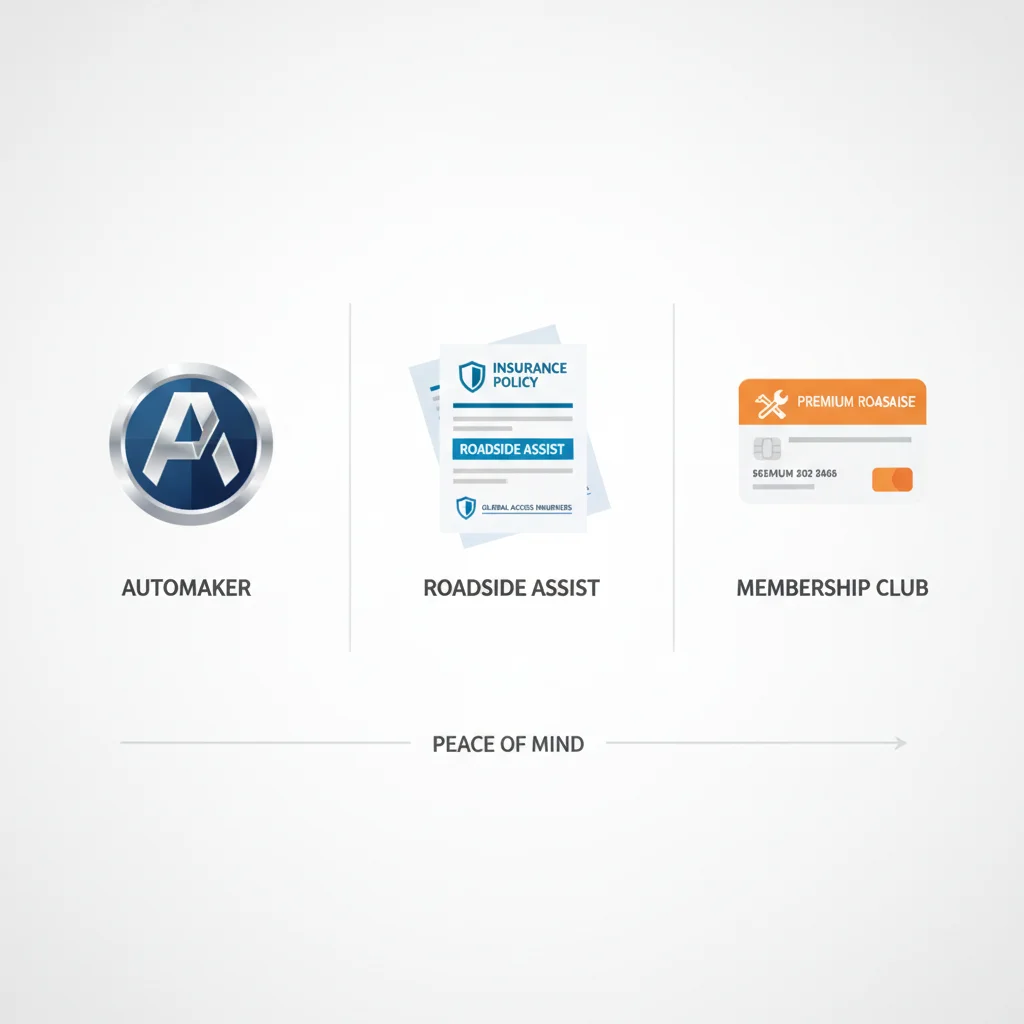
EV roadside assistance comes from three distinct sources, and most EV owners have access to at least two of them simultaneously. Understanding what each offers — and where each falls short — helps you identify whether you have gaps or redundant coverage.
Automaker Programs
Most major EV manufacturers include some form of roadside assistance bundled with the vehicle for a defined period, typically 4 to 8 years or 50,000 to 100,000 miles. These programs are generally the most EV-literate, since the manufacturer understands the vehicle's specific towing requirements, charging compatibility, and software diagnostics. Tesla's Roadside Assistance, for example, dispatches flatbed trucks, provides mobile charging in select markets, and connects to the vehicle's telemetry remotely. Rivian and Lucid offer similar integrated programs.
The limitation: manufacturer programs are time-limited, geographically inconsistent in rural areas, and expire when the vehicle changes ownership. If you're buying a used EV, verify whether the original roadside program is transferable.
Insurance-Bundled Roadside Add-Ons
Adding roadside assistance to an auto insurance policy is typically the cheapest option — often $5–$20 per year — but also the least EV-specific. Most insurer programs are administered through third-party networks (like Agero or Cross Country Motor Club) and use the same dispatch infrastructure as gas vehicle calls. The coverage terms are determined by your insurer, not the dispatch network, so policy language matters enormously here.
See the complete EV insurance guide for a broader look at how insurers are adapting their products for EV owners — some are moving faster than others.
Third-Party Membership Programs
AAA and similar membership organizations offer tiered plans with more explicit towing distance allowances. AAA's Premier tier, for instance, covers tows up to 200 miles, which addresses range anxiety scenarios effectively. Some regional auto clubs have started explicitly advertising EV-specific service capabilities. The tradeoff is annual membership cost ($70–$175 depending on tier) and the fact that most plans still don't include mobile EV charging dispatch except in select pilot markets.
A detailed comparison of these three roadside assistance sources can help you determine which combination gives you the most complete coverage for your driving profile.
EV-Specific Third-Party Services
A small but growing segment of EV-focused startups now offer mobile charging services directly. Companies like Zap Map's dispatch partners (in select cities) and regional operators provide on-demand charge delivery for a per-incident fee. These aren't subscription roadside plans, but they can serve as a practical backstop when a conventional roadside dispatch can't help. Having the app or phone number saved before you need it is a form of preparedness your policy alone may not provide.
Mobile EV charging
A roadside service that dispatches a vehicle carrying a portable battery pack to deliver a limited amount of charge (typically 15–40 miles of range) directly to a stranded EV. It is the functional equivalent of emergency fuel delivery for gasoline vehicles.
Flatbed towing
A towing method that loads the entire vehicle onto a flat platform rather than lifting and dragging by the wheels. Flatbed towing is required for most EVs, particularly all-wheel-drive models, to avoid damage to electric motors and regenerative braking systems.
Trip interruption coverage
An optional policy provision that reimburses costs such as hotel stays, meals, and rental transportation when a covered vehicle breakdown strands the driver a significant distance from home.
Charge-out event
A roadside incident in which an EV's battery reaches zero state of charge, rendering the vehicle immobile. Some policies classify this as 'driver error' and may exclude it from coverage.
Towing distance cap
The maximum number of miles a roadside policy will pay for towing a vehicle to a repair facility or charging location in a single incident. Caps vary widely — from as little as 5 miles to 200 miles depending on the plan.
OEM roadside program
Roadside assistance provided directly by the vehicle manufacturer (OEM stands for Original Equipment Manufacturer), typically included with new vehicle purchase for a specified period. These programs are usually the most EV-literate option available.
Regenerative braking
An EV system that recovers kinetic energy during deceleration and converts it back to electrical energy stored in the battery. Improper towing (non-flatbed) can engage this system unintentionally and cause motor or electronics damage.
Battery management system (BMS)
The onboard computer that monitors and regulates an EV battery's state of charge, temperature, and health. BMS failures are a mechanical issue distinct from simple charge depletion, and coverage may differ between the two scenarios.
How EV Roadside Needs Differ by Driving Profile
Not every EV owner faces the same roadside risk. The right level of coverage depends heavily on how and where you drive.
Urban and Suburban Commuters
If your driving is primarily within a well-charger-saturated metro area and you charge at home overnight, your stranding risk from charge depletion is low. The more relevant risks are mechanical breakdowns, lockouts, and flat tires — scenarios covered by most standard plans. An insurer add-on with modest towing distance (up to 25–30 miles) is likely adequate. However, confirm flatbed-only towing is available for your specific model before assuming the plan is sufficient.
Highway and Long-Distance Drivers
Drivers who regularly use their EV for highway travel, road trips, or rural commutes face meaningfully higher range-related stranding risk. Charging infrastructure density drops significantly outside metro corridors, and fast charger reliability is still inconsistent enough that backup options matter. These drivers should prioritize extended towing distance (50+ miles), mobile charging dispatch where available, and trip interruption coverage.
If you're factoring charging costs and infrastructure into your EV decision-making, the charging costs and savings hub provides useful context on infrastructure density and cost by region.
Used EV Buyers
Used EV buyers often inherit a vehicle whose manufacturer roadside program has expired or is non-transferable. This group is most likely to be relying solely on an insurer add-on or AAA membership — coverage that may not have been updated to reflect EV-specific requirements. If you're purchasing a used EV, treat roadside assistance as a coverage gap to actively address. Review the first-time EV insurance guide for a broader set of coverage considerations specific to this transition.
Multi-Vehicle Households
If your household has both an EV and a gas vehicle, confirm whether your roadside policy covers the EV specifically with EV-appropriate terms, or whether it applies a one-size-fits-all policy across all vehicles. Some policies automatically extend coverage to all household vehicles under the same terms — terms that may be adequate for the gas car but not the EV.
Manufacturer Plans Don't Follow Used EVs Automatically
When an EV is sold to a second owner, the original manufacturer roadside assistance program may not transfer. Policies vary by brand: some transfer with the warranty, others are tied to the original purchaser. If you're buying a used EV, contact the manufacturer directly to confirm the roadside program status before assuming you have coverage. This is an especially common gap for used Tesla and Chevrolet Bolt buyers.
"Driver Error" Exclusions Can Void Charge-Out Coverage
A number of insurer roadside add-ons include fine-print language that excludes coverage for incidents resulting from "driver error" or "failure to maintain adequate fuel." In the EV context, this language has been applied to deny coverage for charge depletion events, treating running out of battery the same as intentional neglect. Review your policy's exclusion section carefully and ask your insurer for a written clarification on how this clause applies to EVs specifically.
Check Real-Time Charger Availability Before Relying on It
Roadside assistance can tow you to a charging station, but it cannot guarantee the chargers there are operational. Before any long trip, use apps like PlugShare, ChargePoint, or your vehicle's built-in navigation to verify charger availability and recent user check-ins at your intended stops. A tow to a broken charger creates a secondary problem your roadside policy may not cover a second time in the same incident.
Building a Complete EV Roadside Safety Net
The most effective approach to EV roadside coverage is layered: a manufacturer program for the vehicle's warranty period, supplemented by an insurer add-on or membership plan that explicitly covers EV-specific scenarios, with awareness of local mobile charging services as a practical backup.
Before your next policy renewal, take 20 minutes to audit your current roadside coverage against the criteria in this guide. Confirm towing method and maximum distance, verify whether charge delivery is included or excluded, and check whether any "driver error" exclusions could leave you without coverage for a charge depletion event. The cost of underinsuring isn't limited to mechanical catastrophes — a single flatbed tow that your policy doesn't fully cover can cost more than a year's worth of upgraded roadside coverage premiums.
For a broader view of where roadside assistance fits within your complete EV insurance picture — including battery coverage, charging equipment protection, and gap insurance — the true cost of underinsuring an EV is worth reading before your next renewal. The out-of-pocket exposure from coverage gaps compounds quickly when EV repair costs are involved.
EV ownership brings genuine advantages in fuel cost, maintenance simplicity, and driving experience. The roadside assistance calculus is one area where the ownership experience hasn't yet caught up with the technology — but knowing exactly what to look for puts you well ahead of most drivers currently on the road.
PlugShare
A real-time crowd-sourced map of EV charging stations with user check-ins and reliability reports. Essential for verifying charger availability before long trips and as a backup reference when roadside assistance is dispatching a tow.
AAA EV Roadside Membership Guide
AAA's official breakdown of its Premier and Classic tier roadside benefits, including towing distance allowances relevant to EV owners. Useful for comparing against your current insurer add-on.
EV Insurance Policy Checklist
A structured checklist for verifying EV-specific coverage terms — including roadside provisions — before signing or renewing an insurance policy. Covers battery coverage, charging equipment, and more.
AFDC Alternative Fuels Station Locator
The U.S. Department of Energy's Alternative Fuels and Advanced Vehicles Data Center provides a free, regularly updated map of public EV charging stations across the country, useful for route planning and understanding charger density in your region.
Recurrent EV Battery Health Reports
Recurrent provides free battery health reports for used EVs, helping owners understand the actual usable range of their specific vehicle — critical context for evaluating how much towing distance you realistically need in a roadside plan.
Manufacturer Plans Don't Follow Used EVs Automatically
When an EV is sold to a second owner, the original manufacturer roadside assistance program may not transfer. Policies vary by brand: some transfer with the warranty, others are tied to the original purchaser. If you're buying a used EV, contact the manufacturer directly to confirm the roadside program status before assuming you have coverage. This is an especially common gap for used Tesla and Chevrolet Bolt buyers.
"Driver Error" Exclusions Can Void Charge-Out Coverage
A number of insurer roadside add-ons include fine-print language that excludes coverage for incidents resulting from "driver error" or "failure to maintain adequate fuel." In the EV context, this language has been applied to deny coverage for charge depletion events, treating running out of battery the same as intentional neglect. Review your policy's exclusion section carefully and ask your insurer for a written clarification on how this clause applies to EVs specifically.
Check Real-Time Charger Availability Before Relying on It
Roadside assistance can tow you to a charging station, but it cannot guarantee the chargers there are operational. Before any long trip, use apps like PlugShare, ChargePoint, or your vehicle's built-in navigation to verify charger availability and recent user check-ins at your intended stops. A tow to a broken charger creates a secondary problem your roadside policy may not cover a second time in the same incident.
For a comprehensive look at EV maintenance needs and how they differ from gas vehicles — context that can help you anticipate what kinds of roadside events are most likely — see the EV maintenance basics hub.
All claims are backed by peer-reviewed research. Sources on request.