Key Takeaways
When reviewing any auto policy for an EV, go directly to the exclusions section and search for the words 'battery,' 'high-voltage,' and 'wear and tear' — those three phrases are where most coverage gaps hide.
Policy exclusions are written in precise legal language that may not surface during a standard agent review; searching the document directly ensures you find battery-specific carveouts before they affect a claim.
Ask your insurer specifically whether your roadside assistance program will dispatch a mobile charging unit or only a standard tow truck — the answer reveals how EV-literate the product team actually is.
A tow to a shop with no DC fast charger can leave an EV stranded overnight; mobile charge delivery or a tow to a compatible charging location is the only genuinely useful response for a depleted battery.
Before your first renewal, request a copy of your claims history report and verify that your EV's VIN is correctly coded in the insurer's system as an electric vehicle — miscoding to a hybrid or ICE variant is more common than you'd expect and may disqualify you from EV-specific discounts.
VIN decoding errors in insurer systems have been documented in consumer complaint filings; correcting a miscoded VIN can recover discounts retroactively in some cases.
If you're financing your EV, confirm with your lender whether GAP coverage is already included in your loan terms before purchasing it separately through your insurer — some manufacturer financing arms bundle it in.
Duplicate GAP coverage is a common and costly oversight; since GAP insurance from lenders and insurers covers the same exposure, paying for both provides no additional protection.
Document the serial number and purchase receipt for your home EVSE unit before installation and store them digitally alongside your insurance declarations page — this documentation is required for equipment theft claims and frequently unavailable after a loss.
Insurers require proof of ownership and value for equipment claims; without the serial number and receipt, claims adjusters often settle at a lower estimated value or deny the claim entirely.
Why EV Insurance Is Different From Standard Auto Coverage
Buying an electric vehicle changes your relationship with nearly every aspect of car ownership — including how you insure it. On the surface, an EV policy looks identical to a conventional auto policy: liability, collision, comprehensive, and uninsured motorist coverage all appear on the declarations page. But the details underneath those familiar labels tell a very different story.
The core difference is cost and complexity of repair. An EV's drivetrain — dominated by a high-voltage battery pack, electric motors, and sophisticated power electronics — is fundamentally unlike anything a traditional body shop has serviced before. Specialized tools, trained technicians, and OEM-sourced components drive repair bills significantly higher than what an insurer would pay for a comparable gasoline vehicle. That cost structure gets baked into your premium from day one.
Beyond repair costs, EVs introduce coverage categories that simply don't exist for internal combustion vehicles: battery pack valuation, charging cable protection, grid-connected equipment liability, and range-related roadside assistance are all issues that conventional policy language was never designed to address. Without the right policy, you can find yourself holding a vehicle worth $45,000 and an insurance payout that falls thousands of dollars short of making you whole.
How EV and traditional auto policies actually differ goes deeper on the structural contrasts, but the essential insight is this: treating an EV insurance policy as a commodity purchase — the same way you might shop for coverage on a ten-year-old sedan — is a mistake that can prove expensive after an accident or total loss.
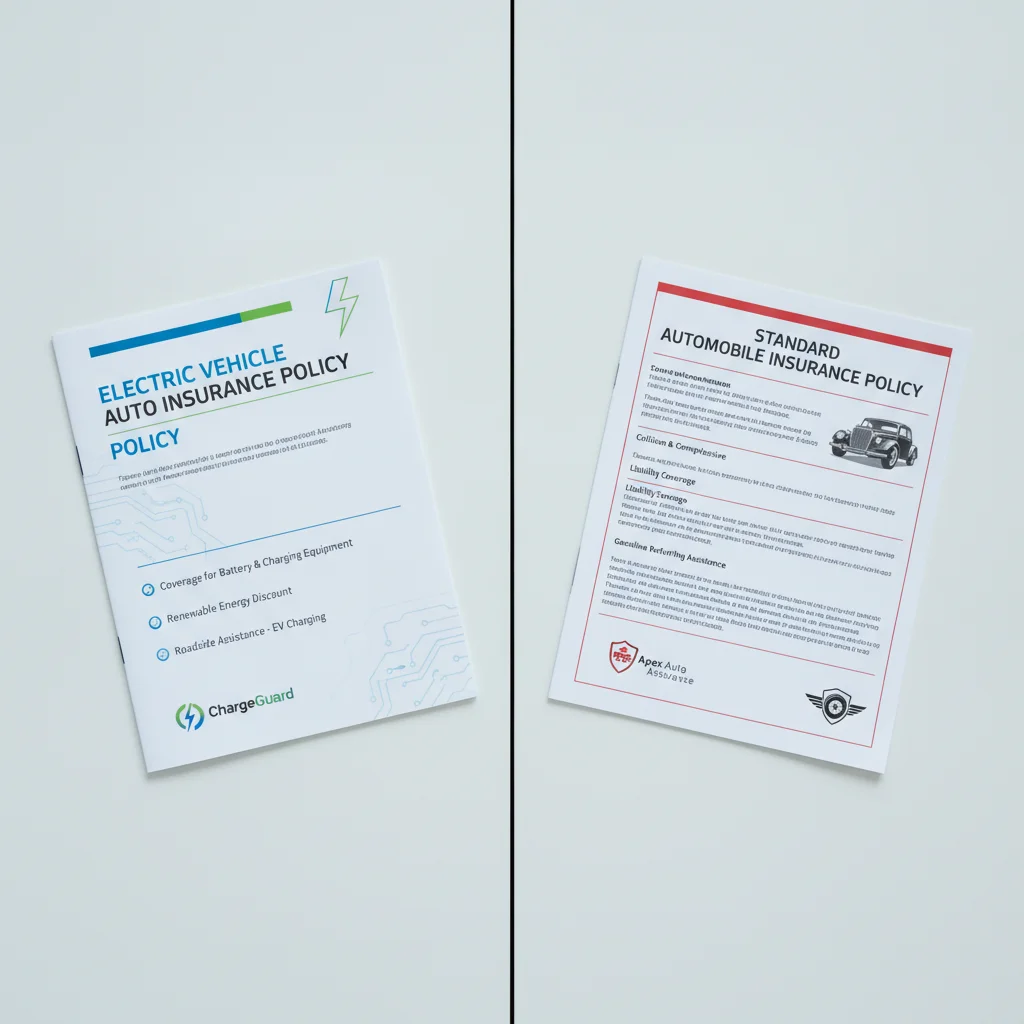
Understanding those differences before you shop is the single most valuable thing you can do as an EV owner. The sections that follow walk through every major dimension of EV insurance, from the coverage types you need to the insurers best positioned to provide them.
Coverage Types Every EV Owner Needs to Understand
The foundation of any EV policy is the same as any auto policy — but each coverage type carries EV-specific nuances that deserve attention.
Liability Coverage
Liability pays for bodily injury and property damage you cause to others. State minimums apply to EVs just as they do to any vehicle, and the same logic for carrying limits above the minimum applies: a serious accident can generate claims that dwarf state-mandated floors. Because EVs tend to skew toward higher-value vehicles, carrying robust liability limits is especially important — other drivers may expect deeper pockets from an EV owner in litigation.
Collision and Comprehensive
Collision covers damage from accidents; comprehensive covers theft, weather events, vandalism, and fire. For EVs, both coverages carry higher average payouts due to parts and labor costs. Comprehensive also becomes relevant in a scenario unique to EVs: thermal runaway — a rare but catastrophic battery failure that can result in a total loss. Verify that your comprehensive coverage explicitly includes fire events originating in the battery pack.
Uninsured and Underinsured Motorist Coverage
With repair costs for EVs running higher than average, an accident caused by an uninsured driver — a disturbingly common scenario, with roughly one in eight U.S. drivers uninsured — can leave you severely exposed without adequate UM/UIM limits. Match your UM/UIM coverage to your liability limits as a baseline.
Gap Insurance
EVs depreciate at rates that vary considerably by brand and model, but in the first year of ownership the gap between what you owe on a loan and what the vehicle is worth can be substantial. Gap insurance covers the difference if your EV is totaled before the loan balance falls below market value. If you financed your EV — and particularly if you put less than 20% down — gap coverage is worth serious consideration.
Medical Payments and PIP
Personal Injury Protection or MedPay covers medical expenses for you and your passengers regardless of fault. Required in no-fault states, optional elsewhere. EVs don't change the calculus here, but it's a coverage category worth evaluating alongside your health insurance to avoid duplication or gaps.
When reviewing any auto policy for an EV, go directly to the exclusions section and search for the words 'battery,' 'high-voltage,' and 'wear and tear' — those three phrases are where most coverage gaps hide.
Policy exclusions are written in precise legal language that may not surface during a standard agent review; searching the document directly ensures you find battery-specific carveouts before they affect a claim.
Ask your insurer specifically whether your roadside assistance program will dispatch a mobile charging unit or only a standard tow truck — the answer reveals how EV-literate the product team actually is.
A tow to a shop with no DC fast charger can leave an EV stranded overnight; mobile charge delivery or a tow to a compatible charging location is the only genuinely useful response for a depleted battery.
Before your first renewal, request a copy of your claims history report and verify that your EV's VIN is correctly coded in the insurer's system as an electric vehicle — miscoding to a hybrid or ICE variant is more common than you'd expect and may disqualify you from EV-specific discounts.
VIN decoding errors in insurer systems have been documented in consumer complaint filings; correcting a miscoded VIN can recover discounts retroactively in some cases.
If you're financing your EV, confirm with your lender whether GAP coverage is already included in your loan terms before purchasing it separately through your insurer — some manufacturer financing arms bundle it in.
Duplicate GAP coverage is a common and costly oversight; since GAP insurance from lenders and insurers covers the same exposure, paying for both provides no additional protection.
Document the serial number and purchase receipt for your home EVSE unit before installation and store them digitally alongside your insurance declarations page — this documentation is required for equipment theft claims and frequently unavailable after a loss.
Insurers require proof of ownership and value for equipment claims; without the serial number and receipt, claims adjusters often settle at a lower estimated value or deny the claim entirely.
For a full breakdown of EV-specific policy language and what each term actually means in practice, the EV insurance glossary is a useful companion reference.
What Drives EV Insurance Premiums Higher (or Lower)
EV insurance premiums are shaped by a distinct combination of vehicle-level factors and driver-level factors. Knowing which variables matter most gives you leverage when shopping for the best rate.
15–25%
EV premium increase vs. comparable ICE vehicles
According to aggregated rate data from major insurers analyzed by industry researchers in 2023–2024, EV owners pay 15–25% more on average for comparable coverage.
30–50%
Share of EV value represented by battery pack
Battery packs account for roughly 30–50% of total vehicle value depending on model and chemistry, making them the most consequential component in any total loss scenario.
1 in 8
U.S. drivers who are uninsured
The Insurance Research Council estimates that approximately 12.6% of U.S. motorists carried no insurance as of recent measurement periods, underscoring the importance of robust UM/UIM limits.
$200–$600
Annual savings from EV discounts and telematics
Combining EV-specific discounts, telematics enrollment, and multi-policy bundling can reduce annual premiums by $200–$600 depending on insurer and driver profile.
80%
Share of EV charging that happens at home
U.S. Department of Energy data consistently shows that approximately 80% of EV charging sessions occur at the owner's residence, making home EVSE coverage a priority.
Vehicle-Level Factors
- Purchase price and trim level: Higher MSRP translates directly to higher comprehensive and collision premiums. A $75,000 dual-motor SUV will cost more to insure than a $35,000 compact EV, all else equal.
- Repair cost index: Some EV brands — particularly those with proprietary components, integrated structural battery packs, or limited independent repair networks — carry significantly higher average repair costs. Insurers price this in.
- Parts availability: When OEM parts have long lead times (a recurring issue during EV supply chain disruptions), insurers face extended rental reimbursement costs. That exposure factors into premiums for affected brands.
- Safety ratings: Strong IIHS and NHTSA scores can moderate premiums. Many EVs score well here due to the structural rigidity that battery packaging provides, which is a modest but real offsetting factor.
- Theft risk: EVs have historically shown lower theft rates than comparable ICE vehicles — a data point some insurers reflect in comprehensive rates.
Driver-Level Factors
- Driving record: The single largest driver of premium variation at the individual level. A clean record remains your best tool for controlling costs.
- Credit score (where permitted): Most states allow insurers to use credit-based insurance scores as a rating factor. Improving your credit profile can have a meaningful impact on renewal rates.
- Annual mileage: EVs are frequently used as primary commuter vehicles. Accurate mileage reporting matters — underreporting can void claims; overreporting inflates your premium unnecessarily.
- Location: Urban environments with higher accident and theft frequency carry higher base rates. In dense metro areas, the rate difference between an EV and an equivalent ICE vehicle can narrow because both face the same location surcharge.
- Garaging situation: Keeping your EV in a locked garage — particularly relevant for owners with home charging equipment — can reduce both comprehensive rates and home charging equipment risk.
Common EV insurance myths explores several misperceptions about what actually drives premium differences — including the widely repeated claim that EVs are always more expensive to insure than their ICE counterparts.
Battery Coverage: The Most Critical Gap to Plug
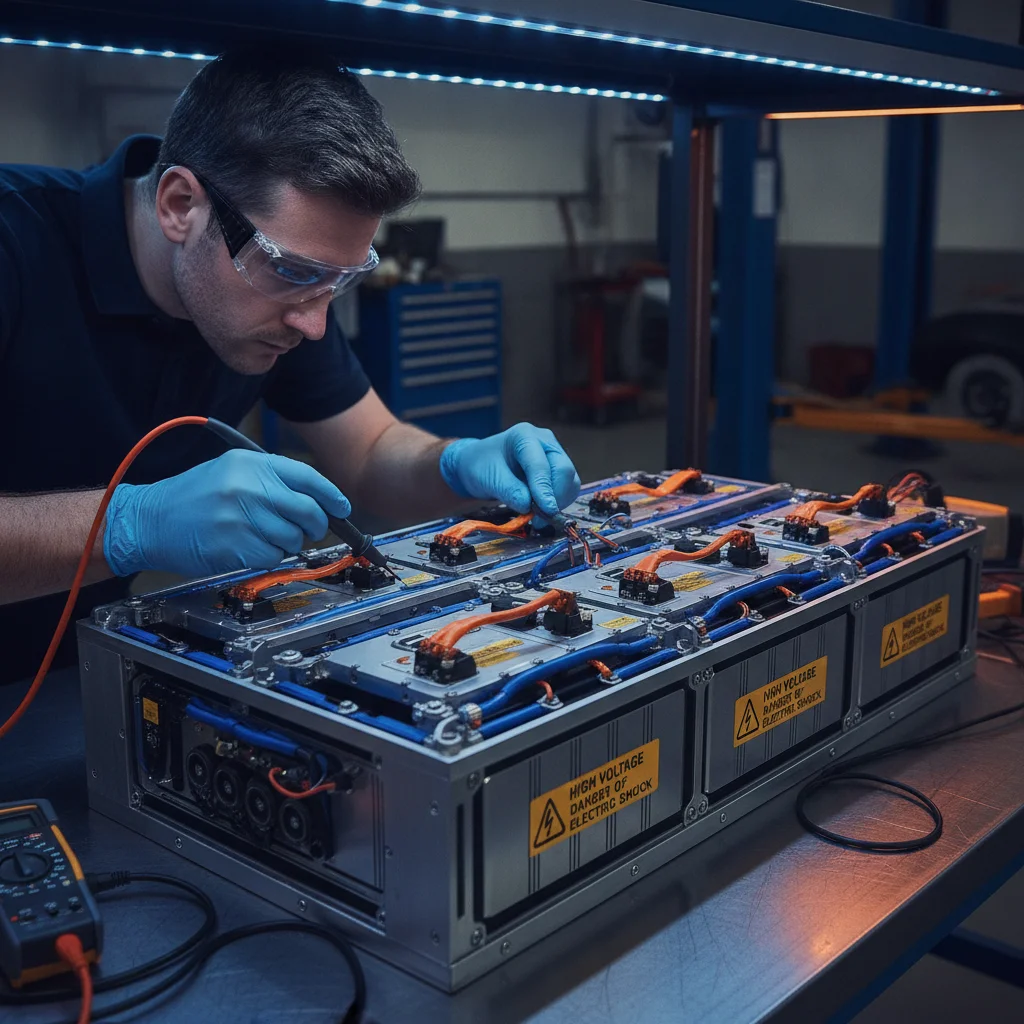
The battery pack is the most expensive single component in any electric vehicle — typically representing 30 to 50 percent of the vehicle's total value. It is also the component most likely to be underinsured or entirely excluded from standard policy language.
Battery Exclusions Can Void Your Largest Asset
Many standard auto policies contain exclusions or sublimits for high-voltage battery systems that are buried in the policy endorsements section. If your EV's battery is damaged in an accident, fire, or flood event and your policy excludes or caps battery coverage, you could face a repair or replacement bill of $10,000 to $40,000 with no insurer contribution. Request a written confirmation from your insurer that the battery pack is explicitly covered under collision and comprehensive before binding the policy.
How Battery Damage Gets Excluded
Most standard auto policies cover the vehicle as a whole under collision and comprehensive — but insurers increasingly carve out specific exclusions or sublimits for high-voltage battery systems. Common exclusions include:
- Damage from improper charging or use of non-OEM charging equipment
- Battery degradation framed as "wear and tear" rather than a covered loss
- Thermal runaway events that insurers classify as mechanical failure rather than a covered peril
- Water intrusion damage in markets with regular flooding — unless comprehensive is specifically written to cover submersion
Agreed Value vs. Actual Cash Value for Battery Replacement
The valuation method your policy uses to settle a battery replacement claim can mean a difference of thousands of dollars. Actual Cash Value (ACV) policies apply depreciation to the battery pack, which can reduce a payout on a three-year-old battery to a fraction of the replacement cost. Agreed Value policies lock in a specific payout figure at the time of policy issuance, eliminating depreciation from the equation — but they're less common and typically carry higher premiums.
Some insurers offer a middle path: a battery endorsement or rider that guarantees replacement with a new OEM battery regardless of the vehicle's age, at an additional premium. For owners of newer, high-value EVs, this endorsement can pay for itself after a single significant event.
Manufacturer Warranty vs. Insurance: What Each Covers
Battery warranties from manufacturers (typically 8 years / 100,000 miles under federal requirements for vehicles with batteries above 10 kWh) cover defects and capacity degradation below specified thresholds. They do not cover collision damage, theft, flood damage, fire, or vandalism. Insurance fills those gaps — but only if the policy language says so explicitly. Never assume the warranty and the insurance policy together provide complete coverage without verifying the exact terms of each.
Understanding how EV batteries work provides useful context for evaluating what a policy needs to cover and why certain failure modes fall outside warranty protection.
Charging Equipment and Home Installation Coverage
Roughly 80 percent of EV charging happens at home, and the majority of home EV owners install a Level 2 charger (240V, typically 32–48 amps) for faster overnight charging. That hardware — a charging unit, dedicated circuit, and associated wiring — can represent a $500 to $2,500 investment. Knowing whether your insurance covers it, and under which policy, is a detail many EV owners overlook entirely.
What Falls Under Auto Insurance vs. Homeowners
The charging cable that ships with your vehicle and any portable charging equipment stored in the car generally falls under your auto policy's comprehensive coverage, subject to your deductible. Fixed charging equipment permanently installed in your home — a wall-mounted Level 2 unit hardwired into your electrical panel — typically falls under your homeowners or renters insurance as personal property or a fixture, not your auto policy.
The problem: standard homeowners policies may have sublimits on attached equipment, may exclude equipment used for business charging, or may have gaps around power surge damage (the most common cause of EVSE failures). A standalone equipment endorsement through your auto or homeowners insurer closes those gaps cleanly.
Bundle Home and Auto for Charging Equipment Coverage
If you bundle your EV auto policy and homeowners or renters policy with the same insurer, ask them to explicitly confirm in writing which policy covers your home EVSE unit and under what circumstances. This single conversation eliminates the most common coverage dispute after a home charging equipment loss. A bundled policy also simplifies claims when both the vehicle and the charger are damaged in the same event.
Public Charging Liability
A lesser-discussed exposure is liability arising from charging at public stations. If your charging cable causes damage to a charging station or injures someone at a shared charging location, your auto liability coverage generally responds — but the specific scenario may be worth confirming with your insurer, particularly if you frequently use public DC fast chargers where equipment interactions are more complex.
Portable Charging Equipment Theft
Level 1 portable chargers (J1772 units that plug into a standard 120V outlet) are routinely stolen from parking lots and apartment building charging areas. Confirm with your insurer whether portable charging equipment left in a parked vehicle is covered under comprehensive and what documentation — serial number, purchase receipt — would be required for a successful claim.
For a full breakdown of what to look for before you finalize coverage, the EV insurance policy checklist walks through each coverage category systematically.
Choosing the Right Insurer for Your EV
Not all insurers have invested equally in EV-specific products, and the difference in coverage quality — not just price — can be substantial. When evaluating insurers, look beyond the premium quote to the specific features each company offers for electric vehicle owners.
“The auto insurance industry built its actuarial models on a century of internal combustion data. Electric vehicles are forcing a complete rethink — not just of repair costs, but of what 'the vehicle' even means when the battery is worth as much as the car around it.”
— Robert Passmore, Vice President, Personal Lines Policy, American Property Casualty Insurance Association
Key Features to Compare Across Insurers
| Feature | What to Ask For |
|---|---|
| Battery replacement coverage | New OEM battery guaranteed, regardless of depreciation |
| OEM parts guarantee | Commitment to use manufacturer parts, not aftermarket equivalents |
| EV-specific roadside assistance | Mobile charging service, flatbed towing to nearest compatible charger |
| Charging equipment coverage | Explicit inclusion of home EVSE in auto or bundled policy |
| Rental reimbursement | EV-compatible rental vehicles or equivalent daily allowance |
| Telematics program availability | Usage-based discount program compatible with your vehicle's data |
Insurers With Notable EV Programs
Several major insurers have developed dedicated EV coverage features worth knowing about. Tesla owners have the option of Tesla Insurance, which uses real-time driving behavior data from the vehicle itself to price coverage — a model that can reward safe drivers with notably competitive rates. Nationwide offers an EV-specific endorsement that covers charging equipment and locks in battery replacement at current OEM pricing. Progressive has invested in telematics programs (Snapshot) that can benefit EV drivers who log predictable, low-mileage commutes. State Farm and GEICO offer EV coverage broadly but with less product differentiation — suitable for buyers prioritizing price over specialized features.
For new EV owners encountering these choices for the first time, what catches first-time EV owners off guard covers the most common insurer-selection mistakes in detail.

Bundling and Multi-Policy Discounts
Bundling your EV policy with homeowners or renters insurance can generate discounts of 5 to 15 percent on both policies. Given that your homeowners policy may also need to cover your home charging equipment, bundling with the same insurer simplifies claims handling if both the vehicle and the charger are damaged in the same event — a real scenario in flood, fire, and severe weather losses.
Discounts, Telematics, and Ways to Lower Your Premium
EV insurance premiums are higher on average than conventional vehicle premiums — but the gap is narrower than most owners assume once available discounts are applied. A systematic approach to discount stacking can reduce annual premiums by $300 to $700 depending on insurer, vehicle, and driver profile.
EV-Specific Discounts
Several major insurers offer explicit discounts for insuring an electric or hybrid vehicle, ranging from 2 to 10 percent. These discounts are often not automatically applied — you may need to identify your vehicle as an EV at the point of quote rather than relying on the system to detect it from the VIN. Ask directly whether an EV discount is available and confirm it appears on your declarations page.
Telematics Programs
Usage-based insurance programs track driving behavior — acceleration, braking, time of day, and mileage — and use that data to price your premium. For EV drivers, telematics programs can be particularly advantageous: regenerative braking produces gentle deceleration profiles that score well in braking metrics, and the predictable daily range of most EV commuters generates favorable mileage profiles. Some insurers allow your EV's native telematics data (already collected by the vehicle) to feed directly into their rating system, eliminating the need for a separate plug-in device.
Telematics Data Can Also Increase Premiums
Usage-based insurance programs can raise your premium if your driving data reveals high-risk behaviors — hard braking, late-night driving, or high mileage. Before enrolling, review the program's terms carefully and understand whether you can opt out if your initial score is unfavorable. Some programs lock in a discounted rate for the enrollment period regardless of score; others apply the telematics rate at the first renewal.
Don't Rely on Manufacturer Warranty to Cover Accident Damage
Battery warranties from EV manufacturers cover defects and premature capacity degradation — they explicitly exclude damage from accidents, floods, fires, and theft. Assuming warranty coverage extends to collision or comprehensive events is a common and costly misconception. Verify that your insurance policy fills every gap the warranty does not.
Other Discount Categories Worth Pursuing
- Multi-vehicle discount: If your household has both an EV and a conventional vehicle, insuring both with the same carrier typically generates a 10–20% discount on each policy.
- Good driver discount: Three to five years of claim-free driving produces meaningful rate reductions at most insurers.
- Defensive driving course: Completing an approved course can reduce premiums by 5–10% and may be completed online.
- Paperless and autopay discounts: Small (2–5%) but require zero effort.
- Loyalty renewal discounts: Staying with the same insurer for consecutive policy periods can generate progressive discounts — but don't let loyalty prevent an annual market comparison.
Pairing insurance savings with the broader financial picture of EV ownership is worth doing deliberately. The year-one EV savings checklist covers how insurance fits into the complete cost picture alongside charging costs, tax credits, and maintenance savings.
Filing a Claim as an EV Owner: What to Expect
The claims experience for an EV differs from a conventional vehicle in ways that catch many owners off guard. Understanding the process in advance — especially for battery-related events — reduces stress and improves outcomes.
Finding a Qualified Repair Facility
Not every body shop or mechanic can work on high-voltage EV systems. Most insurers have directed repair programs, but EV-certified facilities within those networks can be geographically limited. In rural or suburban markets, the nearest certified EV technician may be 50 to 150 miles away, which directly affects rental car duration and total claims cost. Before you need to file a claim, it's worth knowing which facilities near you are approved to work on your specific vehicle brand.
Tesla, for instance, operates its own body repair network with strict certification requirements — and Tesla Insurance is designed to route claims through that network. For non-Tesla EVs, confirm whether your insurer's directed repair program includes facilities certified by your manufacturer, or whether you have the right to choose an approved specialist independently.
Battery Damage Assessment
When an EV sustains collision damage, the battery pack must be inspected for structural and electrical integrity before the vehicle is returned to service — even if the battery appears undamaged externally. This inspection adds time to every EV repair, often 24–72 hours, and the cost is borne by the insurer. If the assessment reveals internal cell damage, a full or partial battery replacement may be required, dramatically increasing total repair cost.
Some incidents — particularly floods and fires — can render an EV a total loss even when the body damage appears minor, because battery pack contamination or thermal damage is detected during inspection. Comprehensive coverage that explicitly includes these scenarios is essential.
EV Insurance Pricing Is Rapidly Evolving
The EV insurance market is in an early and active phase of pricing adjustment. As insurers accumulate more claims data on electric vehicles — repair costs, total loss frequencies, battery failure rates — premiums are being recalibrated both upward and downward for specific models. This means the market comparison that was accurate 18 months ago may no longer reflect current rates. Annual re-shopping at renewal is more important for EV owners than for drivers of conventional vehicles.
Federal Battery Warranty Minimums Apply to Most EVs
Under federal law, EV battery packs with a capacity above 10 kWh must be warranted for at least 8 years or 100,000 miles for defects and capacity degradation below specified thresholds. This warranty runs parallel to your insurance coverage but addresses entirely different risks — defects versus damage. Understanding which protection applies to which scenario helps you avoid assuming coverage exists where it does not.
Total Loss Valuation
If your EV is declared a total loss, the settlement amount is calculated based on actual cash value (unless you have agreed value coverage or a GAP policy). For vehicles that have depreciated significantly — or for models where used-market values are volatile — ACV settlements can fall well short of replacement cost. Document your vehicle's condition meticulously, keep records of installed upgrades, and be prepared to negotiate the ACV if comparable vehicles in your market support a higher figure.
Final Checklist Before You Sign Your EV Policy
Before binding coverage on your EV, run through each of the following verification points. A few minutes of due diligence at this stage can prevent thousands of dollars in uninsured losses later.

- Battery coverage confirmed: Does your policy explicitly cover battery pack damage from collision, fire, flood, and theft? Is replacement based on ACV or new OEM value?
- Charging equipment covered: Is your home EVSE covered under this policy or your homeowners policy? Is there a sublimit? Does coverage include power surge damage?
- OEM parts clause: Does your insurer commit to using original manufacturer parts for repairs, particularly for high-voltage components?
- EV-specific roadside assistance: Does the roadside program include mobile charge delivery or flatbed towing to a compatible charging location — not just a standard tow?
- Rental reimbursement adequacy: Given potentially longer EV repair timelines, is the daily rental allowance and total coverage period sufficient? Will the reimbursement cover an EV or comparable vehicle?
- Gap insurance status: If you financed your EV, is gap coverage in place and confirmed with your lender?
- Telematics enrollment: Have you enrolled in the insurer's telematics program if one is available and advantageous for your driving profile?
- All applicable discounts applied: EV discount, multi-policy bundle, good driver, paperless/autopay — confirm each appears on your declarations page.
- Deductible alignment: Is your collision and comprehensive deductible set at a level you can genuinely absorb out of pocket, given the higher average repair costs for EVs?
- Policy renewal review commitment: Set a calendar reminder to re-shop at renewal — EV insurance pricing is evolving rapidly as insurers accumulate more loss data, and the most competitive rate today may not be the best rate in 12 months.
For a complete policy-review framework, the EV insurance policy checklist expands each of these points with specific questions to ask your insurer or broker.
EV ownership brings real financial advantages — lower fuel costs, reduced maintenance, and meaningful federal and state tax credits — but those advantages are best protected by insurance coverage that's actually built for the vehicle you're driving. Doing the verification work now, before you need to file a claim, is how you ensure the investment holds its value for years to come.
EV Insurance Policy Checklist Before You Sign
A structured checklist covering battery coverage, charging equipment, rental reimbursement, and more — verify every critical policy element before finalizing your EV insurance.
EV Insurance Terms Every Owner Should Know
A quick-reference glossary covering agreed value, battery endorsements, telematics, OEM parts clauses, and other EV-specific insurance language you'll encounter while shopping.
Federal Trade Commission Auto Insurance Guide
The FTC's consumer resource on auto insurance basics — useful for understanding your rights during the claims process and how to dispute a settlement offer.
IIHS Vehicle Safety Ratings
The Insurance Institute for Highway Safety's searchable database of crash test results — useful for verifying how your EV's safety ratings may influence your premium.
EV Tax Credits Hub
Federal and state EV incentive information to help you understand the full financial picture of EV ownership alongside your insurance costs.
Maximizing EV Savings: Year-One Financial Checklist
A comprehensive first-year savings roadmap for new EV owners, covering charging rate plans, maintenance savings, tax credits, and insurance optimization strategies.
All claims are backed by peer-reviewed research. Sources on request.