Key Takeaways
EV Depreciation
EV depreciation is the rate at which an electric vehicle loses its market value over time. Unlike gas-powered cars, EVs are affected by factors specific to battery technology, federal tax credit availability, and rapid model-year updates. These unique pressures can cause some EVs to lose value faster in their first few years while others hold value surprisingly well.
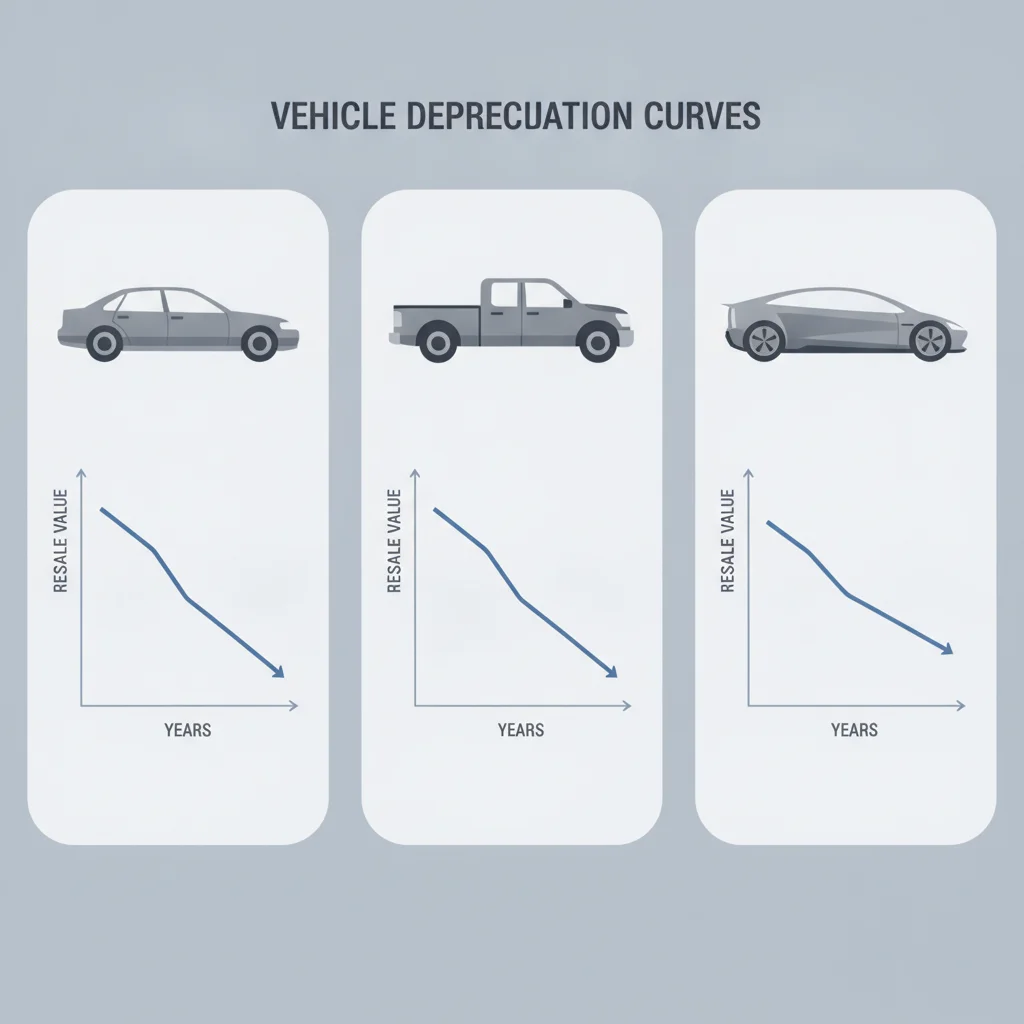
Depreciation is measured as the percentage decline from the original MSRP (Manufacturer's Suggested Retail Price) to current market value. For EVs, residual value calculations used by lenders and lessors often apply steeper discount curves than those used for equivalent internal combustion engine vehicles.
Why EVs Play by Different Rules
When you sell a used gas-powered sedan, the main depreciation drivers are mileage, condition, trim level, and brand reputation. Those factors matter for EVs too — but they're joined by a separate set of variables that have no equivalent in the internal combustion engine world. Understanding these forces is the difference between pricing your EV to sell quickly and watching it sit on the market while you revise the listing downward every two weeks.
The core issue is that electric vehicles exist at the intersection of consumer technology and traditional automotive value. Like a smartphone, an EV can be rendered functionally obsolete not because it stopped working, but because a newer version does the same job dramatically better. A 2021 model with 250 miles of range looks far less appealing once the 2024 version of the same nameplate offers 340 miles at the same original price point.
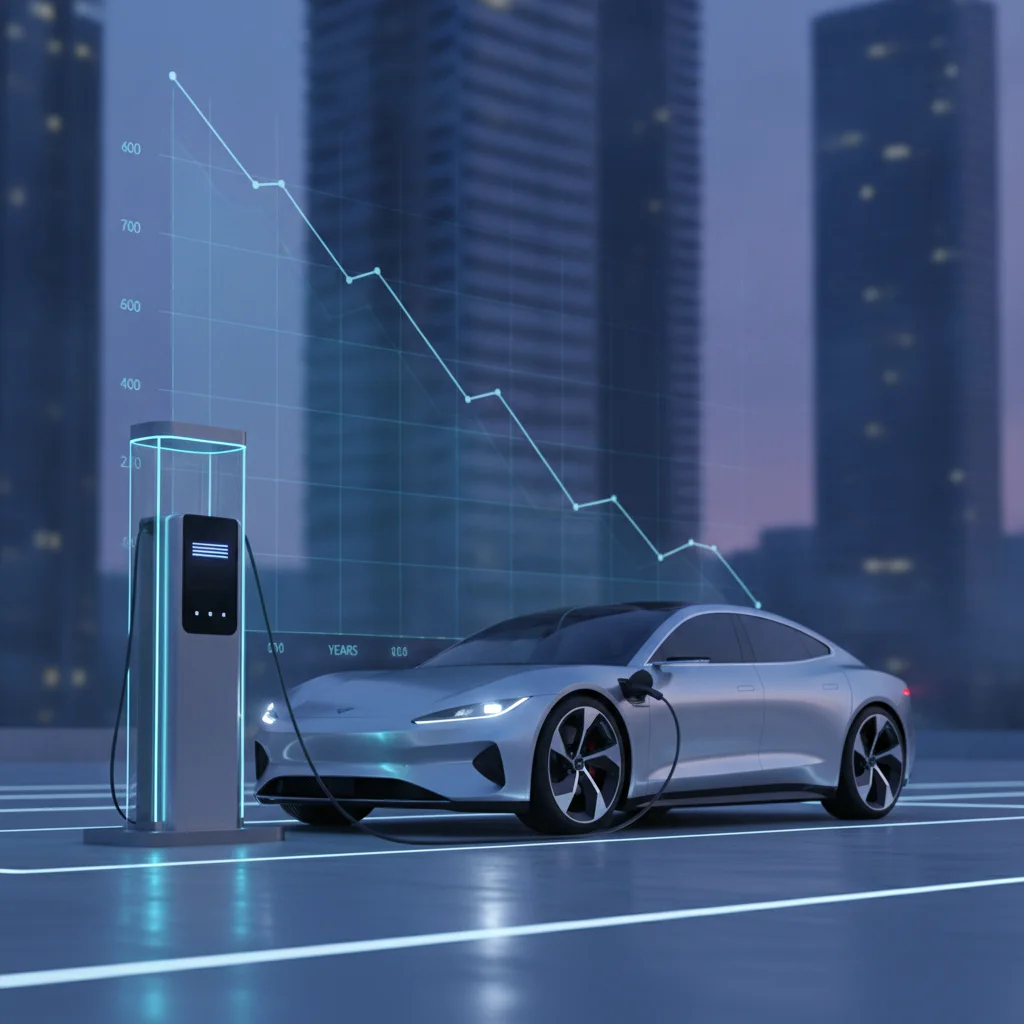
This dynamic doesn't apply cleanly to a five-year-old pickup truck. The 2019 F-150 isn't made obsolete by the 2024 F-150 — they're both fundamentally trucks that haul cargo and tow trailers. But a 2019 EV sedan competing against its newer self in the used market faces a much steeper climb. That's the first rule to internalize: EV depreciation is partly technological obsolescence, not just wear and tear.
See the fundamentals of vehicle depreciation for a broader look at how all vehicles lose value over time before we go deeper into what makes EVs unique.
The Key Drivers of EV Value Loss
Several specific factors drive depreciation for electric vehicles. Each one can either accelerate value loss or, under the right conditions, slow it down considerably. As a seller, knowing which levers are in play for your specific vehicle gives you real pricing power.
49.1%
Average 3-year EV depreciation rate
iSeeCars analysis of used vehicle listings found EVs depreciated nearly 50% on average over three years, compared to roughly 38% for gas-powered vehicles.
$7,500
Federal new EV tax credit maximum
Under the Inflation Reduction Act, eligible new electric vehicles can qualify for up to $7,500 in federal tax credits, compressing used EV pricing competitiveness.
8 years / 100K mi
Minimum required EV battery warranty
Federal regulations mandate that EV manufacturers warrant their battery and electric drive components for at least 8 years or 100,000 miles, whichever comes first.
80–90%
Typical battery capacity retention at 100K miles
Most modern EV batteries retain 80–90% of their original capacity at 100,000 miles under normal charging conditions, according to manufacturer data and independent studies.
10–20%
Private sale premium over trade-in
Private-party EV sales typically yield 10–20% more than dealer trade-in offers, making a direct sale worth the additional effort for most sellers.
Battery Degradation and Range Anxiety
The battery is simultaneously the most expensive component of an EV and the one buyers are most anxious about. A lithium-ion battery pack loses a small percentage of its peak capacity with every charge cycle. Over 80,000 to 100,000 miles, most modern EV batteries retain roughly 80–90% of original capacity — but that remaining 10–20% loss matters a great deal to buyers.
If your vehicle's onboard diagnostics show 215 miles of real-world range on a battery that was originally rated for 250, buyers will factor in that gap aggressively. Some will demand a price discount far larger than the actual range reduction warrants, simply because battery replacement — if ever needed — can run $10,000 to $20,000 or more depending on the vehicle.
The practical takeaway: get a battery health report before listing. Many dealerships and third-party EV shops can run one for under $100. If your battery is healthy, that report becomes a selling tool. If it shows meaningful degradation, you'll need to price accordingly rather than be surprised during negotiation.
Get Your Battery Report Before Listing
A pre-listing battery health report costs $50–$150 at most EV-savvy shops or dealerships. If the report shows strong health, it becomes a marketing asset that justifies your asking price. If it reveals significant degradation, you avoid pricing yourself into a painful negotiation surprise. Either way, you go into the sale with information rather than assumptions.
Highlight Remaining Warranty in Every Listing
Remaining battery warranty is one of the few concrete risk-mitigating facts you can put in front of a buyer. Include the exact expiration date and mileage remaining. For vehicles still covered by the original 8-year/100,000-mile federal minimum, state this explicitly — many buyers don't know how to calculate it themselves, and clarifying it builds confidence in your asking price.
Federal Tax Credits and the New-Car Discount Effect
The Inflation Reduction Act extended and restructured EV tax credits, with eligible new EVs qualifying for up to $7,500 off. This directly compresses what used EVs can fetch on the market. Here's the math: if a buyer can get a new 2024 EV for an effective out-of-pocket cost of $32,500 after a $7,500 credit, your 2021 model with 45,000 miles needs to be priced well below that threshold to make sense — because the buyer is giving up a newer battery, updated software, and the remaining full warranty.
The used EV credit (capped at $4,000 for vehicles under $25,000) helps narrow this gap slightly for lower-priced EVs, but for vehicles priced above that threshold, sellers absorb the full weight of the new-car credit discount. This is one reason EVs have historically depreciated faster on paper than gas vehicles — the subsidy structure constantly tilts buyers toward new.
Used EV Tax Credit Has Limits
The Inflation Reduction Act introduced a used EV tax credit of up to $4,000, but it applies only to vehicles priced under $25,000 and sold by a licensed dealer. Private-party sales do not qualify. This means for most mid-range and luxury used EVs, buyers cannot access any federal credit — keeping pressure on sellers to price competitively against subsidized new vehicles.
EV Depreciation Data Is Still Maturing
Because mass-market EVs have only been widely available since roughly 2012–2015, long-term depreciation data covering 7–10 year ownership periods is still limited. Treat any depreciation benchmark as a current snapshot rather than a settled historical norm. The picture is evolving quickly as battery longevity data accumulates and market penetration increases.
Model Updates and Software Generations
Unlike a traditional vehicle where a model refresh might mean a new grille and updated infotainment, EV model updates can deliver meaningful functional improvements: longer range, faster charging speeds, updated driver assistance systems, or entirely new battery chemistry. When a manufacturer announces a significant upgrade, used values of prior-generation models often drop immediately — before the new model even ships.
This means EV sellers need to watch product roadmaps, not just current market comps. If a manufacturer has announced a major range or feature upgrade arriving in the next model year, selling your current-generation vehicle before that announcement becomes widely known can protect thousands of dollars in equity. See how depreciation curves can inform your sale timing for a broader framework on this strategy.
How EV Depreciation Compares Across Segments
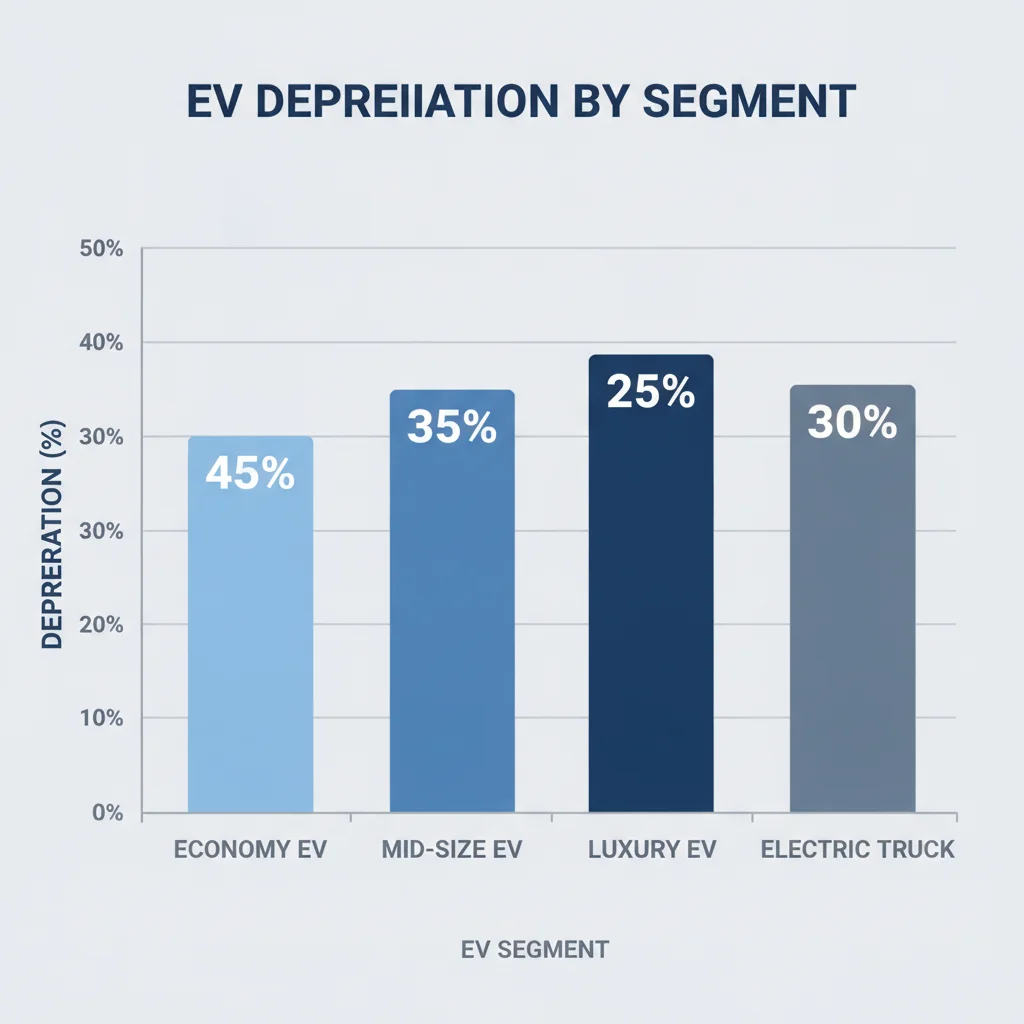
Not all EVs depreciate at the same rate. The segment your vehicle sits in — economy, mid-size, luxury, or truck — matters as much as the brand and technology generation.
Economy and Mass-Market EVs
Economy EVs like the Chevrolet Bolt and Nissan LEAF have historically shown steep early depreciation, sometimes losing 40–50% of their original value within three years. Much of this is driven by their relatively modest original price points (making absolute-dollar depreciation look large as a percentage) and aggressive new-model pricing from manufacturers eager to move volume. However, after that initial steep drop, these vehicles tend to level off and provide stable used-car value for budget buyers.
Mid-Size and Mainstream EVs
Mid-range EVs occupy the most competitive segment. Tesla Model 3 and Model Y, Ford Mustang Mach-E, and Hyundai Ioniq 6 all compete here. Depreciation in this range varies widely by brand strength and update cadence. Tesla has historically seen mid-cycle price cuts on new models that immediately dragged down used Tesla values — a well-documented phenomenon for Tesla owners. Meanwhile, Hyundai's Ioniq lineup has retained value relatively well due to strong demand and limited initial supply.
Luxury EVs
Luxury EVs — think BMW iX, Mercedes EQS, Audi e-tron — have followed a pattern more similar to their gas-powered luxury counterparts: steep depreciation in years one through three, followed by stabilization. Luxury EVs carry high original MSRPs, so even a 30% first-year drop represents a large dollar amount. For sellers in this segment, the key is getting out before year three if maximizing return is the priority.
Electric Trucks and SUVs
Electric trucks like the Rivian R1T and Ford F-150 Lightning have shown unusually strong initial value retention due to high demand and limited supply. However, as production ramps up and competition increases, this segment is expected to normalize toward broader EV depreciation patterns over the next two to three years. If you own one, current market conditions may represent a near-term window of relatively favorable pricing.
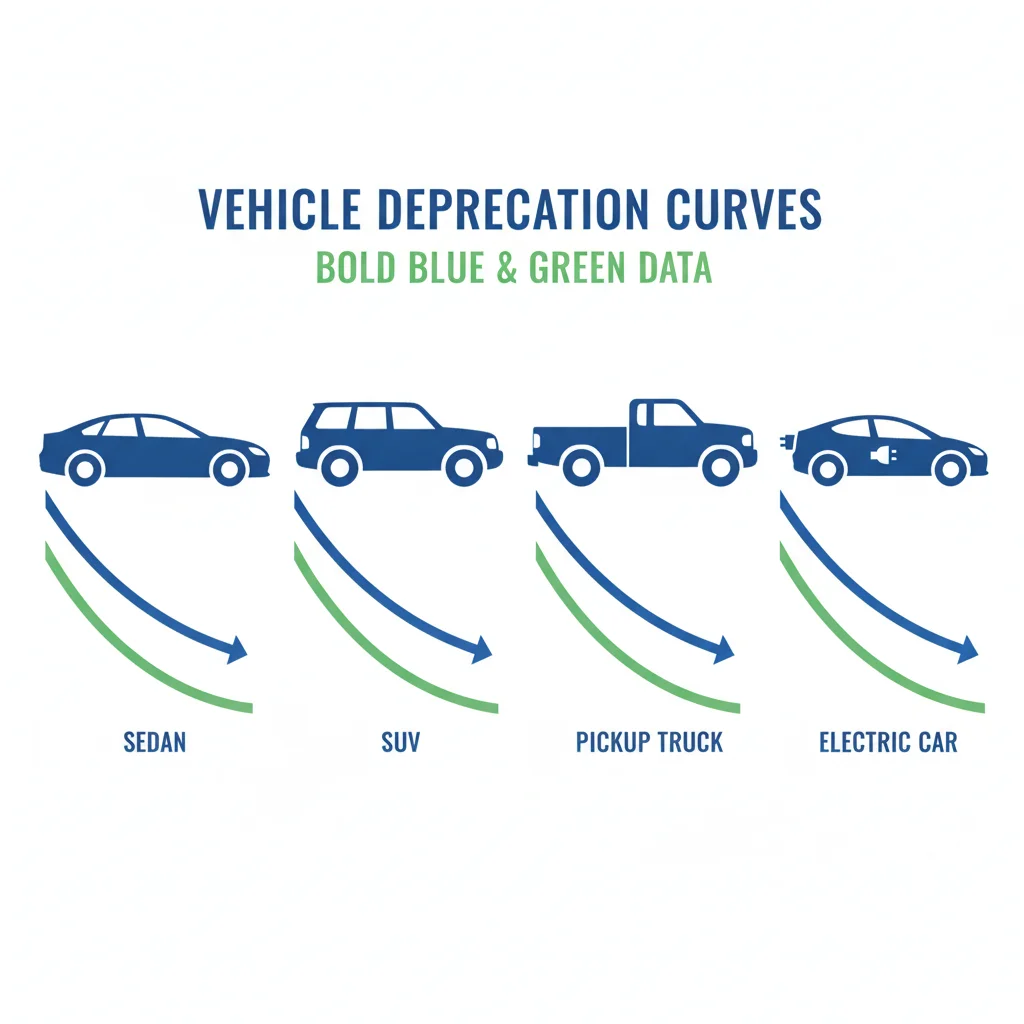
For a category-by-category comparison of how EVs stack up against sedans, SUVs, and trucks, see depreciation rate benchmarks by vehicle category.
What Slows Down EV Depreciation
The picture isn't uniformly gloomy. Several factors actively work in favor of EV value retention, and understanding them helps you position your vehicle — and your listing — more effectively.
“Residual values for electric vehicles are being reset almost every quarter right now. Sellers who treat their EV like a traditional used car and ignore the technology cycle are consistently leaving money on the table — or worse, pricing themselves out of the market entirely.”
— Ivan Drury, Director of Insights, Edmunds
Brand Reputation and Charging Network Access
Vehicles backed by brands with strong EV credibility and wide charging infrastructure access tend to hold value better. A used Tesla benefits from the Supercharger network — arguably the most reliable fast-charging network in the U.S. — in a way that a competitor's vehicle tied to a patchwork of third-party chargers does not. Buyers factor in charging convenience as a real ownership cost, and that willingness to pay a premium shows up in resale data.
Remaining Warranty Coverage
Federal law requires EV manufacturers to warrant their battery and drive systems for at least 8 years or 100,000 miles. A vehicle still covered by that warranty is materially more valuable than one where coverage has lapsed. If your EV still has three or more years of battery warranty remaining, highlight that prominently in your listing — it directly addresses the battery anxiety that suppresses EV bids.
Get Your Battery Report Before Listing
A pre-listing battery health report costs $50–$150 at most EV-savvy shops or dealerships. If the report shows strong health, it becomes a marketing asset that justifies your asking price. If it reveals significant degradation, you avoid pricing yourself into a painful negotiation surprise. Either way, you go into the sale with information rather than assumptions.
Highlight Remaining Warranty in Every Listing
Remaining battery warranty is one of the few concrete risk-mitigating facts you can put in front of a buyer. Include the exact expiration date and mileage remaining. For vehicles still covered by the original 8-year/100,000-mile federal minimum, state this explicitly — many buyers don't know how to calculate it themselves, and clarifying it builds confidence in your asking price.
Low Mileage and Documented Charging Habits
EV buyers are more aware than gas-car buyers of how usage patterns affect long-term battery health. If you've consistently charged between 20% and 80% (as most EV guides recommend) and avoided frequent DC fast charging, document that in your listing. Screenshots from your vehicle's app showing consistent battery health over time are a meaningful differentiator. Low annual mileage also carries more weight with EV buyers than it does in the gas-car market, given the direct relationship between charge cycles and battery longevity.
Software Support Continuity
EVs increasingly rely on over-the-air software updates for everything from navigation maps to driving dynamics. Manufacturers that have committed to ongoing software support for older models — and have a track record of delivering it — see their used vehicles command better prices. Buyers know that a software-abandoned EV is effectively a static product in an industry that moves fast.
Setting a Realistic Asking Price: A Step-by-Step Approach
Armed with an understanding of what drives EV depreciation, you can build a defensible asking price rather than guessing or anchoring to what you paid. Here's a practical process:
- Pull current market comps. Use Edmunds, KBB, and CarGurus simultaneously. Filter by your exact model, trim, year, mileage range (within 10,000 miles of yours), and ZIP code radius (within 150 miles). Note the range of asking prices and the average days-on-market for listings that have sold.
- Get a battery health report. A clean battery report justifies pricing at or near the top of your comp range. Degradation of more than 15% from original capacity warrants a downward adjustment of 5–10% from the market average.
- Check the new-car credit math. Look up the current new-model price for your vehicle and apply the applicable federal credit. Your asking price needs to make financial sense relative to that effective new-car cost for a buyer who qualifies for the credit.
- Check the product roadmap. Search for any manufacturer announcements about a significant range upgrade or redesign coming in the next 6–12 months. If one is announced, adjust your price down pre-emptively and move quickly — waiting will cost you more.
- Factor in remaining warranty. For each year of remaining battery warranty, you can reasonably add 1–2% to your price versus a comparable out-of-warranty vehicle. Quantify this for buyers in your listing.
- Set your floor. Determine the minimum price you'd accept based on your loan payoff (if applicable) and your alternative of trading in. Private-party sales typically net 10–20% more than dealer trade-in offers for EVs, so know that number before you enter any negotiation.
For a broader look at how your vehicle's category compares to sedans, SUVs, and trucks, see depreciation by vehicle segment. And if you're weighing whether your insurance costs as an EV owner are reasonable, EV auto insurance rates explained breaks down why premiums differ from gas-car policies.

The EV market is still maturing, and depreciation norms will continue to shift as battery technology improves, charging infrastructure expands, and buyer familiarity increases. Sellers who stay informed about these dynamics — rather than relying on gas-car intuitions — will consistently make smarter timing and pricing decisions.

All claims are backed by peer-reviewed research. Sources on request.