Key Takeaways
Electric Vehicle Depreciation
Electric vehicle (EV) depreciation is the rate at which a battery-powered car loses its market value over time. Like all vehicles, EVs depreciate from the moment you drive off the lot — but the factors driving that value loss are different from those affecting gas-powered cars. Battery degradation, rapid model updates, federal tax credits on new EVs, and fluctuating charging infrastructure all influence how fast an EV loses value.
EV depreciation is also affected by the distinction between usable and total battery capacity, as well as state-level incentives that can depress used EV prices by making new EVs artificially cheaper for first-time buyers.
Why EV Depreciation Doesn't Play by the Same Rules
When you buy a gas-powered car, the depreciation story is pretty predictable. Mileage climbs, parts wear out, and the market adjusts accordingly. There are surprises — a model gets discontinued, or a design flaw tanks resale — but the general curve is well-understood.
Electric vehicles complicate all of that. The technology is newer, the market is still finding its footing, and a handful of forces unique to EVs are doing real damage to resale values that wouldn't affect a comparable gas car at all. If you're buying an EV with any thought to eventually selling it, or you already own one and are wondering when to move it, you need to understand what's actually driving value loss.
The basics of vehicle depreciation — age, mileage, condition — still apply. But EV ownership adds a layer of variables that can accelerate or, in some cases, protect that value drop. Let's break them down one by one.
The Battery Factor: Range Loss Is a Resale Killer
If there's one thing that can torpedo the resale price of a used EV, it's a degraded battery. Every lithium-ion battery pack loses some capacity over time and with repeated charge cycles. For most EVs, the degradation is gradual — losing roughly 2–3% of range per year under normal use — but it compounds.
An EV listed at 250 miles of original range that now delivers 210 miles on a full charge is a different product than it was on day one. Buyers know this, and they price it in aggressively. Unlike a gas car where worn brake pads or old spark plugs are known, routine costs, a degraded battery pack can cost $10,000–$20,000 to replace — a number that hangs over every used EV transaction.
EV Battery Warranty: What It Covers
Federal law requires EV manufacturers to warrant the battery pack for at least 8 years or 100,000 miles against falling below 70% of original capacity. However, the terms vary by manufacturer — some cover capacity loss more generously, others only cover outright failure. Always read the specific warranty language for your vehicle, not just the headline numbers. A battery at 71% capacity that isn't covered under a stricter warranty interpretation is a meaningful risk for any buyer.
Regional Charging Access Affects Value
Used EV prices aren't uniform across the country. In cities with robust fast-charging networks — like coastal metros — buyers are willing to pay more for the same used EV than buyers in areas where charging is sparse or unreliable. If you're selling, consider whether listing in a market with better charging infrastructure is logistically possible. If you're buying, factor in your local charging reality honestly before committing to a range that only works on paper.
Manufacturers handle battery warranties differently, and this affects perceived resale risk. Most major EV makers warrant the battery for 8 years or 100,000 miles against falling below 70% of original capacity. A used EV still covered by that warranty is worth meaningfully more than one that's aged out of it. Always check the remaining warranty window before pricing or purchasing a used EV.
Some manufacturers, like Tesla, provide a battery health readout directly through the vehicle's display. For others, a third-party OBD-II adapter and app can pull state-of-health data. Either way, document battery health before listing — buyers will ask.
Pull a Battery Health Report Before Listing
Before you price or list your used EV, get a verified battery state-of-health reading. For Tesla owners, this is available directly in the car's settings. For other brands, an OBD-II Bluetooth adapter combined with apps like Leaf Spy or Car Scanner ELM OBD2 can pull this data. Documenting battery health upfront gives buyers confidence and gives you the data to justify your asking price — especially if your battery is in good shape.
Watch the Manufacturer's Refresh Calendar
EV model refreshes and next-generation launches can hit used prices fast and hard. Set a Google alert for your specific model's name alongside terms like 'redesign,' 'refresh,' or 'next generation.' If a major update is coming within six months, sell sooner rather than later. Waiting until after the announcement often means competing with discounted outgoing new inventory on dealer lots.
Federal Tax Credits: The Used Market's Quiet Enemy
Here's a dynamic that surprises a lot of first-time EV sellers: federal and state tax credits actively work against used EV resale prices. When a buyer can walk into a dealership and get $7,500 knocked off a brand-new EV, the appeal of a two-year-old used model at a similar price drops significantly.
This is structurally different from gas cars. There's no meaningful federal incentive driving buyers toward new gas vehicles over used ones. But for EVs, the subsidy environment consistently makes new models more competitive with the used market than they'd otherwise be.
49%
Average EV value loss after 3 years
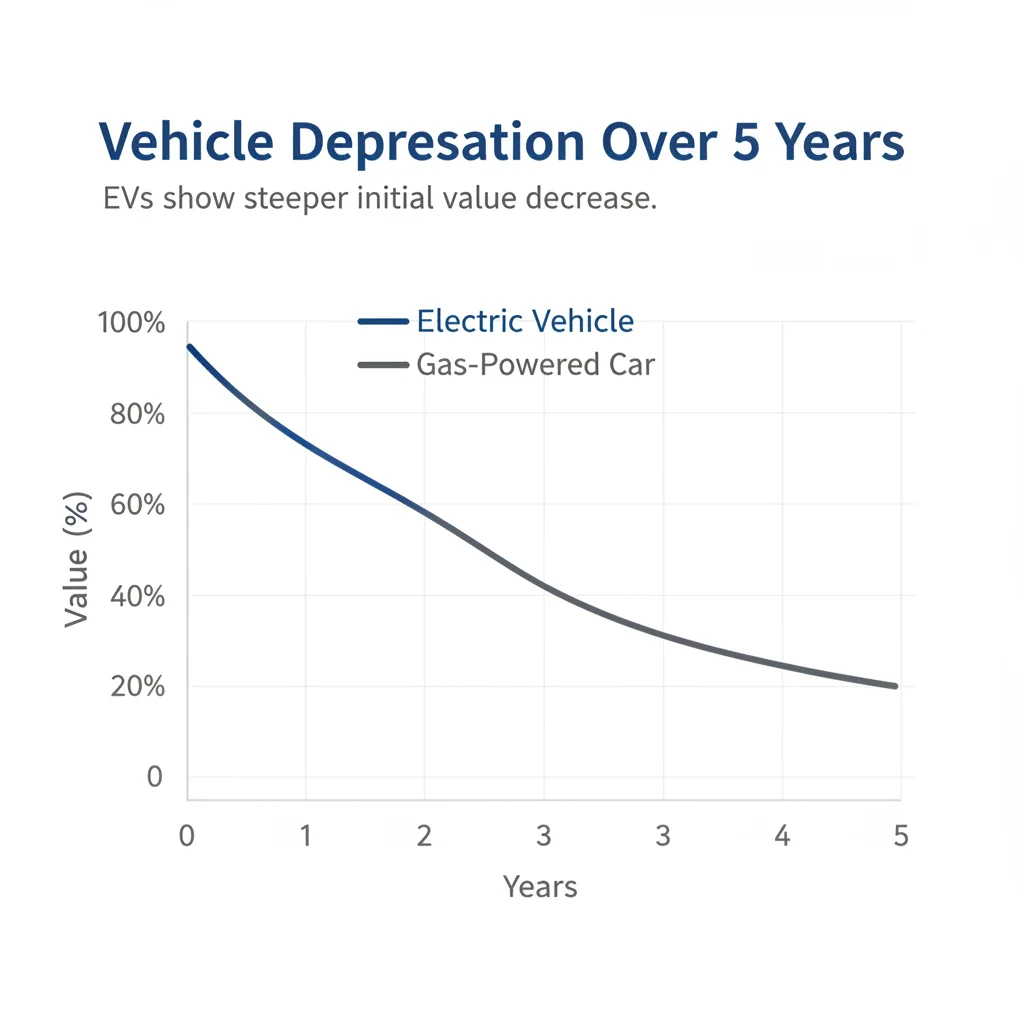
iSeeCars analysis of 2020–2023 data found EVs depreciated an average of 49% over three years, compared to roughly 36% for gas-powered vehicles in the same period.
$7,500
Federal EV tax credit for new purchases
Under the Inflation Reduction Act, qualified buyers can receive up to $7,500 off a new EV purchase, directly competing with used EV pricing in the market.
2–3%
Annual battery capacity loss rate
Most lithium-ion EV batteries degrade at roughly 2–3% per year under normal conditions, according to Geotab fleet data covering hundreds of thousands of EVs.
8 years
Standard EV battery warranty period
Federal regulations require EV manufacturers to warranty the battery pack for a minimum of 8 years or 100,000 miles against capacity falling below 70%.
$4,000
Used EV federal tax credit maximum
The Inflation Reduction Act introduced a used EV credit of up to $4,000 for qualifying purchases from licensed dealers, subject to income and vehicle price limits.
The Inflation Reduction Act did introduce a used EV tax credit — up to $4,000 for qualifying used EVs purchased from a dealer — which has helped soften this dynamic somewhat. But the new EV credit is still larger, and income caps on the used credit mean not every buyer qualifies. The net effect remains a downward pull on used EV prices that simply doesn't exist in the gas car market.
This is worth understanding if you're deciding between buying new versus used. EVs depreciate by a different set of rules, and subsidy structure is a big part of why.
Rapid Model Updates: Technology Obsolescence Is Real
Gas car platforms evolve slowly. A 2020 Honda Accord and a 2023 Honda Accord are meaningfully similar vehicles — the older one doesn't feel dramatically behind. EV platforms move much faster. Software updates can change performance, range estimates, and even add features, but a three-year-old EV's hardware — its motor, battery chemistry, and charging speed — is often genuinely outclassed by current-year versions.
That hardware gap creates a perception of obsolescence that pressures used prices. When a newer EV charges 30% faster, drives 50 miles farther, and has a more refined interface, buyers notice. That older EV sitting on the used lot starts to feel like old tech even if it drives just fine.
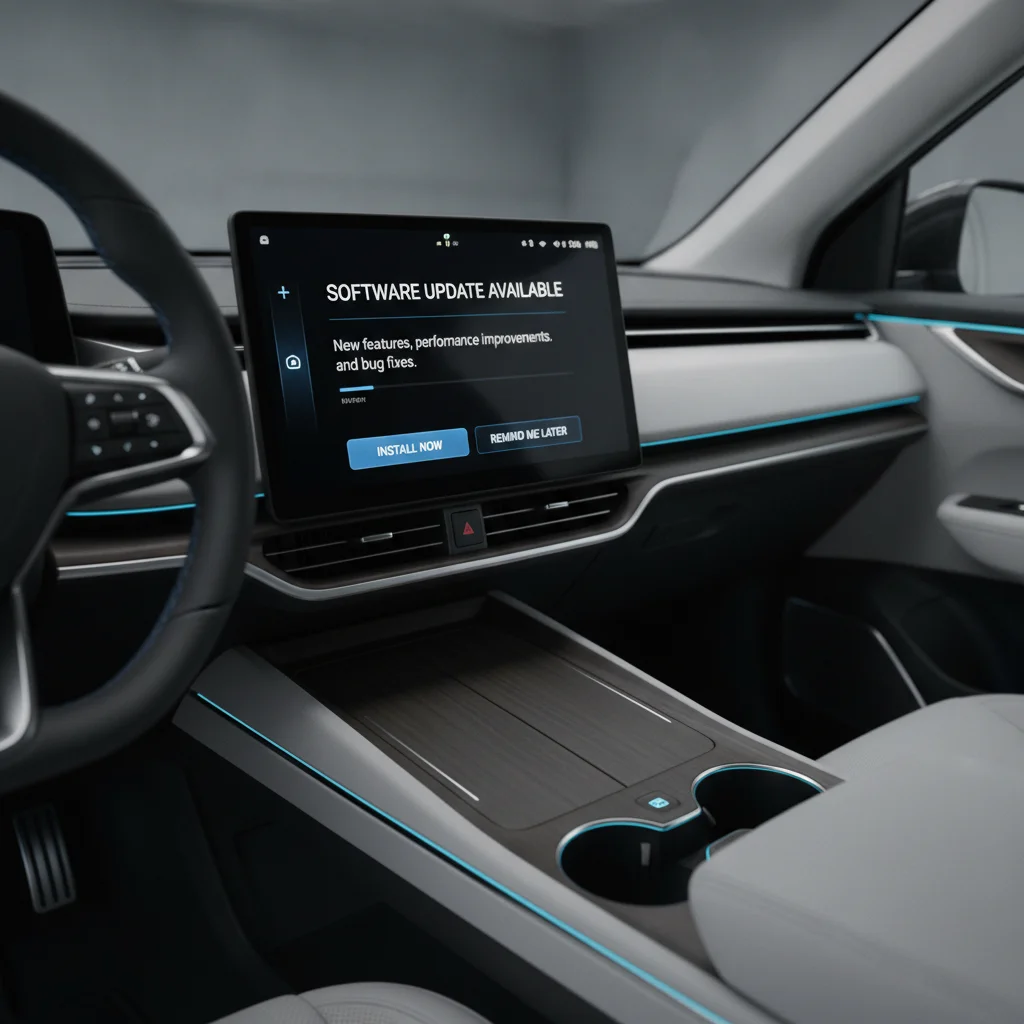
Compare this to gas cars where a 2019 model with 40,000 miles competes on very familiar ground with its 2023 equivalent. The EV version of that comparison often results in a much wider value gap in favor of the newer vehicle.
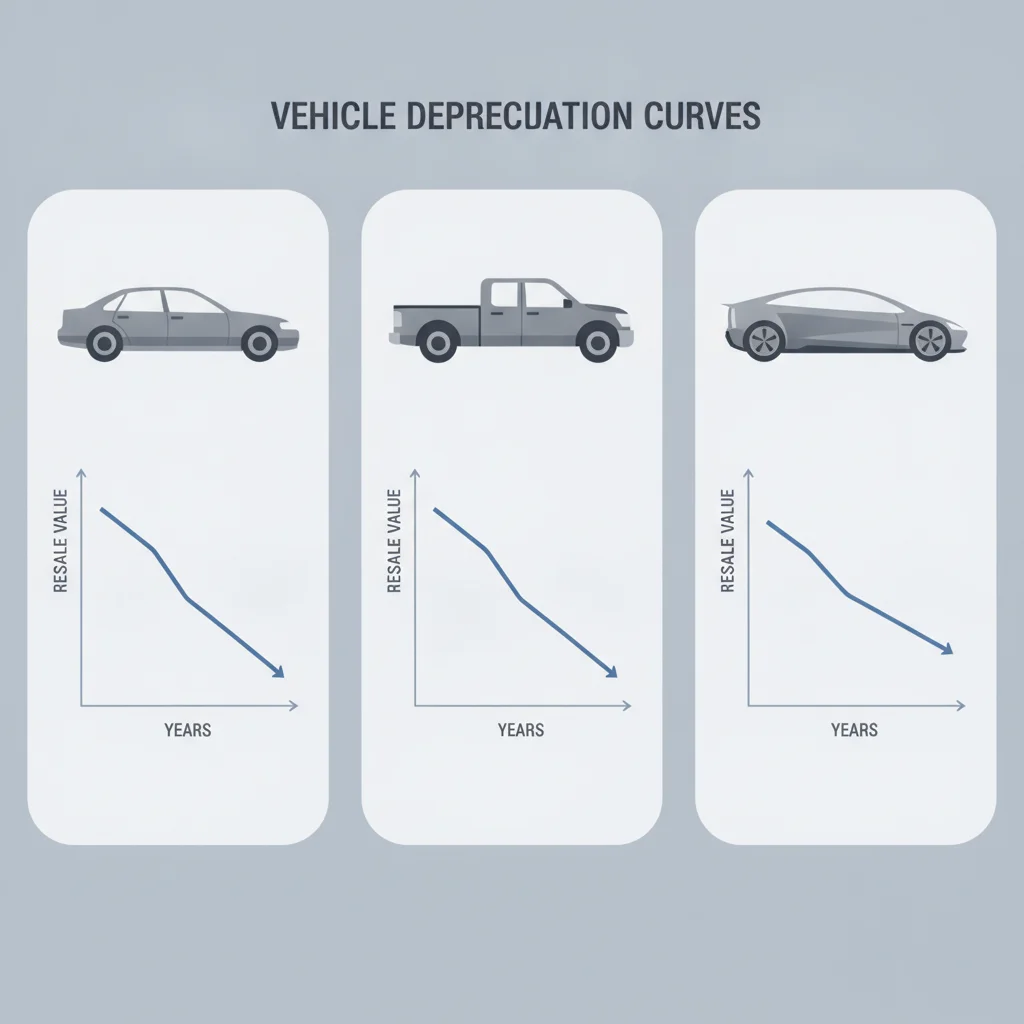
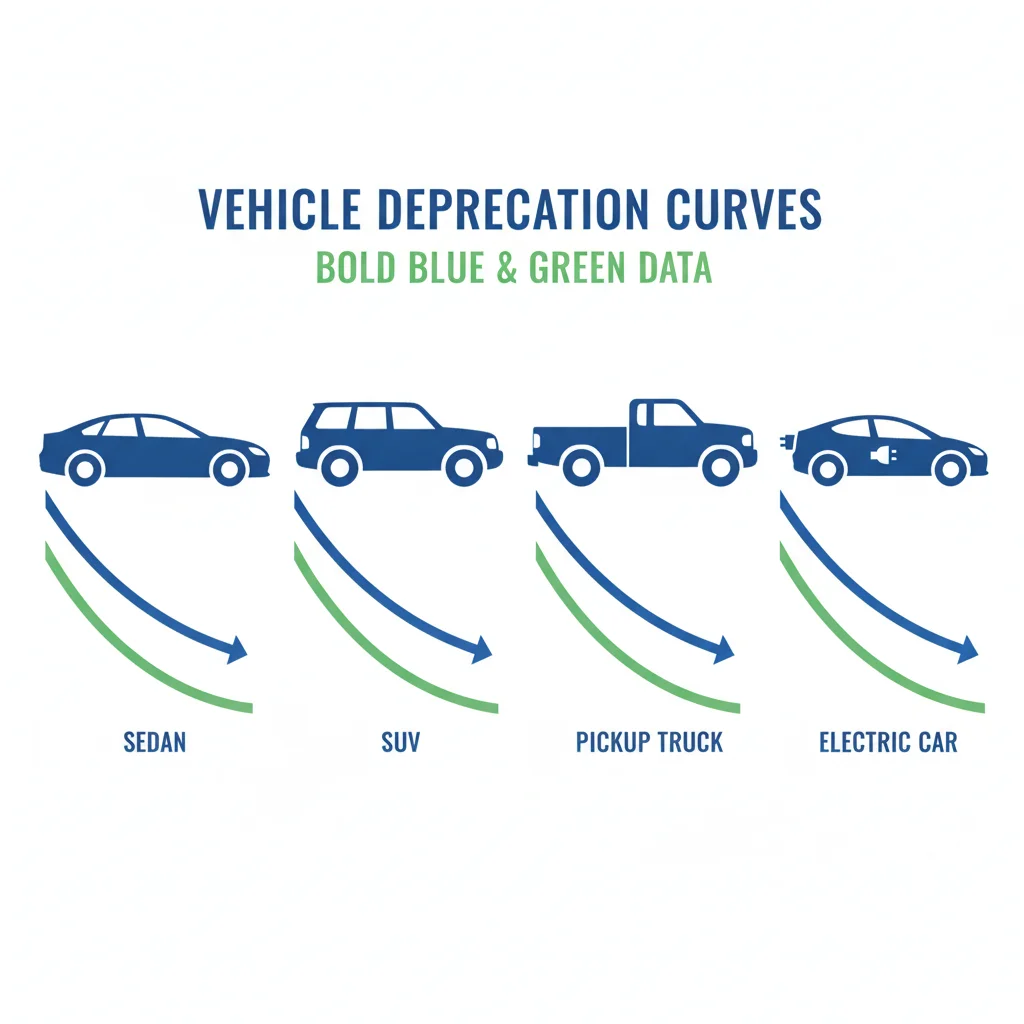
Timing matters here. Selling before a major platform refresh is one of the most effective moves an EV owner can make. Depreciation curves vary by vehicle type, and knowing when a redesign is coming for your specific EV model can mean thousands of dollars in saved resale value.
When EVs Hold Value — and Why
Not every EV story is a depreciation disaster. Some models hold value remarkably well, and understanding why tells you a lot about what to look for when buying.
Supply and demand still matters. EVs with long waiting lists or constrained production — like some Rivian models and certain Tesla configurations during periods of high demand — can actually appreciate or hold flat. When buyers can't get a new one in time, they'll pay close to new-car money for a used one.
Brand strength matters too. Tesla has built a resale reputation that most other EV brands haven't matched yet, partly because of its software update cadence (keeping older vehicles feeling current) and partly because of sheer brand loyalty in the EV space. A used Tesla Model 3 typically commands a higher percentage of its original MSRP than a comparable used Chevrolet Bolt or Nissan Leaf.
“Software is becoming the great equalizer in the EV resale market. A vehicle that keeps getting meaningful updates stays relevant longer — and buyers are starting to factor that into what they're willing to pay for used models.”
— Karl Brauer, Executive Analyst, iSeeCars.com
Software-capable vehicles — those that receive meaningful over-the-air updates that improve performance, range, or features — also depreciate more slowly because the ownership experience doesn't stagnate. If a manufacturer stops supporting software updates for an older model, that's a signal resale value will fall faster.
For a broader view of how different vehicle categories stack up, depreciation rate benchmarks by vehicle category give you a useful reference point when comparing EV against truck or sedan resale expectations.
Charging Infrastructure and Range Anxiety: How Market Confidence Shapes Value
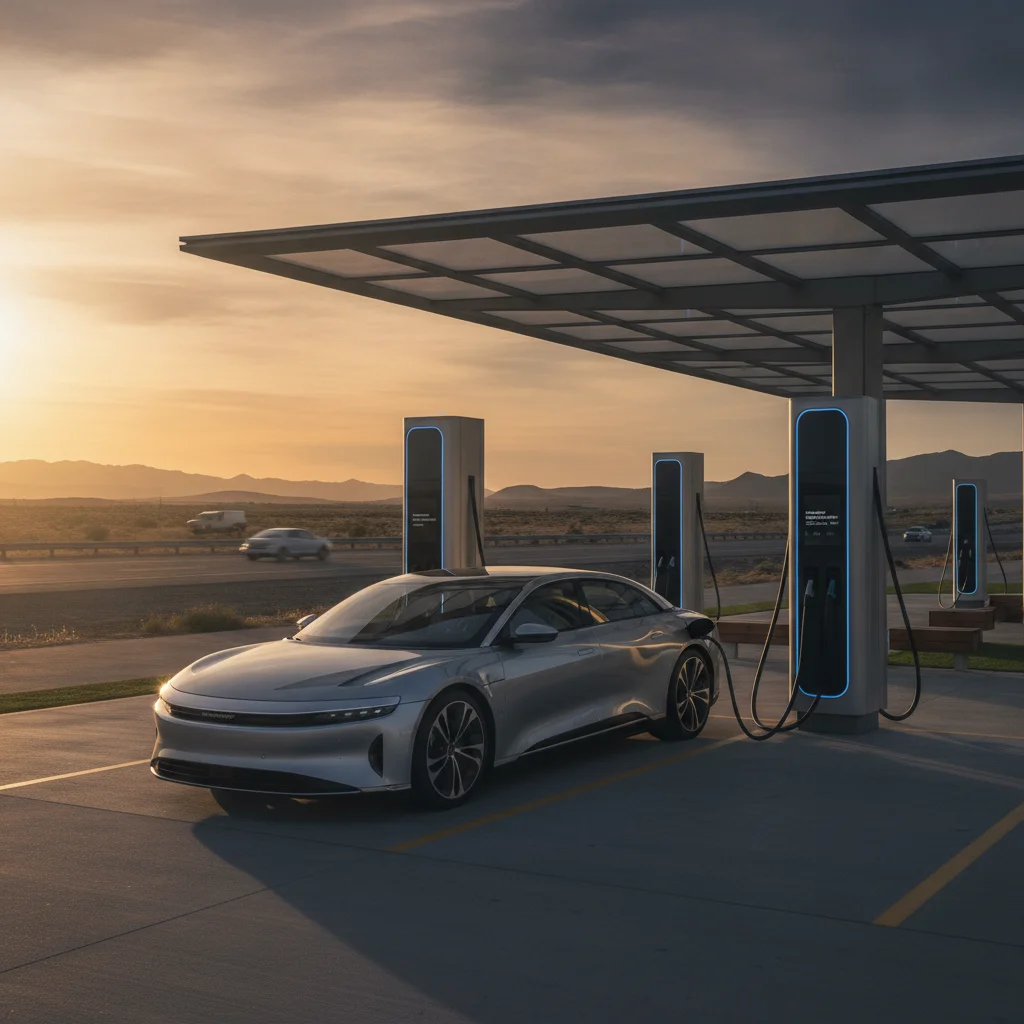
Here's something that doesn't apply to gas cars at all: the value of your EV partially depends on how confident the market feels about the charging network. In regions where fast chargers are sparse or unreliable, buyers discount used EVs more aggressively because the ownership experience feels riskier.
As charging infrastructure matures and becomes more reliable — particularly with the expansion of fast-charging networks and the industry's move toward a common charging standard — that risk premium is shrinking. But it still exists, and it still varies significantly by geography.
EV Battery Warranty: What It Covers
Federal law requires EV manufacturers to warrant the battery pack for at least 8 years or 100,000 miles against falling below 70% of original capacity. However, the terms vary by manufacturer — some cover capacity loss more generously, others only cover outright failure. Always read the specific warranty language for your vehicle, not just the headline numbers. A battery at 71% capacity that isn't covered under a stricter warranty interpretation is a meaningful risk for any buyer.
Regional Charging Access Affects Value
Used EV prices aren't uniform across the country. In cities with robust fast-charging networks — like coastal metros — buyers are willing to pay more for the same used EV than buyers in areas where charging is sparse or unreliable. If you're selling, consider whether listing in a market with better charging infrastructure is logistically possible. If you're buying, factor in your local charging reality honestly before committing to a range that only works on paper.
Range anxiety also shapes buyer perception in ways that artificially depress value. A used EV listed with 215 miles of real-world range might be perfectly adequate for 90% of buyers, but the psychological comparison to a new EV's 300-mile rating creates hesitation. Understanding that perception — and pricing accordingly — is critical for sellers.
Practical Takeaways: Timing Your EV Buy or Sell
All of this comes down to making smarter decisions with your own money. Here's how to put the EV depreciation picture to practical use:
- Buying used: The steepest depreciation typically happens in years one through three. A two-to-three-year-old EV can represent significant value if battery health is verified and the model still has active software support and warranty coverage. Check the battery state-of-health first — this is non-negotiable.
- Buying new: Accept that you'll take a bigger initial hit than you would with a comparable gas vehicle. Offset this by maximizing any available tax credits and choosing a model with a strong track record of holding value.
- Selling: List before a major model refresh if at all possible. Years two through four are often the sweet spot before deeper depreciation sets in and before your vehicle's hardware starts looking dated compared to the new generation. Document battery health to justify your asking price.
- Trading in: Dealer trade-in values on EVs can be particularly aggressive. Get independent valuations from multiple sources before accepting a trade-in offer.
The cost of owning an EV doesn't stop at the sticker price. Insurance is another area where EVs diverge from gas cars — EV insurance rates work differently due to higher repair costs and different risk profiles, which factors into total cost of ownership calculations.
Pull a Battery Health Report Before Listing
Before you price or list your used EV, get a verified battery state-of-health reading. For Tesla owners, this is available directly in the car's settings. For other brands, an OBD-II Bluetooth adapter combined with apps like Leaf Spy or Car Scanner ELM OBD2 can pull this data. Documenting battery health upfront gives buyers confidence and gives you the data to justify your asking price — especially if your battery is in good shape.
Watch the Manufacturer's Refresh Calendar
EV model refreshes and next-generation launches can hit used prices fast and hard. Set a Google alert for your specific model's name alongside terms like 'redesign,' 'refresh,' or 'next generation.' If a major update is coming within six months, sell sooner rather than later. Waiting until after the announcement often means competing with discounted outgoing new inventory on dealer lots.
If you want to go deeper on how your specific EV category compares to trucks, sedans, and SUVs on depreciation curves, the depreciation basics hub is a solid starting point. And for EV-specific insurance considerations as part of your total ownership cost picture, the EV insurance guide covers the key differences in plain terms.

All claims are backed by peer-reviewed research. Sources on request.