Key Takeaways
Summary
22 items · 20–40 minutes
Why Battery Specs Require More Than a Headline Number
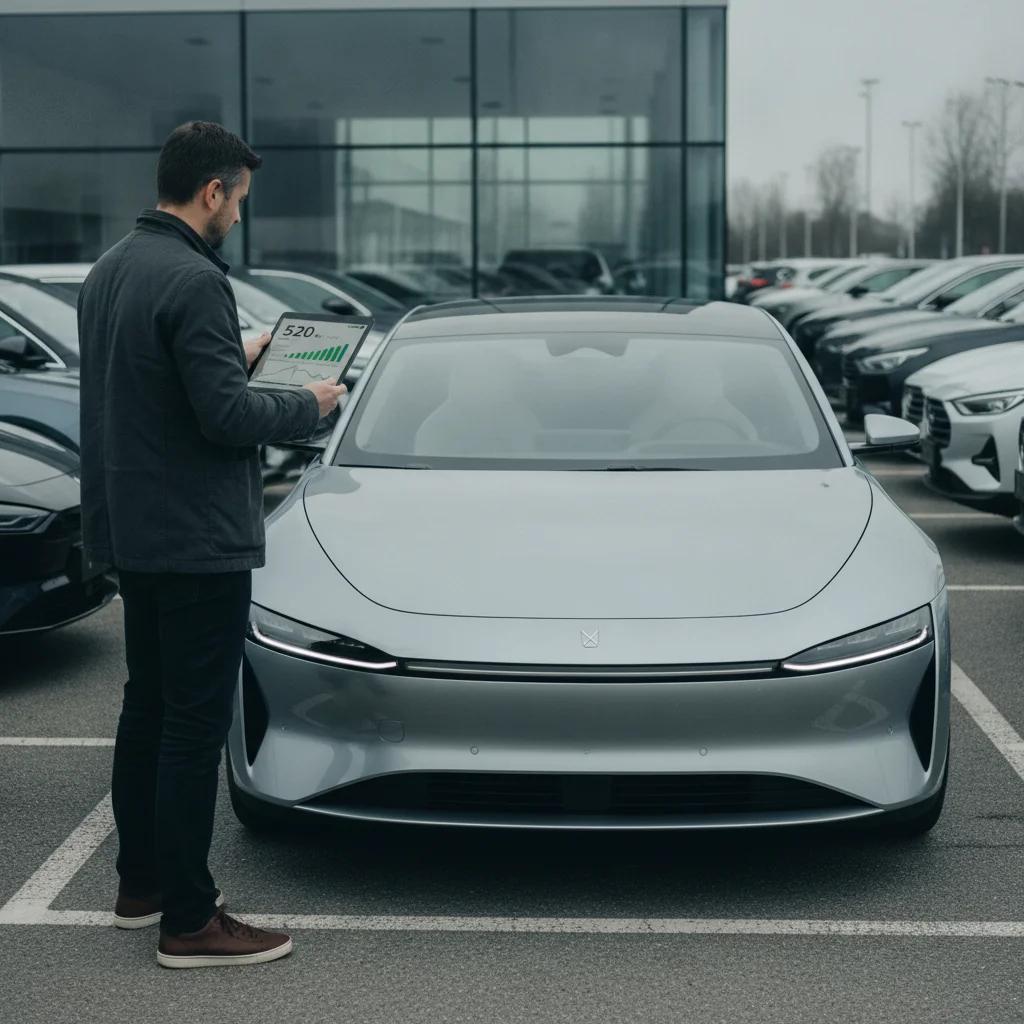
Walk into a dealership or browse any EV listing and you'll see a gross kWh number front and center — 82 kWh, 100 kWh, 123 kWh. That number is a starting point, not a shopping decision. The actual performance, longevity, and cost of living with an EV battery depends on a cluster of specs that rarely make it onto the window sticker: usable capacity, charging curve shape, thermal management design, battery chemistry, and warranty terms with teeth.
This checklist is designed for buyers who want to make an informed call without needing an engineering degree. Whether you're shopping new or used, comparing two finalists, or trying to figure out whether a given EV fits your commute and climate, these are the battery questions worth answering before you sign.
If you're still working out which type of EV fits your lifestyle, start with these practical questions about BEVs, PHEVs, and HEVs before drilling into battery specs. Once you're ready to go further, this checklist gives you a structured way to evaluate what's actually under the floor.
Understanding Usable Capacity and Charging Performance
The gap between gross and usable battery capacity is one of the most underappreciated specs in EV shopping. Automakers deliberately leave a buffer — typically 10 to 20 percent of total pack size — to protect battery chemistry at both the top and bottom of the charge cycle. That buffer is invisible to you as a driver, but it directly determines your real-world range.
Usable capacity figures are sometimes published in press materials or discovered through independent testing. When they're not published, you can often calculate them by combining official range figures with real-world efficiency data from third-party sources. The math matters: a vehicle with 82 kWh gross but only 75 kWh usable at 3.5 miles per kWh gives you roughly 262 miles of range, not the 287 miles you'd calculate from the gross number.
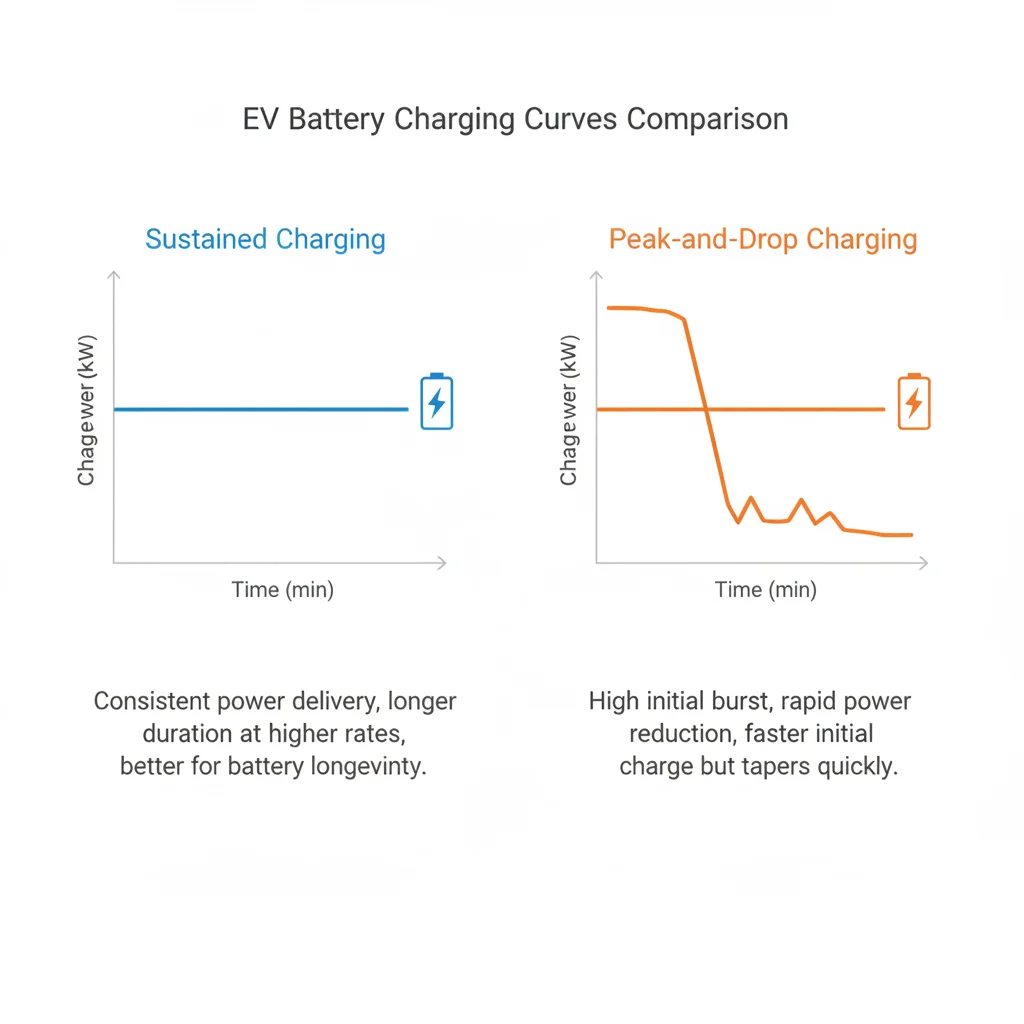
Charging speed compounds this picture. Peak kW rates — the numbers you see in advertisements — represent a momentary ceiling that may last only minutes. What actually determines how long you spend at a fast charger is how sustained that rate is across the charging window from roughly 20% to 80% state of charge. A vehicle that charges at 200 kW flat from 20% to 75% is a better road-trip car than one that spikes at 270 kW for five minutes and then throttles to 100 kW.
For a deeper look at how range figures are calculated and where official estimates fall short, the real-world range performance checklist walks through the variables that matter most.
Recurrent Auto
Access real-world battery degradation and range data aggregated from thousands of EV owners by make, model, and year.
A Better Route Planner (ABRP)
Look up charging curves and real-world efficiency figures for specific EV models before you buy.
PlugShare
Assess the density of compatible charging infrastructure along your most common routes.
Fastned Charging Speed Database
Compare peak and sustained DC fast-charging speeds across EV models using measured, not manufacturer-claimed, data.
Manufacturer Warranty Document (PDF)
Review the exact warranty terms including capacity retention guarantees, exclusions, and transferability before signing.
EPA Fuel Economy Guide (fueleconomy.gov)
Cross-reference official range and efficiency ratings as a baseline before comparing against third-party real-world data.
OBD-II Adapter + LeafSpy or similar app
Read battery state-of-health data directly from the vehicle when evaluating a used EV — not needed for new car purchases.
Thermal Management: The Spec That Determines Long-Term Battery Health
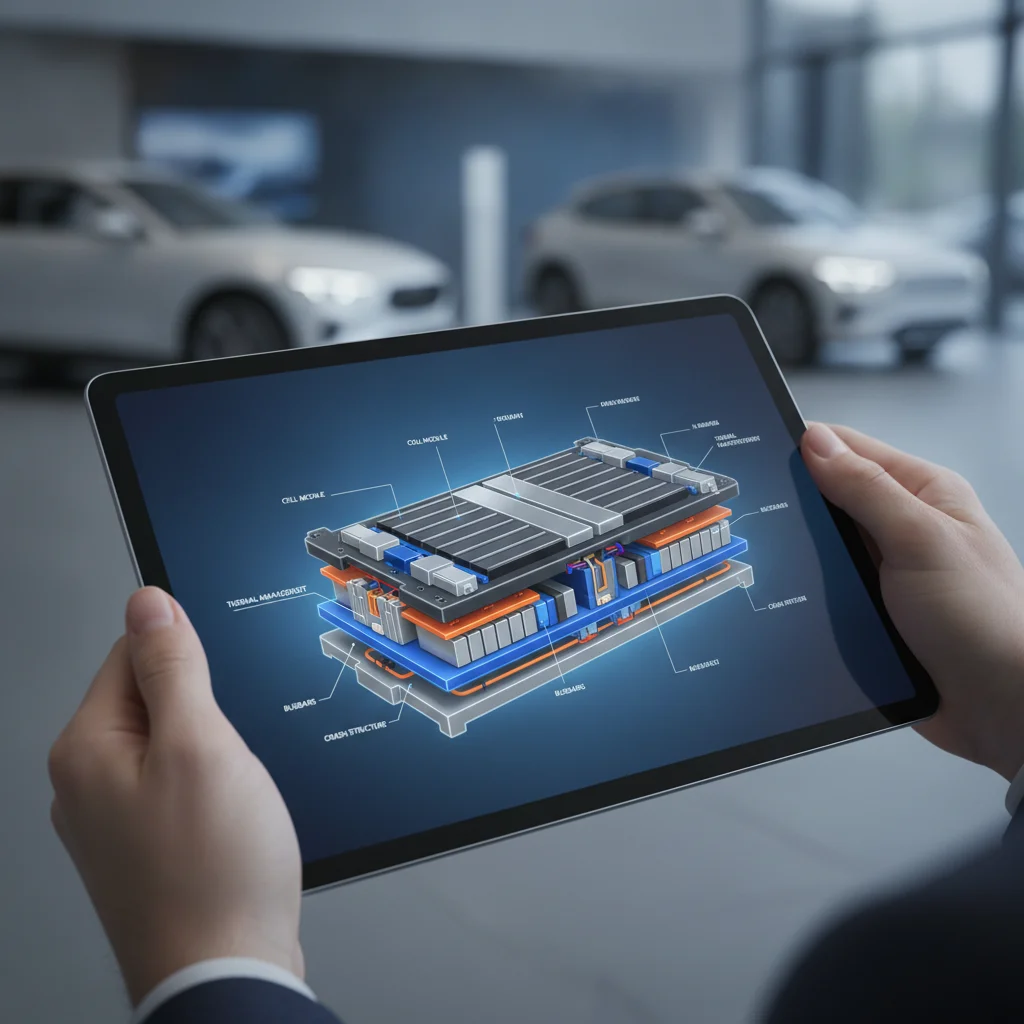
Battery temperature is the single biggest variable in long-term pack health, and the thermal management system is how your EV controls it. This is an area where automakers make meaningfully different engineering choices — and where those choices have real consequences for your ownership experience.
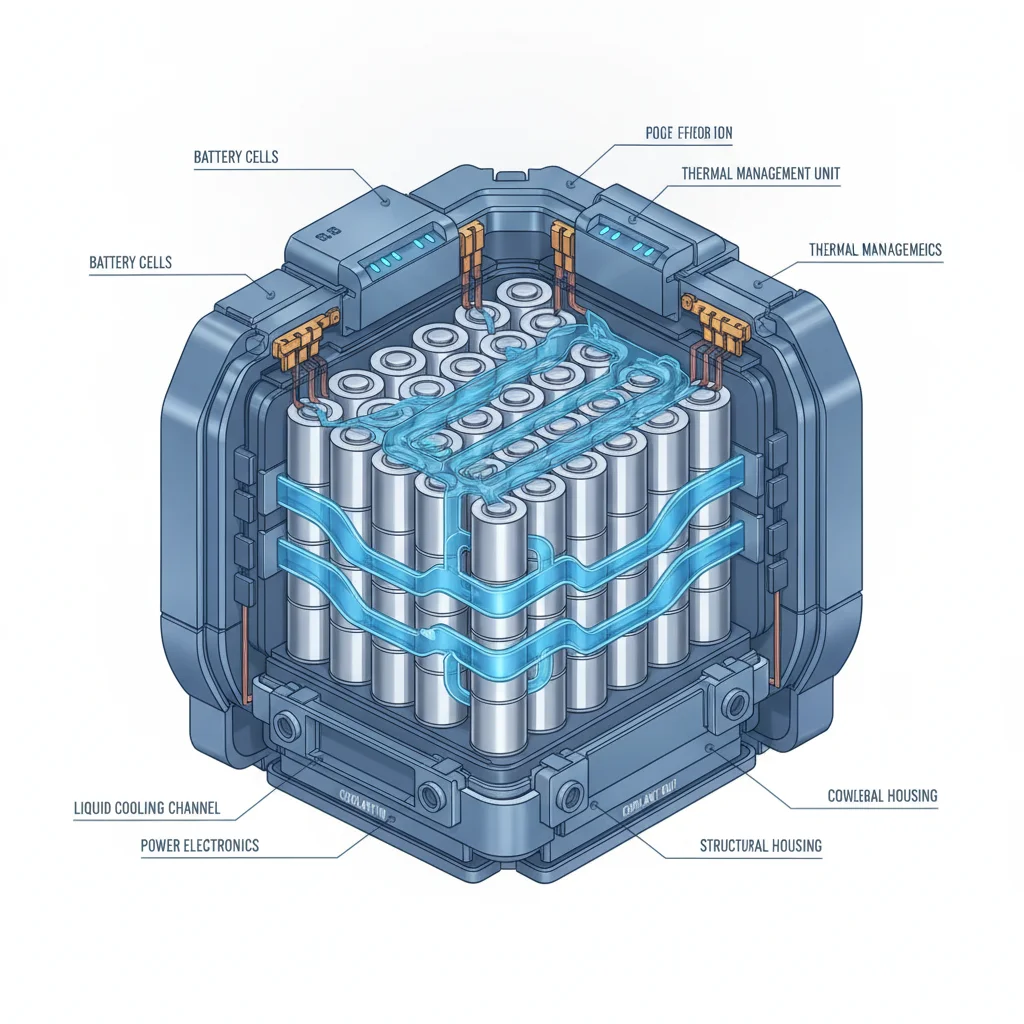
Liquid cooling is the baseline for any EV designed for frequent fast charging or operation in temperature extremes. Air-cooled packs, found in some older and lower-cost models, are cheaper to build but degrade faster under repeated fast charging and in hot climates. Refrigerant-based direct cooling, used in some newer designs, offers faster thermal response and is increasingly common in performance-oriented packs.
Battery pre-conditioning is a specific capability worth checking separately. When you navigate to a DC fast charger using the vehicle's built-in navigation, some EVs will automatically heat or cool the battery to its optimal charging temperature before arrival — cutting charge time and reducing thermal stress on the cells. Some vehicles require you to activate this manually, and a small number don't support it at all. In cold climates, the difference in fast-charging speed between a pre-conditioned and a non-pre-conditioned pack can be dramatic.
Peak kW numbers are marketing, not reality
A vehicle advertised as supporting 350 kW DC fast charging may only sustain that rate for a few minutes before the battery management system throttles it down. Always look at how long the vehicle holds a high charge rate across the 10–80% state-of-charge window, not just the peak. Charging curve data from independent sources is the only reliable way to evaluate this.
Warranty summaries often omit critical exclusions
Manufacturer marketing materials typically highlight the headline warranty term (e.g., 8 years/100,000 miles) but bury exclusions in the full warranty document. Conditions like 'commercial use,' 'non-OEM charging equipment,' or 'extreme temperature exposure' can void coverage in ways that aren't obvious at purchase. Download and read the actual warranty PDF before signing.
Cold-weather range loss can be severe and model-dependent
EPA range estimates are conducted under controlled conditions that don't reflect winter driving. Some EVs lose 30–40% of their range in sub-freezing temperatures, while others with heat pumps and better thermal management lose significantly less. If you live in a cold climate, this is one of the most consequential spec comparisons you can make.
Heat pump availability is another thermal spec with significant real-world impact. Resistive heating — the fallback in EVs without a heat pump — draws heavily from the battery to warm the cabin, accelerating range loss in cold weather. Heat pumps are two to three times more efficient at moving thermal energy, which translates directly into preserved range when temperatures drop below freezing. On some models it's standard; on others it's a paid option. Check before you configure.
For a broader look at how to evaluate these systems during an actual test drive, see how to evaluate an EV on a test drive, which covers battery health indicators and charge port condition checks you can perform in person.
Battery Chemistry: LFP vs. NMC and What It Means for You
Most EVs sold in the United States use one of two primary battery chemistries: lithium iron phosphate (LFP) or nickel manganese cobalt (NMC). The differences affect how you charge, how much range you get, and how the battery holds up over years of use.
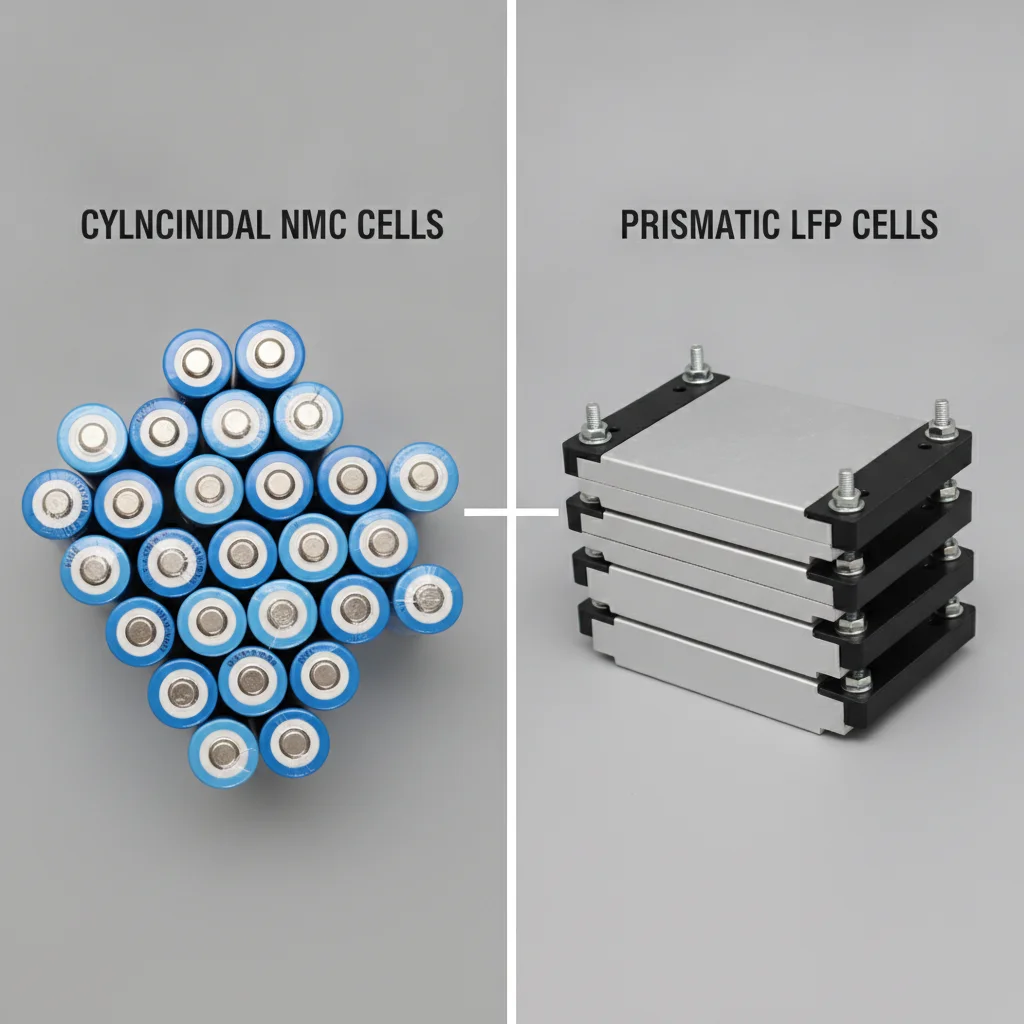
NMC packs are the dominant choice for longer-range vehicles because they offer higher energy density — more kilowatt-hours per kilogram of battery weight. That means more range without as much pack mass. The trade-off is that NMC chemistry is more sensitive to aggressive charging habits. Regularly charging to 100% or letting the pack sit at full charge for extended periods accelerates long-term capacity degradation. Most manufacturers of NMC vehicles recommend a daily charge limit of 80–90% for routine use.
LFP chemistry gives up some energy density — a meaningful disadvantage for long-range applications — but compensates with better thermal stability, a longer cycle life, and tolerance for routine 100% charging. If your EV uses LFP cells, you don't need to limit daily charging to 80%; charging to full regularly is fine and, in fact, recommended by some manufacturers to keep the battery management system calibrated.
Capacity Retention Guarantee: The Warranty Clause That Actually Protects You
Not every EV battery warranty guarantees how much capacity you'll retain over time. Some cover only defects and failures — meaning a battery that degrades to 60% capacity in five years may not be covered if it hasn't technically failed. Look specifically for a capacity retention clause, typically written as '70% of original capacity at 8 years/100,000 miles.' This is the provision that gives your battery warranty real financial meaning.
LFP vs. NMC Chemistry Changes Your Ownership Strategy
If the EV you're evaluating uses an LFP (lithium iron phosphate) battery, the charging rules change: LFP packs are designed to be charged to 100% regularly without the same degradation risk that affects NMC packs. Charging an NMC battery to 100% daily accelerates long-term capacity loss. Confirm the battery chemistry before setting your charging habits — the wrong strategy for the wrong chemistry will cost you range over time.
The shift toward solid-state battery technology is worth monitoring as a future consideration, though it's not yet available in production consumer vehicles. What solid-state batteries promise and where the technology currently stands is relevant context if you're deciding between buying now and waiting for the next generation of battery tech.
Reading the Battery Warranty Before You Commit
Federal law requires EV manufacturers to warrant the battery for at least 8 years or 100,000 miles, whichever comes first. That's the floor. What sits above that floor — or falls short of it in practical terms — varies considerably by manufacturer and sometimes by trim level or pack size.
The most important distinction is between a defect warranty and a capacity retention guarantee. A defect warranty covers the battery if it fails outright — if cells short-circuit, if the management system throws terminal errors, if the pack refuses to accept a charge. A capacity retention guarantee covers you if the battery degrades below a specified threshold — say, 70% of original usable capacity — even if the pack is technically functioning. Many consumers assume their warranty includes both. Some do; some don't.
Read the actual warranty document. Not the marketing one-pager. The PDF that specifies exact terms, exclusions, and claim procedures. Look for language that specifies the capacity threshold at which a claim is valid, how that capacity is measured (and by whom), and whether replacement batteries are new, remanufactured, or refurbished to a guaranteed minimum state of health.
Transferability matters too, particularly if you're planning to sell or trade within the warranty period. A warranty that transfers to the next owner adds real resale value. One that doesn't is worth less to both you and any future buyer. If you're evaluating a used EV, this is doubly important — what to verify before buying a used EV includes warranty status alongside battery health checks and service history review.
Finally, think about how battery condition affects your insurance. Some policies handle EV battery claims differently, particularly around replacement costs and OEM parts requirements. The right questions to ask an insurance agent before buying EV coverage can help you close that gap before it becomes a claims problem.
Use the Checklist, Then Verify with Real-World Data
Spec sheets and warranty documents give you the framework. Real-world owner data fills in what automakers don't publish. The two most useful resources for battery due diligence are Recurrent Auto, which aggregates anonymized battery health and range data from thousands of owners by model and year, and ABRP's vehicle database, which provides charging curves based on measured rather than claimed performance.
Run both before finalizing any EV purchase. If the model you're evaluating shows above-average degradation in Recurrent's data or a charging curve that drops off steeply above 50% state of charge, those are substantive findings — not opinions. They belong in your comparison alongside price, range, and features.
Usable Capacity & Energy Density
Charging Speed & Curve
Thermal Management System
Battery Warranty & Degradation Guarantees
Long-Term Degradation & Resale Impact
Software & Cell Chemistry Considerations
Battery technology is evolving quickly. The EV range and efficiency hub covers how efficiency ratings are constructed and what affects real-world range, while the home charging setup hub addresses how to pair the right charger with your vehicle's onboard AC charging rate. Both are worth reviewing once you've narrowed your choices.
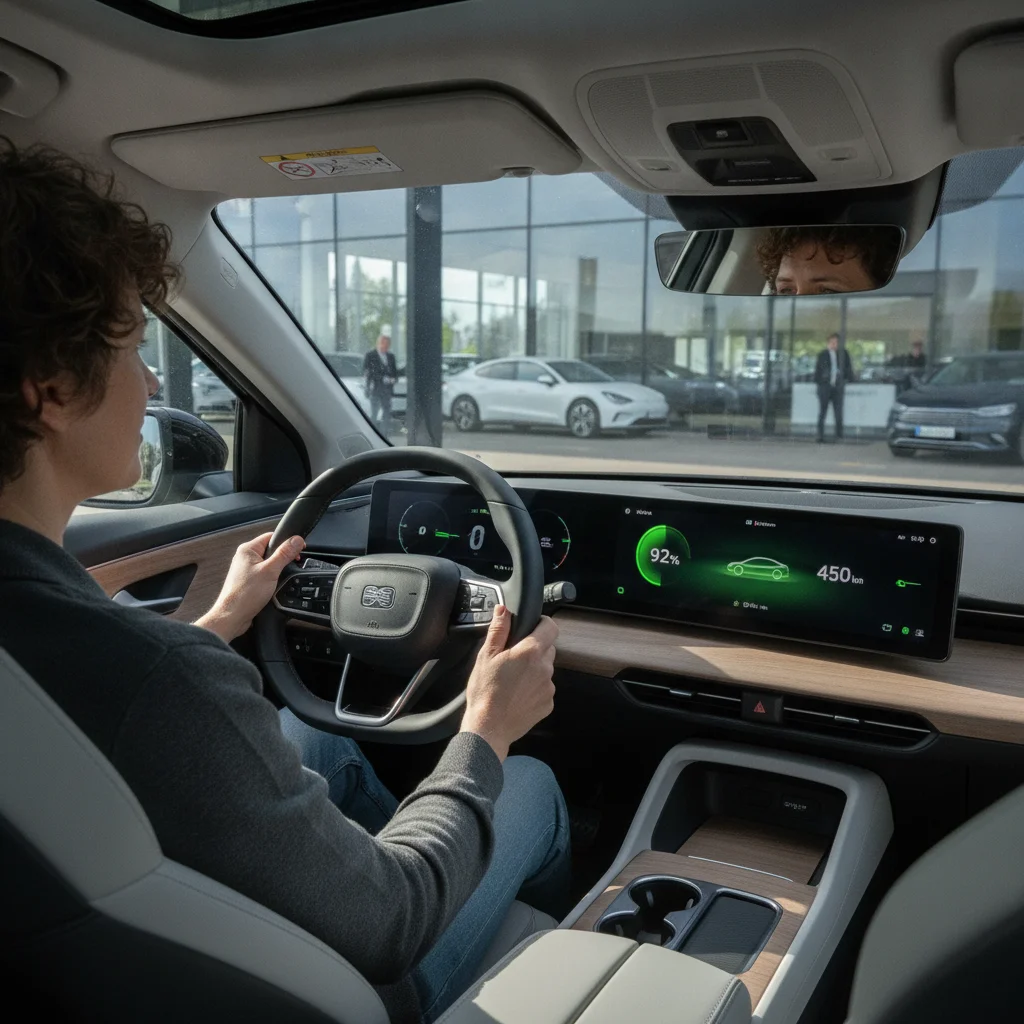
If you want to carry this evaluation into the physical vehicle, evaluating an EV on a test drive covers what you can actually observe and ask about at the dealership — including battery health displays, regenerative braking behavior, and charge port condition. Battery specs on paper and battery behavior in practice don't always align; the test drive is where you close that gap.
Keep an eye out for warning signs that may emerge after purchase too. Subtle symptoms that suggest your EV battery needs a diagnostic check is a useful reference for the ownership phase — not just the buying phase.

All claims are backed by peer-reviewed research. Sources on request.