Key Takeaways
Summary
28 items · 45–90 minutes
Why an EV Test Drive Is Fundamentally Different
Test driving a gas-powered car and test driving an electric vehicle are not the same exercise. With an ICE vehicle, you're listening for engine knock, feeling for transmission shudder, and smelling for exhaust leaks. With an EV or hybrid, those cues don't apply — but there are an entirely different set of things that demand your attention, and most buyers walk off the lot without checking any of them.
Before you even schedule a drive, make sure you've thought through which powertrain type actually fits your life. If you haven't done that yet, the questions to ask before choosing an EV type will help you figure out whether a BEV, PHEV, or HEV makes the most sense for your commute, charging situation, and driving habits. And if you're shopping for a used EV specifically, pair this checklist with a dedicated pre-purchase EV inspection that goes deeper on service records and battery documentation.
This checklist is built for the in-person, behind-the-wheel phase. It covers what to check before you start moving, what to test while you're driving, and what to verify when you return to the lot. Use it on any pure electric, plug-in hybrid, or standard hybrid you're seriously considering.
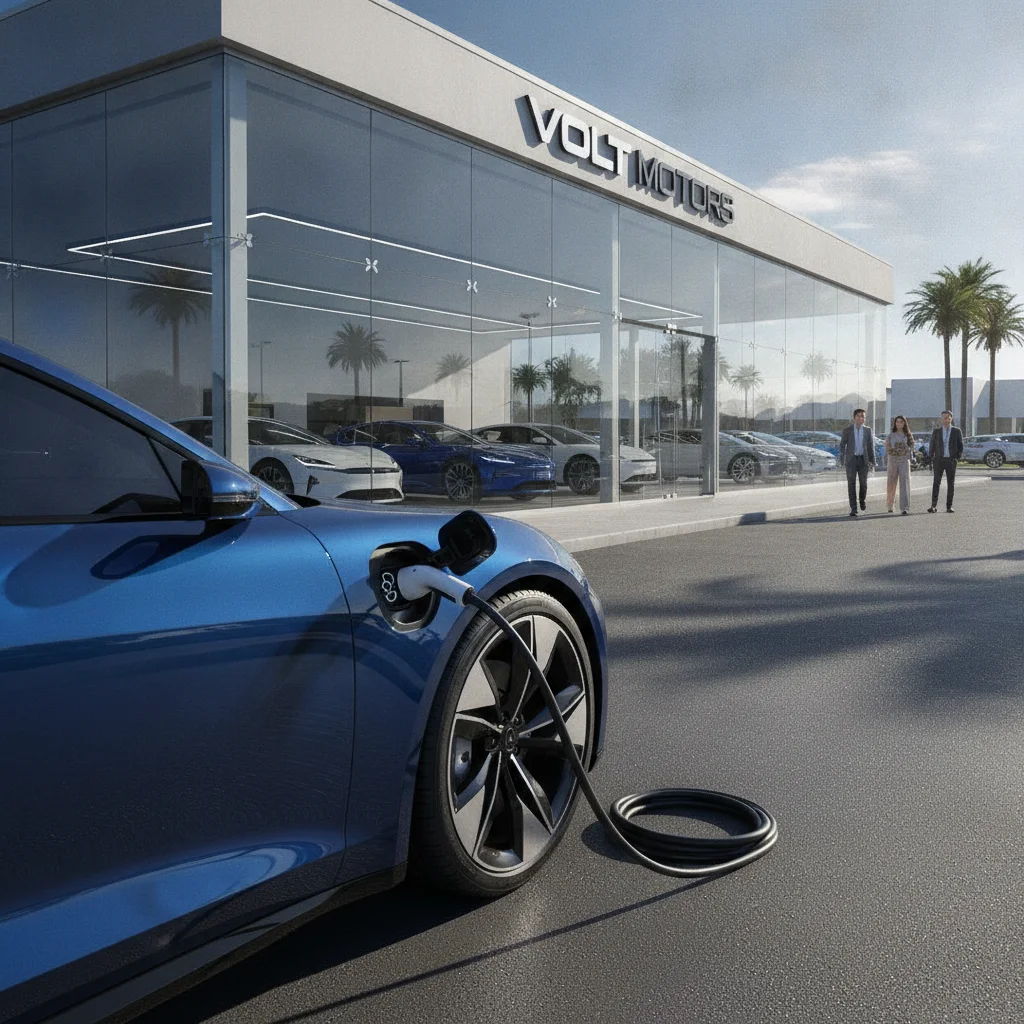
One practical note: ask the seller or dealer to have the vehicle charged to at least 80% before your appointment. A car sitting at 12% charge doesn't give you meaningful range data, and some diagnostic information — including battery health readouts — is more accurate at higher states of charge.
Tools and Resources You'll Need
You don't need a mechanic's toolkit for a test drive, but a few items will make your evaluation significantly more reliable. Bring these with you:
Smartphone with manufacturer companion app
Access remote charging data, battery status, and software version — many EVs expose health data through their official app that isn't visible on the dashboard.
OBD2 Bluetooth adapter + EV-specific diagnostic app (e.g., Car Scanner, Leaf Spy for Nissan, ScanMyTesla)
Reads battery state of health, cell balance data, and stored fault codes that the dash display doesn't show.
Portable Level 2 EVSE (or J1772 adapter)
Allows you to test charging acceptance and verify charge rate at the dealership or seller's property.
Flashlight or phone torch
Inspect the charge port interior, underbody battery pack, and interior corners for wear or damage.
Notepad or checklist printout
Record efficiency readings, range loss ratios, and observations during the drive while they're fresh — it's easy to forget specific numbers.
VIN decoder / vehicle history report (Carfax, AutoCheck)
Verify flood damage, accident history, and prior ownership — critical for used EVs where battery damage may not be externally visible.
For a used EV purchase, consider hiring a mobile pre-purchase inspector who specializes in electric vehicles — they can pull battery health data and fault codes that you can't access without professional-grade equipment. This typically costs $150–$300 and is worth every dollar on a vehicle that might have a $15,000 battery pack inside it.
The Full Test Drive Checklist
Work through these items in order. The pre-drive checks take about 10–15 minutes and will save you from wasting time on a car that has obvious problems before you even turn the key — or, in this case, press the start button.
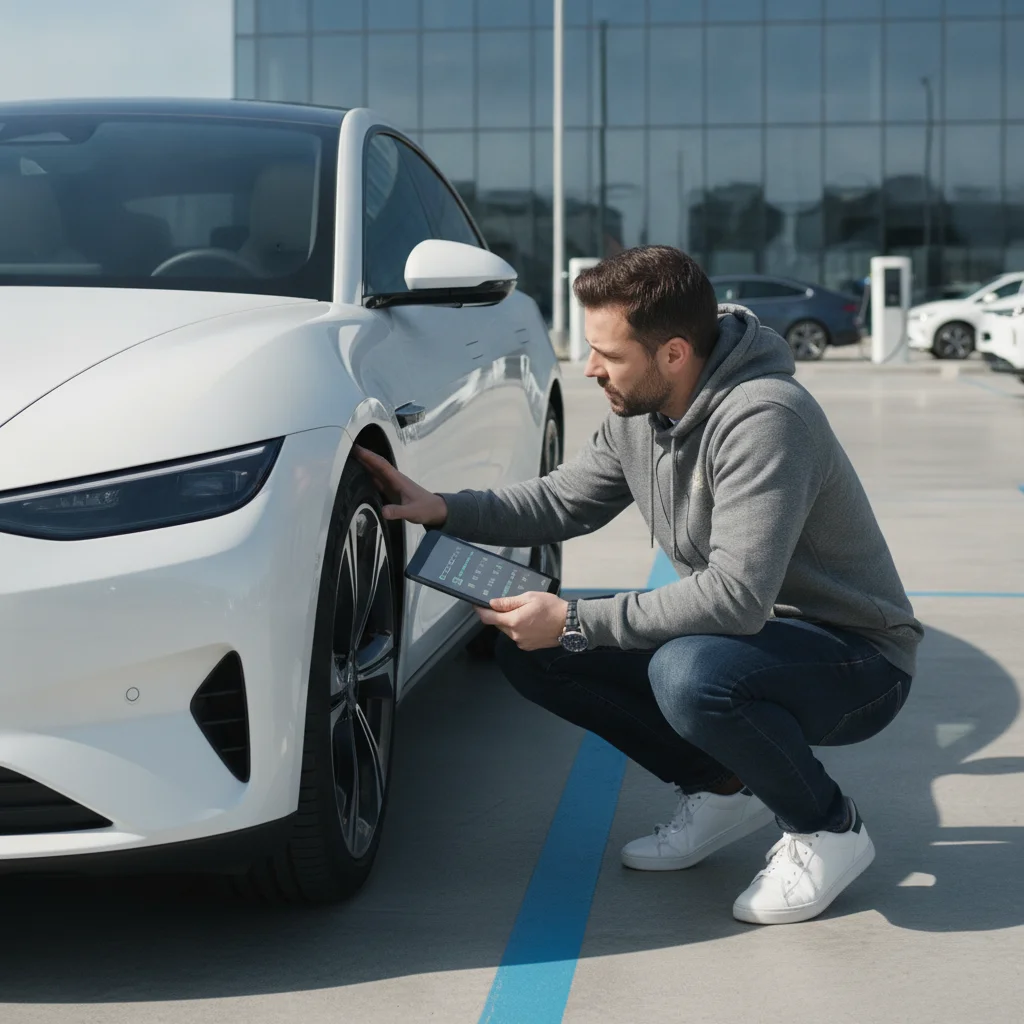
Before You Start the Car
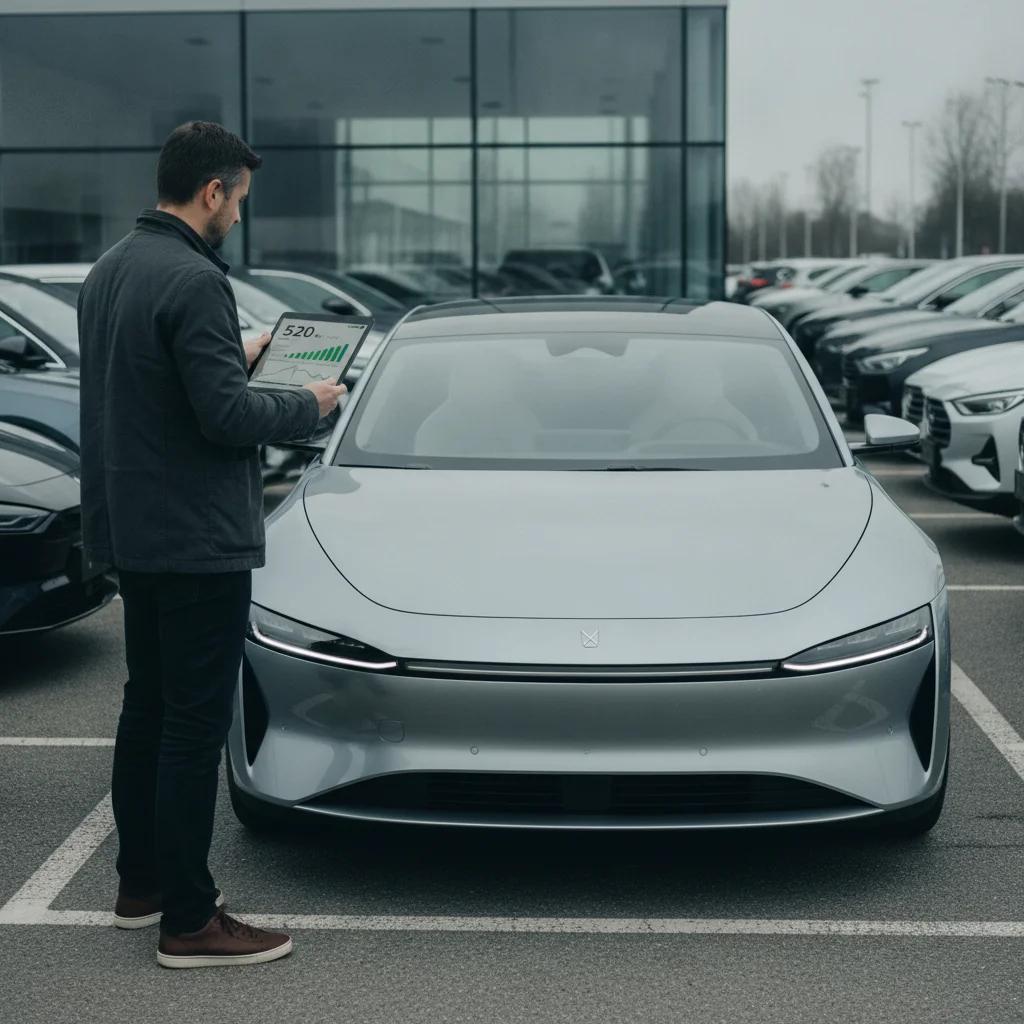
Dashboard and Software Checks (Stationary)
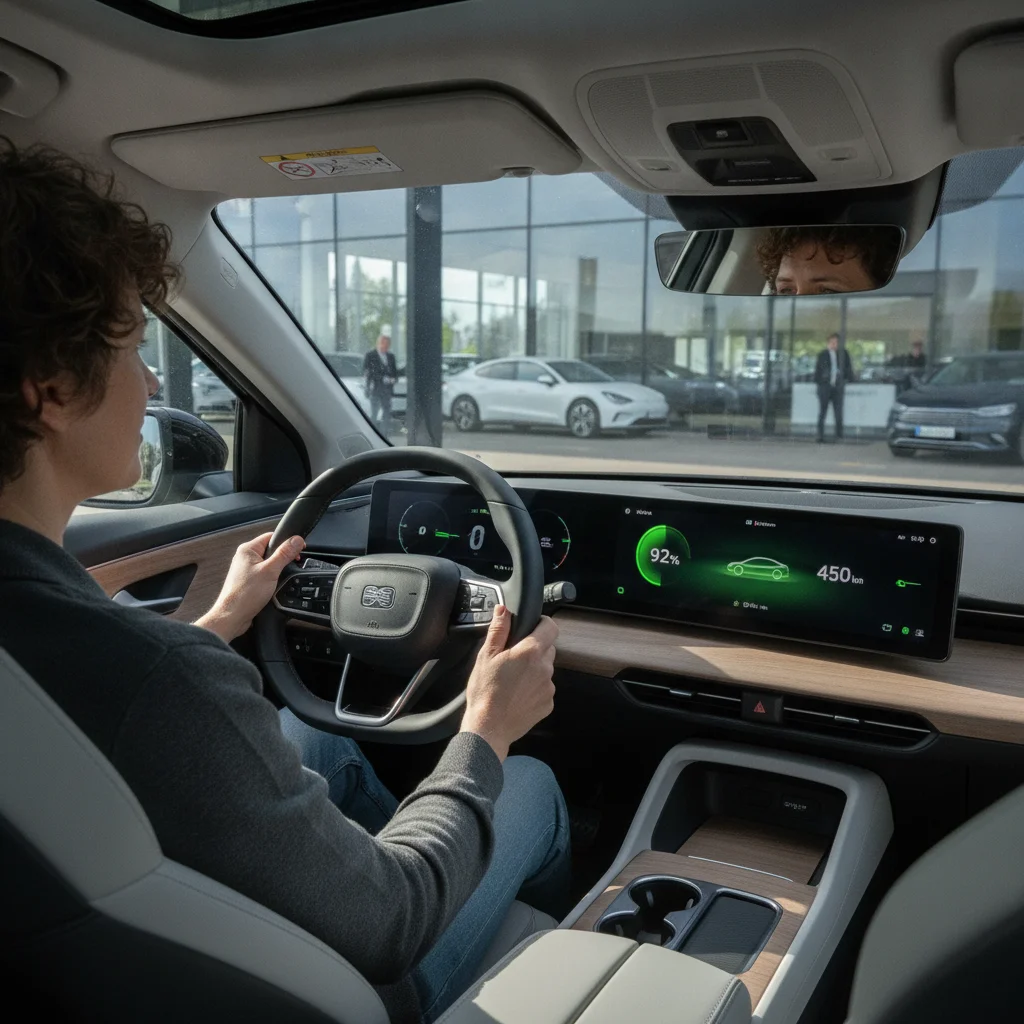
During the Drive: Acceleration and Powertrain
During the Drive: Range and Efficiency
Handling, Comfort, and NVH
Post-Drive Verification
Don't Accept a Low-Battery Test Drive
If a dealer or private seller offers a test drive with the battery below 30%, decline and reschedule. Low state of charge limits your ability to assess range, may suppress performance modes, and can make the car's displayed range estimates unreliable. A seller who refuses to charge the vehicle before a test drive should raise your suspicion about what they're trying to hide.
PHEV Gas Engine Neglect Is Common
Many PHEV owners drive almost exclusively on electric power and rarely run the combustion engine. This can cause oil to degrade without being burned off, intake carbon buildup, and fuel going stale in the tank. Always force the gas engine on during a PHEV test drive and check the oil condition and color on the dipstick before you buy.
Third-Party Charging Compatibility Isn't Guaranteed
Adapter availability and charging network compatibility change frequently as the industry shifts toward NACS standardization. Before you buy, confirm exactly which fast-charging networks the vehicle can access natively, which require adapters, and whether those adapters are included. A vehicle locked out of a major network could significantly limit your road trip capability.
For a deeper look at how real-world range compares to EPA estimates across different conditions, the real-world EV range performance checklist walks through the specific questions to ask before you commit. Range anxiety is legitimate — but it's also manageable if you go in with accurate numbers rather than window sticker figures.
Evaluating Regenerative Braking and the Brake Pedal
Regen braking is one of the most distinctive aspects of driving an EV, and it's also one of the most misunderstood. When you lift off the accelerator, the motor switches to generator mode and converts kinetic energy back into battery charge — and that creates a braking effect that varies enormously between vehicles and settings.
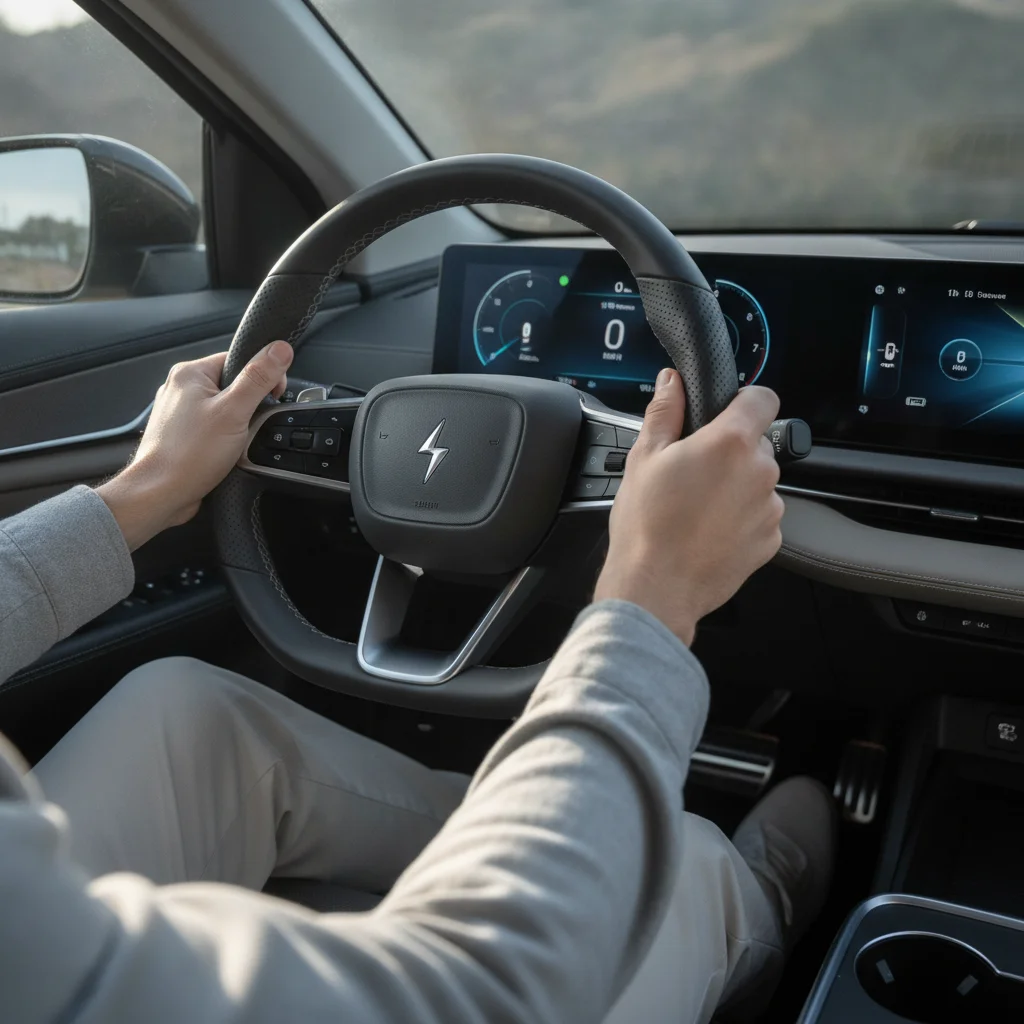
Some EVs offer multiple regen levels you can toggle with paddle shifters or a menu setting. Others have a fixed profile. A few high-efficiency models offer true one-pedal driving, where you can come to a complete stop without touching the brake pedal at all. None of these approaches is universally better — but you need to know which style the car uses and whether it matches how you actually drive.
Here's what to specifically test:
- One-pedal capability: In a parking lot or quiet street, accelerate to 20–25 mph and lift off the throttle completely. Does the car slow down aggressively or coast? Can it come to a full stop without the brake pedal?
- Brake pedal feel: EVs use blended braking — regen first, friction brakes second. This can create a mushy, disconnected pedal feel if the calibration is off. The transition between regen and friction braking should be smooth and consistent, not grabby or unpredictable.
- Emergency stop response: In a safe, empty area, do a firm panic stop from around 30 mph. The car should stop straight and predictably. Any pull, vibration, or excessive nose dive is worth flagging.
For a comprehensive breakdown of brake evaluation technique that applies to both EVs and conventional vehicles, see how to evaluate brake performance on a test drive.
Battery Degradation Is a One-Way Street
Unlike a worn brake pad or a failing alternator, a degraded EV battery pack cannot be easily repaired — only replaced, at costs that can range from $5,000 to $20,000 depending on the model. On any used EV, obtaining a documented state-of-health reading below 80% should be treated as a deal-breaker unless the price is adjusted substantially. Don't rely on the seller's verbal assurances — get the number from the car itself or from a professional scan.
Blended Braking Failure Is a Safety Issue
If the brake pedal feels inconsistent, spongy, or requires significantly more pressure than expected during the test drive, do not dismiss this as 'different' EV brake feel. A malfunctioning brake blending system — where the transition between regenerative and friction braking is erratic — can increase stopping distances unpredictably. Have any abnormal pedal feel inspected by a qualified EV technician before purchase.
PHEV-Specific Checks: Testing Both Modes
A plug-in hybrid is essentially two drivetrains sharing one car. That means you have twice as many potential failure points, and you need to verify that both powertrains are functioning correctly. Many PHEV buyers only test the electric mode and never notice a problem with the gas engine until they're out of range of a charger.
Here's how to structure your PHEV evaluation:
- Start in EV-only mode and drive the first 10–15 minutes exclusively on battery power. Evaluate acceleration, regen, and any unusual noises exactly as you would a pure BEV.
- Force the gas engine on by either depleting the battery or manually switching to hybrid/sport mode (the method varies by model — ask the dealer before the drive). Listen for rough idle, hesitation during combustion mode startup, or any vibration that wasn't present in EV mode.
- Test the transition from electric to combustion and back. It should be nearly seamless. A clunk, surge, or stumble during the handoff is a red flag.
- Check the exhaust when the ICE is running — blue or white smoke signals engine problems that the electric mode was masking.
Understanding the EV type you're evaluating matters here. The EV types explained hub covers the mechanical differences between PHEVs, BEVs, and standard hybrids — understanding those differences helps you know what to listen for on each.
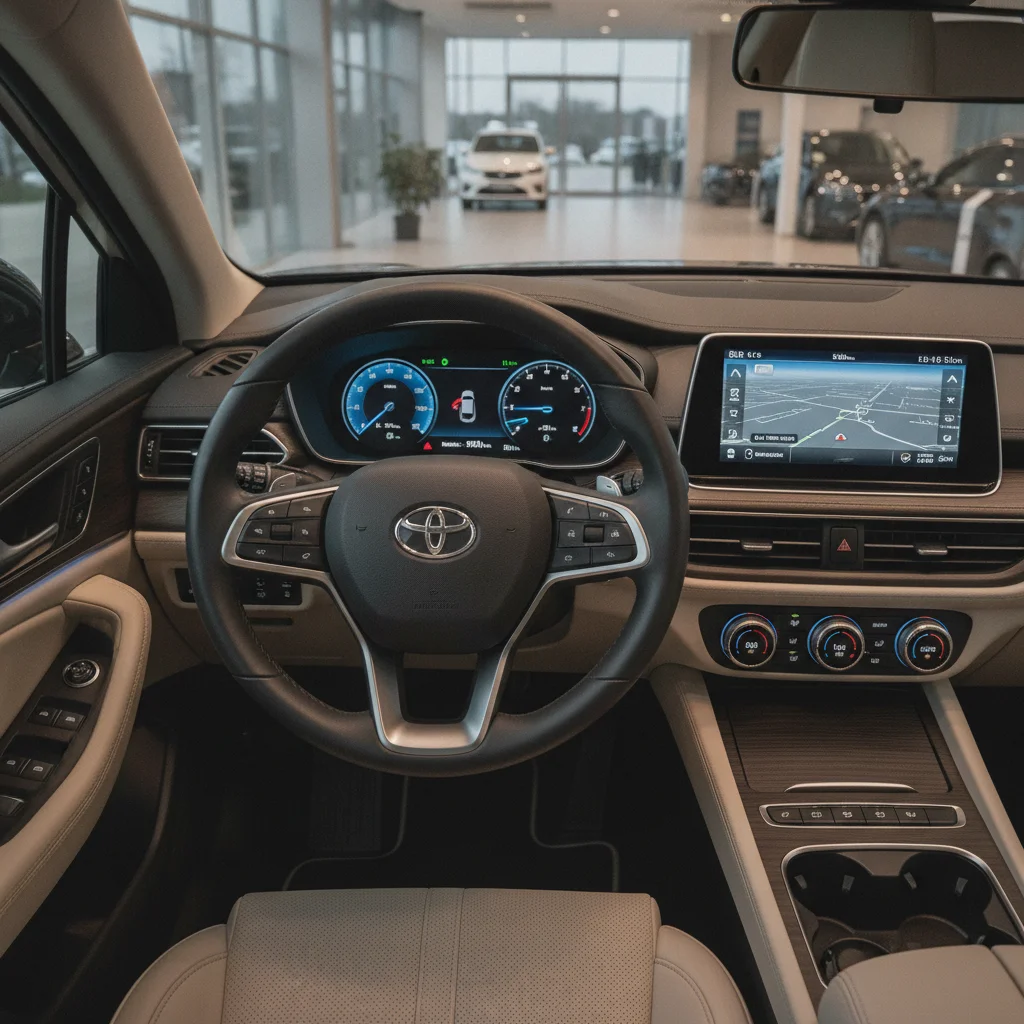
After the Drive: Range Data, Software, and Final Verification
When you return to the lot, don't just hand back the keys. Spend another 5–10 minutes reviewing what the car is telling you.
Pull up the energy consumption screen — most EVs display average efficiency in miles per kWh or kWh per 100 miles. Compare that to the vehicle's EPA-rated efficiency. If you drove the car reasonably and the displayed efficiency is significantly worse than rated, ask why. Temperature, climate control usage, and driving style all affect this, but a dramatic shortfall (more than 25%) during a mild-weather drive deserves explanation.
Note how much range was consumed relative to miles driven during your test. If the car lost 20 miles of indicated range during a 10-mile drive, the range estimate algorithm may be pessimistic — or the battery may genuinely be degraded. This is one of the clearest on-drive signals of battery health without professional equipment.
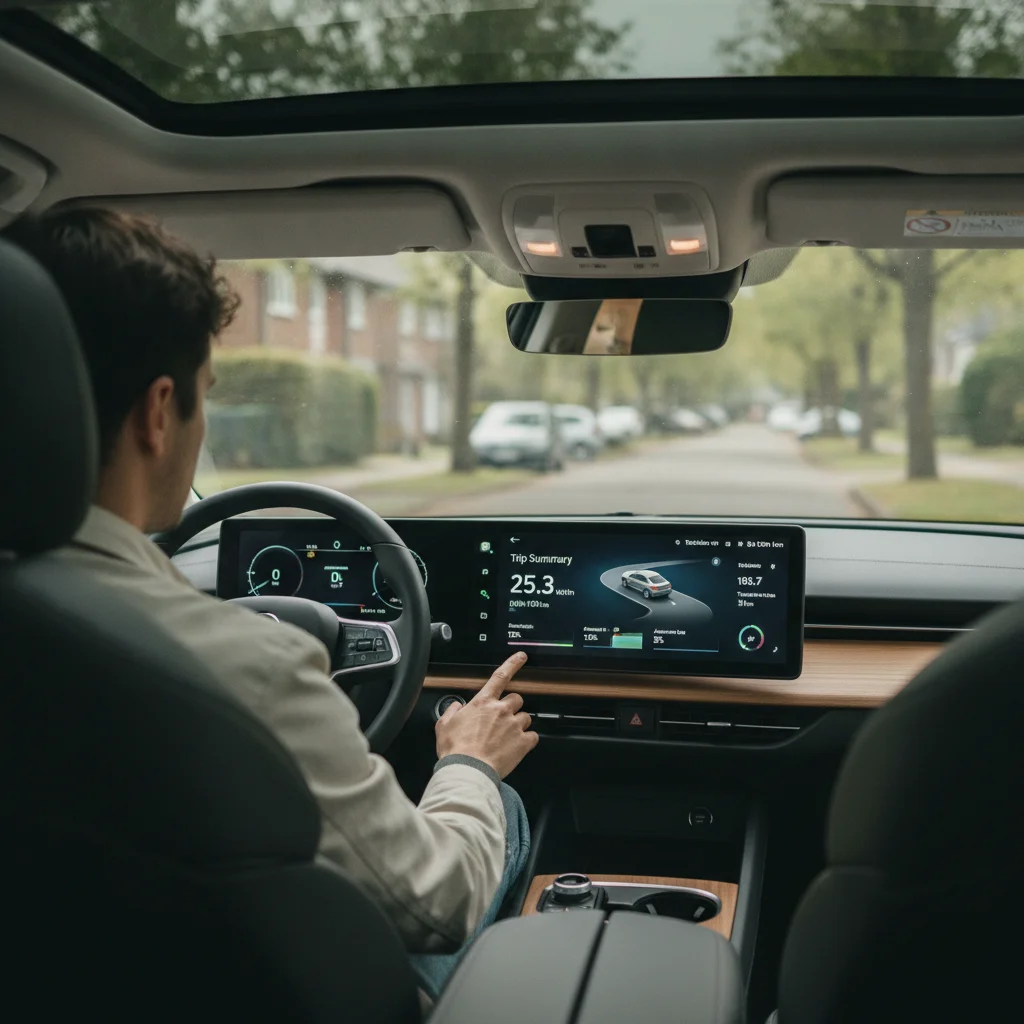
Check the software experience one more time while parked: navigation routing, Bluetooth pairing, backup camera latency, and voice command response. These aren't cosmetic features — they're part of the car's safety and usability infrastructure. A laggy backup camera or a nav system that takes 30 seconds to calculate a route isn't just annoying; it's a sign of aging hardware that may be expensive to address.
Finally, inspect the charge port again with the car powered down. Open the port door manually and look for any corrosion, bent pins, or debris inside the socket. On a used vehicle, check the charging cable (if included) for fraying near the connector. Replacement charging equipment and port repairs can add hundreds to your ownership costs.
For a broader picture of what EV ownership entails beyond the test drive, everything that goes into maintaining an EV over its lifetime covers battery care, software updates, tire wear, and every other cost and task you'll encounter from purchase to resale. Going in informed on the long-term picture makes the test drive evaluation feel less like a gamble and more like a structured decision.
One route won't tell you everything about a car. If you have the opportunity, test the vehicle under multiple conditions — highway, city, and suburban roads. The why one test drive route isn't enough article explains how different road types expose different weaknesses. For an EV, that especially matters because highway driving at 70+ mph can reduce range by 30–40% compared to city driving — something you'll never discover on a slow dealership loop.

All claims are backed by peer-reviewed research. Sources on request.