Key Takeaways
Start here
What Makes a BEV Different From Other Electrified Vehicles
Build your foundation
The Battery Pack: Your Fuel Tank and Energy Source
Go deeper
The Electric Motor: Converting Power Into Motion
Connect the dots
The Inverter and Power Electronics: The Brains of the Operation
Apply to real decisions
What This Means When You're Shopping for an EV
What Makes a BEV Different From Other Electrified Vehicles
Walk into any dealership today and you'll encounter a confusing alphabet soup of electrified vehicle types: HEV, PHEV, BEV, FCEV. Manufacturers don't always make the distinctions easy to find on the window sticker. Before diving into powertrain components, it's worth getting clear on exactly what a battery electric vehicle (BEV) is — and what it is not.
Battery Electric Vehicle (BEV)
A vehicle powered entirely by electricity stored in an onboard battery pack, with no gasoline engine of any kind. Must be recharged from an external power source.
Kilowatt-hour (kWh)
The unit used to measure how much energy a battery can store. A higher kWh number generally means more driving range — similar to how more gallons means more miles in a gas car.
Inverter
A power electronics component that converts the direct current (DC) stored in the battery into the alternating current (AC) the electric motor needs to run.
Regenerative Braking
A system where the electric motor acts as a generator during deceleration, converting the car's momentum back into electricity and feeding it into the battery to extend range.
Battery Management System (BMS)
The onboard software and hardware that monitors and manages every cell in the battery pack, controlling temperature, charge balance, and available power to protect long-term battery health.
On-Board Charger (OBC)
The component inside the EV that converts AC power from a Level 1 or Level 2 charging station into DC power to charge the battery pack. Its power rating determines how fast the vehicle can charge on AC.
Torque
A measure of rotational force. Electric motors deliver maximum torque instantly from a standstill, which is why EVs feel so responsive when accelerating from a stop.
Usable Capacity
The portion of a battery's total energy storage that the vehicle actually allows you to use. The BMS reserves a buffer at the top and bottom of the battery's range to protect cell longevity.
A BEV is the only vehicle category that uses zero gasoline under any circumstance. There is no combustion engine hidden somewhere under the hood as a backup. Every mile is driven on electricity alone, drawn from a large battery pack that you recharge at home or at a public charging station. That's the defining characteristic.
Compare this to the other common categories:
- Hybrid (HEV): Has both a gas engine and a small electric motor, but cannot be plugged in. The battery charges only through regenerative braking and the engine itself. Electric-only range is minimal or nonexistent.
- Plug-in Hybrid (PHEV): Can be plugged in and offers real electric-only range — typically 20 to 50 miles — before the gas engine takes over. Still requires gasoline for longer trips.
- Fuel Cell Electric Vehicle (FCEV): Uses hydrogen fuel and a fuel cell to generate electricity onboard. Produces no tailpipe emissions, but hydrogen fueling infrastructure is extremely limited outside of California.
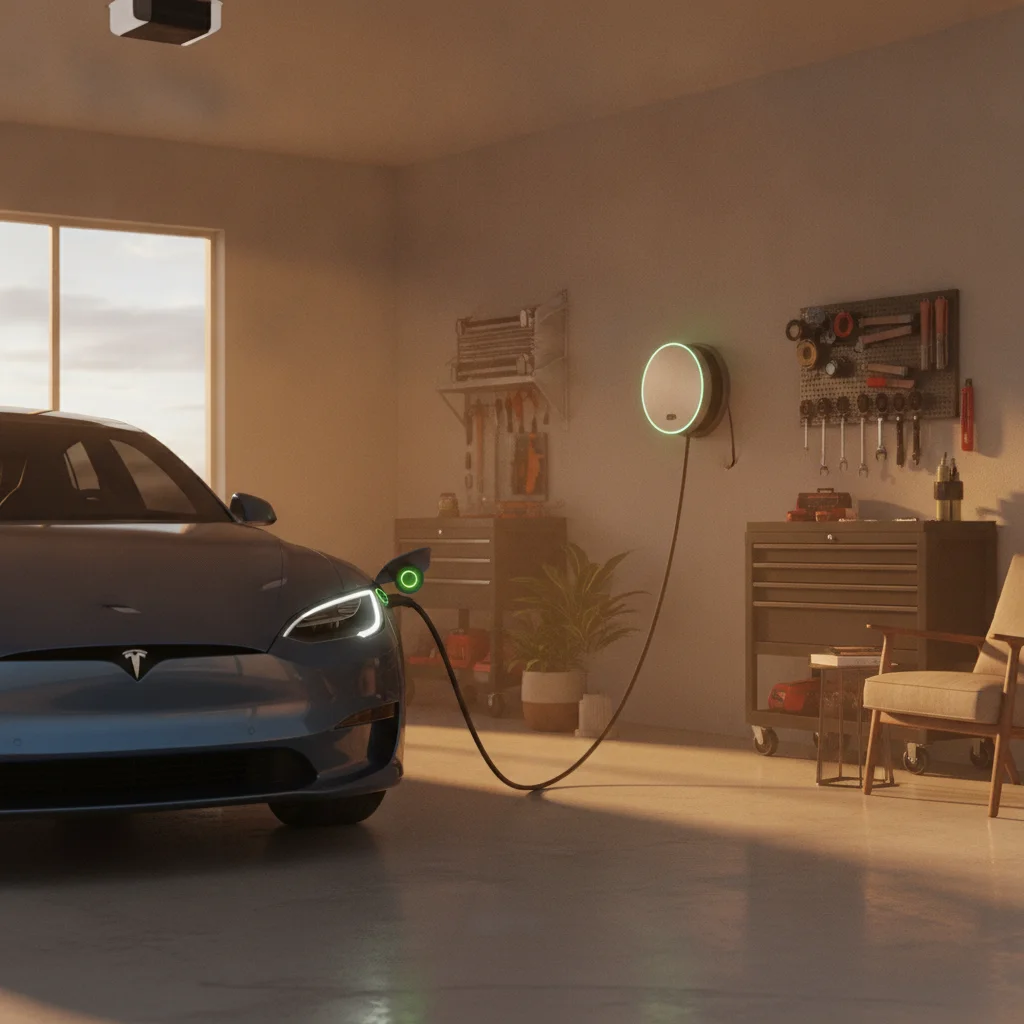
The practical implication for buyers is significant: choosing a BEV means you are fully dependent on the electrical grid for energy. That's a different relationship with fueling than most drivers have ever had. The good news is that home charging options are more accessible than many people expect, and the vast majority of BEV owners charge overnight at home, waking up to a full battery every morning.
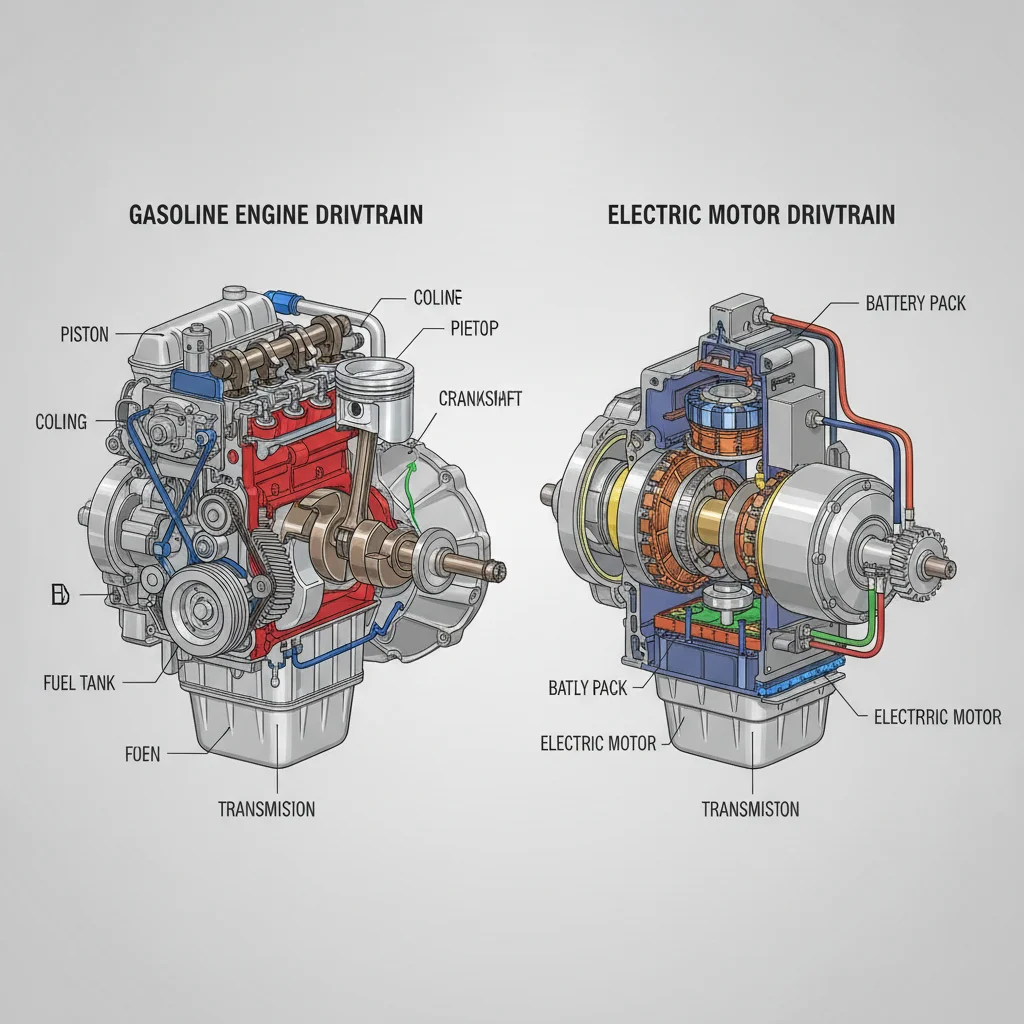
For a side-by-side look at how the BEV powertrain compares mechanically to what's under the hood of a gas car, see Gas Engine vs. Electric Drivetrain: A Component-by-Component Look.
The Battery Pack: Your Fuel Tank and Energy Source
If you're new to EVs, the battery pack is the component that will dominate most of your research — and rightly so. It is the most expensive single component in the vehicle, it determines how far you can drive on a charge, and its condition over time affects resale value more than almost anything else.
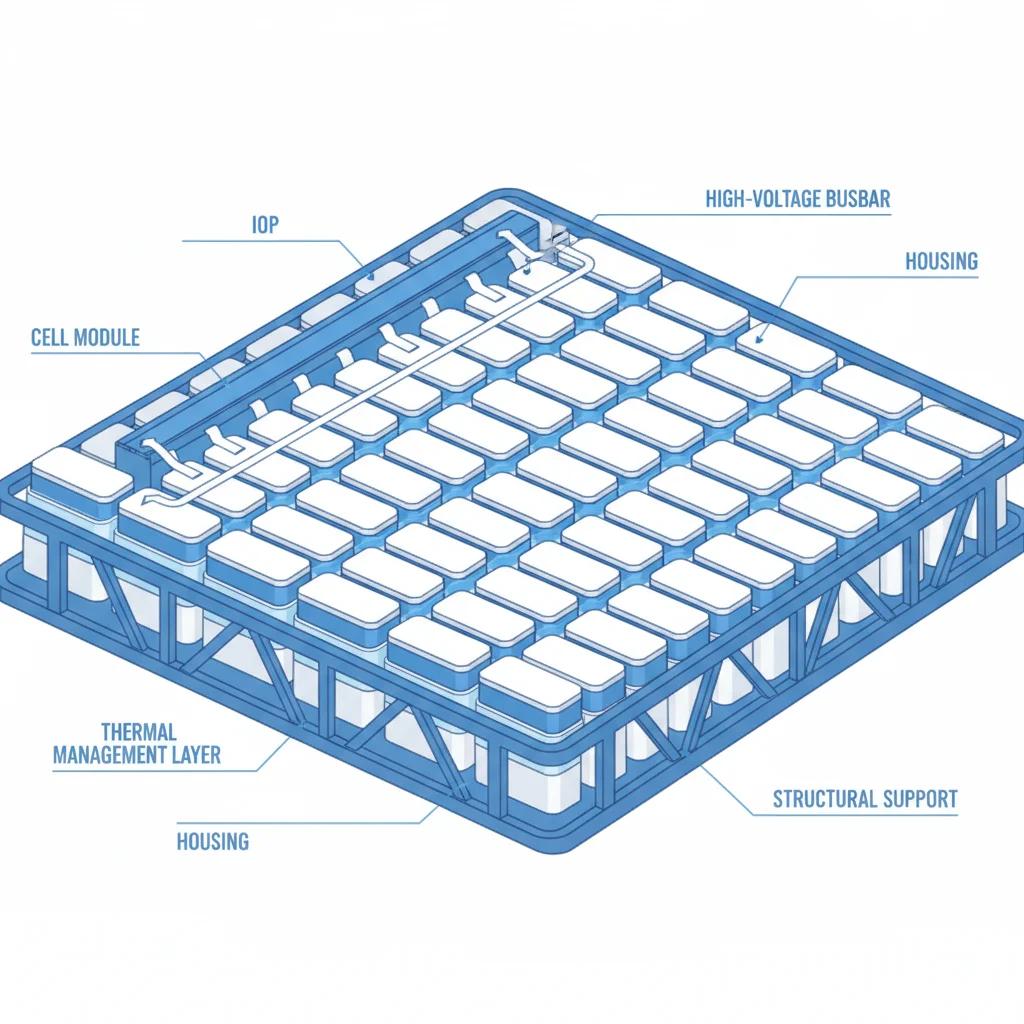
EV battery packs are made up of hundreds or thousands of individual lithium-ion cells, grouped into modules, which are then assembled into the full pack. The pack sits low in the vehicle — usually integrated into the floor — which lowers the center of gravity and contributes to the flat-floored interior most BEVs offer.
Capacity: The Key Spec to Understand
Battery capacity is measured in kilowatt-hours (kWh). Think of it exactly like gallons in a gas tank: a bigger number means more stored energy, which generally means more range. Current mainstream BEVs typically offer usable capacities ranging from about 40 kWh (shorter-range urban vehicles) to well over 100 kWh (long-range trucks and SUVs).
But capacity alone doesn't determine range. Efficiency — measured in miles per kWh — matters just as much. A 75 kWh pack in an aerodynamically efficient sedan might deliver 300+ miles. That same 75 kWh pack in a large, boxy SUV might only yield 220 miles. Always check EPA-rated range alongside the kWh number.
Total vs. Usable Battery Capacity
Manufacturers sometimes advertise total battery capacity (e.g., 82 kWh), but the usable capacity available to the driver is always somewhat lower (e.g., 77.4 kWh) because the BMS reserves buffers at both ends to protect cell health. When comparing range figures across vehicles, make sure you're looking at usable capacity and EPA-rated range — not just the headline kWh number.
Thermal Management: The Hidden Quality Differentiator
Not all battery packs are built equally. How a manufacturer manages heat — both during charging and during discharge — has a direct impact on long-term battery health. Active liquid cooling systems (used by most major manufacturers including Tesla, GM, and Hyundai-Kia) do a better job of keeping cells within optimal temperature ranges. Passive air cooling, used in older Nissan Leaf models, has historically shown higher degradation rates in hot climates. This is worth researching specifically for any used BEV you're considering.
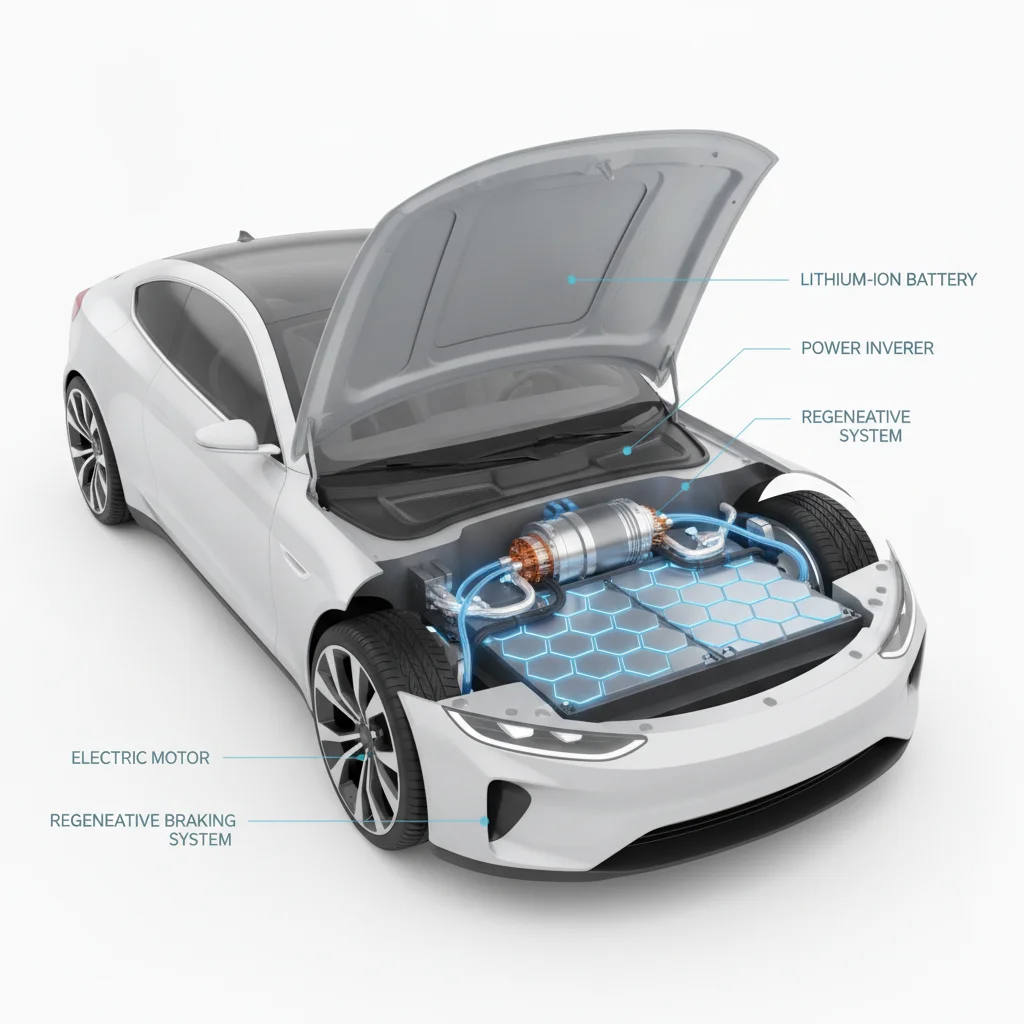
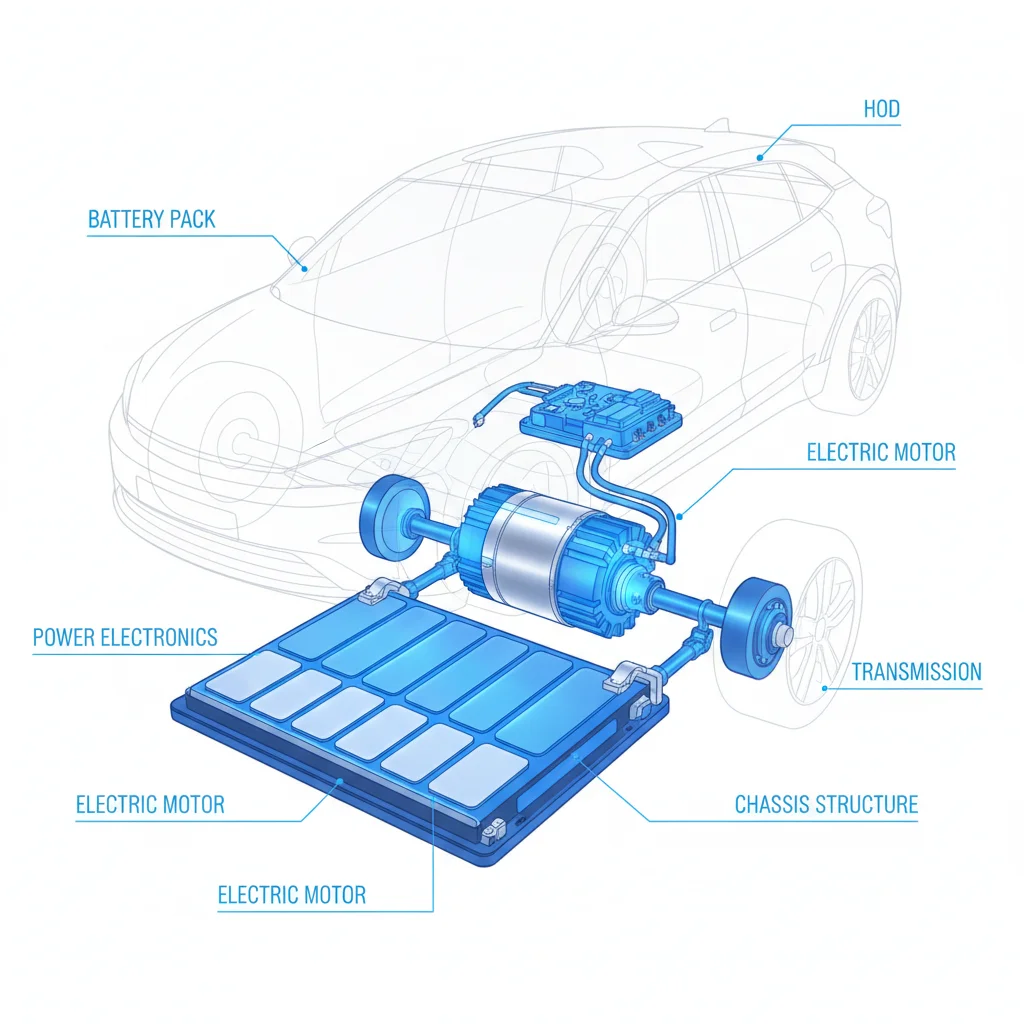
For a deeper look at how the battery pack connects to the rest of the powertrain, this explainer on how a BEV powers itself walks through the full energy flow from pack to wheels.
The Electric Motor: Converting Power Into Motion
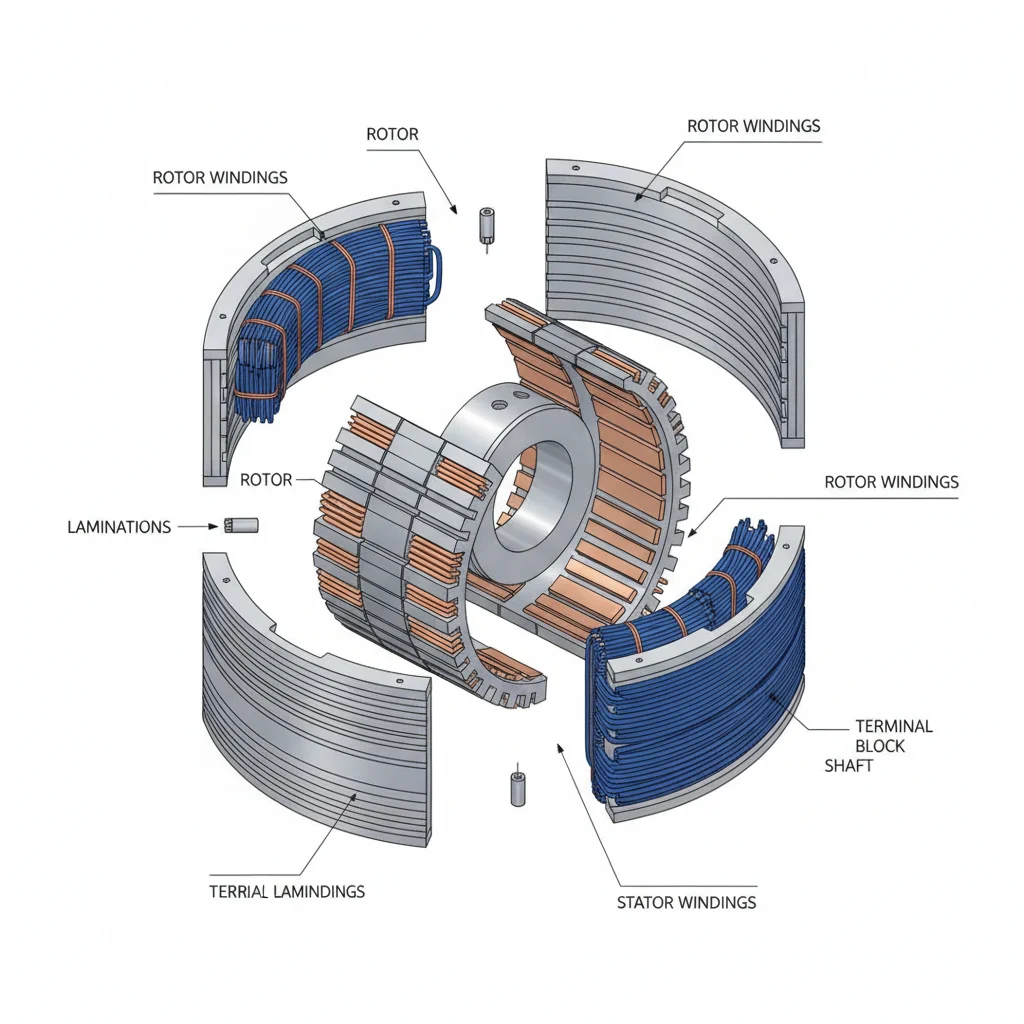
The electric motor is what actually drives the wheels. It takes electrical energy from the battery pack and converts it into rotational mechanical force — torque — that spins the axles. Understanding a few basics here will help you decode spec sheets and understand why EVs drive the way they do.
How Electric Motors Differ From Combustion Engines
A gas engine must build RPM before it reaches peak torque. An electric motor, by contrast, delivers maximum torque from the very first rotation. Press the accelerator in an EV and the motor responds immediately with full rotational force — no waiting for the engine to wake up, no gear hunting by a transmission. This is why EVs feel so responsive in everyday driving, even when their peak power numbers are modest.
Electric motors are also dramatically simpler machines. A typical combustion engine contains hundreds of moving parts: pistons, valves, camshafts, crankshafts, a timing system, an exhaust system, a cooling system, and more. A permanent magnet electric motor has essentially one moving part: the rotor. Fewer moving parts means less to wear out and less to maintain.
Common Motor Types in Modern BEVs
- Permanent Magnet Synchronous Motor (PMSM): The most common type in consumer EVs. Efficient, compact, and powerful. Used by Tesla, Hyundai, Ford, and many others.
- AC Induction Motor: Used historically by Tesla on rear motors. Slightly less efficient at light loads but robust and well-understood technology.
- Wound Rotor Synchronous Motor: Used by Renault and some other manufacturers. No rare earth magnets required, which can reduce supply chain concerns.
For most buyers, the specific motor type is less important than the resulting performance and efficiency numbers. What matters is how the vehicle drives and how efficiently it uses the battery's stored energy.
Single Motor vs. Dual Motor (AWD)
Most base-trim BEVs come with a single motor driving either the rear or front wheels. Upgrading to AWD in most EVs means adding a second motor on the opposite axle — no traditional mechanical driveshaft required. Dual-motor setups deliver better traction, faster acceleration, and in some cases slightly more efficient torque distribution, though the added motor does consume some additional power.
Inside an Electric Motor: What Actually Makes an EV Move goes further into the physics if you want the full technical picture before your dealership visit.
The Inverter and Power Electronics: The Brains of the Operation
The battery pack stores electricity as direct current (DC). Electric motors run on alternating current (AC). Bridging that gap is the job of the inverter — a component that most buyers never hear about but that fundamentally shapes how the car performs and charges.
Faster Charging Isn't Always Better for the Battery
DC fast charging (Level 3) is convenient for road trips, but regularly charging to 100% at high speed can accelerate battery degradation over time. Most EV manufacturers and BMS software recommend keeping daily charging between 20% and 80% for everyday use, reserving full charges for long trips. This is not a dealbreaker — it's just a habit worth building early.
What the Inverter Actually Does
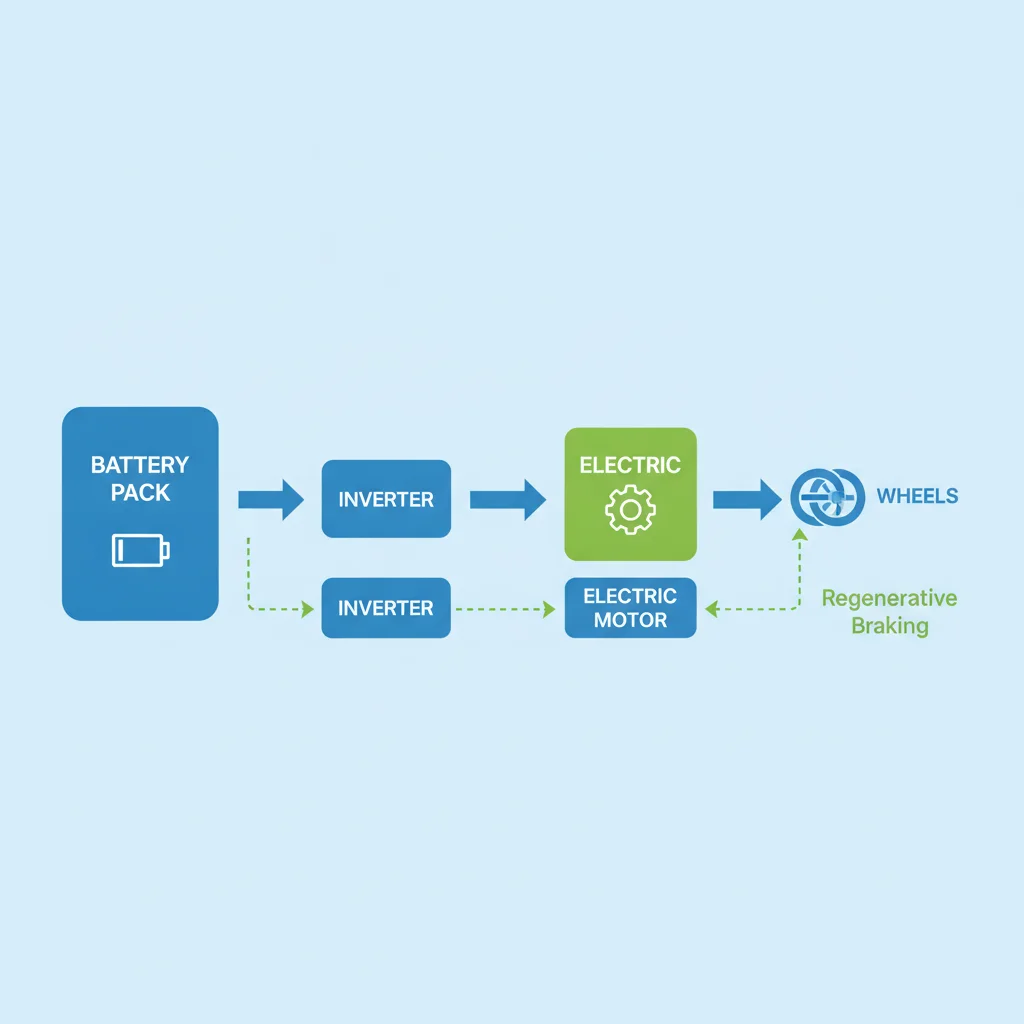
The inverter converts DC power from the battery into the AC power the motor needs, and it does so with remarkable precision. By varying the frequency and amplitude of the alternating current it produces, the inverter controls exactly how much torque the motor generates. When you press the accelerator halfway, it's the inverter — responding to signals from the vehicle control unit — that tells the motor how hard to work. The instant, seamless throttle response you feel in an EV is largely the inverter doing its job at microsecond speed.
Modern EV inverters use silicon carbide (SiC) transistors in high-efficiency designs (Tesla, Hyundai, and others have made this transition). SiC-based inverters operate at higher temperatures and switch faster than older silicon designs, which improves overall powertrain efficiency — sometimes meaningfully improving real-world range.
Other Power Electronics Worth Knowing
- On-Board Charger (OBC)
- When you plug into a Level 1 or Level 2 AC charging station, this component converts the AC power from the grid into DC to charge the battery. Its capacity — measured in kilowatts — determines how fast Level 2 charging can replenish your battery. A 7.2 kW OBC will charge roughly twice as fast as a 3.6 kW unit.
- DC-DC Converter
- Converts high-voltage DC from the main battery pack down to 12 volts to power all the conventional 12V accessories — lights, infotainment, power windows, and more. Think of it as replacing the alternator in a gas vehicle.
- Battery Management System (BMS)
- Not an inverter, but equally critical. The BMS monitors every cell in the battery pack, balancing charge across cells, monitoring temperature, and preventing overcharge or deep discharge. It's the system that decides how much of the rated battery capacity is actually available to you at any given moment.
Together, these systems form the power electronics stack — and their quality and thermal design contribute significantly to real-world efficiency, charging speed, and long-term durability. It's one reason why two vehicles with identical battery sizes can have notably different charging curves and range figures.
Regenerative Braking: How EVs Recapture Energy
One of the most practically useful features of an all-electric powertrain is regenerative braking — and it's also one of the most misunderstood by first-time buyers.
Here's the core concept: when you lift your foot off the accelerator or apply the brakes in a BEV, the electric motor switches roles. Instead of consuming energy to drive the wheels, it acts as a generator — the wheels now drive the motor, which produces electricity that flows back into the battery pack. Kinetic energy that would otherwise be wasted as heat in friction brakes is partially recaptured and stored.
Strong Regen Can Surprise Other Drivers
In strong single-pedal driving mode, your EV can decelerate quite sharply when you lift off the accelerator — but your brake lights may not illuminate until the friction brakes engage. Drivers behind you may not anticipate the slowdown. Check whether your vehicle activates the brake lights during regen deceleration (most modern EVs do), and use the friction brakes deliberately in heavy traffic until you're confident in how your car's regen system communicates with traffic behind you.
How Regen Affects the Driving Experience
The strength of regenerative braking varies by vehicle and, in most modern EVs, by driver-selectable settings. Some vehicles offer strong single-pedal driving — where lifting off the accelerator slows the car aggressively enough that you rarely need to touch the brake pedal. Others default to a milder regen feel that's closer to engine braking in a gas car.
First-time EV drivers often need a few days to adjust to the sensation, particularly in strong single-pedal mode. After that adjustment period, many drivers find it more intuitive than the conventional approach — and the friction brakes last noticeably longer as a result.
How Much Range Does Regen Actually Add?
That depends heavily on driving conditions. On a flat highway at constant speed, there's very little opportunity for regen — you're not decelerating. In stop-and-go city driving, regen can recover a meaningful percentage of the energy used to accelerate. EPA efficiency ratings capture this in their combined city/highway figures, which is why EVs often show a smaller gap between city and highway range than gas vehicles do (or even better city figures than highway, in some cases).
How These Components Work Together When You Drive
Knowing the individual components is useful. Understanding how they interact is what makes the system make sense. Here's what actually happens in sequence during a typical drive:
- You press the accelerator. A signal goes to the vehicle control unit, which tells the inverter how much power to deliver.
- The inverter converts DC to AC at the precise frequency needed to generate the requested torque, and sends it to the motor.
- The motor spins, turning the axle, which drives the wheels. Peak torque is available immediately.
- The BMS monitors the battery pack in real time, ensuring cells stay within safe voltage and temperature ranges, and communicates available power limits to the control unit.
- You lift off the accelerator. The control unit signals the inverter to shift the motor into generator mode. The motor resists wheel rotation, slowing the car while producing electricity that flows back into the battery.
- You plug in at home or at a DC fast charger. The on-board charger (for AC) or a direct connection (for DC fast charging) replenishes the battery pack under BMS supervision, which controls the charge rate to protect cell health.
The entire system operates silently, with no gear shifts, no exhaust, and no fuel combustion. That simplicity is exactly why BEV maintenance costs are generally lower than for gas vehicles — there's less friction, fewer fluids to manage (no engine oil, no transmission fluid, no coolant for an engine), and fewer parts that wear.
For the full component-by-component breakdown with more technical depth, EV Mechanics 101 is the natural next read. And the How EVs Work hub collects the full series in one place.
What This Means When You're Shopping for an EV
Understanding the powertrain isn't just an academic exercise — it directly changes how you evaluate vehicles at the dealership and online. Here's how to apply what you've just learned:
Prioritize Usable Battery Capacity and Real-World Range
Manufacturers sometimes advertise total battery capacity; what matters to your daily driving is usable capacity after the BMS reserves a buffer at the top and bottom. Check the EPA-rated range figure, and then discount it by 10–15% for a conservative real-world estimate in mixed conditions. If your daily driving is 50 miles, a vehicle rated at 200 miles EPA gives you plenty of headroom. If you regularly drive 150 miles in a day, you need to think more carefully about charging access.
Check the On-Board Charger Rating for Level 2 Charging Speed
If you plan to charge at home with a Level 2 charger (the standard 240V setup), the OBC rating determines your overnight charging speed. A 7.2 kW OBC typically adds 20–25 miles of range per hour of charging. An 11 kW OBC is even faster. For most people charging overnight, this won't matter much — but if you have shorter charging windows, it's worth comparing.
Understand What AWD Actually Costs You
Dual-motor AWD adds real traction and performance benefits, but it typically reduces range compared to the equivalent single-motor rear-wheel-drive version — you're carrying two motors and their associated electronics. Compare the RWD and AWD range figures for any model you're considering, and decide whether the traction benefit justifies the range trade-off for your driving context.
EPA's Electric Vehicle Range and Efficiency Database
The EPA's fueleconomy.gov provides official range, efficiency, and charging data for every federally certified EV. Essential for comparing real-world range figures across models before you shop.
EV Mechanics 101: Everything a First-Time Buyer Should Understand
A deeper component-level breakdown of EV powertrains covering motors, batteries, inverters, and drivetrains — the natural next step after this introduction.
PlugShare
A crowdsourced map of public EV charging stations across North America. Useful for understanding charging availability along your regular routes before committing to a specific vehicle.
Getting Started With EV Incentives: What New Buyers Need to Know First
Covers federal tax credits, state rebates, and utility discounts that can significantly reduce the cost of your first BEV purchase.
Factor in the Full Ownership Picture
The powertrain is only one piece of the ownership equation. You'll also want to understand the financial side — federal tax credits and state rebates can significantly reduce the purchase price. See Getting Started With EV Incentives: What New Buyers Need to Know First for a clear breakdown of what's currently available.
And don't overlook insurance. EVs can carry higher premiums than equivalent gas vehicles, partly because battery packs are expensive to replace and repair. Insuring Your First Electric Vehicle: What Catches New Owners Off Guard covers the coverage gaps specific to EV ownership that a standard auto policy may not address.
Armed with a solid understanding of the powertrain — how the battery, motor, inverter, and regen system work together — you're in a meaningfully better position than most shoppers who walk into a showroom focused only on screen size and 0–60 times. The technology is genuinely impressive, and the fundamentals aren't hard to grasp once someone explains them without the marketing layer.

All claims are backed by peer-reviewed research. Sources on request.