Key Takeaways
EPA Range Rating
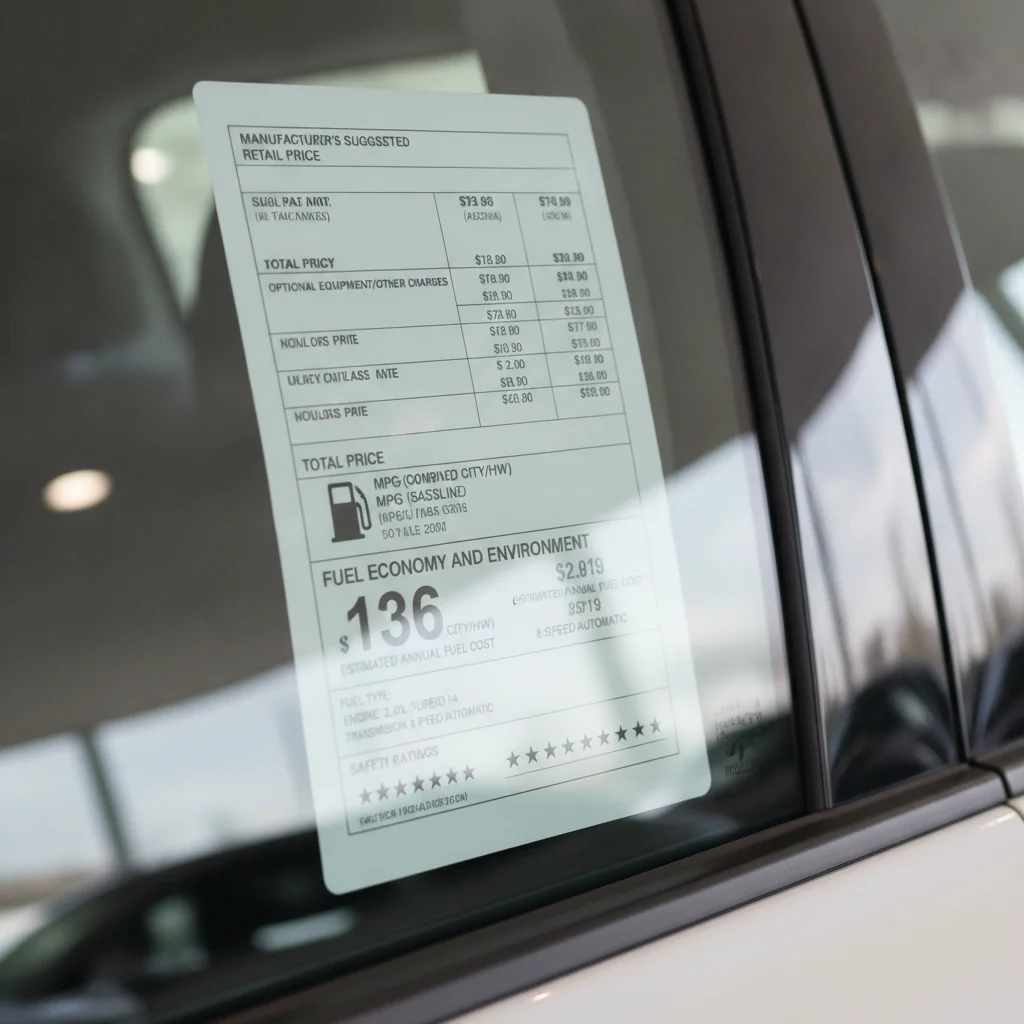
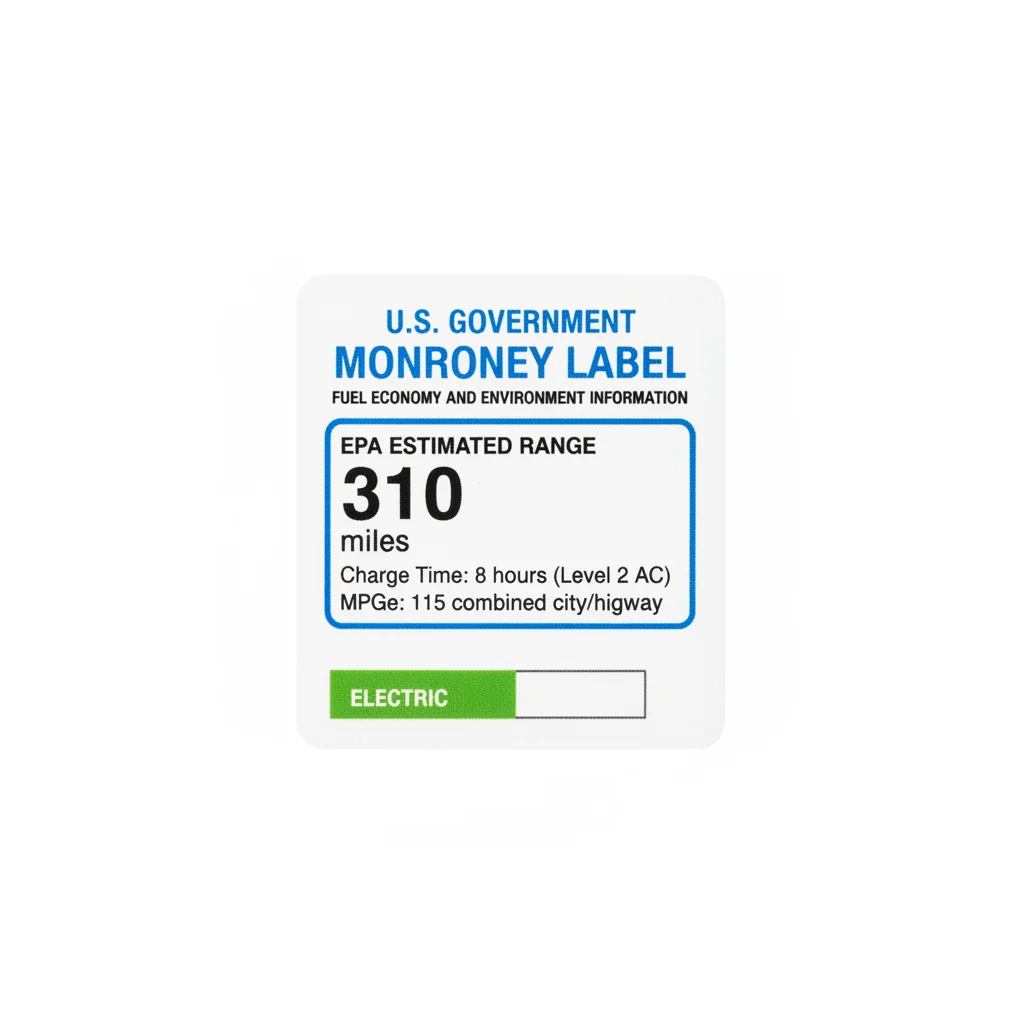
The EPA range rating is a government-standardized estimate of how far a fully charged electric vehicle can travel before its battery is depleted. It is produced by running the vehicle through a controlled laboratory test cycle and appears on the federally required window sticker of every new EV sold in the United States. The number gives buyers a consistent, apples-to-apples comparison point across different models — but it is not a guarantee of real-world performance.
The EPA uses a five-cycle test methodology that includes urban, highway, high-speed, air conditioning, and cold temperature driving scenarios, then applies a correction factor — typically around 30% downward from the raw dynamometer result — to arrive at the published estimate.
Where the Number on the Sticker Comes From
Walk into any EV dealership and you'll see a bold mileage figure on the window sticker — 358 miles, 405 miles, 291 miles. That number is the EPA's estimated range, and understanding exactly how it's calculated is the first step toward setting realistic expectations before you buy.
The EPA does not test every vehicle itself. Instead, automakers run their vehicles through standardized test procedures and submit the results. The EPA then reviews the data and, for a subset of models, conducts its own confirmatory testing. The test itself takes place on a chassis dynamometer — essentially a treadmill for cars — inside a laboratory where temperature, humidity, and airflow are precisely controlled.
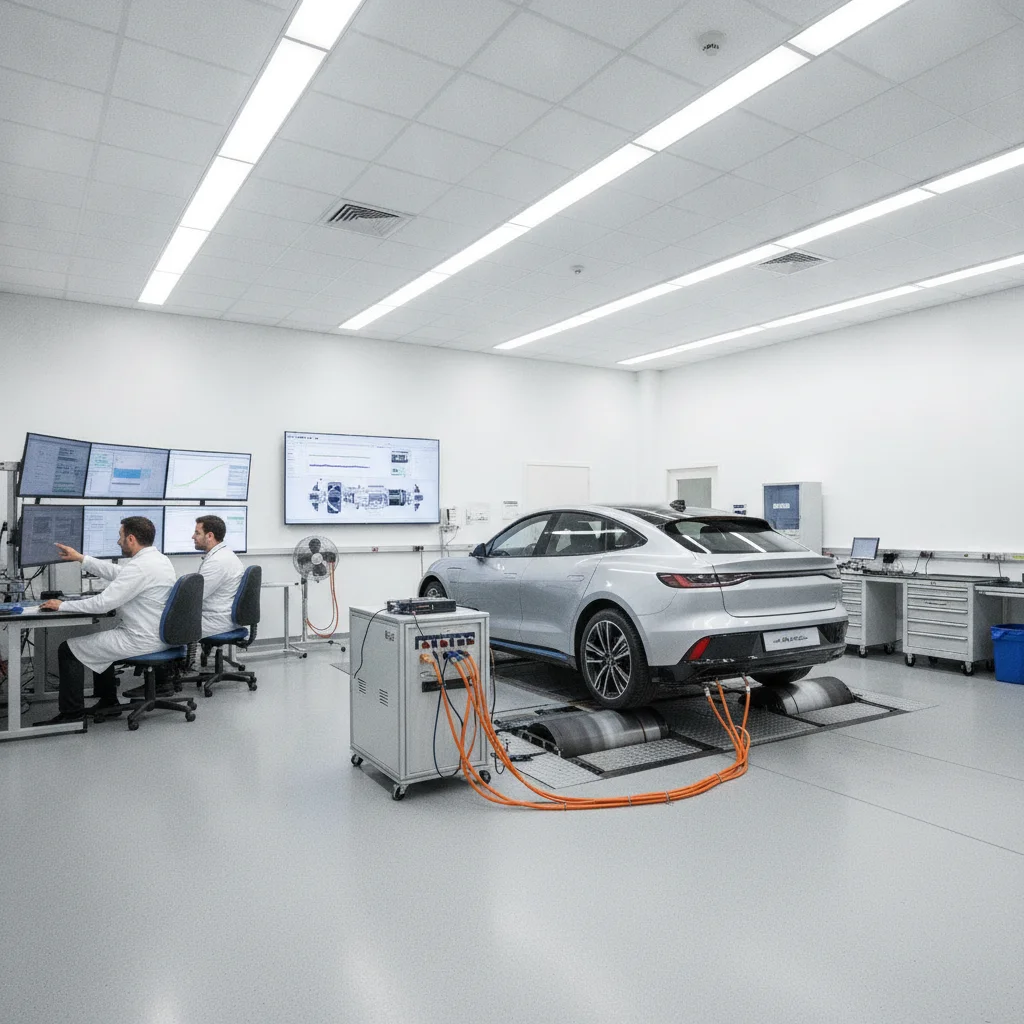
The raw result from that dynamometer run is not what appears on the sticker. The EPA applies a correction algorithm — derived from decades of comparing laboratory results to real-world driving data — that reduces the raw figure by roughly 30% before publication. The intent is to make the final number reflect typical American driving more accurately than a pure laboratory result would.
For additional context on everything else the sticker is communicating, reading a fuel economy label in full walks through every data point the EPA requires manufacturers to disclose.
The Five Test Cycles: What They Measure and What They Miss
The EPA's methodology for electric vehicles uses up to five distinct drive cycles, each designed to simulate a different driving scenario. Together they form a composite picture — but each has meaningful blind spots.
City Cycle (FTP-75)
The Federal Test Procedure simulates urban stop-and-go driving at an average speed of about 21 mph, with frequent acceleration and deceleration events. EVs perform well here because regenerative braking recovers energy that would otherwise be lost as heat. This cycle tends to flatter EV range figures relative to real city driving, which often includes longer idle periods and more aggressive acceleration.
Highway Cycle (HWFET)
The Highway Fuel Economy Test runs at a maximum speed of 60 mph with no stops. The problem: most American highway driving happens at 65–80 mph, and aerodynamic drag increases with the square of velocity. An EV that returns 300 miles at 60 mph may yield significantly less at 75 mph — a gap the highway cycle does not capture.
High-Speed Cycle (US06)
The US06 cycle introduces higher speeds (up to 80 mph) and more aggressive acceleration. Its contribution to the composite rating is weighted modestly, which means its range-reducing effect is partially diluted in the final number.
Air Conditioning Cycle (SC03)
This cycle runs the air conditioning system during a warm-temperature drive. Because EVs use battery power for climate control rather than waste engine heat, A/C use has a more pronounced effect on EV range than on conventional vehicles. The SC03 cycle captures some of this, but the weighting still understates the impact for drivers in hot-summer climates who run A/C continuously.
Cold Temperature Cycle
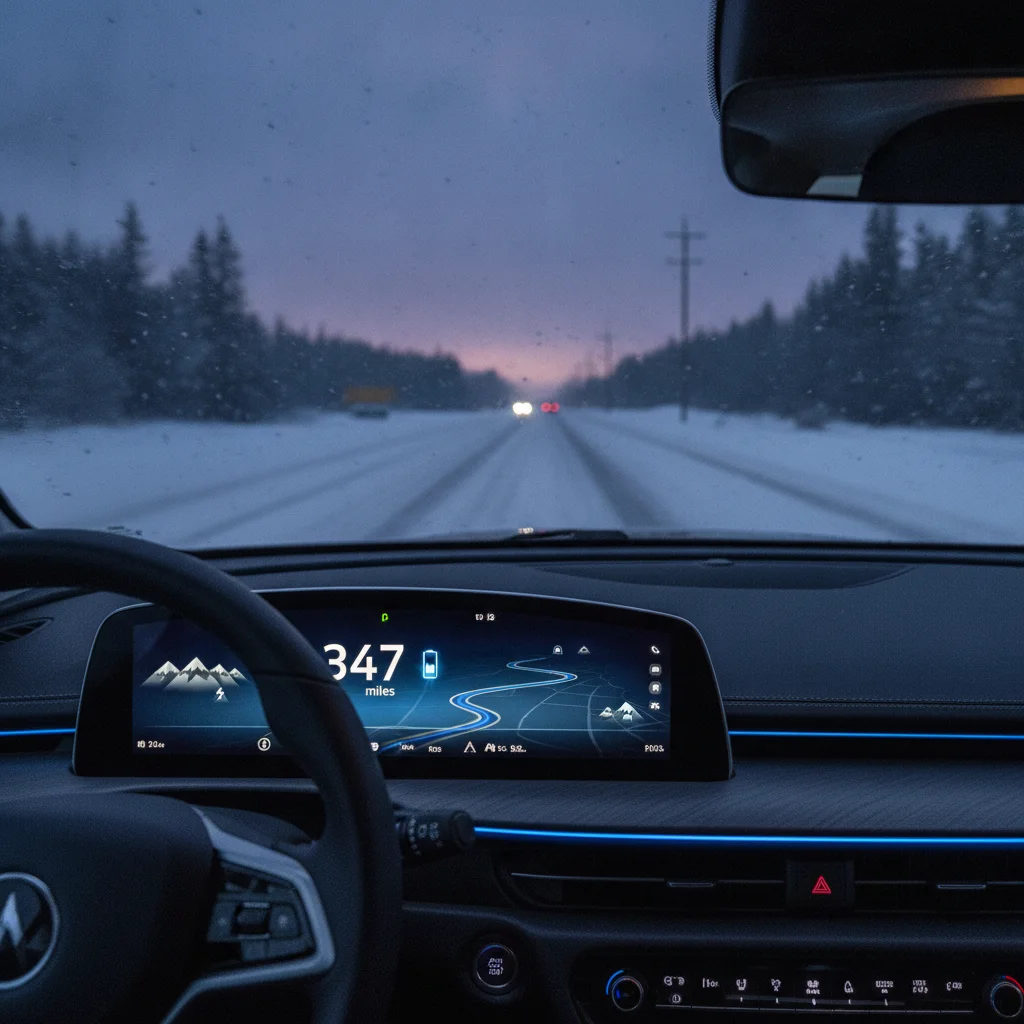
The cold-weather test is conducted at 20°F (−7°C) with the cabin heater running. Battery chemistry slows at low temperatures, reducing both capacity and charge acceptance. This cycle acknowledges the cold-weather penalty, but 20°F is relatively mild compared to winter conditions in northern states, where temperatures frequently drop below 0°F and range losses can be far more severe.
~30%
Correction applied to raw dynamometer results
The EPA reduces raw laboratory range scores by approximately 30% before publishing the window sticker figure to better reflect real-world driving.
20–40%
Range reduction in sub-freezing temperatures
AAA and Recurrent Auto testing found EV range falls an average of 20–40% in temperatures below 20°F, depending on vehicle and heater usage.
75–90%
EPA rating achieved in Edmunds highway tests
Edmunds' standardized 242-mile highway range test at 70 mph consistently shows EVs returning 75–90% of their EPA combined rating.
~50%
Range reduction when towing near max capacity
Real-world towing tests by MotorTrend and other outlets document range losses of 40–60% when EVs tow near their rated maximum capacity.
2–3%
Annual battery capacity loss (typical)
Recurrent Auto's analysis of over 15,000 EVs found average annual range degradation of roughly 2–3% under typical charging and climate conditions.
The composite EPA figure weights these cycles to approximate a blend of driving conditions. The exact weighting has evolved over time as the EPA refines its methodology to track how Americans actually drive.
The Gap Between the Lab and the Road
Even with correction factors applied, the EPA rating and real-world performance frequently diverge. The reasons are well-documented and quantifiable.
Speed Is the Biggest Factor
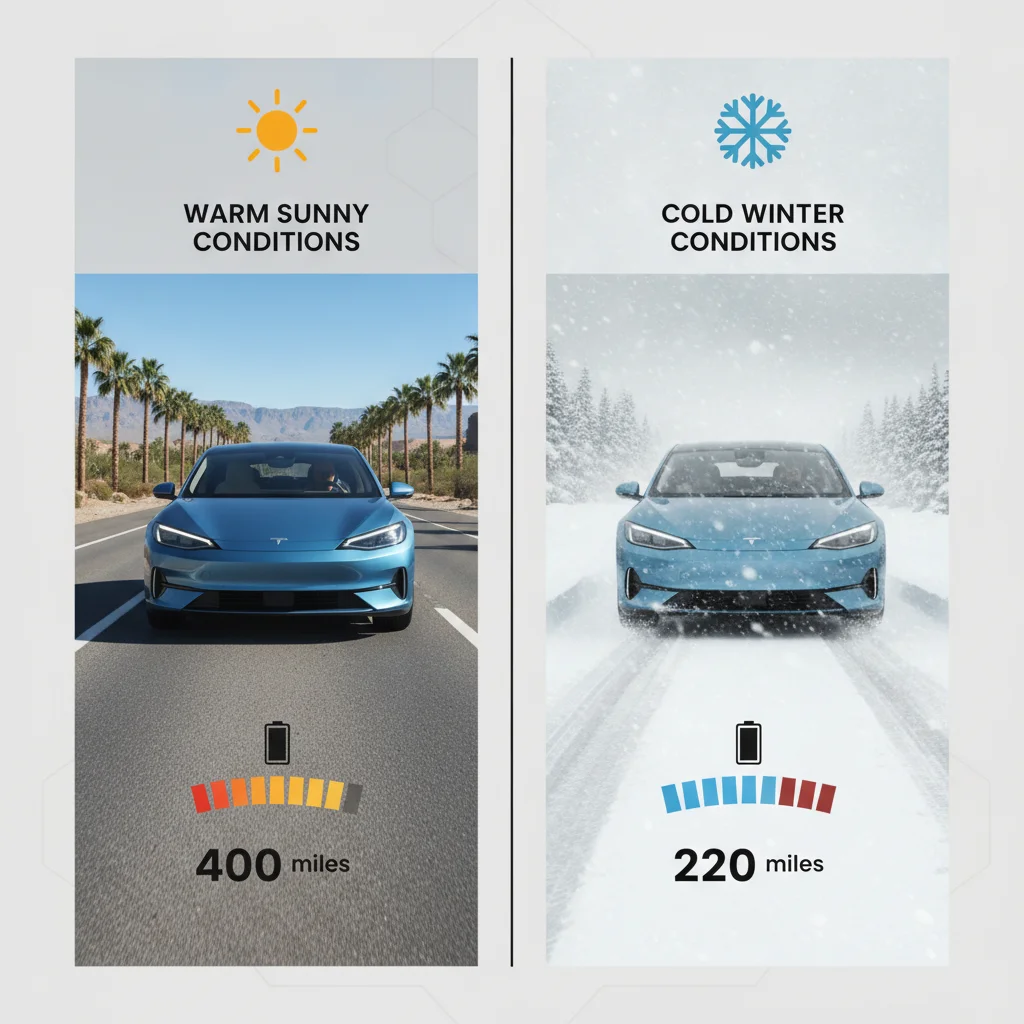
Aerodynamic drag scales with the square of velocity. Drive at 75 mph instead of 65 mph and drag increases by roughly 33%. For a sleek sedan rated at 350 miles, sustained 75 mph highway driving can reduce actual range to 270–290 miles — a gap of 60–80 miles that surprises drivers on long road trips.
Temperature Penalizes Both Ends of the Spectrum
Lithium-ion batteries are chemically optimized for a narrow temperature band. Cold reduces the battery's usable capacity and forces the heating system to draw power continuously. Heat requires the cooling system to work harder and can also modestly reduce capacity. Studies by AAA and Recurrent Auto have documented average range reductions of 20–40% in sub-freezing conditions depending on the vehicle and how aggressively the cabin heater is used.
The EPA Rate Vehicles, Not Drivers
The EPA rating measures the vehicle's energy efficiency under standardized inputs. Two drivers of the identical EV can achieve range figures that differ by 20% or more based on speed, climate control use, and driving style. The rating is a vehicle characteristic, not a personal performance guarantee.
Towing Voids the Range Estimate
The EPA does not include a towing scenario in any of its five test cycles. If you plan to tow with an EV — even occasionally — disregard the sticker range for those trips entirely. Real-world data from third-party towing tests is the only relevant reference point for range planning with a trailer attached.
Cargo, Passengers, and Roof Racks Add Drag and Weight
A fully loaded SUV with a roof cargo box can see 10–15% additional range loss from the combined effects of added mass and increased aerodynamic drag. The EPA test is conducted with no cargo and a single driver-equivalent weight.
Driving Style Amplifies Everything
Hard acceleration, late braking, and frequent lane changes all increase energy consumption. Drivers who maximize regenerative braking and maintain steady highway speeds consistently report results closer to their EPA rating than those who drive aggressively.
For a comprehensive look at how these variables interact, the full breakdown of why EV rated range and real-world range diverge provides detailed data on each factor.
Plan Road Trips at 80% of EPA Range
A practical rule for highway road-trip planning: target charging stops no more than 80% of the EPA range apart. This buffer accounts for highway speed losses, minor temperature effects, and the need to arrive at a charger with charge remaining rather than running to empty. Adjust further downward in winter or when towing.
How the EPA Rating Compares to Third-Party Tests
Because the EPA's published figure is a composite built from controlled cycles, independent organizations have developed their own methodologies to provide a more practical reference point.
Edmunds, for example, conducts a 242-mile real-world highway route at 70 mph with climate control set to 72°F. Their results consistently show EVs achieving 75–90% of EPA ratings on the highway — a valuable sanity check for road-trip planning. The American Automobile Association (AAA) runs separate city and highway range loops, while the European ADAC uses the WLTP cycle, which itself tends to produce higher estimates than the EPA due to less aggressive correction factors.
The practical implication: if your prospective EV shows a large gap between its EPA rating and Edmunds' highway figure, that vehicle is likely more sensitive to high-speed driving than its window sticker implies. Conversely, a small gap suggests efficient highway energy management.
How third-party range testing differs from EPA estimates examines the specific methodologies in detail so you can interpret each organization's results accurately.
“The EPA range rating is the best standardized benchmark we have for comparing EVs side by side, but it was never designed to predict what a specific driver will experience on a specific day. Real-world range is a conversation between the car, the weather, and the driver.”
— Brian Moody, Executive Editor, Autotrader, quoted in automotive industry commentary
How to Use the EPA Rating as a Buying Tool
The EPA figure's greatest strength is its consistency: every new EV sold in the U.S. goes through the same process, making it a reliable relative comparison tool even if the absolute number overstates real-world performance.
Apply a Personal Correction Factor
If you drive primarily in a cold climate, budget for 70–80% of the EPA rating in winter. If your commute is predominantly highway at 70+ mph, plan around 80–85% of the figure. If you mix city and suburban driving in a mild climate, the EPA rating is a reasonable approximation with perhaps a 10% haircut.
Cross-Reference Third-Party Data
Before committing to a model, look up its Edmunds real-world range result or equivalent third-party test. This gives you a second data point that is specifically weighted toward highway driving — the use case where most EV range anxiety is concentrated.
Evaluate Battery Buffer and Thermal Management
Some automakers leave a larger buffer below the advertised 0% state of charge to protect the battery from deep discharge. Vehicles with sophisticated active thermal management systems — which maintain battery temperature in both heat and cold — tend to retain a higher percentage of their rated range across conditions. These details rarely appear on the window sticker itself but are available in technical documentation and long-term owner reviews.
It's also worth considering how range interacts with other ownership costs. EV insurance costs can vary by model, and higher-range vehicles with larger battery packs sometimes carry higher replacement costs that affect premiums.
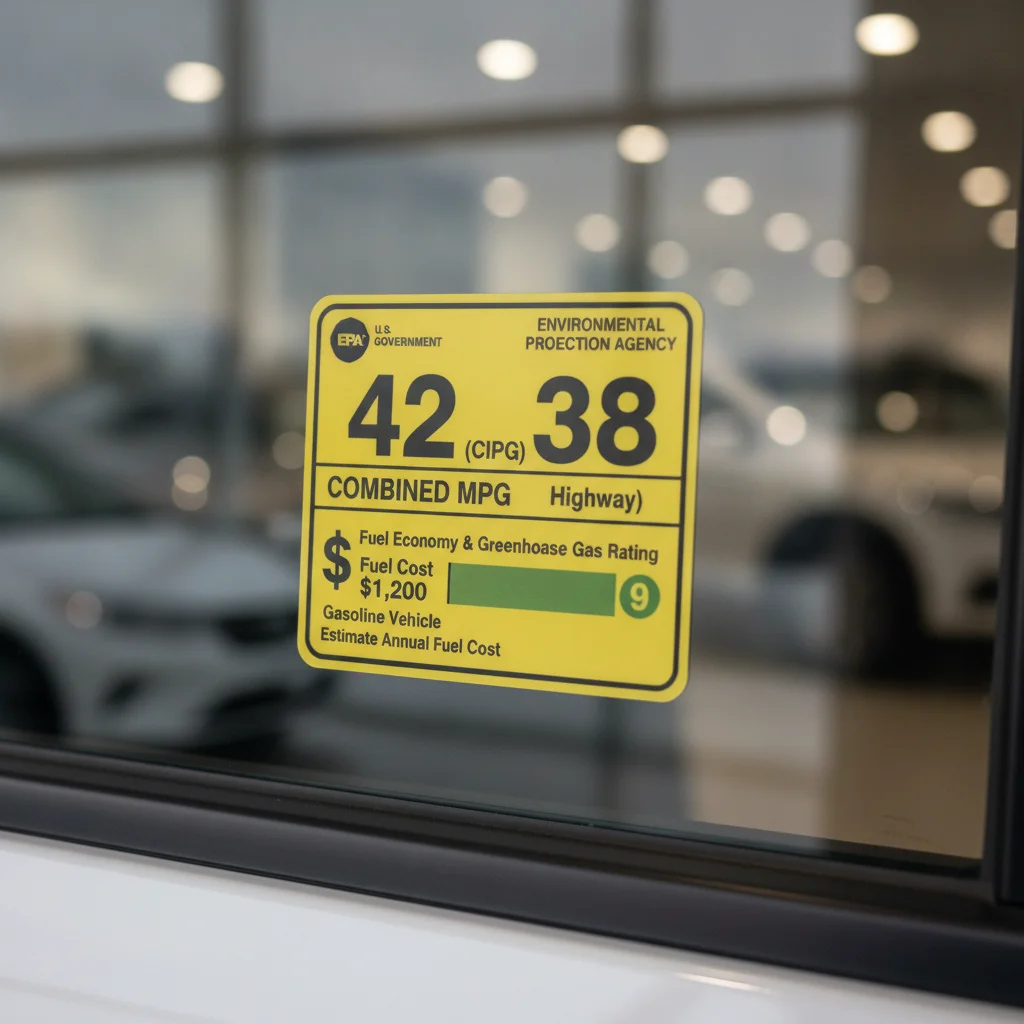
For comparison with how gasoline vehicles are rated, EPA fuel economy ratings for gas vehicles follows a similar but distinct methodology — and the real-world gap there is well-documented too. The same discipline that helps gas car buyers interpret MPG estimates applies directly to EV range figures.
Finally, if you're considering a plug-in hybrid, note that PHEV electric range figures require a separate interpretation framework entirely. What electric range really means on a PHEV window sticker explains why those numbers are even more context-dependent than pure EV ratings.
What the Rating Doesn't Tell You
The EPA range figure answers one question: how far can this vehicle travel from full to empty under standardized conditions? Several equally important questions go unanswered.
- Charging speed: The sticker tells you nothing about how quickly the battery replenishes, which is critical for road trips.
- Long-term degradation: The rating reflects a new battery. Real-world usable range declines as the battery ages, typically losing 2–3% of capacity per year depending on charging habits and climate.
- Usable versus total capacity: Automakers reserve portions of the battery above and below the displayed charge level to protect longevity. The EPA test uses the full usable window, but some manufacturers are more conservative than others about what they label as 0–100%.
- Charging network availability: A 400-mile range rating is only useful if charging infrastructure exists along your route. The sticker provides no guidance on this.
- Towing and payload: Towing dramatically reduces EV range — often by 50% or more — and the EPA rating does not include any towing scenario.
The EPA Rate Vehicles, Not Drivers
The EPA rating measures the vehicle's energy efficiency under standardized inputs. Two drivers of the identical EV can achieve range figures that differ by 20% or more based on speed, climate control use, and driving style. The rating is a vehicle characteristic, not a personal performance guarantee.
Towing Voids the Range Estimate
The EPA does not include a towing scenario in any of its five test cycles. If you plan to tow with an EV — even occasionally — disregard the sticker range for those trips entirely. Real-world data from third-party towing tests is the only relevant reference point for range planning with a trailer attached.
Understanding these gaps doesn't make the EPA rating useless — it makes it a more accurately calibrated tool. Used alongside third-party tests, owner reports, and your own driving profile, the window sticker figure is a reasonable starting point for range planning.
The Monroney label's legal scope also matters here: the sticker is a disclosure document, not a warranty. Knowing that distinction protects you from purchasing decisions based on assumptions the manufacturer never actually made.
All claims are backed by peer-reviewed research. Sources on request.