Key Takeaways
Why Charging Etiquette Matters More Than You Think
Public EV charging infrastructure in the United States is expanding fast, but demand at many stations routinely outpaces supply — particularly along popular highway corridors and in dense urban areas. Unlike a gas pump, where a two-minute transaction ends and you drive off, a charging session can take anywhere from 15 minutes at a fast DC charger to over an hour at a Level 2 station. That time differential makes how you behave at a charger consequential in a way that fueling etiquette simply isn't.
The norms that govern public charging are a mix of written policies enforced by networks through fees and app notifications, and unwritten social expectations developed organically by the EV community. Violating the written rules can cost you money. Violating the unwritten ones erodes the trust and goodwill that make shared infrastructure function. For a full picture of how each major network operates before you plug in, see our complete overview of public EV charging networks in the US.
This guide maps both sets of rules clearly, so whether you're a first-time public charger user or a veteran road tripper, you're operating as a good neighbor to every EV driver who plugs in after you.
The Core Etiquette Rules Every Driver Must Follow
These aren't suggestions — they're the behavioral standards that keep public charging functional, fair, and frustration-free for everyone sharing the infrastructure.
Move your vehicle immediately when charging is complete
Leaving a fully charged vehicle in a stall blocks access for drivers who genuinely need power. At busy stations, even a 10-minute overstay can mean another driver misses their charging window and has range anxiety for the rest of their trip. Idle fees from networks like Tesla, Electrify America, and EVgo are specifically designed to enforce this behavior.
Never unplug another driver's vehicle without explicit permission
Interrupting a charging session can reset the vehicle's charge scheduling, cause confusion about session data, and in some cases damage connectors if the vehicle hasn't unlocked the port. It also creates an obvious privacy and security concern. The discomfort of waiting is never a justification for touching another person's vehicle.
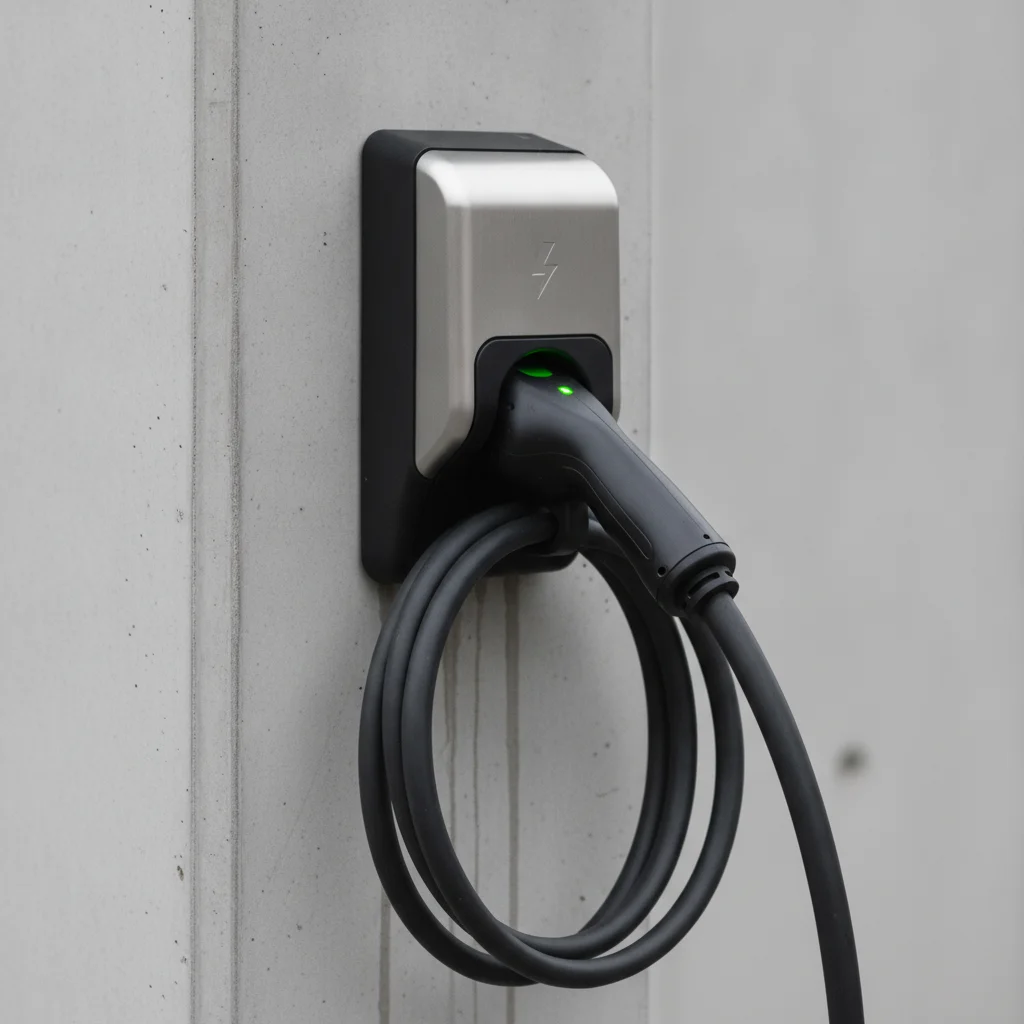
Return charging cables to their holsters correctly after every session
Cables left on the ground or returned to the wrong holster create hazards and confusion for the next driver. They're also more vulnerable to physical damage, which can put a stall out of service for days or weeks while a technician is dispatched. Proper cable management is a two-second action with significant downstream consequences.
Report damaged equipment and ICEd stalls through the network app immediately
A broken charger or a non-EV blocking a stall that goes unreported stays broken or blocked for every driver who arrives after you. Most network apps have one-tap reporting tools that are significantly faster than calling customer service. Early reporting accelerates repair dispatch and helps the network prioritize high-failure locations.
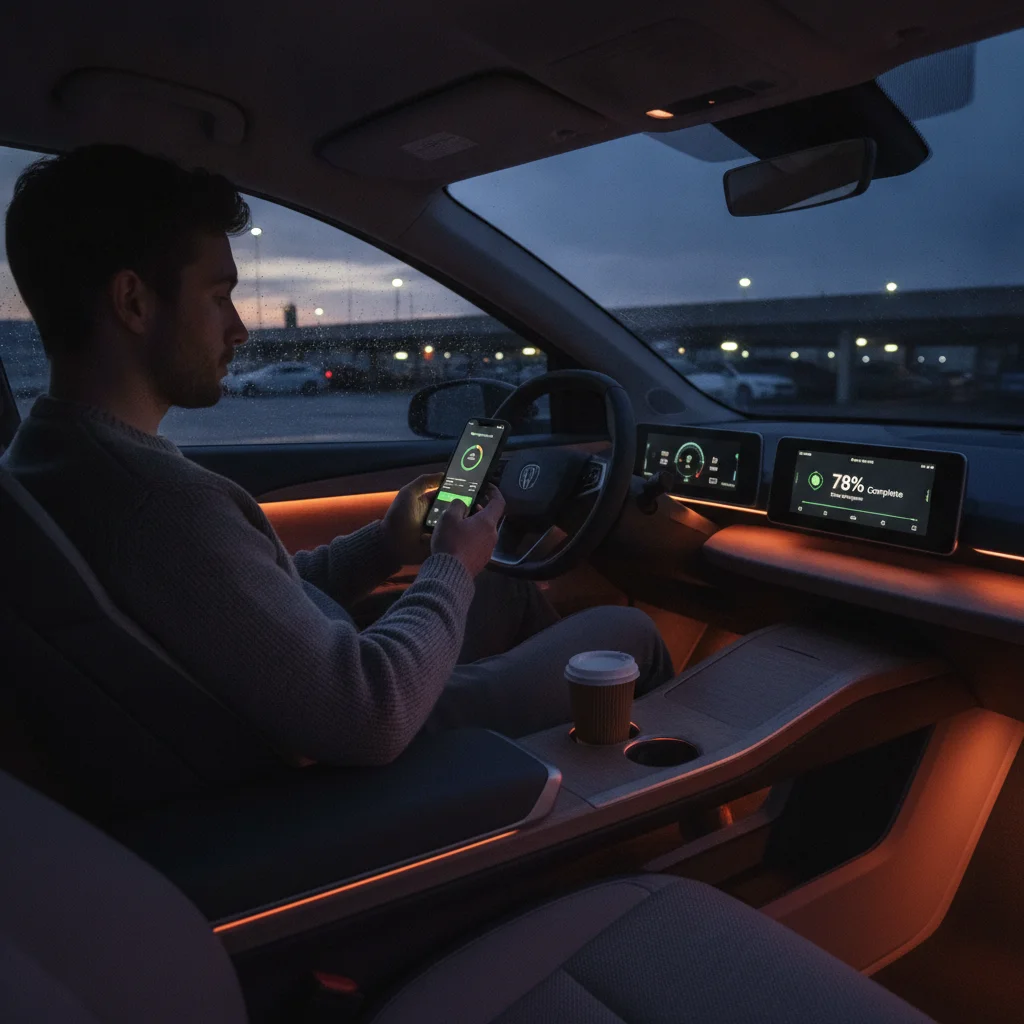
Monitor your session remotely and be ready to return before charging ends
All major charging networks send push notifications when a session is complete. But app notifications can be delayed by poor cell coverage at some stations. Relying solely on the network alert puts you at risk of accruing idle fees. Setting your own reminder gives you a buffer and demonstrates respect for drivers who may be waiting.
Charge only to what you need rather than topping off indefinitely
Charging to 80–90% takes significantly less time than pushing to 100% on most EVs due to how battery management systems taper charging speed at high states of charge. Stopping at a practical charge level frees the stall faster and reduces battery wear from prolonged high-state-of-charge exposure — a benefit to both the network and your long-term range.
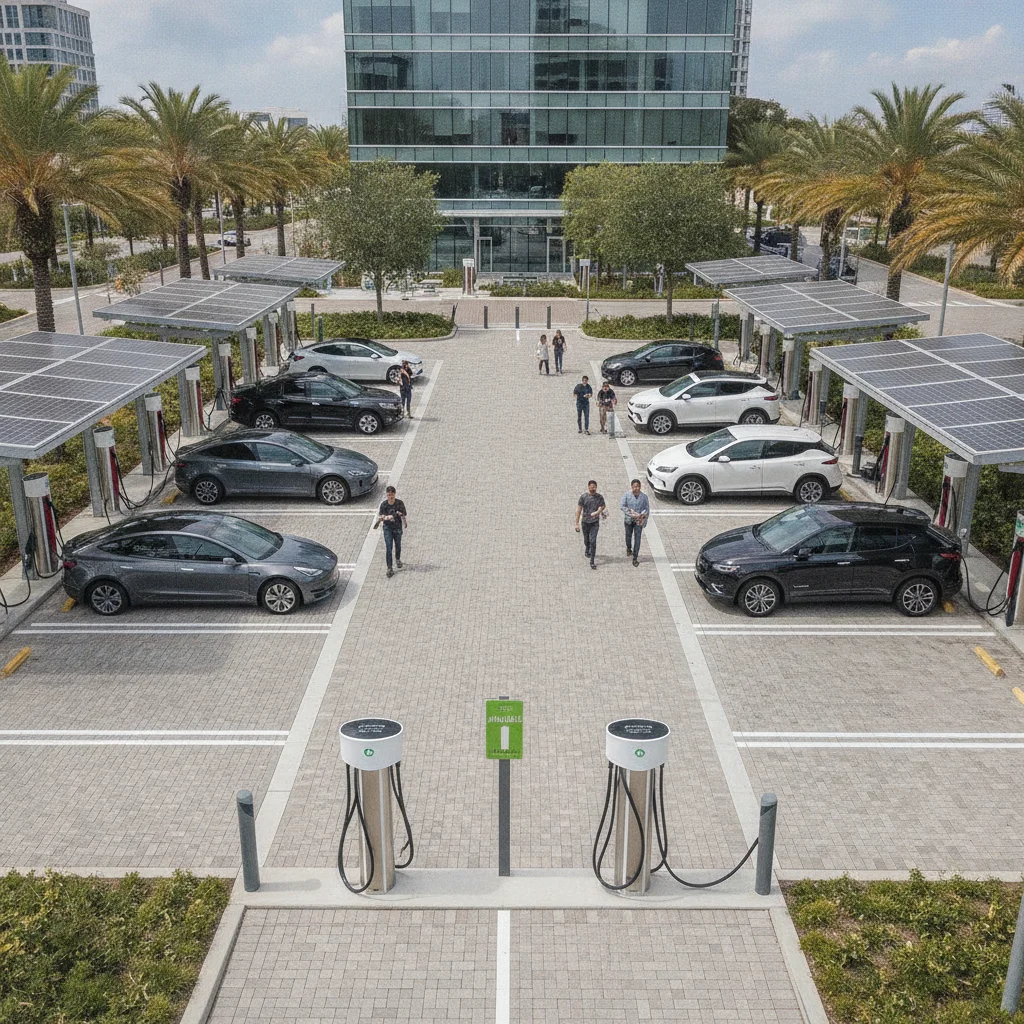
Observe informal queuing norms at high-demand stations
At peak-demand locations, other drivers may be waiting for stalls. Cutting in front of someone who has been waiting — even accidentally — creates conflict and slows the throughput of the entire station. A brief scan of the lot and a quick conversation with waiting drivers before you park costs nothing and prevents friction.
If you're brand new to public charging and want to understand the physical setup, payment options, and connector types before you worry about etiquette, our first-timer's field guide to public EV charging covers all of that ground. And if you want to understand the specific missteps that trip up new users, the most common mistakes first-time public charger users make is worth a read before your first session.
Idle Fees: The Written Rule With Real Financial Consequences
Every major charging network in the US now enforces idle fees — per-minute charges that kick in once your vehicle has finished charging and remains plugged in. Tesla's Supercharger network was among the first to formalize this policy, and ChargePoint, Electrify America, EVgo, and Blink have all followed with their own variations.
$0.40/min
Typical Tesla idle fee after grace period
Tesla charges $0.40 per minute in busy locations once a fully charged vehicle remains in a Supercharger stall past a 5-minute grace period, as of 2024 US pricing.
5 min
Standard idle fee grace period at major networks
Electrify America, EVgo, and Tesla all provide a 5-minute grace period after session completion before idle fees begin accruing, according to each network's published terms.
20+
US states with laws against ICEing EV stalls
As of 2024, more than 20 states have enacted legislation specifically prohibiting non-EVs from occupying designated EV charging spaces, with enforceable fines.
35%
Public chargers reported out of service at any time
A 2023 study published by the University of California, Berkeley found that roughly 27–35% of public charging ports in the San Francisco Bay Area were non-functional on any given visit.
Idle fees are intentionally punitive. They're not designed to generate revenue — they're designed to create a financial incentive strong enough to override the human tendency to leave a car plugged in indefinitely. Most networks send a push notification to your app when your session ends, giving you a short grace period (typically five minutes) before fees begin accruing.
Idle Fee Policies Differ by Network and Location
Not all charging locations within a given network charge the same idle fees. Tesla, for example, applies higher idle fees at stations the app designates as 'busy' and waives them entirely when the station has available stalls. Electrify America's idle fee structure varies by state due to differing utility regulations. Always check the specific location's policy in the app before you step away from your vehicle.
Some Etiquette Norms Are Specific to Vehicle Type
PHEVs (plug-in hybrid electric vehicles) can charge at public Level 2 stations but typically have much smaller batteries and reach full charge in 2–3 hours. Leaving a PHEV plugged in for 8 hours at a shared workplace charger when demand is high is considered poor etiquette even if no idle fee applies. Being mindful of your vehicle's actual charging need — not just whether you're still plugged in — is the underlying principle.
The practical upshot: set a reminder alarm on your phone for slightly before your estimated charge completion time. Don't rely on the network's notification arriving on time, because connectivity at some stations can be unreliable. For a detailed breakdown of how idle fee structures work across networks and how to avoid being charged, see our dedicated piece on idle fees at public chargers.
ICEing, Queue Cutting, and Other Major Offenses
Beyond the standard move-your-car protocol, a few specific behaviors have earned near-universal condemnation in the EV community — and in some jurisdictions, legal consequences.
ICEing
ICEing refers to a non-EV (powered by an internal combustion engine, hence "ICE") occupying a designated EV charging stall, either deliberately or out of ignorance. It renders the stall completely unusable to drivers who actually need it. As of 2024, more than 20 US states have enacted laws specifically prohibiting non-EVs from parking in EV charging spaces, with fines ranging from $50 to several hundred dollars. If you encounter an ICEd stall, document it with a photo and report it to the station operator through their app — most have a direct reporting function.
Unplugging a Charging Vehicle
Unplugging another driver's car mid-session without their permission is the most serious etiquette violation in the EV world. Even when a station is full and you're in urgent need of charge, this is not acceptable. Some drivers use a cable lock for precisely this reason. The only scenario where it may be tolerated — and this is a community norm, not a rule — is if a vehicle is clearly finished charging (at or near 100%), the station is fully occupied, and you cannot reach the owner. Even then, most experienced EV drivers advise against it.
Queue Behavior at Busy Stations
High-demand Supercharger stations and highway fast-chargers often develop informal queuing systems during peak hours. If drivers are waiting, don't circle the lot hoping for a stall to open — ask whether a queue exists, observe where others are waiting, and take your place in line. Cutting the queue, even unintentionally, creates conflict and slows everyone's trip.
“The social norms around public charging are still being written in real time. Every EV driver who follows the unwritten rules — moves promptly, manages cables, respects the queue — is actively helping build a culture that makes the whole network more functional for everyone.”
— Plug In America, National nonprofit EV advocacy organization representing US EV drivers
EV charging spaces at non-charging parking lots present a related issue: parking in an EV space without charging is frowned upon and, at many locations, ticketable. These spaces exist to facilitate active charging, not general parking convenience. This distinction matters especially in shared residential contexts — our guide on charging etiquette for shared home setups explores how those dynamics play out in apartment and condo environments.

Cable Management and Station Hygiene
This section of charging etiquette gets less attention than idle fees or ICEing, but it matters for station reliability and the experience of the driver who arrives after you.
After removing the connector from your vehicle, always return the cable to its holster properly. A cable left coiled on the ground is a trip hazard, a target for damage, and a signal to the next driver that the station might be malfunctioning. At stations with multiple cable types, return each cable to the correct holster — mixing them up creates confusion and can damage the connectors over time.
Use Your Car's Remote App to Monitor Sessions
Most modern EVs — including models from Tesla, GM, Ford, Hyundai, and Rivian — allow you to monitor charging status directly through the manufacturer's companion app on your smartphone. This lets you watch your state of charge in real time without being physically at the vehicle. Set your charge limit in the app before you walk away and you'll receive a manufacturer-side notification in addition to the network's alert, giving you two layers of warning when your session is nearly complete.
Destination Chargers Can Reduce Fast-Charge Dependency
Destination chargers at hotels, wineries, restaurants, and shopping centers are Level 2 units designed for use while you're engaged in another activity for an hour or more. Incorporating them into your route planning reduces pressure on highway DC fast chargers and lowers your per-kWh charging cost. Many destination chargers are free or included in a venue's amenities — check PlugShare or the ChargePoint app to identify them along your route.
Charging Costs Vary Significantly by Network and Location
The per-kWh or per-minute rate at a public fast charger can vary by a factor of two or more depending on the network, state, and time of day. Some networks offer lower rates to members who pay a monthly subscription fee. Before relying on a single network for regular public charging, compare pricing structures for your typical usage pattern — the savings can be meaningful over a full year of driving.
If a cable or connector appears damaged when you arrive — cracked housing, bent pins, or a connector that won't latch — report it immediately through the network's app before attempting to use it. Attempting to force a damaged connector can void your session credit and potentially damage your vehicle's port. Most networks have an in-app mechanism to flag equipment issues, which dispatches a technician and helps other drivers avoid the broken unit.
Receipt paper, food wrappers, and other trash left at charging stations are a minor but persistent frustration. Many stations don't have adjacent trash receptacles. Pack out what you bring in.
Quick Wins: Etiquette Habits to Build Right Now
Etiquette is most effective when it's habitual rather than deliberate. These actions are low-effort and immediately applicable — build them into your charging routine from the start.
Charging Behavior and Your Battery: The Hidden Connection
Some etiquette practices overlap directly with battery health. Leaving your vehicle plugged in at 100% for extended periods — which happens when you ignore the end-of-session notification and let the car sit — doesn't just inconvenience other drivers. It also keeps your battery at a sustained high state of charge, which accelerates long-term degradation in lithium-ion cells.
Similarly, frequent DC fast charging sessions without allowing the battery to cool between charges can increase internal cell stress. This isn't a reason to avoid public DC chargers — they're essential for long-distance driving — but it's worth understanding that responsible charging behavior benefits you as well as the drivers behind you. For a detailed look at which charging habits are quietly wearing out your battery, see our analysis of charging habits that degrade EV batteries over time.
On the cost side, understanding how to minimize charging expenses is another dimension of smart public charging behavior. Destination chargers at hotels, shopping centers, and workplaces often offer free or discounted rates that reduce your dependence on high-cost fast chargers. Our hub on EV charging costs and savings breaks down how to estimate and reduce your overall charging spend compared to gasoline fueling.
Use Your Car's Remote App to Monitor Sessions
Most modern EVs — including models from Tesla, GM, Ford, Hyundai, and Rivian — allow you to monitor charging status directly through the manufacturer's companion app on your smartphone. This lets you watch your state of charge in real time without being physically at the vehicle. Set your charge limit in the app before you walk away and you'll receive a manufacturer-side notification in addition to the network's alert, giving you two layers of warning when your session is nearly complete.
Destination Chargers Can Reduce Fast-Charge Dependency
Destination chargers at hotels, wineries, restaurants, and shopping centers are Level 2 units designed for use while you're engaged in another activity for an hour or more. Incorporating them into your route planning reduces pressure on highway DC fast chargers and lowers your per-kWh charging cost. Many destination chargers are free or included in a venue's amenities — check PlugShare or the ChargePoint app to identify them along your route.
Charging Costs Vary Significantly by Network and Location
The per-kWh or per-minute rate at a public fast charger can vary by a factor of two or more depending on the network, state, and time of day. Some networks offer lower rates to members who pay a monthly subscription fee. Before relying on a single network for regular public charging, compare pricing structures for your typical usage pattern — the savings can be meaningful over a full year of driving.
When Things Go Wrong at a Station
Even drivers who follow every rule encounter situations that require judgment: a broken charger, a driver who refuses to move, a station that's ICEd with no other stalls available. Having a clear mental framework for these scenarios prevents frustration from escalating into conflict.
Broken or Unresponsive Equipment
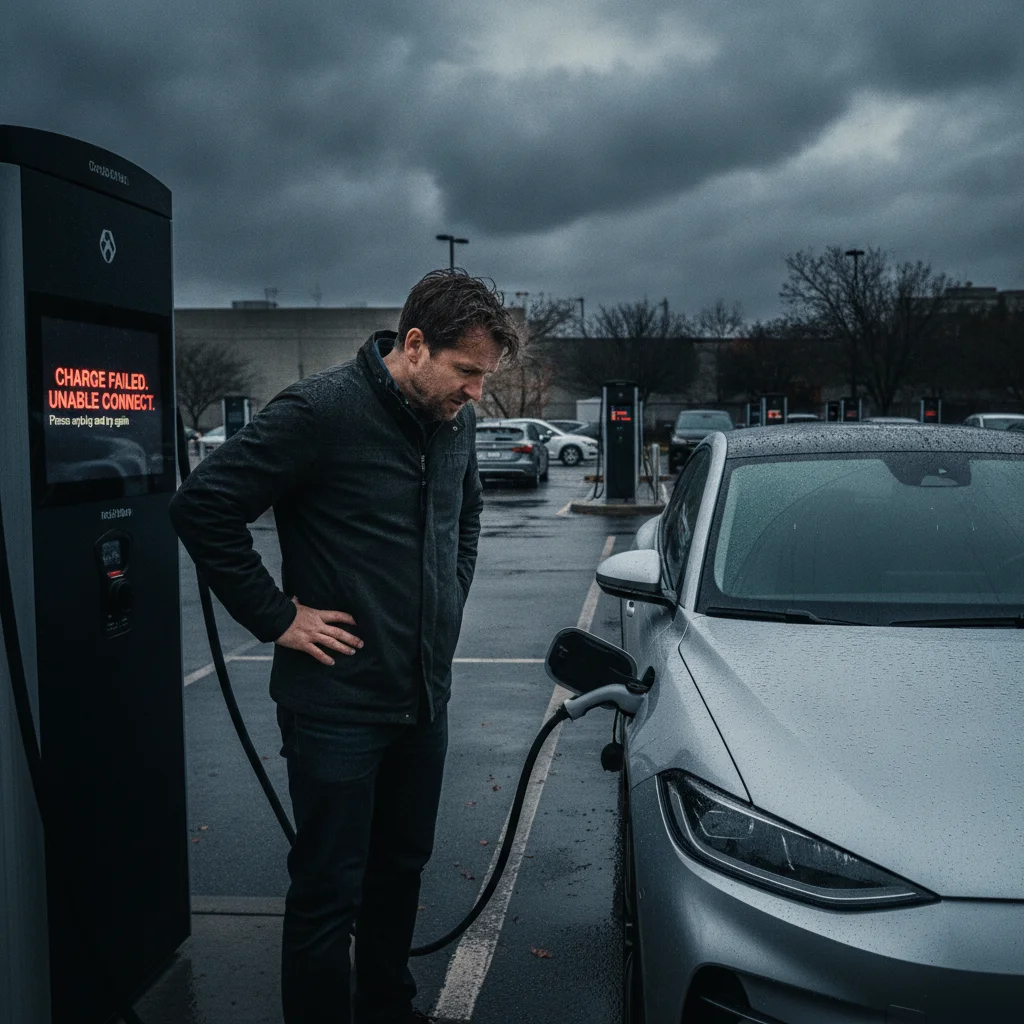
If a charger fails to initiate a session, try the standard troubleshooting steps: re-tap your RFID card or re-open the app, inspect the connector for visible damage, and attempt a different stall if one is available. If the unit is genuinely malfunctioning, report it through the app and, if you have cell service, call the network's customer service line. Most networks offer a call credit or session credit for confirmed equipment failures.
Confrontational Situations
If you encounter a driver who is hostile about being asked to move their vehicle, do not escalate. Document the situation — license plate and stall number — and report it to the station operator. Physical confrontations over parking spaces have occurred and are not worth the risk. Property managers at shopping centers and retail locations have authority to tow non-compliant vehicles; notifying them is often more effective than direct confrontation.
When You're the One Who Made the Mistake
If you overstay your session by a few minutes or accidentally occupy a stall longer than intended, acknowledge it gracefully if another driver is waiting. Apologize, move promptly, and move on. The EV community is generally forgiving of honest mistakes — it's the pattern of disregard that generates lasting resentment.
Idle Fee Policies Differ by Network and Location
Not all charging locations within a given network charge the same idle fees. Tesla, for example, applies higher idle fees at stations the app designates as 'busy' and waives them entirely when the station has available stalls. Electrify America's idle fee structure varies by state due to differing utility regulations. Always check the specific location's policy in the app before you step away from your vehicle.
Some Etiquette Norms Are Specific to Vehicle Type
PHEVs (plug-in hybrid electric vehicles) can charge at public Level 2 stations but typically have much smaller batteries and reach full charge in 2–3 hours. Leaving a PHEV plugged in for 8 hours at a shared workplace charger when demand is high is considered poor etiquette even if no idle fee applies. Being mindful of your vehicle's actual charging need — not just whether you're still plugged in — is the underlying principle.
Public charging is shared infrastructure in the truest sense — every stall is a resource that belongs, in effect, to whoever needs it most right now. The norms outlined in this guide aren't bureaucratic rules imposed from above. They're the practical framework that makes the whole system work, and every driver who follows them makes public charging better for everyone who comes after.
All claims are backed by peer-reviewed research. Sources on request.